
Review · POMPEII TOURS
Pompeii Private Tour with an Archaeologist and Skip The Line
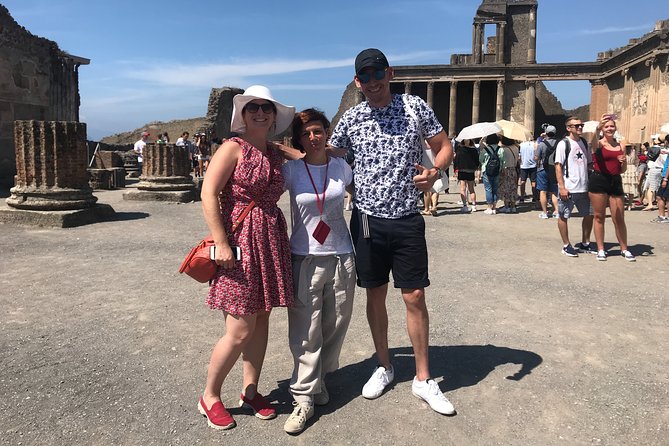
Pompeii gets real when someone connects the dots. In a private 2-hour walk with an archaeologist, you move through the highlights fast, with skip-the-line support so you spend less time stuck at entrances. I like that the focus stays on how people lived—work, worship, food, entertainment—right before the 79 AD eruption.
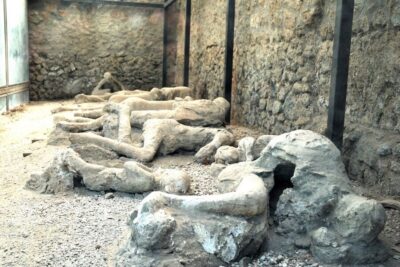
Two things I especially like: the lineup of stops feels like a real day in Pompeii (theaters, forum, baths, shops, and even the red district), and the route keeps you from bouncing around inefficiently on your own. You’ll also see the famous casts, where history stops being abstract and becomes personal.
One consideration: the tour price does not include the Pompeii site admission. The entrance ticket is €19 per person (free for under 18 with ID/passport), so plan to buy that in advance if you want the smooth entry experience.
In This Review
- Key things to know before you go
- What You’re Really Paying For: Private Archaeologist Time in 2 Hours
- Skip-the-Line and the €19 Entrance Ticket: The One Logistics Detail That Changes Everything
- Stop 1: Pompeii Archaeological Park Highlights, Start to Finish
- Odeion (Small Theater) Acoustics: The Roman Tech Moment
- Teatro Grande: Pompeii’s Big Stage
- Via dell’Abbondanza and the Red District: Eating, Buying, and Getting Noticed
- The Forum Circuit: Granaries, Markets, Basilica, and the Temple of Jupiter
- Granai del Foro: Casts and Daily Supply
- Foro di Pompei: Markets and Temples
- Pompei La Basilica: Where Justice Happened
- Temple of Jupiter: Religion at the Center
- Stabian Baths (Terme Stabiane): The Roman Spa Break You’ll Actually Feel
- Gladiator Barracks and Training Spaces: The Quadriporticus Area
- Casa del Fauno: When Pompeii Becomes a Luxury Home
- When You Spot the Casts: Why These Stops Hit Hard
- How the Tour Works as a “Use-It-Then-Go” Plan
- Is It Worth It? Value for Different Types of Visitors
- Book it if you:
- Consider skipping or pairing differently if you:
- Should You Book This Pompeii Archaeologist Tour?
- FAQ
- Is the Pompeii admission ticket included in the tour price?
- Does skip-the-line mean I can enter without buying tickets?
- Where does the tour start, and where does it end?
- How long is the private Pompeii tour?
- What language is the tour offered in?
- What happens if weather is poor?
Key things to know before you go
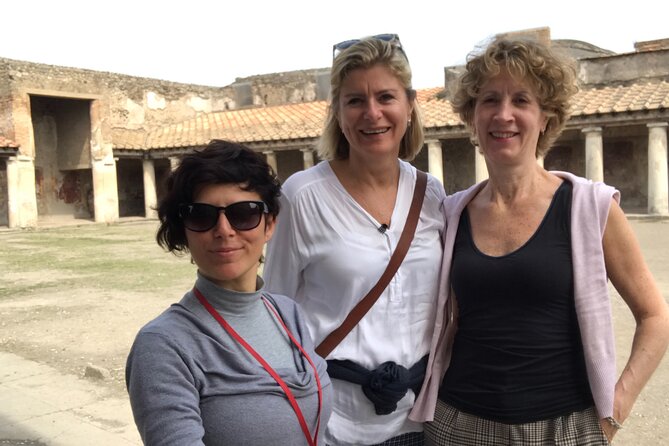
- Private group (up to 10) means you can move at your pace and keep questions coming.
- Skip-the-line support helps at the site, but you still need the Pompeii admission ticket.
- A short, high-impact route covers theaters, forum areas, baths, gladiator spaces, and major houses.
- Acoustics stop at the Odeion gives you a Roman-tech moment, not just pretty ruins.
- Casts included in the route make the eruption feel immediate and human.
- Good planning beats crowds: in high season, the advice is clear—buy site tickets ahead.
Which Pompeii ticket and guide? Compare a few more.
- Pompeii Small Group Tour with an Archaeologist★ 5.0 · 6,593 reviews
- Discover the Ancient Ruins of Pompeii: Day Trip from Rome★ 3.5 · 2,247 reviews
- Pompeii and Herculaneum Small Group Tour with an Archaeologist★ 5.0 · 1,350 reviews
- Skip the Line Guided Tour of Pompeii led by an Archaeologist★ 5.0 · 703 reviews
What You’re Really Paying For: Private Archaeologist Time in 2 Hours
This is a private Pompeii tour built for people who want the best return on limited time. The duration is about 2 hours, and the group size is capped at up to 10—big enough to feel flexible, small enough that you’re not swallowed by a mass tour.
The price is $375.05 per group, which matters because you can spread the guide cost across your group. At the top end (10 people), that guide portion is roughly $37 per person—then you add the required Pompeii admission. If you’re a small group, the per-person guide cost rises, so this tour tends to be strongest when you have a couple of people sharing costs, or when you truly value someone steering you through Pompeii’s maze.
The tour is offered in English, and if you request multiple languages, it can be arranged. You’ll also get a mobile ticket, plus a link sent one day before the tour to buy Pompeii tickets online so you can avoid extra waiting at the ticket office.
Skip-the-Line and the €19 Entrance Ticket: The One Logistics Detail That Changes Everything
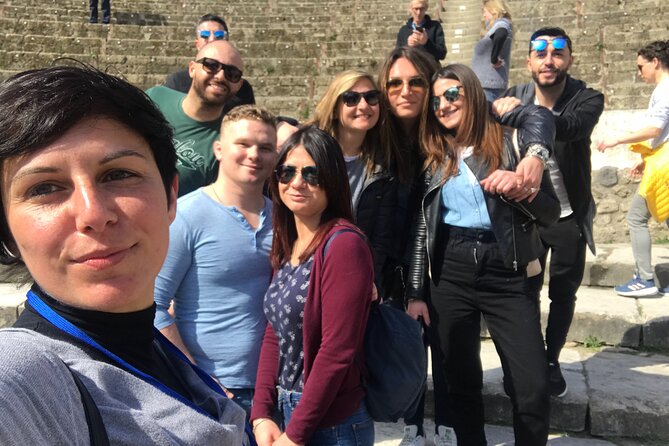
Here’s the part that trips people up: skip-the-line does not mean the entrance ticket is included. Pompeii admission is €19 per person and free for under 18 with ID/passport. So you need to buy the site ticket separately.
The upside is that the provider helps you plan this. You’ll receive a link the day before the tour to purchase tickets online in advance, with help aimed at skipping the ticket office line too. In high season, the recommendation is straightforward: buy admission early. Pompeii’s a magnet, and lines add up fast when your tour window is only about 2 hours.
Practical tip: if you show up without the ticket sorted, you can lose the biggest benefit of a guided, time-limited plan—your entrance becomes the bottleneck. The meeting point is Piazza Esedra, 10, 80045 Pompei, and the tour ends back there, so you’ll want your ticket timing to match that schedule.
Stop 1: Pompeii Archaeological Park Highlights, Start to Finish
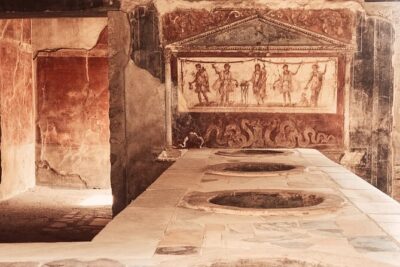
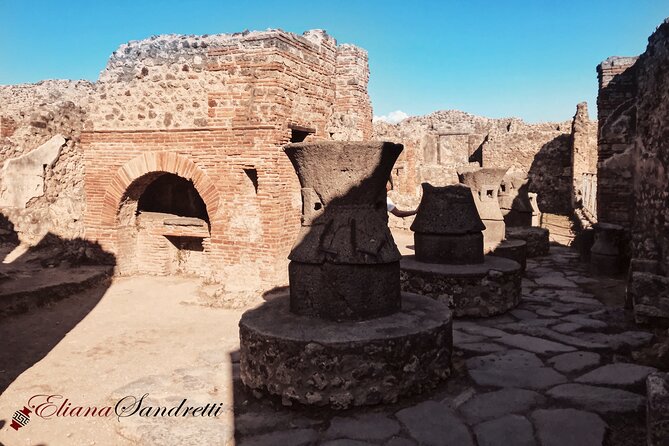
The main experience happens inside the Pompeii Archaeological Park. Since Pompeii is huge, the tour’s value is in its selection: it doesn’t try to cover everything. Instead, it hits a spread of key zones that explain what the Romans did for fun, work, worship, and comfort.
Your early route includes:
- The theaters (including the Odeion acoustics stop and then the main theater)
- Temples in the religious orbit of the city
- A rich house (later you’ll get the big one: Casa del Fauno)
- Stabian baths (Terme Stabiane), billed as the standout “spa” area
- Shops and fast food (so you can picture everyday economics)
- The Lupanar area (the city’s red district)
- The Forum and connected civic spaces
- The Area of the Gladiators
- Casts showing where people died during the eruption
The pacing is the real trick here. If you’re trying to do Pompeii solo, you can burn time just figuring out where to go next. A guided route like this keeps the stops meaningful, and it reduces the chance you’ll miss the most telling rooms and squares.
Odeion (Small Theater) Acoustics: The Roman Tech Moment
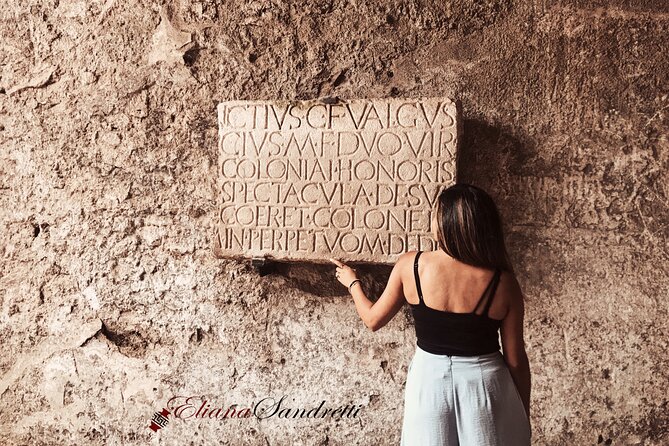
One of the more memorable early stops is the Small Theater (Odeion). The point isn’t just to admire stone steps. The guide focuses on how the Romans recreated perfect acoustics, which gives you a sense of engineering thinking behind the entertainment.
Why this matters for your visit: Pompeii can feel like a pile of ruins unless you have a lens. Acoustics is a great lens because it brings sound into your imagination. You start thinking about audience experience—voices, rhythm, and how performances would have carried in open air.
It’s also a good “mental reset” stop. Before you move into civic and residential areas, this keeps the tour varied and prevents the visit from feeling like a single long walk of similar walls.
Rather go private? More options in Pompeii



Teatro Grande: Pompeii’s Big Stage
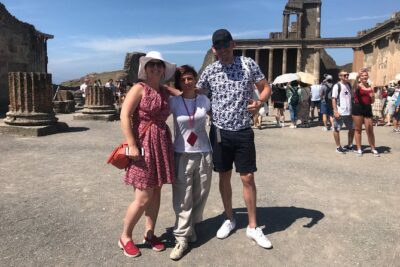
Then you move to Teatro Grande, the Great Theater, described as the most important theater site in Pompeii. Even in ruins, a main theater gives you a scale reference: where people gathered, how crowds were managed, and how entertainment fit into city life.
If you’re only visiting for a short time, Teatro Grande is one of those places that earns its slot. It’s visually strong, and the story behind it tends to explain how theatre wasn’t just art—it was social glue.
The stop is set for about 15 minutes, so don’t expect to linger for long. Instead, think of it as a moment to absorb the big picture: form, function, and the sense of a live audience.
Via dell’Abbondanza and the Red District: Eating, Buying, and Getting Noticed
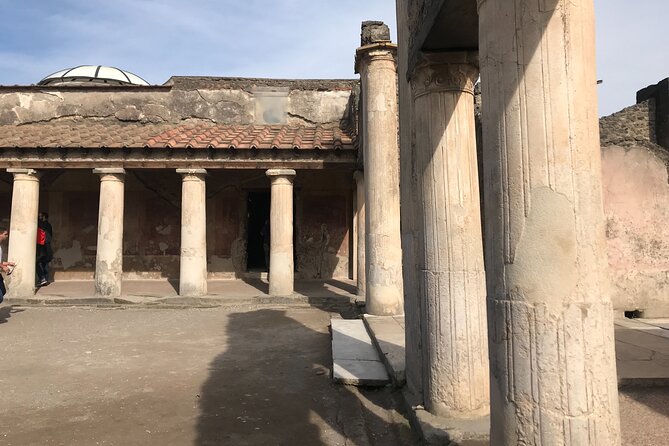
Next you cross via dell’Abbondanza, Pompeii’s main street. This is where the tour starts to feel like a city, not a museum. You’ll see shops and areas described as fast food, which helps you visualize commerce and daily routines.
The tour then heads to Vicolo del Lupanare, the ancient red district. This isn’t everyone’s favorite topic, but it’s part of the truth of how Romans lived. Seeing this area in context is the difference between thinking of Pompeii as only temples and homes. It also shows how entertainment, business, and services coexisted in public view.
The value here is historical realism. Yes, the subject matter is uncomfortable, but that’s exactly why it sticks with you. It prevents the “sanitized postcard” version of Pompeii.
The Forum Circuit: Granaries, Markets, Basilica, and the Temple of Jupiter
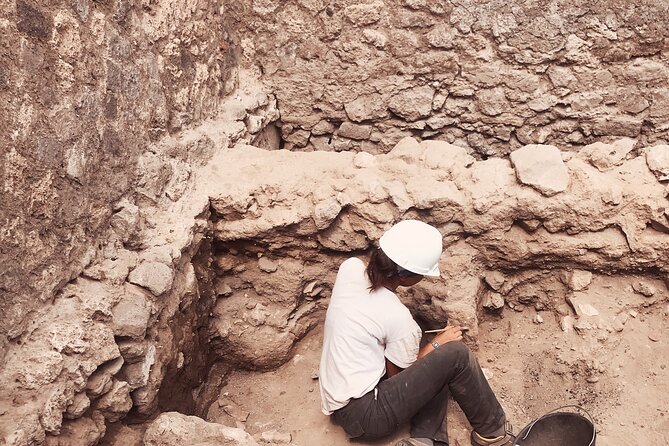
After the street life, your tour shifts to the civic heart of Pompeii: the Forum area. The forum is where the city organized power, religion, and commerce. Here, you’ll hit several stops that connect together like a mini curriculum.
Granai del Foro: Casts and Daily Supply
At Granai del Foro, you’ll see casts linked to the people who died during the eruption. You’ll also hear about the archaeological deposit full of amphorae and work tools, which helps you understand how supplies and storage worked.
This is a strong stop for two reasons:
1) The casts bring urgency.
2) The amphorae and tools make the space feel functional, like it had a job—not just a location.
Foro di Pompei: Markets and Temples
Then comes Foro di Pompei, the main square with its mix of markets and temples. Even if you’re not a classics person, the forum teaches you how Romans organized public life: announcements, rituals, business—everything in the same neighborhood.
Pompei La Basilica: Where Justice Happened
Next you’ll visit the Basilica of Pompeii, described as the ancient court where justice was administered. This is one of those places that’s easy to walk past without direction. With a guide, you understand why the architecture matters—how people gathered, where decisions were made, and how law shaped daily life.
Temple of Jupiter: Religion at the Center
The route also includes the Temple of Jupiter, located in the main square area. This is where the forum’s story becomes more complete: civic life wasn’t separate from worship. It was built into the same public stage.
Stabian Baths (Terme Stabiane): The Roman Spa Break You’ll Actually Feel
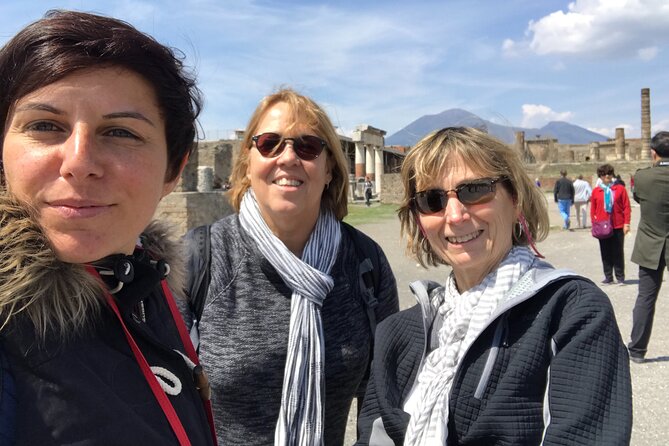
The tour includes Stabian Baths (Terme Stabiane), described as the best spa of the Roman Empire in Pompeii. Even if you take that claim with a grain of salt, the intent is clear: baths were a major social and physical hub.
This stop is about 15 minutes, so you won’t tour every corridor. Still, it’s enough time to see what made baths special—comfort, routine, and a place where people mixed beyond their job titles.
Practical value for your day: baths are also a good “buffer stop.” Pompeii is outdoor walking. When you reach a complex like the baths, you get a break in the rhythm, and the guide’s explanation helps you read the spaces instead of just staring at walls.
Gladiator Barracks and Training Spaces: The Quadriporticus Area
Next you get into the Quadriporticus of the theatres area, tied to the Gladiator Barracks. You’ll see apartments and where gladiators trained.
This stop gives Pompeii a different emotional angle. Instead of focusing only on everyday civilians, you see how spectacle had a behind-the-scenes structure: practice spaces, living quarters, and routines that supported public events.
It’s one of the stops that helps you understand how entertainment was a system, not a one-day show.
Casa del Fauno: When Pompeii Becomes a Luxury Home
Finally, you reach Casa del Fauno, one of Pompeii’s richest residences. It’s not just a house; it’s a snapshot of wealth and taste.
The tour frames it as a chance to see what “home life” looked like for the top tier of Roman society—so your earlier stops (forum, shops, baths) aren’t just separate sights. They connect back to how wealth influenced everything from leisure to status.
The stop is set for about 15 minutes, so the experience is best if you treat it like a highlight sampler. Focus on what feels different: layout, scale, and the idea of daily life arranged around display.
When You Spot the Casts: Why These Stops Hit Hard
You’ll encounter casts in the route, including the Granai del Foro area and other parts of the park described as showing bodies of people who died during the eruption.
This is where Pompeii changes tone. Architecture and street scenes can stay at the level of sightseeing. Casts force you to imagine the final moments—people trapped by sudden disaster in a city they knew intimately.
If you’re visiting with kids or anyone sensitive to heavy topics, you can handle it by pacing: spend enough time to absorb, but don’t feel pressured to linger. A guided route makes it easier to move on before emotions overwhelm the rest of your visit.
How the Tour Works as a “Use-It-Then-Go” Plan
One underrated benefit of this setup is what happens after the tour. You end back at Piazza Esedra, which makes it easier to continue on your own without guessing where to start next.
Because food and drinks are not included, I strongly suggest you bring water and a small snack you’re comfortable with. Pompeii is outdoor walking, and the tour is only about 2 hours, so you’re likely to extend your day afterward—especially if you want to see more excavation areas and nearby sections not covered on the guided route.
For your plan, think like this:
- Use the tour to learn how to read Pompeii.
- Then use your time independently to follow the threads that interested you most (forum life, theatre culture, baths, or houses).
That approach turns your visit from a checklist into a personal story.
Is It Worth It? Value for Different Types of Visitors
This tour is not the cheapest way into Pompeii. But value isn’t only price; it’s also time, direction, and emotional payoff.
Book it if you:
- Have limited time and want a guided “greatest hits” route
- Prefer a small, private group where you can ask questions
- Want someone to connect structures to real daily life, not just dates and facts
- Care about avoiding bottlenecks and chaos around entry and busy areas
Consider skipping or pairing differently if you:
- Want to wander slowly with zero structure (Pompeii is big enough for that)
- Don’t want to pay for a guide when you can hire a cheaper audio route
- Are strongly price-sensitive on top of the €19 per person admission fee
Should You Book This Pompeii Archaeologist Tour?
If your day in Pompeii is short, or you want the site to feel understandable instead of overwhelming, I think this is a smart choice. You’re paying for private pacing, a focused route through the most telling areas, and help turning the “skip the line” promise into a smoother arrival—especially if you buy the €19 admission ahead using the link provided.
Book it now if you’re going in peak season or you want crowd-smart timing. Just don’t assume the tour price covers the entry ticket. Get that sorted in advance, and you’ll spend your time inside Pompeii where it counts.
FAQ
Is the Pompeii admission ticket included in the tour price?
No. The tour price does not include the Pompeii site entrance ticket. Admission costs €19 per person, and under 18 are free with ID or a passport.
Does skip-the-line mean I can enter without buying tickets?
Skip-the-line is included, but you still need to purchase the Pompeii entrance ticket. The provider sends a link one day before the tour so you can buy online in advance and help avoid the ticket office line.
Where does the tour start, and where does it end?
The tour starts at Piazza Esedra, 10, 80045 Pompei NA, Italy. It ends back at the same meeting point.
How long is the private Pompeii tour?
It’s about 2 hours.
What language is the tour offered in?
The tour is offered in English. Multiple languages are available only on request.
What happens if weather is poor?
This experience requires good weather. If it’s canceled due to poor weather, you can choose a different date or request a full refund.
More Tours in Pompeii



More Tour Reviews in Pompeii

More Pompeii Tours to Compare
More Pompeii tours, freshly reviewed



Pompeii Tours, compared.
 ★ 4.8Pompeii: Entry Ticket and Guided Tour with an ArchaeologistFrom $3519,459 reviews
 ★ 4.1Pompeii: Entry Ticket with Audio GuideFrom $4013,491 reviews
 ★ 4.8Pompeii: Small Group Tour with an ArchaeologistFrom $4012,264 reviews
 ★ 4.3Pompeii Ruins & Mount Vesuvius Day TourFrom $12011,459 reviews
★ 5.0Pompeii Small Group Tour with an ArchaeologistFrom $356,593 reviews
★ 4.3Pompeii Ruins & Mount Vesuvius Day TourFrom $12011,459 reviews
★ 5.0Pompeii Small Group Tour with an ArchaeologistFrom $356,593 reviews
 ★ 4.5Skip-the-line Pompeii – Small Group TourFrom $544,401 reviews
 ★ 4.6Naples or Sorrento: Full-Day Pompeii and Mount Vesuvius TourFrom $1044,235 reviews
 ★ 3.9Pompeii: Skip-the-line Entry Ticket with Audio Guide & MapFrom $433,153 reviews