
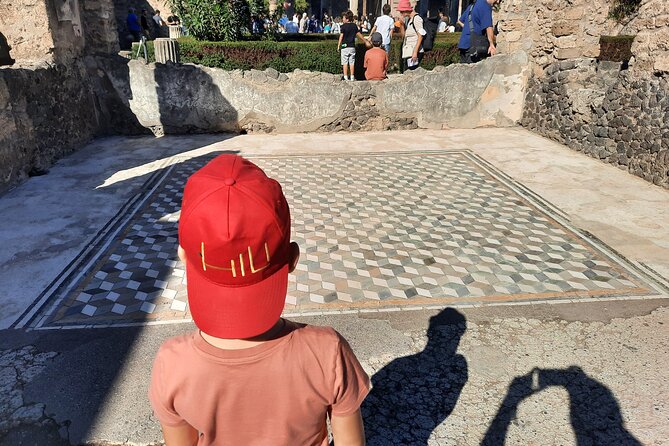
Review · POMPEII TOURS
Pompeii: Exclusive Private Walking Tour with an Archaeologist
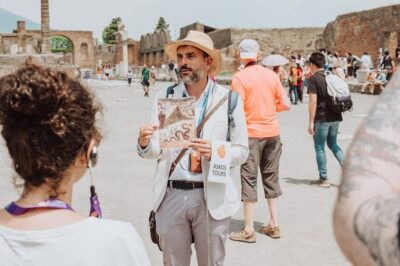
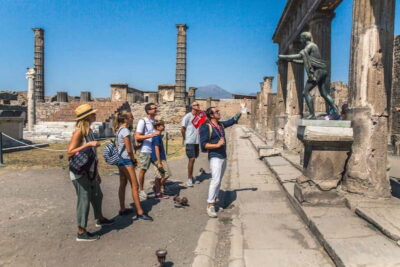
Pompeii gets real when an archaeologist talks. This exclusive private walking tour keeps things focused while you move through major houses and public spaces with an archaeologist guiding the story, and I like that the pacing is tight and the guide is entertaining. I also like the smart site mix: elite homes, Roman bathing life, and the city’s main public areas. One thing to plan for: you’ll still need your own Pompeii entry ticket (the tour doesn’t include it).
With a duration of about 2 hours and a group capped at up to 12, it feels like “your people, your pace,” not a cattle-car shuffle. Expect an English-speaking licensed local guide, plus a mobile ticket for the tour.
You meet at Coffee Shop Vittoria on Via Mare and the tour ends right back there. If you’re prone to overpacking your schedule, build in a little time to reach the entrance you’ll use, since the archaeological site ticket is separate.
In This Review
- Key highlights worth planning around
- Why a private archaeologist tour changes everything in Pompeii
- Casa del Menandro: spotting wealth, design, and everyday meaning
- Stabian Baths: how Romans made public life feel ordinary
- Lupanar: erotic art, social context, and handling a sensitive topic
- Casa del Fauno: elite power, peristyles, and Greek-influenced style
- Teatro Grande, Via dell’Abbondanza, and Foro: reading Pompeii like a city map
- Price and group value: what $421 per group really buys you
- Meeting point, timing, and how to avoid the usual Pompeii stress
- What you’re really paying for: guide style, humor, and clear explanations
- Who should book this Pompeii private archaeologist tour?
- Booking advice: when to reserve and how to plan your day
- Should you book this Pompeii archaeologist walking tour?
- FAQ
- Is the Pompeii entry ticket included in this tour?
- How long is the Pompeii private walking tour?
- Is this a private tour or a group tour?
- What group size is allowed?
- What language is the tour offered in?
- Where do we meet the guide?
- Does the tour use mobile tickets?
- Are service animals allowed?
- Can I cancel for a full refund?
Key highlights worth planning around
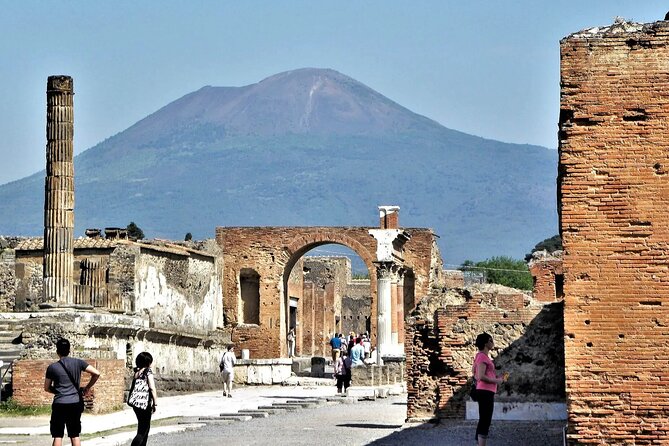
- House of Menander in 1,800 sq m of elite Roman design (and lots to spot in ornament and layout)
- Stabian Baths: one of the oldest public bath complexes in Pompeii, dating to around 125 BC
- Lupanar: a chance to see the famous erotic wall paintings and hear how scholars interpret them
- Casa del Fauno: a grand Hellenistic-style palace with a classic Pompeian peristyle frame
- Teatro Grande + Via dell’Abbondanza + Foro: a quick “city-reading” route through major landmarks
- Past guide styles: groups have praised archaeologists like Clelia, Ines, Leonardo, Paolo, and Lello for humor and vivid explanations
Which Pompeii ticket and guide? Compare a few more.
- Pompeii Small Group Tour with an Archaeologist★ 5.0 · 6,593 reviews
- Discover the Ancient Ruins of Pompeii: Day Trip from Rome★ 3.5 · 2,247 reviews
- Pompeii and Herculaneum Small Group Tour with an Archaeologist★ 5.0 · 1,350 reviews
- Skip the Line Guided Tour of Pompeii led by an Archaeologist★ 5.0 · 703 reviews
Why a private archaeologist tour changes everything in Pompeii
Pompeii can overwhelm you fast. The ruins are everywhere, the streets twist, and without context you can end up playing Where’s the interesting thing? This is why I like a focused private approach. An archaeologist doesn’t just point at stones—they explain what you’re looking at, what it likely meant, and how the different buildings fit together as a working city.
In two hours, the biggest win is clarity. You’ll get a guided path through Pompeii’s “why should I care” zones: wealthy private space (houses), daily public life (baths), social life (including the tricky subject of the Lupanar), and civic identity (the forum and major street-theater spaces). That mix helps you understand Pompeii as a city—not just a dramatic eruption.
Also, this is an English-speaking licensed local guide setup. Based on guide names that have shown up for past groups—Clelia, Ines, Leonardo, Paolo, and Lello—expect explanations that are designed to be remembered, not recited. Humor matters here. When you’re staring at faded fresco fragments and worn stone thresholds, a guide who can make it feel alive is a real advantage.
Casa del Menandro: spotting wealth, design, and everyday meaning
Casa del Menandro (House of Menander) is one of Pompeii’s showpiece residences, and it’s a strong first stop because it sets the tone. You’ll spend about 20 minutes here, and the building covers roughly 1,800 square metres—most of an entire insula. That size matters: you’re not just seeing a room, you’re seeing an entire lifestyle and social footprint.
What I find useful about starting at a place like this is that you can “read” Pompeii’s architecture. Rich homes weren’t random collections of spaces. They had clear hierarchies: public-facing areas, quieter private zones, and decorative choices meant to communicate status. Even when you only get a short visit, an archaeologist can guide you to look for the kinds of details that turn ruins into evidence—materials, layout logic, and how decorative programs relate to how people moved and hosted guests.
A practical note: because this site is large and detailed, you’ll want your guide to help you prioritize. The time here is short (around 20 minutes), so let the archaeologist do the selecting. If you try to “see everything” on your own first, you’ll miss the point of having expert guidance.
Stabian Baths: how Romans made public life feel ordinary
Then you shift from private luxury to public routine at the Stabian Baths (Terme Stabiane). This stop is also about 20 minutes, and it’s a great one for beginners because bathing is easy to imagine. These baths are the oldest and largest of Pompeii’s five public bath complexes, with original construction dating to around 125 BC.
Here’s what this stop does for your understanding: it grounds Pompeii in daily rhythms. Baths weren’t just about hygiene. They were social hubs—places where people met, talked, exercised, and passed time. When an archaeologist walks you through how the complex likely functioned, it turns Pompeii from “an archaeological show” into a city with schedules, habits, and regular movement of bodies.
A quick reality check: baths can feel visually repetitive if you’re only scanning walls and floors. Let your guide steer you toward the different functional areas and how people would have used them. That guidance is what makes the time feel worth it, rather than like you rushed through an outdoor ruin.
Lupanar: erotic art, social context, and handling a sensitive topic
Next comes the Lupanar, the well-known brothel in Pompeii. The tour gives it about 30 minutes, which is significant—more time than you might expect for a building that many people treat as a curiosity stop.
The reason it’s worth your attention is not gossip. It’s interpretation. The Lupanar is known for the erotic wall paintings, and hearing an archaeologist explain how scholars read these kinds of images helps you keep a sense of proportion. You’ll get context about what the space was for and how messaging worked in a Roman setting.
Is this stop for everyone? If you’re traveling with kids or anyone sensitive to sexual content, you’ll want to consider it. The tour itself includes the Lupanar as part of the route, and the paintings are a key reason it’s on the list. If that’s a concern, you should check in with the tour provider ahead of time so you can decide whether this specific itinerary is a good fit for your group.
More of Pompeii at street pace

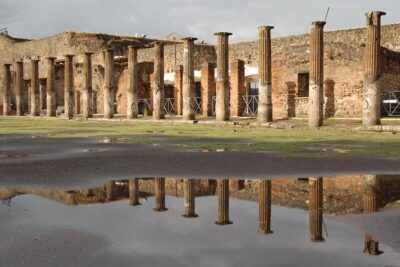
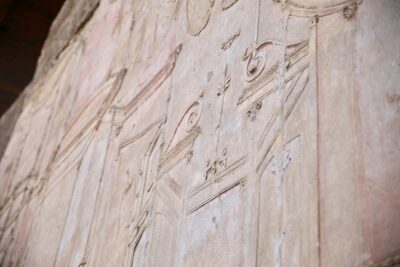
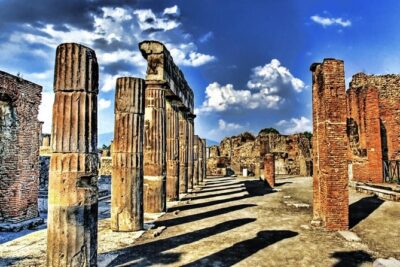
Casa del Fauno: elite power, peristyles, and Greek-influenced style
The House of the Faun (Casa del Fauno) is the next major residence on the walk, with about 20 minutes allotted. It’s a grand Hellenistic palace dating to the 2nd century BC (during the Samnite period) and framed by peristyle—the classic Pompeian open courtyard with surrounding columns.
This stop is where a guide can really help you see how Pompeii absorbed and mixed cultural influences. The peristyle layout is not just decoration. It’s the organizing engine of the home, shaping how you enter, how you view the space, and how your attention moves. An archaeologist can connect the building’s form to what people expected from elite living.
In short: Casa del Fauno helps you understand Pompeii’s wealthy class as consumers and culture carriers, not just “rich people who lived here.” The more you learn to watch for structural patterns, the more Pompeii starts to feel like architecture you can think through.
Teatro Grande, Via dell’Abbondanza, and Foro: reading Pompeii like a city map
After the homes and baths, you get a fast but valuable city survey. You’ll spend shorter segments—about 10 minutes each—at three major landmarks, and that combo is a smart way to end a short tour.
Teatro Grande is Pompeii’s biggest theatre, so even a brief look gives you perspective on entertainment and public gatherings. If you’ve ever wondered where performances fit into daily life, a theatre like this is your anchor point.
Then comes Via dell’Abbondanza, often described as the best preserved street in Pompeii. A street is more than a road here. It’s a window into movement—how people approached major buildings, how neighborhoods connected, and how storefront life and foot traffic would have flowed.
Finally, you’ll visit the Foro (Forum) de Pompeya, the city’s most important square. This is where civic identity shows up. Even if you only have a short stop, it helps to tie together everything you’ve seen: private wealth on one side, public daily life in the baths, and civic priorities at the forum.
The value of these quick stops is that they give you a “mental map” to use once the tour ends. A good guide leaves you with clues so you can keep exploring without feeling lost.
Price and group value: what $421 per group really buys you
This tour costs $421.03 per group, with a group size of up to 12, and it runs about 2 hours. On paper, that may sound expensive—until you translate it into what you’re buying.
You’re not paying for a checklist. You’re paying for an archaeologist-led route through key Pompeii zones while you avoid wasting time guessing what matters. In a place like Pompeii, where the ruins are big and the details are easy to miss, expert guidance can be the difference between a frustrating walk and a meaningful one.
For groups, families, or friends who want a shared guide experience, this can be strong value. With a private format, you also get flexibility that large-group tours can’t offer—stopping for the exact details that interest your group, asking questions, and resetting when your attention drifts.
The other angle: Pompeii tickets are separate. So you should budget for the Pompeii entry ticket on top of the tour price. Once you do, you’re paying for the expertise and the route structure that gets you the best use of limited time.
Meeting point, timing, and how to avoid the usual Pompeii stress
The start is at Coffee Shop Vittoria on Via Mare, Pompei. The tour ends back at the same place. That’s helpful because you’re not left scrambling across ruins trying to find your way out.
Still, plan for one small risk: organization at meeting points can be tricky in any busy heritage site. One past experience flagged difficulty finding the guide and a mismatch in company name shown on communication. That doesn’t mean it’s common, but it’s enough to justify a practical approach: arrive a few minutes early, keep an eye on the message details you receive at booking time, and confirm the exact guide identification before you drift away.
Also, the tour is about 2 hours, so you’ll likely feel the benefit of not overpacking your day. Pompeii is wide. If you add another “must-see” right after, you might end up rushing the final part.
What you’re really paying for: guide style, humor, and clear explanations
The best part of this tour is often the human factor. Multiple guides associated with this experience have been praised for making Pompeii feel alive—through humor, charisma, and explanations that help you picture daily life rather than just memorize facts.
Names that have come up positively include Clelia, Ines, Leonardo, Paolo, and Lello. The common theme is how they connect pieces: how a wall painting relates to a social space, how bath design fits public routines, and how the theatre and forum anchor civic life.
This matters for how the ruins land in your brain later. When you leave a tour with a few strong interpretive hooks, you’ll enjoy the “wandering time” after. One group even noted that the guide’s suggestions made it easier to keep exploring confidently after the tour ended.
Who should book this Pompeii private archaeologist tour?
I’d point you here if you want:
- A 2-hour Pompeii experience that focuses on major sites without getting lost in the weeds
- Expert guidance in English, especially if you care about interpretation, not just photos
- A private format with a small group (up to 12) so the tour can fit your pace
- A route that includes both elite life (Casa del Menandro, Casa del Fauno) and public life (Stabian Baths, theatre, forum)
It can also fit families with older teens who can handle the Lupanar stop and are ready for a more frank archaeological conversation.
If your group is very sensitive to adult subject matter, you should think carefully about that Lupanar inclusion before booking.
Booking advice: when to reserve and how to plan your day
This tour tends to sell out enough that it’s often booked about 57 days in advance on average. That’s your signal to plan ahead if your dates are fixed.
Bring the basics:
- Your tour confirmation
- Your own Pompeii archaeological site entry ticket (since it’s not included)
- A little buffer time at the start meeting point
If you’re using public transportation, you’re in the right general area because the tour is near public transit. Service animals are allowed, which is useful for visitors who need that support.
Finally, if you’re the type who likes to sleep on a plan, remember you’re dealing with a site that’s easy to lose time in. This itinerary is designed for a focused window—so treat it like a plan, not a suggestion.
Should you book this Pompeii archaeologist walking tour?
Yes, if you want a tight, high-impact Pompeii route with an archaeologist and you’re okay with paying separately for the Pompeii entry ticket. The biggest reasons to book are the focused stop mix and the consistent praise for guides who bring the site to life with humor and clear explanations.
I’d skip it only if your schedule is too loose (Pompeii will eat time), or if the adult content at the Lupanar doesn’t work for your group.
If you match the right “tour personality” (structured, explanation-first, not just sightseeing), this is one of the best ways to get meaning out of Pompeii in just a couple hours.
FAQ
Is the Pompeii entry ticket included in this tour?
No. The tour includes the guided experience, but you need to buy your own entry ticket to the archaeological area.
How long is the Pompeii private walking tour?
It’s about 2 hours.
Is this a private tour or a group tour?
It’s private. Only your group participates.
What group size is allowed?
It’s listed as up to 12 people per group.
What language is the tour offered in?
The tour is offered in English.
Where do we meet the guide?
You meet at Coffee Shop Vittoria, Via Mare, 80045 Pompei NA, Italy.
Does the tour use mobile tickets?
Yes, the tour includes a mobile ticket.
Are service animals allowed?
Yes, service animals are allowed.
Can I cancel for a full refund?
Yes. Free cancellation is available if you cancel at least 24 hours in advance for a full refund.
More Tours in Pompeii



More Tour Reviews in Pompeii

More Pompeii Tours to Compare
More Pompeii tours, freshly reviewed


Pompeii Tours, compared.
 ★ 4.8Pompeii: Entry Ticket and Guided Tour with an ArchaeologistFrom $3519,459 reviews
 ★ 4.1Pompeii: Entry Ticket with Audio GuideFrom $4013,491 reviews
 ★ 4.8Pompeii: Small Group Tour with an ArchaeologistFrom $4012,264 reviews
 ★ 4.3Pompeii Ruins & Mount Vesuvius Day TourFrom $12011,459 reviews
★ 5.0Pompeii Small Group Tour with an ArchaeologistFrom $356,593 reviews
★ 4.3Pompeii Ruins & Mount Vesuvius Day TourFrom $12011,459 reviews
★ 5.0Pompeii Small Group Tour with an ArchaeologistFrom $356,593 reviews
 ★ 4.5Skip-the-line Pompeii – Small Group TourFrom $544,401 reviews
 ★ 4.6Naples or Sorrento: Full-Day Pompeii and Mount Vesuvius TourFrom $1044,235 reviews
 ★ 3.9Pompeii: Skip-the-line Entry Ticket with Audio Guide & MapFrom $433,153 reviews
Browse the lists this tour appears in