
Review · POMPEII TOURS
Pompeii Ancient City Walking Tour – Italian & English Guide
Pompeii is huge, so a guide really helps. This walking tour focuses on the big names of the site and makes the day feel manageable, with facilitation at the Ticket Office entrance and a structured route through the ruins. You’ll also get story-driven context, including the eruption story, not just stone-by-stone sightseeing.
What I like most is the hit-list approach: you spend quality time at the main archaeological park, then you get quick orientation at standout homes and temples. I also like that the tour is capped at 25 travelers, which keeps things moving without turning into a blur.
One drawback to consider: the most famous spots are time-boxed (short stops after the main park walk), so if you want a slow, deep look at fewer buildings, this format might feel rushed. And, as with any group tour, make sure you confirm meeting details—one past issue involved not finding the operator at the start.
In This Review
- Key things to know before you go
- Pompeii is a puzzle—this route helps you solve it
- Where you start: Porta Marina meeting point and entry flow
- The money math: €22 entrance + a $36.12 guided route
- Day 1 inside Pompeii: from the biggest park walk to the stars of the site
- Stop 1: Pompeii Archaeological Park (the “orientation walk”)
- Stop 2: Casa del Fauno (mosaic bragging rights)
- Stop 3: Tempio di Giove Capitolino (religion with a dramatic backdrop)
- Stop 4: Temple of Apollo (the oldest religious stop on your list)
- Stop 5: Anfiteatro Romano (a gladiator arena with scale)
- Stop 6: Casa del Menandro (a house named by its art)
- Stop 7: Casa dei Vettii (status after freedom)
- Stop 8: Villa dei Misteri (the initiation-room story)
- Day 2: Roman Catholic Sanctuary of Pompeii and a softer pace
- Guide quality is the real product here
- How long each stop feels: fast facts, then keep your eyes ready
- What to bring for a two-day Pompeii walking plan
- Who this Pompeii tour suits best
- The one thing to be careful about: meeting and communication
- Should you book this Pompeii tour?
- FAQ
- How much does the Pompeii walking tour cost?
- Is the Pompeii entrance ticket included?
- How long is the tour?
- What languages is the tour offered in?
- What’s included in the tour besides the guide?
- What is the day 2 activity and is it ticketed?
- How big are the groups?
- Where does the tour start and end?
- Is service animal access allowed?
- Can I cancel and get a full refund?
- Is good weather required?
- Is the tour suitable for most people?
Key things to know before you go
- Ticket Office entry help: Your guide handles facilitation at the Ticket Office entrance, so you waste less time waiting.
- Bilingual support in practice: The tour is offered in English, and in a mixed-language situation the guide (Simone) handled English and could repeat in Italian if needed.
- A “greatest hits” day 1: You’ll move through Pompeii’s top temples, villas, and major houses in one organized sweep.
- Famous art and names: You’ll see why spots like the Casa del Fauno, Casa del Menandro, and Villa dei Misteri earned their reputations.
- Day 2 adds a different angle: A free visit to the Roman Catholic Sanctuary of Pompeii rounds out the experience.
- Entrance ticket is extra: Pompeii entrance costs €22.00 per person, so budget that on top of the tour price.
Which Pompeii ticket and guide? Compare a few more.
- Pompeii Small Group Tour with an Archaeologist★ 5.0 · 6,593 reviews
- Discover the Ancient Ruins of Pompeii: Day Trip from Rome★ 3.5 · 2,247 reviews
- Pompeii and Herculaneum Small Group Tour with an Archaeologist★ 5.0 · 1,350 reviews
- Skip the Line Guided Tour of Pompeii led by an Archaeologist★ 5.0 · 703 reviews
Pompeii is a puzzle—this route helps you solve it
Pompeii can feel like wandering in a giant open-air maze. Streets, building footprints, and attractions sprawl across a big area, and it’s easy to miss the “why it matters” parts if you’re relying only on printed maps.
This tour’s value is how it organizes your time. You get a guided start at the Pompeii Archaeological Park, then targeted stops at the places most people travel to see: temples, major homes, and the amphitheater. That structure helps you connect what you’re looking at to the bigger story—especially the tragic eruption narrative that your guide brings to life.
Also, this is a walking experience. That’s good news if you like to get your bearings fast and don’t want to bounce between separate transportation schedules. You’re still outside, still moving—so you’ll want comfortable shoes and a steady pace.
Where you start: Porta Marina meeting point and entry flow
The tour meets at Piazza Porta Marina, 80045 Pompei NA, Italy and ends back at the same place. That matters more than people think: Pompeii routes can be confusing, and having a single start/end point makes it easier to plan your day.
A key included benefit is facilitation at the entrance to the Ticket Office. In practical terms, this can mean fewer headaches at the busiest moment—when you’re standing around with tickets and trying to figure out the correct lane. If you’ve ever arrived at an attraction with “I think we’re in the right line” energy, you’ll appreciate this.
If you’re coming in by public transportation, the meeting point is described as near public transportation. I’d still give yourself extra time, because groups start together and Pompeii crowds can change your walking speed.
The money math: €22 entrance + a $36.12 guided route
The tour price is $36.12 per person, but Pompeii entrance fees are not included. The listing price for the site ticket is €22.00 per person. So you should plan on paying about $36.12 + €22.00 for the full guided experience (amounts vary with exchange rates).
Is it worth it? Usually, yes, if you care about:
- getting guided context (what you’re seeing and why it matters),
- having help with ticket-office entry flow,
- and covering multiple major highlights without spending extra energy figuring out an efficient route.
If you’re the type who only wants one or two buildings and doesn’t need an explanation, you might find self-guided works better. But if you want structure and meaning, the tour cost plus the entrance ticket is the straightforward way to get it.
Day 1 inside Pompeii: from the biggest park walk to the stars of the site
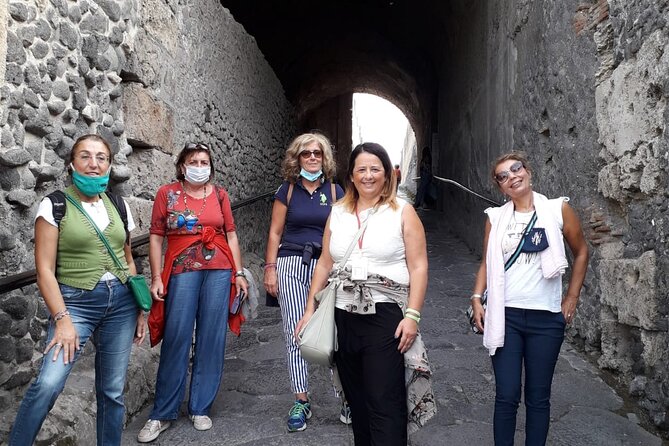
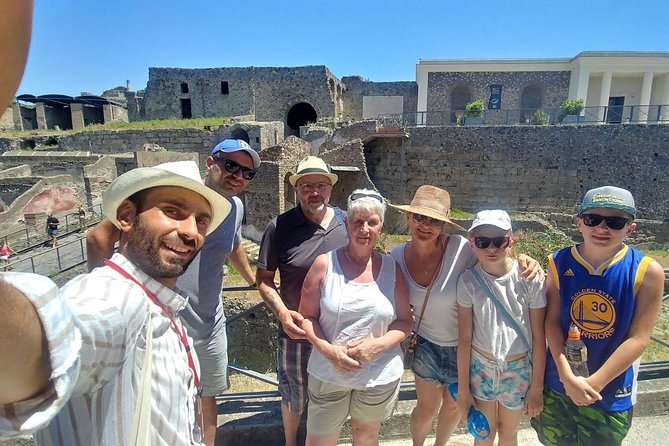
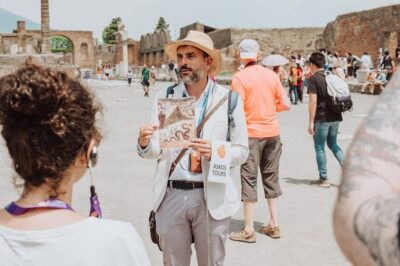
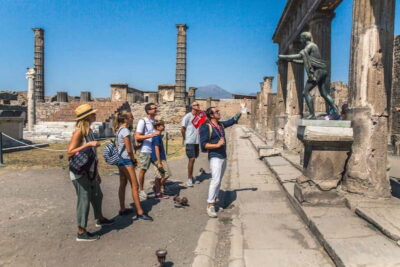
Day 1 is the heart of the tour. You start at the Pompeii Archaeological Park, where you meet your guide with a Sesto Continente Tours sign. After entry, you move through some of the best-known areas in the park, including the Amphitheater and major temples.
More of Pompeii at street pace
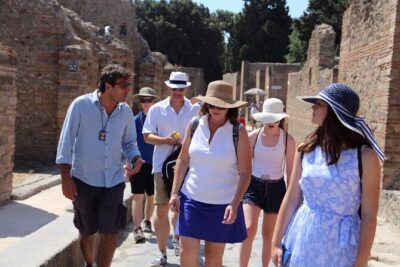
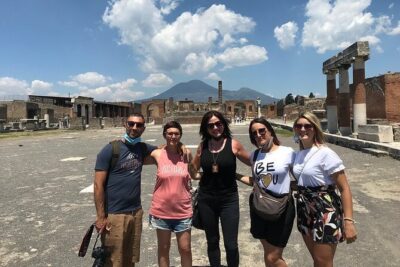

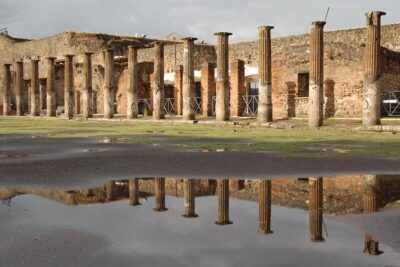
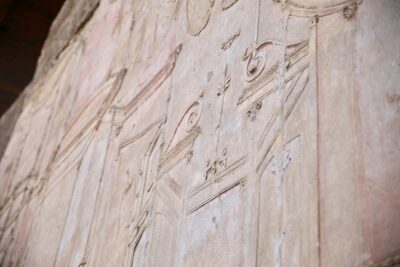
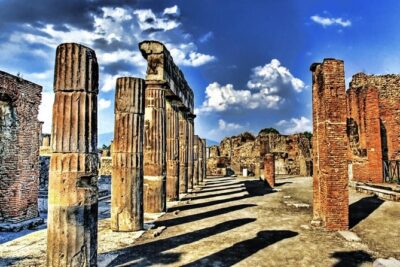
Stop 1: Pompeii Archaeological Park (the “orientation walk”)
You’ll spend about 2 hours at the archaeological park. This is where the guide can set the stage: you’ll pass major anchors such as:
- Anfiteatro (Roman amphitheater)
- Tempio di Apollo
- Tempio di Giove
- and prominent houses like Casa del Fauno, Casa del Menandro, and Casa dei Vettii
- plus Villa dei Misteri and more
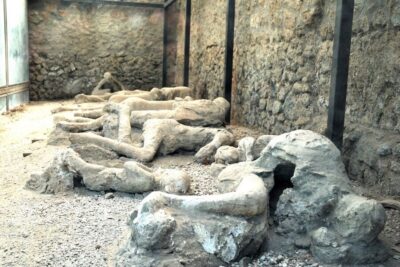
Because this is the main chunk of time, it’s also where you’ll feel the strongest impact of the guide’s storytelling. In one standout account, the guide’s explanation made the eruption story feel immediate, while also staying enthusiastic about art and decoration inside the villas.
If you go in expecting a quick “this is a wall” tour, you’ll likely be happier than that. This portion is built to give you the overall layout and the big-ticket sights in a single day.
What to watch for: the tour’s other stops are short. So if you love one specific building, you’ll want to remember where it is so you can return later on your own time.
Stop 2: Casa del Fauno (mosaic bragging rights)
The Casa del Fauno is one of the larger residences at Pompeii. The big reason to care here is the replica of Alexander’s mosaic, depicting the battle between Alexander the Great and King Darius III.
This stop is brief (about 10 minutes), but it’s the kind of moment that gives you a concrete example of how art and status worked at the time. Even in a short visit, it helps you connect “villas” with “display”—people didn’t just live there; they made statements with decoration.
Stop 3: Tempio di Giove Capitolino (religion with a dramatic backdrop)
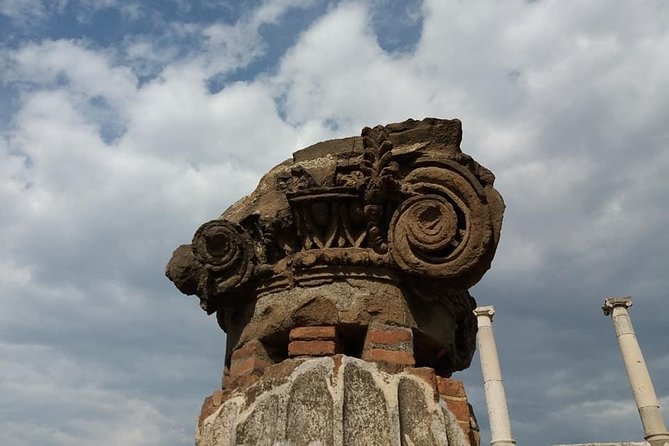
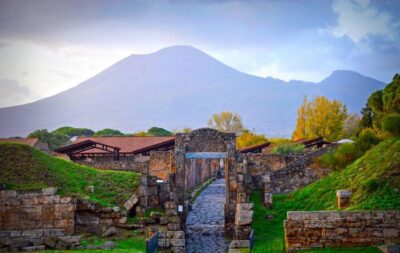
Next is the Tempio di Giove Capitolino, tied to the idea of the Capitoline triad—Jupiter, Juno, and Minerva. The setting adds drama: Mount Vesuvius rises in the background.
This is a short stop (around 10 minutes), so the guide’s role is crucial: you’re not here to do a long architectural study. Instead, you’re building a quick mental map of what kind of space these temples were—religious, ceremonial, and central to civic life.
Stop 4: Temple of Apollo (the oldest religious stop on your list)
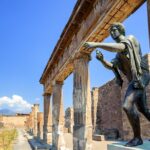
The Temple of Apollo is described as the oldest religious building at Pompeii. Here, you’ll also get a reproduction of a famous bronze statue of Apollo—shown holding a bow and arrow, posed as if in action.
Another short stop (about 10 minutes) means you’ll likely see key features, but not have time for lingering. If you’re a photo person, aim to shoot quickly, then listen first.
Stop 5: Anfiteatro Romano (a gladiator arena with scale)
The Roman amphitheater is the kind of sight that snaps your brain into scale. The tour highlights that it was built in 80 a.C. and could hold up to 20,000 spectators, arranged in three sections based on social class.
This is listed as about 10 minutes. That’s enough time to appreciate the shape and the idea of “who sat where,” especially when your guide gives context. Even if you don’t know Roman entertainment history, the physical scale is the point.
Stop 6: Casa del Menandro (a house named by its art)
The Casa del Menandro doesn’t take its name from the original owners. Instead, it’s named for a standout fresco showing the Greek poet Menander.
This is another about 10 minutes stop. Think of it like a mini-lesson: you see how art can leave a building with an identity—even centuries later.
Stop 7: Casa dei Vettii (status after freedom)
The Casa dei Vettii is tied to the story of the Vettii brothers, who, after becoming freed slaves, didn’t hold back on spending to show their new social standing. The tour description emphasizes the home’s remarkable affreschi and murals.
This is a quick stop too (around 10 minutes). Still, it’s a strong reminder that Pompeii isn’t only about ruins; it’s about people trying to live their lives and signal who they were.
Stop 8: Villa dei Misteri (the initiation-room story)
Your final major day 1 highlight is the Villa dei Misteri. The big detail here is the sequence of nine painted scenes in the Initiation Room, depicting a bride’s rite of passage into adult womanhood and linking to the worship of Dionysus, the Greek god of wine and fertility.
This is a short stop (around 10 minutes), but it’s one of the most story-friendly places on the whole route. If your guide connects the panels into a clear narrative, this is where the tour can feel most meaningful.
Day 2: Roman Catholic Sanctuary of Pompeii and a softer pace
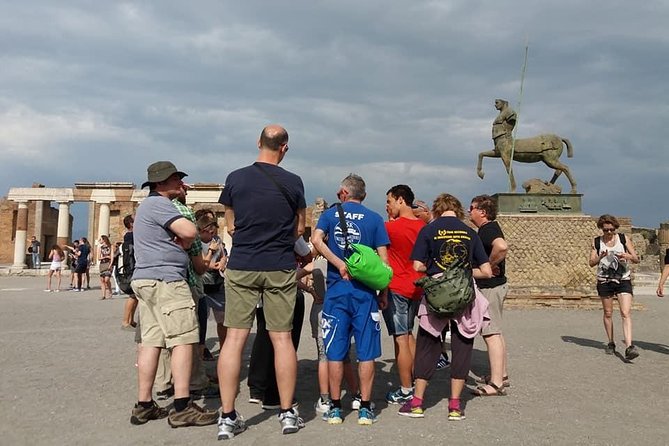
Day 2 includes the Roman Catholic Sanctuary of Pompeii, with a free visit and about 1 hour. This stop changes the tone. Instead of focusing only on ancient houses and temples, you get a living, religious site within the Pompeii area.
This can be a welcome break from the strict “ruins only” format. It also helps you understand that people keep returning to this place for reasons beyond archaeology—depending on your interests, that shift can be satisfying.
If you want more time at the older parts of Pompeii, this day-2 hour can also help you catch up on photos or observations from day 1—though the tour schedule is the tour schedule.
Guide quality is the real product here
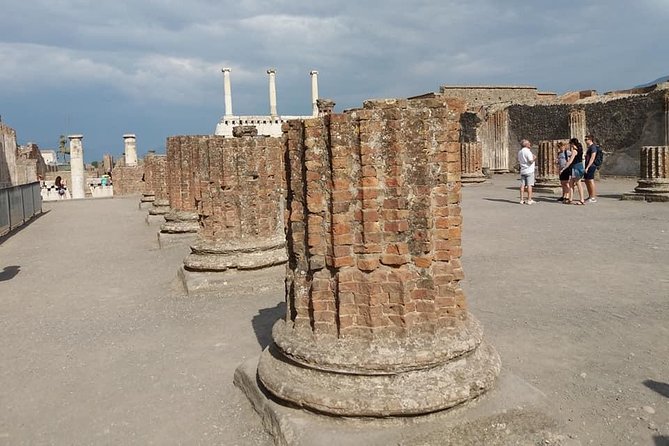
You’re paying for people, not just places. The included entry gate facilitation helps, but the guide is what turns a pile of stones into a coherent day.
One positive experience highlighted a guide named Simone as engaging and thorough, with explanations that made the eruption story feel real while still keeping enthusiasm for art inside the villas. In that same story, a communications issue forced the guide to deliver the full visit in English for a mixed group, but Simone was able to repeat in Italian if questions came up.
So what should you expect? The tour is offered in English, and the brand positioning is Italian & English guide. If you speak Italian, you should still be fine—but I’d assume you might hear English first, with some Italian support depending on the group.
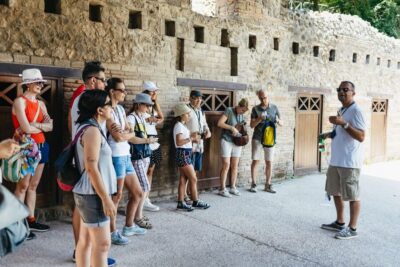
With a maximum group size of 25 travelers, the experience should stay interactive enough for basics: directions, what you’re looking at, and why that stop matters.
How long each stop feels: fast facts, then keep your eyes ready
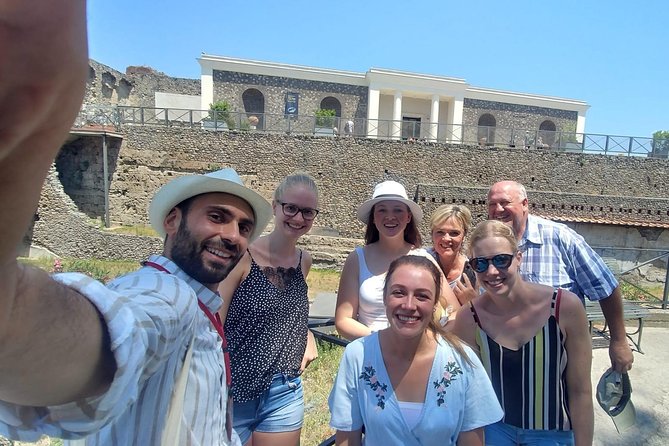
A practical truth about this tour: after the 2-hour park section, most specific highlights are about 10 minutes each. That’s not “bad”—it’s a deliberate format.
Here’s how to make it work for you:
- If there’s a single building you love most, prioritize that one for photos.
- Use the guided stops to understand what you’re seeing, then plan to spend your own time longer if you return later.
- Keep your pace steady. Quick stops reward travelers who are ready to move on time.
If your dream trip is slow and quiet, you might prefer a self-guided visit with a longer pass. But if your goal is to see Pompeii’s biggest names with context and not get lost, this is a strong setup.
What to bring for a two-day Pompeii walking plan
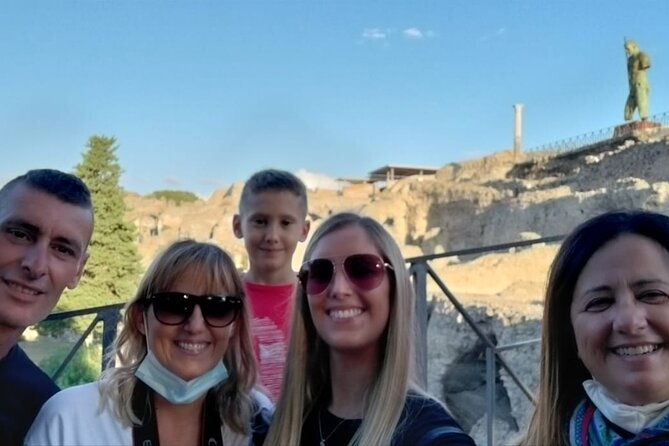
You’ll be outside and walking. The tour requires good weather, which is a polite way of saying you shouldn’t plan this on a day that might rain heavily.
Bring:
- comfortable walking shoes (you’ll likely cover real distance),
- sun protection if it’s warm,
- water,
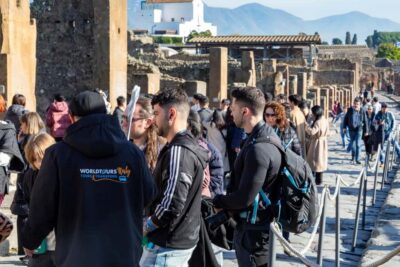
- and a bit of patience for crowds at the entrance and around the most popular structures.
If you’re sensitive to pacing, remember the stops are short. You can still enjoy it—you just want to arrive ready to go.
Who this Pompeii tour suits best
This tour fits best if you:
- want a structured walkthrough of Pompeii’s major highlights,
- like learning why things are famous (mosaics, temple themes, standout fresco scenes),
- appreciate group organization and ticket-office help,
- and don’t need hours inside only one or two buildings.
It’s also a good option if you’re visiting with a mixed language group. The guide experience shows flexibility when circumstances shift, like switching to a full English delivery while still supporting Italian questions.
The one thing to be careful about: meeting and communication
Most parts of this sound organized: clear meeting point, signposting with Sesto Continente Tours, and ticket-office facilitation. Still, one negative incident in the record described the operator not meeting the group and not responding, which left the travelers touring on their own and losing money.
You can’t control everything, but you can reduce risk. I’d do two simple things:
- double-check your confirmation details right before the start,
- and arrive early enough that a late start doesn’t turn into a missed meet-up.
That’s not paranoia—it’s good travel hygiene.
Should you book this Pompeii tour?
Book it if you want a guided, efficient Pompeii overview with strong story context, plus the bonus of a day-2 stop at the Roman Catholic Sanctuary. The format is especially good value when you factor in the ticket-office facilitation and the guided coverage of major sights in one route.
Skip or reconsider if you know you want slow time in fewer buildings, or if you dislike group pacing. Also, if you’re traveling on a tight schedule, plan around the fact that Pompeii entry still depends on weather and timing at the ticket area.
If you’re aiming for: see the classics, understand what you’re looking at, and avoid getting lost—this is a solid choice.
FAQ
How much does the Pompeii walking tour cost?
The tour is priced at $36.12 per person.
Is the Pompeii entrance ticket included?
No. The Pompeii entrance fee is €22.00 per person and is not included with the tour price.
How long is the tour?
The overall experience is listed as 2 days (approx.).
What languages is the tour offered in?
It’s offered in English, and the experience is described as an Italian & English guide.
What’s included in the tour besides the guide?
The tour includes facilitation at the entrance to the Ticket Office.
What is the day 2 activity and is it ticketed?
Day 2 is a free visit to the Roman Catholic Sanctuary of Pompeii, with an included admission status listed as included.
How big are the groups?
This activity has a maximum of 25 travelers.
Where does the tour start and end?
The tour starts at Piazza Porta Marina, 80045 Pompei NA, Italy and ends back at the meeting point.
Is service animal access allowed?
Yes. Service animals are allowed.
Can I cancel and get a full refund?
Yes. You can cancel up to 24 hours in advance for a full refund.
Is good weather required?
Yes. The experience requires good weather. If it’s canceled due to poor weather, you’ll be offered a different date or a full refund.
Is the tour suitable for most people?
It says most travelers can participate.
More Tours in Pompeii


More Tour Reviews in Pompeii

More Pompeii Tours to Compare
More Pompeii tours, freshly reviewed



Pompeii Tours, compared.
 ★ 4.8Pompeii: Entry Ticket and Guided Tour with an ArchaeologistFrom $3519,459 reviews
 ★ 4.1Pompeii: Entry Ticket with Audio GuideFrom $4013,491 reviews
 ★ 4.8Pompeii: Small Group Tour with an ArchaeologistFrom $4012,264 reviews
 ★ 4.3Pompeii Ruins & Mount Vesuvius Day TourFrom $12011,459 reviews
★ 5.0Pompeii Small Group Tour with an ArchaeologistFrom $356,593 reviews
★ 4.3Pompeii Ruins & Mount Vesuvius Day TourFrom $12011,459 reviews
★ 5.0Pompeii Small Group Tour with an ArchaeologistFrom $356,593 reviews
 ★ 4.5Skip-the-line Pompeii – Small Group TourFrom $544,401 reviews
 ★ 4.6Naples or Sorrento: Full-Day Pompeii and Mount Vesuvius TourFrom $1044,235 reviews
 ★ 3.9Pompeii: Skip-the-line Entry Ticket with Audio Guide & MapFrom $433,153 reviews
Browse the lists this tour appears in