
Review · POMPEII TOURS
Pompeii 2h Small-Group Tour with Expert Archaeologist
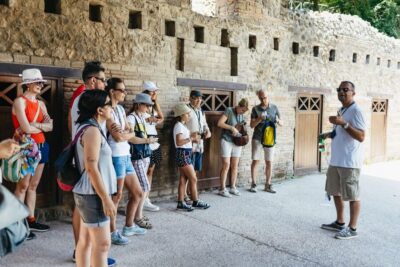
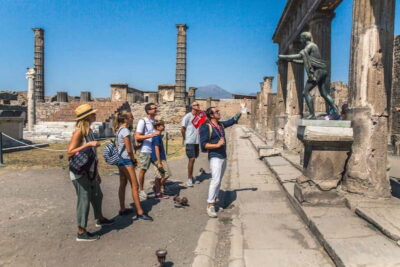
Pompeii is too big to see fast. This 2-hour small-group walk helps you hit the most important ruins with an archaeologist-style guide explaining what you’re actually seeing. I like that it stays family-friendly without turning the sights into a childish checklist, so adults and kids can both follow along.
One possible drawback: the timing is tight. You’ll cover a lot of ground, but you won’t get the kind of slow, detailed reading you might want if you came for only one or two buildings.
Key sights, in a smart route. In about 2 hours, you move from fresco-filled areas to theaters, big homes, baths, the Lupanar, and then back through the main civic spaces like the square and basilica. It’s built for first-timers, people with limited time, and anyone who wants Pompeii to feel understandable instead of just scenic.
In This Review
- Quick hits before you go
- Why two hours in Pompeii can feel like a full day
- Meeting at Ristorante Suisse and getting oriented fast
- Archaeological Park of Pompeii: frescoes and the city’s “before and after”
- Teatro Piccolo and Teatro Grande: two stops that explain social life
- House of Menander and House of the Faun: homes for people who notice details
- Stabian Baths and Lupanar: daily routines and the city’s edge
- Stabian Baths (Terme Stabiane)
- Lupanar (Pompeii’s famous brothel)
- Via dell’Abbondanza, the Foro, and the Basilica: the city’s main spine
- Who this tour suits best (and where it might not)
- Price and value: is $32.67 a good deal?
- Should you book this Pompeii highlight tour?
- FAQ
- How long is the Pompeii tour?
- What does the tour cost?
- Is the tour in English?
- Where do we meet for the tour?
- Is admission included?
- What group size should I expect?
- Is the tour suitable for kids?
- When is Pompeii admission free?
Quick hits before you go
- Admission included at every listed stop, so you’re not juggling tickets mid-walk
- Two theaters in one run (Teatro Piccolo and Teatro Grande) without the usual backtracking
- Big-home highlights like the House of Menander and House of the Faun, chosen for architecture and decoration
- Stabian Baths on the schedule, so you see Pompeii’s daily-life side, not only the famous street scenes
- Street and civic center stops like Via dell’Abbondanza, the Foro, and the Basilica so the city layout clicks
- Max 30 people, keeping the group manageable even when the park is crowded
Which Pompeii ticket and guide? Compare a few more.
- Pompeii Small Group Tour with an Archaeologist★ 5.0 · 6,593 reviews
- Discover the Ancient Ruins of Pompeii: Day Trip from Rome★ 3.5 · 2,247 reviews
- Pompeii and Herculaneum Small Group Tour with an Archaeologist★ 5.0 · 1,350 reviews
- Skip the Line Guided Tour of Pompeii led by an Archaeologist★ 5.0 · 703 reviews
Why two hours in Pompeii can feel like a full day
Pompeii is massive, and it’s easy to wander and still leave feeling like you mostly saw stone. This tour solves that problem by moving you through the sites that best explain how the city worked—social life, entertainment, home life, bathing, and public spaces.
What makes it work in real life is the pacing. Each stop is short (often around 10–15 minutes), which sounds rushed until you realize Pompeii rewards orientation. A good guide points out what matters so you don’t spend your limited time trying to figure out where to look. Many people also love that the walk is designed for families: one guide style I’ve seen praised includes adapting explanations to keep kids engaged, rather than forcing everyone to “be quiet and listen.”
If you want a slow archaeology class, this may not satisfy that craving. Think of it as a focused highlights route that builds the foundation—then you can roam on your own afterward with better context.
Meeting at Ristorante Suisse and getting oriented fast
You meet at Ristorante Suisse, Piazza Esedra 10/13, Pompei (NA), Italy, and the tour ends back at the same spot. That matters more than it sounds. Pompeii ruins aren’t laid out like a museum hallway, so starting and ending at the same point reduces stress, especially if you’re also planning the rest of your day.
Two practical perks help here:
- Mobile ticket delivery means you’re not stuck hunting for paper
- The meeting point is near public transportation, which is helpful if you’re coming from Naples or using local trains/buses
You also want to plan for heat and uneven walking. The tour calls for moderate physical fitness, and Pompeii can be draining. Guides have been praised for slowing down and stopping in shade when conditions get intense, which is exactly the kind of flexibility you appreciate once you’re on-site.
Archaeological Park of Pompeii: frescoes and the city’s “before and after”
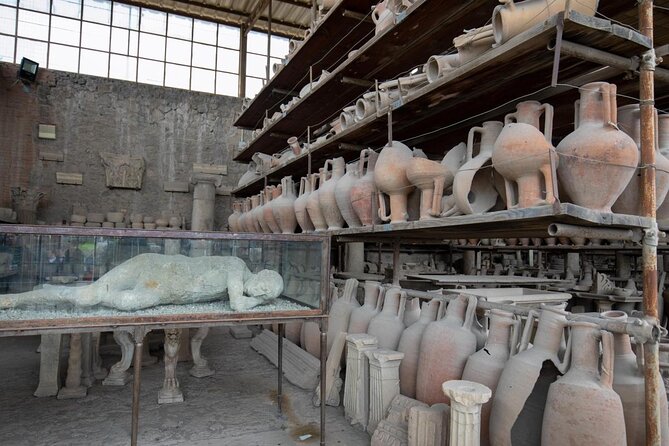
The first stop is the Archaeological Park of Pompeii, including time focused on frescoes. That’s a smart opener because frescoes do a job that stone alone can’t: they suggest personality. They hint at what people decorated their walls with, how rooms were used, and what “normal life” looked like before 79 AD.
In a place like this, your biggest challenge is deciding what’s worth staring at. A guide makes fresco viewing make sense by giving you a frame—so instead of saying, “It’s old,” you start noticing details and the kinds of scenes Pompeians chose to display.
Timing-wise, you get about 10 minutes here. It’s not meant to replace a long museum-style visit. It’s meant to help you leave the first area with a working sense of the city, so the rest of the walk feels connected rather than random.
Teatro Piccolo and Teatro Grande: two stops that explain social life
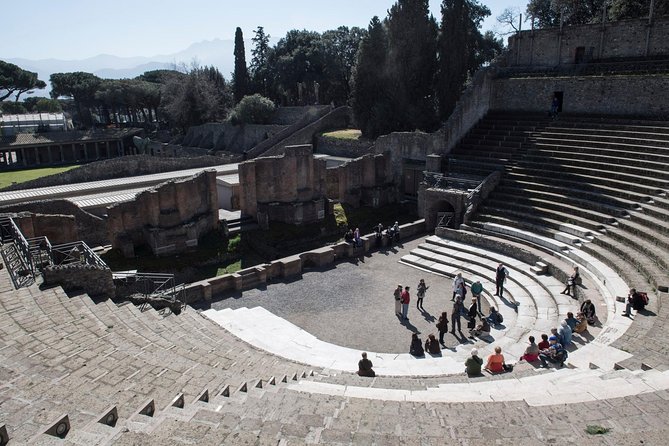
Next you visit Odeon – Teatro Piccolo and then Teatro Grande, the most important theater in Pompeii.
Here’s why this matters: Pompeii wasn’t just homes and street corners. It had organized entertainment and public gatherings, and theaters are where Roman civic life shows up in physical form. Even if you’re not a theater person, these spaces help you understand who gathered, why, and how the city shaped public moments.
The tour keeps it efficient:
- Teatro Piccolo gets about 10 minutes
- Teatro Grande gets about 15 minutes
If you get a guide who’s good at storytelling, this is often where the ruins start feeling real. Some guides you might encounter are praised for pacing that works for mixed ages—like keeping a moderate walking speed so an older parent isn’t stuck dragging behind.
Other Pompeii outings worth a look before you book
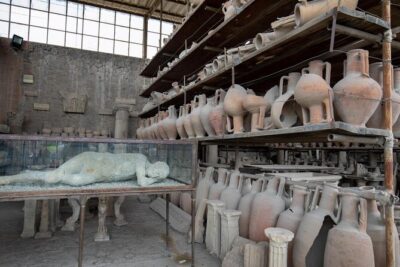
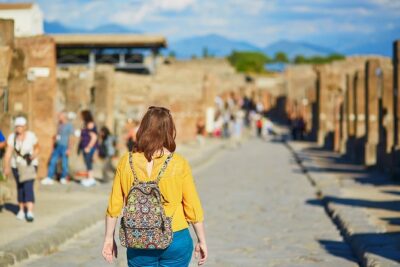
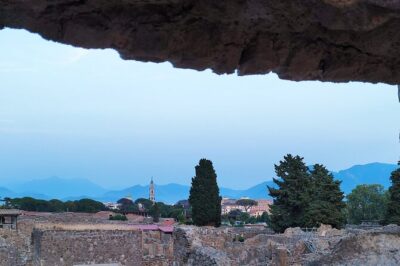
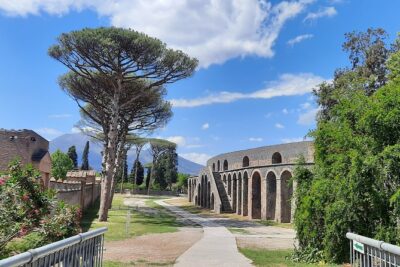
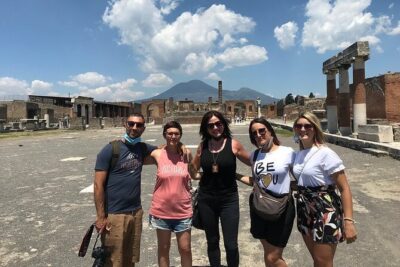
House of Menander and House of the Faun: homes for people who notice details
You’ll then move into private life with two major household stops:
- House of Menander (highlighted for architecture, decoration, and contents)
- House of the Faun (one of the largest and most impressive private residences)
These houses aren’t just “big buildings.” They’re where Pompeii shows its social ladder and taste. A guide’s value here is pointing out what makes each home special, rather than leaving you to guess. If you love design, decoration, and the layout of rooms, you’ll like how this part of the route gives you multiple ways to compare wealth and lifestyle.
Expect short time blocks:
- House of Menander: about 15 minutes
- House of the Faun: about 10 minutes
So yes, you’ll skim. But you’ll skim with a guide’s map in your head, which can make later self-guided exploring much more satisfying.
Stabian Baths and Lupanar: daily routines and the city’s edge
This is where Pompeii stops being polite postcard ruins and starts feeling like an actual city.
Stabian Baths (Terme Stabiane)
You’ll see Stabian Baths, described as the oldest thermal complex in the city. Baths matter because they represent routine. When you walk past a bathing area with a guide, you’re not just looking at walls—you’re learning what “going about your day” may have looked like.
You get about 15 minutes here, which is enough to understand the scale and role of the complex without needing an entire afternoon.
Lupanar (Pompeii’s famous brothel)
Then comes the Lupanar, Pompeii’s most famous brothel. This stop is quick—about 10 minutes—but it’s memorable because it shows a side of Roman life that doesn’t fit the sanitized version of antiquity.
One practical note: some guides use audio headsets in the busier parts. There have been complaints about headset clarity for at least one group, so if you’re sensitive to audio, ask the group leader for a quick check of how you’re hearing it and don’t assume you’re hearing perfectly until you test it.
Via dell’Abbondanza, the Foro, and the Basilica: the city’s main spine
The tour then threads you through the parts of Pompeii that make it feel like a real place you could navigate.
- Via dell’Abbondanza gives you a sense of the city’s street life rhythm.
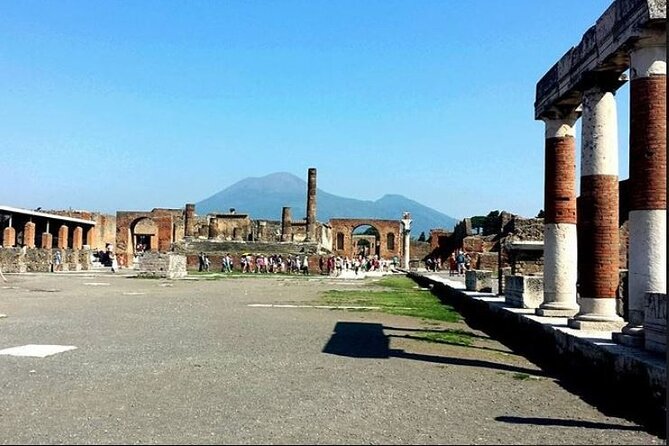
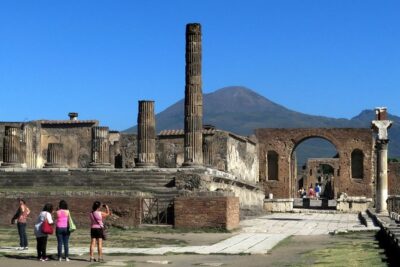
- Foro de Pompeya (the ancient main square) is about public business, gatherings, and the heart of civic space—about 15 minutes.
- Basilica is next, described as an open portico that sheltered merchants and other activities, also about 15 minutes.
If you want Pompeii to “click” as a layout—not just a collection of highlights—this segment is key. By the time you reach the square and basilica, you can start mentally connecting homes, entertainment spaces, and the market/public core.
This is also a good part of the walk for photo breaks, but keep moving. Pompeii’s best experience comes from watching how one area sets up the next.
Who this tour suits best (and where it might not)
This tour is ideal if:
- you want a guided highlights route and don’t want to spend your whole day trying to plan your own path
- you’re visiting with kids and need explanations that keep them interested (guides have been praised for being patient and adapting)
- you’re traveling with mixed ages and want pacing that works for people who need slower movement
You may want to skip—or add extra time—if:
- you’re hoping for a deep archaeology seminar at every stop
- you prefer very detailed, longer viewing of one house or one theater rather than “many sites, quick context”
A small-group format helps, but remember the overall cap is 30 travelers. That’s still plenty of people in a ruin site. If you hate crowds, go for early entry times when possible and plan for brief stops.
Price and value: is $32.67 a good deal?
At $32.67 per person, you’re paying for more than a walk. You’re paying for:
- a route that hits high-impact Pompeii areas in about 2 hours
- an archaeologist-style guide who turns the layout into understandable stories
- admission included for each listed stop, so you’re not paying extra to step inside
That admission-included element is big for value. Pompeii self-guided can be straightforward, but the costs add up fast if you’re buying tickets while trying to coordinate timing. Here, the structure is set up so you focus on the experience rather than the paperwork.
Also, it’s commonly booked around 39 days in advance on average. If you’re traveling in peak season, I’d treat that as a hint to reserve early so you’re not stuck with less convenient slots.
If you want more attention per person, there’s an option to upgrade to a private tour. That’s the best match if your priority is asking lots of questions or you want a more flexible pace through the ruins.
Should you book this Pompeii highlight tour?
I think you should book it if your goal is simple: you want Pompeii to feel understandable in a short visit, without spending hours planning. The guide-led route, admission included, and the mix of theaters, homes, baths, the Lupanar, and civic spaces makes it a smart use of limited time.
Skip it if your ideal Pompeii day is slow, quiet, and deeply focused on only a few structures. In that case, you’ll probably want more time on your own after a short orientation—or choose a longer format.
If you do book, show up ready for heat, wear shoes you can stand in for a while, and don’t be shy about asking your guide to explain what you’re looking at. That’s where the real value shows up—Pompeii becomes a story, not a scavenger hunt.
FAQ
How long is the Pompeii tour?
It runs for about 2 hours.
What does the tour cost?
The price is $32.67 per person.
Is the tour in English?
Yes, the tour is offered in English.
Where do we meet for the tour?
You meet at Ristorante Suisse, Piazza Esedra 10/13, 80045 Pompei NA, Italy.
Is admission included?
Yes. Admission is included for each listed stop.
What group size should I expect?
The tour has a maximum of 30 travelers and requires a minimum of 6 people to run.
Is the tour suitable for kids?
Yes. It’s described as family-friendly, and kids can stay engaged during the visit.
When is Pompeii admission free?
Pompeii’s entrance ticket is free on the first Sunday of each month, and it’s also free for people under 18 (with valid ID or passport shown on the day of the tour).
More Tours in Pompeii



More Tour Reviews in Pompeii

More Pompeii Tours to Compare
More Pompeii tours, freshly reviewed



Pompeii Tours, compared.
 ★ 4.8Pompeii: Entry Ticket and Guided Tour with an ArchaeologistFrom $3519,459 reviews
 ★ 4.1Pompeii: Entry Ticket with Audio GuideFrom $4013,491 reviews
 ★ 4.8Pompeii: Small Group Tour with an ArchaeologistFrom $4012,264 reviews
 ★ 4.3Pompeii Ruins & Mount Vesuvius Day TourFrom $12011,459 reviews
★ 5.0Pompeii Small Group Tour with an ArchaeologistFrom $356,593 reviews
★ 4.3Pompeii Ruins & Mount Vesuvius Day TourFrom $12011,459 reviews
★ 5.0Pompeii Small Group Tour with an ArchaeologistFrom $356,593 reviews
 ★ 4.5Skip-the-line Pompeii – Small Group TourFrom $544,401 reviews
 ★ 4.6Naples or Sorrento: Full-Day Pompeii and Mount Vesuvius TourFrom $1044,235 reviews
 ★ 3.9Pompeii: Skip-the-line Entry Ticket with Audio Guide & MapFrom $433,153 reviews
Browse the lists this tour appears in