
Review · POMPEII TOURS
Best of Pompeii – 2 hour Private Tour with Alex
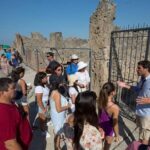
Pompeii can feel close-up and real. This private 2-hour tour with Alex uses skip-the-line tickets and a smart route through the most important and most human parts of the ruins.
I love the way Alex brings the city to life with clear, energetic explanations, even when you bring kids or teens. I also like the crowd-aware pacing, including how the house stop is chosen to keep things moving.
One consideration: in a 2-hour format, the tour is selective, and at least one major sight noted on the route has admission not included (so you may need to plan for that if you want everything).
In This Review
- Key highlights worth your time
- Why a 2-hour private Pompeii tour works so well
- Getting in fast: mobile tickets and skip-the-line value
- Porta Marina start: the eruption context that makes the city click
- The Pompeii Forum route: politics, religion, business, and people
- Body casts: the ruins stop being scenery
- A “Roman day” feel: baths, theatres, and public routines
- Stabian Baths (Terme Stabiane)
- Teatro Grande and the theatre moment
- Casa degli Amorini Dorati: mosaics, frescoes, and Roman taste
- Thermopolium Regio VI: Pompeii fast food, ancient style
- The Roman bakery stop: a quick taste of the daily economy
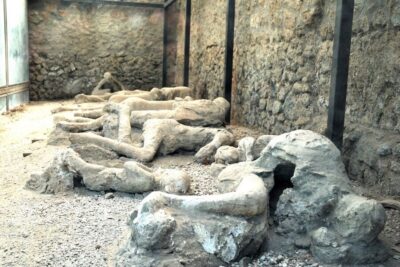
- Orto dei Fuggiaschi: plaster casts of the final moments
- Crowd-smart planning: why the house stop feels better
- Price and value: what $95.54 per person buys you
- Who should book this tour, and who might want something longer
- Should you book Best of Pompeii with Alex?
- FAQ
- Is this a private tour?
- How long is the tour?
- What’s the meeting point for the tour?
- Does the tour include skip-the-line access?
- Are tickets included for the sites visited?
- Is the tour family-friendly?
- What’s the physical requirement?
- What’s the weather situation?
- Are service animals allowed?
- What’s the cancellation policy?
Key highlights worth your time
- Private pace with skip-the-line: a 2-hour plan designed to avoid the slow crush at Pompeii’s busiest spots
- Alex adapts on the fly: you can expect patience for families and flexibility for questions and comfort levels
- Starts at Porta Marina: you get eruption context before you walk the Forum area
- A mix of Pompeii’s “public + private” life: baths, theatres, homes, shops, and the fast-food stop
- Plaster casts that hit hardest: the human moment shows up at the body casts and the Orto dei Fuggiaschi
Which Pompeii ticket and guide? Compare a few more.
- Pompeii Small Group Tour with an Archaeologist★ 5.0 · 6,593 reviews
- Discover the Ancient Ruins of Pompeii: Day Trip from Rome★ 3.5 · 2,247 reviews
- Pompeii and Herculaneum Small Group Tour with an Archaeologist★ 5.0 · 1,350 reviews
- Skip the Line Guided Tour of Pompeii led by an Archaeologist★ 5.0 · 703 reviews
Why a 2-hour private Pompeii tour works so well
Pompeii is massive in your mind, but in real life it’s easy to waste time. Big group tours can turn into a sprint: follow the flag, glance at stones, move on. A private setup keeps the pace usable, so you actually notice what you’re standing in front of.
This tour is built for focus. In about two hours, you hit the Forum, Roman bathing, standout homes with frescoes and mosaics, plus the plaster casts that show what the eruption meant for real people. You also get the kind of guidance that turns a pile of ruins into a city you can understand.
If you’re the kind of traveler who likes specifics—how daily life worked, what buildings were for, how Romans ate, bathed, and gathered—this format fits perfectly. And if you’re traveling with younger people, the private style helps a lot.
Getting in fast: mobile tickets and skip-the-line value
The biggest practical win is the skip-the-line part. Pompeii’s lines can eat up a day faster than you think, especially when you’re trying to see more than one place. Here, you’re not starting your visit stuck waiting.
You’ll also get a mobile ticket, which is handy because you’re juggling maps, weather, and walking routes. The less you have to fuss with paperwork, the more you can focus on the ruins.
A small heads-up from the itinerary itself: some stops list admission ticket included, some are not included, and one small stop is free. That means you should be ready for the fact that not every single moment is bundled into the main price. Still, most of the big “must-see” items are included in the tour stops.
Porta Marina start: the eruption context that makes the city click
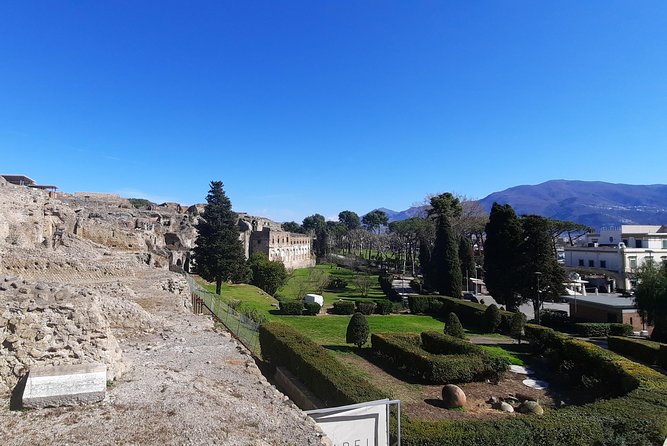
The tour begins at Porta Marina, the sea gate. Starting here matters. When you begin with the city’s geography and the eruption’s dynamics, the rest of Pompeii stops feeling random. You’re not just wandering—you’re building a map in your head.
Expect an intro that sets the historical background, then you walk into the core civic area. From there, you’ll move through major building types: political and religious space in the Forum, daily-life rooms in homes, and public social spots like baths and theatres.
This is also where Alex’s approach shows up in a useful way. If you’re the type who asks questions—how people lived, what things were called, why certain layouts exist—you’re more likely to get straight answers rather than a hurried lecture. The tour time is limited, so the conversation needs to be efficient, and the best guides keep it grounded.
The Pompeii Forum route: politics, religion, business, and people
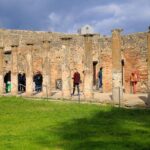
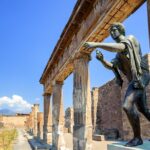
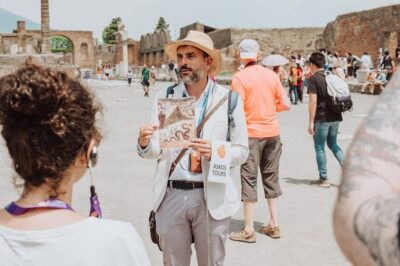
The tour’s early anchor is the Forum—Pompeii’s main square and the center of political, economical, religious, and social life. In plain terms, it’s where the city worked. You’ll see key public structures around the forum area and get context for what they were doing for daily life.
This part is also built for understanding, not just sightseeing. The Forum doesn’t mean much until you grasp what the Romans used it for—meetings, ceremonies, commerce, and community pressure all in one place.
You’ll also include the sites around it that help you read the city:
- Shops and workshops, so you can picture Pompeii as a place of transactions and trades, not only sightseeing ruins
- The water system, which is a big deal when you think about Roman engineering and how the city stayed functional
Time here is tight—around the first major block of the tour—but it’s the right kind of tight. You’re hitting the “what this city was” layer before the “look at this building” layer.
Rather go private? More options in Pompeii



Body casts: the ruins stop being scenery
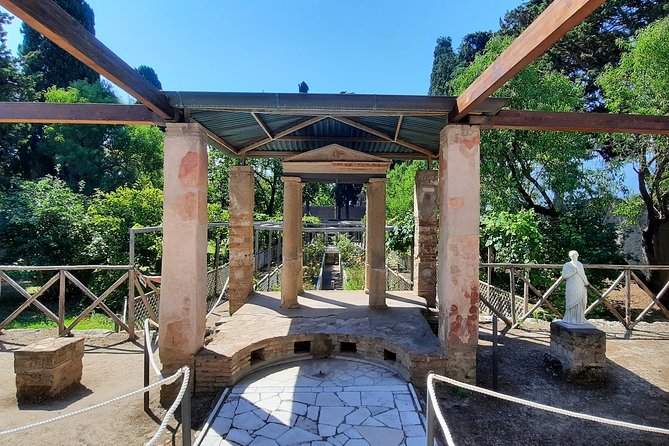
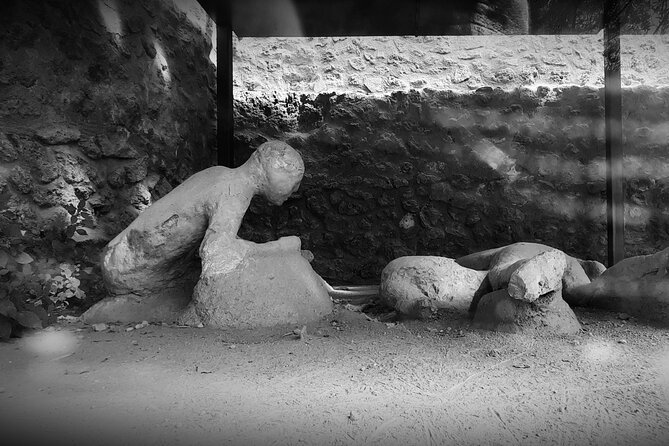
One of the tour’s emotional anchors is the body casts, preserved in their last seconds. This is the stop that turns your brain from history mode into human reality mode.
You’ll also find plaster casts again later at Orto dei Fuggiaschi, but the early cast work helps you calibrate. Once you understand what these casts represent, the rest of Pompeii feels heavier. You start noticing how public spaces and domestic spaces coexisted—how the city’s normal rhythm ended abruptly.
This is also where good pacing matters. You want enough time to process what you’re seeing without feeling rushed. In a two-hour private tour, you’re less likely to get shoved through. If you’re traveling with kids, this is often the part where the guide’s tone and patience matter most, since questions can come fast.
A “Roman day” feel: baths, theatres, and public routines
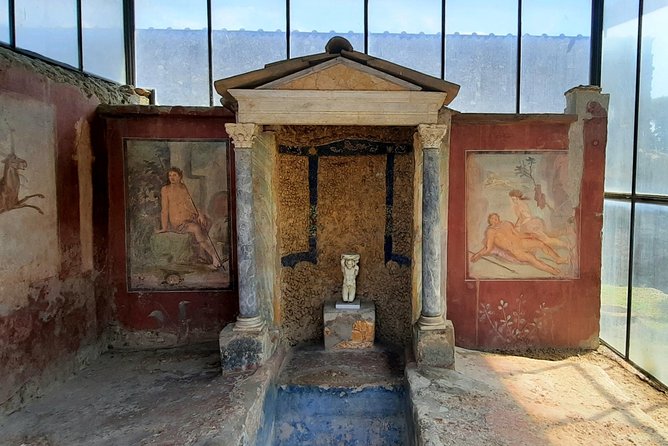
Pompeii’s public spaces are where the city feels most like a living place. This route includes multiple bathing and performance elements, which is smart, because Romans weren’t stuck indoors.
Stabian Baths (Terme Stabiane)
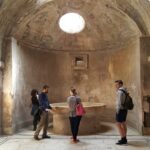
You’ll spend about 10 minutes at the Stabian Baths, with admission ticket included for this stop. Baths weren’t only about cleanliness. They were social hubs—people gathered, chatted, and made time feel slower.
Even if you don’t know all the technical terms, Alex’s explanations make the building readable. You’ll connect what you see to routine: rooms for different temperatures, the logic of movement through space, and why a bath complex mattered for daily status and comfort.
Teatro Grande and the theatre moment
The tour also includes Teatro Grande, again with admission ticket included for this stop. Even in ruins, theatres show how Romans organized entertainment and crowds.
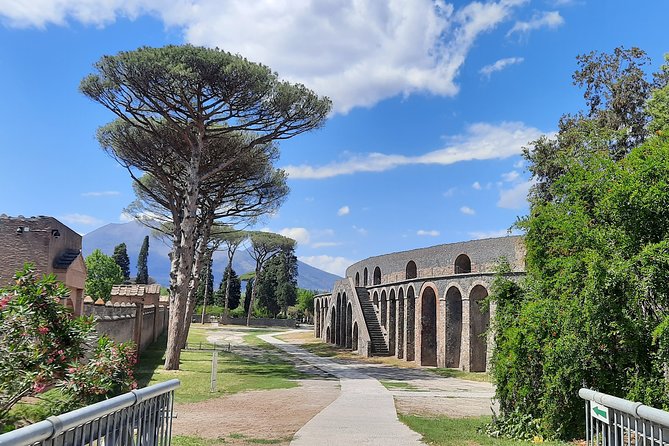
There’s also a theatre note earlier on the park route that says admission ticket not included. Translation: you may be able to see more than one theatre area, but you might need extra planning depending on what you want to include.
For most people, the real value is understanding why theatres were central to public life, not chasing every single corner.
Casa degli Amorini Dorati: mosaics, frescoes, and Roman taste
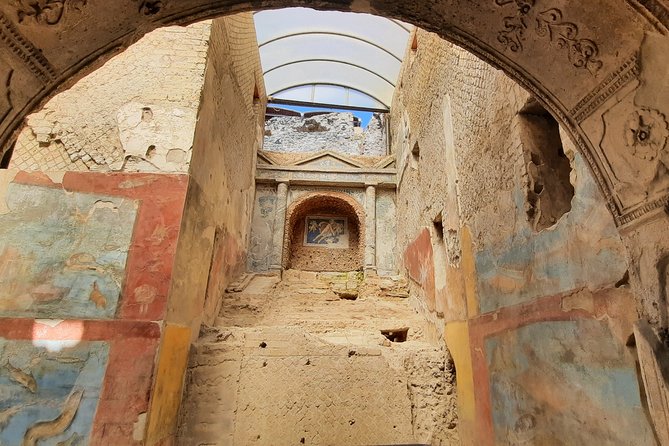
If you want Pompeii’s private side, this tour doesn’t just mention it—it shows it.
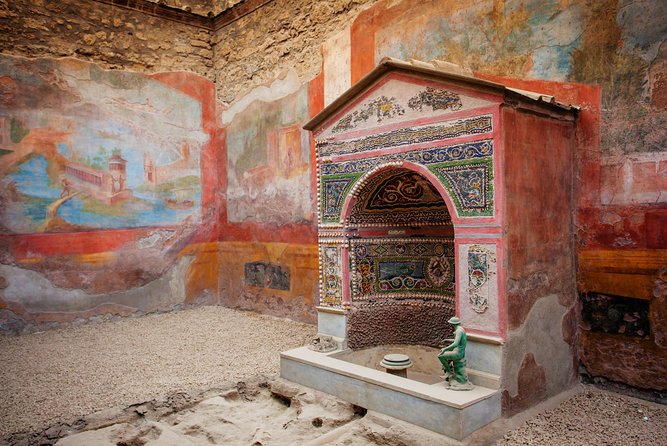
At Casa degli Amorini Dorati, you get a sumptuos Roman house experience focused on frescoes and mosaics, with about 20 minutes and admission ticket included. This is where you start noticing how wealth expressed itself. The decoration isn’t random; it’s messaging: identity, education, taste, and leisure.
You’ll also hit a famous mosaic moment: Cave Canem, meaning beware of the dog. It’s one of those details you can’t unsee once you spot it. It’s playful and also practical, a reminder that even homes had boundaries and routines—like the idea that not everything important is outdoors.
This stop is especially good for photography, too, but more importantly, it’s good for learning. You get to compare “public Pompeii” (Forum and baths) with “private Pompeii” (house decoration and entryway symbolism).
Thermopolium Regio VI: Pompeii fast food, ancient style
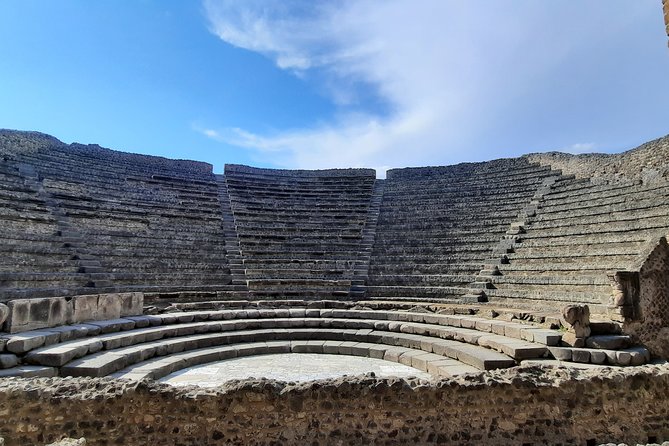
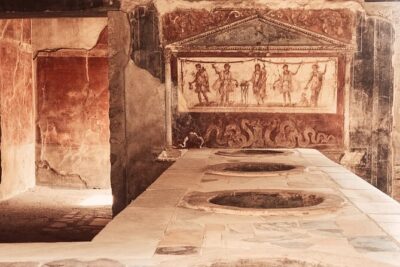
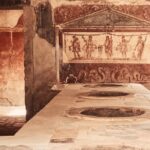
One short but fun stop is the Thermopolium Regio VI, Insula VIII, 8. This is Pompeii’s version of a quick meal place, and it’s included with admission ticket for this stop.
It’s also a great reality check. When you only see big monuments, you can forget that people ate on ordinary days. Thermopolia help you picture the everyday flow of a neighborhood: someone grabs something warm or ready-made, moves on, and continues their day.
The stop time is about 5 minutes, so you’re not trying to memorize every detail. The point is to connect the dots: baths and theatres suggest leisure and public life, while the thermopolium shows you the constant engine of daily needs.
The Roman bakery stop: a quick taste of the daily economy
You’ll also get a brief stop at an ancient Roman bakery (about 5 minutes), listed as free admission. This is a nice add-on because it keeps the “economy of the city” theme going.
Bread and baking are small words for big life. When you picture the bakery alongside the thermopolium, the city feels less like a museum and more like a place with supply chains, workers, and hungry routines.
This stop is short, so don’t expect a deep architectural walkthrough. Think of it as an anchor that rounds out the story.
Orto dei Fuggiaschi: plaster casts of the final moments
The tour ends with Orto dei Fuggiaschi, about 10 minutes with admission ticket included. This area is known for plaster casts that show the victims of the eruption.
This is different from the early body cast moment because it’s tied to the place and timing of the final events. You’re not just learning the idea—you’re seeing how Pompeii’s people were caught in a specific stretch of time and space.
If you want the most powerful emotional payoff from a short tour, this is it. It also helps you understand why Pompeii is studied so intensely: these aren’t only buildings. They’re preserved stories.
Crowd-smart planning: why the house stop feels better
One of the most practical notes in the itinerary is that the house stop is chosen based on crowds, opening rotation, or your specific request. That’s a big deal.
Pompeii can be a zoo at peak times, and if you’re stuck in a line to enter one house, you lose the ability to enjoy what’s inside. Alex’s approach is to pick the best option in the moment so your time stays productive.
This is also why the tour often lands well with families. If a group gets bored or restless, you need the itinerary to stay smooth. A guide who can steer around crowds and still explain what you’re seeing makes the tour feel less like a checklist.
Price and value: what $95.54 per person buys you
At $95.54 per person for roughly 2 hours, the price sounds steep if you compare it to wandering on your own. But private tours in Pompeii cost what they cost because they solve real problems: lines, confusion, and lost context.
Here’s why it can be good value:
- You get skip-the-line entry benefits
- Admission tickets are included for key stops like Stabian Baths, Casa degli Amorini Dorati, Cave Canem mosaic, Thermopolium, Teatro Grande, and Orto dei Fuggiaschi
- You’re not buying time you don’t need. The route is dense and focused
What you might question is how many “extra” paid areas you want. The theatre note says admission not included for one theatre area in the park portion. So, if you’re the type who wants every single viewpoint regardless of cost, you may spend a bit more on top.
Still, if your goal is learning the main story in a short window, this price can make sense. It’s paying for interpretation and efficient access, not for empty time.
Who should book this tour, and who might want something longer
This tour is a great match if you:
- Want a focused Pompeii overview in about two hours
- Like question-friendly guiding and want explanations, not just pointing
- Are bringing kids or teens and need engagement
- Prefer a plan that avoids the worst crowd pressure
You might consider a longer or different format if you:
- Want to explore lots of extra neighborhoods and side streets on your own
- Are hoping for a fully unhurried pass through every single major ruin
- Have a strong interest in a specific theatre area beyond what’s clearly included
For moderate physical fitness, this route should work as long as you pace yourself. Pompeii has uneven ground, and even “short” visits require walking.
Should you book Best of Pompeii with Alex?
I think it’s a solid booking when your priority is quality time with smart context. The tour is built around the city’s essentials: the Forum, Roman baths, standout houses with mosaics, the everyday food stops, and the plaster casts that make the tragedy unforgettable.
If you’re worried about getting overwhelmed by Pompeii, this private setup helps you stay oriented fast. If you’re traveling with family, Alex’s style is clearly a selling point: engaged kids and patient answers are not an afterthought here.
Book it if you want a tight, meaningful route and you value skip-the-line access plus ticketed highlights. If you want to wander for hours with zero structure, then save your money and do Pompeii independently.
FAQ
Is this a private tour?
Yes. It’s a private tour/activity, and only your group participates.
How long is the tour?
It runs about 2 hours.
What’s the meeting point for the tour?
You meet at Hortus Pompei, Restaurant & Garden Bar, Via Villa dei Misteri – Piazza Porta Marina Superiore 1 (80045 Pompei NA, Italy).
Does the tour include skip-the-line access?
Yes. Skip-the-line tickets are included.
Are tickets included for the sites visited?
Many stops include admission tickets, including Stabian Baths, Casa degli Amorini Dorati, Cave Canem, Thermopolium Regio VI, Teatro Grande, and Orto dei Fuggiaschi. The theatre noted on the park portion says admission ticket not included.
Is the tour family-friendly?
The information provided indicates the tour works well with children and teens, and Alex is described as patient and engaged.
What’s the physical requirement?
Travelers should have a moderate physical fitness level.
What’s the weather situation?
The experience requires good weather. If it’s canceled due to poor weather, you’ll be offered a different date or a full refund.
Are service animals allowed?
Yes, service animals are allowed.
What’s the cancellation policy?
Free cancellation is offered. You can cancel up to 24 hours in advance for a full refund.
More Tours in Pompeii


More Tour Reviews in Pompeii

More Pompeii Tours to Compare
More Pompeii tours, freshly reviewed


Pompeii Tours, compared.
 ★ 4.8Pompeii: Entry Ticket and Guided Tour with an ArchaeologistFrom $3519,459 reviews
 ★ 4.1Pompeii: Entry Ticket with Audio GuideFrom $4013,491 reviews
 ★ 4.8Pompeii: Small Group Tour with an ArchaeologistFrom $4012,264 reviews
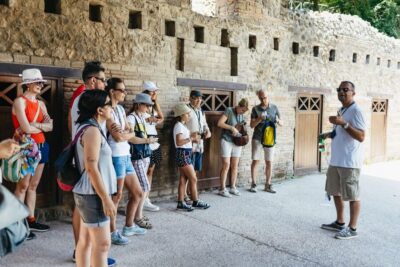 ★ 4.3Pompeii Ruins & Mount Vesuvius Day TourFrom $12011,459 reviews
★ 5.0Pompeii Small Group Tour with an ArchaeologistFrom $356,593 reviews
★ 4.3Pompeii Ruins & Mount Vesuvius Day TourFrom $12011,459 reviews
★ 5.0Pompeii Small Group Tour with an ArchaeologistFrom $356,593 reviews
 ★ 4.5Skip-the-line Pompeii – Small Group TourFrom $544,401 reviews
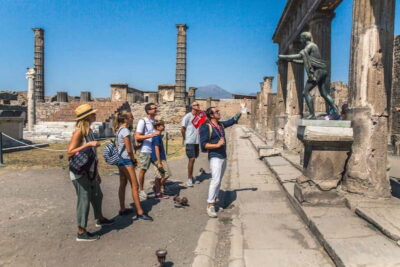 ★ 4.6Naples or Sorrento: Full-Day Pompeii and Mount Vesuvius TourFrom $1044,235 reviews
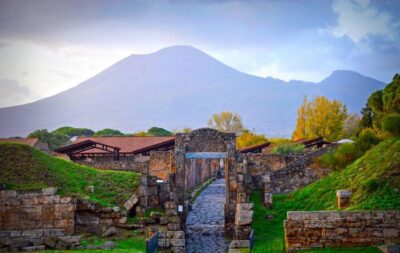 ★ 3.9Pompeii: Skip-the-line Entry Ticket with Audio Guide & MapFrom $433,153 reviews
Browse the lists this tour appears in