
Review · HERCULANEUM TOURS
Herculaneum small group tour with an archaeologist – skip the line
Roman life, frozen by ash.
This skip-the-line visit to Herculaneum is guided by an archaeologist, so you don’t just look at ruins—you get the story behind them. I like the focus on what people faced when the eruption came, and I also like the small-group pace, capped at 20, which gives you room to ask real questions.
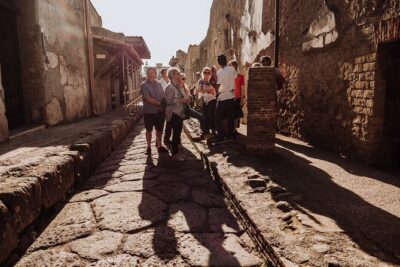
You’ll spend about 2 hours walking through key houses and public buildings, with a guided explanation of how this one-time Roman resort town worked day to day. The most memorable part for me is how much attention the guide puts on preserved details—think carbonized wood, door frames, and everyday architecture that still feels tangible.
One practical catch: Herculaneum is popular, and getting to the exact tour start can be confusing if your ticket details don’t match the signage. Add sun and heat into the mix and you’ll want a cap and some shade breaks baked into your mindset.
In This Review
- Key things that make this tour worth it
- Herculaneum’s ash story: why the ruins feel personal
- Skip-the-line entry: how the “small group + archaeologist” works in practice
- Casa dei Cervi: stags, marble, and the peristyle vibe
- La Terrazza di M. Nonio Balbo + the Augustales: power, patronage, and worship
- Elite houses and preserved household tech: Telefo, wood partitions, private baths
- Central Thermae: men and women baths in the same complex
- Luxury in plain sight: Black Hall, Sannitica, Bel Cortile, and the Grand Portal
- Price and fit: is $57.26 a smart deal?
- Should you book this skip-the-line archaeologist tour?
- FAQ
- How long is the Herculaneum small group tour?
- Is skip-the-line admission included?
- How big is the group?
- Where does the tour start and end?
- What ticket format do I receive?
- What is the cancellation policy?
Key things that make this tour worth it
- Skip-the-line admission means you spend your time inside the archaeology, not waiting at the ticket counters
- Archaeologist-led guidance gives context for what you’re seeing, including the human choices during the disaster
- Small group size (max 20) makes it easier to ask questions and hear answers clearly
- House + bath + cult sites in one route shows how elites, workers, and worshippers lived
- Preserved materials (including carbonized remnants) turn the visit from pretty photos into real evidence
Herculaneum keeps a few more tours worth your time
- Herculaneum: Skip-the-Line Guided Tour with Archaeologist★ 4.8 · 3,439 reviews
- Herculaneum Small Group Tour and Ticket With an Archaeologist★ 5.0 · 994 reviews
- Herculaneum: Skip-the-Line Entry Ticket with Audio Guide★ 4.3 · 870 reviews
- From Naples: Pompeii & Herculaneum with Archaeologist Guide★ 4.8 · 665 reviews
Herculaneum’s ash story: why the ruins feel personal
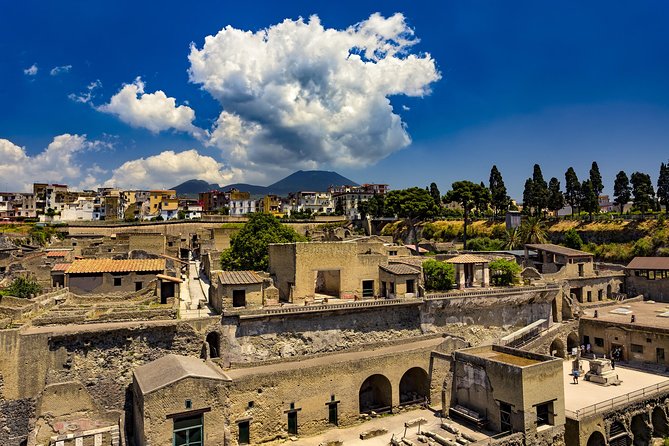
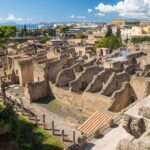
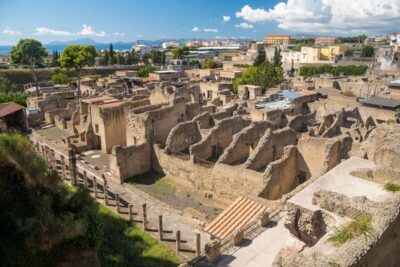
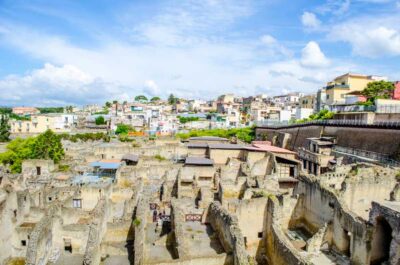
Herculaneum hits differently from other Roman sites because volcanic ash didn’t just bury structures—it preserved them in a way that lets you imagine daily life with fewer leaps of faith. Your archaeologist will set the stage with the bigger eruption story and, more importantly, the human problem: did people try to flee or try to stand their ground?
That question matters, because it changes how you read the buildings. Instead of treating this like a museum slideshow, you start noticing what people likely used and valued—private entrances, bath routines, social spaces, and the kinds of public honors carved into stone. It’s a place where the architecture itself carries the narrative weight.
And you’ll see that narrative play out quickly. In roughly two hours, you’ll cover a tight circuit of villas and civic buildings, so you’re not left with the feeling that you only skimmed the highlights. The pacing is quick, but it’s structured, so the facts don’t feel random.
One more thing to know: the site can feel more like an archaeology walk than a traditional stop-and-stare attraction. If you love asking questions and getting your bearings fast, the guided format is a big help. If you want long, slow browsing, you may still find yourself wishing for more time at a couple of houses—especially if you’re the type who zooms in on every doorway and wall fragment.
Skip-the-line entry: how the “small group + archaeologist” works in practice
At $57.26 per person for a guided visit of about 2 hours, the value is mostly in two things: you get skip-the-line admission and you get a licensed archaeologist guide. When you add both together, the price starts to make sense, because your time is protected. You don’t lose your best energy window to ticket lines.
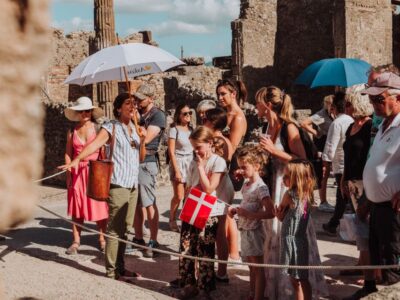
The small-group cap of 20 matters more than it sounds. With larger tours, the guide talks at you while you listen in snippets. Here, you’re close enough to ask follow-ups—like why certain spaces were designed the way they were, or what a particular inscription might tell you about status and power in town.
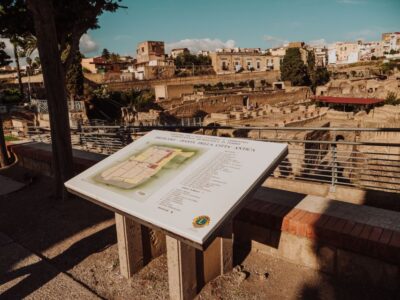
Also, the format is built for comprehension. Your guide moves through a sequence of places—houses, baths, and social/religious spaces—so you get a basic map of how Herculaneum functioned. That helps if you’re not a deep Rome scholar. You’ll still leave knowing what you saw and why it mattered.
One practical tip from the vibe on the ground: plan to dress for sun. The guide tells stories about preserved materials, including carbonized remnants, but you’ll be outside for a large chunk of the route. Bring a cap, sunglasses, and water. During hot hours, the sun can feel like it’s working against your curiosity.
Casa dei Cervi: stags, marble, and the peristyle vibe
Your first stop is Casa dei Cervi, named for marble statues of stags (deer) found in the peristyle area. This is a great opener because it shows you how Herculaneum’s homes could be both practical and theatrical. You’re not just walking through rooms—you’re seeing how a household used art and layout to signal taste and rank.
In a peristyle house, the courtyard/perimeter space is the social center. That’s where light hits, where people would gather, and where decorative choices stand out. When your guide connects the deer statues to the bigger idea of household identity, the house stops being a shell. It becomes a stage.
A quick reality check: you’ll only spend about 10 minutes here. That’s enough for the “wow” factor and the key facts, but it doesn’t allow for wandering your own path. If you’re the type who wants to linger with your camera, keep your expectations modest. The tour is designed to be broad and coherent, not perfectly slow.
Still, this first house sets the tone. By the time you reach the next stops, you’re already trained to look for the small signals—how entrances are shaped, how open spaces work, and how decorative choices show who lived there and how they wanted to be seen.
La Terrazza di M. Nonio Balbo + the Augustales: power, patronage, and worship
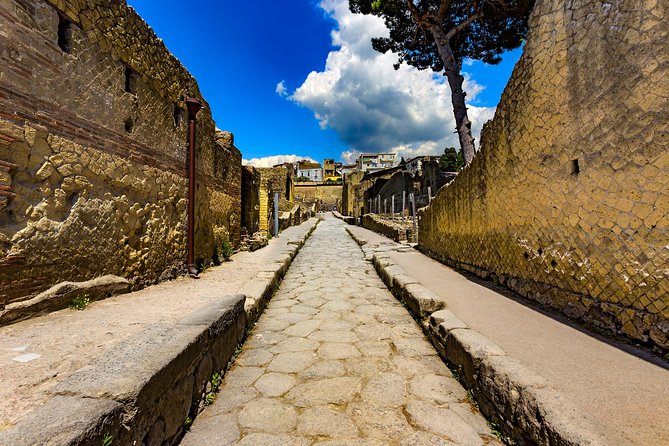
Next up is La Terrazza di M. Nonio Balbo. Nonius Balbus was a major benefactor, and your guide connects the physical setting to the social system that made public projects possible. On his death, he was honored as patron, and there’s a long inscription on a funeral altar tied to those honors.
This stop is valuable because it’s not just “pretty stones.” It helps you understand how Roman society turned individual wealth into public architecture—and then turned that architecture back into fame. Once you grasp that loop, the town reads differently. You start seeing the city as a network of relationships, not just buildings.
Then you move to the College of the Augustales. This building is thought to have been a center tied to the cult of Emperor Augustus, and it may have served as the headquarters of the Collegium Augustalium, or possibly even the local curia. Translation: it’s a reminder that religion and politics didn’t sit in separate boxes.
One reason I like this portion of the route is timing. By now, you’ve seen household display at Casa dei Cervi, and now you see how civic and sacred authority were organized. The tour gives you a clear ladder—from private life to public devotion.
Again, your time per stop is about 10 minutes, so listen closely early. If you let your mind drift, you’ll miss the strongest interpretation moments: the story behind the benefactor and what the Augustales connection implies about status and loyalty.
More skip-the-line entries around Naples

Elite houses and preserved household tech: Telefo, wood partitions, private baths
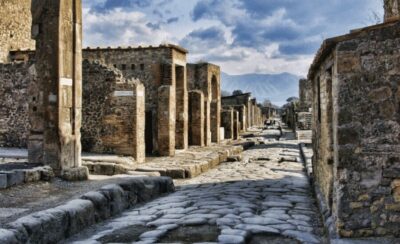
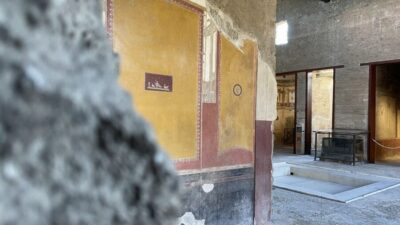
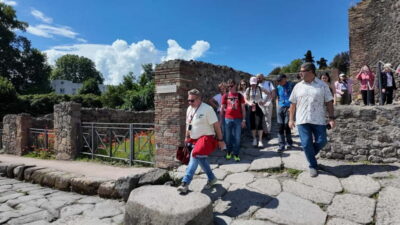
When you reach Casa del Rilievo di Telefo, you’re likely looking at a house tied to a leading benefactor, with private access to the adjoining Suburban Thermae to the south. That private access detail is a big deal. It shows how comfort and control could be built into the layout—especially for people who could afford separation and convenience.
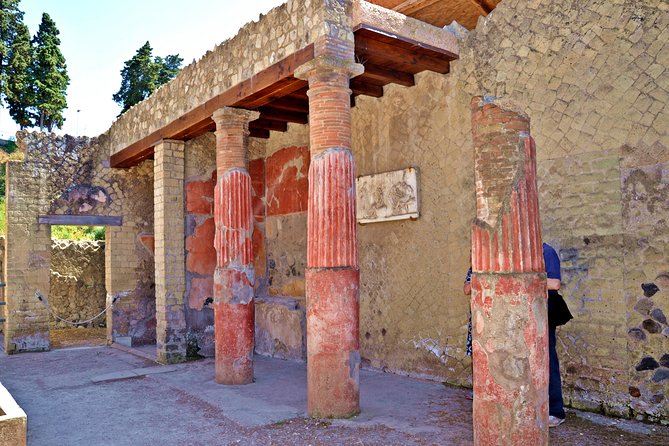
Then comes Partem Domus lignea – Casa del Tramezzo di Legno, centered on an elegant wooden partition that remained. This is the kind of detail that makes Herculaneum feel almost eerie in the best way. Your guide uses these preserved elements to show how the home organized movement and space, and how wood—something that usually disappears—survived in this environment.
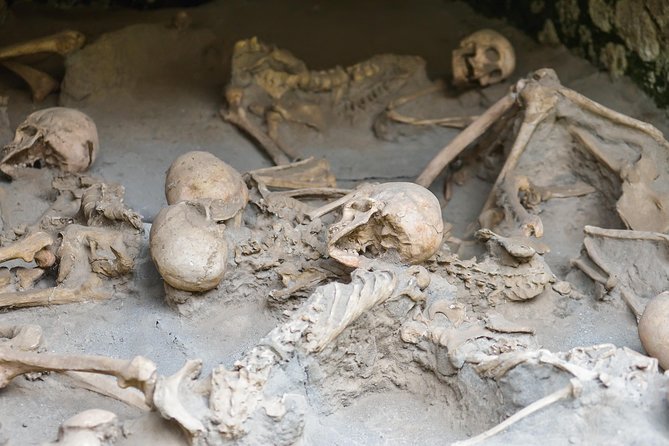
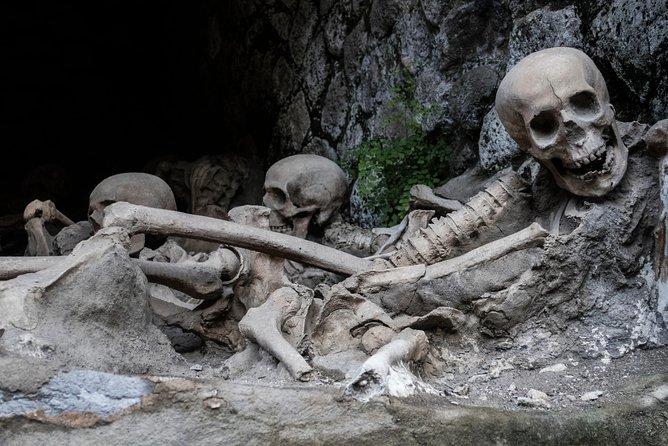
After that, you’ll stand at the House of the Skeleton. The naming comes from the discovery of human remains in a second-floor room back in 1831. This is a heavy stop, and it’s also one where your archaeologist’s framing matters. You’ll get context without it turning into a tragedy tour. Instead, it becomes part of the eruption story and what preservation can (and can’t) tell us about moments we can’t fully reconstruct.
These combined stops—private thermae access, surviving wood architecture, and the remains—connect three themes: daily comfort, design choices, and human vulnerability. It’s not just ruins. It’s evidence.
Central Thermae: men and women baths in the same complex
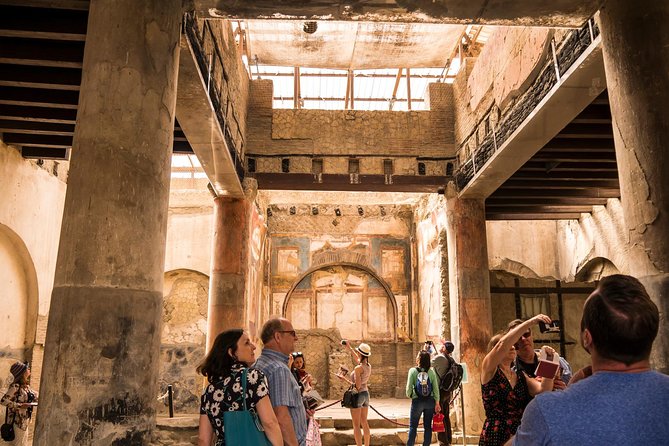
Now you’ll hit Central Thermae, built around the start of the 1st century AD. One of the standout interpretive points here is how the baths were split into men’s and women’s spaces, each with its own separate entrances. That detail makes the site more than a Roman spa postcard.
Your guide will help you see the logic of the plan: different entrances, different flow, and a designed separation that reflects social norms. If you’ve only experienced modern bath culture as one shared setup, this feels like a real cultural window.
You’ll spend about 15 minutes here, which is enough for the essentials: the time period, the layout concept, and why it matters that separation was built into the architecture from the start.
I also like this stop because it balances the emotional weight of the skeleton house. After the human story, you return to a structure that shows routines—how people washed, relaxed, and participated in everyday city life.
Luxury in plain sight: Black Hall, Sannitica, Bel Cortile, and the Grand Portal
The last stretch leans toward more impressive houses, and your guide uses them to show different styles of wealth and design.
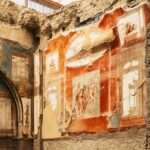
First is Casa del Salone Nero (House of the Black Hall), one of Herculaneum’s more luxurious mansions. The house has a monumental entrance, and your guide points out carbonized remains of the doorposts and lintel. That’s the kind of detail you can’t fake with imagination. The architecture looks scorched, yet it’s still readable, and it makes the story feel close to the moment of catastrophe.
Then comes Casa Sannitica. This house has an arrangement considered typical of the Samnites, with an atrium plus a gallery with Ionic columns and rooms decorated with frescoes. The guide’s explanations help you understand that Herculaneum wasn’t a single uniform culture. It absorbed influences and reflected wider regional identities.
Next is Casa del Bel Cortile, notable for being original in layout: it features a courtyard with a stairway and a stone balcony instead of a traditional atrium. This stop is great if you like architecture that breaks the usual pattern. Your brain expects one house type and then the courtyard style forces you to notice how flexible Roman domestic design could be.
Finally, you’ll close at the House of the Grand Portal, in the central archaeological area, with multiple environments and places where frescos appear, plus charred remains of wooden parts. This is a fitting last stop because it gives you a big “wrap your head around it” view of scale and variety.
Time per stop is about 10 to 15 minutes, so keep your attention sharp. If you want the most from these luxury homes, focus on entrance layout, open space, and anything your guide flags as preserved material.
Price and fit: is $57.26 a smart deal?
For $57.26, you’re paying for two hours of archaeologist-led interpretation plus skip-the-line admission fees. That’s not just convenience. It’s also a practical time-saver. At Herculaneum, the waiting game can cut into the moments when your guide’s explanations are freshest and you’re best able to process what you’re seeing.
Also, the average booking window is about 42 days in advance. That’s usually a sign this tour slots up regularly. If you’re traveling in peak season or you have a tight plan, booking ahead is a smart move.
Who this tour fits best:
- You want an organized 2-hour route that teaches you what you’re looking at
- You like small groups and having time for questions
- You’re curious about the preserved details—wood, door frames, and the evidence of daily life
Who might want to adjust expectations:
- If you prefer free-roaming at your own pace for longer stretches, this will feel quick.
- If you expect a huge indoor museum experience, you may find the interpretive material on-site doesn’t feel like a big museum day. (A short guided route does give context, but it can’t replace hours of independent wandering.)
Should you book this skip-the-line archaeologist tour?
I’d book it if you want Herculaneum to make sense quickly. The skip-the-line part is a real win, and the archaeologist framing turns the site into more than a photo stop.
I’d be cautious if you hate tight timing or you’re arriving late with no buffer. The route is structured, the time per stop is short, and the sun can be intense. Arrive a bit early, double-check the meeting point at Archaeological Park of Herculaneum, Corso Resina, 187, 80056 Ercolano NA, and bring that cap. Small preparation pays off here.
If you’re short on time in Naples and want a strong, coherent Herculaneum experience, this is one of the cleaner ways to do it.
FAQ
How long is the Herculaneum small group tour?
The tour lasts about 2 hours.
Is skip-the-line admission included?
Yes. Skip-the-line admission fees are included with the tour.
How big is the group?
The tour is capped at a maximum of 20 travelers.
Where does the tour start and end?
It starts and ends at the Archaeological Park of Herculaneum (Corso Resina, 187, 80056 Ercolano NA, Italy).
What ticket format do I receive?
You get a mobile ticket.
What is the cancellation policy?
You can cancel for a full refund up to 24 hours before the tour starts. Confirmation is received at booking, and changes made within 24 hours aren’t accepted.
More Tours in Naples




More Tour Reviews in Naples

Herculaneum, a Few More Tours

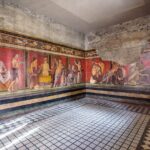
More Naples tours, freshly reviewed




Herculaneum Tours, compared.
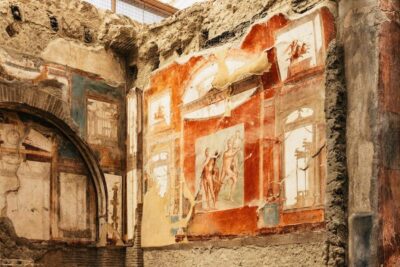 ★ 4.8Herculaneum: Skip-the-Line Guided Tour with ArchaeologistFrom $533,439 reviews
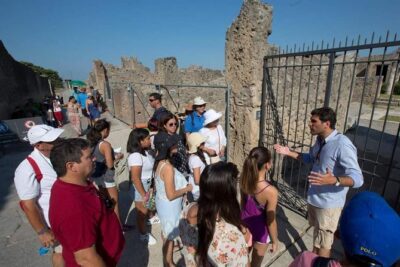 ★ 5.0Pompeii and Herculaneum Small Group Tour with an ArchaeologistFrom $771,350 reviews
 ★ 5.0Herculaneum Small Group Tour and Ticket With an ArchaeologistFrom $53994 reviews
 ★ 4.3Herculaneum: Skip-the-Line Entry Ticket with Audio GuideFrom $15870 reviews
 ★ 4.8Pompeii: Small-Group Tour of Pompeii and Herculaneum867 reviews
 ★ 4.8Pompeii & Herculaneum with Archaeologist GuideFrom $168665 reviews
 ★ 3.9Pompeii, Herculaneum, & Vesuvius Full-Day TourFrom $152602 reviews
 ★ 4.1Ercolano: Herculaneum Entry Ticket with Optional Audio GuideFrom $21581 reviews
Browse the lists this tour appears in