
Review · POMPEII TOURS
Guided tour of Pompeii with a writer
Pompeii hits harder when it’s explained. This private tour from Piazza Porta Marina turns the ruins into everyday life—houses, shops, and public spaces—by focusing on how people lived and what changed right before the eruption. I also liked the writer-like storytelling approach from licensed guide Sara (you may see her listed as Sara Prossomariti), which keeps the visit clear even when you’re surrounded by stone and columns. One thing to plan for: entrance tickets aren’t included, and Pompeii closures can affect exactly which parts you’ll walk through.
Two things I really liked: first, the tour’s emphasis on daily routines and social life (including details like the condition of women of Pompeii). Second, the guide keeps it accessible—light in tone, but not light on meaning—so you’re not just staring at walls. You’ll walk at a moderate pace, and the route adapts based on what the archaeological park is allowing that day. The main drawback is simple: it’s only 2–3 hours, so you won’t cover everything at Pompeii, even though the experience is designed to feel complete.
If you want Pompeii as a story of real people, not a list of monuments, this is a great fit. It’s also a smart way to make sense of a big site where wandering can feel overwhelming. Just come ready for walking on uneven ground, and expect that your “exact” route can shift with park management.
In This Review
- Key highlights to know before you go
- Pompeii, told like a real city (not a museum line)
- Your guide makes the site make sense (Sara’s storytelling)
- Time on the ground: 2 to 3 hours that feel intentional
- Meet at Piazza Porta Marina: a practical starting point
- Entrance tickets: what you pay for and what you still need
- What you’ll see inside Pompeii Archaeological Park
- Expect houses and shops tied to real life
- You may include a spa and other public spaces
- The route adapts to park management
- The big value: learning without getting overwhelmed
- How walking style and fitness level play into your day
- The Naples tie-in: why Pompeii without context feels incomplete
- Price and value: is $173.47 per person worth it?
- Who this tour fits best
- Should you book Pompeii with Morosofi Guided Tours?
- FAQ
- What is the duration of the Pompeii guided tour?
- Where does the tour start?
- Does the price include Pompeii entrance tickets?
- Is this tour private?
- Will I get a ticket on my phone?
- Is the tour okay for people with moderate fitness?
- Is the tour near public transportation?
- Are service animals allowed?
- What happens if I cancel or the minimum number of travelers isn’t met?
Key highlights to know before you go
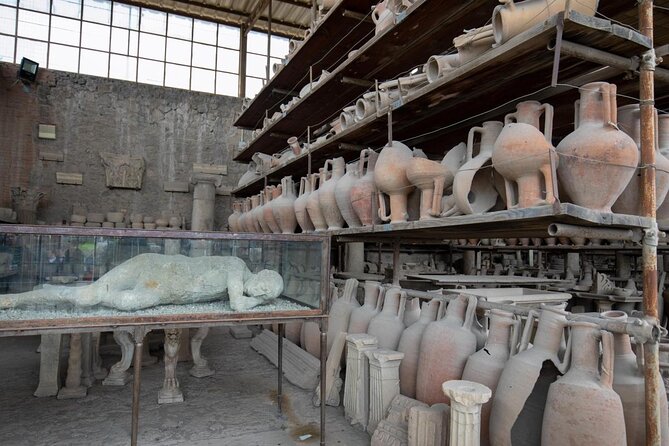
- Story-first guiding: the tour focuses on how Pompeiians lived, not just what you’re looking at
- Sara’s clear, energetic style: many guests single out her ability to make the site click for kids and adults
- Homes, shops, and public life: you’ll connect architecture to daily routines, markets, and social spaces
- Route flexibility due to closures: what you see can change based on what the park allows
- Private group experience: your group only, so questions don’t get squeezed out
Which Pompeii ticket and guide? Compare a few more.
- Pompeii Small Group Tour with an Archaeologist★ 5.0 · 6,593 reviews
- Discover the Ancient Ruins of Pompeii: Day Trip from Rome★ 3.5 · 2,247 reviews
- Pompeii and Herculaneum Small Group Tour with an Archaeologist★ 5.0 · 1,350 reviews
- Skip the Line Guided Tour of Pompeii led by an Archaeologist★ 5.0 · 703 reviews
Pompeii, told like a real city (not a museum line)
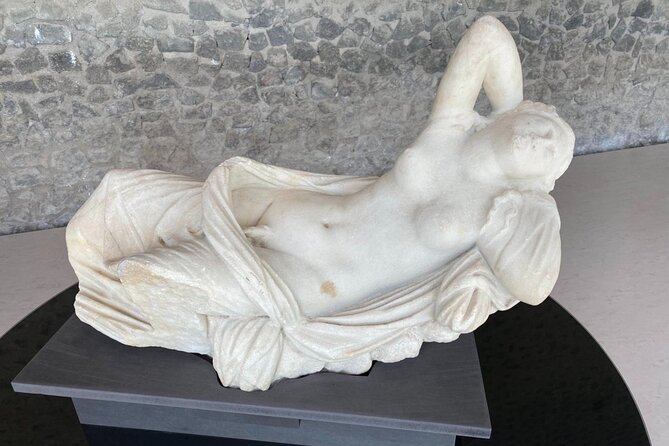
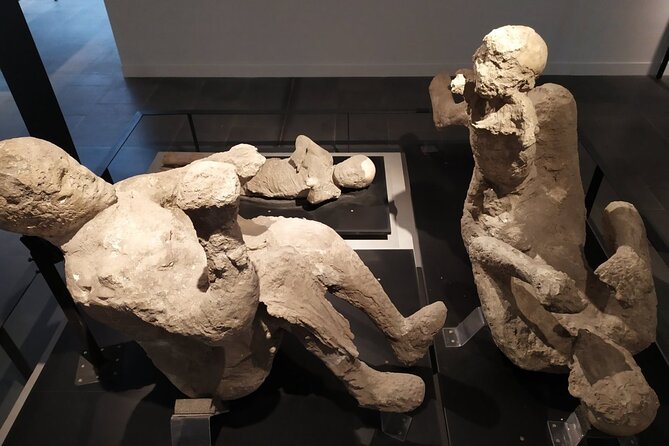
Pompeii is famous for a reason, but it can also feel like a blur if you visit without context. That’s where this tour earns its price. Instead of treating the site like a set of photos, the guide frames it like a living place: where people went, how they worked, what they bought, what they wore, and what daily life looked like before disaster.
I like that the tour doesn’t get stuck in one lane. You’ll spend time with the kinds of spaces that shaped ordinary routines—homes and shops—and you’ll also touch on places that show civic and cultural habits, like a spa area. The result is that the ruins stop being just impressive. They become understandable.
And there’s a specific angle you may not expect on a first Pompeii visit: the tour brings in the lives of women and daily conditions, which helps you picture the full society—not only the grand buildings. It’s not random trivia. It’s the human scale that makes everything else easier to track.
Your guide makes the site make sense (Sara’s storytelling)
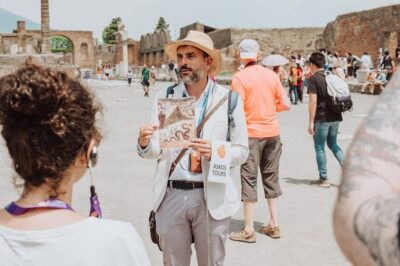
This is a private tour with a licensed guide from Morosofi Guided Tours. In practice, that means you’re not sharing attention with a crowd that’s constantly reshuffling. You can ask questions, and you can follow along without playing catch-up.
Many reviews highlight Sara’s energy and her ability to explain without turning the visit into a lecture. Guests describe her as engaging and really good at storytelling—especially for families, including kids ranging from early teens down to younger children. That matters because Pompeii can be long and visually repetitive. When the guide ties what you see to a moment in everyday life, the time feels shorter.
Sara’s style also seems built for both beginners and people who already have some interest in Roman history. You get clear explanations, but you’re also handed small details that reward attention. If you like tours that feel like conversations, this one is likely to work well.
Time on the ground: 2 to 3 hours that feel intentional
Most Pompeii visits balloon because people wander or get stuck waiting around. Here, you’re on a defined walking experience lasting about 2 to 3 hours. That window is long enough to feel like you’ve seen the “core” of Pompeii’s everyday world, but not so long that you’ll hate your shoes by the first hour.
Still, manage your expectations: Pompeii is huge. This tour is designed to be accessible and “light” in the sense that it guides you through key areas without overwhelming you. If you’re hoping for a complete, exhaustive tour of every district, you’ll want a longer option. But for most first-timers, the structure is a win.
Meet at Piazza Porta Marina: a practical starting point
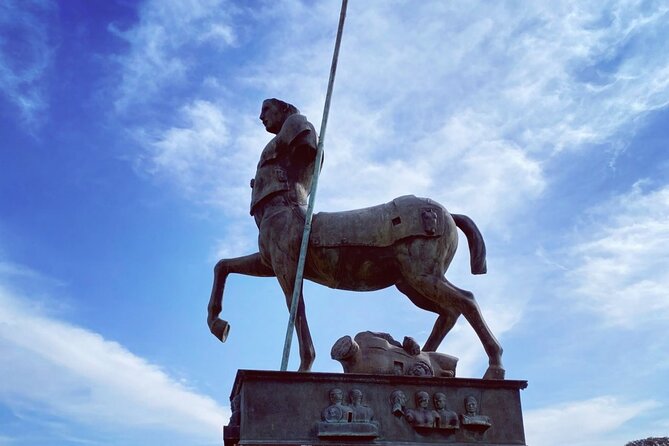
The tour starts at Piazza Porta Marina, 80045 Pompei NA, Italy and ends back at the meeting point. That return matters more than it sounds, because Pompeii can leave you disoriented fast if you start walking “in the wrong direction.”
Starting at a known public square also makes your first minutes less stressful. You can orient yourself, meet your guide, and then focus on the ruins. Since it’s near public transportation, it’s easier to stitch into a day trip with Naples or the Vesuvius area—assuming your schedule allows for the walking time inside Pompeii.
More guided runs around Pompeii

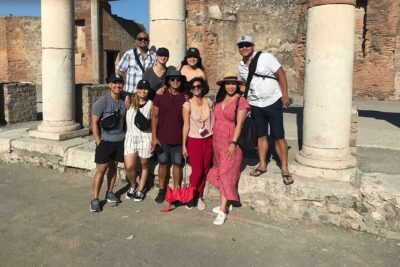

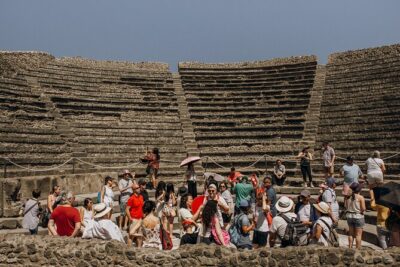

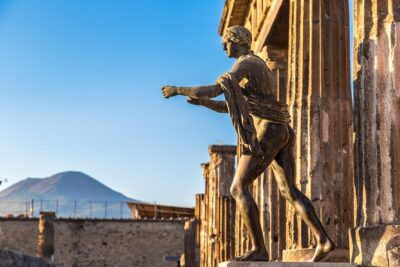
Entrance tickets: what you pay for and what you still need
This tour includes a licensed guide. It does not include entrance tickets, and the experience notes the admission ticket is not included.
So if you’re budgeting, remember you’re paying for guiding plus whatever entry costs are required to get into the Pompeii Archaeological Park. That doesn’t make the tour a bad value—it usually means you’re choosing flexibility (you handle the admission) while still getting a guided route that saves time and confusion.
One useful detail: some guests mention the guide helping with ticket purchases in advance so you can avoid the hassle of queuing. The tour details don’t promise one exact method for everyone, but it suggests the guide is used to helping you smooth the process.
What you’ll see inside Pompeii Archaeological Park
This is the only stop: the Pompeii Archaeological Park. Because the park sets closures, what you get in your exact route can vary. That’s normal for Pompeii. The upside is that a good guide doesn’t just march you through a fixed checklist—she adapts and still builds a coherent story.
Expect houses and shops tied to real life
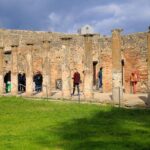
You’ll spend time with spaces that show the city from the street up. Houses aren’t described like “rooms in a diagram.” They’re explained in terms of how people lived day to day—where routines happened, how public and private space worked, and how the home fit into the city’s flow.
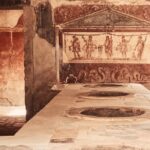
Shops add another layer. Roman storefronts and commercial corners can look similar at first glance, but the guide helps you see how commerce shaped everyday behavior. You start to understand why people gathered where they gathered.
If you care about social life, this is a big reason the tour gets strong marks. You don’t just walk through ruins—you connect architecture to daily habits.
You may include a spa and other public spaces
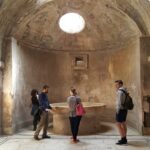
Depending on closures, you may also visit a spa area and other notable public spaces. These stops are valuable because they show how Pompeii wasn’t only about private houses. People also used shared spaces for health routines, social contact, and city life.
A spa visit (when it’s accessible that day) is a great example of why a guide helps. Without explanation, you might see “a building with water channels.” With guiding, you start asking better questions: Who used this? When? What did it signal socially?
The route adapts to park management
Because closures are part of real-world Pompeii visits, your itinerary may shift. The experience is designed to keep things accessible even when certain areas are off-limits.
For you, that means don’t treat it like a strict guarantee that every person will see every exact area on every date. Instead, think of it as a guided experience through the best accessible parts of the site that day, tied together by a consistent story about living in Pompeii.
The big value: learning without getting overwhelmed
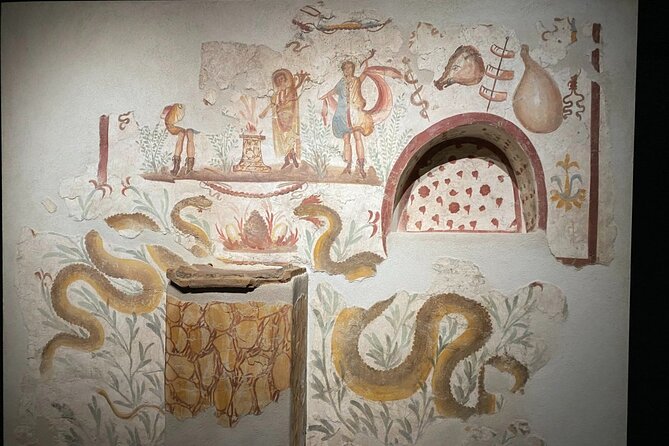
Pompeii is a lot. Without a plan, you can end up with a head full of names and no real picture of daily life. This tour’s approach helps you build an internal map.
The “people first” focus—how residents lived, what daily activities looked like, and details about women’s condition—turns the ruins into something you can visualize. You’ll likely leave with a clearer sense of how ordinary Pompeiians moved through work, homes, markets, and communal spaces.
That’s why this tour can work even if you only have a short time window. You’re not trying to memorize the whole site. You’re learning how to read it.
How walking style and fitness level play into your day
The tour calls for moderate physical fitness. Pompeii’s ground is uneven in places, and you’ll be walking and standing for stretches. You don’t need to be an athlete, but you should wear good shoes and expect a steady walking pace.
Also, if you’re traveling with a family, the fact that the guide has experience engaging younger visitors is a practical advantage. When kids can stay interested, the whole group tends to enjoy it more. You’re not dragged through a long silence while everyone waits to understand what they’re seeing.
Service animals are allowed, and the tour is private, so there’s flexibility in how things flow for your group.
The Naples tie-in: why Pompeii without context feels incomplete
Pompeii often gets paired with Naples. Even if this tour is only inside Pompeii for 2–3 hours, the way it’s explained can make the larger region feel connected. You’ll pick up a sense of how daily life in this Roman city existed within a wider world of trade, culture, and regional movement.
That matters if you’re doing multiple stops in the area. A guided Pompeii visit gives you the framework to interpret what you see elsewhere—whether that’s a harbor city feel or another layer of Roman influence.
Price and value: is $173.47 per person worth it?
At $173.47 per person for about 2–3 hours with a licensed, private guide, the key value isn’t the price tag—it’s what you gain:
- You’re paying for interpretation, not just access.
- You’re buying a route that’s responsive to closures while keeping a clear narrative.
- You’re paying for a guide who can explain daily life in plain language, including social details like the role and condition of women.
- You’re getting a private format, which usually means fewer bottlenecks and more room to ask questions.
The main “gotcha” is that entrance tickets aren’t included. So your total day cost will be higher once you add admission. But if you know you want guidance to make Pompeii meaningful—and not just scenic—this price can feel fair.
If you’re traveling with a group and you want everyone to get the most out of a limited time window, a private guided approach usually makes more sense than hoping you’ll piece it together on your own.
Who this tour fits best
I think this tour is a strong match if you:
- are visiting Pompeii for the first time and want the human story right away
- prefer explanations that stay accessible and don’t drown you in dates
- want a private experience where your group can ask questions
- are traveling with kids or teens and need a guide who can keep attention
- like tours that connect architecture to daily habits (homes, shops, public life)
It might be less ideal if you:
- want to cover as much of Pompeii as possible in one go
- strongly prefer self-guided wandering with lots of independent time
Should you book Pompeii with Morosofi Guided Tours?
Yes—if your goal is to leave Pompeii understanding how people actually lived. The biggest advantage is the guide’s ability to turn ruins into everyday scenes, with a focus on social life and people, not just monuments. In a site this big, that kind of storytelling is what keeps the experience from feeling like a blur.
Book it if you appreciate clear guidance, a private group format, and a route that adapts to what the park allows. Add your entrance ticket separately, wear solid shoes, and give yourself time to ask questions—you’ll get more out of the stones than you would on your own.
If you want a first Pompeii experience that feels organized, thoughtful, and genuinely readable, this one deserves a spot on your plan.
FAQ
What is the duration of the Pompeii guided tour?
It’s about 2 to 3 hours.
Where does the tour start?
The meeting point is Piazza Porta Marina, 80045 Pompei NA, Italy.
Does the price include Pompeii entrance tickets?
No. Entrance tickets are not included.
Is this tour private?
Yes. It’s private, and only your group participates.
Will I get a ticket on my phone?
The tour uses a mobile ticket.
Is the tour okay for people with moderate fitness?
The experience is listed for travelers with moderate physical fitness.
Is the tour near public transportation?
Yes, it’s near public transportation.
Are service animals allowed?
Yes, service animals are allowed.
What happens if I cancel or the minimum number of travelers isn’t met?
This experience is non-refundable and cannot be changed. If it’s canceled because the minimum isn’t met, you’ll be offered a different date/experience or a full refund.
More Tours in Pompeii



More Tour Reviews in Pompeii

More Pompeii Tours to Compare
More Pompeii tours, freshly reviewed



Pompeii Tours, compared.
 ★ 4.8Pompeii: Entry Ticket and Guided Tour with an ArchaeologistFrom $3519,459 reviews
 ★ 4.1Pompeii: Entry Ticket with Audio GuideFrom $4013,491 reviews
 ★ 4.8Pompeii: Small Group Tour with an ArchaeologistFrom $4012,264 reviews
 ★ 4.3Pompeii Ruins & Mount Vesuvius Day TourFrom $12011,459 reviews
★ 5.0Pompeii Small Group Tour with an ArchaeologistFrom $356,593 reviews
★ 4.3Pompeii Ruins & Mount Vesuvius Day TourFrom $12011,459 reviews
★ 5.0Pompeii Small Group Tour with an ArchaeologistFrom $356,593 reviews
 ★ 4.5Skip-the-line Pompeii – Small Group TourFrom $544,401 reviews
 ★ 4.6Naples or Sorrento: Full-Day Pompeii and Mount Vesuvius TourFrom $1044,235 reviews
 ★ 3.9Pompeii: Skip-the-line Entry Ticket with Audio Guide & MapFrom $433,153 reviews