
Review · POMPEII TOURS
Guided Private Tour in Pompeii
Pompeii feels less like ruins and more like a day. This private walk through the city’s key sites is led by an authorized archaeologist, built around everyday Roman life. You’ll see Pompeii’s big stories and small routines in just about 2.5 hours, and you start with an entrance point designed to help you avoid queueing. I especially like the way the guide ties architecture to daily habits, and I love the food-and-bath angles that make the place feel human. The one thing to watch: Pompeii’s site entry fee is extra (18 euros per person), so your final cost depends on how many you bring.
I’d call this a smart pick if you want a tight, high-impact plan without turning Pompeii into a checklist-only job. The format is private—just your group—so you can move at a pace that fits your questions, interests, and time limits.
If you’re the type who likes to linger for long stretches, the schedule may feel a bit brisk. Still, for many people, that’s exactly the point: you get a lot of Pompeii with a guide who knows where to focus.
In This Review
- Key highlights worth centering your time
- A 2½-hour private Pompeii plan with an archaeologist guide
- Meeting at Ristorante Suisse and getting in fast (Piazza Esedra)
- From the port-area entrance to an instant sense of place
- The forum heart: basilica civic power and the temples around it
- Entertainment and sanctuaries: Teatro Grande, Apollo, and Isis
- Daily Roman life you can picture: Stabian Baths, thermopolio, bakery, and the Macellum
- Stabian Baths (Terme Stabiane)
- Termopolio di Vetuzio Placido (Roman fast food)
- Local bakery tasting
- Macellum (food market + frescoes + casts)
- Bawdy corners and luxury houses: Piccolo Lupanare and Casa del Fauno
- Piccolo Lupanare
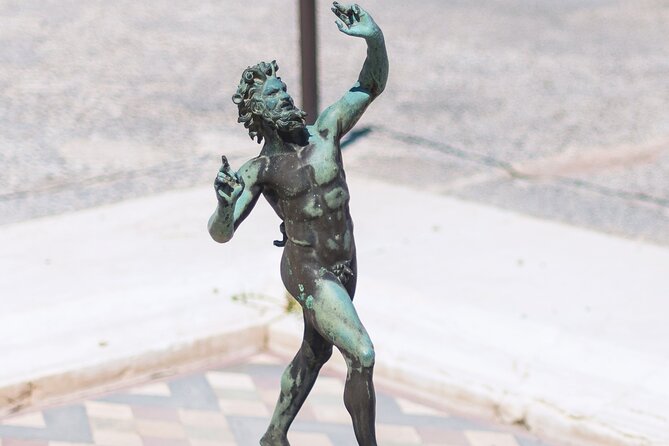
- Casa del Fauno (luxury house)
- Roman villa garden mood, frescoes, and the wine break
- Price and what you actually get for $326.72 per group
- When this private Pompeii tour beats DIY
- Should you book this private Pompeii tour?
- FAQ
- How long is the Guided Private Tour in Pompeii?
- How many people are in the group?
- Is Pompeii entry included in the tour price?
- Where do we meet, and does the tour return there?
- Is Teatro Grande accessible during the tour?
- Do I receive tickets on my phone?
Key highlights worth centering your time
- Authorized archaeologist guide: history and archaeology explained by someone trained to connect details to the bigger picture.
- Fast entry route: start at Piazza Esedra (Porta Marina Inferiore) to help you skip the worst waiting and get a view of the ancient port area.
- Roman daily-life stops: baths, a thermopolium (Roman fast food), a food market (Macellum), and a villa-world contrast with luxury houses.
- Food, bathing ritual, and wine: the tour isn’t only walking—you also get tastes and a Roman-style bathing moment.
- Real “city function” sites: forum buildings and major sanctuaries like Apollo and Jupiter anchor the civic and religious story.
Which Pompeii ticket and guide? Compare a few more.
- Pompeii Small Group Tour with an Archaeologist★ 5.0 · 6,593 reviews
- Discover the Ancient Ruins of Pompeii: Day Trip from Rome★ 3.5 · 2,247 reviews
- Pompeii and Herculaneum Small Group Tour with an Archaeologist★ 5.0 · 1,350 reviews
- Skip the Line Guided Tour of Pompeii led by an Archaeologist★ 5.0 · 703 reviews
A 2½-hour private Pompeii plan with an archaeologist guide
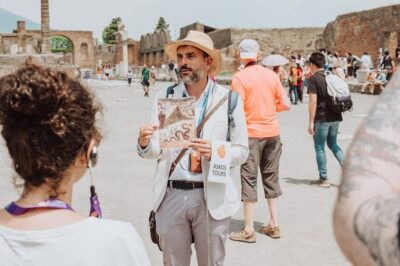
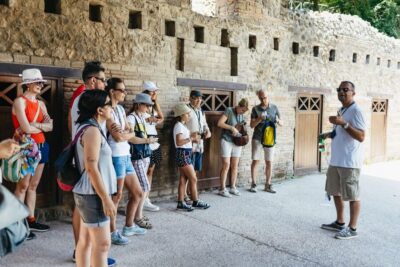
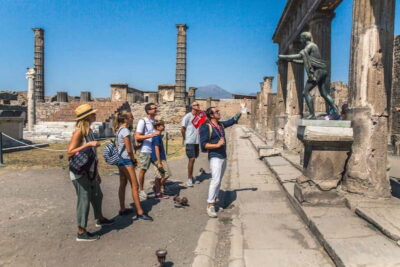
This is not the kind of Pompeii tour that races through with a megaphone and a map. You’re with an authorized archaeologist on a private route designed for about 2 hours 30 minutes of focused looking and straight answers.
What makes the timing work is that the tour isn’t only “top sights.” It’s organized around what Romans actually did: going to public baths, eating quick street-style food, shopping, attending civic life in the forum, and spending time in entertainment and religious spaces. When you see a building, you also hear what kind of day it belonged to.
The guide’s storytelling approach is a big part of the value. In particular, the tone you’ll get is practical and personal—your route can flex to your interests and time limits, and the pacing is built to keep you from feeling rushed while still covering major areas.
Meeting at Ristorante Suisse and getting in fast (Piazza Esedra)
Your tour starts and ends back at the Ristorante Suisse, at Piazza Esedra, 10/13, 80045 Pompei. The meeting point is close to public transportation, which matters if you’re coming in from Naples or connecting onward.
Once you’re together, you head to the entrance approach at Piazza Esedra (Porta Marina Inferiore). The idea is simple: reduce queue time and start with a payoff view tied to Pompeii’s ancient port area. That early moment helps you get oriented fast, before the day becomes a blur of streets and stone.
Private tours shine here because you’re not stuck waiting for a large group to assemble. You get to start your Pompeii story sooner, with less standing around.
From the port-area entrance to an instant sense of place
Your first stop is Pompeii Archaeological Park, using the Piazza Esedra / Porta Marina Inferiore entrance to help you avoid the worst lines. Admission to the park is included in your guide service package, but the site entry fee itself is not included in the price you pay for the tour (more on that later).
From the start, the guide is aiming for one outcome: you should feel like you’re entering the city, not just touring a museum. That’s why this first phase matters. Pompeii is huge, and the quickest way to get lost—even mentally—is to treat everything like separate “attractions.” You’ll instead build a mental map: port / movement / civic center / daily life.
The forum heart: basilica civic power and the temples around it
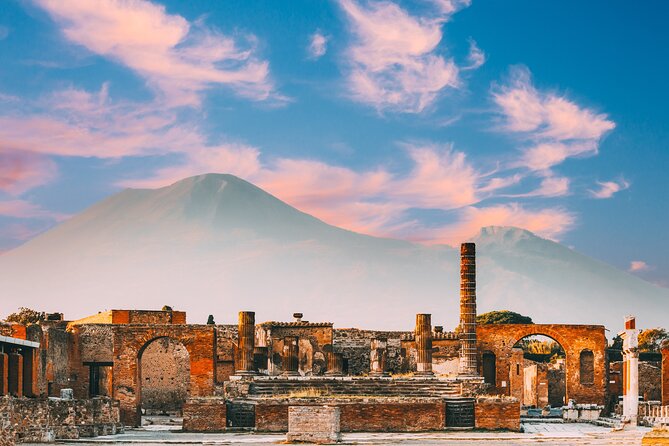
Pompeii’s Foro de Pompeya (main square) is the social and political center, and you spend real time here—about 15 minutes—because it’s where the city’s public rhythm becomes clear. This is where Romans gathered, where public life played out, and where the city’s authority showed itself.
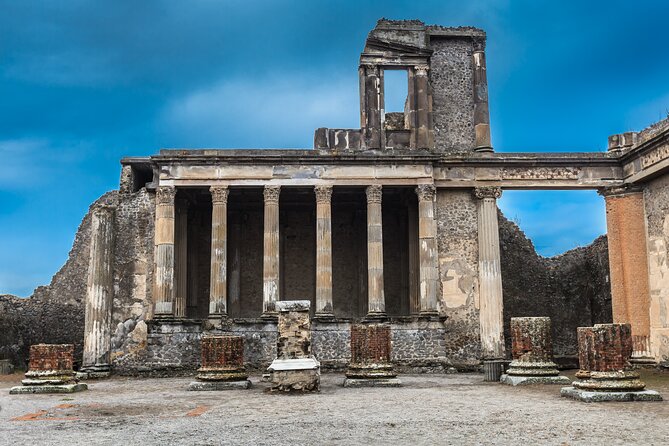
You’ll also visit Pompei La Basilica, described as the Roman parliament-style civic building with marble decoration. Even if you don’t read Latin or know Roman law, this stop helps you understand what a forum building was for: gathering, business, and public proceedings.
Then the tour shifts into the religious-political overlap with Temple of Jupiter (Tempio di Giove Capitolino). It’s tied to public speaking in the forum area, which is a useful detail. It’s not just “temple sightseeing.” It’s a reminder that politics and religion were tangled together in everyday Roman life.
If you like tours where the guide makes the city’s function obvious, you’ll appreciate this section.
More guided runs around Pompeii


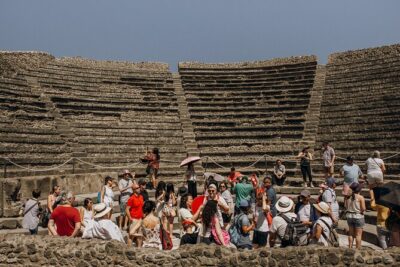

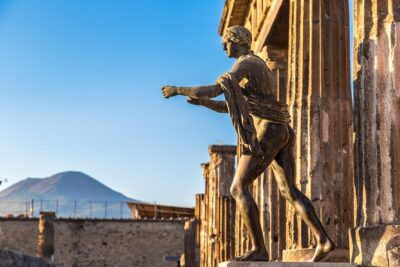
Entertainment and sanctuaries: Teatro Grande, Apollo, and Isis
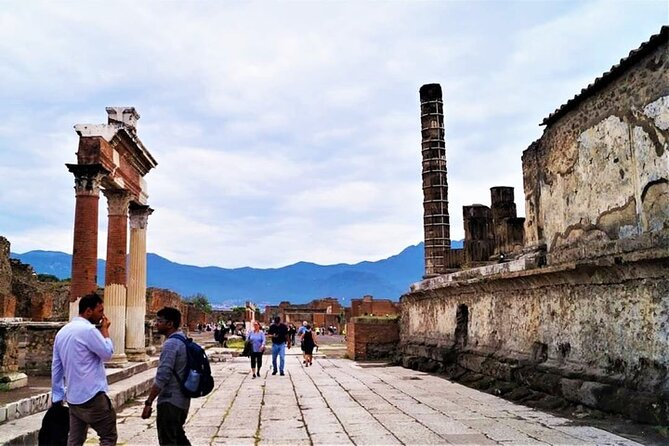
Pompeii wasn’t only about governance and commerce. It also had entertainment and ritual spaces that shaped daily schedules.
You’ll see Teatro Grande from a panoramic vantage point. The note that matters for planning: the big and little theaters aren’t accessible at the moment, so you won’t be walking into the full theater experience. You still get the entertainment-area perspective, but your expectations should match a view-based stop rather than a full interior exploration.
From there, religion steps forward. The Temple of Apollo is part of an Apollo sanctuary visit, and you also visit Tempio di Iside. Around these stops, the guide’s archaeologist background is the real advantage: you’re not just hearing names. You’re learning what these spaces signaled in Roman culture and why they were important enough to build and maintain.
There’s also a specific domestic/archaeological angle here. Near the Temple of Isis, you visit a house located right in front of it, selected because it’s tied to major Pompeii finds and how the site was uncovered and studied. Even without diving into technical details, that combination—temple plus nearby house—helps you see the city as lived-in, not only ceremonial.
Daily Roman life you can picture: Stabian Baths, thermopolio, bakery, and the Macellum
This section is where the tour becomes more than “what to see.” It becomes “how to imagine living there.”
Stabian Baths (Terme Stabiane)
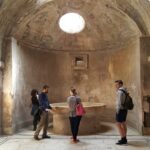
The Stabian Baths are a big anchor stop, with about 20 minutes on site. This is a public bathing complex, described as a healing spa concept and framed as the real way Romans stayed safe in bath routines. Whether you look at it as health, routine, or social time, it’s one of the most effective stops for building a day-in-the-life mental picture.
Termopolio di Vetuzio Placido (Roman fast food)
Next is Termopolio di Vetuzio Placido, one of the “high-speed” food experiences of Roman Pompeii. You’ll spend a short 5 minutes here, but it’s a memorable one because the stop is defined by frescoes and the idea of street food culture—quick meals, visual decoration, and a place to grab something without waiting for a full sit-down.
Local bakery tasting
The tour also includes a local bakery tasting: freshly baked bread plus Roman-style snacks. This is one of the clever parts of the experience. It turns the Roman food conversation from theory into something you can actually taste, and it gives you a break from the heat and stone.
Macellum (food market + frescoes + casts)
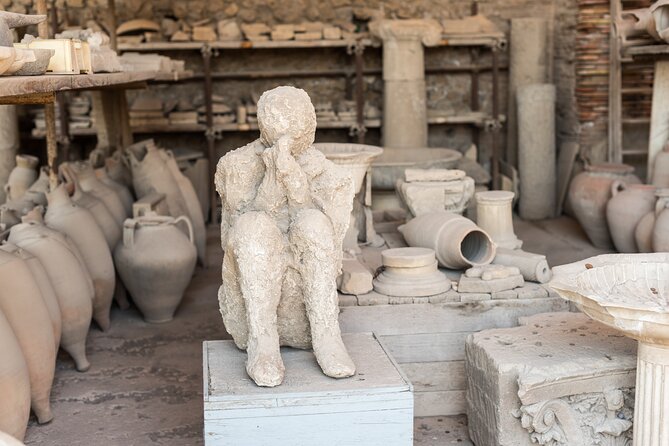
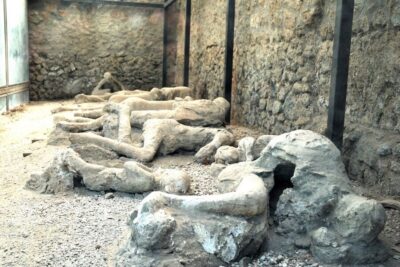
Later, you’ll visit Macellum, a food market. The description includes high-end frescoes and body casts, which signals why the market is so powerful in Pompeii’s story. Markets were where daily schedules converged—people came for food and social contact—so it’s a strong place to connect “normal life” to what survives from the disaster.
The Macellum stop runs about 15 minutes, enough time for you to take in the look and then absorb why this kind of setting matters.
Bawdy corners and luxury houses: Piccolo Lupanare and Casa del Fauno
Pompeii doesn’t sanitize itself, and neither does this tour—at least not where it’s historically important.
Piccolo Lupanare
You’ll visit Piccolo Lupanare, described as a red light district and a brothel. The visit is about 20 minutes. If you prefer only solemn monuments, you might not love this stop. But if you want Pompeii as it really was—work, desire, business, and daily consumption—you’ll understand why it belongs on a “Roman life” tour.
Also, framing matters. The guide’s job here is to keep you anchored to context rather than sensationalism.
Casa del Fauno (luxury house)
After that comes Casa del Fauno, a standout example of a luxury Pompeian home, with about 20 minutes on site. This is the counterpoint stop. Instead of street-level life, you step into a world of status: the kind of house built for comfort, display, and household identity.
You’ll get plenty of opportunities to compare how spaces felt for different social classes. That contrast is one of the reasons private tours work so well: you can ask questions about differences you notice in real time.
Roman villa garden mood, frescoes, and the wine break
The tour also includes a Roman villa garden moment. You’ll experience aspects of domestic life and admire frescoes on the walls, then enjoy a glass of wine as you reflect on what you’ve seen.
Even without mapping it to a single numbered stop, this part of the experience does something important. Pompeii can feel heavy if you only focus on disaster and stone details. A planned pause—with a garden setting and a simple refresh—helps your brain file the day as lived life, not only tragedy.
Just plan for the practical reality of wine: it’s best treated as a relaxed add-on, not something you build your whole schedule around.
Price and what you actually get for $326.72 per group
The tour price is $326.72 per group, up to 5 people, and the authorized archaeologist guide service runs about 2.5 hours. Tickets for Pompeii Archaeological Park cost 18 euros per person (free under 18), and tips are not included.
So what’s the value?
- If you’re traveling as a group of 4–5, the per-person tour cost drops fast, and you end up paying for something you can’t get as easily on your own: an archaeologist-led explanation tied to a tight route.
- If you’re going solo or as a couple, it’s still a good option when you want maximum guidance efficiency—especially when time is tight—because you’re not spending hours figuring out where to start or what matters most.
One more detail that protects your money: the tour includes mobile tickets, so you’re not scrambling on arrival.
When this private Pompeii tour beats DIY
If you’re deciding between going alone and booking a guide, consider what you want your Pompeii to do for you.
I’d book this style of tour if:
- you want help prioritizing the best parts in a limited time window
- you care about Roman daily life, not just monuments
- you like asking questions and getting direct answers on-site
- you want a route built around how the city functioned (forum, temples, baths, markets, houses)
I’d skip it (or at least adjust expectations) if:
- you want to wander slowly without structure
- you don’t enjoy stops that include the brothel district
- you’re expecting the Teatro Grande to be fully accessible inside (it’s listed as not accessible at the moment)
Should you book this private Pompeii tour?
If you want Pompeii to feel like a real Roman day—food, bathing routines, civic spaces, temples, and social contrasts—this is a strong match. The biggest reasons are the private format, the archaeologist-led guidance, and the way the route ties buildings to daily behavior. The guide name you’ll often hear is Tony/Toni, and his approach is repeatedly described as careful, well paced, and story-driven in a way that makes the place stick.
My practical recommendation: book it if you’re going with at least 3 people (or you’re short on time and really want structure). Do a quick budget check for the 18-euro Pompeii entrance fee per person, and plan around the fact that Teatro Grande access is limited right now. Also note the site runs 9:00 AM to 3:00 PM, so timing matters.
Free cancellation is available up to 24 hours in advance, which makes it easier to commit if your schedule might shift.
If that sounds like your ideal Pompeii day, Capri Top Tours’ guided private experience is worth your attention.
FAQ
How long is the Guided Private Tour in Pompeii?
The tour lasts about 2 hours 30 minutes.
How many people are in the group?
It’s a private tour with up to 5 people in your group.
Is Pompeii entry included in the tour price?
No. Pompeii Archaeological Park tickets are not included. The entry fee listed is 18 euros per person (free under 18).
Where do we meet, and does the tour return there?
You start at Ristorante Suisse, Piazza Esedra, 10/13, 80045 Pompei NA, Italy, and the tour ends back at the same meeting point.
Is Teatro Grande accessible during the tour?
The stop is planned as a panoramic view, and the big and little theaters are noted as not accessible at the moment.
Do I receive tickets on my phone?
Yes. The tour includes mobile ticket access.
More Tours in Pompeii



More Tour Reviews in Pompeii

More Pompeii Tours to Compare
More Pompeii tours, freshly reviewed



Pompeii Tours, compared.
 ★ 4.8Pompeii: Entry Ticket and Guided Tour with an ArchaeologistFrom $3519,459 reviews
 ★ 4.1Pompeii: Entry Ticket with Audio GuideFrom $4013,491 reviews
 ★ 4.8Pompeii: Small Group Tour with an ArchaeologistFrom $4012,264 reviews
 ★ 4.3Pompeii Ruins & Mount Vesuvius Day TourFrom $12011,459 reviews
★ 5.0Pompeii Small Group Tour with an ArchaeologistFrom $356,593 reviews
★ 4.3Pompeii Ruins & Mount Vesuvius Day TourFrom $12011,459 reviews
★ 5.0Pompeii Small Group Tour with an ArchaeologistFrom $356,593 reviews
 ★ 4.5Skip-the-line Pompeii – Small Group TourFrom $544,401 reviews
 ★ 4.6Naples or Sorrento: Full-Day Pompeii and Mount Vesuvius TourFrom $1044,235 reviews
 ★ 3.9Pompeii: Skip-the-line Entry Ticket with Audio Guide & MapFrom $433,153 reviews