

Review · POMPEII TOURS
From Naples: Pompeii Wheelchair-accessible with a Guide
A world-class ruin, made usable for mobility needs. This wheelchair-accessible Pompeii experience ties together a ramp-equipped vehicle and a guided route with ramps inside the site. I like that you meet your guide at the Pompeii entrance with tickets ready, so you’re not stuck figuring things out on arrival. One consideration: the terrain is still uneven and hilly, so you’ll likely want an all-terrain setup and be ready for occasional tougher spots.
What makes this plan feel fair (not just “accessible on paper”) is the way it’s built around real movement needs. You get driver help getting in and out of the van, and the route is designed to overcome architectural barriers. The trade-off is that Pompeii is Pompeii: even with the paved accessible paths, some areas can require extra effort—or short periods of standing—for certain layouts.
If you’ve ever worried you’d miss Pompeii because of mobility limits, this is a smart way to reduce stress and focus on the real stuff: Roman daily life, street-level views, and the scale of what was buried in 79 A.D.
In This Review
- Key points worth knowing before you go
- From Naples to Pompeii in a wheelchair-friendly van
- Meeting at Pompeii Entrance and getting skip-the-line tickets
- A guided, wheelchair-accessible route through Pompeii’s key areas
- How the day flows: guided time plus room to breathe
- What your Pompeii guide does (and why it’s worth paying for)
- Terrain reality check: wheelchair choices and when standing may be needed
- Price and value: is $88 a fair deal for this level of support?
- Vehicle rules, what you can bring, and day-of comfort
- Best for whom? And who should think twice
- Should you book this wheelchair-accessible Pompeii tour?
- FAQ
- Where do we meet the guide and get tickets?
- Is there a wheelchair-accessible route inside Pompeii?
- Do I have to get a transfer from Naples?
- How long is the tour, and how much time is guided?
- What’s included in the price?
- Can my personal assistant enter free with me?
- What information do you need about my wheelchair?
- What do I need to bring, and what isn’t allowed?
- What languages are the guides available in?
Key points worth knowing before you go
- Ramped, wheelchair-capable van from Naples: the driver assists you getting in and out.
- Meet at Pompeii Entrance with tickets already arranged: skip-the-line access via a separate entrance.
- Wheelchair route inside the excavations: ramps and paved paths help you move through key areas.
- Professional guide for about 3 hours: clear explanations instead of wandering.
- Free admission for wheelchair users and a personal assistant (with proof, per the provided rules).
- Bring your ID and plan for uneven terrain: all-terrain wheels are strongly recommended.
Which Pompeii ticket and guide? Compare a few more.
- Pompeii: Entry Ticket and Guided Tour with an Archaeologist★ 4.8 · 19,459 reviews
- Pompeii: Small Group Tour with an Archaeologist★ 4.8 · 12,264 reviews
- Pompeii: Skip-the-line Entry Ticket with Audio Guide & Map★ 3.9 · 3,153 reviews
- Naples: Pompeii and Mt. Vesuvius with Lunch and Wine Tasting★ 4.5 · 2,454 reviews
From Naples to Pompeii in a wheelchair-friendly van
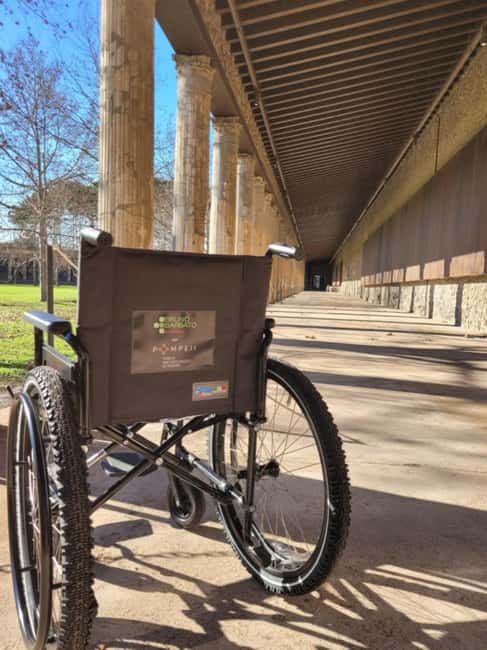
This tour starts in Naples, and the big win is how you get there. If you choose the transfer option, you ride in a vehicle designed for wheelchair access, including a ramp. The vehicle setup can handle 4 passengers plus 1 wheelchair user, which matters because it keeps the group small and gives the driver space to help without rushing you.
The driver’s role is practical, not just “someone will be there.” You get assistance getting in and out of the vehicle, which can save real energy right at the start. For many people, that’s the difference between arriving tired and arriving ready to look closely.
One timing note: the ride portion is short enough to keep the day focused, but long enough that you’ll want to think ahead about comfort. If you use a wheelchair, the tour asks for detailed wheelchair information after booking, so the operator can tailor the experience to your needs.
Meeting at Pompeii Entrance and getting skip-the-line tickets
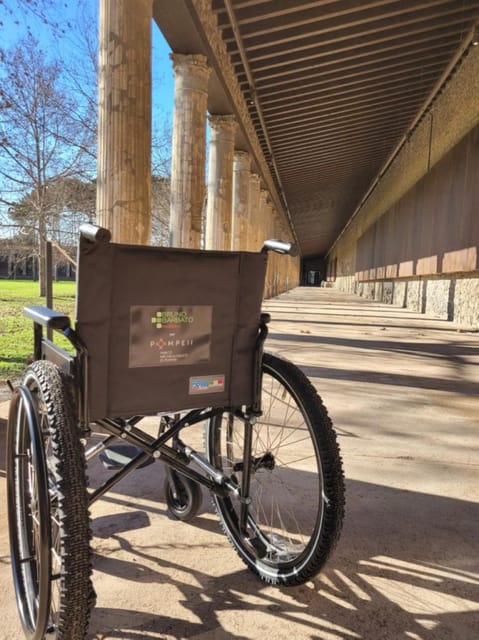
You meet your guide at the Pompeii entrance, specifically at the Pompeii Amphitheater/Anfiteatro entrance area. This is where the tour becomes smoother than a DIY visit. Your guide meets you at the gate and provides your tickets so you can head straight to the accessible route without wasting time.
The skip-the-line part is handled through a separate entrance, which is especially helpful if you already know you’ll need extra time for transfers, seating position, and breaks.
There’s also a paper trail requirement you shouldn’t ignore. The tour requires traveler names and dates of birth for entrance tickets. Make sure you supply those details exactly as needed, and bring the right ID on the day of your visit.
If you’re coordinating for more than one person, this is also where the private-group nature helps. You’re not waiting around for someone else’s pace or needing to constantly translate what you need.
A guided, wheelchair-accessible route through Pompeii’s key areas
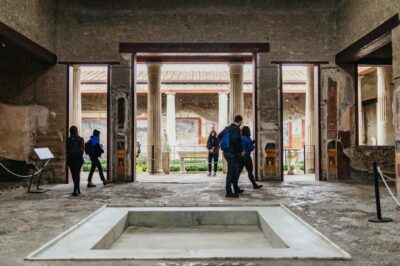
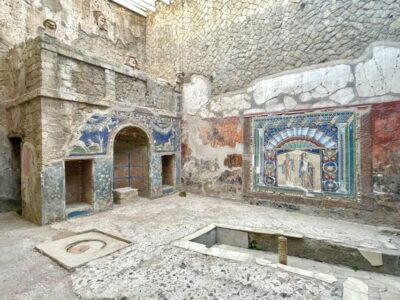
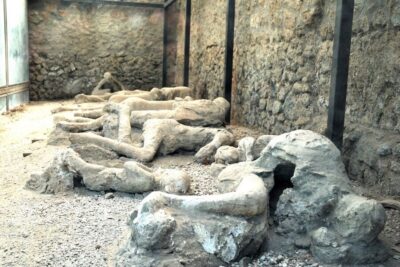
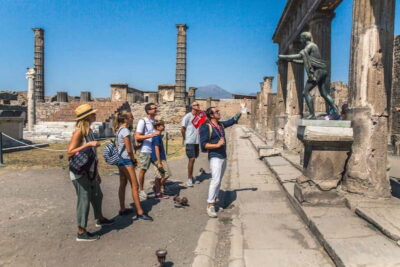
Pompeii is a UNESCO World Heritage Site, and it’s famous for a reason: when Mount Vesuvius erupted in 79 A.D., the city was buried under ash. The result is an archaeological site that preserves a “snapshot” of everyday Roman life at street level.
Your route begins at Piazza Anfiteatro, where your guide is waiting with the tickets and leads you onto the wheelchair-accessible itinerary. The tour is built around paths inside the excavations that use ramps to reduce architectural barriers.
You’ll spend about 3 hours with the guide. That time matters. Pompeii can feel like a lot of stones if you don’t know what you’re looking at. With a guide, you’re not just moving from one photo spot to another—you’re learning how the spaces worked together and what they suggest about Roman daily life.
Also, the accessible path is not just a token route. You’ll be guided along a path within the excavations, and the structure includes paved ways and ramps intended to keep the experience doable for mobility needs.
One practical recommendation comes directly from the terrain reality: Pompeii has steep and uneven sections. Even on an accessible route, you’ll want wheels that can handle rougher patches. The tour specifically recommends all-terrain wheelchairs with rugged wheels for comfort and accessibility.
How the day flows: guided time plus room to breathe
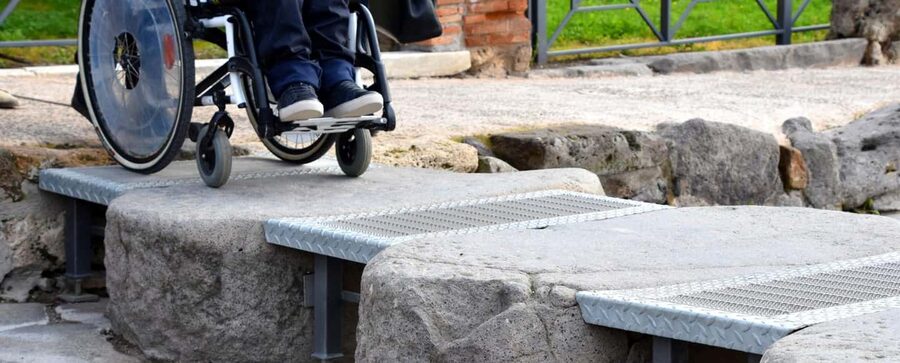
The day is organized so you’re not forced to run a strict loop with zero breaks. After you arrive and meet your guide, the focus is on a guided visit lasting about 3 hours, which is long enough to learn the story but structured enough to avoid fatigue spirals.
You also get time on your own inside Pompeii. That free time is useful for two reasons:
- It gives you a chance to linger at the places your guide highlights.
- It gives you breathing room if you need slower transfers, a snack outside the vehicle (not allowed in the vehicle), or just a pause to regroup.
Finally, you’ll return to Naples by van after your Pompeii time. The overall tour length is listed as 3 to 4 hours, which is a realistic window for a mobility-adapted outing when you factor in boarding and site navigation.
More guided runs around Pompei Campania

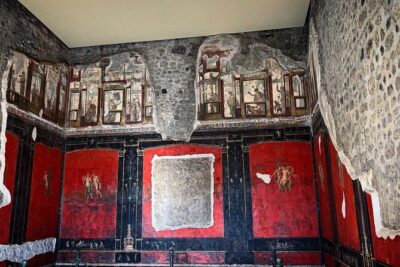


What your Pompeii guide does (and why it’s worth paying for)
A good guide turns Pompeii from scattered ruins into a readable town. This tour is built around a professional guide who explains what you’re seeing in a clear, direct way, and who can adjust attention to the needs of a wheelchair user.
In the feedback I’m using to shape expectations, one theme is how helpful the guide is at preventing you from feeling lost. A guide doesn’t just point out highlights—they also tell you what those highlights meant in daily Roman life.
A specific guide name you might see in this experience is Jasmine, and the point of that detail is simple: you’re not rolling the dice on an unfocused explanation. The tour aims for clear, supportive guidance, including helping you navigate the accessible route so you’re not left to interpret ramps and paths on your own.
You can also get access to areas tied to active work and excavation progress. You may be able to see areas where excavation is happening, which adds a layer of “this is still a living research site,” not just a finished museum display.
Terrain reality check: wheelchair choices and when standing may be needed
Here’s the honest part: Pompeii is not flat. Even with wheelchair-accessible ramps and paved paths, the site includes slopes and uneven ground. The tour is explicit about this and recommends all-terrain wheelchairs with rugged wheels. If you’re using a lightweight indoor chair, this is where you should think seriously about compatibility.
A few practical tips to plan around:
- If your chair has options, consider what works best on bumps and changes in level.
- If you can stand for short stretches, think of standing as a “maybe” rather than a guarantee. Some spots may require standing or walking briefly due to site layouts and transitions.
- Use the driver help at the van and take your time on transfers. Rushing is where stress grows.
The tour also asks for size and needs information after booking. That’s not just bureaucracy—it helps them plan how the wheelchair will fit and how the route can work for your specific setup.
Price and value: is $88 a fair deal for this level of support?
At $88 per person, this is not the cheapest way into Pompeii. But it’s also not trying to be. The value is in what’s included and in what it removes from your workload.
For starters, you get:
- A professional guide for the ruins.
- Pompeii fees covered as part of the tour structure, with free admission for wheelchair users and their personal assistant (with proof of identification from your home country).
- Tickets prepared at the entrance so you can skip the line with a separate entrance route.
- A wheelchair-suitable vehicle and driver assistance, if you choose the transfer option.
Then you add one more “invisible” value: private-group attention. This reduces waiting, reduces confusion, and makes it easier to move at a pace that matches your body and your chair.
If you were to try to DIY this, you’d still be paying for a ticket, losing the skip-the-line advantage, and spending extra energy on logistics and navigation—especially if you’re relying on ramps and specific paths.
Bottom line: this price makes sense if you want Pompeii without the mental overhead, and if you need accessibility support that’s built into the plan instead of improvised on the day.
Vehicle rules, what you can bring, and day-of comfort
This experience comes with some clear boundaries, mostly designed to keep the van safe and the experience smooth:
- No bags are allowed in the vehicle.
- No food or drinks in the vehicle.
- No smoking in the vehicle.
- No alcohol and drugs.
So pack like you’re traveling light. Bring what you need for the site (and keep it manageable), since the official “what to bring” list includes:
- Passport or ID card
- Sunglasses
- Hat
And if you’re using a wheelchair, plan on being proactive about wheels and comfort. The tour’s strong recommendation for all-terrain rugged wheels is a clue that the site can be bumpy enough to matter.
Best for whom? And who should think twice
This tour is a great fit if:
- You use a wheelchair or have reduced mobility and want a wheelchair-accessible path with ramps inside Pompeii.
- You prefer a guide who can explain what you’re seeing without you doing extra research on-site.
- You want pickup and a ramp vehicle to cut down the stress of getting there and transferring.
It’s a “maybe” if:
- You can’t handle slopes or uneven ground at all, even with the paved accessible routes.
- Your wheelchair setup isn’t all-terrain, and you’re unwilling to consider adjustments.
If your group includes someone who can stand for short moments, it can widen what you can manage comfortably in mixed terrain.
Also, since the experience is private group, it can work well if you want more control over how long you linger at certain spots—especially important in a site where pace can affect comfort.
Should you book this wheelchair-accessible Pompeii tour?
Book it if you want Pompeii’s highlights with less friction. The combination of skip-the-line access, tickets handled at the entrance, and a guided wheelchair route is exactly what you want when mobility needs are part of the plan. The ramp-equipped van and driver assistance reduce stress before you even reach the ruins.
Think twice if you know you struggle with uneven, hilly ground and you don’t have an all-terrain setup. In that case, you might still go, but you should plan for extra effort and possibly some brief standing depending on how the route and transitions line up.
If you’re aiming for a first-time Pompeii visit that focuses on understanding Roman life (not just collecting photos), this is a strong way to make that happen.
FAQ
Where do we meet the guide and get tickets?
Meet your guide at the Pompeii Entrance, at the Pompeii Amphitheater/Anfiteatro entrance area. You also get your tickets there.
Is there a wheelchair-accessible route inside Pompeii?
Yes. The itinerary uses an accessible path within the excavations, with ramps designed to overcome architectural barriers.
Do I have to get a transfer from Naples?
Pickup is optional. If you select the option with transfer, a ramp-equipped van can take you from Naples to Pompeii.
How long is the tour, and how much time is guided?
The tour runs about 3 to 4 hours total. The guided portion is approximately 3 hours, with additional time inside Pompeii.
What’s included in the price?
You get a professional guide, Pompeii fees (with free admission rules for wheelchair users and their personal assistant with proof), a wheelchair-suitable vehicle if the transfer option is chosen, and the tickets provided at the entrance.
Can my personal assistant enter free with me?
Yes, Pompeii fees are included with free admission for wheelchair users and their personal assistant, as long as proof of identification is provided from your home country.
What information do you need about my wheelchair?
After booking, you should provide detailed information about your wheelchair size and your needs so the experience can be tailored.
What do I need to bring, and what isn’t allowed?
Bring your passport or ID card, plus sunglasses and a hat. Bags, food, and drinks are not allowed in the vehicle, and smoking and alcohol/drugs are not allowed.
What languages are the guides available in?
The guide is available in English, Spanish, Italian, French, and German.
More Guided Tours in Pompei Campania





More Tour Reviews in Pompei Campania



More Pompeii Tours to Compare
More Pompei Campania tours, freshly reviewed




Pompeii Tours, compared.
 ★ 4.8Pompeii: Entry Ticket and Guided Tour with an ArchaeologistFrom $3519,459 reviews
 ★ 4.1Pompeii: Entry Ticket with Audio GuideFrom $4013,491 reviews
 ★ 4.8Pompeii: Small Group Tour with an ArchaeologistFrom $4012,264 reviews
 ★ 4.3Pompeii Ruins & Mount Vesuvius Day TourFrom $12011,459 reviews
★ 5.0Pompeii Small Group Tour with an ArchaeologistFrom $356,593 reviews
★ 4.3Pompeii Ruins & Mount Vesuvius Day TourFrom $12011,459 reviews
★ 5.0Pompeii Small Group Tour with an ArchaeologistFrom $356,593 reviews
 ★ 4.5Skip-the-line Pompeii – Small Group TourFrom $544,401 reviews
 ★ 4.6Naples or Sorrento: Full-Day Pompeii and Mount Vesuvius TourFrom $1044,235 reviews
 ★ 3.9Pompeii: Skip-the-line Entry Ticket with Audio Guide & MapFrom $433,153 reviews