
Review · POMPEII TOURS
Fast Access Exclusive Private Ancient Pompeii Half Day Tour with Local Guide
Pompeii runs out of patience fast. This private half-day tour uses fast entry and a local guide to get you into the UNESCO ruins early, before the biggest crowds slow you down. I also like that you can steer the visit toward what you care about most, whether that’s mosaics, plaster casts, or the texture of everyday Roman life.
The main trade-off is time. In about two hours, you’ll see a focused highlights route, so it’s not built for long meanders or lots of stops to linger.
In This Review
- Key Points at a Glance
- Fast Entry With a Private, Art-Historian Guide
- Teatro Grande: Roman Entertainment at 5,000 Seats
- Odeon (Teatro Piccolo): When the Theatre Gets Personal
- Via dell’Abbondanza: Pompeii’s Main Street and Its Shops
- Terme del Foro: Roman Baths Buried After 79 A.D.
- Lupanar: The Brothel Frescoes and How They’re Read
- Two Hours in Pompeii: How the Route Stays Satisfying
- Price and Value: What You’re Really Paying For
- Who This Tour Suits Best (and Who Might Feel Crunched)
- Should You Book This Tour?
- FAQ
- How long is the Pompeii tour?
- Is this tour private?
- Is the tour offered in English?
- Are admission tickets included?
- Does the tour skip the long lines?
- Where do I meet, and where does the tour end?
- Is hotel pickup included?
- Is the tour suitable for people with limited mobility?
- Can I cancel for a full refund?
- What document do I need on the day of travel?
Key Points at a Glance
- Fast entry through the busiest bottlenecks: You’re guided in to avoid the long queues that can chew up your precious hours.
- Private pace for your group: Only your party joins, so questions and photo stops don’t get squeezed by a larger crowd.
- Art-history interpretation, not just facts: Expect a professional art historian guide alongside the local guide style.
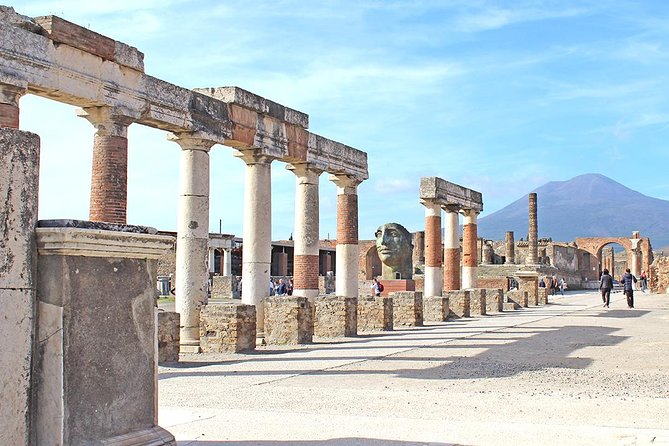
- Pompeii’s “where they went out” culture: Teatro Grande (about 5,000 seats) and the smaller Teatro Piccolo (about 800 seats) show Roman public entertainment.
- Daily life stops that don’t feel random: Via dell’Abbondanza, Terme del Foro, and the Lupanar turn architecture into stories you can picture.
- Morning or afternoon options: Pick a time that matches your day so Pompeii doesn’t steal the best part of your schedule.
Which Pompeii ticket and guide? Compare a few more.
- Pompeii Small Group Tour with an Archaeologist★ 5.0 · 6,593 reviews
- Discover the Ancient Ruins of Pompeii: Day Trip from Rome★ 3.5 · 2,247 reviews
- Pompeii and Herculaneum Small Group Tour with an Archaeologist★ 5.0 · 1,350 reviews
- Skip the Line Guided Tour of Pompeii led by an Archaeologist★ 5.0 · 703 reviews
Fast Entry With a Private, Art-Historian Guide
Pompeii is one of those places where the difference between a good day and a frustrating day is often minutes. This tour is designed to protect your time with guaranteed priority entry, so you can start seeing rather than standing.
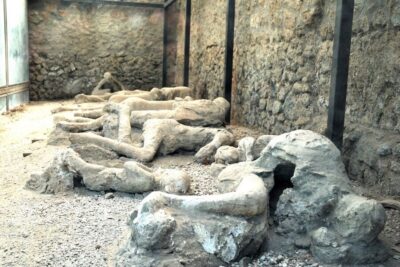
You also don’t just get a guide—you get interpretation. The tour includes a local guide plus professional art historian guidance, which matters in Pompeii because you’re not only looking at “old stuff.” You’re looking at art, public space, and domestic life frozen mid-routine after the eruption in 79 A.D.
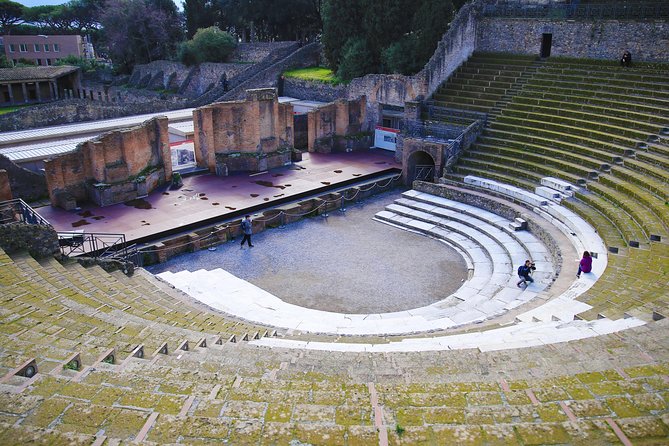
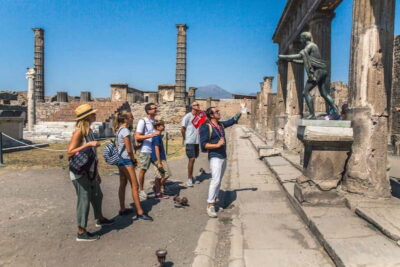
If you’re heading with kids or a mixed group, this structure helps. You get a clear path, a plan, and explanations that keep attention moving. Some departures are led by guides such as Anna, Livio, or Lello, and the common thread in how they work is practical pacing and hands-on help—like guiding you toward less crowded entry approaches early and assisting with photos.
One more practical perk: you’ll have a mobile ticket, and the meeting point is at Piazza Esedra in Pompeii. That’s useful because it cuts down the mystery factor when you’re juggling arrival times and getting oriented in a busy zone.
Teatro Grande: Roman Entertainment at 5,000 Seats
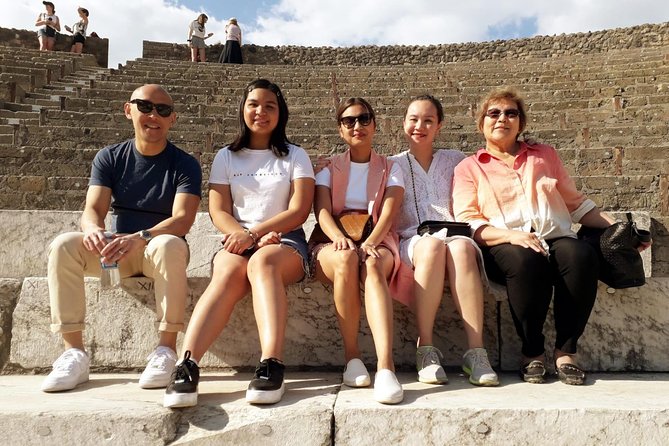
Teatro Grande is the big one, an open-air theatre with room for about 5,000 people. Standing there, it’s easier to understand that Pompeii wasn’t quiet. It was public. People gathered. Shows and announcements were part of everyday city rhythm.
What I like about starting with Teatro Grande is that it gives you a “frame” for everything after. Once you’ve seen the scale of Roman entertainment, the smaller stops feel more connected instead of like random ruins.
From a visitor standpoint, the main value is how your guide can connect visuals to use. You’ll be able to look at the theatre space as a functioning place—where sound, sightlines, and crowd movement mattered—rather than just admiring columns and stonework.
Time is tight (each segment is roughly short), so don’t expect a long sit-down moment. But with a private guide, you can spend your time where you actually care—focus on the architecture if that’s your thing, or ask how these performances would have worked.
Odeon (Teatro Piccolo): When the Theatre Gets Personal
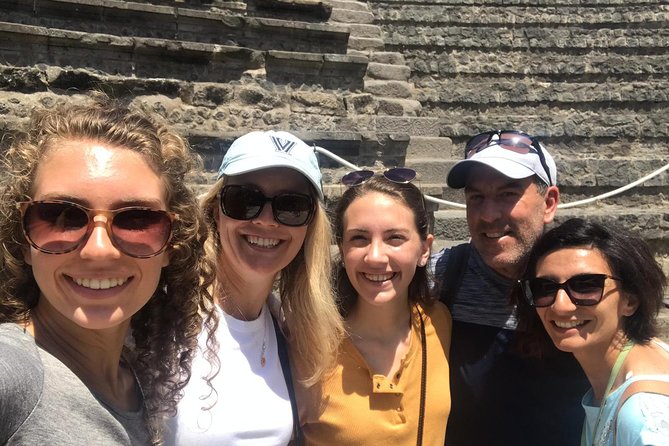
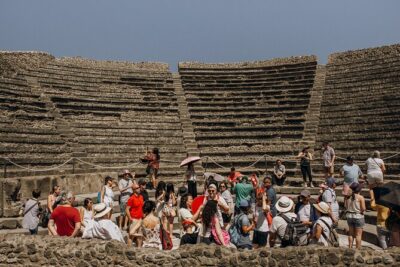
Next comes the smaller cousin, the Odeon / Teatro Piccolo, with about 800 seats. This contrast is what makes the theatre pair worth doing on a short tour. You’re not only seeing “a theatre,” you’re seeing how Romans scaled venues for different audiences and uses.
On a half-day, the small stage is your chance to slow down a notch mentally. The scale shift helps you imagine how different events might have felt more intimate, even while they were still very much public.
Here’s a practical tip for your viewing: if you’re traveling with someone who wants photos more than explanations, ask the guide to do a fast “orientation pass” first. Then you’ll know exactly where to stand and what angle matters before the crowd density changes.
Via dell’Abbondanza: Pompeii’s Main Street and Its Shops
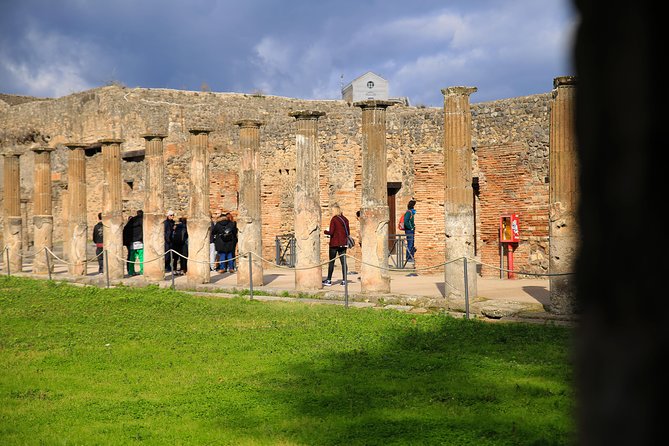
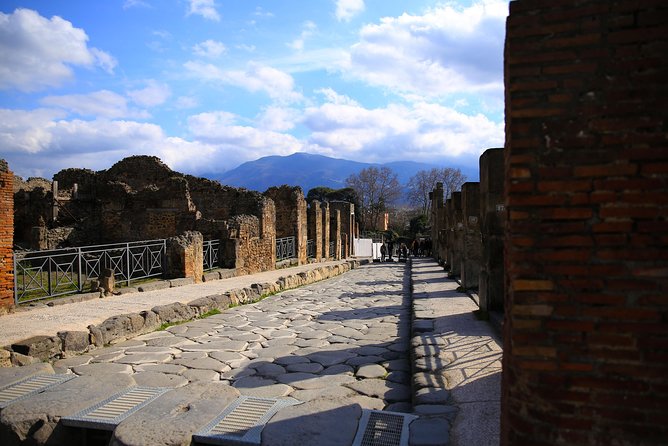
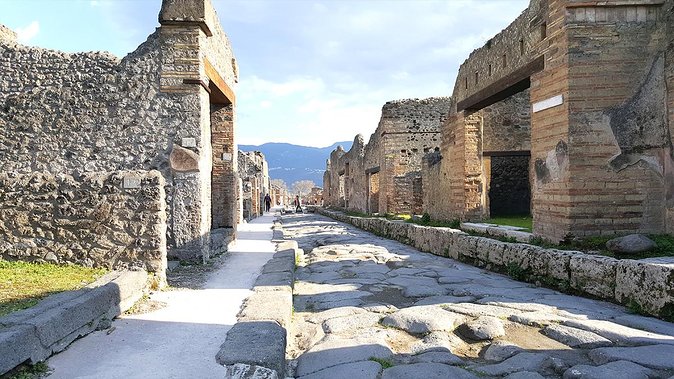
Then you hit Via dell’Abbondanza, Pompeii’s main street lined with major villas and Roman shops. This is where Pompeii starts to feel like a real city instead of a set of excavated buildings.
I like this stop because it’s a change of tempo. The theatres tell you about gatherings; the street tells you about daily movement—people walking, merchants working, and homes tucked close to public life.
Even with limited time, you can spot the “logic” of the urban plan: Pompeii wasn’t arranged for visitors. It was arranged for residents. A good guide will help you interpret what you’re seeing—where the street activity would have centered, and how shopfront design relates to commerce.
You’ll also get a sense of how close wealth and ordinary street life could sit next to each other. That contrast is a big reason Pompeii hits so hard once the guide connects the dots.
More guided runs around Pompeii



Terme del Foro: Roman Baths Buried After 79 A.D.
Next is Terme del Foro, a Roman bath complex buried by the eruption of Vesuvius in 79 A.D. Bathing in Roman cities wasn’t just about cleanliness. It was social time, routine time, and public time—often mixed with chatting, arranging meetings, and relaxing.
This stop can feel visually complex, because you’re dealing with a whole system of rooms and spaces rather than one dramatic structure. That’s exactly why the guide matters. With strong interpretation, you won’t just see walls and openings—you’ll understand the flow of the bath experience and what each area likely served.
A short warning (the kind that saves your trip): Roman ruins can have uneven footing, and bath complexes can include areas where you have to watch where you step. Wear grippy shoes and keep your eyes down for a moment before you look up to take pictures.
If you enjoy architecture, look at the layout and think about movement. If you enjoy art, you might also notice how decoration and design supported a “public comfort” atmosphere, even in places that now look stark.
Lupanar: The Brothel Frescoes and How They’re Read
Then comes the Lupanar, an ancient Roman brothel. Some frescoes are still visible, and the paintings help illustrate the specialties associated with the women shown there.
This stop is memorable because it flips the usual Pompeii script. You’re not only looking at grand public spaces or polished domestic corners. You’re seeing how people lived—and how a city’s economy and social structures worked, including the parts that are uncomfortable to talk about today.
Use this stop to ask questions that go beyond shock value. A good guide will help you interpret what you’re seeing in terms of signage, imagery, and the way Roman culture recorded identity and service through visual cues.
Sensitivity note: because the subject matter can be awkward, I’d lean on the guide’s pacing and tone. A tour like this is most satisfying when it stays focused on context, not gossip.
Two Hours in Pompeii: How the Route Stays Satisfying
A two-hour Pompeii tour sounds almost too short. But the structure makes sense for real-life travelers: you get an efficient, high-value set of sites that cover Roman public life, street life, and everyday social realities.
Instead of trying to “cover everything,” the tour zeroes in on places that help you build a mental map:
- theatres (public entertainment),
- main street (commerce and movement),
- baths (routine and socializing),
- and the Lupanar (city realities and visual culture).
If you’re the kind of traveler who gets overwhelmed by big ruins, this route is a relief. It gives you a path, and you’re not stuck making choices while the clock keeps ticking.
Still, manage expectations. Pompeii is large, and the ground is uneven. The tour calls for moderate physical fitness, and you should dress for all-weather operations. That means rain can happen, sun can happen, and you’ll want footwear that works on stone.
Also, hotel pickup isn’t included. You’ll need to make your own way to Piazza Esedra, which is near public transportation—handy if you plan ahead and keep it simple.
Price and Value: What You’re Really Paying For
At $203.95 per person, this isn’t a bargain-basement tour. But it also isn’t just you paying for someone to walk beside you.
You’re paying for several things that matter in Pompeii:
- Guaranteed line skipping, which protects your time and reduces stress.
- Admission ticket inclusion, so you’re not juggling separate entry costs for each stop.
- Private guiding, which helps you ask questions and focus on your interests instead of fitting into a bus-group rhythm.
- Art-historian support, which can be the difference between seeing a wall and understanding what made that wall meaningful.
One extra point: the tour mentions group discounts, which can improve value if you’re traveling with others and coordinating schedules.
And timing helps too. This experience is commonly booked about 43 days in advance, so if Pompeii is a top priority for your trip, earlier planning usually makes your life easier.
Who This Tour Suits Best (and Who Might Feel Crunched)
This tour is a strong match if you:
- want a guided highlights route without spending your morning trapped in queues,
- care about interpretation (art + architecture + daily life),
- and prefer a private experience that fits your pace.
It can also work well for couples and small families because the format is straightforward and the stops are distinct.
Who might feel “crunched”? If you’re hoping for hours of wandering or you want to stop repeatedly for slow, detailed photo sessions, the short duration might feel limiting. In that case, you may want a longer independent plan. Here, the value is speed plus story, not endless roaming.
For families: children must be accompanied by an adult. For everyone: keep an eye on your footing and energy level, since the route includes walking through uneven ancient surfaces.
Should You Book This Tour?
I think you should book if Pompeii is on your list but you don’t want to gamble your day on lines and decision-making. The combination of private guiding, fast entry, and a concentrated set of stops—from Teatro Grande to Terme del Foro and the Lupanar—is built for travelers who want results, not chaos.
Don’t book if you want a slow, sprawling “pick every alley” experience. This is a focused, time-protected tour.
If you want the best shot at an easy day in Pompeii, show up ready to walk, bring comfortable shoes, and plan to ask your guide for what you actually care about—mosaics, casts, or the human story behind the eruption.
FAQ
How long is the Pompeii tour?
The tour lasts about 2 hours.
Is this tour private?
Yes. It’s a private tour, and only your group participates.
Is the tour offered in English?
Yes. The tour is offered in English.
Are admission tickets included?
Yes. Admission tickets are included for the stops on the tour.
Does the tour skip the long lines?
Yes. It’s guaranteed to skip the long lines with the help of your private guide.
Where do I meet, and where does the tour end?
You meet at Piazza Esedra, 80045 Pompei NA, Italy, and the tour ends back at the same meeting point.
Is hotel pickup included?
No. Hotel pickup and drop-off are not included.
Is the tour suitable for people with limited mobility?
The tour notes a moderate physical fitness level is required. It operates in all weather conditions, so wear appropriate clothing and footwear.
Can I cancel for a full refund?
Yes. You can cancel up to 24 hours in advance for a full refund.
What document do I need on the day of travel?
A current valid passport is required on the day of travel.
More Tours in Pompeii


More Tour Reviews in Pompeii

More Pompeii Tours to Compare
More Pompeii tours, freshly reviewed
Pompeii Tours, compared.
 ★ 4.8Pompeii: Entry Ticket and Guided Tour with an ArchaeologistFrom $3519,459 reviews
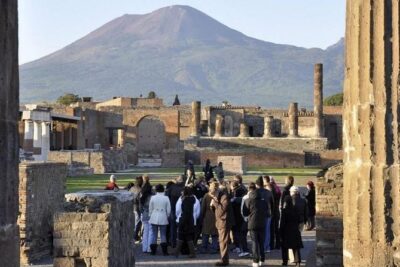
 ★ 4.1Pompeii: Entry Ticket with Audio GuideFrom $4013,491 reviews
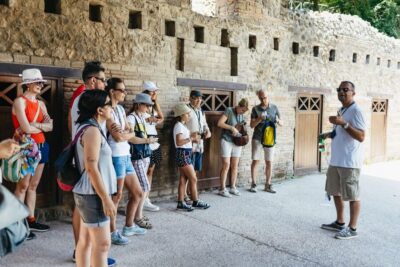
 ★ 4.8Pompeii: Small Group Tour with an ArchaeologistFrom $4012,264 reviews
 ★ 4.3Pompeii Ruins & Mount Vesuvius Day TourFrom $12011,459 reviews
★ 5.0Pompeii Small Group Tour with an ArchaeologistFrom $356,593 reviews
★ 4.3Pompeii Ruins & Mount Vesuvius Day TourFrom $12011,459 reviews
★ 5.0Pompeii Small Group Tour with an ArchaeologistFrom $356,593 reviews
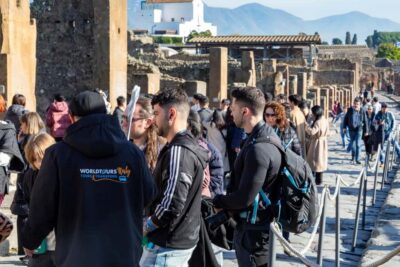 ★ 4.5Skip-the-line Pompeii – Small Group TourFrom $544,401 reviews
 ★ 4.6Naples or Sorrento: Full-Day Pompeii and Mount Vesuvius TourFrom $1044,235 reviews
 ★ 3.9Pompeii: Skip-the-line Entry Ticket with Audio Guide & MapFrom $433,153 reviews