
Review · POMPEII TOURS
Discover Pompeii on this Guided Walking Tour of the Buried City
A buried city in full conversation with today. This guided walk through Pompeii is built to get you into the UNESCO site fast, with a guide translating the big picture of daily Roman life. I like that admission is included and you get headsets, which makes the tour feel smoother and less chaotic. One thing to watch: language options can depend on your departure window and minimum group size.
I especially like the way the tour sets Pompeii up before you start walking. You’ll hear how the city formed on a plateau shaped by Vesuvius lava, and how early walls and mixed communities helped it grow. I also like that the pace is designed for questions, since you’re working with a professional guide rather than just following signs on your own.
The main consideration is language accuracy. French and German live guiding depends on meeting a minimum of 10 participants, and if that doesn’t happen, the tour runs in English. If you’re counting on exact translations, I’d plan to confirm the language choice within 24 hours of departure.
In This Review
- Key Things I’d Focus On
- Pompeii in Two Hours: What You Can Really Expect
- The Best Value Moment: Admission Included and That Skip-the-Line Benefit
- Meeting at Piazza Esedra: Easy Start, No Bus Ride Required
- Walking Pompeii With a Roman-Day Focus (Not Just Stone Facts)
- Where the City Came From: Plateau, Lava, and the Sarno River
- Origins That Weren’t Neat and Simple
- Vesuvius Context: The Volcano You Can’t Ignore
- Language Options: Live Guide, Headsets, and Audio Guides That Change by Season
- Group Size and Pacing: The “15 People Max” Advantage
- What’s Not Included (and How to Plan Around It)
- Who This Tour Is Best For
- Should You Book This Pompeii Guided Walking Tour?
- FAQ
- How long is the Pompeii guided walking tour?
- What is the price?
- Are admission tickets included?
- Where do I meet the guide?
- What languages are available for the guided tour?
- Are headsets included?
- Is there an audio guide, and what languages are offered?
- What do I need to bring for entry verification?
- Is the group size limited?
- What is the cancellation policy?
Key Things I’d Focus On
- Skip-the-line entry plus admission included so you lose less time to queues.
- Headsets for clearer guiding over crowd noise and walking pace.
- Small group size (max 15) for easier questions and a more human experience.
- Live guide in English, Spanish, German, or French with audio guides for extra languages.
- Pompeii’s origins explained first (plateau from lava, early tuff walls, and port life).
- Language conditions for French/German if minimum participation isn’t met.
Which Pompeii ticket and guide? Compare a few more.
- Pompeii Small Group Tour with an Archaeologist★ 5.0 · 6,593 reviews
- Discover the Ancient Ruins of Pompeii: Day Trip from Rome★ 3.5 · 2,247 reviews
- Pompeii and Herculaneum Small Group Tour with an Archaeologist★ 5.0 · 1,350 reviews
- Skip the Line Guided Tour of Pompeii led by an Archaeologist★ 5.0 · 703 reviews
Pompeii in Two Hours: What You Can Really Expect
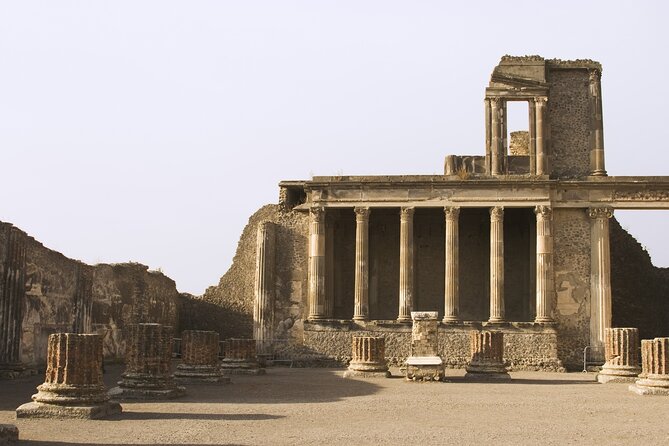
Pompeii is big, and two hours can feel short. That said, this tour is designed around a simple win: it gets you past arrival friction quickly, then uses a guide to help you connect what you’re seeing to how people lived. You’re not just looking at ruins—you’re getting a story that makes the stones make sense.
The length matters. In about 2 hours, you’ll get enough context to recognize patterns—streets, the layout of the city, and the everyday rhythms that show up in the remains. You also won’t spend the entire time “trying to decode a site,” which is the common way Pompeii tours turn frustrating.
I also like that the group is kept to 15 people max. It’s easier to keep your bearings, and you’re less likely to feel like you’ve been swallowed by a moving crowd.
The Best Value Moment: Admission Included and That Skip-the-Line Benefit
At $63, you’re paying for more than a guide. The tour includes an admission ticket to Pompeii, and it’s built to help you avoid long lines on arrival. For many people, that’s the biggest value—time saved is vacation currency.
Here’s the practical part: Pompeii is a place where arrival timing can make or break your day. If you arrive during busy stretches, queue time can eat your energy. This tour’s approach—getting you set up with mobile ticketing and guided entry—helps you start seeing things faster.
Also, the tour includes headsets. That’s a real quality-of-life feature. You’re walking through noise and crowds, and headsets keep you from constantly asking someone to repeat themselves or falling behind because you missed a key explanation.
Meeting at Piazza Esedra: Easy Start, No Bus Ride Required
You meet at Piazza Esedra, 2, 80045 Pompei NA, Italy, and the tour ends back at the meeting point. There’s no pickup or drop-off, so you’ll want to plan your own arrival to Pompeii’s area with a buffer.
This setup is convenient if you’re already staying nearby or working your day around Pompeii. It’s less convenient if you were hoping for a packaged transit solution. But the direct meeting point also means you’re not losing time on a shuttle.
A small tip that matters at Pompeii: arrive a bit early so you can find the exact group area and get your headsets sorted before you move. It keeps the first 10 minutes from feeling rushed.
Walking Pompeii With a Roman-Day Focus (Not Just Stone Facts)

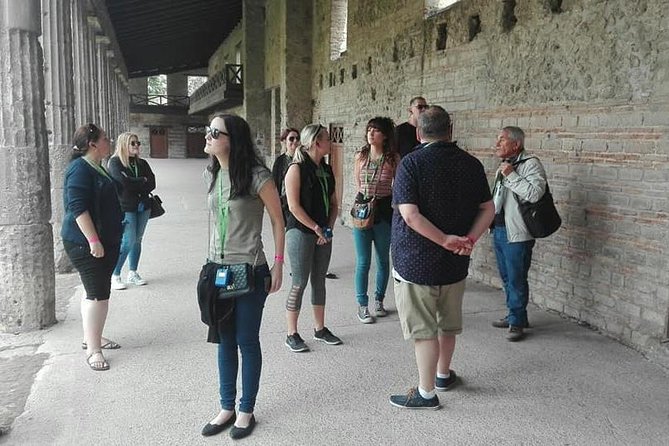
This is a guided walking tour through the UNESCO-listed remains of Pompeii. The overall promise is straightforward: you’ll learn about the Romans’ daily lives, not just dramatic disaster headlines.
The key is how the tour frames the site. Pompeii didn’t happen in a vacuum—it grew in a specific place, with a specific coastline economy, and with layered cultures. When you understand that, the ruins stop being random. You start seeing how people lived close together, how work connected to trade, and how the city’s layout reflects that.
Because the itinerary is focused and time is limited, the guide’s job is to pick the right “anchor points” visually. That’s where headsets and a clear language channel matter: they help you keep the thread while you’re moving.
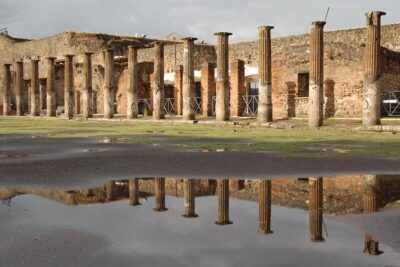
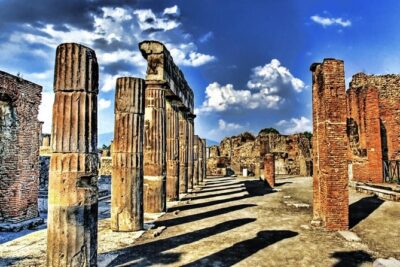
More of Pompeii at street pace


Where the City Came From: Plateau, Lava, and the Sarno River
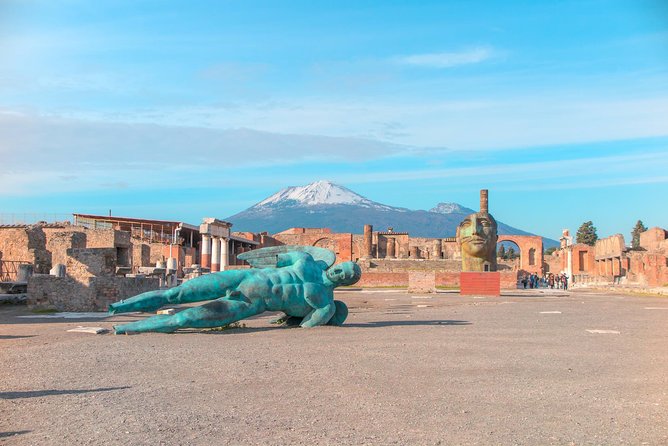
Before you get too far into the streets, you’ll get the geographic setup. Pompeii sits on a plateau formed by Vesuvius lava flow. The city dominated the valley around the Sarno River, and the delta area supported a busy port.
That port detail is more important than it sounds. A port city isn’t just pretty waterfront drama—it’s where goods arrive, jobs connect, and people from different backgrounds cross paths. It helps explain why Pompeii could develop into a real hub rather than a quiet settlement.
Origins That Weren’t Neat and Simple
The origins of Pompeii are uncertain, and the oldest traces go back to the 7th–6th centuries BC. That’s when the first protective walls were built—called pappamonte—to enclose about 63.5 hectares.
The population included a mix of Etruscans, Greeks, and other Italic peoples. You can think of this as an early melting pot at the edges of the Italian world. The tour’s value here is that it prevents a common mistake: treating Pompeii as if it sprang fully formed out of one culture and one moment.
Vesuvius Context: The Volcano You Can’t Ignore
Even though this tour is centered on Pompeii, Vesuvius is part of everything you’ll understand there. The guide’s explanations connect the eruption story to the physical setting.
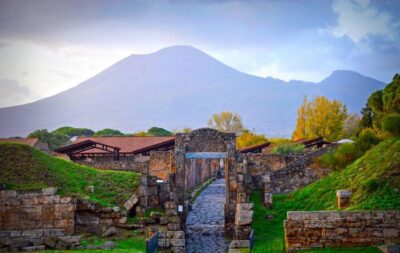
If you want the technical background in plain language: Vesuvius is a somma-stratovolcano on the Gulf of Naples. The structure includes a large cone partially encircled by the steep rim of a summit caldera, which formed after an older, taller volcano collapsed.
Why does any of that matter during a walking tour? Because it helps you understand the landscape that shaped Pompeii in the first place. When you see the city’s plateau and know it was formed by lava flows, the eruption isn’t just a disaster—it’s a geological chapter that literally built the ground you’re standing on.
And it gives the guide an easy way to talk about what preservation means. Pompeii is preserved because the event was catastrophic and fast. That connection becomes clearer once you understand the volcano’s “type” and location in the wider volcanic arc.
Language Options: Live Guide, Headsets, and Audio Guides That Change by Season
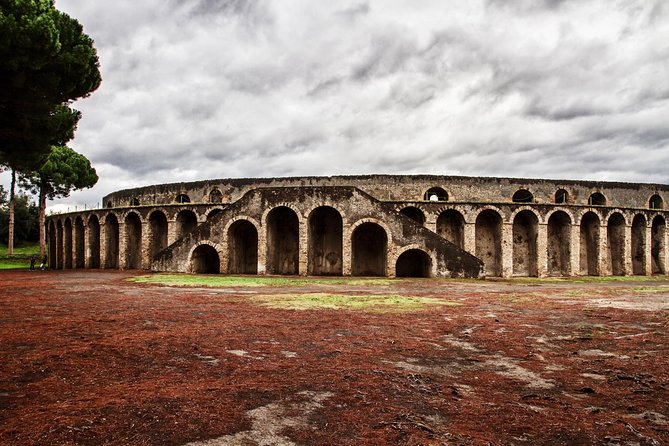
You can choose a live guide in English, Spanish, German, or French. That’s a big deal at Pompeii, because a good guide helps you interpret what you’re seeing while you’re walking.
You also get headsets on the tour, which supports clarity even when your group is moving and the site is loud.
Then there are audio guides—in other languages—depending on the season:
- November to March: Italian, Portuguese, Chinese, Russian, and Japanese
- April to October: Italian, German (from Mondays to Fridays), French, Portuguese, Chinese, Russian, and Japanese
Two practical takeaways:
- Don’t assume that audio-guide language equals live-guide language. The live guide is listed as English/Spanish/German/French, while audio options vary by months.
- If you’re booking French or German, there’s a catch: a minimum of 10 participants is required. If the minimum isn’t met, the tour runs in English. The good news is you can contact the reservations team and confirm the language option within 24 hours before departure.
One more practical point: bring a valid ID/passport for entry verification, since names and verification matter at the gate. (This also helps smooth the start of your tour.)
Group Size and Pacing: The “15 People Max” Advantage
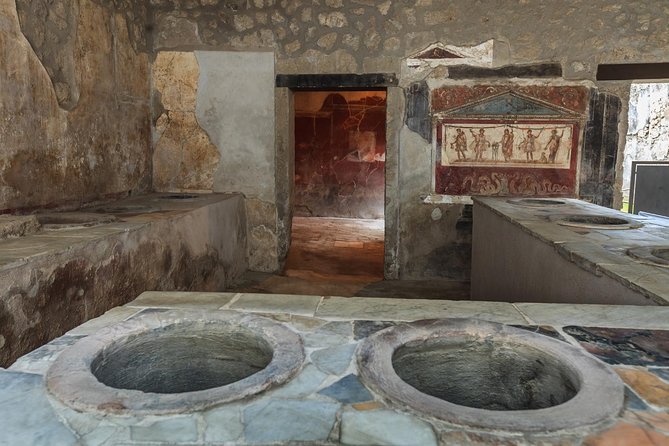
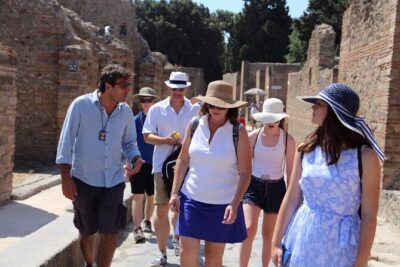
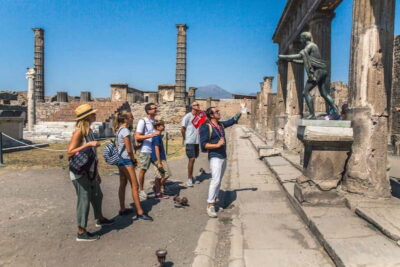
With a maximum of 15 travelers, you’ll likely experience Pompeii more like a guided walk with a small crew than a cattle line. That matters because the guide can actually slow down or answer a question without losing the whole group.
Pacing in Pompeii is also physical. Uneven ground and crowding are real. The tour’s short duration is an advantage if you don’t want to spend your whole day indoors with logistics and lines.
This also means your mindset should be: prioritize the big ideas over trying to capture everything. In two hours, you’re not “completing” Pompeii—you’re building understanding so a return visit (or a self-guided follow-up) becomes easier.
What’s Not Included (and How to Plan Around It)
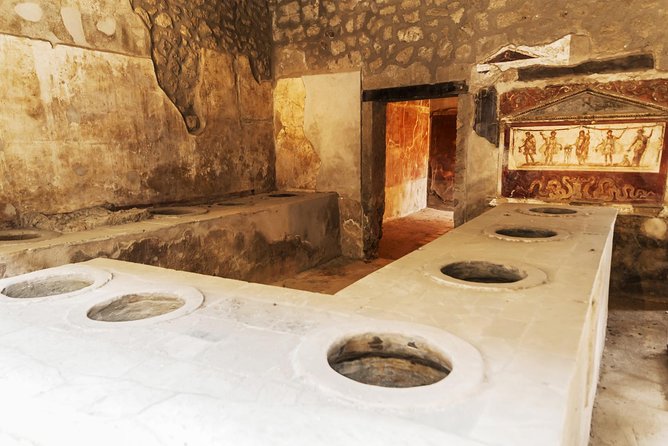
The tour does not include beverages and lunch, and there are optional gratuities. So you’ll want to plan food and drink around your overall day.
Since it’s a walking tour, it helps to be ready for a couple of basic realities:
- You’ll be walking the city remains for roughly 2 hours
- You’ll spend time listening through headsets, then looking closely at what the guide points out
A good strategy is to treat this tour as your “orientation plus story” session. Afterward, you can decide what you want to revisit with your own pace and interests.
Who This Tour Is Best For
This tour fits best if you want:
- A guided explanation that turns ruins into daily life
- Language support for English, Spanish, German, or French (plus audio alternatives)
- Admission included and less time wasted on queues
- A small group size and headsets that make it easier to follow
It’s also a solid option for first-timers. Pompeii can feel overwhelming if you’re trying to figure out significance on your own while walking quickly. A guide helps you get your bearings fast.
If your top priority is spending hours wandering without a schedule, you might prefer a self-guided route. But if your goal is understanding, this tour is built for that.
Should You Book This Pompeii Guided Walking Tour?
I’d book it if you value time savings and you want a guided framework for how Pompeii worked day-to-day. At $63 with admission included, plus headsets and a professional guide, it’s a practical value—especially on days when Pompeii lines can be a mess.
The decision hinges on language. If you’re choosing German or French, confirm you’ll actually get that live guide (minimum 10 participants, otherwise it switches to English). If you’re flexible on language or you’re comfortable with English, you’ll likely enjoy the tour more because you won’t be stuck worrying about translation.
If you’re careful about the language plan and you want your Pompeii visit to feel coherent within two hours, this is a strong way to see the buried city with less stress.
FAQ
How long is the Pompeii guided walking tour?
The tour lasts about 2 hours.
What is the price?
The price is $63.
Are admission tickets included?
Yes. Admission to Pompeii Archaeological Park is included in the tour.
Where do I meet the guide?
You meet at Piazza Esedra, 2, 80045 Pompei NA, Italy.
What languages are available for the guided tour?
The live guide is available in English, Spanish, German, or French.
Are headsets included?
Yes. Headsets are included so you can hear the guide clearly.
Is there an audio guide, and what languages are offered?
Audio guides are available in additional languages. The available audio languages vary by season:
- November to March: Italian, Portuguese, Chinese, Russian, Japanese
- April to October: Italian, German (Mon–Fri), French, Portuguese, Chinese, Russian, Japanese
What do I need to bring for entry verification?
You should bring a valid ID/passport for entry verification.
Is the group size limited?
Yes. This tour has a maximum group size of 15.
What is the cancellation policy?
You can cancel for free up to 24 hours in advance for a full refund. If you cancel less than 24 hours before the start time, the amount paid is not refunded.
More Tours in Pompeii



More Tour Reviews in Pompeii

More Pompeii Tours to Compare
More Pompeii tours, freshly reviewed




Pompeii Tours, compared.
 ★ 4.8Pompeii: Entry Ticket and Guided Tour with an ArchaeologistFrom $3519,459 reviews
 ★ 4.1Pompeii: Entry Ticket with Audio GuideFrom $4013,491 reviews
 ★ 4.8Pompeii: Small Group Tour with an ArchaeologistFrom $4012,264 reviews
 ★ 4.3Pompeii Ruins & Mount Vesuvius Day TourFrom $12011,459 reviews
★ 5.0Pompeii Small Group Tour with an ArchaeologistFrom $356,593 reviews
★ 4.3Pompeii Ruins & Mount Vesuvius Day TourFrom $12011,459 reviews
★ 5.0Pompeii Small Group Tour with an ArchaeologistFrom $356,593 reviews
 ★ 4.5Skip-the-line Pompeii – Small Group TourFrom $544,401 reviews
 ★ 4.6Naples or Sorrento: Full-Day Pompeii and Mount Vesuvius TourFrom $1044,235 reviews
 ★ 3.9Pompeii: Skip-the-line Entry Ticket with Audio Guide & MapFrom $433,153 reviews
Browse the lists this tour appears in