
Review · HERCULANEUM TOURS
Walking Tour of Herculaneum with Local Guide
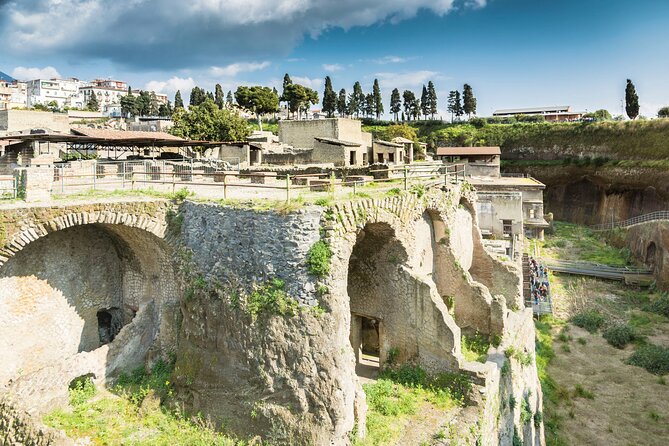
Herculaneum is small, and that matters. In about two hours, you can see Roman daily life in a way that feels unusually close, from a preserved ancient boat to rooms packed with mosaics, all with a local guide and prebooked entry. It’s the kind of outing that fits neatly into a Naples day.
What I like most is the pace. This is an express route with short stops that still cover the big visual hits, so you don’t lose your whole afternoon to ticket lines and wandering.
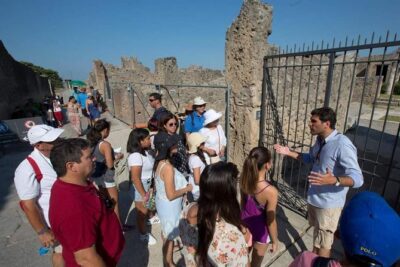
The other thing I like: it’s guided, not just self-guided with headphones. You walk from highlight to highlight with an English-speaking guide who helps you connect what you’re seeing to what life was like back then. One drawback to consider is language expectations: this tour is offered in English, and other language availability can depend on minimum participation.
In This Review
- Quick Hits Before You Go
- Herculaneum Walking Tour: Why It Feels Like the Real Thing
- Price and Value: What $48.16 Buys You in Real Terms
- Timing, Group Size, and How the Walk Actually Works
- Your Stop-by-Stop Route at Herculaneum
- Stop 1: Salone della Barca di Ercolano (The Preserved Roman Boat)
- Stop 2: Antiquarium di Ercolano (Objects That Tell a Story)
- Stop 3: Casa dei Cervi (A Patrician Villa With Strong Preservation)
- Stop 4: Casa del Rilievo di Telefo (Another Patrician Villa Moment)
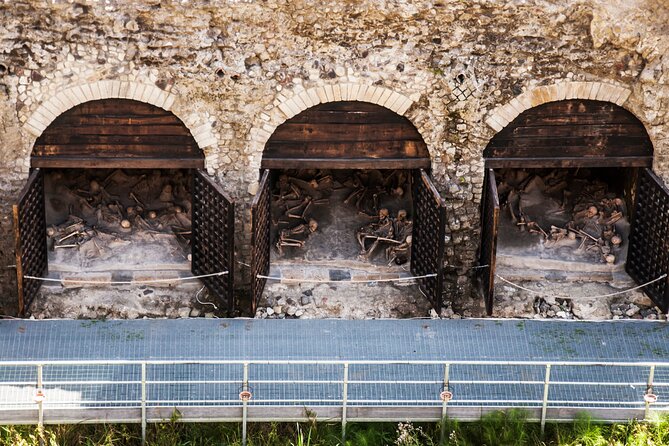
- Stop 5: Grande Taberna (A Roman Fast-Food, Not a Guess)
- Stop 6: Vestibolo della Palestra (Gymnasium and Swimming Pool)
- Stop 7: Partem Domus lignea – Casa del Tramezzo di Legno (Wood That Still Matters)
- Stop 8: Terme Del Foro (Thermal Baths)
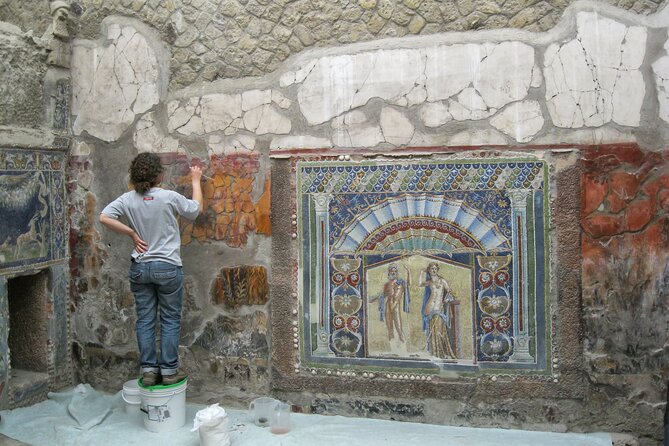
- Stop 9: Casa di Nettuno e Anfitrite (Mosaics That Shut Up Your Brain)
- The Real Impact of Having a Guide
- Language Expectations: English Is the Safe Bet
- Weather, Footwear, and Small Things That Affect Big Enjoyment
- Who This Tour Fits Best (And Who Might Prefer Another Option)
- Tips to Make the Most of the 2-Hour Express Pace
- Should You Book This Herculaneum Walking Tour?
- FAQ
- Is admission to Herculaneum included?
- How long is the walking tour?
- What time does it start and where do we meet?
- What language is the tour offered in?
- Is there a minimum or maximum group size?
- Does the tour run in bad weather?
Quick Hits Before You Go
- Prebooked admission helps you skip the stress of entry timing at Herculaneum.
- Short, focused stops keep the tour to about two hours.
- English-speaking guide means you get explanations, not just labels.
- Top highlights in a smart route: boat, villas, baths, mosaics, and even a Roman fast-food stop.
- Weather happens: it operates in all conditions, so you’ll want to dress for wet or windy days.
- Small group limit (max 20) keeps it easier to hear and move through the site.
Herculaneum keeps a few more tours worth your time
- Herculaneum: Skip-the-Line Guided Tour with Archaeologist★ 4.8 · 3,439 reviews
- Herculaneum Small Group Tour and Ticket With an Archaeologist★ 5.0 · 994 reviews
- Herculaneum: Skip-the-Line Entry Ticket with Audio Guide★ 4.3 · 870 reviews
- From Naples: Pompeii & Herculaneum with Archaeologist Guide★ 4.8 · 665 reviews
Herculaneum Walking Tour: Why It Feels Like the Real Thing
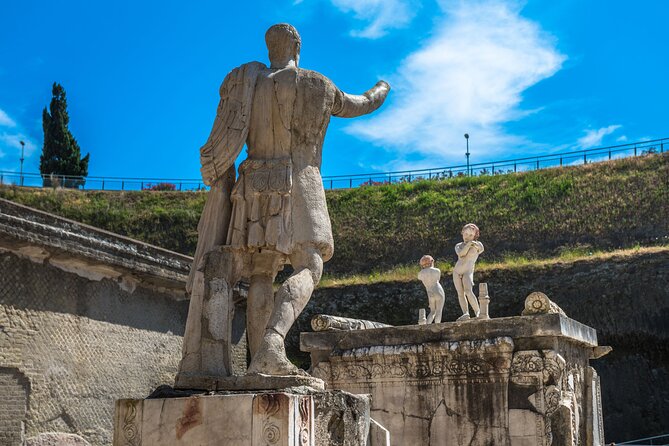
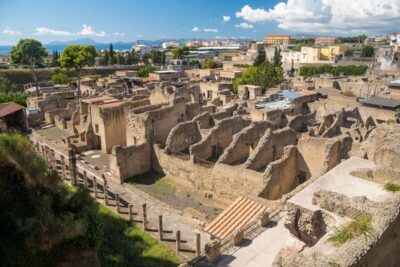
Herculaneum is the quieter neighbor to Pompeii, and that quiet can be a gift. The site is compact enough that you can get a strong sense of the town without turning your day into a marathon. The best part is how many of the highlights relate to everyday life: homes, baths, a gym, and even a place that looks like Roman-era fast food.
With this tour, the layout of the route matters. You’re not drifting. You’re moving through a sequence of key spaces that build a picture in your head: trade and food, then leisure and exercise, then the villas and the art.
This is also a smart way to experience the site if you’re trying to balance Naples sightseeing with one major archaeological stop. You get meaningful time inside, but you’re not stuck there all day.
Price and Value: What $48.16 Buys You in Real Terms
At $48.16 per person for roughly two hours, the best value here is what’s included. You’re paying for more than a guide’s time—you’re also getting the Herculaneum entrance ticket bundled in.
That matters because Herculaneum is the kind of place where timing affects your enjoyment. If you show up without a plan, you can spend the best part of your afternoon waiting and then rushing. With prebooking, you can usually get into the experience more quickly and stay focused on the highlights.
You also avoid the “I’m paying for a guide, so why didn’t they show me anything?” problem. The route is built around specific stops—nine of them—each designed to give you a different angle on the ancient city.
Timing, Group Size, and How the Walk Actually Works
This tour starts at 2:00 pm at the Herculaneum Ticket Office in Ercolano. It ends back at the same meeting point, which is convenient if you’re planning to head back toward Naples afterward.
The group size is capped at 20 travelers, with a minimum of 4 people per booking. In plain terms: it’s big enough that you’ll have company, but small enough that the guide can keep things organized.
You’ll also want moderate physical fitness. This isn’t described as a strenuous hike, but archaeological sites involve walking on uneven ground and moving between spaces quickly. If your mobility is limited, it’s worth thinking twice before choosing an express route with short stops.
Your Stop-by-Stop Route at Herculaneum
This tour moves briskly, with most stops lasting 5 to 15 minutes. That quick structure is either perfect or frustrating, depending on your style. If you like a highlight reel with context, it works well. If you prefer lingering and reading every label, you may wish you had extra time on your own afterward.
Here’s what each stop is, and what to look for.
More of Naples at street pace



Stop 1: Salone della Barca di Ercolano (The Preserved Roman Boat)
You begin with the Salone della Barca di Ercolano, a small museum space where you can see an ancient Roman boat in excellent condition. It’s one of those moments that instantly pulls you out of “ruins” mode and into “people did this for a living” mode.
If you’re trying to understand how a coastal city worked, this stop is a strong opener. Even in a short visit, the boat helps you imagine transport, trade, and work rhythms before you move on to homes and public spaces.
A drawback to keep in mind: this is about 10 minutes. Spend that time looking closely, not scanning the room. If you blink, you’ll miss details.
Stop 2: Antiquarium di Ercolano (Objects That Tell a Story)
Next is the Antiquarium di Ercolano, where you’ll see furnishings, furniture, and jewels found during the excavations. The point isn’t just the items—it’s what the items suggest about daily life: taste, status, craftsmanship, and what people valued enough to keep.
This stop is valuable because it connects the outdoor ruins to something tactile. When you later walk past villa spaces, you can better imagine what might have been inside them.
Time is about 20 minutes, which is long enough to get oriented. If you tend to enjoy details, this is the stop where you’ll feel the most satisfied.
Stop 3: Casa dei Cervi (A Patrician Villa With Strong Preservation)
The Casa dei Cervi is described as one of the best preserved buildings in Herculaneum, a patrician villa. The villa concept is key here: this isn’t just a house, it’s a statement of wealth and social position.
With only 15 minutes, the guide’s role becomes important. You’ll likely get help spotting what makes the building stand out and how its layout fits a high-status lifestyle.
If you love architecture, you might wish you had more time. But as a highlight inside a tight schedule, it’s a solid anchor stop.
Stop 4: Casa del Rilievo di Telefo (Another Patrician Villa Moment)
The Casa del Rilievo di Telefo is another ancient patrician villa, and your visit is short—about 5 minutes. Think of this as a quick hit: you’ll focus on what makes this place distinct rather than trying to take in everything at once.
This stop is best if you want variety. The tour is building a loop of high-value spaces, and this one keeps the route from feeling repetitive.
Stop 5: Grande Taberna (A Roman Fast-Food, Not a Guess)
Next up is the Grande Taberna, described as a thermopylae—ancient fast food. That alone is worth the stop. The idea that you could grab prepared food quickly in Roman times makes the site feel more human and less distant.
Even in 5 minutes, the setting helps you connect the city’s economy to daily routines. You’re not only looking at elite villas; you’re also seeing how ordinary people would have interacted with food and commerce.
Stop 6: Vestibolo della Palestra (Gymnasium and Swimming Pool)
The Vestibolo della Palestra is where the tour gets playful. You’ll see the gymnasium and swimming pool of Herculaneum.
This stop is a reminder that leisure wasn’t just something people did at home. Bodies were trained, routines existed, and public spaces mattered.
Because it’s only 5 minutes, don’t treat it like a museum gallery. Treat it like a place to quickly clock the layout and imagine the activity.
Stop 7: Partem Domus lignea – Casa del Tramezzo di Legno (Wood That Still Matters)
You’ll then see Partem Domus lignea – Casa del Tramezzo di Legno, an ancient Roman house segment where wooden doors and beams are preserved.
The wow-factor here is simple: so much ancient construction disappears over time. Seeing preserved wood changes the feel of the tour because it adds texture—literally something closer to the original material story.
This stop runs about 10 minutes, which gives you enough time to look at the structures and then listen while the guide connects it to how the home functioned.
Stop 8: Terme Del Foro (Thermal Baths)
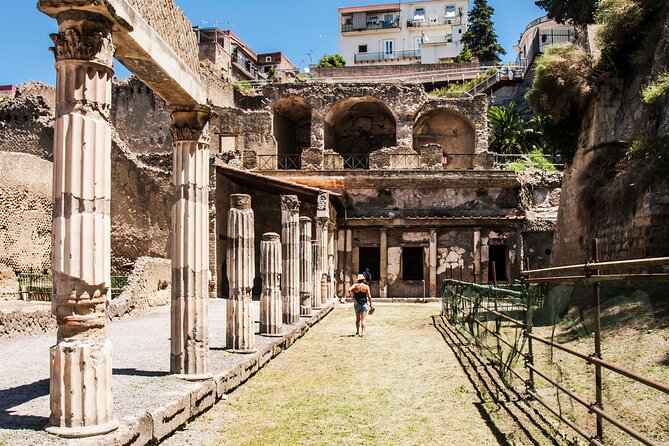
The tour continues to Terme Del Foro, the thermal baths. Baths are always a big deal in Roman cities, and here they’re a major highlight because they point to social life and routine.
In 10 minutes, you should aim to grasp the space flow. Even without deep technical detail, it helps you understand that the baths were more than hygiene. They were meeting points, relaxation, and status-by-presence.
Stop 9: Casa di Nettuno e Anfitrite (Mosaics That Shut Up Your Brain)
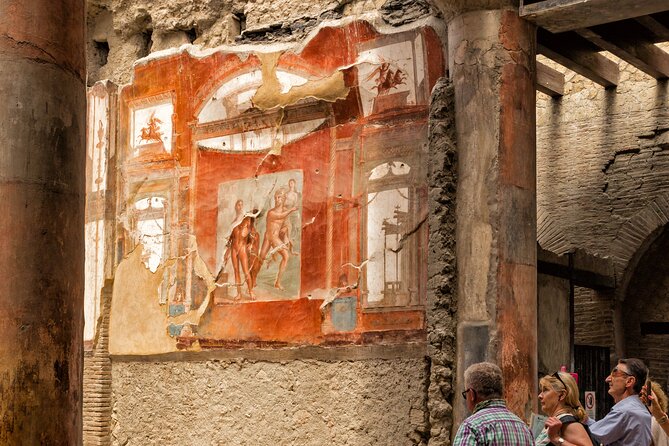
Finally, you reach Casa di Nettuno e Anfitrite, a house known for one of the most beautiful mosaics of the excavations. Your stop is about 5 minutes, so it’s not about reading everything. It’s about seeing the art and letting it anchor the whole experience.
If you’re the type who likes one visual that you’ll remember later, this is the stop. Mosaics tend to do that. They turn a site from geography into feeling.
The Real Impact of Having a Guide
The tour’s strongest ingredient is the guidance. Labels are nice, but a guide helps you interpret the “why.” Why is this space elite? Why is that area public? Why does that object matter? Why does the city look the way it does?
One name that shows up in strong guide experiences is Mr Raphael. The most useful guides are the ones who help you see connections fast—what you’re looking at now and how it fits the daily rhythm of the ancient city.
Also, the tour is designed with communication in mind: it’s offered in English. That makes a big difference when you have only two hours. You don’t have time to piece things together yourself.
Language Expectations: English Is the Safe Bet
This tour is listed as offered in English, and that’s the clearest promise you can rely on. The description also notes the tour can be bilingual, but availability can vary.
Here’s the practical caution: language options may depend on minimum participation. The tour requires at least 4 people per booking, and if that minimum isn’t met for a specific language setup, you might be offered a different arrangement.
If language matters a lot to you, double-check what language you’ll actually get before you arrive. If you only want English, you’re on safe ground with the standard offering.
Weather, Footwear, and Small Things That Affect Big Enjoyment
This tour operates in all weather conditions, and you’re told to dress appropriately. That’s not just boilerplate. A rain-soaked archaeological site can be slippery, and the tour’s quick pacing leaves less room for detours.
So I suggest:
- Wear shoes with grip you trust.
- Bring a light layer you can adjust if the weather changes.
- If it’s rainy, plan for a damp day rather than hoping it clears up.
Also remember: you’re walking between multiple spaces. Even if the route is short, your comfort depends on your feet.
Who This Tour Fits Best (And Who Might Prefer Another Option)
This tour fits best if you:
- Have limited time in Naples but want a meaningful archaeological experience
- Want a guided highlight route instead of a slow self-guided day
- Prefer learning in context while you walk, not reading for hours afterward
- Like the idea of seeing both villas and public life spaces in one loop
You might choose something else if you:
- Want to linger long in museums or read every detail
- Get frustrated when stops are brief
- Need maximum language flexibility beyond English
Tips to Make the Most of the 2-Hour Express Pace
Because the route is tight, your strategy matters.
First, pick one or two things you want to remember before you start. Maybe it’s the boat, the baths, or the mosaic. Then, when you’re at each stop, let that goal guide where you focus your attention.
Second, listen to the guide for the connections, not just the facts. In a short tour, the best use of time is understanding how each site relates to the city as a whole.
Third, if you’re a detail lover, give yourself permission to return later on your own. With an express tour, you’re building a foundation, not finishing every reading task.
Should You Book This Herculaneum Walking Tour?
I’d book it if you want a fast, organized route through the best-known parts of Herculaneum with prebooked entry and an English-speaking guide. At roughly two hours, it’s a strong match for visitors who are juggling Naples logistics and want a real sense of what Herculaneum was like.
I’d hesitate if you’re extremely language-sensitive beyond English, because language availability may vary based on group conditions. And if you like slow travel and long museum time, the short stops may feel rushed.
If your goal is to get your bearings fast and leave with clear memories—boat, villas, baths, and mosaics—this Herculaneum walking tour is a practical and very satisfying choice.
FAQ
Is admission to Herculaneum included?
Yes. The entrance ticket of Herculaneum is included in the tour price, along with the walking tour inside the archaeological site.
How long is the walking tour?
It’s listed as about 2 hours.
What time does it start and where do we meet?
It starts at 2:00 pm. The meeting point is the Herculaneum Ticket Office, 80056 Ercolano, Metropolitan City of Naples, Italy.
What language is the tour offered in?
The tour is offered in English.
Is there a minimum or maximum group size?
Yes. A minimum of 4 people is required per booking, and the tour has a maximum of 20 travelers.
Does the tour run in bad weather?
It operates in all weather conditions, so you should dress appropriately. The experience also notes it requires good weather, and if it’s canceled due to poor weather you’ll be offered a different date or a full refund.
More Tours in Naples


More Tour Reviews in Naples

Herculaneum, a Few More Tours

More Naples tours, freshly reviewed




Herculaneum Tours, compared.
 ★ 4.8Herculaneum: Skip-the-Line Guided Tour with ArchaeologistFrom $533,439 reviews
 ★ 5.0Pompeii and Herculaneum Small Group Tour with an ArchaeologistFrom $771,350 reviews
 ★ 5.0Herculaneum Small Group Tour and Ticket With an ArchaeologistFrom $53994 reviews
 ★ 4.3Herculaneum: Skip-the-Line Entry Ticket with Audio GuideFrom $15870 reviews
 ★ 4.8Pompeii: Small-Group Tour of Pompeii and Herculaneum867 reviews
 ★ 4.8Pompeii & Herculaneum with Archaeologist GuideFrom $168665 reviews
 ★ 3.9Pompeii, Herculaneum, & Vesuvius Full-Day TourFrom $152602 reviews
 ★ 4.1Ercolano: Herculaneum Entry Ticket with Optional Audio GuideFrom $21581 reviews
Browse the lists this tour appears in