
Review · POMPEII TOURS
Visit Pompeii with a local expert guide
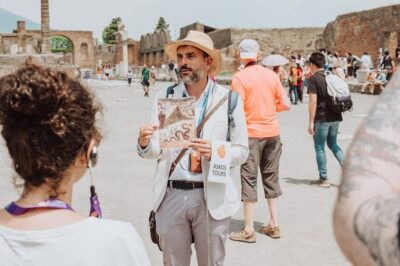
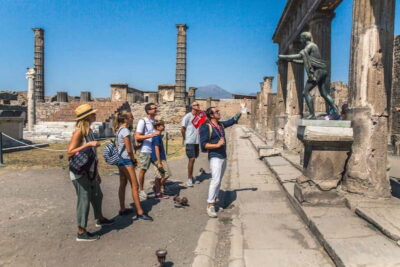
Pompeii clicks into place faster with a local guide. This is a 3-hour Pompeii walk led by a certified expert, designed to point out the places most visitors miss and explain what you’re seeing. You’ll choose your language, and the pace stays focused on public life and everyday Roman routines instead of just dumping dates on you.
I like that the tour builds understanding with real-world context: the Foro de Pompeya is explained as the heart of public Roman life, and the Teatro Grande is framed around how people actually used the space. I also like that admission tickets are included for both main stops, which saves time and hassle when you’re trying to get moving early.
One thing to consider: 3 hours is tight for Pompeii, so if you want to roam at your own pace for long stretches, this tour may feel like a fast, structured highlights route.
In This Review
- Key points that matter before you go
- Why Pompeii is better with a guide (and why this format works)
- The meeting point: Piazza Esedra makes the start easy
- Stop 1: Foro de Pompeya (30 minutes) and why the forum matters
- Stop 2: Teatro Grande (50 minutes) and the logic of Roman entertainment
- What you’ll do between the big stops
- Language choice is not a small detail
- Guide service and the value of a private expert
- Weather, walking pace, and comfort basics
- Cancellation and rescheduling: keep it simple
- Who this tour suits best (and who might want something else)
- Should you book this Pompeii expert-guide tour?
- FAQ
- How long is the Pompeii visit?
- Is this a private tour or a group tour?
- What’s the group size limit?
- Where does the tour start?
- What stops are included in the tour?
- Are admission tickets included?
- Is transportation included?
- What time does the tour begin?
- What if the weather is bad or I need to cancel?
Key points that matter before you go
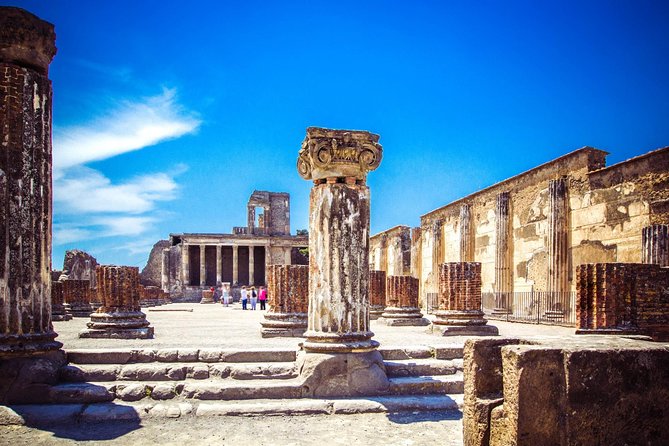
- Foro de Pompeya and Teatro Grande, with tickets included for both stops
- Small private group (up to 10), so you can ask questions without getting lost in a crowd
- Certified local guiding, with examples like Alessia and Soraya known for clear, engaging explanations
- Language choice so the walking tour doesn’t become a guessing game
- Great timing and simple routing starting at Piazza Esedra and ending back there
Which Pompeii ticket and guide? Compare a few more.
- Pompeii Small Group Tour with an Archaeologist★ 5.0 · 6,593 reviews
- Discover the Ancient Ruins of Pompeii: Day Trip from Rome★ 3.5 · 2,247 reviews
- Pompeii and Herculaneum Small Group Tour with an Archaeologist★ 5.0 · 1,350 reviews
- Skip the Line Guided Tour of Pompeii led by an Archaeologist★ 5.0 · 703 reviews
Why Pompeii is better with a guide (and why this format works)
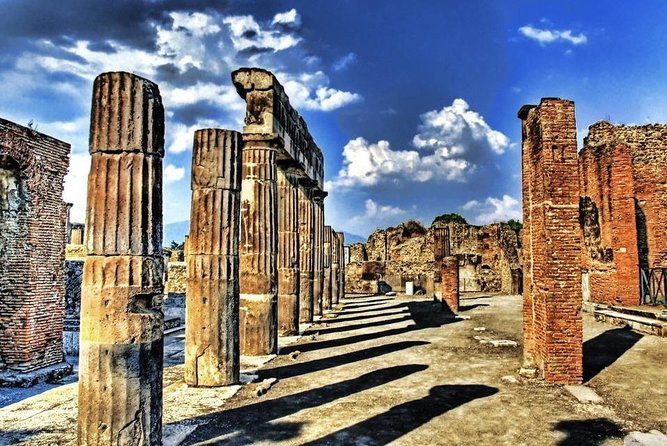
Pompeii can feel like a giant open-air museum until someone helps you read it. With this kind of guided approach, you’re not just looking at old stones—you’re learning what those stones were for: civic life in the forum and public entertainment in the theater.
This tour is built around two big anchor points, not a scattered checklist. When you start with the Foro de Pompeya, you get a mental map of Roman public space. Then the Teatro Grande gives you a second anchor for how leisure and crowds worked. That combination helps you connect what you’ll see in the rest of Pompeii as you walk through “public places” in between.
The other practical win is the private setup. Because it’s only your group, the guide can adapt to your pace and questions, instead of forcing you into someone else’s rhythm.
The meeting point: Piazza Esedra makes the start easy
You meet at Piazza Esedra, 80045 Pompei NA, Italy with a start time of 9:00 am. Starting at a set meeting point like this helps you avoid the common Pompeii headache: showing up early, finding the right entrance, and then losing time waiting for a big group.
Also, the activity is described as near public transportation, which matters because you’re likely getting to Pompeii by bus or train at some point. The tour ends back at the meeting point, so you don’t end the morning stuck figuring out the logistics for the rest of your day.
If you’re planning more time at the site after your tour, this type of “return to start” routing is a convenience. You can decide what you want next without starting from a brand-new location.
Stop 1: Foro de Pompeya (30 minutes) and why the forum matters
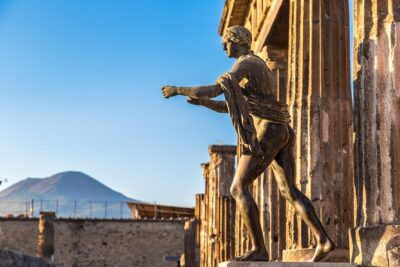
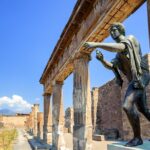
The first stop is Foro de Pompeya, and it’s scheduled for about 30 minutes with the admission ticket included. This is the public heart of Pompeii—the place tied to civic life. In plain terms, it’s where the city performed its identity: politics, social contact, and daily public business.
Why this stop is smart for a 3-hour tour: it gives you the framework to understand everything you’ll notice later. When you know what a forum is meant to do, you start spotting purpose, not just ruins. Even when the buildings look incomplete, the layout and the surrounding spaces start to tell you how people moved through the city for official and social reasons.
Potential drawback: 30 minutes is enough to get oriented, but it’s not enough to turn the forum into a deep, slow museum-style experience. If you want lingering time for photography or extra explanations, you’ll likely want to add independent time after the guided portion.
Still, for most people, this is a good balance: you get the meaning early, then the rest of your visit makes more sense.
Stop 2: Teatro Grande (50 minutes) and the logic of Roman entertainment
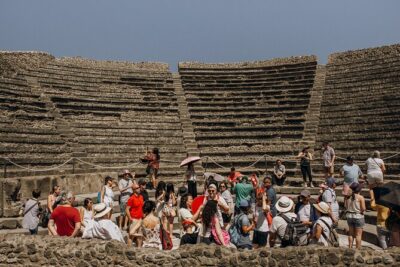
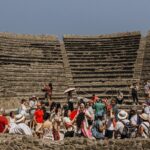
The second scheduled stop is Teatro Grande for about 50 minutes, again with admission ticket included. This is where Pompeii shifts from civic life to public entertainment—Roman routines played out in a shared space.
This matters because it changes how you think about the day-to-day city. In many places, Pompeii can look like a collection of buildings. The theater helps you picture the city as a place where people gathered, watched, reacted, and socialized—often as part of normal life, not just an event on special occasions.
Why I think 50 minutes works: it’s long enough for the guide to explain the theater’s role and for you to look around without feeling rushed. It also gives you a chance to take in the structure and understand how the design relates to audience movement and viewing.
Potential drawback: if you’re a first-time visitor with strong interest in theater architecture specifically, you might want more time at this stop. The tour is timed to fit both major anchors, so you’ll get understanding first, then you can decide if you want to re-visit later on your own.
More guided runs around Pompeii



What you’ll do between the big stops
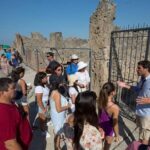
Besides the two main points, the tour description emphasizes hidden corners and public places. In practice, that means the guide uses the walking time as “learning time,” not just transit.
You can expect the guide to help you keep orientation: where you are, why the space exists, and how the Roman city functioned as a network of public areas. Guides also tend to point out details that feel obvious only after someone names them—so you start noticing changes in elevation, entrances, and how people would have flowed through the area.
This is one reason a shorter, structured tour can still feel satisfying. You’re not just covering ground; you’re learning how to read the ground.
Language choice is not a small detail
One of the most practical features here is that you can choose your preferred language. That matters at Pompeii because the site is visual, but the meaning is not self-explanatory. If you’re unsure what you’re looking at, you end up relying on guesswork.
A good guide keeps the experience coherent, linking forum life to entertainment life, and then back to what you see while walking. When your language matches your brain, questions come easier too—especially when you’re trying to understand how people actually lived with these spaces.
Guide service and the value of a private expert
The cost is $210.52 per group, up to 10 people, for about 3 hours. On paper, that may sound steep until you break it down by group size and what’s included.
What you’re paying for:
- Guide service for a private group
- Admission tickets included for Foro de Pompeya and Teatro Grande
So the value depends on how many people you bring. If you’re a group of four to ten, the cost often feels more reasonable because you’re splitting both time and entry costs. If you’re just two people, the price is higher per person—but you still get the advantage of private pacing and fewer “wait-and-stand” moments.
A small but important note: this tour is private, meaning only your group participates. That reduces the common frustration of being dragged along or having to listen from the back.
Also, the tour provider is listed as Guide Turistiche Campania di Febronia Amato. In the past, guides connected to this operator—like Alessia, Soraya, and Piero—have been praised for strong explanations and making the ruins feel understandable rather than overwhelming.
Weather, walking pace, and comfort basics
This experience requires good weather. Pompeii is an outdoor site, so if conditions are poor, the tour may be rescheduled or you’ll be offered a full refund.
Because the tour is about 3 hours, plan for steady walking and periodic standing at stops. The description says most people can participate, but this isn’t a sit-and-watch program. Wear comfortable shoes and dress for sun or sudden cloud cover—Pompeii doesn’t care about your plans for the day.
If you’re prone to rushing through ruins, the guided format can actually help you slow down at the right points.
Cancellation and rescheduling: keep it simple
You get free cancellation if you cancel at least 24 hours before the start time for a full refund. If you cancel less than 24 hours in advance, the amount paid won’t be refunded.
The good news is this tour includes a weather safeguard: if it’s canceled due to poor weather, you’ll be offered a different date or a full refund.
Who this tour suits best (and who might want something else)
This tour is a great fit if you:
- Want a structured Pompeii experience without feeling lost
- Prefer a private pace and the ability to ask questions
- Care about understanding how public spaces worked in Roman life
- Want admission included for major stops instead of ticket juggling
You might want a different style of Pompeii visit if you:
- Want to spend half a day wandering on your own without a set route
- Need longer time at just one area (like theater-focused or forum-focused sightseeing)
- Are the type who always wants “more hours” because Pompeii is never really done
Should you book this Pompeii expert-guide tour?
Yes, I’d book it if you want your first Pompeii visit to feel clear and connected. The biggest strength is the combination of Foro de Pompeya and Teatro Grande in a tight timeline, plus admission tickets included and a private group setup.
If you’re coming with friends or family and can fill a group of several people (up to 10), the value improves fast because the guide and tickets are shared. Even if it’s just you and a partner, the structured 3-hour route can still be the best way to leave Pompeii feeling like you truly understood what you saw.
FAQ
How long is the Pompeii visit?
It lasts about 3 hours.
Is this a private tour or a group tour?
It’s private. Only your group participates.
What’s the group size limit?
The price is for a group of up to 10 people.
Where does the tour start?
It starts at Piazza Esedra, 80045 Pompei NA, Italy.
What stops are included in the tour?
The tour includes Foro de Pompeya and Teatro Grande. It also includes time for visiting public places.
Are admission tickets included?
Yes. Admission tickets are included for both Foro de Pompeya and Teatro Grande.
Is transportation included?
No. Private transportation is not included.
What time does the tour begin?
The start time is 9:00 am.
What if the weather is bad or I need to cancel?
The experience requires good weather. If it’s canceled due to poor weather, you’ll be offered a different date or a full refund. You can cancel up to 24 hours in advance for a full refund; within 24 hours, you won’t get a refund.
More Guided Tours in Pompeii



More Tour Reviews in Pompeii


More Pompeii Tours to Compare
More Pompeii tours, freshly reviewed



Pompeii Tours, compared.
 ★ 4.8Pompeii: Entry Ticket and Guided Tour with an ArchaeologistFrom $3519,459 reviews
 ★ 4.1Pompeii: Entry Ticket with Audio GuideFrom $4013,491 reviews
 ★ 4.8Pompeii: Small Group Tour with an ArchaeologistFrom $4012,264 reviews
 ★ 4.3Pompeii Ruins & Mount Vesuvius Day TourFrom $12011,459 reviews
★ 5.0Pompeii Small Group Tour with an ArchaeologistFrom $356,593 reviews
★ 4.3Pompeii Ruins & Mount Vesuvius Day TourFrom $12011,459 reviews
★ 5.0Pompeii Small Group Tour with an ArchaeologistFrom $356,593 reviews
 ★ 4.5Skip-the-line Pompeii – Small Group TourFrom $544,401 reviews
 ★ 4.6Naples or Sorrento: Full-Day Pompeii and Mount Vesuvius TourFrom $1044,235 reviews
 ★ 3.9Pompeii: Skip-the-line Entry Ticket with Audio Guide & MapFrom $433,153 reviews