
Review · HERCULANEUM TOURS
Secret Herculaneum: The Hidden Treasure of Ancient Roman Civilization
Herculaneum feels eerily alive. This 2-hour English tour is led by a certified guide with an archaeologist, and it takes you through one of UNESCO Italy’s most intact Roman towns. I love that it stays compact and focused, so you get meaning with every stop.
I’m also a fan of the still-visible rooms and fresco colors in the houses, not just scattered columns. And the sea-facing moments—from the ancient waterfront to the terrace views—help you picture how this city functioned, not just how it collapsed.
One possible catch: the park entrance fee is not included. You’ll pay €16.00 per person at the Archaeological Park of Herculaneum.
In This Review
- Key highlights to look for
- Why Herculaneum still feels like a place, not a pile of stones
- Price and ticket plan: what you pay for the tour vs the park
- Starting point: finding the right door to the park
- Stop-by-stop: how the tour reads like a story
- Stop 1: Parco Acheologico di Ercolano (the part that sets everything up)
- Stop 2: the ancient beach (Roman waterfront geography in one stop)
- Stop 3: La Terrazza di M. Nonio Balbo (where status meets the sea)
- Stop 4: Casa dei Cervi (why deer matter in archaeology)
- Stop 5: Partem Domus lignea – Casa del Tramezzo di Legno (the wooden partition story)
- Stop 6: Casa di Nettuno e Anfitrite (mosaics you can see clearly)
- Stop 7: Casa Sannitica (an older dwelling, a popular stop)
- Stop 8: the decumanus maximus (main street power)
- Stop 9: College of the Augustales (imperial worship, Roman administration)
- Stop 10: Casa d’Argo (myth on house walls)
- Stop 11: Salone della Barca di Ercolano (the boat that sealed the story)
- Guide impact: why this tour works in real time
- Who should book this Herculaneum walk
- Should you book Secret Herculaneum?
- FAQ
- What is the duration of the Secret Herculaneum tour?
- Where does the tour start and end?
- What does the tour price include?
- Is the Archaeological Park entrance fee included?
- What language is the tour offered in?
- How many people are in the group?
- Do I need a mobile ticket?
- Is the tour easy to walk for most people?
- What if I need wheelchair accessibility?
- FAQ
- What if I cancel?
- What happens if the weather is poor?
Key highlights to look for
- Small group size (max 10) makes it easier to ask questions and hear the guide clearly
- Certified guide plus archaeologist adds real context to the ruins you are seeing
- Best-preserved “city feeling”: houses, doors, bedrooms, and urban layout are still readable
- Mosaics and named houses: Neptune and Amphitrite, plus famous residences like Casa dei Cervi
- Waterfront stops: the ancient beach and the terrace of Marco Nonio Balbo give strong geographic clues
- Charred boat pavilion: the preserved boat found during excavation in 1981 adds a haunting finishing note
Herculaneum keeps a few more tours worth your time
- Herculaneum: Skip-the-Line Guided Tour with Archaeologist★ 4.8 · 3,439 reviews
- Herculaneum Small Group Tour and Ticket With an Archaeologist★ 5.0 · 994 reviews
- Herculaneum: Skip-the-Line Entry Ticket with Audio Guide★ 4.3 · 870 reviews
- From Naples: Pompeii & Herculaneum with Archaeologist Guide★ 4.8 · 665 reviews
Why Herculaneum still feels like a place, not a pile of stones
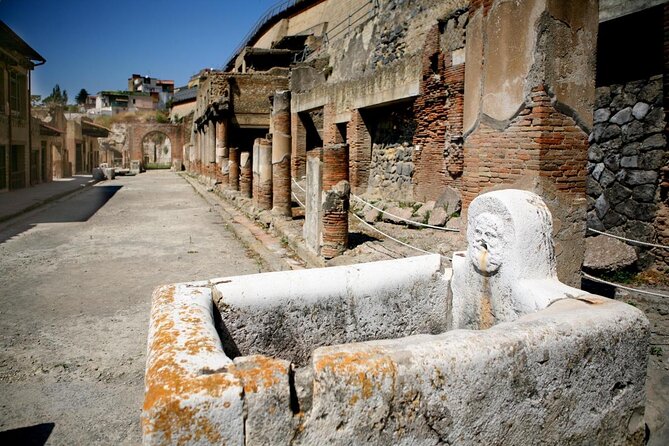
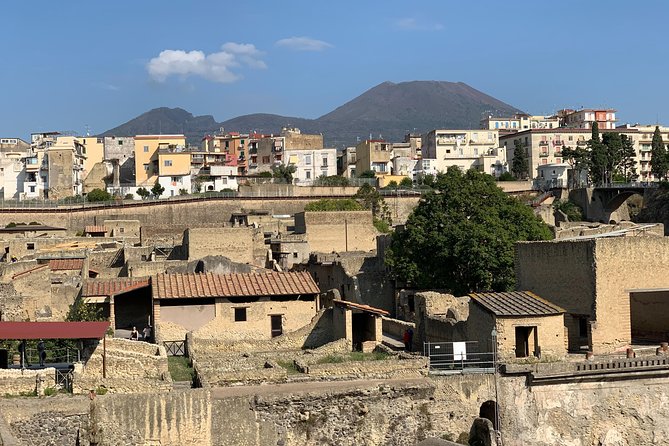
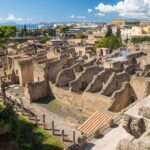
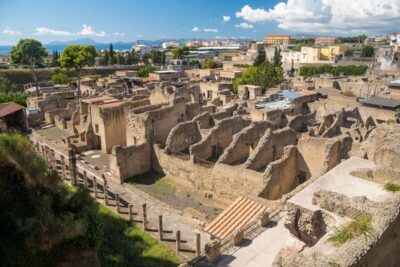
Herculaneum’s big advantage over many Roman ruins is simple: you can still understand daily life. The town was buried by the eruption of Mount Vesuvius in 79 AD, and because of that dramatic event, the city’s urban and civic layout remained unusually intact. You walk along paved streets and suddenly you can picture the rhythm of the place—entryways, rooms, workshops, and spaces where people gathered.
What I love most is the scale. Herculaneum is less extensive than Pompeii, so the experience doesn’t turn into a long slog. In a couple of hours, you can cover the main sights without losing the thread. Your guide keeps pointing out how the pieces connect, from the main street plan to the specific features inside individual houses.
Another nice bonus: the stories don’t stop at disaster. You get explanations about how Romans lived day to day—social life, civic worship, and even politics and business chatter in public spaces like baths.
Price and ticket plan: what you pay for the tour vs the park
This experience costs $34.84 per person for the guided portion. What’s not included is the entrance fee to the Archaeological Park of Herculaneum, listed at €16.00 per person. So your real total is the tour price plus that entry.
Is it good value? For me, the best sign is focus. You are not paying for hours of wandering. You are paying for a guided “map with explanations,” where each stop is chosen to tell a clear story: houses, public buildings, the seafront, and the preserved boat. The guided time is long enough to make the ruins legible, and short enough to keep your attention (especially if you also plan to see Pompeii).
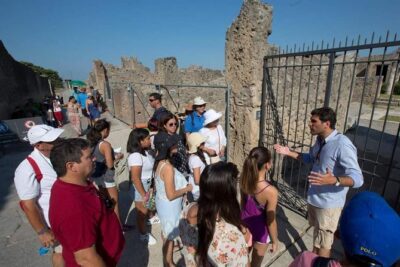
Also note the practical format. You get a mobile ticket and the tour runs in English. The group is capped at 10 travelers, which usually means less crowd noise and more back-and-forth.
Starting point: finding the right door to the park
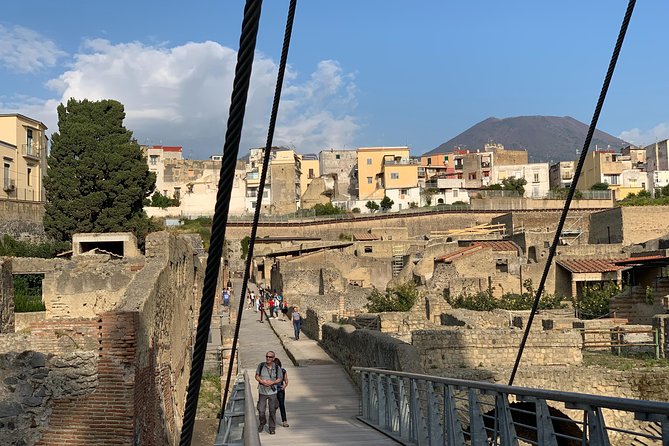
The tour meets at the Herculaneum Ticket Office in 80056 Ercolano, and it ends back near the same meeting point. That matters because Herculaneum is compact and you do not need to piece together complicated transit plans once you are there.
The best move is to show up a bit early so you can handle check-in calmly. One of the most common frustrations at sites like this is waiting while a few people get their logistics sorted. If you arrive ahead of time, you help the group start cleanly.
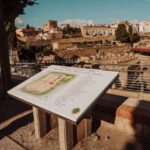
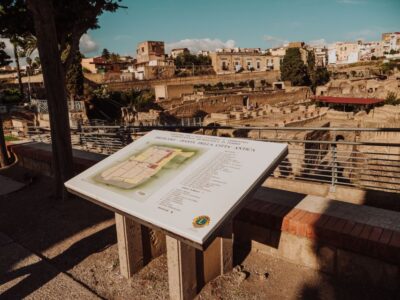
You will also likely want to grab orientation materials once you enter the park. A free map is available at the kiosk at entry, and it helps you track what your guide is showing as you move from street to street.
Stop-by-stop: how the tour reads like a story
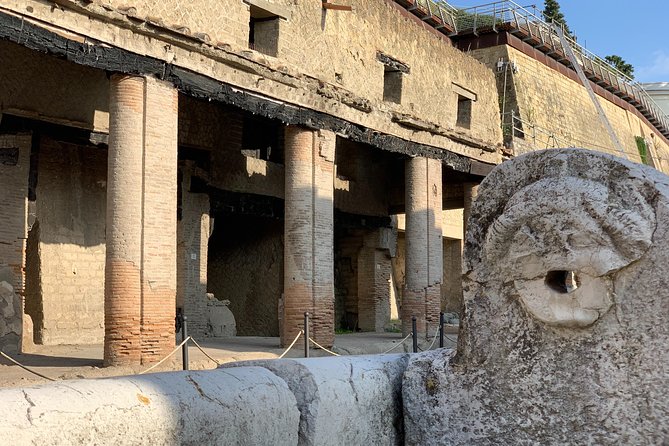
The tour moves at a steady pace, with short, timed visits to each highlight. Each stop is brief, but the guide’s job is to make sure you see what matters in those few minutes. Think of it like a guided highlights reel with enough context to make the ruins stick.
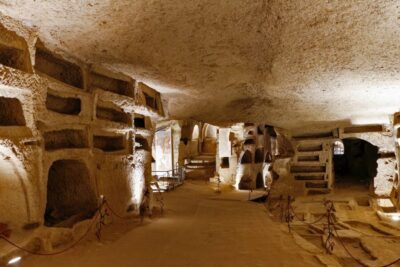
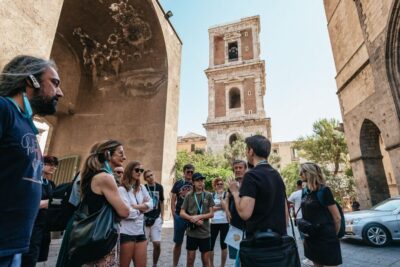

Stop 1: Parco Acheologico di Ercolano (the part that sets everything up)
You start at the archaeological park itself, a UNESCO site known for its remarkable preservation. Here, the goal is orientation: how the town is laid out and why this place feels different from many other Roman sites.
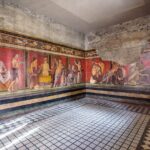
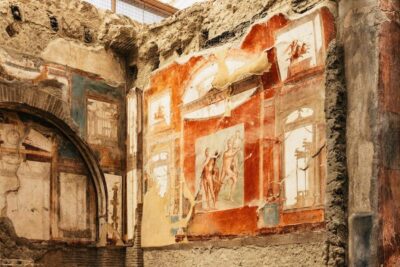
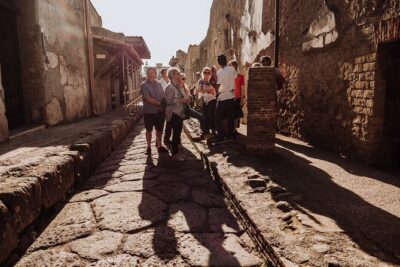
You walk paved streets where houses, doors, and even bedrooms are still visible. Frescoes appear with their warm colors intact, and you can see how workshops and everyday objects fit into the home life. Your guide also helps you connect the burial event to what you see now—why so much survived and how that shapes what archaeologists can interpret.
One practical note: the tour covers steps and uneven Roman paving. You will want sturdy walking shoes, and you should be comfortable with walking up and down stairs.
Stop 2: the ancient beach (Roman waterfront geography in one stop)
Next comes the seafront logic. This is the ancient beach, described as the only waterfront of an almost entirely preserved Roman city. That one detail changes how you picture the town.
Instead of imagining Herculaneum from the land only, you suddenly understand why the city mattered: the sea is right there in the layout, and the people who lived here were tied to that shoreline for travel, trade, and daily rhythm.
Stop 3: La Terrazza di M. Nonio Balbo (where status meets the sea)
Then you move to La Terrazza di M. Nonio Balbo, a terrace connected with Marco Nonius Balbo. This stop is a reminder that Roman cities weren’t just functional—they were also political and social.
The terrace overlooks the sea in the way it would have at the time, and it helps you grasp why wealthy families positioned themselves with views and prominence. Even if the architecture is partially lost, the sightline gives the story back to you quickly.
Stop 4: Casa dei Cervi (why deer matter in archaeology)
Casa dei Cervi translates as the House of Deer. It’s noted as one of the richest residences found in the excavation area. The name comes from two marble groups showing deer being attacked by dogs.
This is a great stop for your imagination. You can look at the physical remains and also think about taste and symbolism: what kind of art appeared in elite homes, what it might signal, and why it was worth preserving enough to let archaeologists identify the household.
Stop 5: Partem Domus lignea – Casa del Tramezzo di Legno (the wooden partition story)
This next house is known for the House of the Wooden Partition. The name comes from a discovered folding wooden structure that separated the splendid atrium from the tablinum, essentially the homeowner’s study.
It’s one of those details that makes the home feel designed, not random. You see how rooms were organized for privacy, performance, and daily business. And because you are walking through, you can almost sense the flow: public entry areas to more controlled spaces.
Stop 6: Casa di Nettuno e Anfitrite (mosaics you can see clearly)
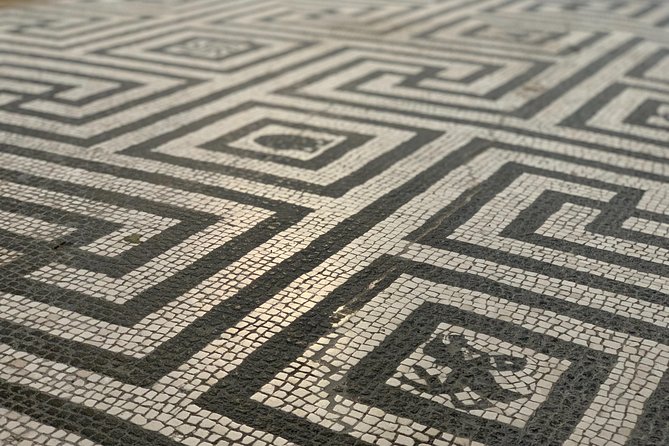
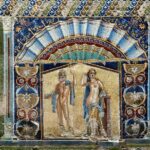
Here you get to Casa di Neptune and Amphitrite, tied to a wealthy merchant. The standout feature is a mosaic of Neptune and Amphitrite.
Mosaics can be “nice to look at” in a museum, but here the effect is different. The decoration is part of the home setting, so you feel how art and identity worked together. If you like visual storytelling, this is one of the best stops.
Stop 7: Casa Sannitica (an older dwelling, a popular stop)
Casa Sannitica is called the Samnite House. It’s one of the most popular remains on the site and considered one of the oldest dwellings here.
This stop is useful if you want a sense of time depth. Instead of seeing only the late flourish before the eruption, you get the feeling of a place that had older roots and evolved over time.
Stop 8: the decumanus maximus (main street power)
The tour then emphasizes the decumanus maximus, the main street of Roman cities, and specifically why it mattered at Herculaneum. Because it was the main street, it held the most prestigious houses along its sides.
This is a big “connect the dots” moment. You stop, look, and suddenly the town layout makes social sense. Where you live—and where you show status—was tied to movement through the city.
Stop 9: College of the Augustales (imperial worship, Roman administration)
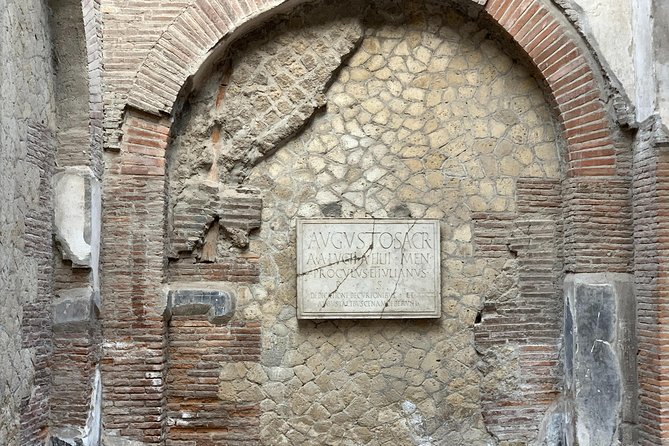
Next is the College of the Augustales and the Sacellum of the Augustals. This building from Roman times was used for rites of worship of emperors, tended by Augustales priests.
If you only think of Rome as politics and war, this stop reminds you Rome was also ritual and administration. In daily life, worship wasn’t a separate sphere—it fed into community identity and belonging.
Stop 10: Casa d’Argo (myth on house walls)
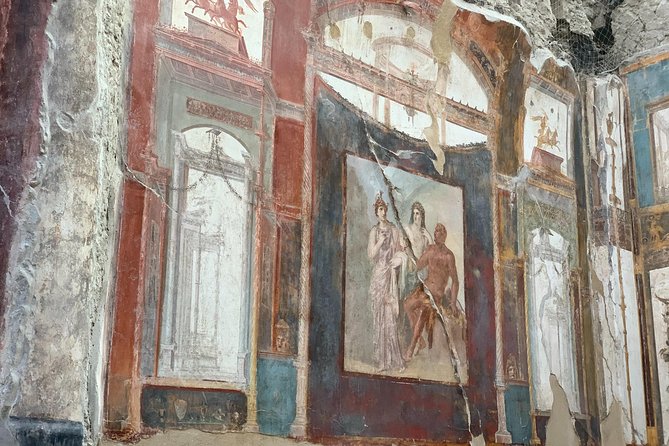
Casa d’Argo is named for a once-present fresco depicting Argo Panoptes, the giant with a hundred eyes.
Even if the fresco itself is partially gone, the story is clear enough to make you think about myth in domestic settings. Romans didn’t just put mythology in temples or public spaces. They brought it into homes, too, and it could reflect education, taste, or family identity.
Stop 11: Salone della Barca di Ercolano (the boat that sealed the story)
The last major stop is the Salone della Barca di Ercolano, the boat pavilion. Here, a charred boat found along the beach of Herculaneum during excavations in 1981 is preserved.
This is your emotional closer. After all the rooms, street planning, and art, the boat is a direct physical link to the eruption’s impact on transport and daily life. It makes the tragedy feel concrete in a way that ruins alone sometimes do not.
Guide impact: why this tour works in real time
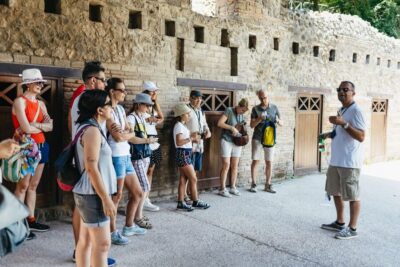
The structure of the tour is built for understanding, but the guide is what makes it feel like a coherent narrative. This company includes a certified guide plus an archaeologist, and that pairing shows up in how the explanations are framed.
On past runs, guides named Luigi, Ornella, Riccardo, Arcangelo, Raffaele, and Corrado have led tours, and the thread in that lineup is clear: they connect details to how people lived and why archaeologists care. Humor comes up often, and it helps the short stop times feel less like checkboxes.
One more practical point: if you are sensitive to volume or hearing, it helps to position yourself where you can listen. A small-group tour is friendly, but some guides can be quieter than others, so don’t let the back of the group steal your experience.
Who should book this Herculaneum walk
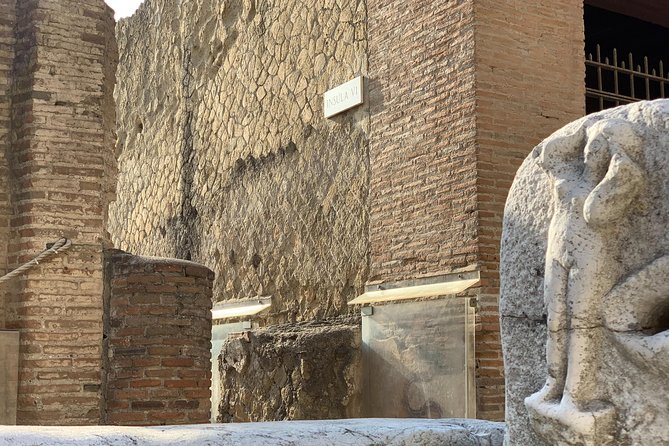
You will likely enjoy this tour if you:
- want a tight, 2-hour Roman site plan without hours of wandering
- like seeing homes and everyday layout, not only temples and streets
- plan to combine sites and want Herculaneum to be the most “human” stop of your day
- enjoy mosaics and named houses with specific features (deer statues, wooden partition, Neptune scene)
You might pass if you:
- want a long self-paced museum-style visit (this is timed and stop-focused)
- have limited mobility and cannot manage steps/stairs, since the walk includes that kind of movement
Should you book Secret Herculaneum?
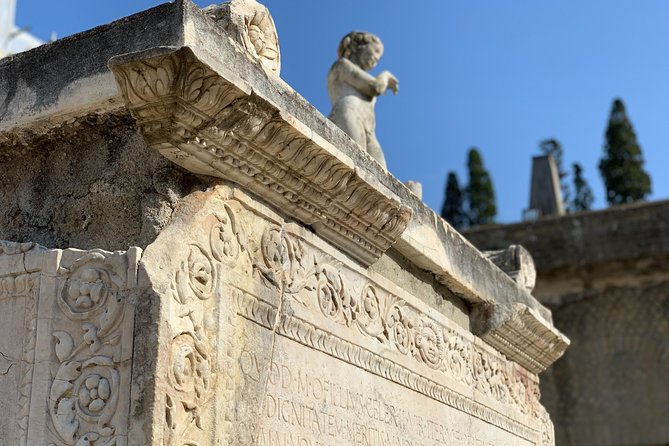
Yes, if you want the Roman world explained in a way you can picture. The best reason to book is that this is not a generic ruins walk. You get a guided sequence that turns preserved architecture—doors, bedrooms, baths, waterfront access—into a story you can follow in a couple of hours.
Just do the math upfront for value: $34.84 plus €16.00 entrance. If you are paying that total, you should come ready to look closely and ask questions. With a small group and an archaeologist involved, this is one of the more satisfying ways to experience Herculaneum’s unusual level of preservation.
If your travel day includes Pompeii, this one can still be worth it because it is smaller, more compact, and often easier to “feel” rather than just photograph.
FAQ
What is the duration of the Secret Herculaneum tour?
It lasts about 2 hours.
Where does the tour start and end?
It starts at the Herculaneum Ticket Office (80056 Ercolano) and ends back at the meeting point.
What does the tour price include?
It includes a certified guide and an archaeologist.
Is the Archaeological Park entrance fee included?
No. The entrance fee to the Archaeological Park of Herculaneum is €16.00 per person.
What language is the tour offered in?
The tour is offered in English.
How many people are in the group?
The maximum group size is 10 travelers.
Do I need a mobile ticket?
Yes. A mobile ticket is included.
Is the tour easy to walk for most people?
Most travelers can participate, but you should be able to walk on steps/stairs and wear sturdy walking shoes.
What if I need wheelchair accessibility?
Wheelchair use must be reported 24 hours before the visit.
FAQ
What if I cancel?
You can cancel up to 24 hours in advance for a full refund. If you cancel less than 24 hours before the experience starts, the amount paid is not refunded.
What happens if the weather is poor?
If it is canceled due to poor weather, you will be offered a different date or a full refund.
More Tour Reviews in Naples


Herculaneum, a Few More Tours

More Naples tours, freshly reviewed


Herculaneum Tours, compared.
 ★ 4.8Herculaneum: Skip-the-Line Guided Tour with ArchaeologistFrom $533,439 reviews
 ★ 5.0Pompeii and Herculaneum Small Group Tour with an ArchaeologistFrom $771,350 reviews
 ★ 5.0Herculaneum Small Group Tour and Ticket With an ArchaeologistFrom $53994 reviews
 ★ 4.3Herculaneum: Skip-the-Line Entry Ticket with Audio GuideFrom $15870 reviews
 ★ 4.8Pompeii: Small-Group Tour of Pompeii and Herculaneum867 reviews
 ★ 4.8Pompeii & Herculaneum with Archaeologist GuideFrom $168665 reviews
 ★ 3.9Pompeii, Herculaneum, & Vesuvius Full-Day TourFrom $152602 reviews
 ★ 4.1Ercolano: Herculaneum Entry Ticket with Optional Audio GuideFrom $21581 reviews
Browse the lists this tour appears in