
Review · HERCULANEUM TOURS
Private Walking Tour through the Historical City of Herculaneum
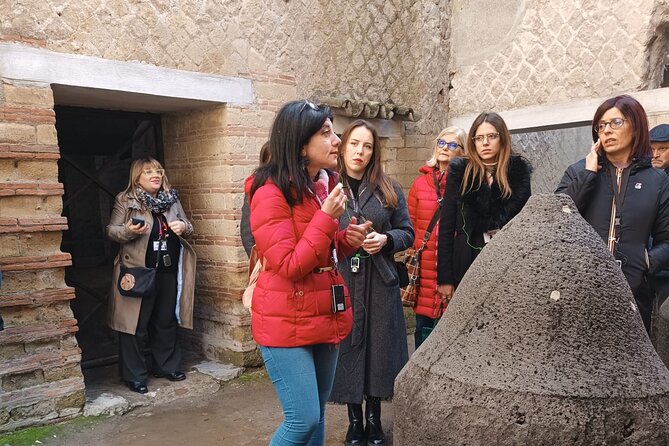
Herculaneum feels personal, not museum-crowded. This private walking tour is designed for a calmer pace, with an expert archaeology guide leading you to the site’s standout houses, baths, and artwork without rushing. I also love how the itinerary is built around what’s most visually striking, from charred-wood artifacts to floor mosaics. One thing to weigh: the €16 Archaeological Park entrance fee (adult) is extra, on top of the tour price.
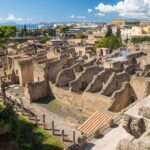
This is a smart choice if you’re short on time in Naples. You’ll spend about two hours at the Archaeological Park of Herculaneum, focusing on major stops like the Terme Del Foro and key homes such as the Casa del Tramezzo di Legno and the Casa di Nettuno e Anfitrite. And because it’s private, you can ask follow-up questions and linger when something catches your eye.
Plan for real outdoor walking. Bring sunglasses and a hat, wear comfortable shoes, and expect a warm route in open areas. Also, remember that only part of ancient Herculaneum has been excavated, so your visit is a window into a much larger buried city.
In This Review
- Key takeaways before you go
- Why a private walk works so well at Herculaneum
- Price and what you truly get for it
- Entering the Archaeological Park: logistics that save time
- Stop-by-stop: what you’ll see in 2 hours (and why it matters)
- Terme Del Foro (Roman baths and room-by-room life)
- Partem Domus lignea – Casa del Tramezzo di Legno (charred wood furniture)
- Casa di Nettuno e Anfitrite (mosaics with major visual impact)
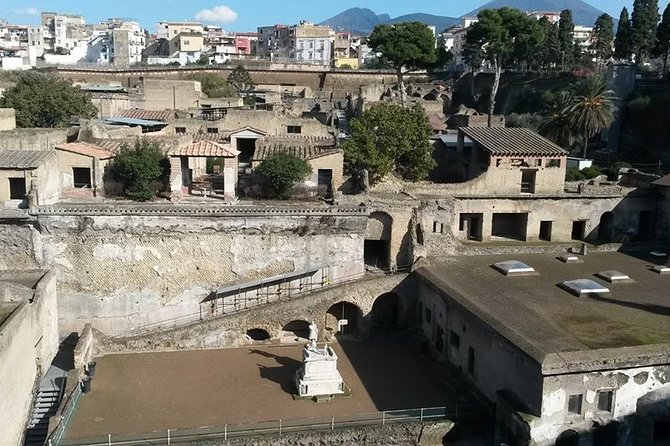
- Casa dei Cervi (the deer house and the view factor)
- Casa Sannitica (early painted decoration)
- Salone della Barca di Ercolano (the charred boat and finds museum)
- College of the Augustales (a public temple with mythological frescoes)
- Casa del Salone Nero (the black hall and fresco conservation)
- Antiquarium di Ercolano (optional museum time at your discretion)
- Herculaneum vs Pompeii: the context your guide helps you keep
- Who this tour fits best (and who might want a different plan)
- What to bring and how to handle comfort in the park
- Should you book this private Herculaneum walking tour?
- FAQ
- How long is the private walking tour of Herculaneum?
- What is the price per person?
- Is the Archaeological Park entrance fee included?
- What language is the tour offered in?
- Is this tour private?
- Where does the tour start and end?
- Do I get a mobile ticket?
- Are service animals allowed?
- What is the cancellation window?
Key takeaways before you go
- Private, English-speaking archaeology guide: You get explanations tailored to your pace and interests.
- A tightly planned 2-hour route: You hit the core highlights instead of wandering.
- Most stops include admission tickets: The itinerary’s site entries are handled for you at each stop.
- Park entry is separate: Expect the extra €16 Archaeological Park fee for adults.
- The museum adds perspective: You can see the charred Roman boat and other finds without leaving the theme of 79 AD.
- Guides handle different needs well: You may have opportunities to adjust timing for slower walkers or strollers.
Herculaneum keeps a few more tours worth your time
- Herculaneum: Skip-the-Line Guided Tour with Archaeologist★ 4.8 · 3,439 reviews
- Herculaneum Small Group Tour and Ticket With an Archaeologist★ 5.0 · 994 reviews
- Herculaneum: Skip-the-Line Entry Ticket with Audio Guide★ 4.3 · 870 reviews
- From Naples: Pompeii & Herculaneum with Archaeologist Guide★ 4.8 · 665 reviews
Why a private walk works so well at Herculaneum
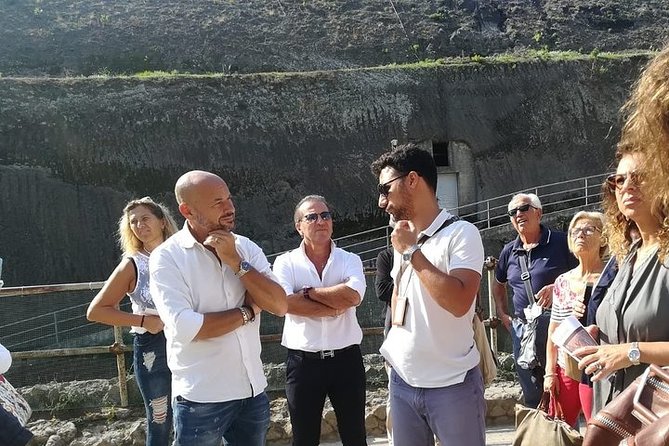
Herculaneum rewards attention. In a big group, it’s easy to rush past the small-but-crucial details—wall paintings, mosaic patterns, and the logic of Roman life. In a private format, you can slow down when the guide points out something specific, like how a space was used or why a certain artifact survived.
This tour is also built for understanding, not just sightseeing. The stop order moves from daily-life rooms to the public and semi-public spaces, so the town feels connected rather than like disconnected photo stops. That matters because Herculaneum’s most famous story is about how everyday buildings froze in time—and your guide keeps that human context clear.
Price and what you truly get for it
The headline price is $102.12 per person, with a tour duration of about 2 hours. What makes it feel reasonable is what’s included: a licensed guide (expert in archaeology), taxes, and a private tour format.
There’s one cost you should plan for: the Archaeological Park entrance ticket (€16 per person). The park ticket is free under 18 if you have the right document. So for most adults, your practical total is the tour price plus the park entry.
One more small value point: several listed stops include the admission ticket as part of the tour flow. That reduces the hassle of sorting tickets at each point and keeps the experience moving smoothly.
Entering the Archaeological Park: logistics that save time
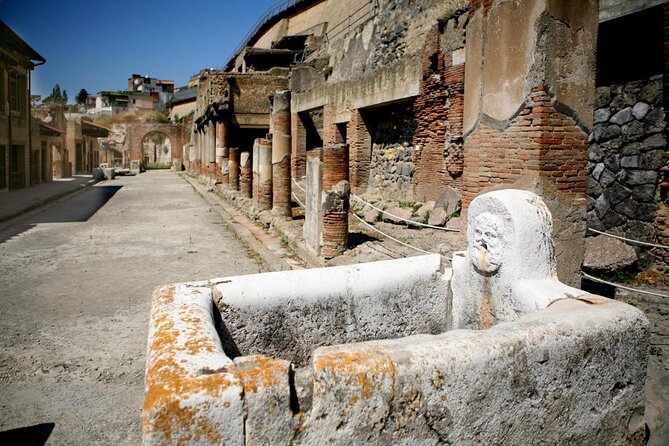
You’ll start and end at the Archaeological Park of Herculaneum, Corso Resina, 187, 80056 Ercolano NA, Italy. The tour ends back at the same meeting point, which is helpful if you’re planning transport afterward.
This is also convenient for travel days. The meeting location is near public transportation, and the tour is designed around walking within the park area. That makes it easier to combine with a Naples plan, even if you’re not staying nearby.
Tip: arrive with your shoes on already. This is an outdoor walk, and you don’t want to burn time changing or dealing with discomfort once you’re inside.
Stop-by-stop: what you’ll see in 2 hours (and why it matters)
The key idea here is focus. The route takes you through the best-preserved corners of the park while still giving you brief time to look closely. Each stop is short—around 10 to 15 minutes—but that’s intentional, since Herculaneum is dense with details.
Below is what you can expect at each stop, plus what to pay attention to.
More of Naples at street pace



Terme Del Foro (Roman baths and room-by-room life)
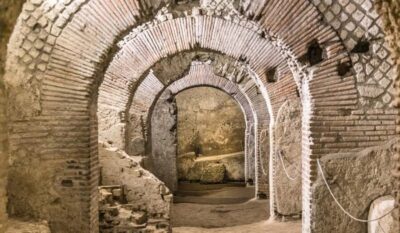
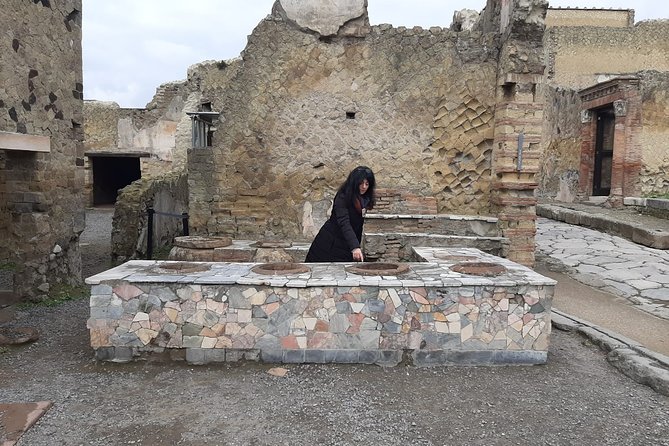
This stop shows the typical Roman thermal system in a very well-preserved form. You’ll see spaces connected to daily routines—like areas used for exercise (the gym), changing rooms, and rooms for warm and warm baths.
What I like about this kind of stop is that it turns archaeology into routine. Roman bathing wasn’t just hygiene; it was social time, status, and rhythm. If you’ve ever wondered how a Roman city organized time inside public buildings, this is where it becomes real fast.
Partem Domus lignea – Casa del Tramezzo di Legno (charred wood furniture)
Next comes one of Herculaneum’s signature shocks: charred wood furniture. The Casa del Tramezzo di Legno is known for being one of the best-preserved houses in the area, and this is where the “how did anything survive?” feeling hits hardest.
Look for how the furniture and interior layout suggest movement and daily use. Even when pieces are damaged or darkened by the eruption, the placement helps you imagine the house as an active home rather than a frozen display.
Casa di Nettuno e Anfitrite (mosaics with major visual impact)
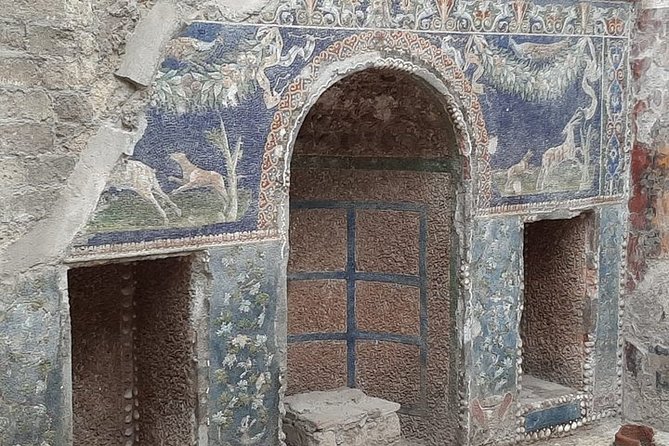
This house is one of the symbolic homes of Herculaneum. It’s famous for one of the most beautiful mosaics across the Vesuvian sites, here in a setting that makes the artistry feel personal rather than generic.
When you’re standing in front of a mosaic, slow down for a few seconds. Let your eyes map the pattern. A guide can point out why the imagery matters, but even without that, mosaics pull you toward the scale of the home.
Casa dei Cervi (the deer house and the view factor)
The Casa dei Cervi is short on time at this point, but high on atmosphere. It’s set in a spectacular panoramic position between the Gulf of Naples and Capri, and it’s also associated with polychrome marble.
This is a good moment to look outward as well as inward. Ancient builders loved views because they signaled wealth and comfort. When you pair that landscape with what the house contained, Herculaneum starts to feel like a real place people chose to live.
Casa Sannitica (early painted decoration)
Among the older houses, the Samnite house is known for pictorial decoration in the first Pompeian style. If you’ve heard people talk about Roman wall paintings but never seen an example, this is where the style labels become visual.
Pay attention to how painted scenes frame space. Even small wall sections can show how the Romans wanted rooms to feel—more open, more dramatic, more “finished” than you’d expect from a ruin.
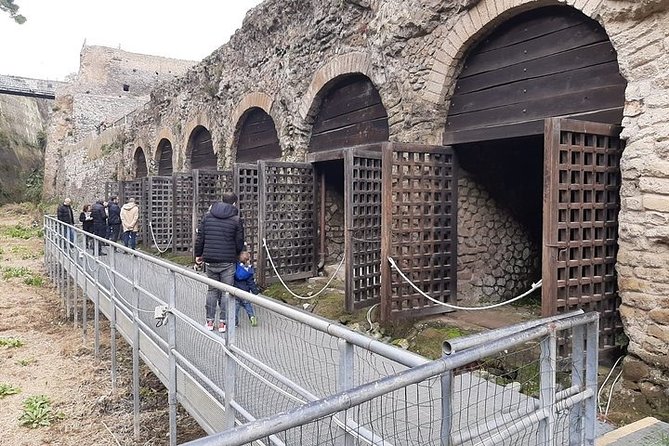
Salone della Barca di Ercolano (the charred boat and finds museum)
This stop shifts slightly away from the main park walk. Outside the archaeological area, in a small museum, you can see the ancient charred Roman boat and other finds.
This is one of the best “pause and reset” stops. After houses and mosaics, the boat adds scale—something about the town’s waterfront life and its connection to the wider world. If you’re the type who likes objects (rather than just buildings), this museum segment is worth your attention.
College of the Augustales (a public temple with mythological frescoes)
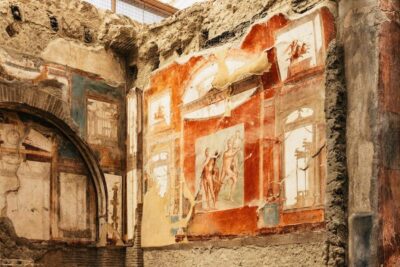
Next is one of the few public temples excavated that you can actually visit. Here, mythological frescoes bring the idea of civic religion to life inside the archaeological setting.
This is also a place to learn how religious imagery functioned in public spaces. Even at a glance, frescoes can show you what kind of stories and symbols people expected to see regularly.
Casa del Salone Nero (the black hall and fresco conservation)
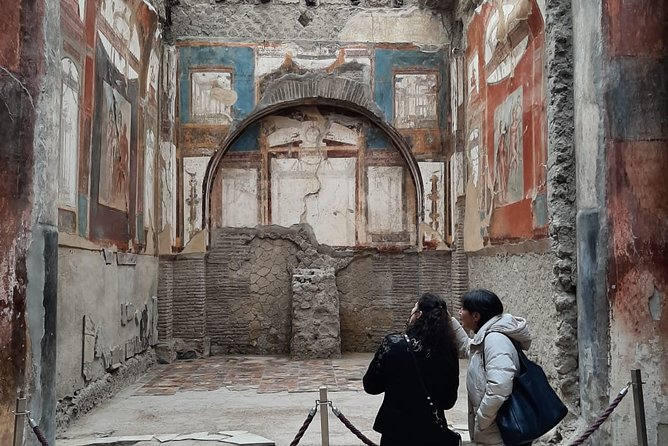
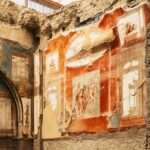
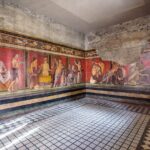
The Casa del Salone Nero is described as the house of the black hall, overlooking the main street of Herculaneum. It reflects the Vitruvian model, and what makes it especially interesting is the state of conservation of its frescoes.
“Conservation” sounds technical, but it’s basically why your eyes can still connect with what was painted. When frescoes survive, you can see the original intentions more clearly than at many other archaeological sites where decoration is lost or fragmentary.
Antiquarium di Ercolano (optional museum time at your discretion)
The tour closes with a flexible stop: Antiquarium di Ercolano. At your discretion, you can visit permanent and temporary exhibitions with finds such as jewelry, everyday objects, and charred wood furnishings.
This is the stop that lets you tailor your ending. If you want more object-focused material, you’ll likely enjoy this. If you prefer a final scan of the park and photos from viewpoints, you can keep it brief and still have the context your guide provided.
Herculaneum vs Pompeii: the context your guide helps you keep
You’re often comparing Herculaneum with Pompeii in your head, whether you planned to or not. The difference that guides emphasize is the “how it feels” factor—Herculaneum can come across as more intact, with smaller crowds, which changes how you experience scale and details.
A good guide makes the comparison useful, not confusing. Instead of saying one site is better, they explain how both formed under the same catastrophe but left different kinds of evidence behind. That’s how you go from collecting sights to understanding a story.
Also, Herculaneum’s preserved details—like baths, painted walls, and charred household items—carry their own emotional pull. With the right framing, you don’t just see ruins. You see daily routines and artistic choices.
Who this tour fits best (and who might want a different plan)
This tour is ideal if you want a guided, focused visit in about two hours. It also fits families, since the guide approach can be patient with slower walkers, and people have brought strollers that still made the experience work.
If you’re new to Roman history, you’ll still benefit. The stops are visual and structured, so you’re not stuck reading labels. If you already love Roman culture, the guided interpretation makes the artifacts and rooms feel more meaningful.
If you prefer a totally independent visit with no guidance, this may not be the best use of your time. The value is in someone helping you see what matters quickly, and then letting you ask questions while you’re there.
What to bring and how to handle comfort in the park
Keep it simple. Bring sunglasses, a hat, and comfortable walking shoes. You’ll want water and a plan for shade when the sun is strong.
If you’re visiting on a hot day, it helps to know the experience can include small comfort touches from the guide side, including cooling along the way. Don’t count on miracles, but do expect guides who care about keeping the group comfortable.
One practical note: if you’re thinking about bathroom planning, bring your own supplies where you can. There are restroom options, but you might not want to rely on finding everything you need on-site.
Should you book this private Herculaneum walking tour?
Yes, if you want a guided route that helps you see Herculaneum, not just walk through it. The tour’s strengths are clear: private pacing, an archaeology-trained guide, and a stop sequence built around the places that make Herculaneum feel uniquely intact.
Book it soon if your dates are firm. This kind of tour tends to sell, and it’s scheduled far enough ahead that locking in your time window early is a smart move.
One last check before you commit: count the €16 adult park entrance fee into your budget and plan your timing around a focused two-hour visit. If you do that, you’re set up for an experience that feels personal, structured, and genuinely worth your time in the Vesuvian shadow.
FAQ
How long is the private walking tour of Herculaneum?
The tour lasts about 2 hours (approx.).
What is the price per person?
The price is $102.12 per person.
Is the Archaeological Park entrance fee included?
No. The Archaeological Park of Herculaneum entrance ticket (€16 per person) is not included. It is free under 18 with document.
What language is the tour offered in?
The tour is offered in English.
Is this tour private?
Yes. It’s a private tour/activity, so only your group participates.
Where does the tour start and end?
It starts at the Archaeological Park of Herculaneum, Corso Resina, 187, 80056 Ercolano NA, Italy and ends back at the same meeting point.
Do I get a mobile ticket?
Yes, the tour includes a mobile ticket.
Are service animals allowed?
Yes, service animals are allowed.
What is the cancellation window?
You can cancel for a full refund up to 24 hours in advance of the experience start time.
More Tours in Naples



More Tour Reviews in Naples

Herculaneum, a Few More Tours

More Naples tours, freshly reviewed



Herculaneum Tours, compared.
 ★ 4.8Herculaneum: Skip-the-Line Guided Tour with ArchaeologistFrom $533,439 reviews
 ★ 5.0Pompeii and Herculaneum Small Group Tour with an ArchaeologistFrom $771,350 reviews
 ★ 5.0Herculaneum Small Group Tour and Ticket With an ArchaeologistFrom $53994 reviews
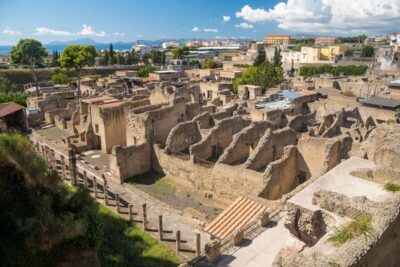 ★ 4.3Herculaneum: Skip-the-Line Entry Ticket with Audio GuideFrom $15870 reviews
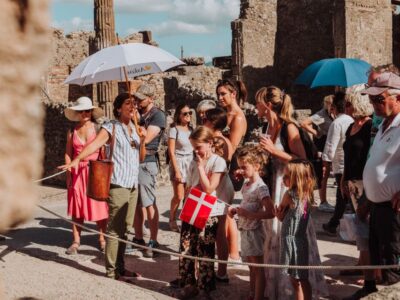 ★ 4.8Pompeii: Small-Group Tour of Pompeii and Herculaneum867 reviews
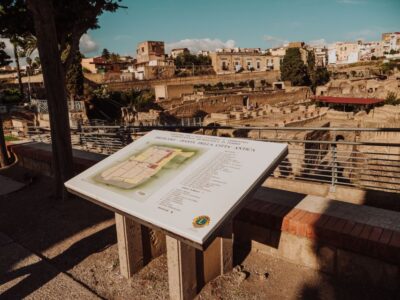 ★ 4.8Pompeii & Herculaneum with Archaeologist GuideFrom $168665 reviews
 ★ 3.9Pompeii, Herculaneum, & Vesuvius Full-Day TourFrom $152602 reviews
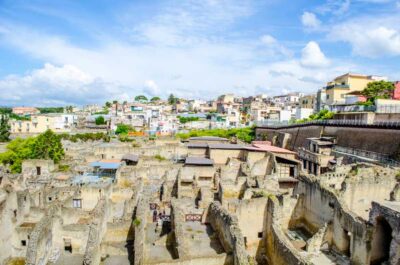 ★ 4.1Ercolano: Herculaneum Entry Ticket with Optional Audio GuideFrom $21581 reviews
Browse the lists this tour appears in