
Review · POMPEII TOURS
Private Tour of Pompeii
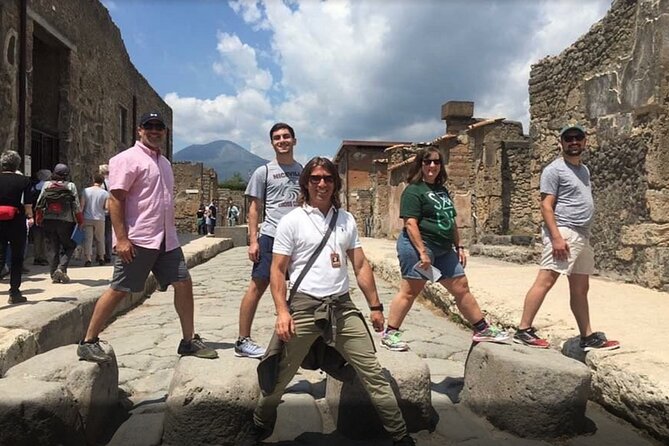
Pompeii makes sense fast when you have a guide. This private Pompeii tour uses a focused walk through the western ruins to explain life there before the AD 79 eruption of Vesuvius. It’s an English experience built around real on-site questions, not just a quick slideshow of stones.
I like the pacing. At about 2 hours 15 minutes, you get grounded in the big sights—like the Basilica and Forum—without sprinting through everything. I also like that you can ask your archaeology guide questions as you go, then keep wandering after the tour if you want more time in the park.
One drawback to plan for: Pompeii entry is not included, and transport/parking aren’t included either. So you’ll want to budget for admission and think through how you’ll reach the meeting point near Via Villa dei Misteri.
In This Review
- Key things to know before you go
- Pompeii’s Western Streets: What This 2h15 Route Actually Shows
- Entering the Ruins: Why the Basilica and Forum Hit Hard
- Thermal Baths and a Bakery Stop: Life Was Busy, Not Just Tragic
- Residential Houses: Seeing Houses as Status, Space, and Stories
- How “Private” Changes the Experience (and the Crowd Factor)
- “Before AD 79” Is the Real Magic
- Price and Value: When $298.37 Per Group Makes Sense
- Timing, Meeting Point, and What to Do Right After
- Which Guides You Might Get, and What That Can Change
- Should You Book This Private Pompeii Tour?
- FAQ
- How long is the Private Tour of Pompeii?
- How many people is this private tour for?
- What language is the tour offered in?
- Where do you meet for the tour?
- Where does the tour end?
- Is the Pompeii admission ticket included?
- What’s included in the tour price?
- Do you receive a mobile ticket?
- Is free cancellation available?
Key things to know before you go
- Private group up to 10 keeps the pace flexible and the Q&A real
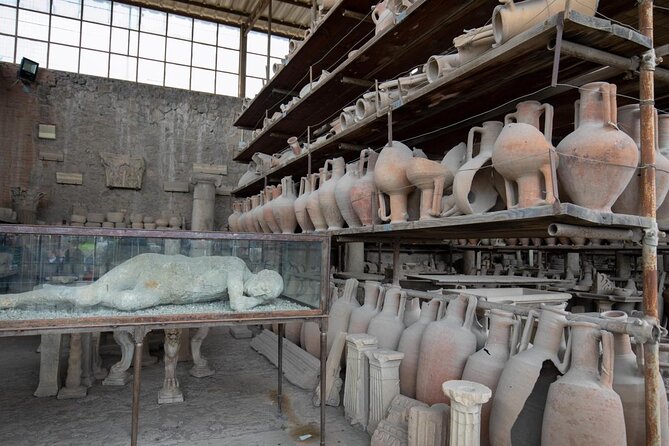
- Western Pompeii focus includes the Basilica, Forum, thermal baths, bakery, and residential houses
- About 2h 15m is long enough to orient you, short enough to avoid fatigue
- Mobile ticket in English makes day-of logistics simpler
- Guided ruins, admission not included means you’ll pay the park separately
- You can stay after the tour to add more time in the site and museum area if it fits your schedule
Which Pompeii ticket and guide? Compare a few more.
- Pompeii Small Group Tour with an Archaeologist★ 5.0 · 6,593 reviews
- Discover the Ancient Ruins of Pompeii: Day Trip from Rome★ 3.5 · 2,247 reviews
- Pompeii and Herculaneum Small Group Tour with an Archaeologist★ 5.0 · 1,350 reviews
- Skip the Line Guided Tour of Pompeii led by an Archaeologist★ 5.0 · 703 reviews
Pompeii’s Western Streets: What This 2h15 Route Actually Shows

This tour is built around a guided walk through the Archaeological Park of Pompeii, using the western part of the city to connect buildings to daily life. You’ll hear the story of Pompeii before the disaster—how people lived, worked, shopped, and gathered—then you’ll see the physical spaces where that all happened.
The timing matters. Two hours and a bit is enough time to understand what you’re looking at, not just pass it by. It’s also a good length if you want to see Pompeii now, but still leave room for your own exploring after.
Even if you’re not a “history person,” the ruins still hit. The guide’s job is to translate layout and architecture into everyday meaning: where public meetings happened, where people warmed up in baths, and how food preparation and commerce worked. That turns Pompeii from scattered ruins into a place with habits and routines.
Entering the Ruins: Why the Basilica and Forum Hit Hard
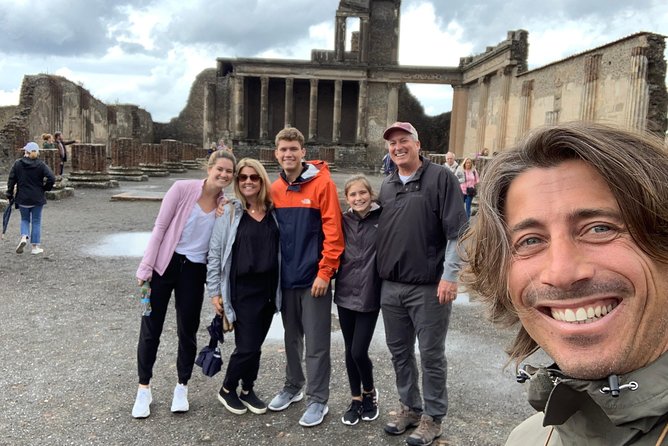
The route starts by taking you through major civic spaces, and that choice is smart. When you stand in front of the Basilica and the Forum, you’re seeing the heart of public Pompeian life—where decisions were made, disputes were settled, and people came together.
The Basilica is the kind of structure that’s easy to overlook if you only look for the big drama. With a guide, you start to notice the human pattern: people moving, gathering, and conducting everyday business. The Forum adds the larger context, so it doesn’t feel like you’re reading a building’s “facts,” but understanding why it mattered.
This is where you’ll feel the value of a private archaeologist guide. You can stop when something catches your eye and ask a direct question. That’s usually the difference between snapping photos and actually getting what you’re seeing.
Thermal Baths and a Bakery Stop: Life Was Busy, Not Just Tragic
Pompeii isn’t only about the moment everything stopped in 79 AD. The tour leans into how people spent their time, and two stops do that particularly well: the thermal baths and the bakery.
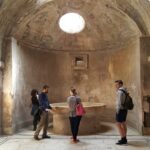
Baths show you routine. Even without getting technical, you can grasp that the bath area wasn’t just for cleanliness—it was social, with people talking while they took time for daily care. It also helps you understand how Roman engineering shaped comfort and community.
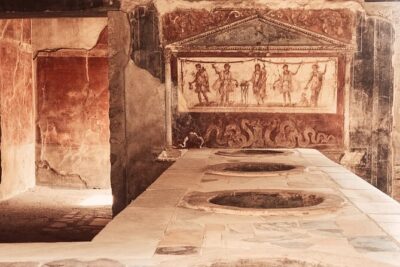
A bakery adds a different kind of “real life.” Food production is one of those topics that can feel abstract until you stand near a place built for it. Seeing a bakery area makes the scale of daily work feel immediate, and it helps you picture the rhythm of a city that ran on food, trade, and steady labor.
Residential Houses: Seeing Houses as Status, Space, and Stories
The tour includes some residential houses, and this is where Pompeii stops being only a public-city story. Homes are where you learn about privacy, status, and how domestic spaces were organized.
With a guide, residential sections become easier to read. You start to connect rooms and movement patterns to how people lived day-to-day—where conversation likely happened, where daily tasks would have taken place, and how different household zones felt distinct.
This is also a great time to ask questions. If you’ve ever wondered why certain rooms face certain directions, or what the layout suggests, your guide can usually explain what the ruins imply. That kind of back-and-forth is one of the reasons a private format works so well.
Rather go private? More options in Pompeii

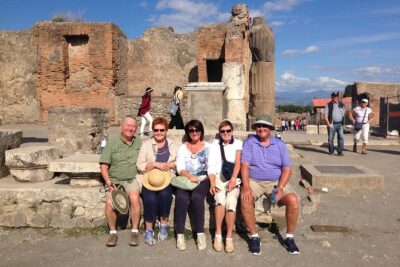
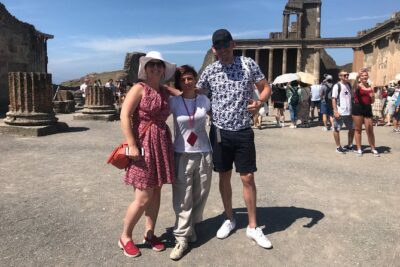


How “Private” Changes the Experience (and the Crowd Factor)
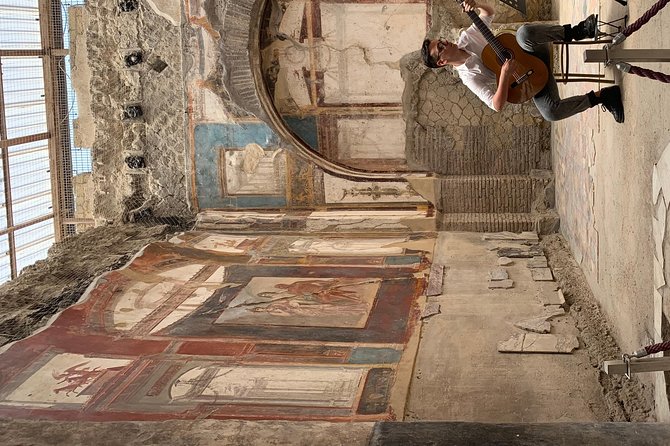
A private tour for up to 10 is not just a pricing label. It changes how the visit feels at ground level.
For one, you’re not stuck with a loud group marching pace. If your timing is off, you can slow down. If something interests you—like a mosaic detail, a building doorway, or a layout—your guide can adjust the explanation without making you wait for the “next” item.
You’ll also benefit from the way your guide can manage the walk within the park. Pompeii has crowds at certain hours, so having your own group can help you avoid spending the day grinding through bottlenecks. The tour’s structure still keeps things efficient, but the private format makes it feel more human.
If you’re the type who asks lots of questions, you’ll love this. One review-style detail you should take seriously: some guides on this kind of tour use humor and clear voice projection, so you don’t have to fight to hear them. Even if you don’t get the same personality, the private setting usually makes communication straightforward.
“Before AD 79” Is the Real Magic
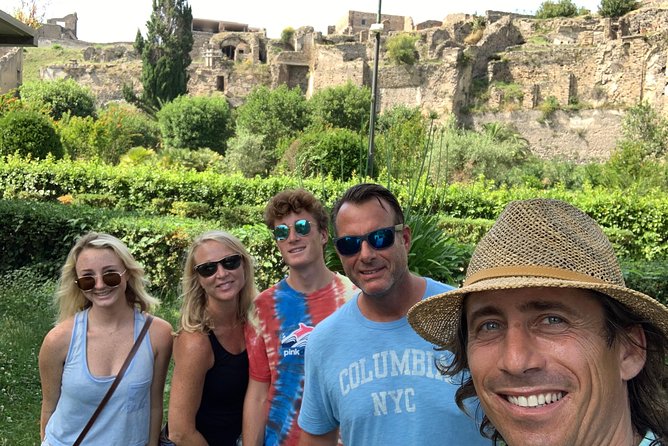
The most meaningful hook here isn’t just seeing ruins. It’s understanding what Pompeii was like before the Vesuvius eruption of AD 79 changed everything.
A good guide keeps the focus on the city’s normal life—then the tragedy lands harder because you know what’s being lost. When you hear the story in context while you’re standing in place, you’re not just looking at old walls. You’re connecting a moment of catastrophe to a functioning society.
That framing also makes it easier to remember what you saw. You’ll likely leave with a mental map: public areas where people gathered, practical areas for food and bathing, and homes that suggest daily routines. That’s when Pompeii feels like a real place and not just a landmark.
Price and Value: When $298.37 Per Group Makes Sense
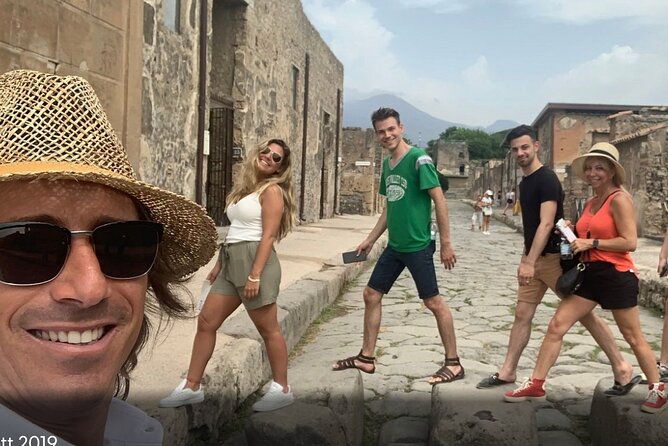
At $298.37 per group (up to 10), this is priced for people who travel with others or who want a private guide without paying private-guide prices per person. The math gets friendlier fast if you have a small group—say 4, 6, or 8 people—because the cost spreads across the group.
But there’s one key catch: Pompeii admission tickets are not included. So your true total cost has two parts:
- the guided private tour fee
- the park entry admission you’ll purchase separately
Even with that, this can still be a good value if you care about learning and want a route that hits the major sites without spending your day trying to decode Pompeii on your own. If you’re the kind of traveler who hates wasting time, a guided walk often pays for itself in saved “what am I looking at?” moments.
For solo travelers, this is usually less cost-effective unless you’re okay paying a higher per-person rate to guarantee a private format. For couples and small groups, it’s one of the cleaner ways to do Pompeii without turning the day into a logistics puzzle.
Timing, Meeting Point, and What to Do Right After

The tour starts at Ristorante Bar Sgambati, Via Villa dei Misteri, 1, 80045 Pompei NA, Italy and returns back to that same meeting point. That back-to-start structure is helpful because you don’t end up stranded across the park from your next plan.
The tour is about 2 hours 15 minutes, so you’ll likely finish while you still have daylight (season matters, but you get the idea). Then you can stay in the archaeological site to explore more afterward if you want. This is a big deal because Pompeii is one of those places where your attention can stretch.
One practical move: use the guided portion to understand the layout, then spend extra time where your guide’s explanations make you curious. If you’re drawn to mosaics, room layouts, or artifacts, you might find the on-site museum area worth adding—especially if you’re trying to bring the ruins back to life with objects in hand. (You’ll know what to prioritize once the guide has given you context.)
Also, plan around weather. The experience requires good weather, so if the forecast looks ugly, you may need a date adjustment or refund through the provider’s process.
Which Guides You Might Get, and What That Can Change
You’ll want to think about guide style as much as route coverage. In the same way a great instructor changes how fast you learn, a great Pompeii guide changes how quickly the city clicks.
Some guide styles mentioned for this type of Pompeii experience include:
- Frenky/Frankie-style guided humor and strong engagement for group pacing
- Sasa/Sasha-style detailed, funny explanations that keep attention without turning it into a lecture
- Anna-style explanations that can connect Roman engineering and design to what you see
- Melana and Francesco-style responsiveness to questions and architecture context
You can’t guarantee a specific person, but it’s worth noting that guide communication seems to be a core strength for this program.
If you’re picky about tours—short on facts, heavy on meaning—aim for a guide who likes questions. Pompeii rewards curiosity. The faster you ask, the faster you understand.
Should You Book This Private Pompeii Tour?
Book it if you want a guided walk that explains what you’re looking at and you prefer spending time learning over scanning maps. It’s especially worth it when you’re traveling in a group of up to 10 and want a private feel without turning Pompeii into a solo scavenger hunt.
Skip or reconsider if you’re mainly chasing “see everything fast” and already know Pompeii well, because the entry ticket is extra and the route is only a portion of the site. Also, if you’re relying on others for logistics, remember parking and transport aren’t included, so make sure you can reach the meeting point near Via Villa dei Misteri.
If your goal is to leave Pompeii with a clear sense of how the city functioned before AD 79, this private format is a strong fit.
FAQ
How long is the Private Tour of Pompeii?
It runs for about 2 hours 15 minutes.
How many people is this private tour for?
It’s private, and it can be booked for up to 10 people.
What language is the tour offered in?
The tour is offered in English.
Where do you meet for the tour?
The meeting point is Ristorante Bar Sgambati, Via Villa dei Misteri, 1, 80045 Pompei NA, Italy.
Where does the tour end?
The tour ends back at the meeting point.
Is the Pompeii admission ticket included?
No. The Pompeii admission ticket is not included.
What’s included in the tour price?
The included item is a guided tour of the Pompeii ruins.
Do you receive a mobile ticket?
Yes, you get a mobile ticket.
Is free cancellation available?
Yes. You can cancel for a full refund up to 24 hours in advance. If you cancel less than 24 hours before the start time, the amount paid is not refunded.
More Tours in Pompeii



More Tour Reviews in Pompeii

More Pompeii Tours to Compare
More Pompeii tours, freshly reviewed



Pompeii Tours, compared.
 ★ 4.8Pompeii: Entry Ticket and Guided Tour with an ArchaeologistFrom $3519,459 reviews
 ★ 4.1Pompeii: Entry Ticket with Audio GuideFrom $4013,491 reviews
 ★ 4.8Pompeii: Small Group Tour with an ArchaeologistFrom $4012,264 reviews
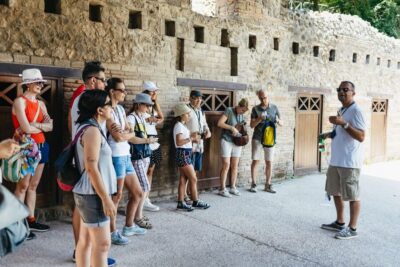 ★ 4.3Pompeii Ruins & Mount Vesuvius Day TourFrom $12011,459 reviews
★ 5.0Pompeii Small Group Tour with an ArchaeologistFrom $356,593 reviews
★ 4.3Pompeii Ruins & Mount Vesuvius Day TourFrom $12011,459 reviews
★ 5.0Pompeii Small Group Tour with an ArchaeologistFrom $356,593 reviews
 ★ 4.5Skip-the-line Pompeii – Small Group TourFrom $544,401 reviews
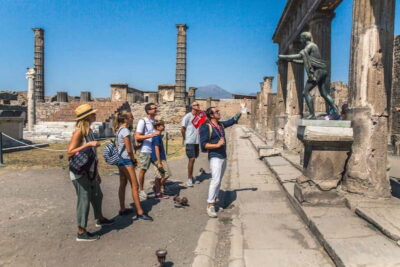 ★ 4.6Naples or Sorrento: Full-Day Pompeii and Mount Vesuvius TourFrom $1044,235 reviews
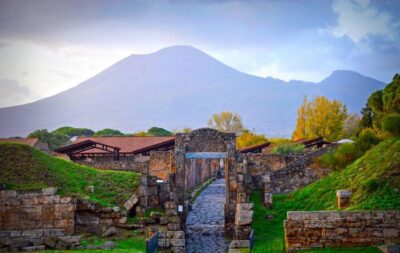 ★ 3.9Pompeii: Skip-the-line Entry Ticket with Audio Guide & MapFrom $433,153 reviews