
Review · POMPEII TOURS
Private Pompeii Tour with 3D Virtual Reality Headset – Tour Assistant Only
VR makes Pompeii feel close. On this private experience in Pompeii, you get 3D VR reconstructions of ancient streets and buildings, then a real walking tour where the ruins do the talking through headset audio. It’s an effective mix of tech and atmosphere, especially if you’ve ever felt Pompeii is hard to picture before you see it.
The biggest thing to know is that your assistant is not a licensed guide, so they’ll help you run the experience and navigate timing, but you won’t get deep Q&A about the site. Instead, you’ll lean on the headset commentary for the historical story.
You’re not just watching VR—you’re walking Pompeii
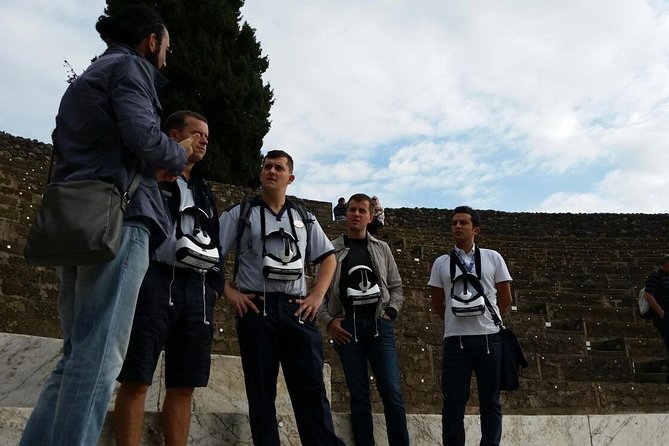
- A private group experience: only your group participates, so you’re not stuck in a mass shuffle.
- 5 minutes of headset training: you’ll learn how to use the Gear VR/Oculus-style setup before you enter the park.
- Up to 15 3D video moments: multiple reconstructions bring areas like homes, shops, and streets back to life.
- Audio in 6 languages: English, Italian, German, French, Spanish, Russian are available in the headsets.
- Skip-the-line entry included: you get the admission ticket plus a skip-the-line entrance fee.
- Uneven walking terrain: you’ll need comfortable shoes for the ground underfoot.
In This Review
- Pompeii, Rebuilt in 3D: What the VR Part Really Adds
- The 5-Minute Training: How You’ll Get Set Up (And Why It Matters)
- Your Tour Assistant’s Role: Help With the Experience, Not Site Expert Answers
- The Main Ruins Experience: Streets, Homes, Shops, Temples, and Theaters
- Language Set-Up: Assistant English/Italian and Headset Audio in 6 Languages
- VR Graphics and Expectations: What to Anticipate Before You Put the Headset On
- Price and Timing: Is $124.02 Worth It for Your Pompeii Day?
- Comfort, Safety, and Medical Notes for VR Headsets
- Age Limits for Kids: Minimum 9, Caution Under 13
- Where You Meet and End: Easy Pompeii Access, End on a Different Square
- Who This Private Pompeii VR Tour Fits Best
- Should You Book This Private Pompeii VR Tour?
- FAQ
- How long is the private Pompeii VR tour?
- Is the entrance ticket included?
- Is this tour really private?
- What languages does the tour assistant speak?
- Are the VR headset audio tracks available in languages besides English?
- What age can children use the VR headset?
- What should I wear for the tour?
- Where does the tour start and end?
- What is the cancellation policy?
Pompeii, Rebuilt in 3D: What the VR Part Really Adds
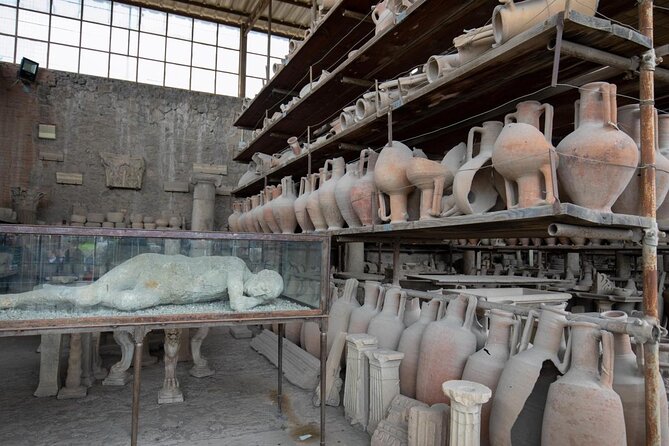
Pompeii is already dramatic. But in real life, you’re often looking at stone outlines and columns and thinking, What did this actually look like when it was full of people? This tour answers that question by pairing ruins with 3D virtual reality videos that recreate what the ancient city looked like before Vesuvius erupted.
What I like about this approach is that it doesn’t replace Pompeii. It frames it. You walk the real streets and then—at the right moments—you switch on the headset and get the feeling of volume, rooflines, street activity, and building life. The narration stays in the headsets, so you can focus on the space around you instead of trying to read signs at the speed of a tour group.
There’s also a practical benefit: this format can help you make sense of big Pompeii areas without needing to know everything in advance. Even if you’re not a museum person, the “before and after” effect makes the site easier to follow.
Which Pompeii ticket and guide? Compare a few more.
- Pompeii Small Group Tour with an Archaeologist★ 5.0 · 6,593 reviews
- Discover the Ancient Ruins of Pompeii: Day Trip from Rome★ 3.5 · 2,247 reviews
- Pompeii and Herculaneum Small Group Tour with an Archaeologist★ 5.0 · 1,350 reviews
- Skip the Line Guided Tour of Pompeii led by an Archaeologist★ 5.0 · 703 reviews
The 5-Minute Training: How You’ll Get Set Up (And Why It Matters)
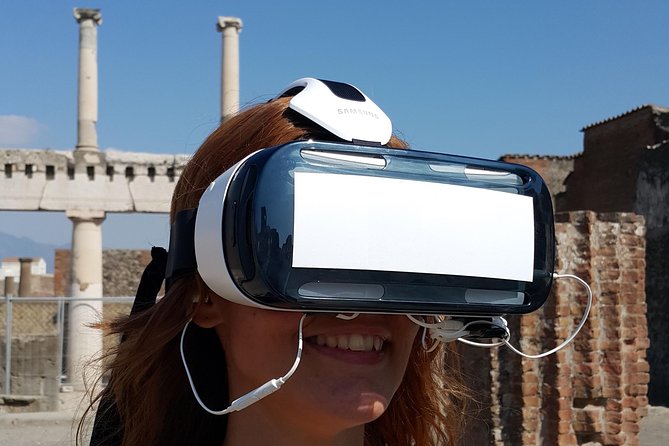
Right at the start, a staff member gives you about 5 minutes of training on the VR headsets. That short orientation is more important than it sounds. VR is a different kind of attention than normal sightseeing, and the biggest risk is wasting your time while everyone is still figuring out controls.
Once you’re set, the experience moves into the ruins with your tour assistant. You’ll use the headset at specific moments, and the videos are what do most of the historical “reconstruction work.” The assistant’s job is to keep the flow moving and support your group, not to lecture about archaeology.
For you, the best strategy is simple: treat the training as part of the tour, not a warm-up. If you get comfortable quickly with the headset fit and timing, you’ll spend more of the experience actually watching and less of it resetting or adjusting.
Your Tour Assistant’s Role: Help With the Experience, Not Site Expert Answers
One key detail changes how you should plan your expectations. Your tour assistant is not a licensed guide, so they can’t answer questions about the archaeological site. That means if you want facts in the style of a professional archaeologist—specific interpretations, deep context, or “why is this wall here?”—you’ll need a different guide type.
But that doesn’t mean you’re on your own. The assistant handles the practical rhythm: getting you to the right areas, supporting headset use, and keeping you on schedule. In feedback about this format, the most common praise is that the assistant was helpful and attentive—someone who makes sure you don’t get lost between the VR segments and the walking parts.
So I’d frame it this way: you’re buying a structured VR-enhanced walk, not a Q&A-driven site lecture.
The Main Ruins Experience: Streets, Homes, Shops, Temples, and Theaters
Your time in the Pompeii Archaeological Park is where the magic happens. After training, you enter the ruins accompanied by your assistant, and then the headsets take over with multiple 3D reconstructions. The experience is designed around you seeing major types of city spaces come back to life: temples, homes, shops, theaters, streets, and markets.
A big value here is pacing. Pompeii can feel overwhelming because it’s spread out and visually complex. By using the headset videos in a sequence (up to 15 videos), the experience encourages a clearer storyline than “look at everything” touring.
One practical note: you’ll still be on foot in the real site environment. That means you’ll need to slow down a bit and watch your footing on uneven terrain, then lift your gaze at moments when you take the headset off to look around. The best results come when you treat it like two layers: the VR layer for reconstruction and the real-world layer for orientation.
Language Set-Up: Assistant English/Italian and Headset Audio in 6 Languages
This tour is offered in English, but the language split is important.
- The tour assistant speaks English and Italian.
- The headset commentary is available in six languages: English, Italian, German, French, Spanish, and Russian.
If you’re booking for a group with mixed language preferences, this is where the tour can be surprisingly flexible. You can all listen in different languages through the headsets, while the assistant keeps communication simple for the group.
For you, the smartest move is to choose your headset language before you begin walking into the park. Don’t leave that decision for the middle of a VR segment. You’ll get the most from the audio if it matches what you want to learn.
Rather go private? More options in Pompeii

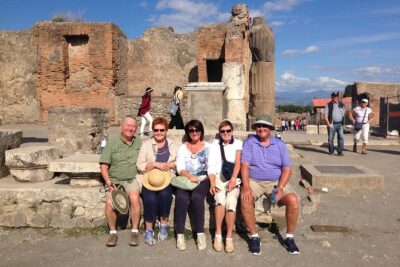



VR Graphics and Expectations: What to Anticipate Before You Put the Headset On
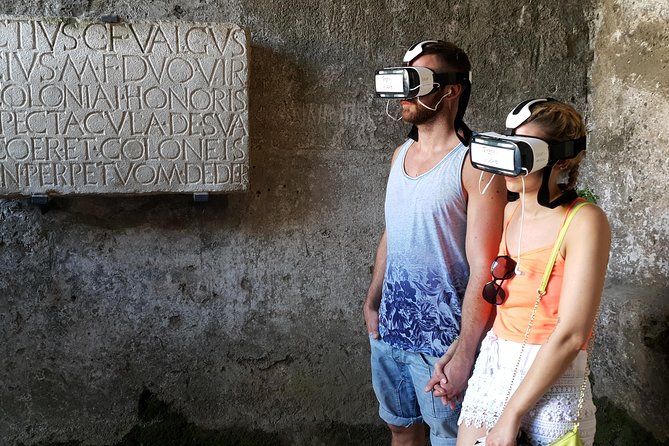
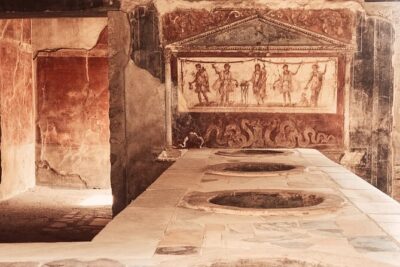
People love Pompeii for its real textures, scale, and silence. VR is different. The reconstructions are a visual storytelling tool, but the quality can be uneven depending on the headset generation and how a viewer expects modern gaming graphics to look.
In the feedback you’ve been given, there’s a clear pattern: most people still found the historical recreations excellent, even if some wished the VR graphics were sharper. That tells me to set your expectation correctly. Think of the VR content as a guide for understanding layout and life in Pompeii, not a cinematic-quality replacement for reality.
Also, VR is personal. Some visitors get a strong sense of being transported; others focus more on information. Either way, you’ll learn more from Pompeii if you pay attention to what the headset shows right before and after the real-world view.
Price and Timing: Is $124.02 Worth It for Your Pompeii Day?
At $124.02 per person for about 2 hours 30 minutes, this tour isn’t “cheap,” but it’s not built to be low-cost. You’re paying for a packaged experience: private group format, headset hardware included, headset training, the assistant’s help, and admission with skip-the-line entry.
That value works best if you want:
- a structured route so you don’t waste time figuring out what to see,
- multilingual audio without needing extra materials,
- and a VR element that helps you visualize ancient Pompeii.
If you already know Pompeii very well and you want a deep, licensed, Q&A-heavy history lecture, you might prefer a traditional guided tour. But if you’re looking for a more modern way to understand the city and you value having everything handled (entry + equipment + timed experience), this price starts to make sense.
Timing matters too. There’s a choice of morning or afternoon departures, which is helpful if you’re trying to match your energy level and your other plans.
Comfort, Safety, and Medical Notes for VR Headsets
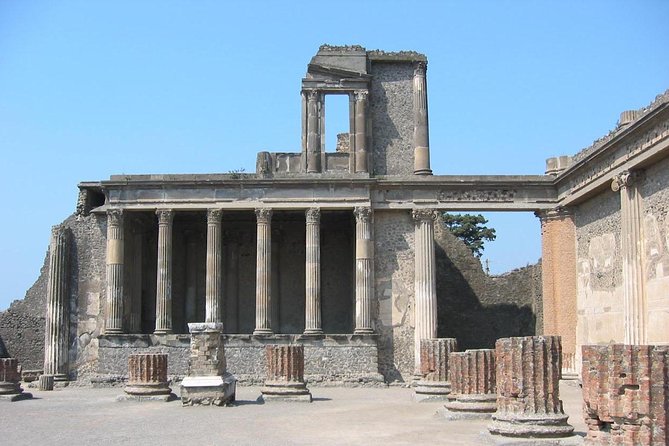
VR is fun, but it comes with real considerations. The tour provides 3D virtual reality headsets (Samsung/Oculus Gear VR), and the provider explicitly recommends checking medical safety in certain situations. If you’re pregnant, elderly, have pre-existing binocular vision abnormalities, psychiatric disorders, or a heart condition, it’s smart to talk to a doctor first.
There’s also a specific warning about dizziness. The information provided notes that about 1 in 4000 people may experience severe dizziness during VR use. If you’ve had seizures, loss of awareness, or symptoms linked to epilepsy, you should consult a doctor before taking the tour.
Two more practical safety points I’d take seriously:
- If you have a pacemaker or implanted medical device, the Gear VR can emit radio waves that could affect it. You should not use the headset without medical advice.
- If you feel symptoms like dizziness, nausea, eye strain, involuntary movements, or disorientation, you should stop using the headset immediately. Symptoms can linger for hours after use for some people.
For you, the best way to protect your experience is to start honest. If you’re prone to motion sickness or get headaches from screens, consider whether VR is the right fit.
Age Limits for Kids: Minimum 9, Caution Under 13
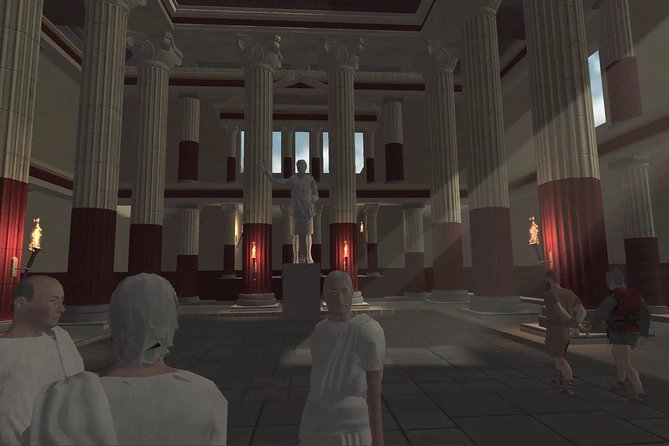
The tour includes a VR headset per adult and youth, but with clear limits.
- Minimum age to use the headset: 9
- The use of headsets is not recommended for children under 13 (Gear VR recommendation)
Children under 9 cannot use the headset. For families, this means the tour can still be enjoyable as a walk, but only if the child can participate with the headset rules. Also, the information provided puts safety responsibility on parents when children under 13 use the headsets, so plan for close monitoring during and after VR use.
If you’re traveling with a younger kid who can’t use the headset, you’ll want to think ahead about how they’ll handle the walking time and the timing of VR stops.
Where You Meet and End: Easy Pompeii Access, End on a Different Square
You’ll start at Hotel Vittoria, Piazza Esedra, 80045 Pompei NA, Italy and the tour ends at Piazza Immacolata, 80045 Pompei NA, Italy.
This end point can be useful because it gives you a natural “off-ramp” after the park time—especially if you’re pairing the tour with lunch, a return to your lodging, or a later visit to a different part of town.
The meeting location is near public transportation, and the overall area is easy to reach with trains that run regularly throughout the day and evening. You can also keep logistics simple by traveling light since the provider advises minimizing bags and backpacks.
Who This Private Pompeii VR Tour Fits Best
This experience makes the most sense if you like guided structure more than “wander and hope.” It’s especially good for:
- couples who want a smart mix of VR visualization and a real-world walk,
- families with kids old enough for the headset limits,
- and anyone who finds Pompeii’s scale and layout hard to picture from ruins alone.
It also works well for tech-curious visitors. The whole point is that you’re using modern tools to understand a city that existed two millennia ago, just before Mount Vesuvius changed everything.
If you’re the type of traveler who wants lots of archaeology questions answered on the spot, you may feel limited by the assistant’s non-licensed role. In that case, consider pairing your visit with a licensed guide elsewhere, or choose a different tour format entirely.
Should You Book This Private Pompeii VR Tour?
Book it if you want a guided, private Pompeii walk enhanced with headset reconstructions, multilingual audio, and skip-the-line admission. At $124.02 per person, it’s a fair value when you factor in the equipment, the structured pacing, and the fact that you’re not relying on signage or guessing what you’re looking at.
Pass or think twice if VR motion and screen-based viewing don’t agree with you, if you need deep site expertise through Q&A, or if your group includes children who can’t meet the headset age requirements. In short: this is best for people who want history explained through visuals and audio, not through an archaeology lecture.
If that’s your style, you’ll likely leave Pompeii with the streets and buildings you saw—now mentally “filled in,” not just outlined.
FAQ
How long is the private Pompeii VR tour?
It lasts about 2 hours 30 minutes.
Is the entrance ticket included?
Yes. The admission ticket and the skip-the-line entrance fee are included.
Is this tour really private?
Yes. It’s listed as a private activity, and only your group will participate.
What languages does the tour assistant speak?
The tour assistant speaks English and Italian.
Are the VR headset audio tracks available in languages besides English?
Yes. The headset commentary is available in English, Italian, German, French, Spanish, and Russian.
What age can children use the VR headset?
Children cannot use the headset under age 9. The manufacturer also recommends it should not be used by children under 13.
What should I wear for the tour?
Wear comfortable shoes, since you’ll be walking over uneven terrain.
Where does the tour start and end?
It starts at Hotel Vittoria, Piazza Esedra, and ends at Piazza Immacolata, both in Pompei.
What is the cancellation policy?
You can cancel for a full refund if you cancel up to 24 hours in advance. If you cancel less than 24 hours before the start time, the amount paid is not refunded.
More Tours in Pompeii






More Tour Reviews in Pompeii

More Pompeii Tours to Compare
More Pompeii tours, freshly reviewed





Pompeii Tours, compared.
 ★ 4.8Pompeii: Entry Ticket and Guided Tour with an ArchaeologistFrom $3519,459 reviews
 ★ 4.1Pompeii: Entry Ticket with Audio GuideFrom $4013,491 reviews
 ★ 4.8Pompeii: Small Group Tour with an ArchaeologistFrom $4012,264 reviews
 ★ 4.3Pompeii Ruins & Mount Vesuvius Day TourFrom $12011,459 reviews
★ 5.0Pompeii Small Group Tour with an ArchaeologistFrom $356,593 reviews
★ 4.3Pompeii Ruins & Mount Vesuvius Day TourFrom $12011,459 reviews
★ 5.0Pompeii Small Group Tour with an ArchaeologistFrom $356,593 reviews
 ★ 4.5Skip-the-line Pompeii – Small Group TourFrom $544,401 reviews
 ★ 4.6Naples or Sorrento: Full-Day Pompeii and Mount Vesuvius TourFrom $1044,235 reviews
 ★ 3.9Pompeii: Skip-the-line Entry Ticket with Audio Guide & MapFrom $433,153 reviews