
Review · HERCULANEUM TOURS
Private Herculaneum Tour – Top Experience with Local Guide
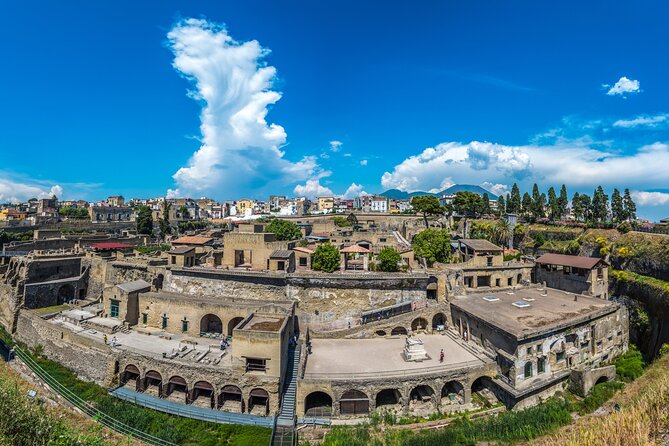
Herculaneum is history you can actually walk through. This private tour pairs a local guide with one of the best-preserved Roman towns, so you can move at your own speed through streets, shops, and baths. It’s the rare kind of ruin visit where you leave with a story in your head, not just pictures on your phone.
I especially like how the guide threads everything together, from the waterfront evidence of the eruption to the everyday household details. On tours led by guides such as Fabrizio or Paulo, you get clear explanations and plenty of time to ask questions, which makes the site feel instantly easier to understand.
One thing to plan for: moderate walking. With optional additions like a Vesuvius-area lunch, it can stretch longer than you expect, so wear comfortable shoes and don’t over-schedule the rest of your day.
In This Review
- Key things that make this tour work
- Why Herculaneum hits harder than Pompeii
- The private guide advantage: time, clarity, and better questions
- Entering Parco Acheologico di Ercolano: start with orientation, not overwhelm
- Boat Pavilion: the eruption explained with objects, not theory
- Antiquarium: original artifacts that make the ruins easier to read
- The ancient beach and boat houses: when the tragedy becomes personal
- Casa dei Cervi: waterfront wealth, refined taste, and a garden story
- Palestra: the Roman sports club that doubled as a social hub
- Casa di Nettuno e Anfitrite: mosaic brilliance and domestic design
- Women’s Baths: Roman engineering you can still feel
- Ad Cucumas: the ancient wine ad that feels almost modern
- Casa del Bicentenario: architecture plus evidence from carbonized writing
- Sacello degli Augustali: imperial cult, local loyalty
- Casa del Tramezzo di Legno: a carbonized wall that tells you how privacy worked
- Casa dello Scheletro: the most haunting moment, with context and care
- Optional add-on: Vesuvius wine at Cantina del Vesuvio (Russo Family since 1930)
- Price and timing: when $142.82 feels fair
- Pickup, meeting point, and getting there without stress
- What to bring and how to prepare
- Should you book this Private Herculaneum Tour
- FAQ
- How long is the Private Herculaneum tour?
- Is admission to Herculaneum included?
- Is this a private tour?
- Do I get pickup from my hotel?
- Where does the tour start and end?
- What language is the tour offered in?
- How much walking is involved?
- Are service animals allowed?
- Can I cancel for a full refund?
- Is the winery lunch included?
Key things that make this tour work
- Private guide pace at a site that’s calmer than Pompeii but still packed with detail
- The emotional punch of the Boat Pavilion and waterfront remains, shown in context
- A quick orientation via the Antiquarium, so the ruins make sense fast
- House-by-house stops that highlight Roman daily life, not just big monuments
- Optional Cantina del Vesuvio vineyard walk and tasting with views over the Bay of Naples
Herculaneum keeps a few more tours worth your time
- Herculaneum: Skip-the-Line Guided Tour with Archaeologist★ 4.8 · 3,439 reviews
- Herculaneum Small Group Tour and Ticket With an Archaeologist★ 5.0 · 994 reviews
- Herculaneum: Skip-the-Line Entry Ticket with Audio Guide★ 4.3 · 870 reviews
- From Naples: Pompeii & Herculaneum with Archaeologist Guide★ 4.8 · 665 reviews
Why Herculaneum hits harder than Pompeii
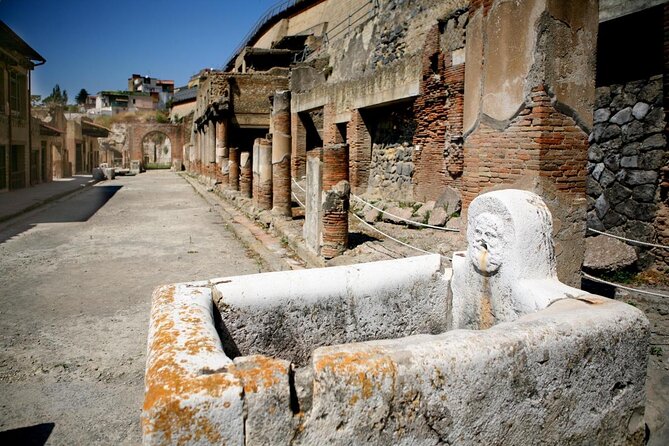
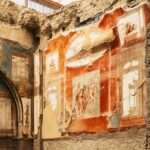
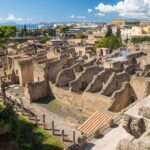
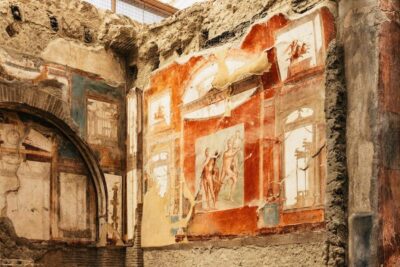
Herculaneum doesn’t compete with Pompeii on sheer size. Instead, it wins on feeling. The town is smaller, calmer, and—this is the big deal—better preserved. You’re walking through Roman streets where you can still picture normal life: colorful wall paint, mosaics on the floors, everyday wooden furniture, bathhouses, and the layout of shops.
And unlike many ruin visits where you stare at stones and guess, this tour helps you connect the dots. Your guide doesn’t just point. They explain what you’re looking at and why it matters—so the place feels real, not abstract.
Also, if Pompeii already lives on your trip itinerary, Herculaneum is a strong follow-up. It’s the same volcano story, but told through different evidence and different neighborhoods.
The private guide advantage: time, clarity, and better questions
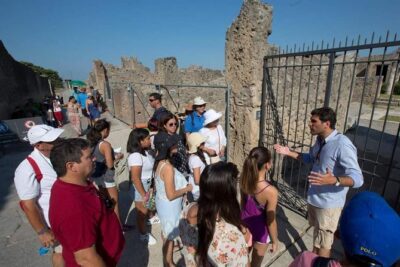
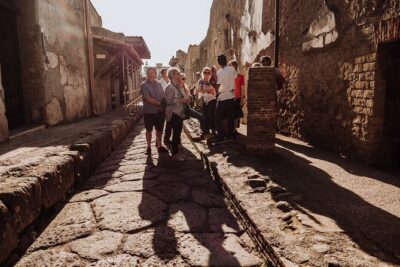
This is a private tour/activity, meaning it’s only your group. That matters at Herculaneum. The site rewards attention, and the pacing can feel more relaxed when you’re not being herded with a crowd.
What you’re really paying for is the guide’s ability to turn a lot of different stops into one clean narrative:
- what life looked like here (homes, bath routines, public spaces)
- what the eruption did to the waterfront and boats
- how objects survive in unusual ways under volcanic material
- how you can read social status in architecture and decoration
The reviews repeatedly highlight excellent, hands-on guiding—people specifically calling out guides who were courteous, on time, and able to explain in depth. That’s exactly what you want here. Herculaneum is famous, but it’s still easy to miss the significance of details if you go in blind.
Some guides you may encounter on this service include Fabrizio and Paulo, and the common thread is the same: clear explanations, friendly answers, and enough breathing room to take your time.
Entering Parco Acheologico di Ercolano: start with orientation, not overwhelm
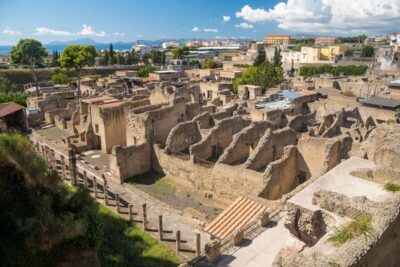
The tour’s core is the Parco Acheologico di Ercolano. You’ll begin at the Archaeological Park of Herculaneum (Corso Resina, 187, 80056 Ercolano NA, Italy), and the visit is built to get you oriented quickly.
You can expect a mix of:
- streets and public spaces
- private houses with visible layout clues
- bath areas and social spaces
- waterfront-related structures
- small but meaningful “everyday life” finds
A key strength of this tour is that it doesn’t treat the site as one long walk of random rooms. Instead, you’re guided from big-picture context to specific homes, then back to meaning—so the architecture and artifacts start to talk to each other.
Boat Pavilion: the eruption explained with objects, not theory
One of the most powerful stops is the Boat Pavilion. This is where Herculaneum shifts from history class to something painfully human.
Here you see carbonized remains of ancient boats and waterfront structures—preserved under volcanic debris. Your guide connects what you’re seeing to the town’s economy and routines: fishermen, merchants, and officials using the shoreline for trade and transport.
What makes this stop land is the combination of science and emotion. The boats are evidence. But the guide also ties them to the desperation of people trying to reach the water during the eruption. You’re not just looking at artifacts; you’re seeing how the sea and the town were linked, right up until the end.
More guided runs around Naples


Antiquarium: original artifacts that make the ruins easier to read
Before you go too far into the open-air excavation, you’ll visit the Antiquarium. Think of it as your decoder ring.
Inside, you’ll see original items such as:
- statues and inscriptions
- household objects and personal belongings
- preserved charred timbers that survived in volcanic heat
This matters because Herculaneum is full of “what is that?” moments. The museum helps you recognize materials and understand how wooden architecture and waterfront life worked here. By the time you step back outside, you’re not starting from zero—you’ve already learned how to interpret what follows.
The ancient beach and boat houses: when the tragedy becomes personal
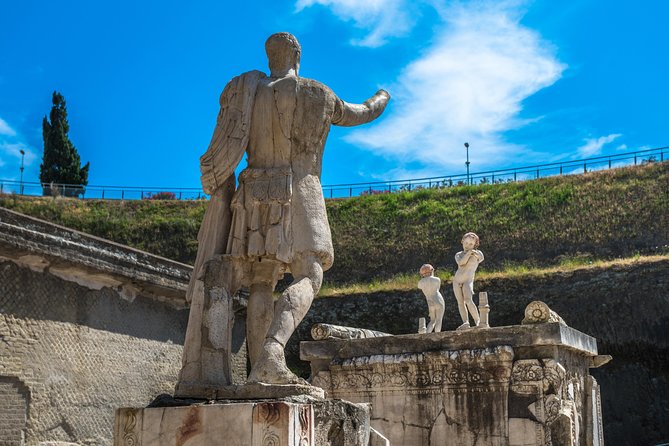
Another stop hits hard: the ancient beach area with the vaulted boat houses. This is one of those places where the evidence is shown in situ, and it changes your perspective immediately.
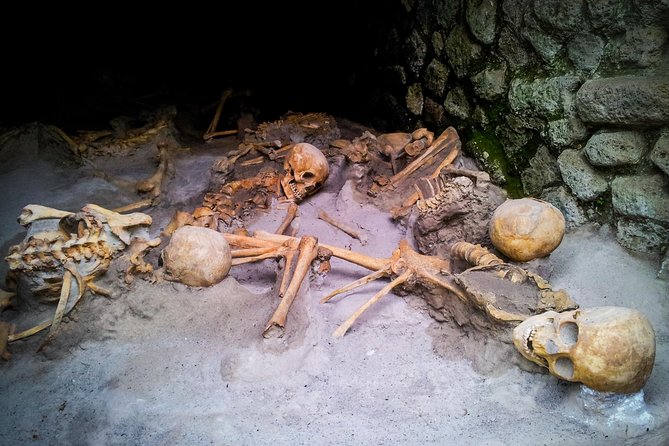
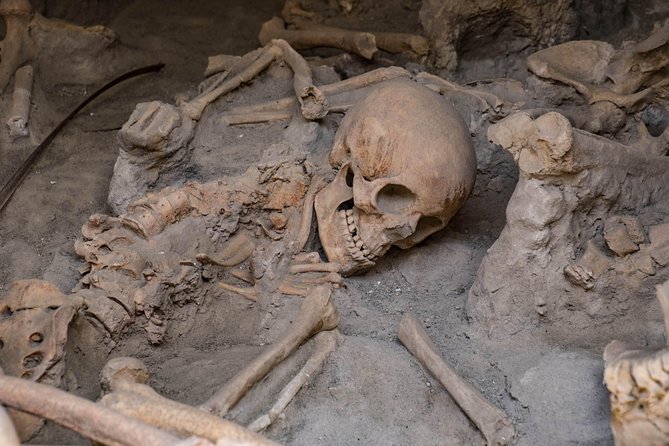
Archaeologists uncovered the skeletons of hundreds of people who gathered at the water’s edge during the eruption, hoping for rescue. Standing there, you can feel how the waterfront shaped daily life, and how quickly the pyroclastic surge overtook the shoreline.
It’s sobering. It’s also historically important, because it helps explain Herculaneum’s proximity to the sea and the speed of what happened.
Casa dei Cervi: waterfront wealth, refined taste, and a garden story
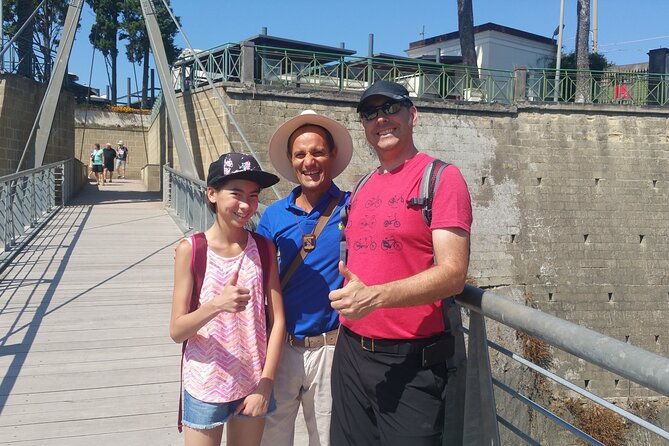
The Casa dei Cervi is one of the more elegant waterfront homes. Your guide walks you through marble floors, colonnaded garden space, and rooms once decorated with fine frescoes.
This stop helps you understand social status in a Roman seaside town. The house name comes from marble statues of stags being attacked by hunting dogs that were found in the garden and displayed separately. Your guide also explains how architecture and customs worked together—so the house reads like a lifestyle, not just a shell.
If you like “how did people live” details, this is where the tour rewards you most.
Palestra: the Roman sports club that doubled as a social hub
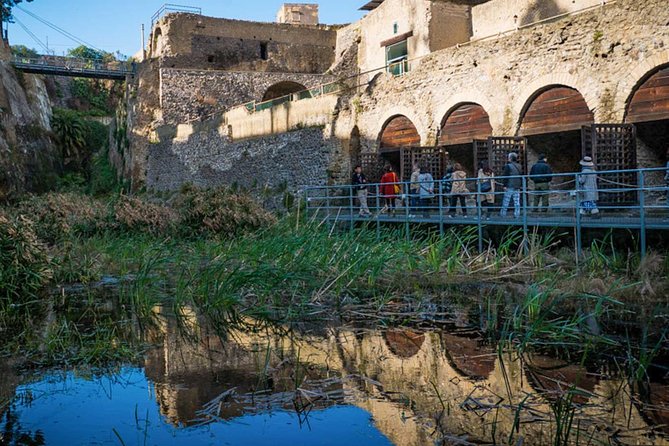
The Palestra is the ancient training space, and it’s more than gym ruins. Your guide shows how young men once trained, exercised, and gathered for events.
You’ll see the large open courtyard framed by porticoes. The scale tells you this wasn’t a tiny pastime. It was part of daily identity—physical training, social life, and public culture all in one.
Even if you’re not a history nerd, this stop is easy to picture once you get the framing.
Casa di Nettuno e Anfitrite: mosaic brilliance and domestic design
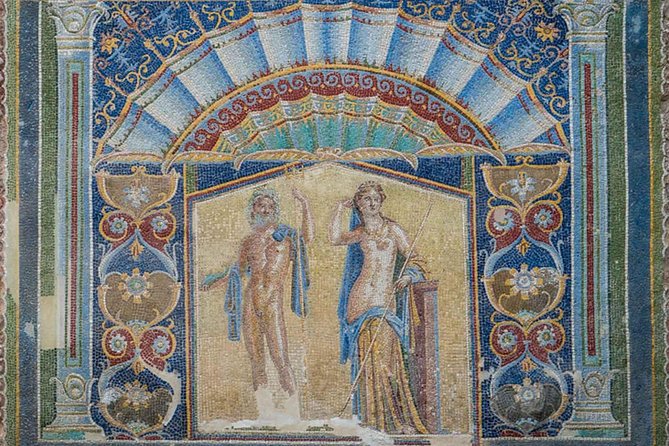
At Casa di Nettuno e Anfitrite, the main star is a dazzling wall mosaic. Tiny glass pieces create shimmering blues and golds, depicting Neptune and Amphitrite with delicate marine motifs.
This stop works on two levels:
- the artistic impact is immediate (even after 2,000 years)
- the guide connects decoration to the home’s private dining and decorative display style
Your guide also points out how water channels, garden traces, and the layout suggest how domestic life blended with status and taste in a Roman seaside home.
Women’s Baths: Roman engineering you can still feel
The Women’s Baths show another side of daily life: routine, care, and social interaction. You’ll move through spaces like changing rooms and heated areas, and you’ll notice the engineering details.
Look for hollow floors and wall pipes that carried hot air to warm the rooms, plus marble benches and mosaic floors that kept the experience comfortable and attractive.
Decor is refined too, with geometric patterns and marine themes. It’s a nice reminder that baths were not just functional. They were a place to talk, relax, and connect.
Ad Cucumas: the ancient wine ad that feels almost modern
This is one of those fun stops that keeps the tour from feeling like only big names and heavy themes.
Ad Cucumas is an ancient wall advertisement in a tavern, promoting wine by the jug. The text is still legible and lists prices for different quantities.
Your guide explains how commerce and street life worked right next to domestic spaces. You’ll probably find yourself smiling at how familiar the impulse feels: good signage, clear pricing, and thirsty customers.
Casa del Bicentenario: architecture plus evidence from carbonized writing
At the Casa del Bicentenario, you get a strong picture of refined urban living. Vivid wall paintings, wooden partitions, and marble thresholds suggest rooms arranged for both family life and social display.
There’s also a small shrine with delicate frescoes, showing domestic religion in the mix.
The really rare detail here is tied to the shoreline setting: excavations at this house yielded carbonized wooden writing tablets. These records point to property and inheritance disputes, meaning you’re not just seeing private space—you’re seeing legal life and civic involvement encoded into domestic settings.
If you like evidence that goes beyond decoration, this stop is a highlight.
Sacello degli Augustali: imperial cult, local loyalty
The Sacello degli Augustali adds political and religious context that many visitors miss. This small temple-like building was dedicated to the imperial cult—local elites honoring the emperor as a living symbol of Rome’s power.
You can see fresco fragments that connect Hercules alongside members of the imperial family. It’s a clever pairing of local mythology and imperial messaging.
This stop quietly shifts your understanding of Herculaneum. It’s not only a pretty seaside town. It was plugged into the wider structure of Roman power and identity.
Casa del Tramezzo di Legno: a carbonized wall that tells you how privacy worked
The Casa del Tramezzo di Legno is memorable for one exceptionally rare feature: a preserved wooden partition wall.
Because it was carbonized by the eruption and survived almost like a fossil, the folding screen once separated reception areas from more private quarters. Walking through the rooms, you can understand social choreography—where guests were welcomed, where business happened, and where daily family life stayed out of view.
This is one of the best stops for grasping the practical side of status and privacy in Roman homes.
Casa dello Scheletro: the most haunting moment, with context and care
Finally, the tour reaches Casa dello Scheletro, the House of the Skeleton. It’s the stop that tends to linger.
Inside, you see skeletal remains discovered there. Around the bones, architectural details like fresco fragments and room divisions hint at daily rhythm before the eruption. Your guide helps frame it as a meeting point of archaeology and humanity—an abrupt interruption to a lived-in town.
It’s not the kind of place where you rush. This is where a private pace helps most.
Optional add-on: Vesuvius wine at Cantina del Vesuvio (Russo Family since 1930)
If you want to make the day feel complete, the optional winery visit is a great match.
At Cantina del Vesuvio, you’re on the slopes of Mount Vesuvius, in volcanic soils that shape grape cultivation. With an enologist, you’ll stroll through the vineyards and get explanations about how terroir influences native varietals used to produce Lacryma Christi.
Then comes a relaxed lunch and tasting, pairing local dishes with the estate’s bottles. Even better, you get a terrace view stretching across the Bay of Naples to the summit of Vesuvius.
This add-on turns your visit from “how the Romans lived” into “how the land still shapes what people do.”
Price and timing: when $142.82 feels fair
The price is $142.82 per person. On its own, that sounds like a splurge—until you break down what’s included.
- You’re getting a private tour with a local guide.
- The visit includes an admission ticket for the archaeological portion.
- The tour duration is flexible, listed as 2 to 6 hours depending on what you choose (walking only vs. pickup, and whether you add the winery).
In practice, the best value shows up when you:
- care about explanation (not just seeing walls)
- have limited time and want a guided route that makes sense
- want the calm advantage of a private group
- plan to pair this with Pompeii and need Herculaneum to deliver the extra depth
If you’re the type who likes wandering without help, you might find a self-guided visit cheaper. But if you want the site to make sense quickly, the guide is the point.
Pickup, meeting point, and getting there without stress
The standard meeting point is the Archaeological Park of Herculaneum at Corso Resina, 187, 80056 Ercolano.
You can also choose an option with private transportation pickup, with flexible pickup anywhere in Naples or Sorrento. If you choose the walking tour only option, you meet the guide at the archaeological site.
This matters because timing around Pompeii and Herculaneum can get tricky, especially during busy hours. Pickup can reduce the mental overhead so you start the day relaxed.
What to bring and how to prepare
You should have moderate physical fitness and expect a moderate amount of walking. Comfortable shoes are a must. The site is outdoors and uneven in places.
A couple helpful notes from the tour details:
- service animals are allowed
- it’s offered in English
- there’s a mobile ticket
- people under 18 with valid ID can enter for free
Should you book this Private Herculaneum Tour
Book it if you want Herculaneum to feel understandable and human. The private guide pace is the difference between seeing ruins and following a story from waterfront evidence to elegant homes to the bath routines.
Skip it (or consider a shorter/self-guided plan) if you’re aiming for minimal walking, or if you prefer to read at your own speed without a guide connecting details.
If you’re doing Pompeii too, this is one of the best ways to balance the trip. Pompeii gets the spotlight. Herculaneum gives you the quieter, better-preserved version—and with a strong guide, you’ll actually notice why.
FAQ
How long is the Private Herculaneum tour?
The tour is listed as approximately 2 to 6 hours, depending on the options you choose.
Is admission to Herculaneum included?
Yes. Admission ticket is included for the archaeological park visit.
Is this a private tour?
Yes. It’s private, and only your group participates.
Do I get pickup from my hotel?
There is an option that includes private transportation pickup with flexible pickup anywhere in Naples or Sorrento. If you choose the walking tour only option, you meet the guide at the archaeological site.
Where does the tour start and end?
It starts at the Archaeological Park of Herculaneum (Corso Resina, 187, 80056 Ercolano NA, Italy) and ends back at the meeting point.
What language is the tour offered in?
The tour is offered in English.
How much walking is involved?
There is a moderate amount of walking. Comfortable shoes are recommended.
Are service animals allowed?
Yes, service animals are allowed.
Can I cancel for a full refund?
Yes. Free cancellation is available up to 24 hours in advance of the experience start time for a full refund.
Is the winery lunch included?
The winery visit is an optional add-on. If you choose it, you’ll do a vineyard walk with an enologist, then lunch and tasting with views from the terrace.
More Tours in Naples




More Tour Reviews in Naples

Herculaneum, a Few More Tours

More Naples tours, freshly reviewed



Herculaneum Tours, compared.
 ★ 4.8Herculaneum: Skip-the-Line Guided Tour with ArchaeologistFrom $533,439 reviews
 ★ 5.0Pompeii and Herculaneum Small Group Tour with an ArchaeologistFrom $771,350 reviews
 ★ 5.0Herculaneum Small Group Tour and Ticket With an ArchaeologistFrom $53994 reviews
 ★ 4.3Herculaneum: Skip-the-Line Entry Ticket with Audio GuideFrom $15870 reviews
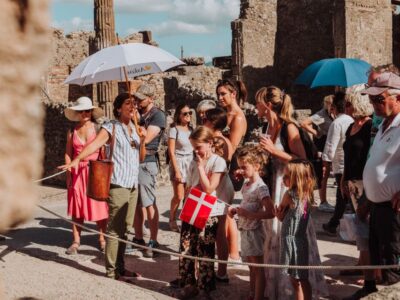 ★ 4.8Pompeii: Small-Group Tour of Pompeii and Herculaneum867 reviews
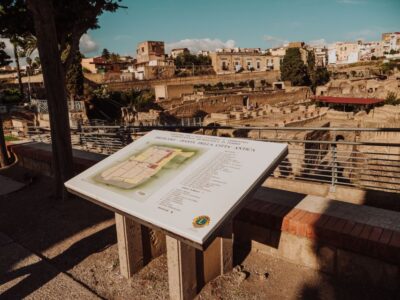 ★ 4.8Pompeii & Herculaneum with Archaeologist GuideFrom $168665 reviews
 ★ 3.9Pompeii, Herculaneum, & Vesuvius Full-Day TourFrom $152602 reviews
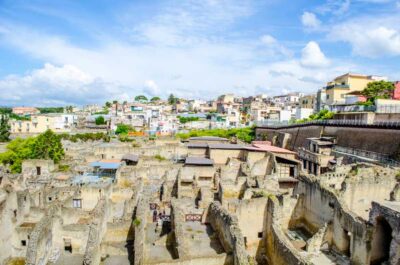 ★ 4.1Ercolano: Herculaneum Entry Ticket with Optional Audio GuideFrom $21581 reviews
Browse the lists this tour appears in