
Review · POMPEII TOURS
Pompeii Tour with Archaeological Expert and Lunch
Pompeii is history you can walk through. This 2-hour guided visit is built for real understanding, from the layout of the city to the drama of 79 AD. You get skip-the-line access with your guide handling tickets, then a focused route through the places that help everything click.
I love how the tour mixes major public landmarks like the Roman Forum with smaller, unforgettable details like the frescoes at the Lupanare. And I like that you’re not left figuring it out solo; a live guide keeps the story moving while you pause for photos.
One possible drawback: it is still a walking tour in an archaeological park. The route may change with crowds and weather, and it is not suitable for wheelchair users, so comfortable shoes and stamina matter.
In This Review
- Key highlights worth knowing
- Skip-the-line entry and where you actually start
- Pompeii in 2 hours: the smart, concentrated route
- Teatro Piccolo: entertainment at human scale
- Terme Stabiane: bathing and daily routine
- The Lupanare: frescoes from a preserved brothel
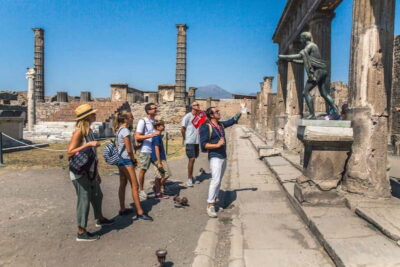
- Foro Civile di Pompei (Roman Forum): power in stone
- Streets under lava: how the eruption changes what you notice
- Lunch near the entrance: pizza or pasta, plus water
- What you should bring (and what actually matters on-site)
- Price and value: is $82 worth it for Pompeii?
- Who this tour suits best
- Should you book this Pompeii guided tour?
- FAQ
- Where is the meeting point for the tour?
- How does skip-the-line entry work here?
- How long is the Pompeii tour?
- What sites are included in the tour?
- What lunch is included?
- Is the tour suitable for wheelchair users?
Key highlights worth knowing

- Skip-the-line entry handled for you, so you waste less time waiting at the gate
- Lupanare frescoes: a brothel preserved by the eruption, explained in context
- Terme Stabiane gives you a sense of everyday Roman leisure and routine
- Teatro Piccolo and the Forum area show how public life worked in Pompeii
- Photo stops built into the route without turning it into a rushed sprint
- Lunch included right near the entrance, with Margherita pizza or spaghetti plus water
Which Pompeii ticket and guide? Compare a few more.
- Pompeii: Entry Ticket and Guided Tour with an Archaeologist★ 4.8 · 19,459 reviews
- Pompeii: Small Group Tour with an Archaeologist★ 4.8 · 12,264 reviews
- Pompeii: Skip-the-line Entry Ticket with Audio Guide & Map★ 3.9 · 3,153 reviews
- Naples: Pompeii and Mt. Vesuvius with Lunch and Wine Tasting★ 4.5 · 2,454 reviews
Skip-the-line entry and where you actually start
This tour is designed to remove one of the biggest Pompeii headaches: the time lost before you even start seeing ruins. You meet your guide at the Wellcome box in front of the EUROPARKING parking lot area. From there, you go straight to the express entry process and your guide takes care of the tickets.
That matters because Pompeii can be crowded. When you have a guide purchasing tickets and guiding you into the park, you start walking sooner and stay in the flow of the experience. It also tends to reduce the stress of trying to match faces to pickup points, especially if you’re arriving with typical train or shuttle timing.
Tip I’d use: arrive a few minutes early. Pompeii meeting points can be busy, and you’ll enjoy the start more if you aren’t scrambling in the last minute.
Pompeii in 2 hours: the smart, concentrated route
A common problem with Pompeii day trips is scope. The site is huge, and if you show up without a plan, you end up seeing a lot of walls without grasping the city. This tour is short on purpose—2 hours—so it focuses on the “why this matters” places.
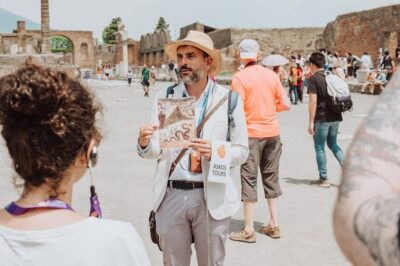
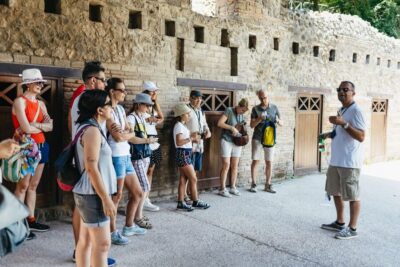
You’ll move through Pompeii on foot with guided stops tied to the city’s structure and daily life. The tour is paced with short guided segments, then brief open time for photos and getting your bearings.
Here’s the practical takeaway: you’ll leave with a working mental map, not just a list of ruins. You’ll understand how public spaces, homes, and entertainment connect—and why the eruption preserved details that still feel startlingly human.
Teatro Piccolo: entertainment at human scale
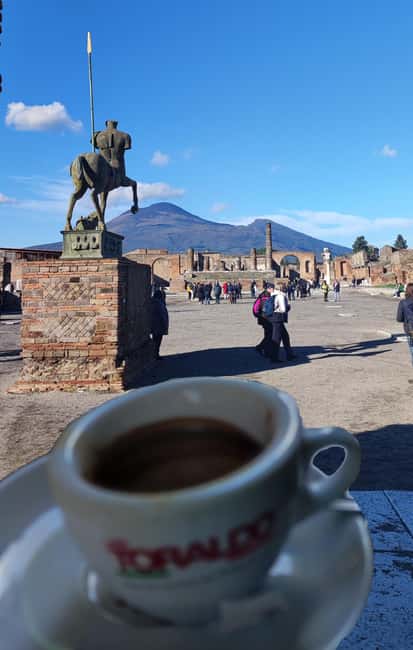
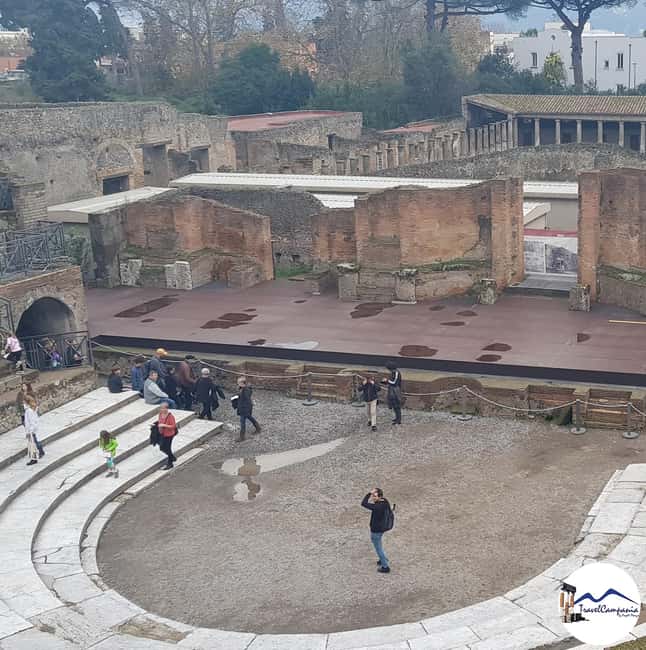
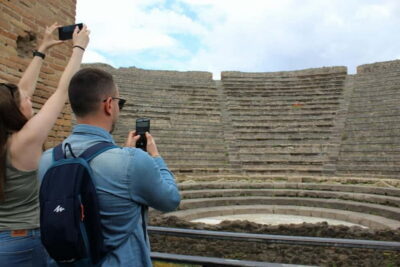
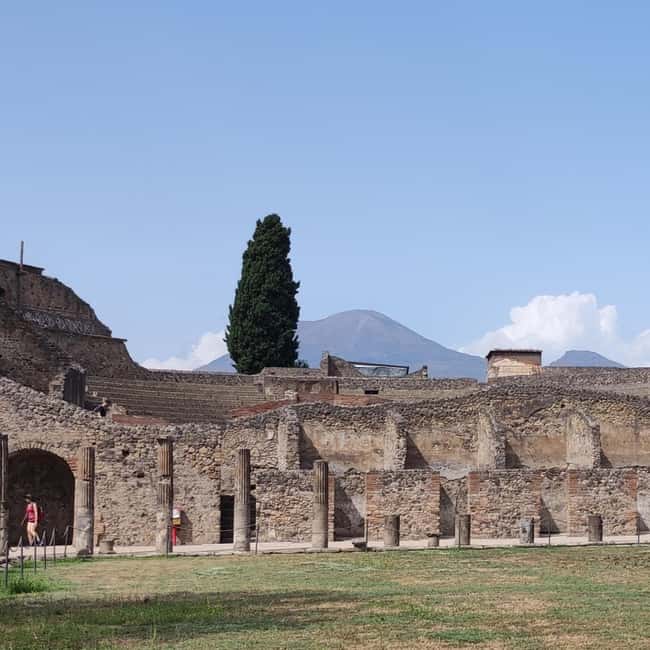
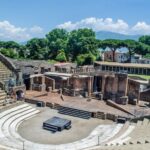
One of your early stops is Teatro Piccolo, a smaller theater compared with Pompeii’s big-name venues. That scale is helpful. It’s easier to imagine the audience, the acoustics, and the rhythm of an evening out when the space isn’t overwhelming.
Your guide’s job here is important: theaters in Pompeii weren’t just buildings. They were social engines—places where people gathered, talked, and watched performances as part of normal life. Even though the stone is silent now, you can still feel the logic of the space when someone points out what you’re looking at.
The benefit for you is clarity. When you understand why the theater sat where it sat, you start reading the street network differently across the rest of the park.
Terme Stabiane: bathing and daily routine
Next up is Terme Stabiane, Pompeii’s bath complex. Baths in Roman towns were about more than cleanliness. They were a big part of social life and routine, with different areas for different temperatures and activities.
In a short tour like this, the baths are a great choice because they show what daily life looked like in a city that wasn’t just politics and temples. You’ll get the sense of how long people might spend here and how different zones worked together.
Drawback to plan for: bath complexes can be visually repetitive if you’re not given context. That’s where having a live guide helps. They can point out which parts you’re seeing and what their purpose likely was, so you don’t miss the story.
Other Pompei Campania outings worth a look before you book

The Lupanare: frescoes from a preserved brothel
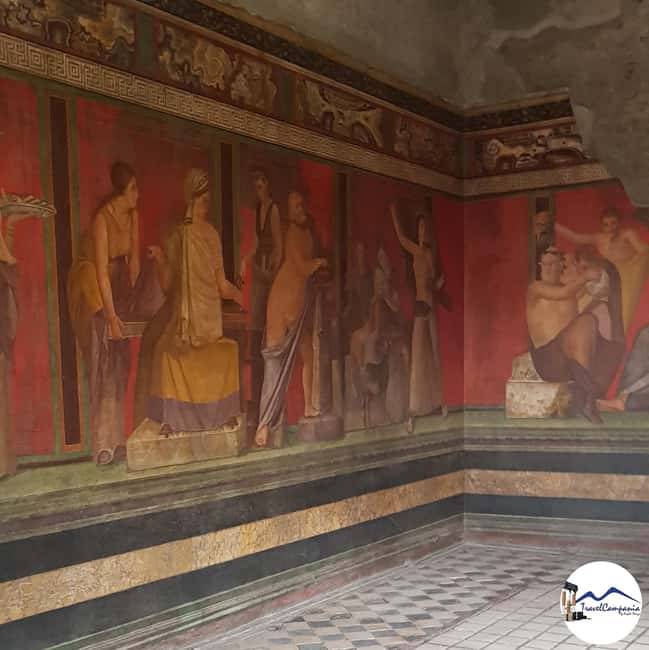
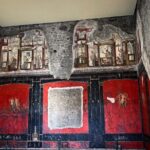
If you want one stop that makes Pompeii feel oddly personal, it’s the Lupanare. This brothel was preserved in a way that keeps its frescoes visible—an eerie reminder that the Roman city included every kind of commerce and human behavior.
This is also where the tour’s expertise really shows. You’re not just being pointed at wall paintings. You’re getting explanation for what the images likely represented in that space and how this site fits into Pompeii’s street-level economy.
A note for your own comfort: the Lupanare is not the kind of stop you casually skim. If you’re sensitive to the subject matter, you’ll still be able to follow the guide’s explanation, but you may want to take it at your own pace and use the photo breaks to step back for a moment.
Foro Civile di Pompei (Roman Forum): power in stone
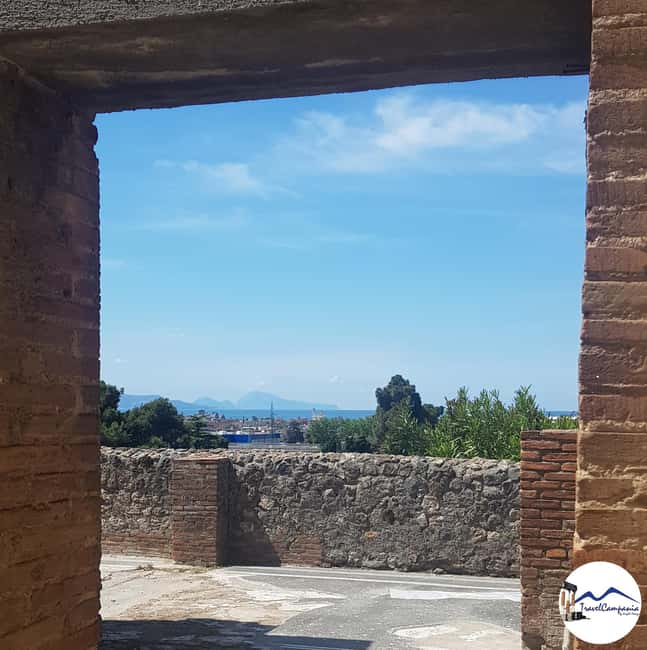
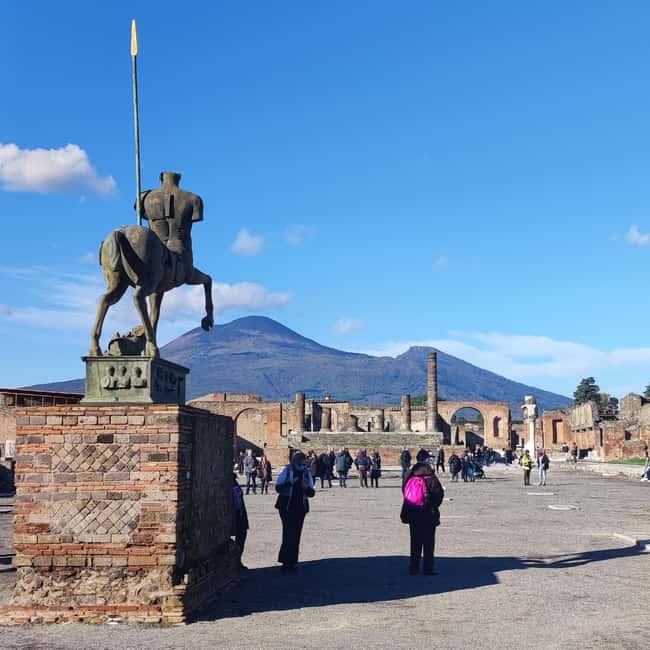
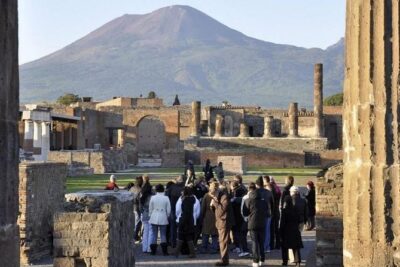
Then you head to Foro Civile di Pompei, which functions as Pompeii’s public civic heart—often the area people think of when they picture the Roman Forum experience. This is where politics, gatherings, and everyday civic movement would have overlapped.
In many archaeological sites, forums can feel like architecture only. Here, it helps that the guide ties the spaces to how people lived and acted. You’ll see why this area mattered for announcements, movement, and public visibility.
What you’ll notice if you pay attention: the forum’s layout makes it easy to imagine crowd flow. People moving toward civic decisions and events. Merchants and onlookers passing by. It’s public life turned into a map made of stone.
That is exactly why this stop is so valuable for a 2-hour tour. It gives meaning to what you’ve been seeing before you reach it.
Streets under lava: how the eruption changes what you notice
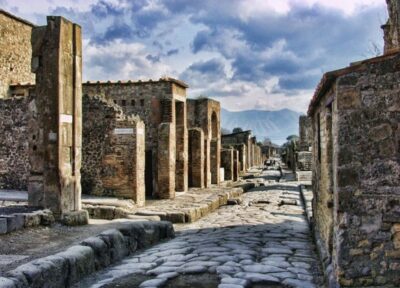
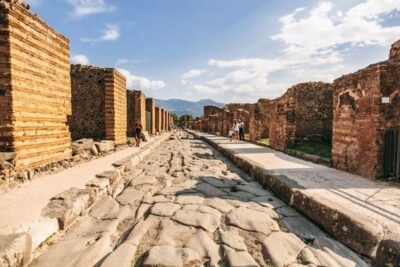
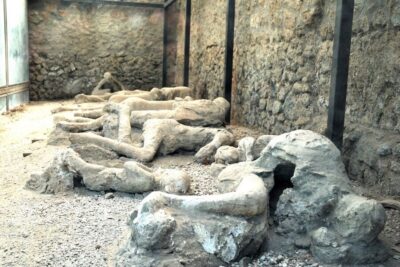
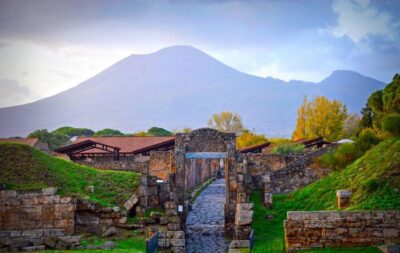
Throughout the walk, you’re moving along streets and passing spaces that were covered in lava after Mount Vesuvius erupted in 79 AD. That fact doesn’t just sit in the background. It affects how you interpret almost everything.
You’ll likely catch yourself noticing things that seem small: where doorways open, how a corner works, how a street might funnel movement. Those details are where Pompeii becomes more than famous ruins.
A guide’s storytelling helps here. When you understand what it means that so much was preserved at the moment of disaster, you start to see Pompeii as a snapshot of a functioning city—not an empty stage.
Lunch near the entrance: pizza or pasta, plus water
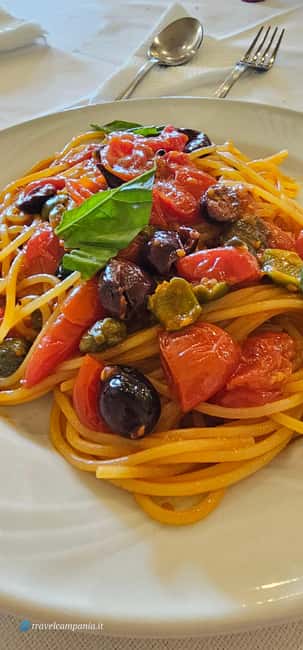
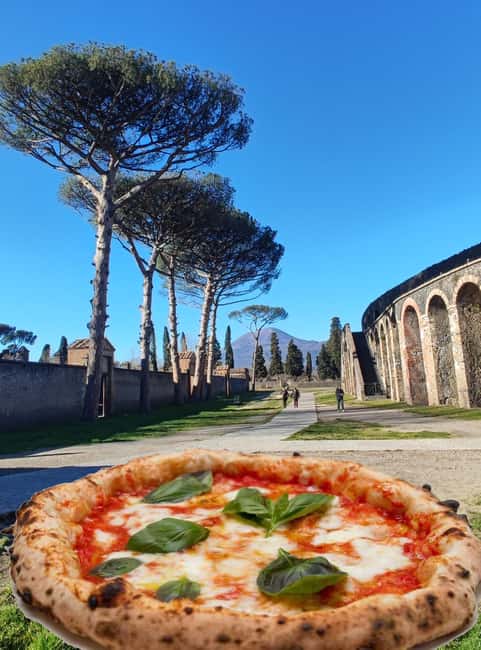
After the walking portion, you finish with food at a restaurant near the entrance to the archaeological park—specifically Ristorante pizzeria Turistico. The meal included is simple and satisfying: Margherita pizza or spaghetti with cherry tomatoes, plus water.
This is a practical choice for value. You’re not paying extra and then hunting for somewhere close afterward. And because it’s near the park entrance, you avoid the typical end-of-tour chaos of deciding where to eat while everyone is tired and hungry.
What to expect from the meal: it’s positioned as an easy recovery stop after a couple hours of walking. In the experience, people have praised the food as delicious and the service as genuinely welcoming.
Small limitation to know: the included meal does not mention alcohol or soft drinks. If you want something besides water, you’ll need to buy it separately.
What you should bring (and what actually matters on-site)
The essentials are straightforward, and they make a real difference in Pompeii comfort:
- Sun hat (shade can be limited in parts of the park)
- Hiking shoes (uneven stone and slopes)
- Reusable water bottle (water is included with lunch, but you’ll still want some on the walk)
Also remember: pets are not allowed, and the tour is not set up for wheelchair access.
And one more practical point: the exact route can vary based on crowd levels and weather. That’s normal for a guided walk in a living site. Your guide will still hit the core areas, but you may move slightly differently day to day.
Price and value: is $82 worth it for Pompeii?
At $82 per person, this isn’t the cheapest way to do Pompeii. But it is also not trying to be. You’re paying for three things that matter in practice:
1) Priority/express entry, with your guide purchasing tickets
2) A live guide for interpretation over a short, focused walk
3) Lunch included: pizza or pasta plus water
If you’ve ever done Pompeii on your own, you know how quickly you can burn time and energy just trying to connect ruins to meaning. Here, the guide work compresses that learning curve into a 2-hour format.
So, for most people, the real question is this: do you want a quick, guided highlight route with food included, or do you want to wander independently for longer? If you want the quick, confident version, $82 is easier to justify.
Who this tour suits best
This experience works especially well if you:
- Want Pompeii but don’t want to spend half a day
- Prefer a guided route that builds understanding fast
- Like the mix of big public sites and more unusual preserved spaces like the Lupanare
- Appreciate convenience, especially with ticket handling and included lunch
It may not be your best fit if you:
- Need full wheelchair accessibility (this tour is not suitable)
- Want lots of free time to wander far off the route
- Plan to do a very photography-heavy day and then also explore much more on your own afterward
Should you book this Pompeii guided tour?
I think it’s a solid choice when you want structure, speed, and context. The combination of skip-the-line access, a live guide, and lunch near the entrance is practical, not just fancy. It’s especially good if it’s your first time in Pompeii and you want to leave with a real sense of how the city worked.
If you want a deeper, slower exploration of every major complex, you might choose something longer. But for a two-hour day with less stress and more meaning, this one is a strong bet.
FAQ
Where is the meeting point for the tour?
You meet your guide at the Wellcome box in front of the EUROPARKING lot in Pompeii.
How does skip-the-line entry work here?
You get priority entrance and an express security check. Your guide purchases the tickets for you at the archaeological site.
How long is the Pompeii tour?
The total duration is 2 hours, including guided time and a short stretch of free time.
What sites are included in the tour?
The tour covers key areas such as the Lupanare (with preserved frescoes), Terme Stabiane, Teatro Piccolo, and Foro Civile di Pompei, plus walking through major streets and important parts of the city.
What lunch is included?
Lunch includes either Margherita pizza or spaghetti with cherry tomatoes, plus water. Alcohol and fizzy drinks are not included.
Is the tour suitable for wheelchair users?
No. This tour is not suitable for wheelchair users.
More Tours in Pompei Campania



More Tour Reviews in Pompei Campania

More Pompeii Tours to Compare
More Pompei Campania tours, freshly reviewed

Pompeii Tours, compared.
 ★ 4.8Pompeii: Entry Ticket and Guided Tour with an ArchaeologistFrom $3519,459 reviews
 ★ 4.1Pompeii: Entry Ticket with Audio GuideFrom $4013,491 reviews
 ★ 4.8Pompeii: Small Group Tour with an ArchaeologistFrom $4012,264 reviews
 ★ 4.3Pompeii Ruins & Mount Vesuvius Day TourFrom $12011,459 reviews
★ 5.0Pompeii Small Group Tour with an ArchaeologistFrom $356,593 reviews
★ 4.3Pompeii Ruins & Mount Vesuvius Day TourFrom $12011,459 reviews
★ 5.0Pompeii Small Group Tour with an ArchaeologistFrom $356,593 reviews
 ★ 4.5Skip-the-line Pompeii – Small Group TourFrom $544,401 reviews
 ★ 4.6Naples or Sorrento: Full-Day Pompeii and Mount Vesuvius TourFrom $1044,235 reviews
 ★ 3.9Pompeii: Skip-the-line Entry Ticket with Audio Guide & MapFrom $433,153 reviews
Browse the lists this tour appears in