
Review · POMPEII TOURS
Pompeii: Skip-the-Line Ticket with Audio Guide and Map
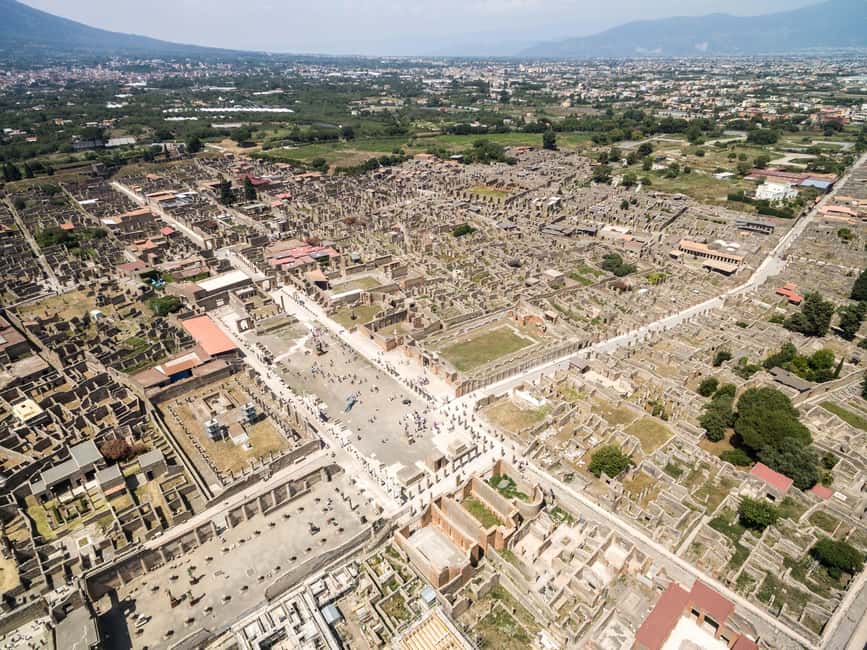
Pompeii rewards slow, careful walking. This skip-the-line ticket gives you direct entry to one of the world’s most important Roman ruins, then lets you explore at your own pace with an included audio guide and updated map. I like that it’s structured enough to keep you moving, but flexible enough that you can pause for frescoes, street scenes, and the big emotional moments without feeling rushed. One possible drawback: the voucher swap point is a bit away from the main gate area, and the map/audio setup can feel clunky in the moment if you like everything to be instantly obvious.
In other words, this works best if you’re ready to do real walking and make a few decisions yourself. The site is spread out, and the tour isn’t suitable for mobility impairments or wheelchair users. Plan for sun and uneven ground, and you’ll likely get a lot more out of the experience.
In This Review
- Key points you’ll care about
- Skip-the-line entry in Pompeii: where you swap your voucher
- Audio guide and updated map: great idea, but watch the language setup
- Pompeii’s highlights, without fixed group pressure
- Roman amphitheater: the best-preserved anchor point
- Domus, frescoes, spas, and temples: reading daily life
- Thermopolis and shops: the city’s fast-food streets
- Theaters and brothels: a full picture of city culture
- Casts of victims: when the story turns personal
- How to pace yourself in one day without getting worn out
- Price and value: what you pay for at $44 per person
- Who should book this Pompeii audio ticket
- Not for everyone: walking, rules, and limitations
- Should you book this Pompeii skip-the-line ticket?
- FAQ
- How long is the Pompeii visit?
- What’s included with the ticket?
- Where do I exchange my voucher for the entrance tickets?
- What languages are available for the audio guide?
- Is the ticket actually skip-the-line?
- What should I bring to Pompeii?
- What is not allowed inside the excavations?
- Is this experience suitable for wheelchair users or people with mobility impairments?
- What are the cancellation rules and payment options?
Key points you’ll care about
- Skip-the-line entry means less time waiting and more time inside the ruins.
- Meet at Via Roma 32 (next to Pasticceria De Vivo), about a 5-minute walk from the Amphiteatre Pompeii Ruins Gate.
- Audio guide + updated map includes suggested highlights so you don’t waste your day lost in streets.
- Must-see stops include the domus (houses), spas, temples, shops, thermopolis, theaters, brothels, Roman amphitheater, and casts of victims.
- Know the limits: no backpacks and no flash photography inside the excavations.
Which Pompeii ticket and guide? Compare a few more.
- Pompeii: Entry Ticket and Guided Tour with an Archaeologist★ 4.8 · 19,459 reviews
- Pompeii: Small Group Tour with an Archaeologist★ 4.8 · 12,264 reviews
- Pompeii: Skip-the-line Entry Ticket with Audio Guide & Map★ 3.9 · 3,153 reviews
- Naples: Pompeii and Mt. Vesuvius with Lunch and Wine Tasting★ 4.5 · 2,454 reviews
Skip-the-line entry in Pompeii: where you swap your voucher
The real win here is not just what you see, but how you start. Your ticket is sold as a skip-the-line package, and you’ll first exchange your voucher for the valid entrance tickets at Via Roma 32, Pompei, right next to Pasticceria De Vivo.
That matters because you don’t want to arrive, hunt around, and then miss your best entry window. The meeting spot is about 5 minutes on foot from the Amphiteatre Pompeii Ruins Gate, so it’s close enough to manage without stress—just give yourself buffer time so you can swap the ticket calmly and head in.
Audio guide and updated map: great idea, but watch the language setup
An audio guide can make or break self-guided Pompeii. This one is included, and it’s listed for English, French, Italian, German, Spanish, Russian, Polish, Hebrew, Chinese, Dutch, and Portuguese, plus you get an updated map.
That said, one important caution from real-world experience: the audio format may not behave the same across languages. In some cases, the experience can shift from a spoken audiobook to a more limited setup where you get a map and a booklet instead. If you’re choosing this based on a specific language, I’d treat it like this: confirm that your language is truly delivered as audio, not just printed guidance.
Also, the system can be as simple as a headset style device, so you’ll want to keep your rhythm. When you’re in a quieter area, pause, listen, and then move on. When you’re in the busiest streets, let the audio point the way rather than trying to read every label at once.
Pompeii’s highlights, without fixed group pressure

One of the best things about Pompeii is also the hardest: it’s big. With this ticket, you’re not stuck in a rigid schedule, and you can follow your own order of priorities.
You’ll see a lot in a day: the city’s domestic world through the domus, the civic and religious side with temples, the everyday economy through shops, plus public and leisure zones like theaters and spas. The plan also pushes you toward the darker, unforgettable part of the story with the casts of the victims and the eruption context of Mount Vesuvius.
The “updated map + itineraries” idea is a big deal for value. Pompeii has enough lanes and side streets to make even confident people feel turned around. With an organized route, you’ll spend less energy figuring things out and more energy actually looking.
Roman amphitheater: the best-preserved anchor point
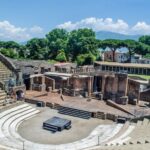
If you only hit a few signature locations, the Roman amphitheater is one of the smartest choices early. It’s described as one of the best-preserved, and it gives you an immediate sense of scale—how this city staged entertainment and public life.
Practically, it also works as a navigation anchor. Once you understand where the amphitheater sits in your mental map, you can better judge distances and decide what to do next without zigzagging randomly.
When you’re there, use the audio to connect what you’re seeing to what the structure was for. Even without deep technical detail, the basic layout helps you read the space: seating areas, the arena zone, and the way crowds would have moved.
Other tickets and entries for Pompei Campania





Domus, frescoes, spas, and temples: reading daily life
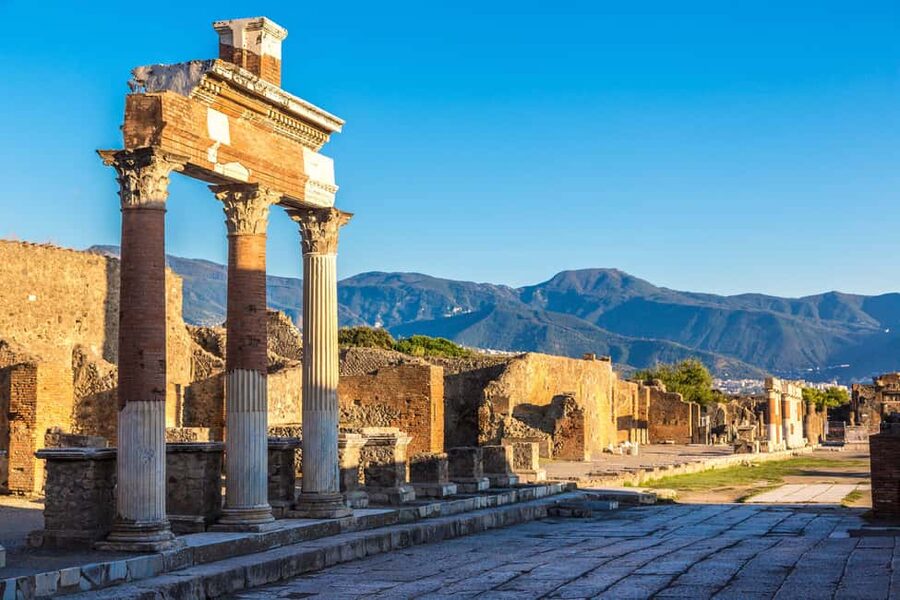
Pompeii is famous for ruins, but what you’re really walking through is a preserved snapshot of daily Roman life. With this ticket, you’re set up to hit the major “categories” that make the city feel real.
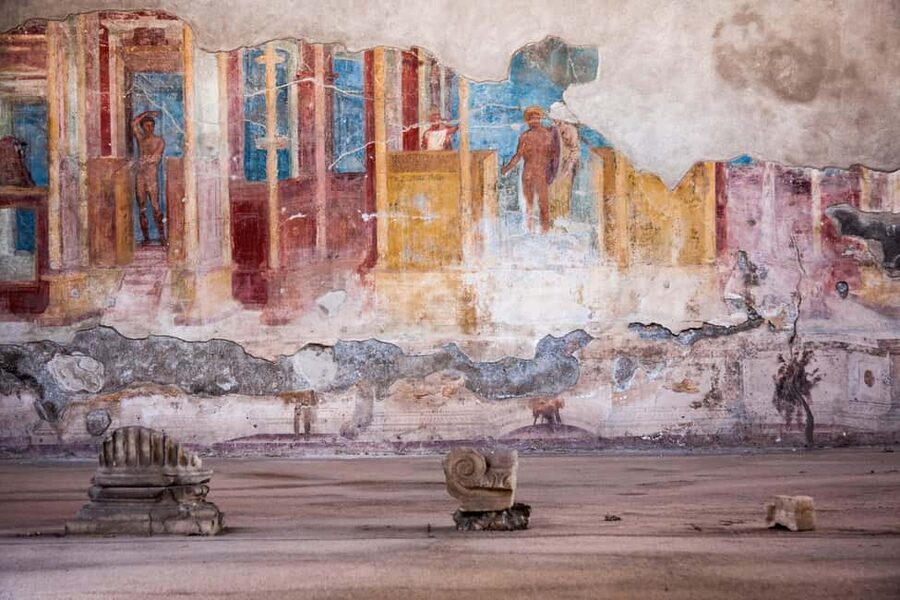
The domus (the frescoed houses) are your best chance to understand how people lived, decorated, and organized indoor space. These areas tend to reward slower stops because you’ll want time to look at wall surfaces and room layouts rather than just passing through.
Then come the spas and temples, which help you see the city beyond homes. You start noticing patterns: how public and semi-public life was organized, where people gathered for hygiene and relaxation, and where religious practices shaped the rhythm of the city.
One good way to do this without burning out: pick one category per “block” of time. For example, do domus and nearby streets as one loop, then switch to temples and civic buildings. Your brain stays focused, and you won’t feel like you’re rushing through everything.
Thermopolis and shops: the city’s fast-food streets
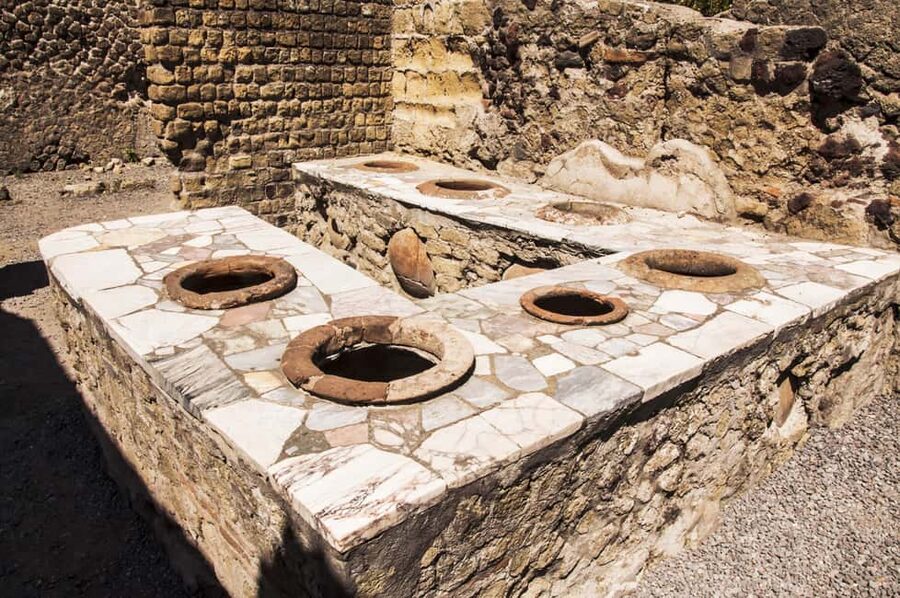
Not every highlight is about grand stone structures. The thermopolis is a great example. It’s described as the coffee-fast food of the time, and that framing actually helps you see it the way locals would have.
This is the kind of stop where audio context matters most. A thermopolis isn’t only about architecture—it’s about routines: where people would grab hot drinks or quick meals, what the counters and layout suggest, and how street life functioned.
Pair that with shops, and Pompeii starts to feel like a living economy rather than an open-air museum. You’ll likely find yourself lingering longer here than you expected, because it connects ruins to real human behavior: buying, eating, and moving on.
Theaters and brothels: a full picture of city culture
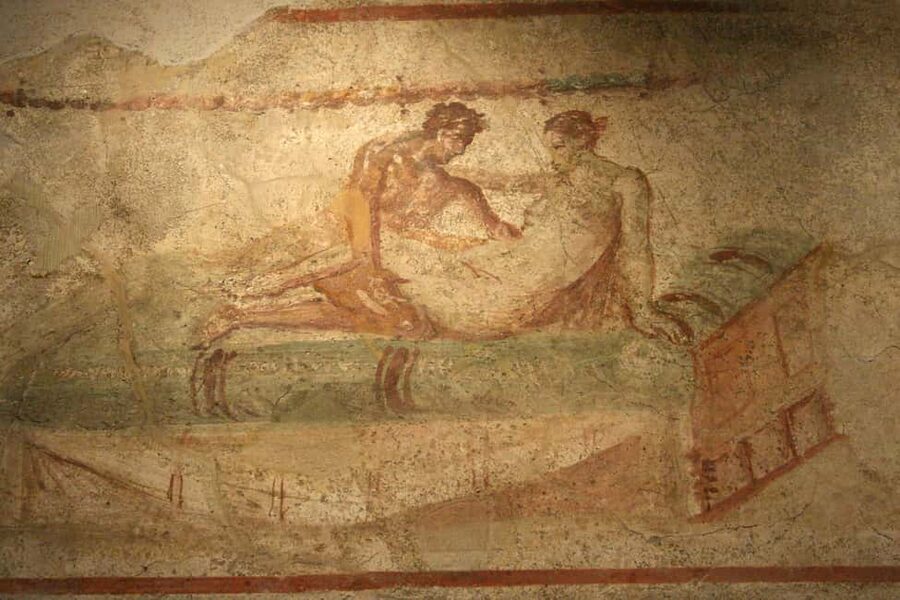
Pompeii doesn’t soften its edges. The included highlights also include theaters and brothels, which can be surprising if you expected only temples and mansions.
Theaters help you understand public entertainment, while brothels show how social life and commerce overlapped. The point isn’t shock value—it’s perspective. Pompeii gives you a city plan where leisure, ritual, and practical services sit side by side.
Use your audio guide in these zones to reduce guesswork. Without context, it’s easy to treat these spaces as “interesting rooms.” With context, you start understanding how they fit into the city’s day-to-day flow.
Casts of victims: when the story turns personal
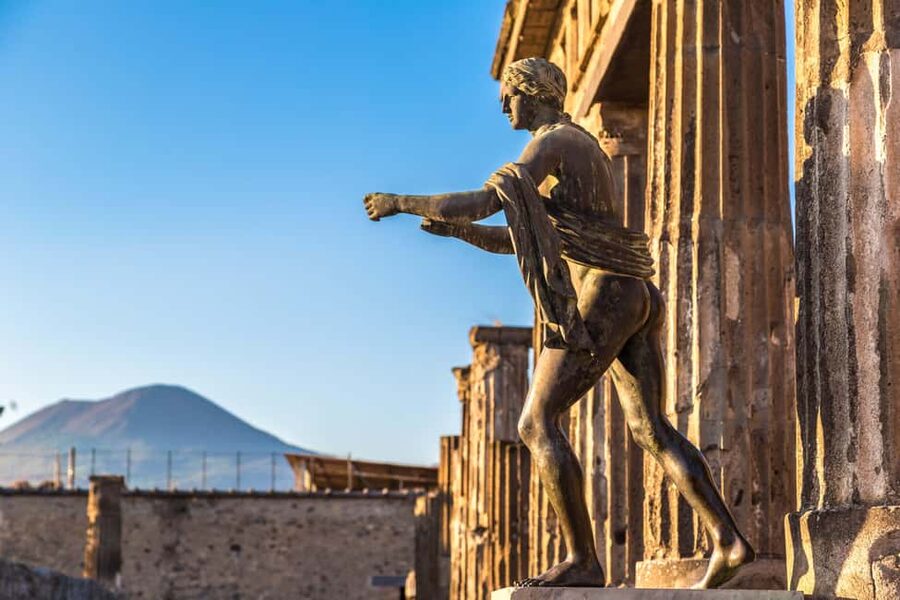
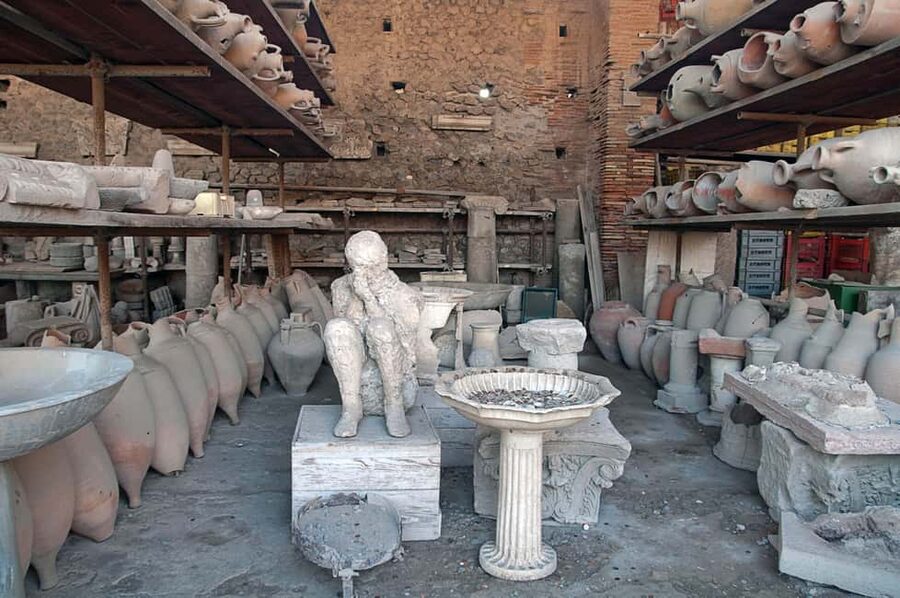
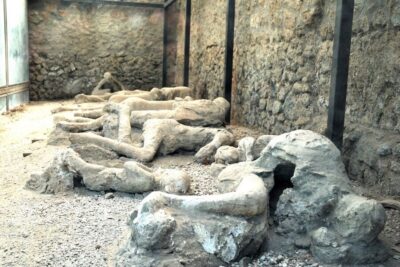
The casts of the victims are listed among the Pompeii highlights, and for a good reason. This is where history stops being abstract, even if you’re not a textbook person.
Plan for this moment like you would for a memorial: don’t rush it to “check the box.” If you want a smoother experience, do these at a time when you can slow down—mid-morning or early afternoon tends to work for many people because you’re not yet mentally exhausted from early walking, and you’re not too close to the end of the day.
The eruption context of Mount Vesuvius is also part of the audio experience. When it’s delivered right next to what you’re seeing, it makes the story easier to hold in your head.
How to pace yourself in one day without getting worn out
This is a one-day visit, but it’s not a short one. The experience info is very direct about what to bring and what to expect: comfortable shoes, hat, sunscreen, and water, because there’s a lot of ground to cover and the sun can be intense.
Here’s a practical way to make the most of your time without turning Pompeii into a sprint:
- Start with a big anchor spot (the amphitheater works well).
- Do your “category blocks” (domus + fresco stops, then spas/temples, then street life like thermopolis and shops).
- Save emotionally heavy moments (the casts) for when you can slow down.
Also keep in mind what’s not allowed. Backpacks aren’t allowed inside the excavations, which can create a last-minute scramble if you travel with a bigger day bag. If you pack light, your arrival feels calmer, and you’ll spend less time dealing with logistics.
Price and value: what you pay for at $44 per person
At $44 per person, you’re paying for more than entry. The core inclusions are a skip-the-line ticket package, an audio guide, and an updated map.
That’s important because the base entrance ticket bought on-site can be much cheaper—one recent experience noted the entrance ticket office price at around 18–22 EUR. The difference is where the value should show up for you.
So ask yourself this: do you want to trade money for time and structure?
- If you hate lines and want a ready-to-go plan, this likely feels like good value.
- If you’re fine waiting and you don’t care about audio, buying entry directly might make more sense.
The only way the add-ons fail is if the language/audio setup doesn’t match what you expected or if the paper map doesn’t help you get oriented fast. In those cases, the ticket can feel like you paid for convenience you didn’t fully receive.
Who should book this Pompeii audio ticket
This works best for people who like control. You get skip-the-line access plus a guide system that supports self-guided wandering, without turning you loose with zero help.
You’ll enjoy it most if you:
- Want to visit major Pompeii zones in one day, not just a small corner.
- Prefer choosing your own pace instead of following a group.
- Like learning in layers, using the audio to add context while you walk.
- Appreciate seeing a wide range: homes, religious spaces, leisure venues, everyday food stops, and the victim casts.
Not for everyone: walking, rules, and limitations
Pompeii is a walking site. The activity info says it’s not suitable for people with mobility impairments and not suitable for wheelchair users.
There are also hard rules that can affect your comfort:
- No backpacks inside the excavations.
- Flash photography isn’t permitted.
If you’re sensitive to long distances, uneven ground, and sun exposure, you’ll want to think carefully before booking. If you’re comfortable with a day of walking and can travel light, you’re set up for a far smoother experience.
Should you book this Pompeii skip-the-line ticket?
I’d book it if you value time savings and want an audio-led day with a map that helps you hit the big themes of Pompeii. The highlights included here cover more than one type of traveler interest: domus and frescoes for the romance of Roman homes, theaters and amphitheater for public life, thermopolis and shops for daily routine, and the casts for the eruption story that defines Pompeii.
Skip it if you’re counting on flawless language playback in every language, or if you know you’ll get frustrated by a map that’s hard to interpret quickly. In that case, consider a more guided option or plan to use printed signage once you’re inside.
If you do book, pack light, bring water, and treat the audio as your compass. Pompeii is big, and the best days are the ones where you slow down enough to actually notice what’s in front of you.
FAQ
How long is the Pompeii visit?
The ticket is valid for one day.
What’s included with the ticket?
You get a skip-the-line ticket package, an audio guide, and an updated map.
Where do I exchange my voucher for the entrance tickets?
Exchange your voucher at Via Roma 32, Pompei, next to Pasticceria De Vivo. It’s about a 5-minute walk from the Amphiteatre Pompeii Ruins Gate.
What languages are available for the audio guide?
The audio guide is listed in English, French, Italian, German, Spanish, Russian, Polish, Hebrew, Chinese, Dutch, and Portuguese.
Is the ticket actually skip-the-line?
Yes. It’s sold as a skip-the-line ticket package.
What should I bring to Pompeii?
Bring comfortable shoes, a hat, a camera, sunscreen, and water.
What is not allowed inside the excavations?
Flash photography is not allowed, and backpacks are not allowed inside the excavations.
Is this experience suitable for wheelchair users or people with mobility impairments?
No. It is not suitable for mobility impairments and wheelchair users.
What are the cancellation rules and payment options?
Free cancellation is available up to 24 hours in advance for a full refund, and the booking offers a reserve now & pay later option.
More Tickets and Entries in Pompei Campania





More Tour Reviews in Pompei Campania



More Pompeii Tours to Compare
More Pompei Campania tours, freshly reviewed




Pompeii Tours, compared.
 ★ 4.8Pompeii: Entry Ticket and Guided Tour with an ArchaeologistFrom $3519,459 reviews
 ★ 4.1Pompeii: Entry Ticket with Audio GuideFrom $4013,491 reviews
 ★ 4.8Pompeii: Small Group Tour with an ArchaeologistFrom $4012,264 reviews
 ★ 4.3Pompeii Ruins & Mount Vesuvius Day TourFrom $12011,459 reviews
★ 5.0Pompeii Small Group Tour with an ArchaeologistFrom $356,593 reviews
★ 4.3Pompeii Ruins & Mount Vesuvius Day TourFrom $12011,459 reviews
★ 5.0Pompeii Small Group Tour with an ArchaeologistFrom $356,593 reviews
 ★ 4.5Skip-the-line Pompeii – Small Group TourFrom $544,401 reviews
 ★ 4.6Naples or Sorrento: Full-Day Pompeii and Mount Vesuvius TourFrom $1044,235 reviews
 ★ 3.9Pompeii: Skip-the-line Entry Ticket with Audio Guide & MapFrom $433,153 reviews
Browse the lists this tour appears in