
Review · POMPEII TOURS
Pompeii: Skip-the-Line Ticket with Audio Guide and Map
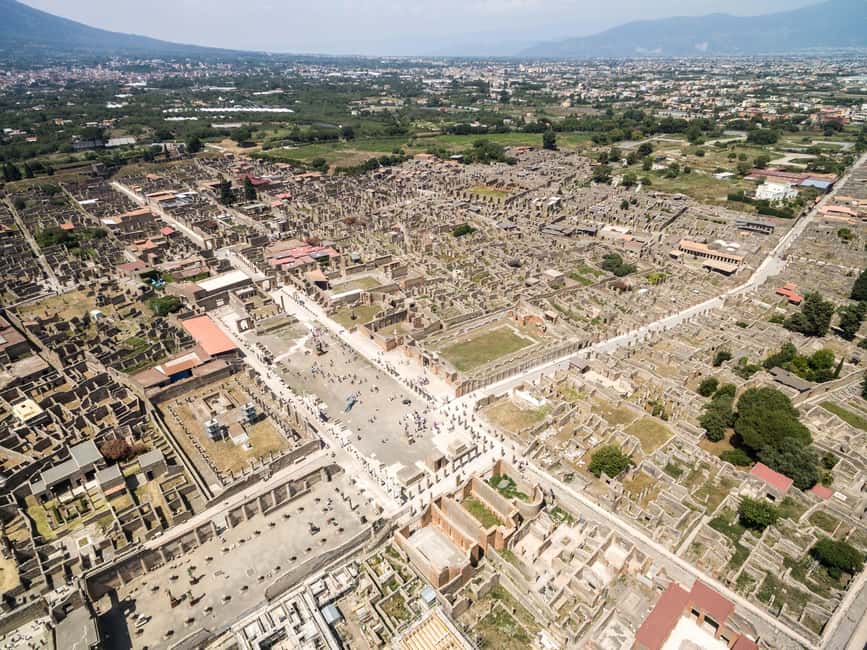
Pompeii is huge, and this ticket saves time. What I like is the skip-the-line ticket plus an audio guide, which lets you cover Pompeii’s 66-hectare ruins without getting stuck waiting around. You also get an updated map to help you keep your bearings as you roam among the big sights.
The main drawback to plan for is navigation: the site is spread out, some signing can feel unclear, and you’ll be walking a lot in warm conditions. Bring plenty of water, and don’t try to cram every stop into a single hour.
In This Review
- Key points to plan your Pompeii day
- Pompeii with a skip-the-line ticket: how it changes your day
- Getting your audio guide and map without fuss
- Skip-the-line at a place with millions of visitors
- How to use the updated map when signage is confusing
- A self-paced route that works: start where you’ll enjoy walking
- Frescoed domus: where you slow down and really look
- Spas, temples, and the built rhythm of the city
- Shops and thermopolis: the everyday food-and-utility stops
- Theaters and brothels: when Pompeii gets real (and a bit intense)
- The casts of the victims: one stop I would not rush
- One of the best-preserved Roman amphitheaters
- Heat, walking, and timing: how to avoid a miserable day
- Price and value: is $44 a smart deal?
- Who this experience suits best (and who should rethink it)
- Should you book this Pompeii skip-the-line audio experience?
- FAQ
- How much does this Pompeii experience cost?
- How long is the Pompeii experience?
- What’s included in the ticket?
- Are food and drinks included?
- Is it really skip-the-line entry?
- What languages are available for the audio guide?
- What languages can the host or greeter speak?
- What should I bring to Pompeii?
- Are luggage or large bags allowed?
- Is it accessible for people with mobility impairments?
Key points to plan your Pompeii day
- Skip-the-line entry saves time at one of Italy’s biggest archaeological sites (about 3 million visitors yearly).
- Audio guide in many languages helps you understand what you’re seeing while you move at your own pace.
- Updated map included so you can build a route instead of wandering randomly.
- Highlights you can actually find: domus with frescoes, spas, temples, shops/thermopolis, theaters, brothels, victims’ casts, and a major amphitheater.
- Self-paced, no-stress style means you can slow down for the places that grab you.
- Not wheelchair-friendly and no large bags: plan for comfort and simple baggage.
Which Pompeii ticket and guide? Compare a few more.
- Pompeii: Entry Ticket and Guided Tour with an Archaeologist★ 4.8 · 19,459 reviews
- Pompeii: Small Group Tour with an Archaeologist★ 4.8 · 12,264 reviews
- Pompeii: Skip-the-line Entry Ticket with Audio Guide & Map★ 3.9 · 3,153 reviews
- Naples: Pompeii and Mt. Vesuvius with Lunch and Wine Tasting★ 4.5 · 2,454 reviews
Pompeii with a skip-the-line ticket: how it changes your day
Pompeii gets serious foot traffic. That matters because you can spend the morning standing around instead of looking at ancient streets, houses, and public spaces. This ticket gives you skip-the-line entry, which is the difference between a productive first hour and a slow start.
The other smart part is that you’re not locked into a tight group schedule. Pompeii covers about 66 hectares, and it’s not laid out like a small museum loop. With a ticket that’s valid for one day, you can choose a pace that works for you—whether that’s a steady walk through the highlights or lingering longer where you want more detail.
Getting your audio guide and map without fuss
This is set up for independent exploring, so the key is getting your materials and then heading straight into the ruins. In practice, you should expect staff support at the start in languages like English, Spanish, French, and Italian, and a fast handoff of your ticket and audio equipment so you can begin.
The audio guide is available in many languages (including English, Spanish, French, German, Chinese, Portuguese, Hebrew, Italian, and Russian). Even if you’re traveling in a mixed group, it’s nice to know you can still match the device language you want.
Bring the basics so your day stays comfortable: comfortable shoes, a hat, sunscreen, and water. Pompeii’s size plus the walking makes this feel less like sightseeing and more like a long outdoor trek.
Skip-the-line at a place with millions of visitors

A skip-the-line ticket is great—but it’s still useful to set realistic expectations for how lines work in the real world. One thing to keep in mind is that queues can pop up around ticket handling, especially at the beginning. If you have any special ticket situation (like child tickets), you might still face some waiting even when you’re using a skip line.
So here’s my practical advice: treat the skip-the-line benefit as time gained, not time eliminated. You’ll still want an early start if you can, and you should plan a bit of buffer at the entry area just in case.
How to use the updated map when signage is confusing
Pompeii is not small, and you don’t want your day to turn into “where am I?” every 10 minutes. The included updated map is there for a reason, but it may not feel perfectly simple in every corner of the site.
My best method is to decide on your priorities before you wander. Pick a few must-sees—like the frescoed domus, the victims’ casts, and the amphitheater—then let the rest fill in around them. If your map feels complicated, don’t fight it; use it to confirm directions between major areas, then follow what you can see on the ground.
Also, don’t assume every moment you spot will be perfectly matched by what the audio guide covers at that exact location. The audio guide is helpful for context, but you’ll still want to rely on your eyes and basic orientation. That’s how you keep the day flowing instead of stuck in frustration.
Other tickets and entries for Pompei Campania




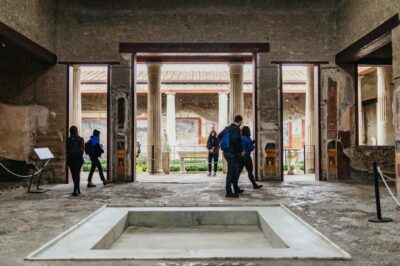

A self-paced route that works: start where you’ll enjoy walking
Because the experience is self-paced, you can shape the day around your interests. I like to think in zones—move between them, then use the audio guide to add meaning as you go. Pompeii includes impressive residential areas, public buildings, and theatrical venues, plus the areas tied to the eruption.
Here’s a common flow you can use:
- Begin with a broad sweep of the main highlights (so you build context).
- Spend extra time on either the residential streets (domus) or the public/entertainment zones (theaters and the amphitheater).
- Finish with the emotional and memorable areas like the casts of the victims so your final stretch feels strong.
If you prefer to move fast, you can skim more and pause less. If you love details, slow down in the domus and around the everyday-life sites like shops and the thermopolis (the Roman quick-food place).
Frescoed domus: where you slow down and really look
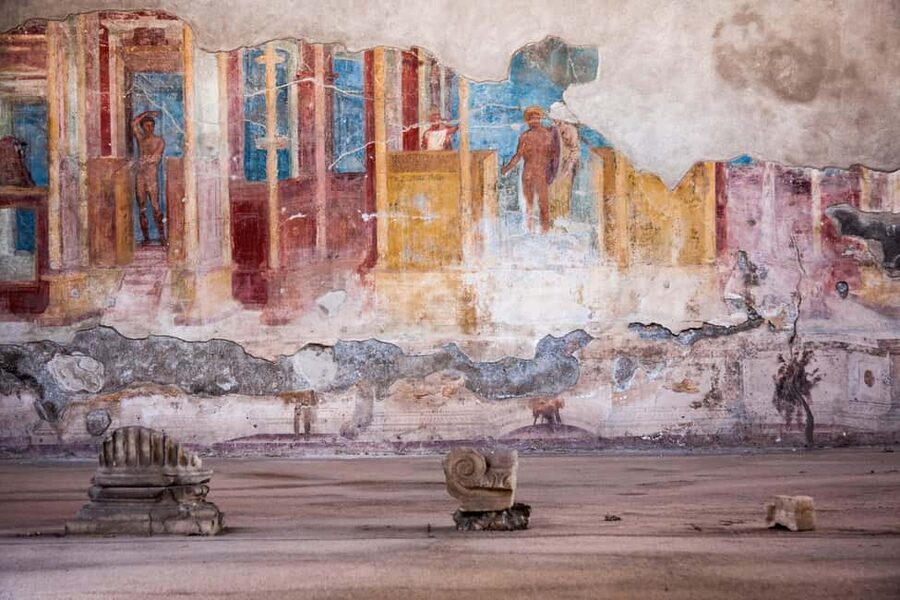
One of the biggest appeals of Pompeii is how much of daily life survived. The tour highlights include magnificent frescoed houses (domus), and this is where an audio guide earns its keep. You’re not just looking at walls—you’re looking at rooms shaped for living, decoration, and status.
I recommend treating the domus as “chapter stops.” Walk through one area, listen for what stands out, then take a longer pause to compare how different spaces feel. Even if you don’t consider yourself a history person, these houses help you understand the Roman idea of public and private space.
If you’re tempted to sprint past these, resist. Frescoes are meant for close attention, and you’ll enjoy the payoff more if you give yourself time.
Spas, temples, and the built rhythm of the city
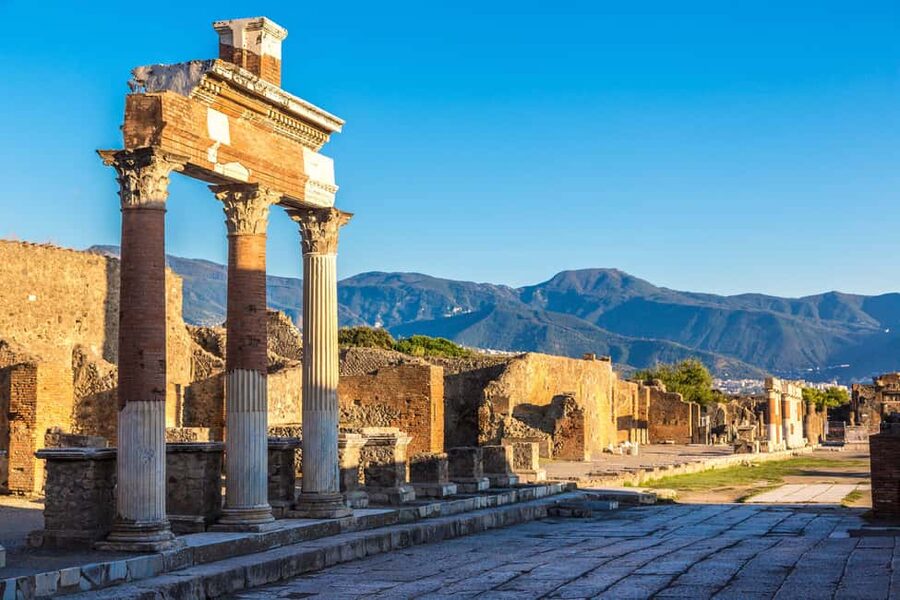
Pompeii’s highlights include spas and temples, and these areas help you see the city’s rhythm. These aren’t just pretty structures. They show how public routines worked—gathering, bathing, and religious space happening in the same urban fabric.
Audio guidance helps here because you can stand in place and connect multiple rooms and features without needing someone to explain every corner on the spot. The advantage of self-paced exploring is that you can spend 20 minutes in a spa zone if it clicks, then move on when your legs say enough.
Temples and other civic religious areas also reward slow walking. There are enough details that you’ll want your brain engaged, not just your feet moving.
Shops and thermopolis: the everyday food-and-utility stops
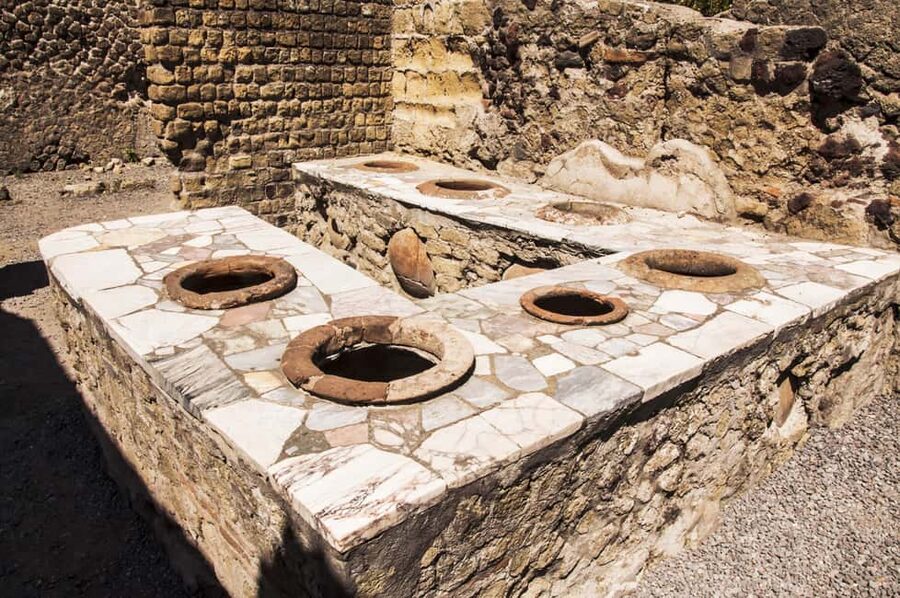
One highlight people often overlook—until they’re standing there—is the shops and thermopolis (a kind of Roman quick-food spot). These stops make Pompeii feel less like a set of monuments and more like an actual city where people ate, shopped, and went about errands.
I like these areas because you can connect them directly to the way we travel today. When you see the layout and imagine the flow of visitors and workers, it stops being abstract.
For your comfort, remember this: food and drinks are not included. If you’re hungry, plan ahead before you get too deep into your walking route. Some areas may feel tougher to navigate when you’re looking for somewhere to eat, so keep your water and snacks logic simple.
Theaters and brothels: when Pompeii gets real (and a bit intense)
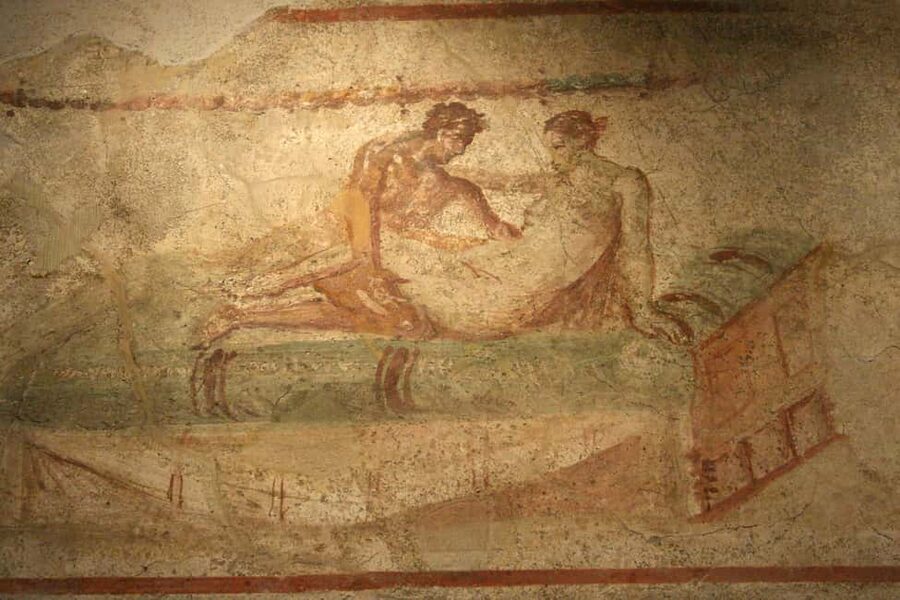
Pompeii includes theaters and brothels—and you should know these are part of the official highlights. This can make the visit feel more honest, but it can also make it feel uncomfortable for some people.
If you’re traveling with family or anyone who prefers a gentler pace, decide ahead of time what you’ll handle. The good news is that with this self-paced setup, you can choose how long you linger and where you slow down.
And for adults, these sites can be a powerful reminder that Roman life included entertainment and adult commerce. With the audio guide, you can get context without needing to rely on informal explanations.
The casts of the victims: one stop I would not rush
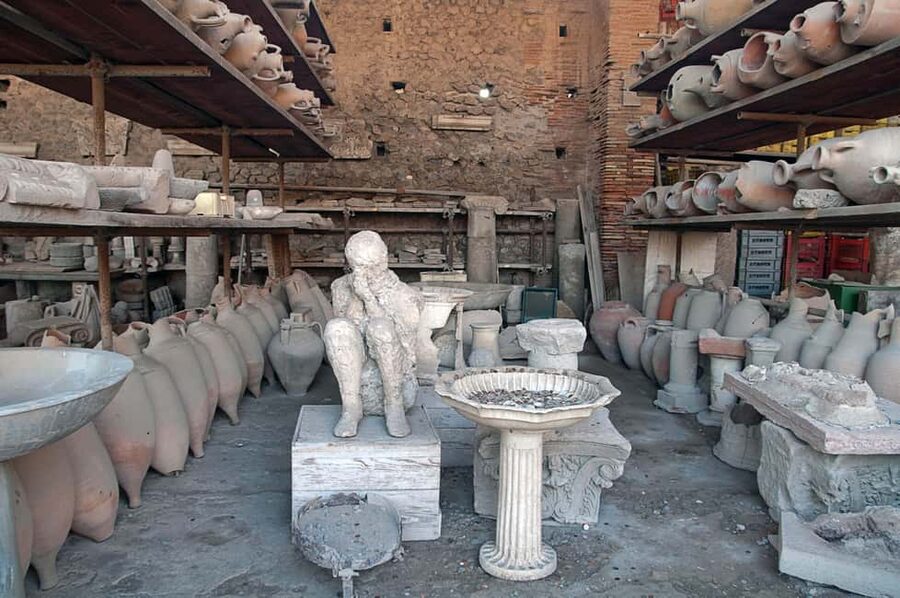
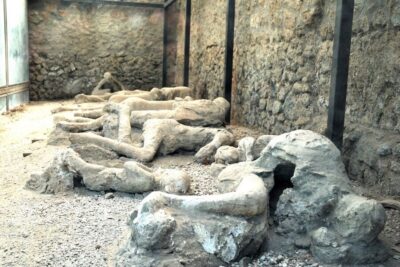
The highlight list includes the casts of the victims of the eruption, and this is the kind of place where speed kills meaning. Even if you usually like to move quickly, give this stop more time than you think.
The audio guide helps you understand what you’re looking at, but the biggest factor is your pace. Stand, listen, then look again. This is where Pompeii often hits hardest, because it’s not just architecture. It’s human loss.
Try not to schedule it at the very end of a long day when you’re overheated and tired. If you place it earlier in your route, you’ll be able to focus better.
One of the best-preserved Roman amphitheaters
Pompeii also includes one of the best-preserved Roman amphitheaters, and this is a classic payoff for visitors who want the dramatic side of Roman public life. Amphitheaters are built for crowds and viewing, and that makes them feel intuitive even when you don’t know every detail.
I like ending (or nearly ending) here because it gives you a big “finale” shape to the visit. You can sit for a minute, look around, and let the audio guide tie the experience together.
The amphitheater also works as a timing anchor. If your route runs long, you’ll still know what to aim for next.
Heat, walking, and timing: how to avoid a miserable day
Pompeii’s size means you’re committing to hours of walking. The weather can also be warm, and it’s not the kind of place where you want to discover halfway through that you didn’t bring enough water.
So my practical advice is simple:
- Start with water already in hand.
- Wear comfortable shoes you trust.
- Bring a hat and use sunscreen.
- Take short breaks instead of waiting until you feel drained.
One review-style tip you’ll hear again and again is that finding places to eat can be tricky once you’re deep inside the ruins. Since food and drinks aren’t included, I’d plan your day like a long outing: snacks or a planned lunch moment near the areas where you’ll naturally slow down.
Price and value: is $44 a smart deal?
At $44 per person, you’re paying for more than “admission.” Your ticket covers:
- Pompeii entrance ticket
- audio guide
- updated map
That matters because Pompeii is the kind of place where context changes everything. Without the audio, you may enjoy the visuals but miss how the different sites connect as a city. With it, you can stand at a house, a spa, or the theaters and understand what you’re seeing in plain language.
Food isn’t included, so you’ll still need to budget for that. But the core value is strong if you want to explore independently while still getting explanations.
If you’re the type who likes to wander at your pace and you hate being rushed, this setup is usually the sweet spot.
Who this experience suits best (and who should rethink it)
This experience fits best if:
- You want Pompeii at your own pace without a group guide leading you from one stop to the next.
- You’ll use the audio guide to connect the highlights (domus, spas, temples, shops/thermopolis, theaters, brothels, victims’ casts, amphitheater).
- You’re comfortable with a long walk across a large site.
It’s not suitable for people with mobility impairments, based on the activity’s constraints. If anyone in your group needs mobility support, you should consider alternative formats.
It also works well for language needs, because the audio guide offers multiple languages beyond just one.
Should you book this Pompeii skip-the-line audio experience?
I’d book it if you want maximum freedom with built-in context. The skip-the-line part helps you start faster, and the audio guide plus updated map gives you a way to enjoy Pompeii without getting lost or stuck guessing what you’re looking at.
Skip it only if you want a live, spoken guide walking with you the whole time, or if your group can’t handle long walking days and Pompeii’s layout. For most visitors, though, this is one of the most practical ways to see Pompeii’s highlights in a single day—especially if you’re planning to explore at a calm, self-set pace.
FAQ
How much does this Pompeii experience cost?
It costs $44 per person.
How long is the Pompeii experience?
It’s valid for 1 day.
What’s included in the ticket?
You get the Pompeii entrance ticket, an audio guide, and an updated map.
Are food and drinks included?
No, food and drinks are not included.
Is it really skip-the-line entry?
Yes, this is a skip-the-line ticket.
What languages are available for the audio guide?
The audio guide is available in English, Chinese, French, Italian, German, Hebrew, Russian, Spanish, and Portuguese.
What languages can the host or greeter speak?
The host or greeter speaks English, Spanish, French, and Italian.
What should I bring to Pompeii?
Bring comfortable shoes, a hat, sunscreen, and water.
Are luggage or large bags allowed?
No, luggage or large bags are not allowed.
Is it accessible for people with mobility impairments?
No, it is not suitable for people with mobility impairments.
More Tickets and Entries in Pompei Campania





More Tour Reviews in Pompei Campania



More Pompeii Tours to Compare
More Pompei Campania tours, freshly reviewed



Pompeii Tours, compared.
 ★ 4.8Pompeii: Entry Ticket and Guided Tour with an ArchaeologistFrom $3519,459 reviews
 ★ 4.1Pompeii: Entry Ticket with Audio GuideFrom $4013,491 reviews
 ★ 4.8Pompeii: Small Group Tour with an ArchaeologistFrom $4012,264 reviews
 ★ 4.3Pompeii Ruins & Mount Vesuvius Day TourFrom $12011,459 reviews
★ 5.0Pompeii Small Group Tour with an ArchaeologistFrom $356,593 reviews
★ 4.3Pompeii Ruins & Mount Vesuvius Day TourFrom $12011,459 reviews
★ 5.0Pompeii Small Group Tour with an ArchaeologistFrom $356,593 reviews
 ★ 4.5Skip-the-line Pompeii – Small Group TourFrom $544,401 reviews
 ★ 4.6Naples or Sorrento: Full-Day Pompeii and Mount Vesuvius TourFrom $1044,235 reviews
 ★ 3.9Pompeii: Skip-the-line Entry Ticket with Audio Guide & MapFrom $433,153 reviews
Browse the lists this tour appears in