
Review · POMPEII TOURS
Pompeii Skip the Line Ticket + Guide Book with itineraries
Pompeii is big, and planning matters. This self-paced experience gives you skip-the-line entry to Pompeii plus a guidebook with timed itineraries so you can make the most of your day without guessing.
I like that you can explore on your schedule from 9:00 am to 5:00 pm, and the structure helps you avoid the classic problem of walking in circles. One thing to watch: the “skip-the-line” part doesn’t mean zero waiting, since you may still go through security checks before you reach the turnstiles.
The best part is the combo of a real on-site updated map and a guidebook that points you toward the ruins that most people come to see. The book also stays with you as a souvenir, and it’s written for self-guided walking, not for a group shuffle.
The one possible drawback is that you’ll still need to exchange your voucher and get oriented at the information point first, so arrive with enough time to settle in before you head into the park.
In This Review
- Key details that make this work on the ground
- Entering Pompeii: Piazza Anfiteatro, Via Roma 123, and what happens at the checkpoint
- Your guidebook and map: how the 2-, 4-, or 6-hour plan keeps you oriented
- Pompeii highlights you’ll want to build into your route
- Frescoed houses and everyday street life
- Spas and temples: the city’s routine beyond the home
- Shops, and the Thermopolium (the ancient quick-stop)
- Theaters and brothels: entertainment and real social life
- The casts of the victims: the hardest part of the walk
- The amphitheater you can still feel
- A simple walking strategy for 2, 4, or 6 hours
- Timing: how to beat crowds and avoid the long-walk fatigue
- What you pay and what that price includes at Pompeii
- Youth pricing detail you should check
- Practical tips before you go: shoes, water, and navigation
- Who should book this Pompeii skip-the-line ticket setup
- Should you book? My quick call
- FAQ
- What is included in the Pompeii ticket?
- Where do I go to enter Pompeii?
- What time is entry available?
- Does it include food or drinks?
- Is a transfer included?
- What languages are the guide materials in?
- What should I bring with me?
Key details that make this work on the ground
- Skip-the-line entry that still includes security checks, so your time savings depend on when you arrive.
- A guidebook with 2, 4, or 6-hour itineraries, so you can match Pompeii to your energy level.
- An updated map designed to help you find the big stops faster.
- Entry from 9:00 am to 5:00 pm, which gives you flexibility for crowds and heat.
- One book per every two reservations, so coordinate if you’re traveling as a pair or group.
Which Pompeii ticket and guide? Compare a few more.
- Pompeii: Entry Ticket and Guided Tour with an Archaeologist★ 4.8 · 19,459 reviews
- Pompeii: Small Group Tour with an Archaeologist★ 4.8 · 12,264 reviews
- Pompeii: Skip-the-line Entry Ticket with Audio Guide & Map★ 3.9 · 3,153 reviews
- Naples: Pompeii and Mt. Vesuvius with Lunch and Wine Tasting★ 4.5 · 2,454 reviews
Entering Pompeii: Piazza Anfiteatro, Via Roma 123, and what happens at the checkpoint
This ticket is built for self-guided entry, and it starts with the right entrance. Your archaeological park access point is the entrance at Piazza Anfiteatro. You don’t just show up there blindly, though—you meet staff at the information point at Via Roma 123, Pompei.
Here’s the practical flow: you show your voucher to staff for access, then you walk to the entrance area. Even with the skip-the-line promise, you may still queue for security, especially for bag scans. That detail matters because it’s where time can bunch up, particularly if you arrive late in the day.
Once you’re past the security area, the barcode scan process is typically fast, and you move through the turnstiles to get inside the park. In real life, that means you should aim to arrive earlier rather than right at the busy mid-day window, especially if you’re planning to see a lot.
Tip that saves stress: don’t plan your entire day as if you’ll sprint in the moment the clock hits 9:00. Build in a small buffer for the voucher exchange and security step, then you’ll feel in control once you’re inside.
Your guidebook and map: how the 2-, 4-, or 6-hour plan keeps you oriented
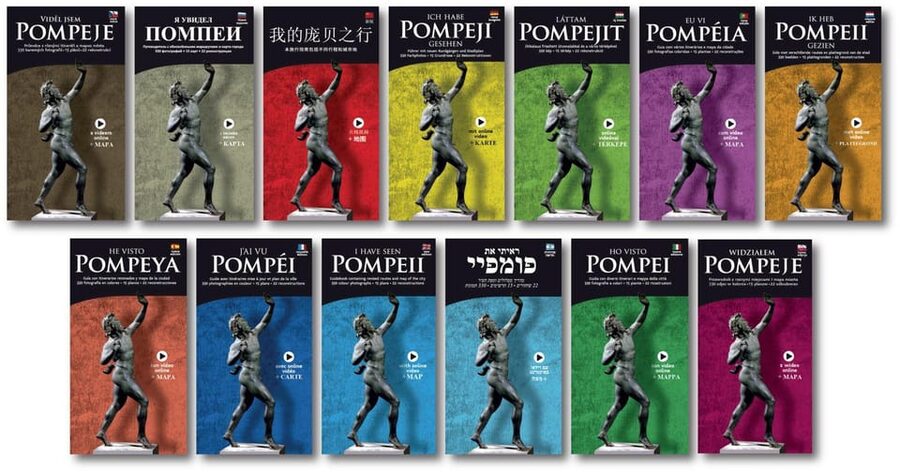
The guidebook is the engine of this experience. You get one guidebook per every two reservations, plus an updated map. The book includes suggested itineraries for two hours, four hours, or six hours, which is perfect when Pompeii is on your itinerary for only a slice of time.
The book is also designed to teach as you walk. You’ll find explanations about the city and its ruins as you move through key areas. That’s valuable because Pompeii can feel like a giant open-air puzzle if you only wander. With the book, you get context for what you’re seeing—houses with frescoes, baths/spas, temples, shops, and more.
A couple of practical notes about the book:
- It’s meant to be used during your visit, then kept afterward as a souvenir.
- It’s available in multiple languages (the guidebook is translated into 13 languages).
- If you’re traveling with someone, make sure you both know whose itinerary you’re following, since the book is shared based on reservations.
How to use the map without losing hours: pick one itinerary length, then use the map to confirm direction before you start walking. The goal isn’t to see everything. It’s to see the right things in the right order with fewer backtracks.
Pompeii highlights you’ll want to build into your route
Pompeii is famous for the way daily life froze in time. This self-guided setup helps you focus on the highlights that most people crave, without needing a live guide.
Your guidebook + map combination points you toward major categories of sights, and you’ll encounter them across the park:
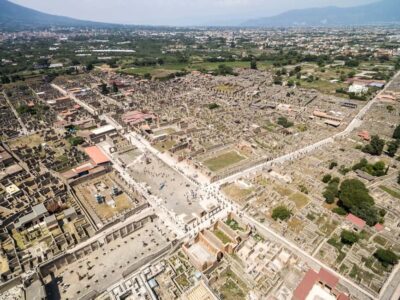
Frescoed houses and everyday street life
You’ll walk along the city’s ancient streets and see impressive residential spaces, including frescoed houses. These aren’t just pretty walls. The frescoes help you understand that Pompeii wasn’t an empty ruin—it was a living place with style, status, and routine.
If you’re the kind of person who gets a little bored by “stand and read” attractions, this part works well because it rewards attention to details as you move.
Other tickets and entries for Pompei Campania



Spas and temples: the city’s routine beyond the home
Pompeii includes spas and temples, giving you a sense of how people kept busy and organized their beliefs. The value of hitting these with an itinerary is time management. Otherwise, it’s easy to get distracted by the first stunning site you reach and then run out of daylight.
Think of the spas and temples as anchors for your route—places you can return to when you feel your walking pace slipping.
Shops, and the Thermopolium (the ancient quick-stop)
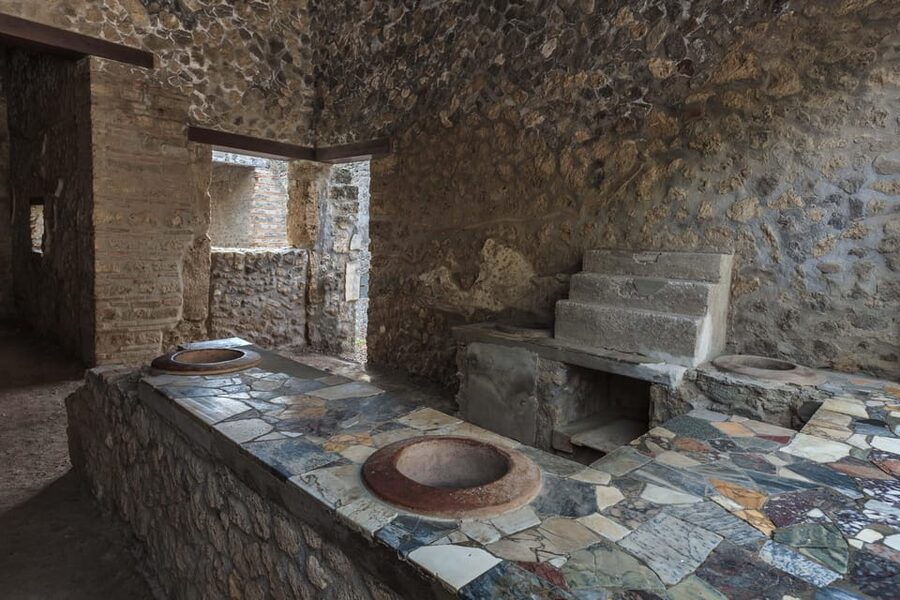
You’ll also see shops and a Thermopolium, described as a kind of coffee-fast food of the time. This is one of the most fun categories because it translates ancient life into something recognizable: quick meals, everyday service, and street-level commerce.
If you enjoy “how did people actually live?” questions, this stop category is a strong reason to choose a self-guided route with context.
Theaters and brothels: entertainment and real social life
This experience includes the chance to see theaters and brothels as part of Pompeii’s preserved layout. These areas round out the story. Pompeii isn’t only about temples and houses—it’s also about public entertainment and the messier parts of social life.
The drawback is tone. If you’re sensitive to mature themes, you might want to go through these areas quickly rather than linger.
The casts of the victims: the hardest part of the walk
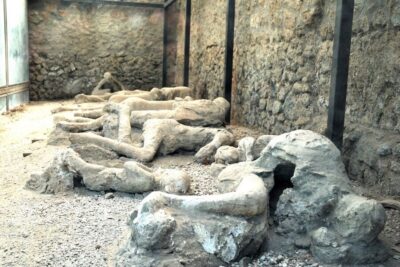
Pompeii’s casts of the victims are emotionally heavy. The good news is that your guidebook structure can help you pace your day so you don’t hit them at the wrong time of day or when you’re already exhausted.
This is one of the moments where the self-guided format actually helps: you can stop when you need to, read what you want, then move on.
The amphitheater you can still feel
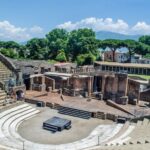
You’ll also see one of Pompeii’s standout surviving performance spaces, including one of the best-preserved Roman amphitheaters. It’s a great finale because it gives you scale. You can look at the geometry of the space, imagine crowds, and then close your loop without ending on a “random” photo location.
A simple walking strategy for 2, 4, or 6 hours
You’re not locked into a group schedule. That’s the point. Your guidebook provides itineraries for two, four, or six hours, and the map helps you keep your feet moving in the right direction.
Since you’re self-guided, your best strategy is to treat Pompeii like zones, not like a checklist. The guidebook and map let you cluster sights—houses, baths/spas, temples, shops, Thermopolium, theaters, brothels, casts of the victims, and the amphitheater—so you’re not crossing the park repeatedly.
Here’s a practical way to think about the time blocks:
- For a shorter plan (2 hours): focus on the big anchor sights plus one or two “street life” categories like shops or the Thermopolium.
- For a mid-length plan (4 hours): add more of the everyday-life spaces (homes, frescoed rooms, baths/spas) and include a heavier stop like the casts.
- For a longer plan (6 hours): you have time to spread out. You can linger at entertainment areas like theaters/brothels, then finish with the amphitheater without feeling rushed.
I’ll be honest: Pompeii is a long walk. Even with a timed itinerary, you’ll want to build in pauses for water and shade.
Timing: how to beat crowds and avoid the long-walk fatigue
Pompeii is open from 9:00 am to 5:00 pm, so you have choices. Based on on-the-ground comments, it can feel noticeably calmer later in the day, with people finding it quieter after 4:30 pm.
That timing can be useful if your priorities are photography, relaxed pacing, or just less crowd noise while you read the signs. The tradeoff is light and energy. Late-day heat and tired legs are real, too.
My recommendation: start earlier if you want the full sweep, then aim to hit your emotional and heavy stops (like the casts) when you have enough energy to absorb what you’re seeing.
Also, the site is massive. If you don’t use the map, you can end up walking extra. The good news is the guidebook is designed to reduce that “where am I?” feeling.
What you pay and what that price includes at Pompeii
The price listed is $41 per person for one day in Pompeii with a skip-the-line ticket plus the guidebook tools.
For that money, you’re getting:
- Pompeii entrance ticket
- Guide book (one book for every two reservations)
- Updated map
- Itineraries of two, four, or six hours
Not included:
- Food and drinks
- Transfer
- A live guide
Value-wise, the guidebook is the differentiator. Without it, Pompeii can feel like you’re wandering among famous ruins with no context. With the itineraries and map, you have a plan that matches your time and attention span.
If you’re trying to keep costs controlled, this is an appealing setup because you’re paying for your entry and your self-guided structure in one go. Just don’t assume you’ll bypass everything at the gate. The skip-the-line element doesn’t cancel security.
Youth pricing detail you should check
If you’re eligible for a youth reduced price (age 18–24) it’s only for EU citizens. If you’re outside that rule, you’ll want to plan around the standard price.
Practical tips before you go: shoes, water, and navigation
Pompeii rewards the right prep. Here’s what you should bring:
- Passport or ID card
- Comfortable shoes
- Sun hat
- Water
- Comfortable clothes
For navigation, rely on the map early. The site is large, and it’s easy to start wandering with confidence and then realize you’re far from your planned stops.
One more practical point: your voucher gets you access through the information point process at Via Roma 123 before you enter at Piazza Anfiteatro. Don’t plan to arrive at the last minute and expect instant entry. Give yourself time to get the tickets exchanged and handle security.
Also, if toilets and cafés are on your mental checklist, you may want to use the map and ask staff at the info point early in your visit. The experience package includes map guidance, but specific facility locations aren’t spelled out in the basic details you’re given here.
Who should book this Pompeii skip-the-line ticket setup
This is a smart choice if you want:
- A self-guided Pompeii visit where you control pace
- A pre-built plan in 2, 4, or 6 hours
- A guidebook and updated map that help you aim at the major categories—houses with frescoes, baths/spas, temples, shops, Thermopolium, theaters, brothels, casts, and the amphitheater
It’s also a good fit if you’re traveling as a pair and can share the book since it’s provided one per two reservations.
You might skip it if you strongly prefer a live guide who talks you through the site in real time, or if you dislike any kind of waiting at entrance security. Even with skip-the-line wording, you should plan around at least some checkpoint time.
Should you book? My quick call
Book it if you want structure without a group schedule. The guidebook itineraries and updated map are the best part of the value equation, especially if Pompeii is your main stop of the day.
Think twice if you need the skip-the-line promise to mean zero waiting. You may still handle security and voucher exchange before you’re truly moving inside. If your timing is flexible and you can arrive earlier (or choose the quieter late slot after 4:30 pm), this setup becomes a very practical way to get a lot out of limited time.
In short: this is a solid, affordable Pompeii day kit—best for people who enjoy reading signs, walking at their own pace, and using a plan instead of wandering blindly.
FAQ
What is included in the Pompeii ticket?
Your package includes a Pompeii entrance ticket, a guide book (one book for every two reservations), an updated map, and itineraries for two, four, or six hours.
Where do I go to enter Pompeii?
Your archaeological park entrance is at Piazza Anfiteatro. You meet staff at the information point located at Via Roma 123, Pompei, where you show your voucher for access.
What time is entry available?
Entry is valid for one day, with entry times available from 9:00 am until 5:00 pm.
Does it include food or drinks?
No. Food and drinks are not included.
Is a transfer included?
No. Transfers are not included.
What languages are the guide materials in?
The guidebook is translated into 13 languages, and the listed instructor languages are English, Italian, Spanish, and French.
What should I bring with me?
Bring your passport or ID card, comfortable shoes, a sun hat, water, and comfortable clothes.
More Tickets and Entries in Pompei Campania





More Tour Reviews in Pompei Campania



More Pompeii Tours to Compare
More Pompei Campania tours, freshly reviewed



Pompeii Tours, compared.
 ★ 4.8Pompeii: Entry Ticket and Guided Tour with an ArchaeologistFrom $3519,459 reviews
 ★ 4.1Pompeii: Entry Ticket with Audio GuideFrom $4013,491 reviews
 ★ 4.8Pompeii: Small Group Tour with an ArchaeologistFrom $4012,264 reviews
 ★ 4.3Pompeii Ruins & Mount Vesuvius Day TourFrom $12011,459 reviews
★ 5.0Pompeii Small Group Tour with an ArchaeologistFrom $356,593 reviews
★ 4.3Pompeii Ruins & Mount Vesuvius Day TourFrom $12011,459 reviews
★ 5.0Pompeii Small Group Tour with an ArchaeologistFrom $356,593 reviews
 ★ 4.5Skip-the-line Pompeii – Small Group TourFrom $544,401 reviews
 ★ 4.6Naples or Sorrento: Full-Day Pompeii and Mount Vesuvius TourFrom $1044,235 reviews
 ★ 3.9Pompeii: Skip-the-line Entry Ticket with Audio Guide & MapFrom $433,153 reviews