
Review · POMPEII TOURS
Pompeii Skip the Line Ticket + Guide Book with itineraries
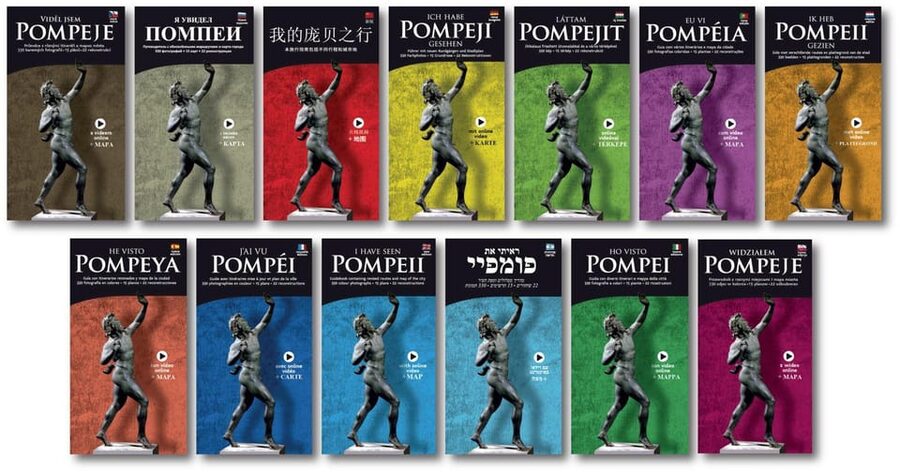
Pompeii is massive, planning saves time. This ticket combo gets you into the ruins fast with skip-the-line entry and a take-with-you guidebook that offers 2, 4, or 6 hour itineraries, so you can explore from 9:00 to 17:00 without guessing. I like the easy setup at the Piazza Anfiteatro access point and the updated map that helps you move between big sights like frescoed homes, theaters, baths, and the amphitheater area. The only real drawback is that it’s self-guided—there’s no live guide to answer questions on the spot.
What makes it work well is control. You pick your pace, stop often, and spend your energy where you feel curious—shops and daily-life spots when you’re in “Roman routine” mode, or the casts and tragedy when you want the emotional side of Pompeii. I also appreciate that the guidebook is shared in a sensible way (one book per two participants) and comes in 13 languages, which makes it easier for mixed groups to stay on the same page.
One more thing to consider: Pompeii rewards comfortable planning. Good shoes matter because you’ll walk a lot on uneven ancient stone and through multiple areas of the archaeological park. Bring water and a hat and you’ll enjoy the day more than if you show up light.
In This Review
- Key things I’d watch for
- Skip-the-Line Entry and the Piazza Anfiteatro Start
- What the 2, 4, and 6 Hour Guidebook Itineraries Really Help You Do
- The 2-hour option: choose highlights, move efficiently
- The 4-hour option: a balanced Pompeii day
- The 6-hour option: for detail people
- Pompeii’s Must-See Layout: Frescoed Streets, Houses, and Neighborhood Life
- Frescoed houses and the rooms people lived in
- Millenary streets that connect public and private life
- Shops and everyday commerce
- Bathing, Temples, and the Thermopolis Stop for Roman Fast Food
- Theaters, Brothels, and the Human Weight of the Eruption Casts
- Best-Preserved Amphitheater Area: A Real Sense of Scale
- Timing Your Day: How to Use 9:00–17:00 Without Burning Out
- Price and Value: Is $41 a Good Deal for Pompeii?
- What’s Included vs Not: Plan Your Day Accordingly
- Who This Self-Guided Ticket Works Best For
- Should You Book This Pompeii Ticket + Guidebook?
- FAQ
- Where do I meet the operator?
- Which entrance do I use to access Pompeii Ruins?
- What’s included with the ticket?
- What is the visiting time window?
- Do I get a live guide?
- How many guidebooks are provided?
- What languages are available?
- What should I bring?
- Is food included?
- FAQ
- Can I cancel for a full refund?
- Can I reserve and pay later?
- Are transfers included?
Key things I’d watch for
- Skip-the-line entry means you lose less time at the ticket gates
- Piazza Anfiteatro access sets you up near the amphitheater zone early
- 2, 4, or 6 hour itineraries help you choose a pace that actually fits your energy
- Updated map + printed guidance keeps you oriented without needing mobile service
- One guidebook per two people is great for couples and friends, but not ideal for solo planners who want their own copy
Which Pompeii ticket and guide? Compare a few more.
- Pompeii: Entry Ticket and Guided Tour with an Archaeologist★ 4.8 · 19,459 reviews
- Pompeii: Small Group Tour with an Archaeologist★ 4.8 · 12,264 reviews
- Pompeii: Skip-the-line Entry Ticket with Audio Guide & Map★ 3.9 · 3,153 reviews
- Naples: Pompeii and Mt. Vesuvius with Lunch and Wine Tasting★ 4.5 · 2,454 reviews
Skip-the-Line Entry and the Piazza Anfiteatro Start
Your day begins in Pompeii’s archaeological area at the Piazza Anfiteatro entrance. The operator meeting point is at VIA ROMA 123, POMPEI, where you show your voucher to get easy access to the park with your reservation.
Why that matters: Pompeii can feel like a maze when you’re trying to move quickly to the first “must-see” areas. Starting at a named entrance like Piazza Anfiteatro helps you orient fast—especially if you want your first stop to be a major anchor sight such as the amphitheater area. With the skip-the-line ticket, you also remove one of the biggest frustrations of visiting Pompeii: arriving and spending time queuing instead of reading the stones.
You also get a clear visiting window: entry is available from 9:00 am until 5:00 pm. That’s plenty of time for a thoughtful walk, especially if you use the guidebook itineraries to prevent “we’re wandering but not sure where” syndrome.
What the 2, 4, and 6 Hour Guidebook Itineraries Really Help You Do
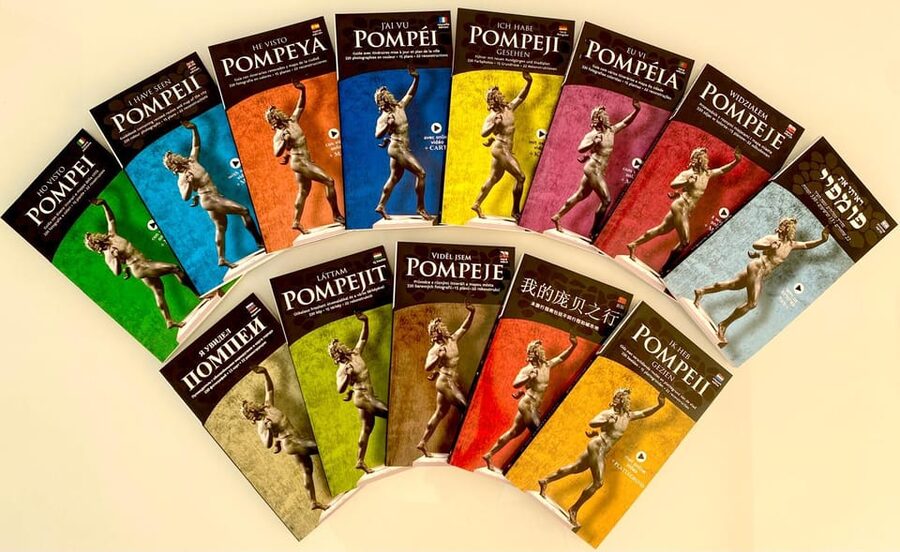
This is a self-guided experience built around a printed guidebook with different routes. You’ll also get an updated map, and you can follow a 2, 4, or 6 hour plan depending on how you like to travel.
Here’s how to think about the itineraries so you choose the right one:
The 2-hour option: choose highlights, move efficiently
A shorter route is best if you:
- want the headline sights fast
- don’t want to feel rushed by too much walking
- plan to return later or pair Pompeii with something else that day
The tradeoff is simple: Pompeii has many layers—houses, shops, baths, temples, theaters, and the casts of the eruption victims—so in two hours you’ll likely focus on a tight selection. You might read less, stop fewer times, or skip side areas.
The 4-hour option: a balanced Pompeii day
Four hours is a sweet spot for most people because it’s long enough to understand what you’re seeing without turning the visit into a sprint. It’s also long enough to spend time on details that make Pompeii memorable—frescoed house walls, the feel of millenary streets, and the way public and private spaces connect.
If you tend to linger (good choice in Pompeii), go with four hours.
Other tickets and entries for Pompei Campania




The 6-hour option: for detail people
Six hours gives you time to slow down and actually absorb how Roman daily life was arranged. If you like comparing sites—like how different activity spaces feel (theaters versus markets, baths versus temples)—you’ll use this route well. You’ll also have more time for the emotionally heavy moments, including the casts of the victims.
The drawback is stamina. You’ll cover more ground, so comfortable shoes and water are not optional.
Good to know: the guidebook is available for every two participants, so if you’re solo, decide whether sharing is fine for your style.
Pompeii’s Must-See Layout: Frescoed Streets, Houses, and Neighborhood Life
Once you’re inside, the ruins are arranged so you can read Pompeii like a city map of daily routines. The guidebook approach helps you “place” what you’re looking at instead of just seeing a sequence of stones.
Here are the types of sights you can expect to focus on during your route:
Frescoed houses and the rooms people lived in
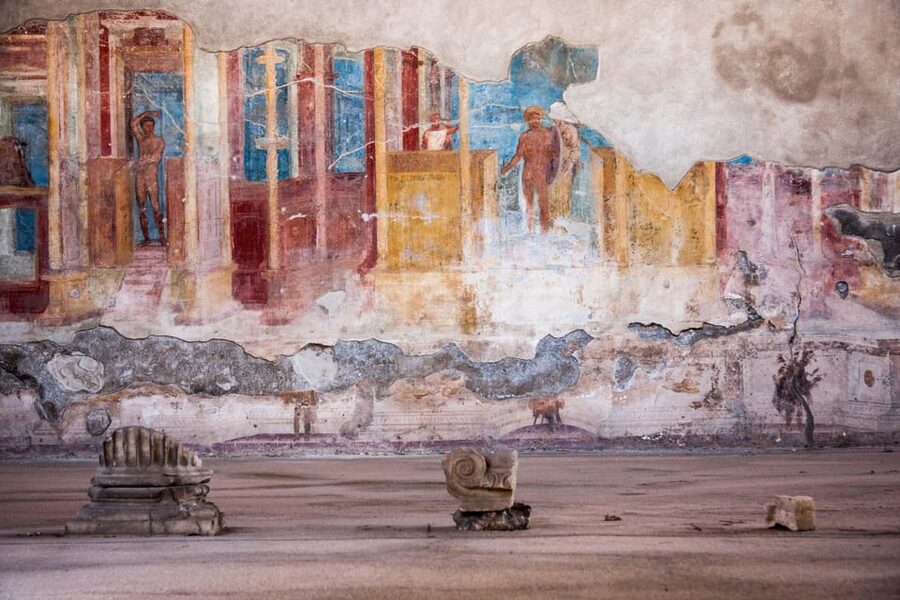
Pompeii is famous for the way it preserves the interiors of homes. You’ll encounter frescoed houses and see how rooms were organized, how decoration signaled status, and how everyday life played out in physical space.
Tip for your 2–6 hour route: don’t try to read every wall detail everywhere. Pick a few homes to explore slowly. Frescoes are the kind of thing you miss if you only glance while moving.
Millenary streets that connect public and private life
The experience isn’t only about big monuments. You’ll walk through streets that have been here for centuries, and that walking is part of the value. Streets show you how people moved between markets, workplaces, entertainment, and home.
If you do only one thing differently than a “checklist visit,” it’s this: pause at intersections and imagine where the crowds were when the city was fully active.
Shops and everyday commerce
You’ll also see shops and small activity spaces tied to daily commerce. Pompeii’s preserved layout makes the city feel functional, not just dramatic.
This is one of the reasons the self-guided format works: the printed itineraries help you connect the dots between “a house” and “a business next door,” which you might miss if you only chase the biggest headline sites.
Bathing, Temples, and the Thermopolis Stop for Roman Fast Food
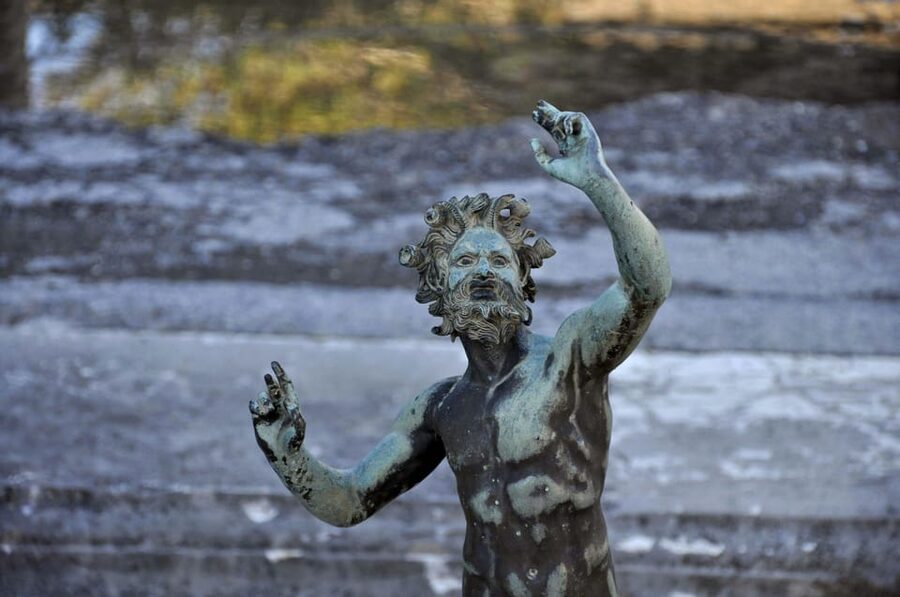
Pompeii’s public spaces help you understand how Romans spent their time. In your guidebook route you’ll have built-in opportunities to connect:
- bathing and social life (the spas)
- religious spaces (temples)
- quick stops for food and drink (the Thermopolis)
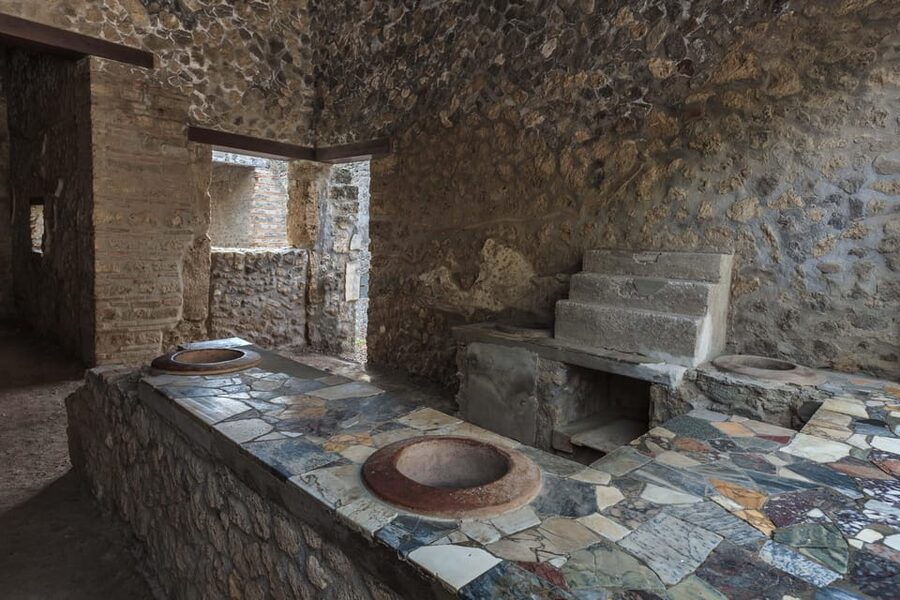
The Thermopolis is especially fun because it’s basically a version of coffee-fast food of the time. Rather than thinking of Roman dining as only long meals, you start to see a quicker rhythm: grab something, talk with neighbors, move on.
What to do here: if you want a lighter moment in the day, aim for Thermopolis during one of your mid-morning or early afternoon breaks. It’s a good reset when your brain starts to feel overloaded by too many wall paintings and architectural details.
Theaters, Brothels, and the Human Weight of the Eruption Casts
Pompeii doesn’t shy away from the full story, including entertainment and the darker corners of city life. Your guidebook routes can include:
- theaters
- brothels
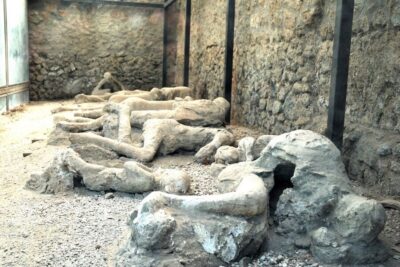
- the casts of the victims of the eruption
The theaters are where you get a sense of public spectacle—how crowds gathered for performance and noise. Even if you’re not a theater person, the preserved layout helps you picture how people shared public space.
Brothels and other adult-life spaces can feel intense, but they’re also part of what makes Pompeii historically useful. You’re seeing how the city functioned in real life, not only in idealized scenes.
Then comes the most emotionally difficult area: the casts of victims. This part of your day is worth slowing down for, even if you’re following a timed itinerary. It’s one of those places where the guidebook explanations help you understand what you’re seeing, but you also want a moment of silence in the experience.
Practical note: If you’re sensitive to heavy history, choose your timing. Don’t put the cast area at the end of the day when you’re tired and rushing.
Best-Preserved Amphitheater Area: A Real Sense of Scale
Among Pompeii’s highlights, you’ll be able to visit one of the best-preserved Roman amphitheaters. This is where the ruins stop feeling like rooms and turn back into a city built for crowds.
If you’re using the 2-hour itinerary, make this your anchor stop. If you’re using 4 or 6 hours, return to it later as a “scale check” while you move between smaller spaces like shops and houses.
Why amphitheaters hit differently: once you see the seating layout and the structure, you can better imagine the sound, the movement, and the packed energy of the city on performance days.
Timing Your Day: How to Use 9:00–17:00 Without Burning Out
You can enter Pompeii from 9:00 am to 5:00 pm, and that long window is one of the main reasons this setup is comfortable. You don’t need to commit to a rigid schedule—you just need to avoid the two classic mistakes:
1) starting too late and rushing the key areas
2) staying too long and losing the meaning of what you’re looking at
Here’s a simple way to manage it based on your chosen itinerary length:
- If you pick 2 hours, aim for late morning or early afternoon so you’re not fighting peak heat and you still have time to relax afterward.
- If you pick 4 hours, start in the morning so you can enjoy frescoed houses with less fatigue and still include the amphitheater and at least one emotionally heavy stop.
- If you pick 6 hours, plan your day like a slow walk. Schedule breaks (water, shade) and don’t feel guilty skipping a side area if you’re exhausted.
Also: Pompeii is outdoors. Bring a hat and water, and wear comfortable clothes. This isn’t just a “bring stuff” list—it directly affects how much you’ll enjoy the ruins.
Price and Value: Is $41 a Good Deal for Pompeii?
At $41 per person, you’re paying for:
- the Pompeii entrance ticket
- a guidebook in 13 languages
- an updated map
- self-guided itineraries for 2, 4, or 6 hours
- skip-the-line access
The best value here is for people who want to tour independently but still want structure. If you enjoy exploring on your own, the guidebook makes the visit easier. The printed maps and routes also help when your phone battery, data signal, or Wi-Fi luck isn’t great.
Now, a caution worth taking seriously: if your group includes people who might qualify for reduced or free entry (for example, seniors or children), double-check what you’re buying. One past experience flagged concern about overpaying when certain entrances could be free for specific categories. That doesn’t mean this offer is automatically bad—it just means you should compare your group’s likely admission eligibility before assuming every ticket is equivalent.
In plain terms: this is a solid purchase when you want skip-the-line entry plus a keep-it guidebook. It’s less attractive if you already know you’ll get most or all of the same access at lower cost through other means.
What’s Included vs Not: Plan Your Day Accordingly
Included:
- Entrance ticket for Pompeii Ruins
- Guidebook in 13 languages with itineraries
- Map
- Itineraries sized to 2, 4, or 6 hours
Not included:
- Transfer
- A guide (this is self-guided)
- Food and beverages
This matters because you’ll want to plan your breaks. If you don’t build in time to eat and drink, you can end up rushing between sites, which reduces how much the guidebook helps. Also, since there’s no live guide included, your best strategy is to use the book actively—skim the sections before each cluster of sights so you know what you’re looking at.
Who This Self-Guided Ticket Works Best For
This experience is a strong match if you:
- like autonomy over group pacing
- want to spend time in frescoed homes, shops, and everyday spaces
- prefer a plan that adapts: 2, 4, or 6 hours
- don’t want to keep checking your phone while navigating ruins
It may be less ideal if you:
- want a live instructor walking you through the site and answering questions in real time
- hate reading while walking
- need a highly structured, stop-by-stop narration schedule
Should You Book This Pompeii Ticket + Guidebook?
Yes—if your goal is to see Pompeii with skip-the-line ease and a practical guide you can follow at your own pace. The updated map and time-based itineraries are exactly what you want in a place this large, because they reduce wasted wandering and help you hit the major categories: homes and frescoes, baths and temples, theaters and brothels, and the hard-to-forget casts of the eruption victims.
I’d say no (or at least pause) if your group already expects to use cheaper admission routes for certain people, because you’ll want to compare total value carefully. Also, if you strongly prefer a live guide, this format will feel like you’re doing more of the work yourself.
FAQ
Where do I meet the operator?
Meet at the information point at VIA ROMA 123, POMPEI, then show your voucher for access to the archaeological park.
Which entrance do I use to access Pompeii Ruins?
You access through the Piazza Anfiteatro entrance.
What’s included with the ticket?
You get the Pompeii entrance ticket, a guidebook (13 languages), a map, and itineraries for 2, 4, or 6 hours.
What is the visiting time window?
Entry is valid for 1 day, and you can enter from 9:00 am until 5:00 pm.
Do I get a live guide?
No live guide is included. You explore independently using the guidebook and map.
How many guidebooks are provided?
One guidebook is available for every two participants.
What languages are available?
The guidebook and activity support are available in English, Italian, Spanish, and French.
What should I bring?
Bring a passport or ID card, comfortable shoes, sun hat, and water, plus comfortable clothes.
Is food included?
No. Food and beverages are not included.
FAQ
Can I cancel for a full refund?
Yes, free cancellation is available up to 24 hours in advance for a full refund.
Can I reserve and pay later?
Yes, you can reserve now and pay later.
Are transfers included?
No, transfers aren’t included.
More Tickets and Entries in Pompei Campania





More Tour Reviews in Pompei Campania



More Pompeii Tours to Compare
More Pompei Campania tours, freshly reviewed




Pompeii Tours, compared.
 ★ 4.8Pompeii: Entry Ticket and Guided Tour with an ArchaeologistFrom $3519,459 reviews
 ★ 4.1Pompeii: Entry Ticket with Audio GuideFrom $4013,491 reviews
 ★ 4.8Pompeii: Small Group Tour with an ArchaeologistFrom $4012,264 reviews
 ★ 4.3Pompeii Ruins & Mount Vesuvius Day TourFrom $12011,459 reviews
★ 5.0Pompeii Small Group Tour with an ArchaeologistFrom $356,593 reviews
★ 4.3Pompeii Ruins & Mount Vesuvius Day TourFrom $12011,459 reviews
★ 5.0Pompeii Small Group Tour with an ArchaeologistFrom $356,593 reviews
 ★ 4.5Skip-the-line Pompeii – Small Group TourFrom $544,401 reviews
 ★ 4.6Naples or Sorrento: Full-Day Pompeii and Mount Vesuvius TourFrom $1044,235 reviews
 ★ 3.9Pompeii: Skip-the-line Entry Ticket with Audio Guide & MapFrom $433,153 reviews