
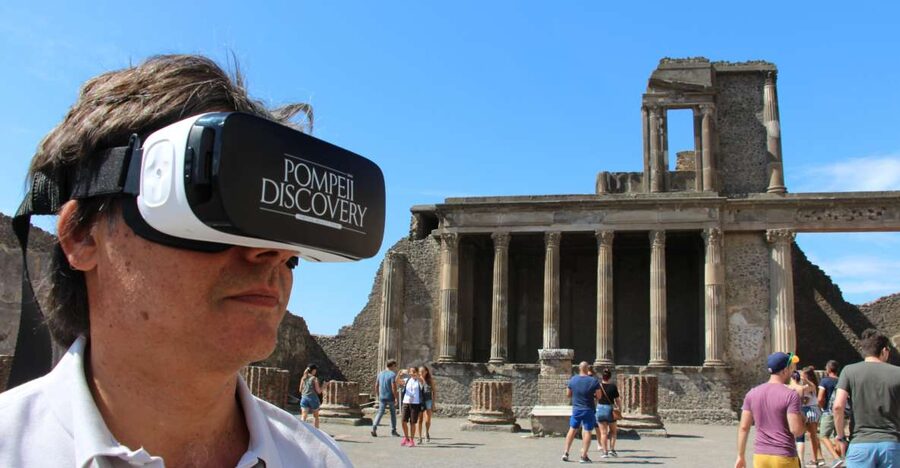
Review · POMPEII TOURS
Pompeii Ruins: Virtual Tour 360° with Authorized Storyteller
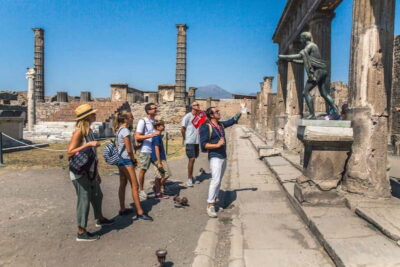
A 79 AD city, rebuilt around you. This Pompeii virtual reality tour pairs a live guide with headset-based 3D views so the ruins make sense fast, and city life before Vesuvius feels closer than you expect.
I love that you’re shown nine famous locations (Forum, Basilica, Baths, House of the Faun or Menander, Bakery, Large Theatre, Quadriporticus, and the Lupanar) instead of wandering and guessing what you’re looking at. I also like how the storyteller turns those stops into scenes you can follow, including shop activities and a theatrical performance.
One consideration: it’s not suitable for people with epilepsy and it’s not suitable for children under 8, so it’s best to check that before you book.
In This Review
- Key things to know before you go
- How the storyteller + 360° VR works at Pompeii
- What the tour covers: nine famous stops you’ll place in your mind
- Entering the Forum: the center of city life
- Basilica + Baths: big architecture, human routines
- Houses and the bakery: learning Pompeii through daily life
- Large Theatre + Quadriporticus: performances and training
- Lupanar nightlife: understanding the darker edge of Pompeii
- Price and value: what $226.57 per group actually buys you
- What to bring, and how to avoid common friction
- Who should book this Pompeii VR tour (and who should skip it)
- A quick word on the guide: Maria Novella and the narration style
- Should you book Pompeii Discovery Virtual Tour 360°?
- FAQ
- Is the entrance ticket to Pompeii included?
- How long is the tour valid?
- What’s included in the tour price?
- What languages are available for the live guide?
- Is this tour private?
- Is the experience wheelchair accessible?
- Is it suitable for children and for people with epilepsy?
Key things to know before you go
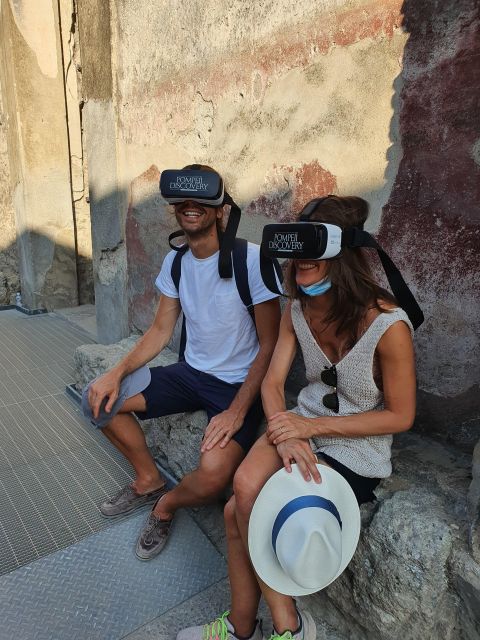
- Authorized local storytelling plus VR so you’re never left staring at stone with no context
- Nine headline sites covered in a structured way (Forum through the Lupanar)
- 3D reconstructions that show how Pompeii worked before the eruption in 79 A.D.
- Headsets for each participant in a private group format
- Credibility beyond tourism, with the format cited as valued for educational impact
Which Pompeii ticket and guide? Compare a few more.
- Pompeii: Entry Ticket and Guided Tour with an Archaeologist★ 4.8 · 19,459 reviews
- Pompeii: Small Group Tour with an Archaeologist★ 4.8 · 12,264 reviews
- Pompeii: Skip-the-line Entry Ticket with Audio Guide & Map★ 3.9 · 3,153 reviews
- Naples: Pompeii and Mt. Vesuvius with Lunch and Wine Tasting★ 4.5 · 2,454 reviews
How the storyteller + 360° VR works at Pompeii
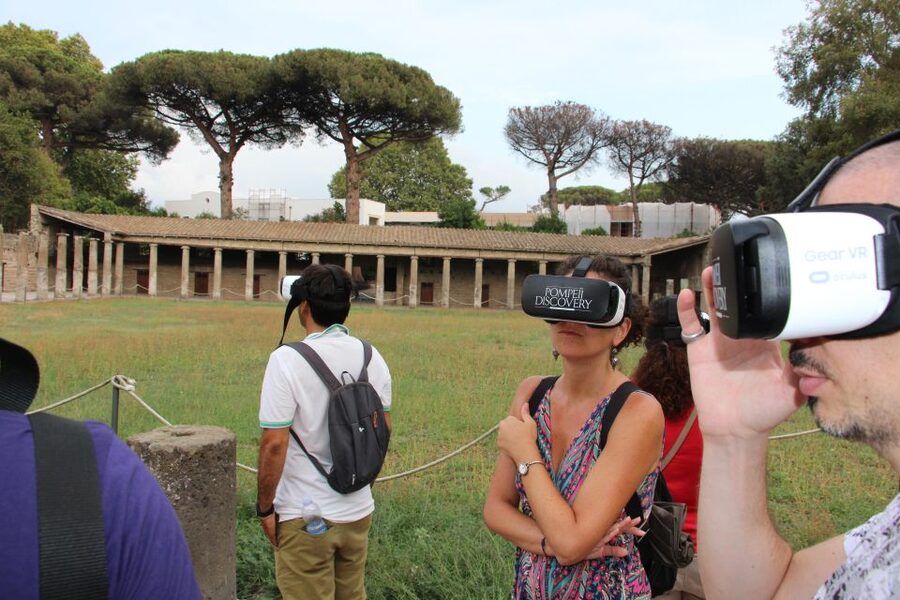
This tour is built around a simple idea: the ruins are amazing, but they’re also fragmented. You can walk Pompeii for hours and still struggle to connect each doorway and column to real daily life. This experience tackles that problem by combining a live, local guide (your Storyteller) with headset-based 3D scenes.
In practice, you’re not replacing the guide with tech. The guide keeps the narrative moving, and the VR adds the missing pieces: scale, layout, and activity. That matters in Pompeii, where one street corner can feel similar to the next unless someone gives you the “what happened here and why it matters” thread.
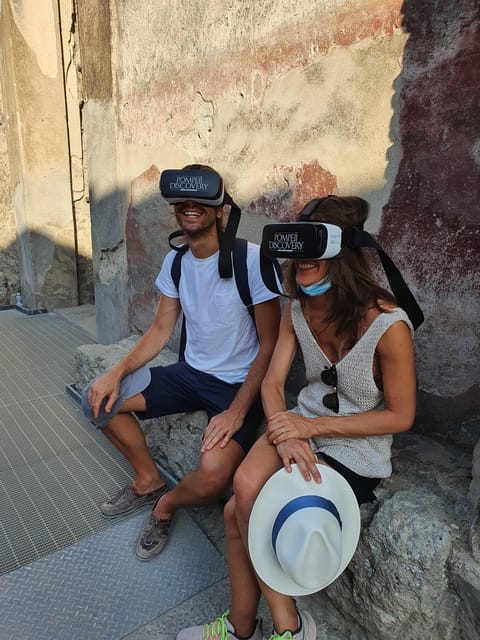
You’ll also get a private-group feel, which helps. With fewer people, you’re more likely to ask questions and stay with the pacing instead of getting swallowed by a big group march.
What the tour covers: nine famous stops you’ll place in your mind
The heart of the experience is seeing nine specific locations in a way that’s easier to remember. The tour describes these as the key areas you’ll visit through the guided tour enhanced by virtual reality:
- Forum
- Basilica
- Baths
- House of the Faun or House of Menander
- Bakery
- Large Theatre
- Quadriporticus
- Lupanar
To make those stops feel like a living city (not museum labels), the experience also includes scenes like shop activities, a theatrical performance, and gladiators’ training in the Quadriporticus, plus a look at nightlife around and inside the Lupanar.
If you’re the type who wants to understand what you’re looking at, this structure is a big plus. You’re not just “seeing Pompeii.” You’re building a map in your head.
Entering the Forum: the center of city life
The Forum is described as the center of Pompeii’s city life, and the way this tour sets it up helps you grasp that role quickly. Without context, forums can look like open spaces and government buildings. With the guided story and VR reinforcement, you’re more likely to recognize it as the place where public life and movement would have mattered every day.
This is also where shop activity and performance elements can help you connect the big picture to daily routines. Even when the setting is ancient, the “people doing things” angle is what makes the Forum feel less like a stop on a checklist.
Potential drawback: because you’re tracking both the guide and VR moments, it’s worth staying mentally present. If you tune out for even a minute, you might lose the storyline that ties the Forum to everything that follows.
Basilica + Baths: big architecture, human routines
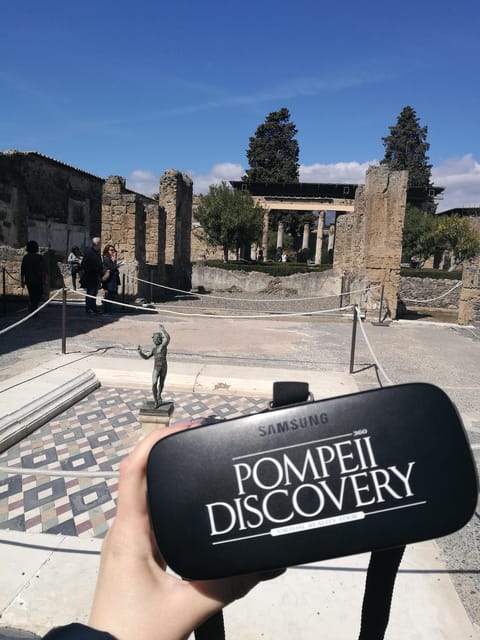
After the Forum, the tour focuses on two sites that naturally complement each other: the Basilica and the Baths.
The Basilica is presented as an imposing building. That fits your intuition when you see it in the ruins: the scale grabs you. What this tour aims to add is the meaning—why a structure like that mattered and how it fit into city life, not just what it looks like.
Then you move into the Baths, described as beautiful. Baths in Pompeii are the kind of place where the physical remains can be confusing, because you’re looking at parts of a complex that used to function as a full system. With VR added to the guide’s explanation, you get help visualizing how the space would have felt and worked before the eruption.
This pairing is smart for a reason: it balances civic life (Forum/Basilica) with personal routine (Baths). By the time you get to homes and entertainment next, you’ll be thinking in “how people used the spaces” terms.



Houses and the bakery: learning Pompeii through daily life
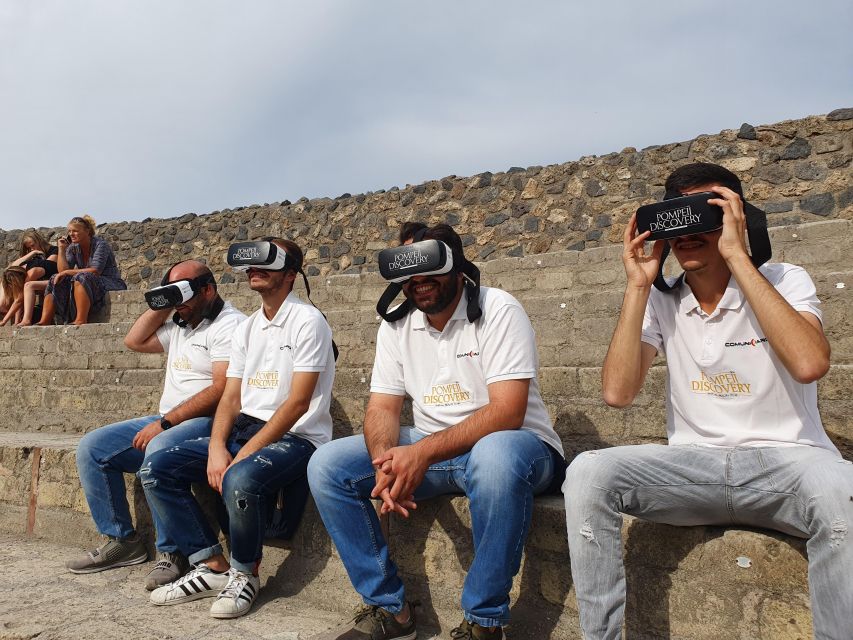
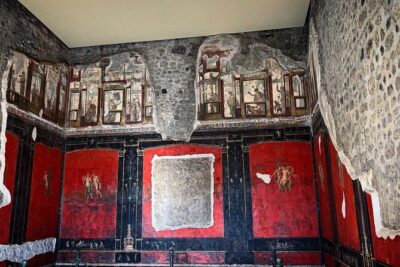
Next up is a choice point: you’ll see either the House of the Faun or the House of Menander. Even if you’re not sure which is which before you arrive, the real value here is that both are used to show domestic life and status—how different households lived within the same city fabric.
Then comes the Bakery, which is one of those stops that can be easy to overlook if you only focus on the biggest monuments. Here, the bakery is a reminder that a city runs on food supply and workrooms, not only public gatherings and spectacles.
In the feedback I reviewed, the VR enhancement was consistently described as an added layer that strengthens the guide’s explanation. That’s exactly what you want in domestic spaces and production areas: you need help connecting what’s left behind to what activity used to happen there.
Practical tip: take a moment before you enter each stop to note where you are in relation to the route. These places can blur together visually, but the tour’s storyline works best if you keep your internal map aligned.
Large Theatre + Quadriporticus: performances and training
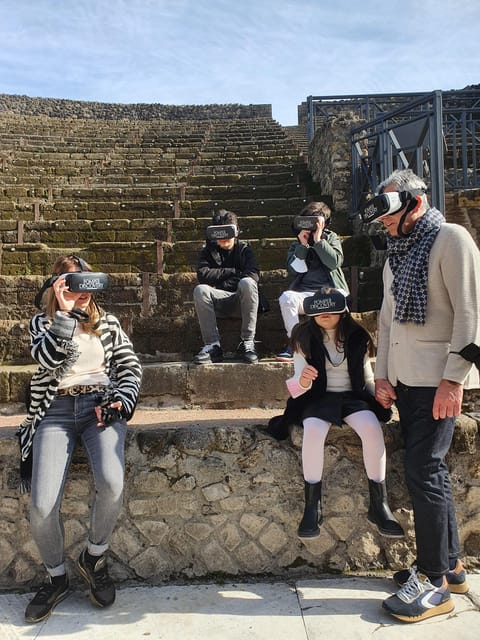
The tour then shifts from everyday spaces to spectacle and public events with the Large Theatre and the Quadriporticus.
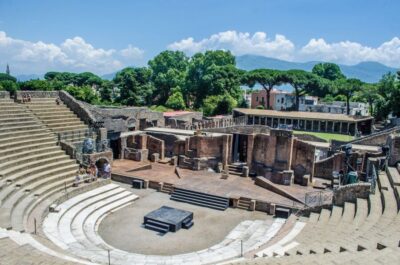
The Large Theatre is another anchor site where the ruins tell you it was important, even if you’re not sure what kind of events took place there. The storyteller-led pacing and VR support are designed to make it feel like more than stone seating—like a place where people came to watch and gather.
After that, the Quadriporticus gets the most action-oriented moment: gladiators’ training. The experience doesn’t treat it like a static monument. It turns the space into a stage for preparation, movement, and practice, which is what your brain needs to “activate” the ruins.
One of the strongest themes of the whole tour is this cause-and-effect feeling: you see where public life happened, where people refreshed themselves, where families lived, and then where performance and combat training fed the city’s entertainment culture.
Lupanar nightlife: understanding the darker edge of Pompeii
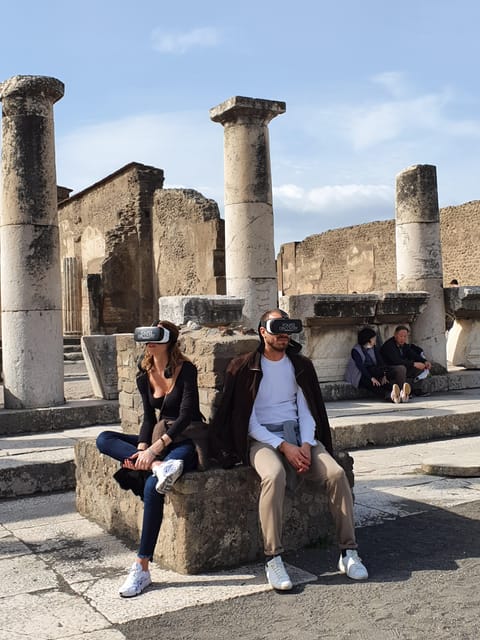
The final major stop is the Lupanar, described as a brothel, with nightlife around and inside it. This is the part of Pompeii many people remember, partly because it feels different from the other civic and domestic spaces.
This tour frames it with VR so you’re not left simply looking at remains and wondering what the scene would have been. The guided storytelling plus the VR emphasis on nightlife is meant to bring the social reality into focus—without turning the stop into a gimmick.
If you’re sensitive to the subject matter, this is a good moment to mentally brace. It’s not an upbeat ending. But it can be historically important, because it shows that Pompeii’s life included the full range of human behaviors and economies, not only the “pretty” tourist postcard view.
Price and value: what $226.57 per group actually buys you
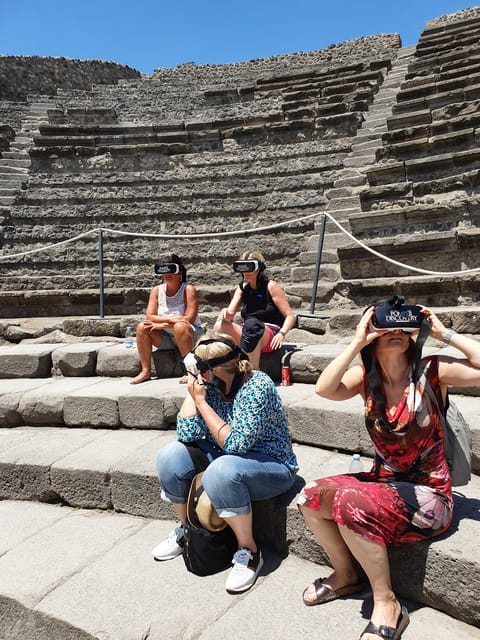
The price is listed as $226.57 per group up to 2, for a private group format. That means you’re paying for a small, guided experience rather than a seat on a crowded bus or a standard group tour.
What you get for that money (based on the tour info):
- A local and authorized guide in your language (English or Italian)
- Virtual reality headsets for each participant
- A guided tour through multiple key areas with VR-enhanced scenes
- Ticket-line help (the experience says skip the ticket line), though the entrance ticket itself is not included
So the value question isn’t just “Is Pompeii worth it?” Pompeii is worth it. The question is whether this format helps you understand and enjoy it more efficiently. For many visitors, it does—especially if you want to leave with a clearer mental map of what you saw and how the city functioned before 79 A.D.
Also, the private-group element matters. If you’re traveling with one companion and you’d rather have a guide that can slow down when you ask questions, this setup fits that preference well.
What to bring, and how to avoid common friction
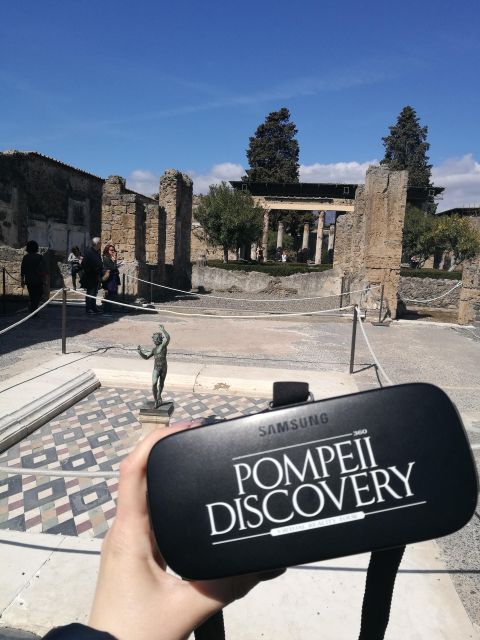
This is a walking-and-standing experience, so pack for comfort:
- Comfortable shoes
- Passport or ID card for children
The tour includes VR headsets. While the tour data doesn’t list specific headset comfort rules, you should assume you’ll be switching attention between real ruins and the VR scenes. If you wear glasses or have any visual sensitivity, consider how you’ll manage that for a headset session.
Also, plan for your entrance ticket separately. The tour says the entrance ticket of Ruins is not included, even though the experience states you can skip the ticket line. In other words: you’ll likely still need your own entry ticket, but the tour helps reduce wait stress.
Who should book this Pompeii VR tour (and who should skip it)
This tour looks like a great match if:
- You want a guided explanation with a clear structure through multiple Pompeii sites
- You learn better when you can see reconstructions of activity, not just read plaques
- You’re traveling in a private group of up to 2 and want a smoother experience
It’s not a fit if:
- You have epilepsy, since the tour is stated as not suitable
- You’re traveling with children under 8
It’s also listed as wheelchair accessible, which is helpful if mobility is a concern.
One more point worth mentioning: the tour includes live guide narration in English or Italian. If you’re comfortable with either language, you’ll get the most out of the storytelling layer that ties the VR scenes together.
A quick word on the guide: Maria Novella and the narration style
One review specifically mentioned a guide named Maria Novella, praising her professional approach and how the virtual component amplified the site’s beauty. Another review highlighted that the augmented reality device complements the guide’s explanations and adds real value, not just novelty.
That pattern matters. When the VR is used to strengthen what the guide is already saying, you end up with a more coherent experience. You’re not just watching tech. You’re following a guided story with extra visual support.
Should you book Pompeii Discovery Virtual Tour 360°?
Book it if you want Pompeii in a more organized, story-driven format—especially if you like the idea of seeing nine key places with VR scenes that show how the city operated before 79 A.D. The private-group setup and headset-per-participant approach can also make this feel like a smarter use of time than a solo walk with a map.
Skip it if you’re traveling with someone who has epilepsy or if your group includes kids under 8. Also, if you strongly prefer a classic, purely on-foot ruins tour with no headset layer, this format may feel like extra tech rather than a benefit.
If you want an experience that helps you place Pompeii—Forum to Lupanar—and leave with a clearer sense of what everyday life looked like, this tour is an easy recommendation to consider.
FAQ
Is the entrance ticket to Pompeii included?
No. The tour does not include the entrance ticket, even though the experience says you can skip the ticket line.
How long is the tour valid?
The listing says it is valid for 1 day. You’ll need to check availability to see starting times.
What’s included in the tour price?
It includes a local and authorized guide in your language, plus VR headsets for each participant, and a guided experience through the ruins enhanced by virtual reality.
What languages are available for the live guide?
The live tour guide is available in English and Italian.
Is this tour private?
Yes. The experience is described as a private group.
Is the experience wheelchair accessible?
Yes, it is listed as wheelchair accessible.
Is it suitable for children and for people with epilepsy?
It’s not suitable for children under 8, and it is not suitable for people with epilepsy.
More Tours in Pompei Campania




More Tour Reviews in Pompei Campania



More Pompeii Tours to Compare
More Pompei Campania tours, freshly reviewed




Pompeii Tours, compared.
 ★ 4.8Pompeii: Entry Ticket and Guided Tour with an ArchaeologistFrom $3519,459 reviews
 ★ 4.1Pompeii: Entry Ticket with Audio GuideFrom $4013,491 reviews
 ★ 4.8Pompeii: Small Group Tour with an ArchaeologistFrom $4012,264 reviews
 ★ 4.3Pompeii Ruins & Mount Vesuvius Day TourFrom $12011,459 reviews
★ 5.0Pompeii Small Group Tour with an ArchaeologistFrom $356,593 reviews
★ 4.3Pompeii Ruins & Mount Vesuvius Day TourFrom $12011,459 reviews
★ 5.0Pompeii Small Group Tour with an ArchaeologistFrom $356,593 reviews
 ★ 4.5Skip-the-line Pompeii – Small Group TourFrom $544,401 reviews
 ★ 4.6Naples or Sorrento: Full-Day Pompeii and Mount Vesuvius TourFrom $1044,235 reviews
 ★ 3.9Pompeii: Skip-the-line Entry Ticket with Audio Guide & MapFrom $433,153 reviews