
Review · POMPEII TOURS
Pompeii – Private Tour (skip-the-line admission included)
Pompeii turns into a story fast. A private, skip-the-line visit with admission included means you spend less time fighting queues and more time understanding what you’re looking at. I really like the way the route mixes big public spaces with everyday details, from thermopolia (Roman street-food spots) to household names like the House of Menander and the House of the Faun.
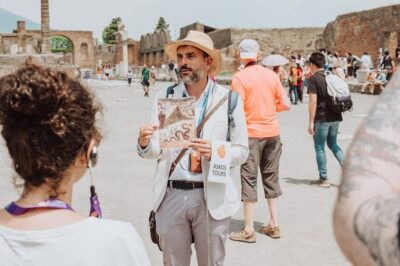
The private part matters, too. With a guide such as Antonella or Francesco, you get focused explanations in English and room to ask questions instead of getting swept along. The only drawback to flag: this is about 2 hours, so you’ll see major highlights, not every single corner of the site.
In This Review
- Key Highlights You’ll Notice on This Pompeii Route
- Skip-the-Line Entry That Actually Buys You Time
- The First Stop: Public Buildings, Temples, Baths, and the Meaning Behind Them
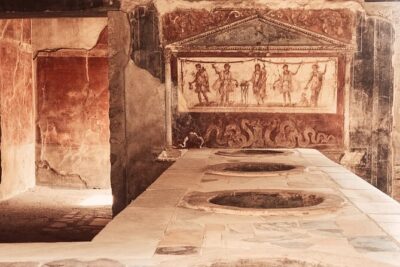
- Roman Street Food and Bakeries: Thermopolia and Pistrinum
- The Houses Everyone Talks About: Menander, the Faun, and the Vettii
- Via dell’Abbondanza and the Forum: Pompeii’s Main Street Energy
- The Red-Light District Wall Paintings: A Historical Warning Label
- Petrified Bodies and the Eruption’s Human Impact
- Price and Value: Is $162.19 Worth It?
- What the Private Format Feels Like in Real Life
- Planning Tips Before You Go
- Should You Book This Private Pompeii Tour?
- FAQ
- How long is the Pompeii private tour?
- Is skip-the-line admission included?
- Is this a private tour or a group tour?
- What language is the tour offered in?
- How do I receive my ticket?
- What does the tour include at Pompeii?
- What is the price per person?
- Is the tour offered year-round regardless of weather?
- Can I get a refund if I cancel?
- Are service animals allowed?
Key Highlights You’ll Notice on This Pompeii Route
- Skip-the-line admission included so your ticket lines are shorter (and your time lasts longer)
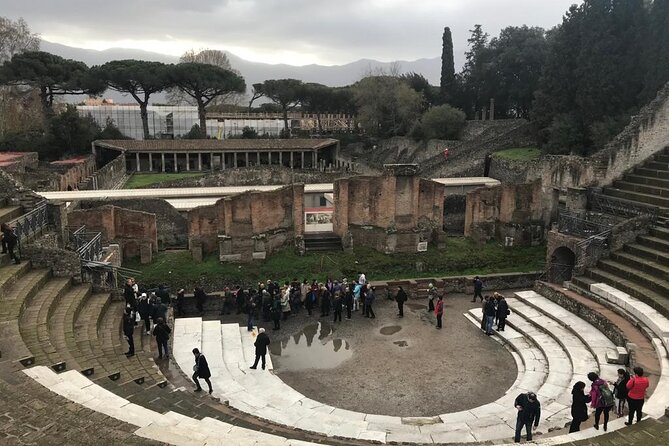
- A smart mix of public buildings and daily life: theatres, temples, thermal baths, and the streets between
- Via dell’Abbondanza plus the Forum for that classic Pompeii “main street and main square” feeling
- Famous houses with real context like the House of Menander, House of the Faun, and House of the Vettii
- Thermopolia and pistrinum that show what Romans actually ate and baked
- A focused look at the eruption victims so the tragedy isn’t just background noise
Which Pompeii ticket and guide? Compare a few more.
- Pompeii Small Group Tour with an Archaeologist★ 5.0 · 6,593 reviews
- Discover the Ancient Ruins of Pompeii: Day Trip from Rome★ 3.5 · 2,247 reviews
- Pompeii and Herculaneum Small Group Tour with an Archaeologist★ 5.0 · 1,350 reviews
- Skip the Line Guided Tour of Pompeii led by an Archaeologist★ 5.0 · 703 reviews
Skip-the-Line Entry That Actually Buys You Time
Pompeii can feel like a two-part trip: first you get through crowds, then you finally start sightseeing. This tour solves part one with skip-the-line admission included, which is exactly what you want if you only have a couple of hours on the clock.
You also get a more controlled pace because it’s private—only your group goes on this route. That doesn’t mean the site is empty (it’s Pompeii, not a library). It means you’re less likely to lose the thread when the crowd presses in. A private guide also helps you understand why certain spaces matter before you walk through them, instead of staring at walls and hoping it clicks.
The tour runs about 2 hours, so think of it as a “best-of Pompeii with meaning.” If you want a slow, end-to-end wander where you linger in every room, you may need a longer visit or a second stop on your own. But if you want the big beats without wasting time, this format is a practical sweet spot.
The First Stop: Public Buildings, Temples, Baths, and the Meaning Behind Them
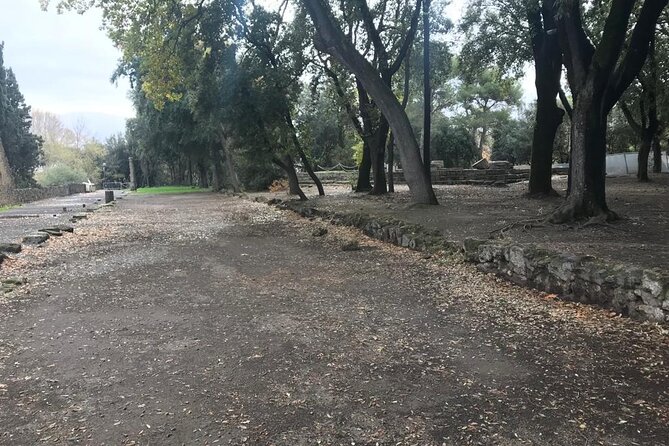
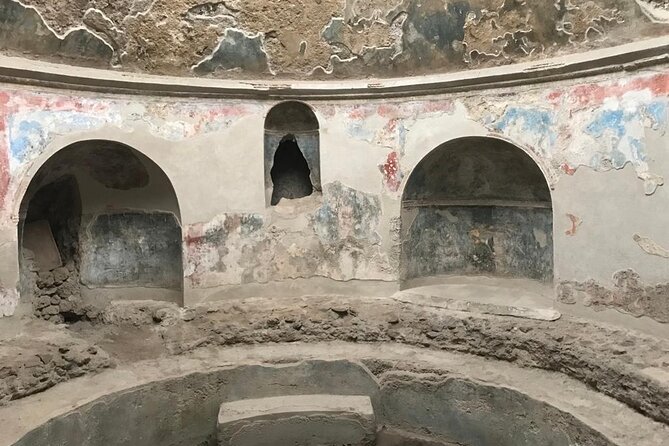
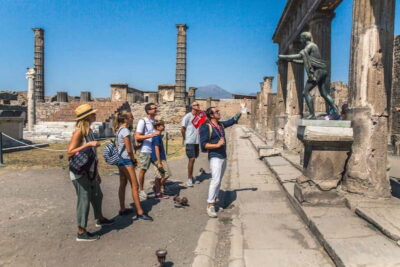
The Pompeii visit is built around the Pompeii Archaeological Park, and the first chunk of your walk centers on major public areas. Expect to see highlights such as theatres, temples, and thermal baths.
Here’s what I like about starting with public buildings: they help you understand how Pompeii worked socially. Theatres show leisure and status. Temples show belief and civic identity. Thermal baths show daily routines—where people met, talked, and refreshed. When you recognize those functions, the ruins stop being random stone blocks. They start acting like a city again.
And because the time is limited, the guide’s job is to connect the dots quickly. That’s where the human element matters. People describe guides with strong communication and flexibility, and that kind of clarity is the difference between seeing Pompeii and understanding it.
Practical note: Pompeii involves walking outdoors, and you’ll be moving between clusters of ruins. Wear comfortable shoes and plan for sun or shade depending on the day.
Roman Street Food and Bakeries: Thermopolia and Pistrinum
One of the most interesting ways this tour teaches Pompeii is by stepping into the habits of daily life. The route points out Roman shops, specifically the thermopolia and the pistrinum.
Why these matter: when you learn what people ate and how food was sold, you suddenly picture the city working in real time. A thermopolium was like a Roman fast-food counter—grab food, keep moving, and eat where you are. A pistrinum was the bakery equivalent, tying into the bigger story of supplies, labor, and neighborhood commerce.
This is also a great antidote to the classic Pompeii trap: everyone rushes to the grand villas and forgets that most people lived their lives through smaller routines. These shop stops help you balance the spectacle with the everyday.
If you love “how did they actually live?” questions, this portion is the kind of detail that makes Pompeii feel personal.
The Houses Everyone Talks About: Menander, the Faun, and the Vettii
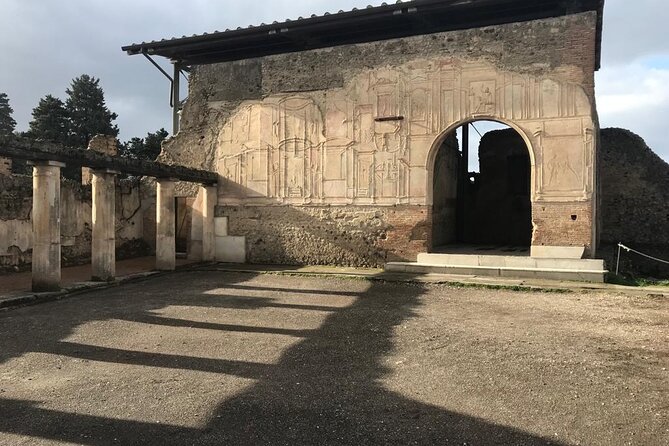
Pompeii is famous for residences, and this tour leans into that. You’ll see notable homes such as the House of Menander, the House of the Faun, and the House of the Vettii, plus others including the House of Caecilius Iucundus.
These names are more than famous labels. The value here is context. A good guide can point out how different homes signaled wealth, taste, and social position through layout and decoration. And when you’re guided through them in a short window, you’re less likely to get lost in a “pretty-to-look-at” checklist.
The House of the Faun is often remembered because it’s associated with impressive visual culture and scale. The House of Menander is tied to artistic and household details that help you imagine a personal, lived-in world—not just a museum. The House of the Vettii gives another angle on domestic style.
In a private setting, you’re also more likely to get explanations that match what you care about. If you’re into art, you’ll probably focus on decoration. If you’re into daily routines, you’ll ask about rooms and how people moved through them. That’s one of the reasons private tours feel more satisfying: you can steer the conversation slightly without derailing the route.
Rather go private? More options in Pompeii



Via dell’Abbondanza and the Forum: Pompeii’s Main Street Energy
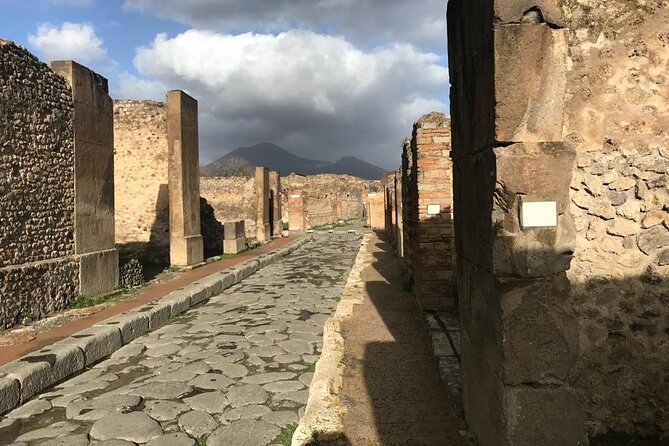
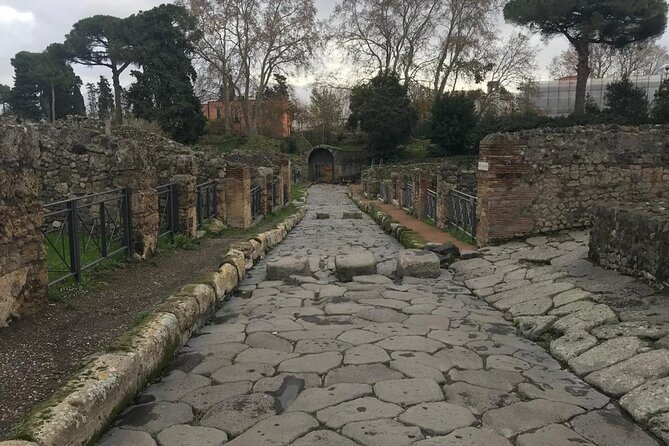
After the buildings and homes, your walk includes Pompeii’s main street, Via dell’Abbondanza, and the Forum, the town’s main square.
This is the part of the itinerary that helps you stitch together the whole place. Via dell’Abbondanza gives you the sense of streets and flow—where people likely traveled and how the city organized movement. Then you arrive at the Forum, which feels like the city’s public center: civic life, decisions, and the day-to-day rhythm of public gatherings.
When a guide points out what you’re seeing here, it changes the experience. Instead of reading the ruins as scattered fragments, you start to understand them as a working city layout. For many people, this is where Pompeii stops feeling like a history lesson and starts feeling like a place.
If you’re short on time, this “main street plus main square” pairing is a smart use of your 2 hours.
The Red-Light District Wall Paintings: A Historical Warning Label
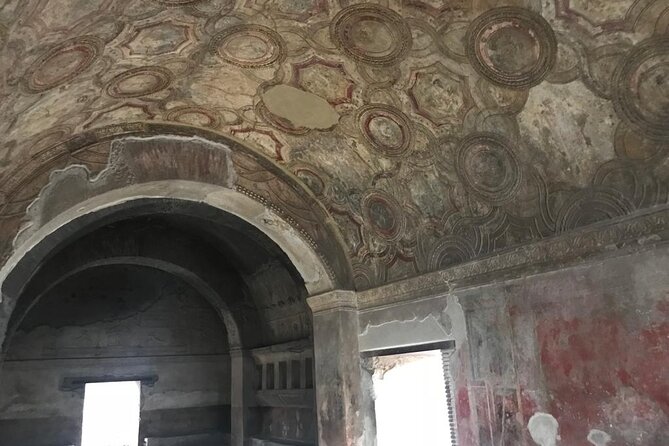
Pompeii is not shy about sexuality in its surviving artwork. This tour includes the famous red-light district area and its suggestive wall paintings.
Here’s how I recommend thinking about this stop: treat it as social history, not shock value. These images tell you something about entertainment, social messaging, and how public space could hold private or commercial themes. A good guide’s role is to explain what you’re looking at without turning it into embarrassment or sensation.
It’s also worth noting that this part can be more awkward for some visitors depending on comfort level. If you’d rather avoid that angle, you may want to ask your guide for how they frame the material before you get there. In a private tour, that conversation is easier than in a larger group.
Petrified Bodies and the Eruption’s Human Impact
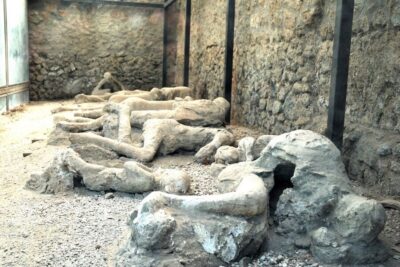
The tour finishes with a special focus on the victims of the eruption—people whose remains are preserved in the ruins. This is the emotional core of Pompeii.
The guide attention here is valuable because it shifts the story away from disaster as a spectacle and toward disaster as a human moment. The eruption wasn’t abstract. It affected individuals and families at street level, in homes, and in the spaces where daily life was unfolding.
The best guides pace this portion carefully. They explain the significance without rushing. They also help you see why these remains are so powerful: Pompeii doesn’t just show buildings; it shows interruption—what a city looked like right up until life stopped.
This part is also where the private setting helps. When you’re walking with only your group, you can absorb the weight of what you’re seeing without feeling like you’re being carried along by noise and impatience.
Price and Value: Is $162.19 Worth It?
At $162.19 per person, you’re paying for three things at once: private guiding, skip-the-line admission, and a focused route designed for a short visit.
If you’ve ever tried to piece together Pompeii on your own, you know the hidden cost isn’t just money—it’s time and confusion. Lines, ticket logistics, and figuring out what to prioritize can eat up your day. With this tour, admission is already included and your guide handles the sequencing so you spend your energy on the site, not on planning.
Private tours cost more than group tours because you’re buying attention and pacing. In this case, the attention is repeatedly praised. Guides such as Antonella and Francesco are highlighted for clear communication, engagement, and personal service—down to helping make the day feel smoother when timing is thrown off.
So the value depends on what you want from Pompeii:
- If you want a fast, high-impact overview with meaning, this price can feel fair.
- If you want a slow, fully unhurried walk where you linger in every room, you might compare it to a longer tour or a self-guided day.
What the Private Format Feels Like in Real Life
This is a private experience, meaning only your group participates. That has a few practical benefits that matter at Pompeii.
First, you can keep the route aligned with your interests. If you care more about domestic life, the guide can spend a little more time on residences like the House of Menander and the House of the Faun. If you’re more into streets and civic space, Via dell’Abbondanza and the Forum become your anchor stops.
Second, it reduces the pressure of matching other people’s pace. Pompeii’s terrain and crowds are real. In a private tour, you’re not constantly waiting for someone who stopped to take photos—because the guide can keep a steady rhythm for your group.
Third, it makes questions feel natural. People often forget that a private guide isn’t just about showing you where to go. It’s also about answering the annoying questions you actually have—what is that room for, why is that decoration important, and what did people do here?
In short: this tour is built for clarity and flow.
Planning Tips Before You Go
You’ll likely have the best experience if you treat this like a walking tour with a purpose.
- Wear shoes that handle uneven stone. Pompeii isn’t designed for flip-flops.
- Expect sun and plan water if the weather is warm.
- If you’re picky about the red-light district segment, you can prepare mentally or ask for how it’s handled.
- If you’re sensitive to emotional content, know that the petrified bodies portion is part of the standard route.
Also, the experience is described as requiring good weather. If conditions aren’t ideal, the tour provider offers an alternative date or a full refund. That matters because Pompeii can be miserable in rain when you’re trying to move quickly between ruins.
Should You Book This Private Pompeii Tour?
I’d book it if you want Pompeii’s highlights in a tight window with skip-the-line admission and a private guide who helps you make sense of what you’re seeing. The route is built for balance: public spaces, everyday food through thermopolia and pistrinum, standout residences, the Forum and main street, and then the eruption’s human impact.
Skip it if you’re planning a long, slow, all-day Pompeii deep-seeing mission and you want to roam with no structure. Also consider whether the red-light district imagery will feel like a good fit for your comfort level.
If your goal is: see the best parts, understand them quickly, and leave feeling like Pompeii actually made sense, this one is a strong choice.
FAQ
How long is the Pompeii private tour?
It runs for approximately 2 hours.
Is skip-the-line admission included?
Yes. Skip-the-line admission is included, and an admission ticket is part of the experience.
Is this a private tour or a group tour?
It’s a private tour. Only your group will participate.
What language is the tour offered in?
The tour is offered in English.
How do I receive my ticket?
You’ll get a mobile ticket.
What does the tour include at Pompeii?
The tour visits the Pompeii Archaeological Park and highlights public buildings like theatres, temples, and thermal baths, Roman shops such as thermopolia and pistrinum, major residences like the House of Menander and the House of the Faun, Via dell’Abbondanza, the Forum, the red-light district wall paintings, and a special focus on the eruption victims.
What is the price per person?
The price is $162.19 per person.
Is the tour offered year-round regardless of weather?
The experience requires good weather. If it’s canceled due to poor weather, you’ll be offered a different date or a full refund.
Can I get a refund if I cancel?
Yes. You can cancel up to 24 hours in advance for a full refund.
Are service animals allowed?
Service animals are allowed.
More Tours in Pompeii



More Tour Reviews in Pompeii

More Pompeii Tours to Compare
More Pompeii tours, freshly reviewed



Pompeii Tours, compared.
 ★ 4.8Pompeii: Entry Ticket and Guided Tour with an ArchaeologistFrom $3519,459 reviews
 ★ 4.1Pompeii: Entry Ticket with Audio GuideFrom $4013,491 reviews
 ★ 4.8Pompeii: Small Group Tour with an ArchaeologistFrom $4012,264 reviews
 ★ 4.3Pompeii Ruins & Mount Vesuvius Day TourFrom $12011,459 reviews
★ 5.0Pompeii Small Group Tour with an ArchaeologistFrom $356,593 reviews
★ 4.3Pompeii Ruins & Mount Vesuvius Day TourFrom $12011,459 reviews
★ 5.0Pompeii Small Group Tour with an ArchaeologistFrom $356,593 reviews
 ★ 4.5Skip-the-line Pompeii – Small Group TourFrom $544,401 reviews
 ★ 4.6Naples or Sorrento: Full-Day Pompeii and Mount Vesuvius TourFrom $1044,235 reviews
 ★ 3.9Pompeii: Skip-the-line Entry Ticket with Audio Guide & MapFrom $433,153 reviews