
Review · POMPEII TOURS
Pompeii & Herculaneum Guided Tour – High Speed Train from Rome
Two lost cities in one long, well-run day. You get a high-speed train from Rome plus an archaeologist-led route through Pompeii and Herculaneum, with skip-the-line entry and headsets for easier listening. It’s especially strong if you want your Roman history tied to real buildings and daily routines, and guides like Michele and Alfredo have a gift for making the eruption story hit home. The main catch is physical: it’s a lot of walking on uneven ground, and Pompeii has little shade.
I also like the logistics. You handle the train to Naples on your own, then meet the group and a driver across from Naples Central Station—so you spend less time stuck in transit. One possible drawback to plan for: depending on pacing, headsets can be harder to hear if you fall behind, and the group moves steadily.
If you like structured highlights over wandering for hours, this format works. The itinerary hits famous stops like Porta Marina, the Lupanar, and Teatro Grande in Pompeii—then switches to Herculaneum’s more intimate, better-preserved streets and thermal areas—before returning you to Naples in time for your train back.
In This Review
- Key points worth knowing
- Why combine Pompeii and Herculaneum on one day from Rome?
- Rome Termini to Naples: the high-speed train that sets the tone
- Naples meet-up and transfers: less stress, smoother pacing
- Pompeii through the Porta Marina gateway: where the city’s story starts
- Via dell’Abbondanza and the everyday-city feel
- Stabian Baths and the city’s social side
- The Lupanar (brothel) and blunt realism
- House of Faun, then theaters for scale
- The Pompeii pacing reality: highlights vs a full Pompeii marathon
- MaxiMall Pompeii: a scheduled break with an included welcome kit
- Herculaneum’s archaeological park: smaller footprint, stronger preservation
- House of Wooden Partition and the drama of interiors
- Central Thermae: the thermal block that ties it together
- More houses: mosaics, courtyards, and portals you can picture
- Listening tips: how to get the most from the archaeologist guide
- Value check: where your money actually goes
- Who this tour fits best (and who should rethink it)
- Practical tips for a smoother Pompeii and Herculaneum day
- Should you book this Pompeii and Herculaneum guided tour from Rome?
- FAQ
- How do I get from Rome to Naples for this tour?
- Where do we meet in Naples?
- Is entry to Pompeii and Herculaneum included?
- Will there be an archaeologist guide?
- What should I plan for in terms of walking?
- Are meals included?
- Is it easy to cancel?
Key points worth knowing
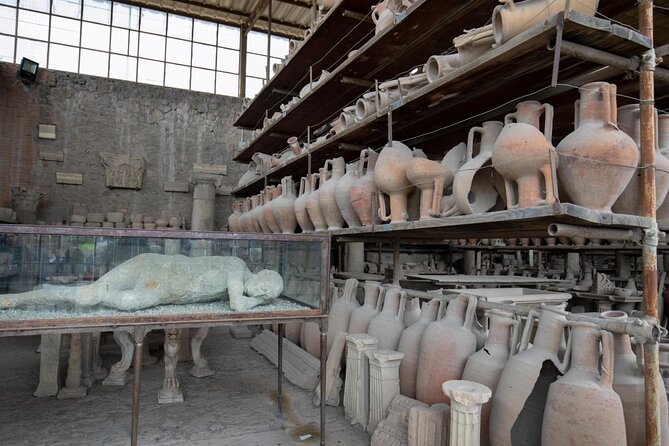
- Skip-the-line style entry to both Pompeii and Herculaneum, plus headsets while you walk.
- Two ruins, one day: the route is tight on purpose, so you see a lot without “wasted time.”
- Pompeii focus areas are specific: Porta Marina, Via dell’Abbondanza, Stabian Baths, the Lupanar, Odeon/Teatro Piccolo, and Teatro Grande.
- Herculaneum focus areas are different in feel: thermals, mosaics/frescos you can still see, and several preserved domus interiors.
- A scheduled break at Maximall Pompeii, with an included welcome kit and discount card.
- Group size max 20, which helps on crowded ground and for keeping track of everyone.
Which Pompeii ticket and guide? Compare a few more.
- From Naples: Pompeii Ruins & Mount Vesuvius Day Tour★ 4.3 · 11,459 reviews
- From Naples: Skip-the-line Pompeii – Small Group Tour★ 4.5 · 4,401 reviews
- Naples or Sorrento: Full-Day Pompeii and Mount Vesuvius Tour★ 4.6 · 4,235 reviews
- Pompeii & Mt.Vesuvius Day Tour from Naples with Pizza Lunch★ 4.0 · 2,901 reviews
Why combine Pompeii and Herculaneum on one day from Rome?

Pompeii and Herculaneum sit under the same ash story, but they don’t feel the same when you’re there. Pompeii is bigger and more chaotic—more streets, more volume, more “how do people live here?” questions. Herculaneum is smaller, and the preservation feels almost personal: you notice details you’d miss on a first pass.
Doing both in a single day works best when you want the contrast without committing to an overnight in Naples. The trade-off is time pressure. You’ll see key areas and a guided storyline, but you won’t have the freedom to roam for hours in the corners.
For most first-timers, that’s a fair deal. The tour is built around efficient movement: fast rail to Naples, then minibus transfers, then guided blocks on foot.
Rome Termini to Naples: the high-speed train that sets the tone
This is the backbone of the experience. You buy nothing at the last minute and you aren’t stuck coordinating trains on the day. Roundtrip high-speed tickets are included, and they’re sent to you one day before the tour so you can board independently from Roma Termini.
Here’s the practical part: the guide does not meet you at the Rome station. You simply travel, arrive in Naples, and then join the group on arrival. That keeps the day from turning into a chaotic “find the guide” scavenger hunt.
One tip that comes straight from real-world experience: there can be more than one Naples stop on the line, so double-check the arrival stop and make sure you’re on the right one before you get off. That small mistake can cost you time you don’t have.
Overall, this rail setup is what makes an 11.5-hour day feel manageable. You’re not wasting half a day just getting to the ruins.
Naples meet-up and transfers: less stress, smoother pacing
Once you arrive, the group meets near Starhotels Terminus at Piazza Giuseppe Garibaldi, directly across from Naples Central Station. That location matters because it’s easy to find and easy to reach again when you return later.
From there, you meet your local guide and the Askos Tours driver. Your driver handles the minibus transport to the archaeological sites, so you aren’t trying to navigate a parking lot situation or coordinate a series of buses.
If you’re coming with luggage: plan to store suitcases at the station or another luggage facility. Not all minivans have luggage space, and you don’t want to spend your limited day trip wrestling bags on narrow sidewalks.
Pompeii through the Porta Marina gateway: where the city’s story starts
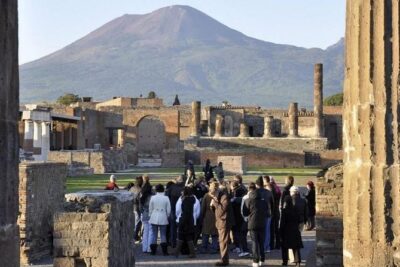
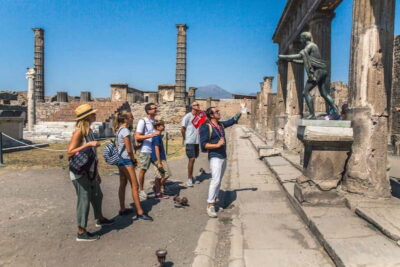
Pompeii is entered via Porta Marina, one of the major gateways. Starting here is smart because you’re placed immediately into the idea of Pompeii as a living city with movement, commerce, and social flow—not just a collection of stones.
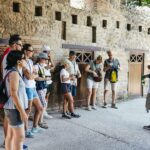
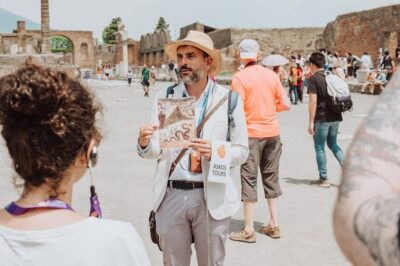
Once you’re in, your archaeologist guide leads the route with a mix of urban layout, daily life, and the eruption’s aftermath. Guides credited with strong performance include Michele and Alfredo, and the common thread is how they connect buildings to routine: where people gathered, how space was used, and why certain areas mattered.
Herculaneum keeps a few more tours worth your time

Via dell’Abbondanza and the everyday-city feel
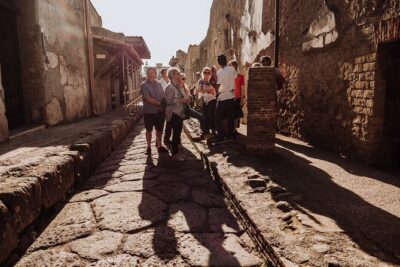
You walk along Via dell’Abbondanza, then move into standout stops like the House of Menander and the Granaries of the Forum. These aren’t random choices. The street gives you the rhythm of the city, the houses show wealth and household design, and the granaries ground the story in supply and economics.
This part is where the tour starts to feel more than “sights.” You begin to see Pompeii like a functional place—streets with purpose, buildings with jobs.
Stabian Baths and the city’s social side
Next up: Stabian Baths. Even if baths are just a “thing people did,” it’s a major clue to how Romans organized leisure and social life. It also helps you shift from houses and streets into public spaces.
The Lupanar (brothel) and blunt realism
You also stop at the Lupanar, Pompeii’s brothel (the itinerary calls it the brothel of Pompeii). This can be surprising, but it’s also one of the most revealing glimpses of how the city worked. You’ll get a sense that Pompeii wasn’t just pretty villas and temples—it had the full messy range of human behavior.
House of Faun, then theaters for scale
Then comes the House of the Faun, followed by two major performance spaces: Odeon/Teatro Piccolo and Teatro Grande. The theater stops give Pompeii scale and sound—places where a crowd would gather, where news and culture traveled fast.
If you’re wondering how the city kept a shared identity, the theaters are one of your answers. You can almost feel how a celebration or a public moment would ripple through the streets.
The Pompeii pacing reality: highlights vs a full Pompeii marathon
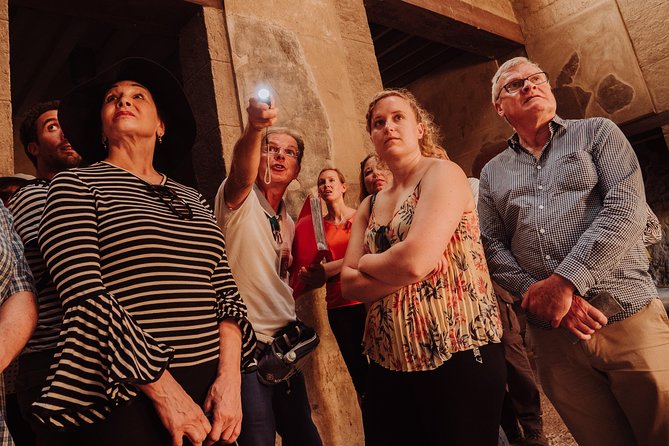
Pompeii is huge. Even with a guided route, you’ll be moving through a chosen slice. That’s the reason this tour is built around many short stops rather than one long “stay here for hours” approach.
One thing to watch: Pompeii has little shade, and it’s not the easiest terrain. If your legs or feet aren’t great with long walking on uneven ground, you should think hard about doing Pompeii and Herculaneum in the same day.
Also, keep up with the group. One review note flagged headsets cutting out when the guide got far ahead. If you consistently lag behind, you might lose some of the story thread.
MaxiMall Pompeii: a scheduled break with an included welcome kit
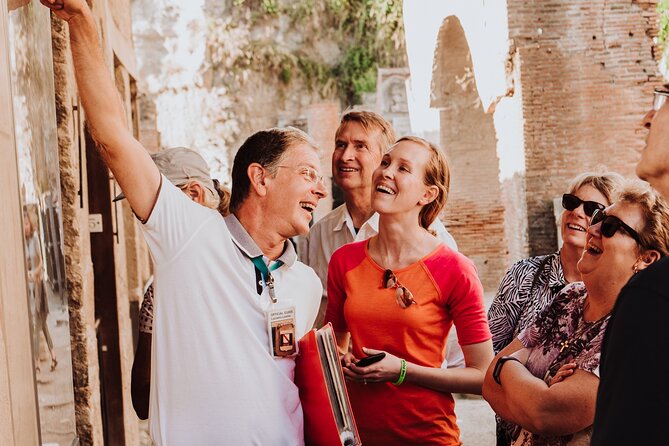
In the middle of the Pompeii portion, you get a stop at MaxiMall Pompeii, described as the largest shopping center in Southern Italy. It’s not random free time. It’s the tour’s designed reset.
You’ll receive an exclusive branded welcome kit plus a discount card that’s supposed to unlock special deals in stores. You’re free to shop (or not), but at minimum it’s a practical pause—use it to cool down and reset your brain before the Herculaneum shift.
Meals aren’t included, so if you want lunch, plan to buy it here. The break duration is set (about 50 minutes), which is enough for a quick snack, restroom stop, and a breather without losing your train rhythm.
Herculaneum’s archaeological park: smaller footprint, stronger preservation
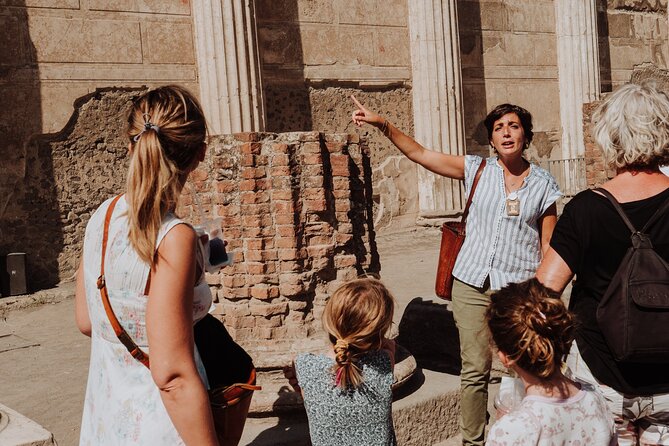
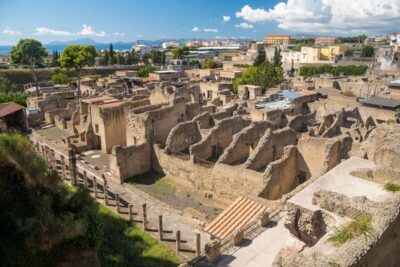
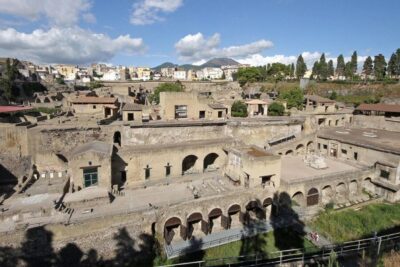
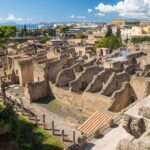
After Pompeii, you head to the Archaeological Park of Herculaneum for about two hours. This is where the mood changes. Herculaneum feels more compact and more readable, especially for the kind of stories your guide tells about daily life.
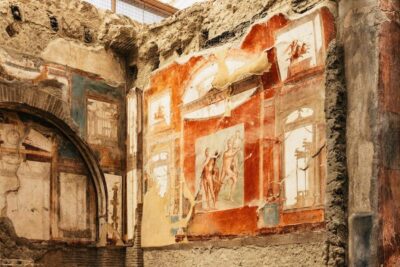
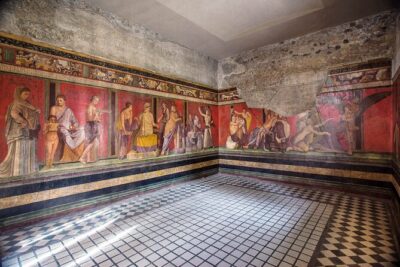
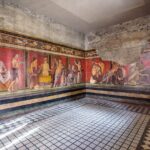
Many people love it here because frescoes and mosaics can still be seen. The tour’s Herculaneum route focuses on domus interiors and key preserved spaces, so you’re not just standing outside looking in.
House of Wooden Partition and the drama of interiors
Early in the Herculaneum visit, you see Partem Domus lignea (Casa del Tramezzo di Legno), the House of the Wooden Partition. This type of stop helps you understand how houses worked as a series of rooms rather than a single “building.”
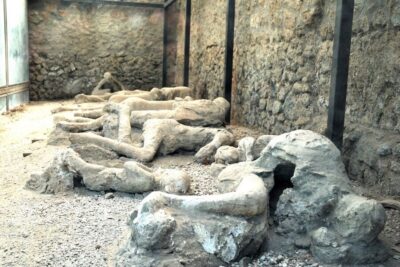
Then you move to the House of the Skeleton. It’s a heavy stop, but historically important. It’s where the tragedy story becomes immediate and human-sized.
Central Thermae: the thermal block that ties it together
Next is Central Thermae. Baths again, but in Herculaneum they feel different because the town scale is smaller and the preserved surfaces can be more striking.
If Pompeii gives you the big-city roar, the Herculaneum thermals bring you back to the routine of public life.
More houses: mosaics, courtyards, and portals you can picture
The tour continues through several labeled houses and features, including:
- Casa del Rilievo di Telefo (House of the Relief of Telephus)
- Casa Sannitica
- Casa del Bel Cortile (House of the Fine Courtyard)
- House of the Grand Portal
- House of the Black Salon (Salon of Nero)
These stops are short (often about 5 to 10 minutes each), but taken together they create a guided “tour through rooms.” The point is to help you build a mental map of Herculaneum as a place people lived, ate, relaxed, and received visitors.
If you like to understand why homes looked the way they did—layout, status cues, and how spaces functioned—this section delivers.
Listening tips: how to get the most from the archaeologist guide
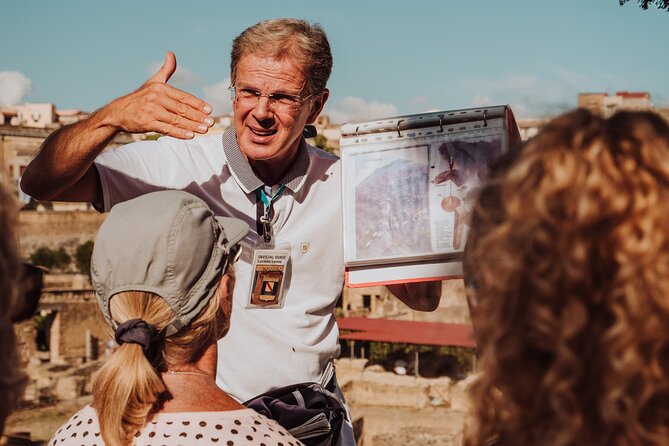
This tour stands or falls on its guidance. And the good news: the program emphasizes licensed archaeologist guidance in Pompeii and Herculaneum.
Guides named in feedback include Michele, Alfredo, Raphael, Bruno, Gennaro, Carmine, Paolo, and Roberta. Across them, what gets praised isn’t just facts—it’s the way they explain excavation and preservation, and the way they tell the eruption story without turning it into a lecture.
One more helpful pattern from strong guides: they balance specific details with a broader context. You’ll hear about daily life, yes, but also how the sites are studied and cared for today. One highlighted moment mentioned active restoration work, which is a great reminder that these ruins are not frozen in time—they’re still being uncovered and protected.
To make this work for you:
- Keep your pace with the group.
- Put your headset on immediately when you hear it’s time.
- If you have questions, ask early in a section rather than waiting for the last minute.
Value check: where your money actually goes
At $204.38 per person, you’re paying for more than two ruin entrances. The included list is doing real work for your day:
- Roundtrip high-speed train tickets between Rome and Naples (Roma Termini ↔ Roma Termini)
- Minibus transportation between Naples Central Station area and the sites
- Entrance fee tickets for Pompeii and Herculaneum
- Archaeologist guidance in both places
- Headsets
- The MaxiMall Pompeii welcome kit and discount card
For context, the provided adult ticket prices are listed as 16 euros for Herculaneum and 20 euros for Pompeii. Since entry fees are included, the tour cost isn’t just “paying for a guide.” It’s also bundling the travel friction.
What’s not included: meals and drinks, and personal expenses. So budget for lunch/snacks on your own.
This pricing tends to make sense if you value:
- fewer navigation headaches,
- a guided storyline,
- and an efficient day that still leaves you with something to remember.
If you already love independent travel and you’re comfortable planning rail + timed tickets yourself, you could compare. But the day-trip structure here is clearly meant to reduce wasted hours.
Who this tour fits best (and who should rethink it)
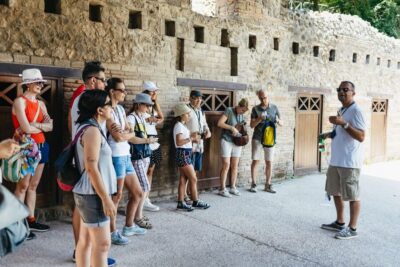
This is a strong match if you want a guided route through both ruins without spending your day figuring out bus schedules or ticket lines. The maximum of 20 travelers supports that group feeling—big enough to have energy, small enough that you can usually follow without losing the thread.
It’s also good for people who learn best from explanation while walking. The itinerary is packed with stop-by-stop highlights like Stabian Baths, the Lupanar, and multiple named Herculaneum houses. You don’t need to be a Roman-history expert.
Where you should rethink it:
- If you have mobility limits or need more time per stop, the pacing can feel demanding.
- One note says it’s not recommended for visually impaired guests unless accompanied by a dedicated personal assistant.
And if your ideal day is slow wandering with no pressure, you might find the “highlights in a day” approach frustrating. Pompeii especially can tempt you to keep going.
Practical tips for a smoother Pompeii and Herculaneum day
A few things I’d plan before you go:
- Wear walking shoes with grip. The sites are uneven and you’ll be on your feet a lot.
- Expect sun in Pompeii. Shade is limited, and heat can make the walking feel harder.
- Bring a valid ID/passport. It’s required by the tour info.
- Store suitcases if you’re traveling with luggage. Minibuses may not have room.
- Use the MaxiMall break wisely. Think restroom + a snack rather than “I’ll figure it out later.”
- If you’re sensitive to audio, stay close enough to keep your headset clear. One review noted cutouts when the guide moved ahead.
Also, note the tour runs roughly 11 hours 30 minutes. That’s a long day. It’s not a quick hit.
Should you book this Pompeii and Herculaneum guided tour from Rome?
I’d book it if you want an efficient, guided day that gives you the biggest emotional and visual payoff from both sites—without spending hours planning trains, transfers, and timed entries. The headsets, archaeologist leadership, and included rail are the reasons this works as a Rome-to-Naples day trip.
I’d skip it (or choose a different format) if your top priority is a slow, unhurried Pompeii experience or if your legs need a lighter day. Pompeii in particular can be tough with limited shade.
If you’re the type who likes to come home with a story in your head—streets, homes, baths, theaters, and the tragedy behind the ash—this tour is a strong bet. Just go in knowing it’s highlights with a schedule, not a relaxed free-for-all.
FAQ
How do I get from Rome to Naples for this tour?
You travel independently from Rome Termini on the included high-speed train. Your train tickets are sent to you one day before the tour, and the guide meets the group after arrival in Naples.
Where do we meet in Naples?
The meeting point in Naples is Piazza Giuseppe Garibaldi, Starhotels Terminus, near Naples Central Station.
Is entry to Pompeii and Herculaneum included?
Yes. The tour includes entrance tickets for Pompeii and Herculaneum. The provided adult ticket prices are 20 euros for Pompeii and 16 euros for Herculaneum.
Will there be an archaeologist guide?
Yes. You’ll have guidance in Pompeii and Herculaneum by an Archaeologist, and headsets are included.
What should I plan for in terms of walking?
Expect a lot of walking across both sites. Pompeii has limited shade, and the day is physically demanding for many people because you move from area to area on foot.
Are meals included?
No. Meals and drinks are not included, so you’ll need to plan food on your own during the day.
Is it easy to cancel?
Free cancellation is available up to 24 hours in advance for a full refund. If you cancel less than 24 hours before, the amount you paid is not refunded.
More Tour Reviews in Naples



Herculaneum, a Few More Tours


More Pompeii Tours to Compare

More Naples tours, freshly reviewed




Pompeii Tours, compared.
 ★ 4.8Pompeii: Entry Ticket and Guided Tour with an ArchaeologistFrom $3519,459 reviews
 ★ 4.1Pompeii: Entry Ticket with Audio GuideFrom $4013,491 reviews
 ★ 4.8Pompeii: Small Group Tour with an ArchaeologistFrom $4012,264 reviews
 ★ 4.3Pompeii Ruins & Mount Vesuvius Day TourFrom $12011,459 reviews
★ 5.0Pompeii Small Group Tour with an ArchaeologistFrom $356,593 reviews
★ 4.3Pompeii Ruins & Mount Vesuvius Day TourFrom $12011,459 reviews
★ 5.0Pompeii Small Group Tour with an ArchaeologistFrom $356,593 reviews
 ★ 4.5Skip-the-line Pompeii – Small Group TourFrom $544,401 reviews
 ★ 4.6Naples or Sorrento: Full-Day Pompeii and Mount Vesuvius TourFrom $1044,235 reviews
 ★ 3.9Pompeii: Skip-the-line Entry Ticket with Audio Guide & MapFrom $433,153 reviews
Browse the lists this tour appears in