
Review · POMPEII TOURS
Pompeii Archaeological Area Entrance Ticket
Ash and streets still hit you fast. This Pompeii entrance ticket is a smart way to see a huge UNESCO site without being stuck on a schedule, and it gives you independent time to wander. I like that you can target the big sights—especially the Theatre, Forum, and the Lupanare—while still having flexibility to detour into side streets, homes, and shop remains.
The only real catch is the practical one: the experience is marketed as skipping long lines, but in the real world you may still face some ticket booth friction at the start. I’d plan extra buffer time so you do not lose precious hours when you could be walking through the ruins.
In This Review
- Key things to know before you go
- What Your Timed Entry Ticket Really Does (Self-Guided, Not Guided)
- Where You’ll Start Matters: Picking an Entrance Zone
- Porta Marina: Walls, Temple of Apollo, Basilica, and the City’s Public Face
- Piazza Esedra: Forum Baths, Homes, Shops, and a Full Snapshot of Daily Life
- Piazza Anfiteatro: Necropolis, Theatre Options, Temples, and the Amphitheater Area
- The Stops You’ll Want to Prioritize: Forum, Theatre, and the Lupanare
- The Forum
- The Theatre and other performance spaces
- The Lupanare (Pompeii’s two-story brothel) and its frescoes
- Victim casts and the street-level feeling
- Timing: Why 2 to 3 Hours Can Feel Short
- Entry and Getting Inside: Skip-the-Line Claims vs Real-World Bottlenecks
- Rules That Keep You Safe (and Keep the Ruins Intact)
- Where to rest
- Who This Self-Guided Ticket Fits Best
- Should You Book This Pompeii Entrance Ticket?
- FAQ
- FAQ
- What is included with the Pompeii Archaeological Area Entrance Ticket?
- How long does the Pompeii visit last?
- How do I enter on the day of my visit?
- Do I get a guided tour included?
- What are the opening hours for the entrance times?
- Can I use this voucher to access the museum?
- Is there a route map available once I arrive?
- Where should visitors with limited mobility enter?
- Are bags and umbrellas allowed?
- Can I take photos or film?
Key things to know before you go
- Timed entry windows let you choose when you start, instead of showing up and waiting in chaos.
- A route map inside the gate helps you pick a circuit fast, especially because Pompeii covers 66 hectares.
- Top stops are all within a walkable network: Theatre, Forum, and the Lupanare brothel frescoes.
- You can shape the visit by picking an entrance zone (Porta Marina, Piazza Esedra, or Piazza Anfiteatro).
- You’re walking an outdoor archaeological site with uneven surfaces and fragile areas to respect.
- Bag storage and rules matter if you want an easy entry and a smoother day on your feet.
Which Pompeii ticket and guide? Compare a few more.
- Pompeii Small Group Tour with an Archaeologist★ 5.0 · 6,593 reviews
- Discover the Ancient Ruins of Pompeii: Day Trip from Rome★ 3.5 · 2,247 reviews
- Pompeii and Herculaneum Small Group Tour with an Archaeologist★ 5.0 · 1,350 reviews
- Skip the Line Guided Tour of Pompeii led by an Archaeologist★ 5.0 · 703 reviews
What Your Timed Entry Ticket Really Does (Self-Guided, Not Guided)
This ticket is an entrance ticket to the Pompeii Archaeological Area, not a guided tour. On the day you go on your own to the site, show your pre-booked ticket to get in, and then explore as you wish once you’re inside.
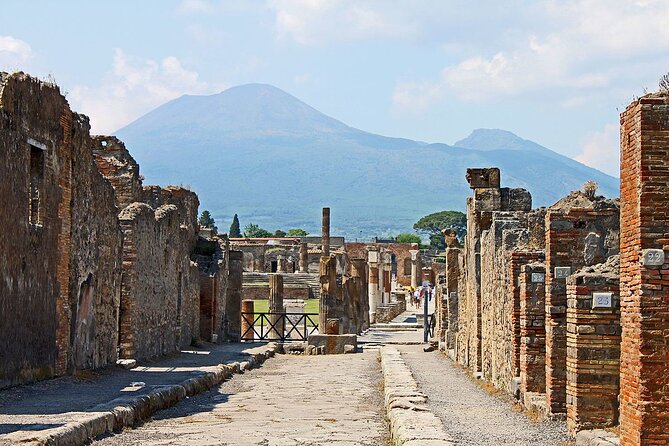
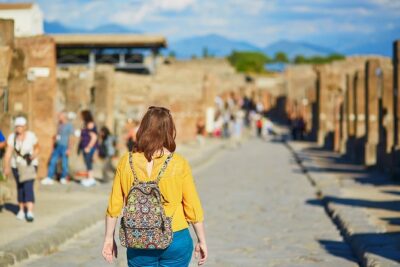
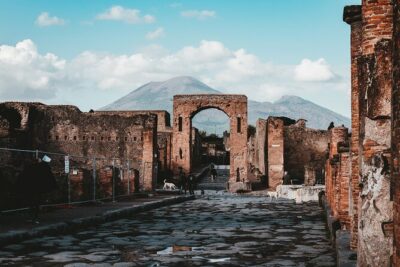
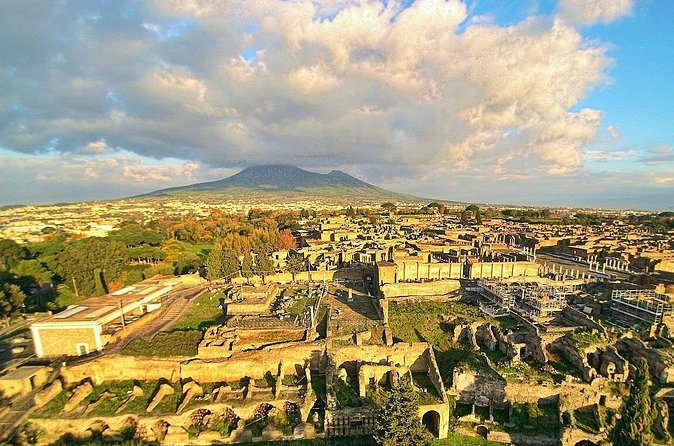
You’ll get the freedom to set your own pace on the stone-paved streets and through the buildings sealed by ash from Mt. Vesuvius in 79 AD. Pompeii covers about 66 hectares (163 acres), and it’s UNESCO-listed for a reason: the eruption preserved a whole city’s layout—streets, houses, shops, public buildings—so you can understand daily life instead of just seeing isolated ruins.
One important clarification: the voucher is for the archaeological area entry. The instructions specifically say do not use this voucher to gain access to the museum, so make sure you’re going to the right place at the right checkpoint.
Where You’ll Start Matters: Picking an Entrance Zone
Pompeii is enormous, so you’ll enjoy the day more if you start with a plan. The site is often approached from different entrance areas, and each side leads you through a different “slice” of the city.
If you like a simple approach, think in circuits. You enter from one of the main areas, hit a set of highlights and surrounding neighborhoods, then work your way toward the other zones at a comfortable pace.
Why this helps: you avoid backtracking, and you get to experience the city layout like you’re moving through it—not zigzagging across the site like a tired GPS.
Porta Marina: Walls, Temple of Apollo, Basilica, and the City’s Public Face
Starting from Porta Marina, you step into the kind of grand, civic Pompeii that sets the tone for everything else. This area connects you to the city’s defensive walls and lets you see the public architecture up close.
From this entrance zone, you can work through highlights such as:
- Porta Marina and walls, including the scale of the city’s fortifications
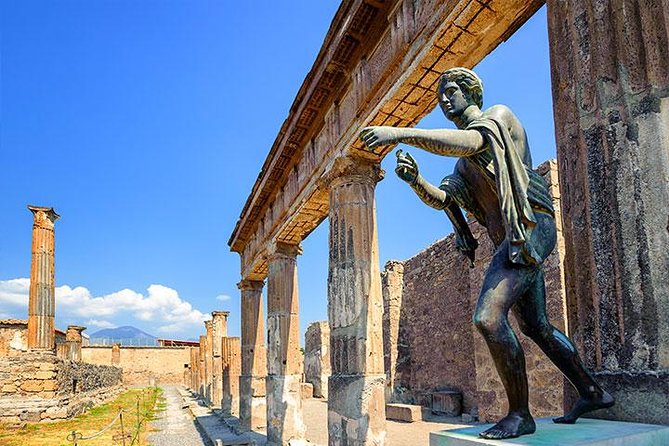
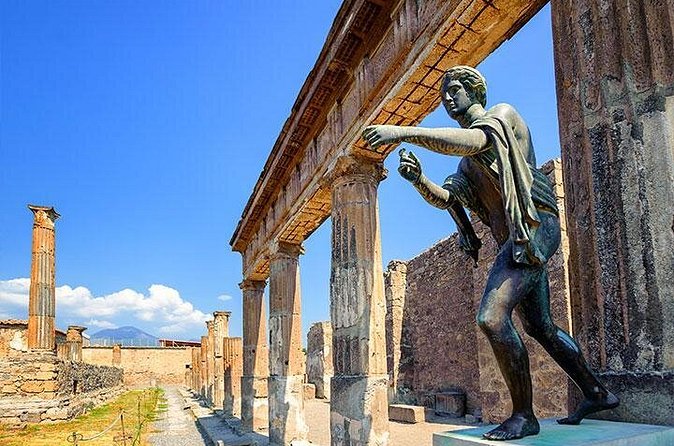
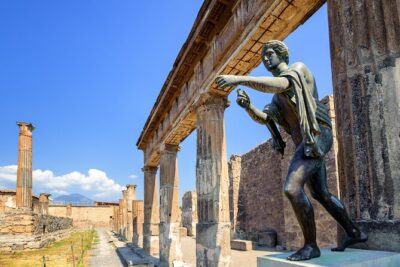
- Temple of Apollo, a major religious site
- Basilica, a key public space
- Public Administration Buildings (where you start thinking about how the city was organized)
- Building of Eumachia, another striking stop that reinforces how “public” Pompeii really was
What I like about this circuit: it makes Pompeii feel like a functioning place. Religious structures, civic halls, and administrative buildings help you understand why the streets and neighborhoods were arranged the way they were.
Watch-outs: this is still walking outdoors, so wear comfortable shoes with flat soles (recommended), and give yourself time for the small pauses when you want to take in details.
Piazza Esedra: Forum Baths, Homes, Shops, and a Full Snapshot of Daily Life
If you want the “people” Pompeii—the streets, homes, and everyday services—then aim for the Piazza Esedra side. This is where the ruins start to feel lived-in, because you’re moving past domestic spaces and commercial leftovers right alongside major public buildings.
This circuit includes a strong set of stops, including:
- Forum Baths, a powerful reminder that daily routines involved shared public spaces
- Temple of Fortuna Augusta
- House of Pansa and the House of the Tragic Poet, both tied to major residential Pompeii
- Thermopolium, a place for buying hot food
- House of the Faun, plus other notable residences like House of Cecilio Giocondo and House of Citharist
- Fullonica Stephanus, which relates to cloth-laundering (a detail that makes the city’s economy feel concrete)
You’ll also pass through residential areas and see the kind of architectural “storytelling” Pompeii is famous for: courtyards, street-level shop spaces, and the layout between work, home, and worship.
Why this matters for value: if you only hit the headline sights (Forum and Theatre), you still get a lot. But this side helps you understand what those sights meant in everyday terms.
Possible drawback: it’s easy to get slowed down by the sheer number of doorways and room layouts. Pompeii doesn’t just have monuments; it has a thousand little anchors you’ll want to look at.
Other tickets and entries for Pompeii



Piazza Anfiteatro: Necropolis, Theatre Options, Temples, and the Amphitheater Area
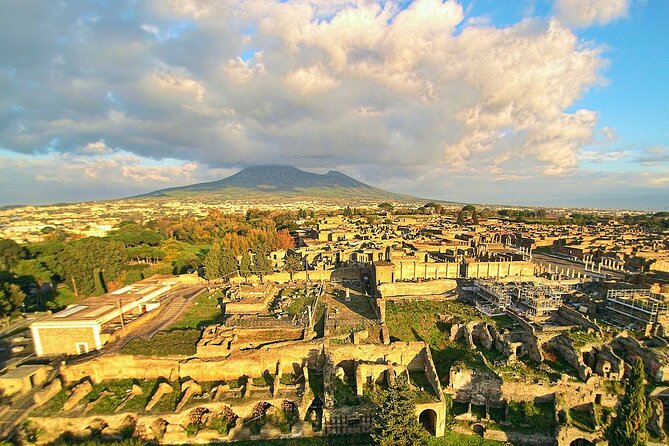
The Piazza Anfiteatro entrance area is a great choice if you want big visual structures and a clear line of sight to major ruins. It also matters for visitors with limited mobility: the guidance says people with limited mobility are advised to enter from Piazza Anfiteatro and limit the visit to the surroundings of the amphitheater.
From this side, you can hit:
- Necropolis of Porta Nocera and Porta Nocera and walls
- Garden of the Fugitives
- House of the Garden of Hercules, plus other residences like House of Octavius Quartio and House of Venus in the shell
- Amphitheater, along with the Small Theater (Odeion) and Great Theater
- Temple of Isis
- Triangular Forum and Doric Temple
- A repeat listing of Fullonica Stephanus, which shows how many points connect across the site
What I like here: the big theaters and amphitheater-style spaces give you a sense of spectacle and community. Pompeii wasn’t just a set of homes; it had venues where people gathered.
Practical note: if you’re trying to keep the day comfortable, this is also one of the easiest places to define what you want to see and what you’re skipping.
The Stops You’ll Want to Prioritize: Forum, Theatre, and the Lupanare
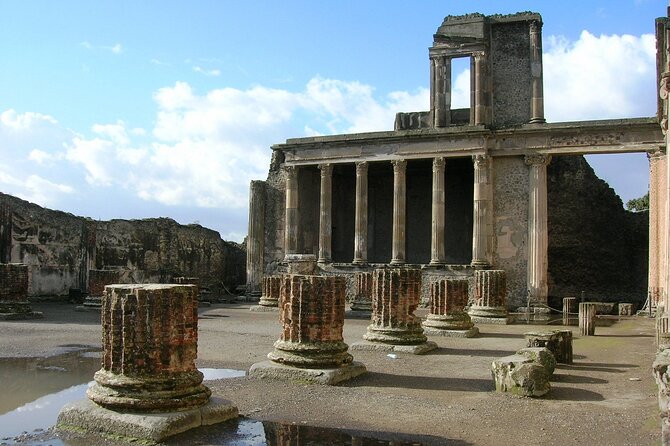
Across Pompeii, a few highlights pull you back in time fast. If you’re trying to choose what to see first, these are the ones that most strongly shape the experience.
The Forum
The Forum is where Pompeii feels like a public stage. It’s a central node, and seeing it helps you connect the roads and civic buildings you’ve already passed.
The Theatre and other performance spaces
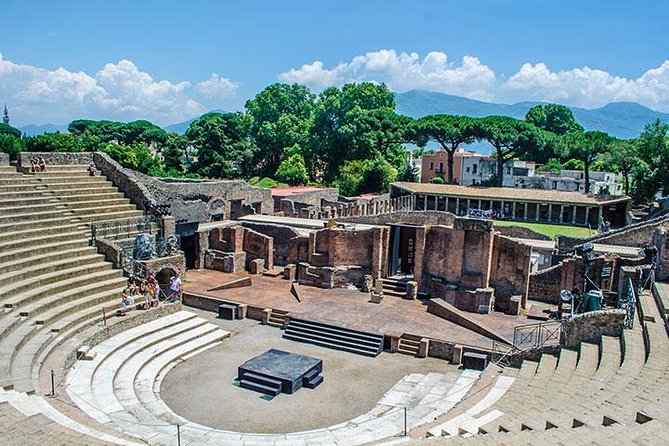
The Theatre and other performance structures (like the Great Theatre and the Odeion) show how entertainment worked in the city. Even if you don’t know the details, the scale and design make it easy to picture a crowd.
The Lupanare (Pompeii’s two-story brothel) and its frescoes
The Lupanare is one of the most talked-about stops for a reason: it’s a two-story building known as Pompeii’s brothel, and its walls still carry erotic frescoes. It’s not a “make-believe” attraction. It’s a real surviving space, so plan a respectful visit.
Victim casts and the street-level feeling
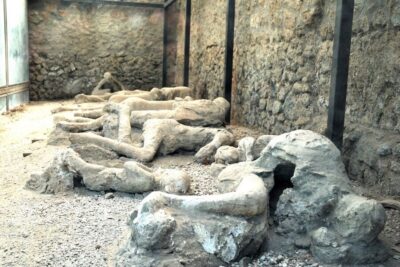
Pompeii also includes the casts of victims’ bodies, which are chilling in a way that doesn’t need extra explanation. Standing near them changes how you read the streets: you stop seeing a city model and start thinking about what happened in real time.
A useful mindset: treat the casts and the major public spaces as bookends. Public life on one end, human loss on the other. Your understanding grows as you move between them.
Timing: Why 2 to 3 Hours Can Feel Short
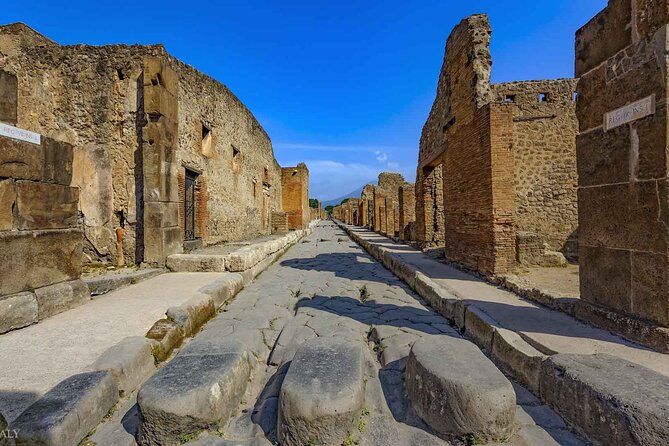
The ticket experience is listed at 2 to 3 hours for an approximate visit. That can work if you move fast and pick a tight route.
But Pompeii covers an enormous area and contains far more than you can fit in a short sprint. A realistic approach is to start with your priorities, then accept that you might take longer if you’re actually looking at details.
Heat is also a factor. The more time you spend walking between corners and across open areas, the more you’ll feel it. That’s why I’d rather you plan a comfortable pace than chase a checklist.
My suggestion: choose one main circuit (Porta Marina or Piazza Esedra or Piazza Anfiteatro), then add only 1-2 “stretch” stops if you still have energy. That keeps Pompeii from turning into a blur.
Entry and Getting Inside: Skip-the-Line Claims vs Real-World Bottlenecks
The ticket description says it’s guaranteed to skip long lines, and it’s set up for timed entry. On paper, that’s great: you show your pre-booked ticket, head inside, and start walking.
In reality, the start of the day is where things can go wrong with any timed voucher setup. If a kiosk exchange is required, or if ticket recognition is slow, you can lose the very time you paid for.
So I’d treat this like a day where your first 20 to 30 minutes matter:
- Keep your confirmation ready on your phone.
- Give yourself buffer time before your chosen entrance slot.
- If signage is confusing (and it can be), be willing to stop, reassess, and use a map.
Also note: there’s no handholding in the form of hotel pickup. You need to make your own way to the archaeological area, which is stated to be near public transportation.
Rules That Keep You Safe (and Keep the Ruins Intact)
Pompeii is fragile, and the rules are there for a reason. If you follow them, you’ll likely have a smoother visit and you’ll help protect what you came to see.
Key guidance includes:
- Do not stop on the edges of excavations and do not climb on walls
- Be respectful: no shouting, writing on ruins, or littering
- Photography and filming are authorized for private use only
- For tripods, flash, artificial light, or commercial uses, you must contact the Office of the Superintendent
- Leave bulky items: the instructions say bags, backpacks, umbrellas, and other bulky items should be left at the wardrobe
- No smoking
Shoes matter too. Flat soles are recommended, which is smart on uneven surfaces. And there’s an unusual but real note: there may be stray dogs that have passed perimeter defenses. The advice is to stay away and be careful.
Where to rest
There’s a picnic area near Porta Nola, which is handy when you’re trying to keep the day flexible without turning it into a food chase.
Who This Self-Guided Ticket Fits Best
This experience is best for you if you like a “pick your path” approach. It works well when you want to spend time at your own pace among houses, streets, and buildings buried by ash, and when you want to decide how long you linger on the Forum, Theatre, or Lupanare.
It’s also a good fit if you don’t need a guide to tell you what you’re seeing. The ticket is built for independent exploration, and Pompeii is one of those places where looking matters more than listening.
It might not be ideal if you want someone to narrate the layers of history from start to finish, because a guided tour isn’t included.
And if you have limited mobility, the guidance is clear: enter from Piazza Anfiteatro and limit your visit to the surroundings of the amphitheater.
Should You Book This Pompeii Entrance Ticket?
I’d book it if you want Pompeii at a price point that lets you control your time, and you’re comfortable with a self-guided plan. Getting inside without a big ticket-line ordeal is the main value, and the lineup of major sights you can cover makes the ticket feel efficient.
But I’d also book with your eyes open. The day starts with a ticket checkpoint, and if your voucher needs exchange or isn’t instantly recognized, you can lose time. Bring your confirmation, arrive with buffer time, and don’t plan a super tight schedule afterward.
If you need zero uncertainty or you want expert storytelling, you may prefer a guided tour option instead, since this one is designed for independent wandering.
FAQ
FAQ
What is included with the Pompeii Archaeological Area Entrance Ticket?
Your ticket includes entrance to the Pompeii archaeological site so you can explore the ruins independently.
How long does the Pompeii visit last?
The experience is listed as 2 to 3 hours (approx.).
How do I enter on the day of my visit?
Book your preferred entrance time, then on the day go to the archaeological site and show your pre-booked ticket to bypass ticket lines and enter.
Do I get a guided tour included?
No. A guided tour is not included. You explore on your own after entry.
What are the opening hours for the entrance times?
For the period 10/27/2025 – 01/26/2027, entrance times are Monday to Sunday: 9:00 AM – 1:00 PM.
Can I use this voucher to access the museum?
No. The instructions say: please do not use this voucher to gain access to the museum.
Is there a route map available once I arrive?
Yes. You can collect a complimentary map inside the gate with recommended routes around the ruins.
Where should visitors with limited mobility enter?
The guidance says people with limited mobility are advised to enter from Piazza Anfiteatro and limit their visit to the surroundings of the amphitheater.
Are bags and umbrellas allowed?
No bulky items should be brought into the site area. The instructions say to leave bags, backpacks, umbrellas, and other bulky items at the wardrobe.
Can I take photos or film?
Photography and filming are authorized for private use only. For tripod use, flash, artificial light, or commercial/other uses, you must contact the Office of the Superintendent.
More Tickets and Entries in Pompeii





More Tour Reviews in Pompeii




More Pompeii Tours to Compare
More Pompeii tours, freshly reviewed



Pompeii Tours, compared.
 ★ 4.8Pompeii: Entry Ticket and Guided Tour with an ArchaeologistFrom $3519,459 reviews
 ★ 4.1Pompeii: Entry Ticket with Audio GuideFrom $4013,491 reviews
 ★ 4.8Pompeii: Small Group Tour with an ArchaeologistFrom $4012,264 reviews
 ★ 4.3Pompeii Ruins & Mount Vesuvius Day TourFrom $12011,459 reviews
★ 5.0Pompeii Small Group Tour with an ArchaeologistFrom $356,593 reviews
★ 4.3Pompeii Ruins & Mount Vesuvius Day TourFrom $12011,459 reviews
★ 5.0Pompeii Small Group Tour with an ArchaeologistFrom $356,593 reviews
 ★ 4.5Skip-the-line Pompeii – Small Group TourFrom $544,401 reviews
 ★ 4.6Naples or Sorrento: Full-Day Pompeii and Mount Vesuvius TourFrom $1044,235 reviews
 ★ 3.9Pompeii: Skip-the-line Entry Ticket with Audio Guide & MapFrom $433,153 reviews