
Review · POMPEII TOURS
Pompeii and Herculaneum Small-Group with an Expert Archaeologist
Two Roman towns, one crater, zero guesswork. This small-group day pairs an expert archaeologist with timed stops, so you get the big Pompeii moments and the surprisingly well-preserved corners of Herculaneum in one go.
I love that admission tickets are included, so you use a mobile ticket and spend less time waiting at entrances. I also like the pacing: a guided walk through Pompeii (about two and a half hours) followed by a guided, two-hour look at Herculaneum.
The trade-off is time: many places get around 10 minutes, so you’ll have to choose where you want to slow down on your own.
In This Review
- Quick hits before you go
- Pompeii and Herculaneum in one long day: what you’re really buying
- The expert archaeologist effect: timed stops that still feel meaningful
- Pompeii stop-by-stop: theatres, frescoes, and the layout of Roman daily life
- Archaeological Park of Pompeii: your orientation in a city made of layers
- Odeon (Teatro Piccolo): the small theatre that teaches you about performance
- Teatro Grande: the main theatre and why it matters
- House of Menander: wealth you can read in decoration and layout
- Stabian Baths (Terme Stabiane): the oldest thermal complex stop
- The brothel of Pompeii: famous for a reason, handled with context
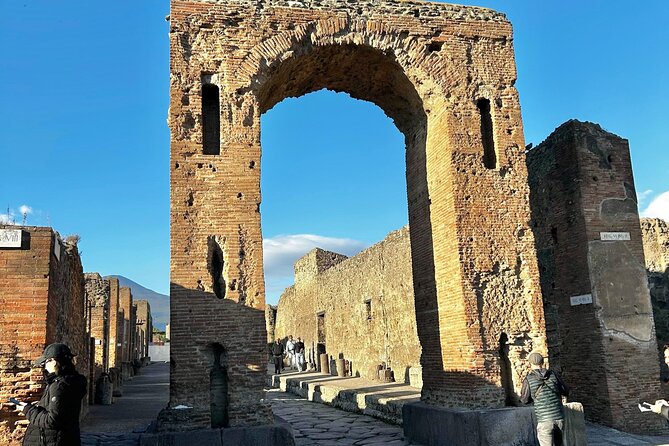
- Via dell’Abbondanza: the street that makes the city feel real
- House of the Faun: big house energy in Pompeii
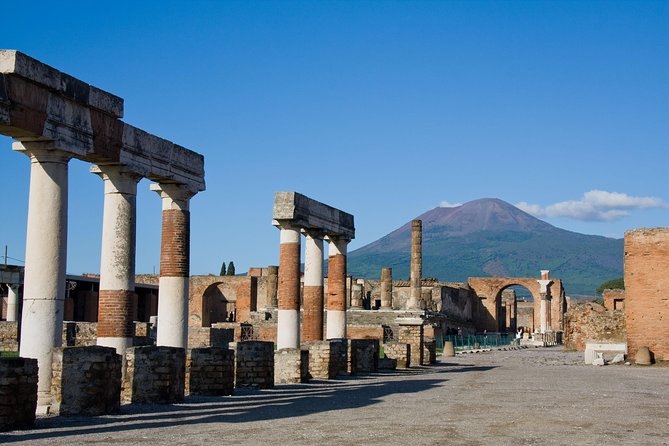
- Foro de Pompeya and Basilica: the civic core
- The Pompeii-to-Herculaneum transition: what to do with the lunch break
- Herculaneum Highlights: why it feels more intimate than Pompeii
- House of the Deer: a name tied to marble statues
- La Terrazza di M. Nonio Balbo: a benefactor you can read in stone
- College of the Augustales: emperor-cult space and civic religion
- Casa del Rilievo di Telefo: a house with unusual access
- Partem Domus lignea – Casa del Tramezzo di Legno: preserved wood in a surviving structure
- House of the Skeleton: a name from a find in 1831
- Central Thermae: separate entrances for men and women
- Casa Sannitica and Casa del Bel Cortile: different styles of everyday domestic space
- House of the Grand Portal: charred wood and large-scale layout
- How to get the most out of stops that last 10 minutes
- Value and inclusions: what’s covered, what’s on you
- Group size, guide style, and the small comforts that matter
- Who this Pompeii and Herculaneum tour fits best
- Should you book this Pompeii and Herculaneum tour?
- FAQ
- How long is the Pompeii and Herculaneum small-group tour?
- What is the price per person?
- Is the tour guided?
- Are admission tickets included?
- What languages is the tour offered in?
- Does this tour include transportation?
- Do meals cost extra?
- How large is the group?
- Can children enter for free?
Quick hits before you go
- Small group size (max 21) keeps the day social but not chaotic.
- Tickets included at both sites mean fewer lines and less coordinating.
- Pompeii highlights in about 2.5 hours gives you a strong first pass at the city layout.
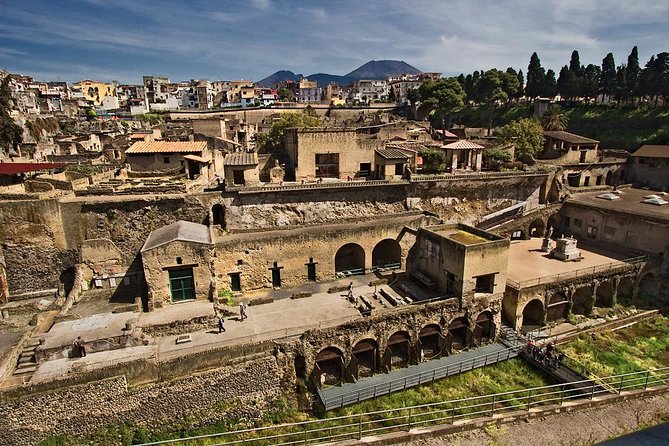
- Herculaneum’s preservation feels personal, with wooden structures, mosaics, and everyday objects.
- Old thermal complexes and baths show Roman life beyond the forum and streets.
- Wood-focused stop at Herculaneum connects directly to how parts of the town survived.
Which Pompeii ticket and guide? Compare a few more.
- Pompeii Small Group Tour with an Archaeologist★ 5.0 · 6,593 reviews
- Discover the Ancient Ruins of Pompeii: Day Trip from Rome★ 3.5 · 2,247 reviews
- Pompeii and Herculaneum Small Group Tour with an Archaeologist★ 5.0 · 1,350 reviews
- Skip the Line Guided Tour of Pompeii led by an Archaeologist★ 5.0 · 703 reviews
Pompeii and Herculaneum in one long day: what you’re really buying
This is a classic “two sites, one day” archaeology route. The value isn’t that you see absolutely everything. It’s that you see the most informative places with an expert guiding you, while transportation and entry are handled for you.
You’ll start in Pompeii at the Archaeological Park. You’ll move through a sequence of theatres, houses, baths, and street-life stops, then transfer to Herculaneum for a more intimate, better-preserved experience. The whole day runs roughly 6 to 11 hours, depending on how long you spend at each stop and how the flow works at the parks.
At $78.31 per person, the price makes sense mainly because the day includes both guided visits and entry tickets—plus round-trip transportation options tied to Naples and Sorrento. In other words, you’re not just paying for a walk; you’re paying to have the “how to make sense of it all” part taken care of.
The expert archaeologist effect: timed stops that still feel meaningful
One of the best parts of a small-group site tour is that the guide’s job is interpretation, not sprinting. Here, the schedule uses shorter segments (many around 10–15 minutes) to hit a lot of the park without turning the day into one long shuffle.
In Pompeii, the guided focus is about two and a half hours, which matters. Pompeii is huge, and going in blind can turn it into walls and pavement. With a guide, you get the “why this matters” layer: how spaces function, what objects and architectural choices signal, and how the city’s story comes together after the eruption in 79 AD.
The same idea carries into Herculaneum. You get a guided visit of about two hours, and that time is designed to help you notice what survived. This town can feel smaller, but it often reads more vividly because so many elements of daily life are preserved.
Pompeii stop-by-stop: theatres, frescoes, and the layout of Roman daily life
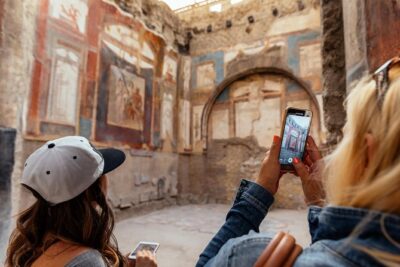
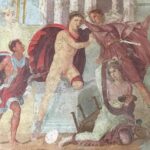
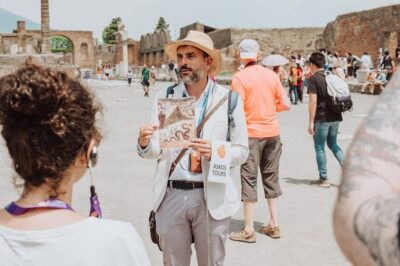
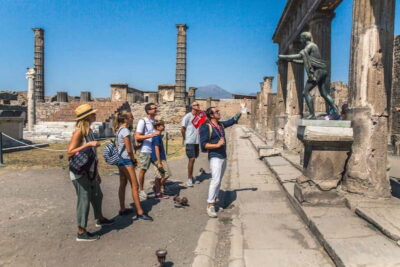
Pompeii is where the big drama is. Not in the Hollywood sense—more in the sense that you’re walking through a real Roman city frozen at the moment of disaster. The tour starts at the Archaeological Park of Pompeii, where you’ll spend time in the most famous areas, including fresco-focused moments.
Archaeological Park of Pompeii: your orientation in a city made of layers
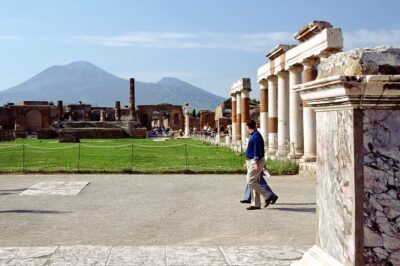
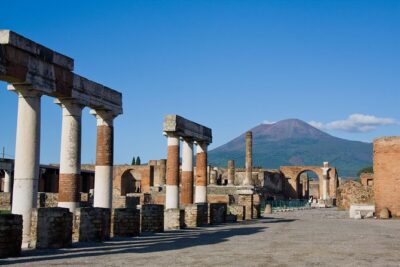
This first stop is where the guide helps you build a mental map. You get a guided look at the most famous areas and frescoes, with the big-picture context of an ancient city preserved by the eruption of Mount Vesuvius.
Practical tip: if you like photos, this is your first chance to set your style—wide shots for city layout, then close-ups later. Early on, it’s easy to get overwhelmed, so you’ll want to learn the city’s rhythm first.
Herculaneum keeps a few more tours worth your time

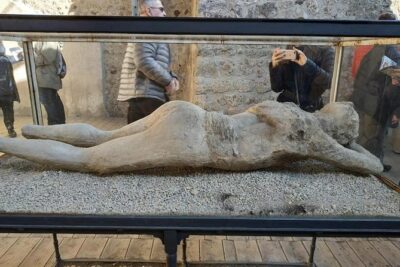
Odeon (Teatro Piccolo): the small theatre that teaches you about performance
Next is the Odeon / Teatro Piccolo. It’s a short stop, but that’s part of why it’s useful: it gives you a quick sense of Pompeii’s performance culture without eating your whole day.
Think of it as a contrast stop. You’re not just seeing one theatre type; you’re learning the range of spaces people used for events.
Teatro Grande: the main theatre and why it matters
Then you move to the Teatro Grande, described as the most important theatre in Pompeii. Again, it’s brief, but it gives you a core landmark: a public structure tied to civic life.
If you’re interested in how Romans used public buildings, this short stop helps you connect architecture to community routines.
House of Menander: wealth you can read in decoration and layout
The House of Menander is one of the richest and most magnificent homes in Pompeii, especially in terms of architecture, decoration, and contents. This is a great stop if you want to see what elite domestic life looked like when the city was still alive.
Stabian Baths (Terme Stabiane): the oldest thermal complex stop
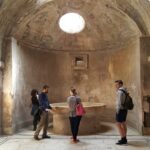
The Stabian Baths cover a vast area and are highlighted as the oldest thermal complex in the city. This stop is a reminder that Roman life wasn’t just about statues and big public squares; it was also daily routine—heat, water, conversation, and social time.
The guide places it in the city’s web of key roads and crossroads, which helps you understand why baths were central, not fringe.
The brothel of Pompeii: famous for a reason, handled with context
You’ll also visit the brothel of Pompeii, described as the most famous brothel in the ruined city. You’re not going to get a voyeur-style walkthrough if the guide is doing the job properly—this kind of site works best when it’s explained as part of urban life and social systems, not just shock value.
Via dell’Abbondanza: the street that makes the city feel real
After those buildings, you’ll see Via dell’Abbondanza. When a tour includes a street in the middle of the itinerary, it usually means you’re being shown more than objects—you’re being shown movement through the city.
On days like this, streets can be the difference between seeing locations and understanding the place.
House of the Faun: big house energy in Pompeii
The House of the Faun is described as one of the largest and most impressive private residences in Pompeii. This stop works well if you want a clear visual of domestic scale—how a wealthy home could function like a mini-world inside the city.
Foro de Pompeya and Basilica: the civic core
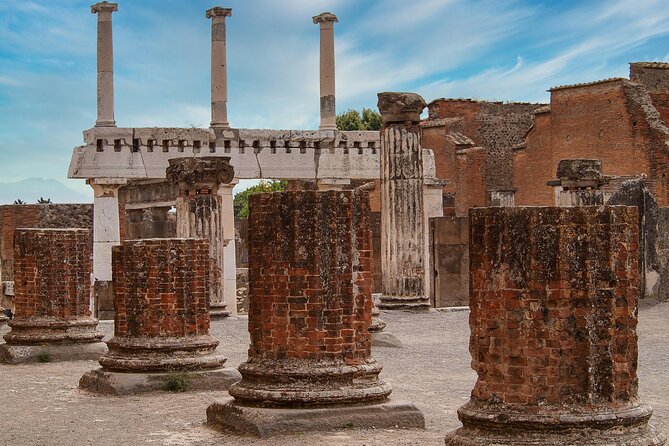
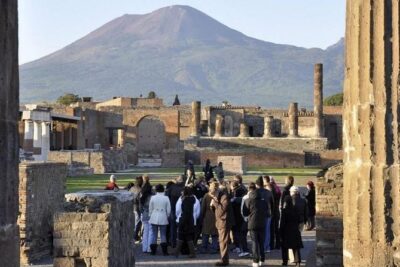
Then you reach Foro de Pompeya, the ancient main square. Right after, you’ll visit the Basilica, described as an open portico that sheltered merchants and other activities.
This pairing is smart. The forum is where you think of public power and gatherings. The basilica explains the everyday economy running underneath it—where people handled transactions, met, and kept city life moving.
The Pompeii-to-Herculaneum transition: what to do with the lunch break
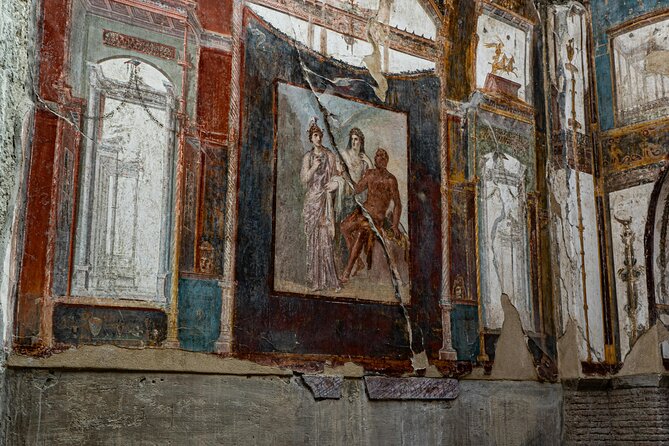
Before you transfer, there’s a quick lunch break available before the transfer (own expense). This matters because both parks require walking and reading, and you don’t want to arrive at Herculaneum hungry and distracted.
If you’re planning ahead, I’d keep your lunch simple so you can get back on your feet fast. Your day is long enough that heavy food can slow you down.
Herculaneum Highlights: why it feels more intimate than Pompeii
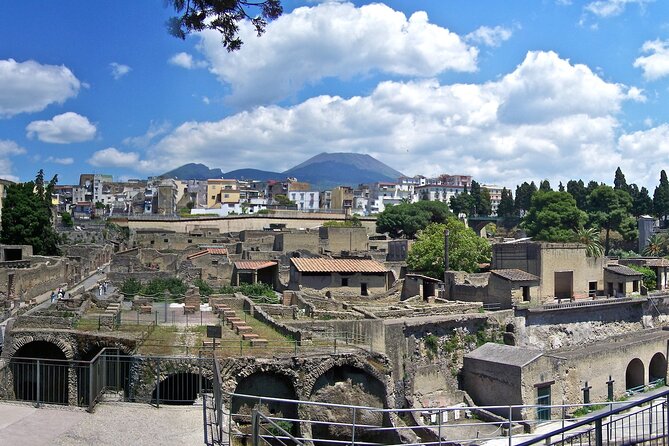
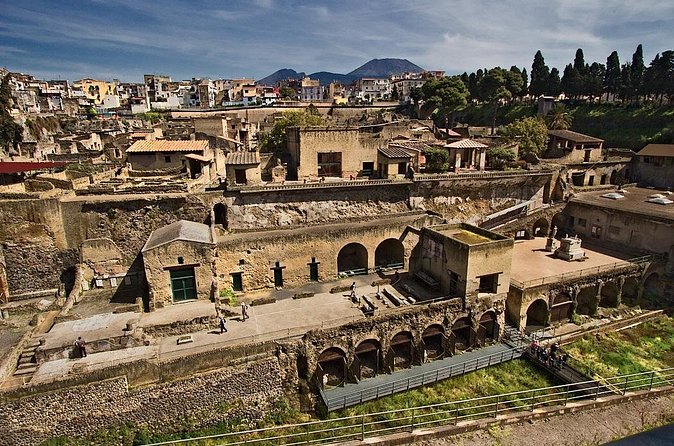
Herculaneum is the surprise. The tour emphasizes how well-preserved it is, with wooden structures, mosaics, and everyday objects surviving the eruption. That combination makes it feel less like a display and more like you’re stepping into a place mid-life.
The guided visit here is about two hours, which is a good length for a town that can invite you to stop and stare.
House of the Deer: a name tied to marble statues
In Herculaneum, the House of the Deer takes its name from marble statues of stags/deer found in the peristyle. Even with a short stop, a detail like this makes the home easier to remember than a generic label would.
La Terrazza di M. Nonio Balbo: a benefactor you can read in stone
Next is La Terrazza di M. Nonio Balbo. This is tied to M. Nonius Balbus, described as the city’s major benefactor who restored and built public buildings. On his death, he received honors linked to an inscription.
This is one of the stops that helps you connect archaeology to actual people and public work, not just private houses.
College of the Augustales: emperor-cult space and civic religion
The College of the Augustales is thought to have been a center of the cult of Emperor Augustus and possibly even the headquarters of the Collegium Augustalium (or possibly local curia).
Even if that wording stays cautious, the point is clear: this building helps you see how Roman civic identity tied into worship and community roles.
Casa del Rilievo di Telefo: a house with unusual access
The Casa del Rilievo di Telefo is described as somewhat unusual because it has private access to the adjoining Suburban Thermae to the south. That detail turns the house into a story about convenience and status—why someone would have direct, controlled access to bathing facilities.
Partem Domus lignea – Casa del Tramezzo di Legno: preserved wood in a surviving structure
This stop is one of the most fascinating for anyone drawn to the ways ruins can still show daily materials. It’s noted as important for an elegant wooden partition that remained.
Herculaneum is famous here for preservation, and stops like this are where you get the tangible proof of why the town is so visually powerful.
House of the Skeleton: a name from a find in 1831
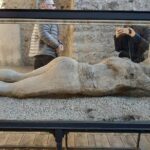
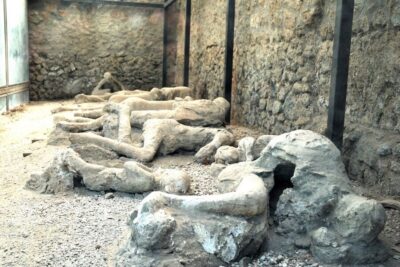
The House of the Skeleton is named from the discovery of human remains in 1831. This is a sobering stop, and the value of a guide is that it helps keep the context human rather than purely sensational.
Central Thermae: separate entrances for men and women
Next comes the Central Thermae, built around the beginning of the 1st century AD. The tour notes they were divided into men’s and women’s baths with separate entrances.
This is useful because it explains how even a single “bath complex” could operate with clear boundaries.
Casa Sannitica and Casa del Bel Cortile: different styles of everyday domestic space
You’ll also see two domestic designs:
- Casa Sannitica, described as typical of the Samnites, with an atrium and a gallery with Ionic columns, plus frescoes.
- Casa del Bel Cortile, with a courtyard and a stone balcony instead of an atrium, including a stairway.
When a tour includes contrasting home layouts, it helps you understand that Pompeii and Herculaneum were not just one style of wealthy living.
House of the Grand Portal: charred wood and large-scale layout
Finally, there’s the House of the Grand Portal, described as a beautiful domus with multiple environments, collonnati, frescoes, and charred remains of wooden parts.
That last detail loops back to the tour’s big theme: Herculaneum survives in fragments that still communicate what the city was built from.
How to get the most out of stops that last 10 minutes
This itinerary makes a deliberate choice: short stops for many locations. That means your success strategy is less about finding one perfect spot and more about working the pacing.
Here’s what I recommend you do during the quick moments:
- Pick one or two stops in Pompeii where you want to slow down, then let the rest be “pattern recognition.”
- In Herculaneum, lean into the preservation details—wood, mosaics, everyday objects—because that’s where you’ll feel the difference most.
- Use the guide to connect dots. In a place like this, the facts land faster when you know what question the guide is answering.
If you hate crowds and hate missing things, you might still feel rushed. But if you like a well-structured overview that you can build on later, this timing works.
Value and inclusions: what’s covered, what’s on you
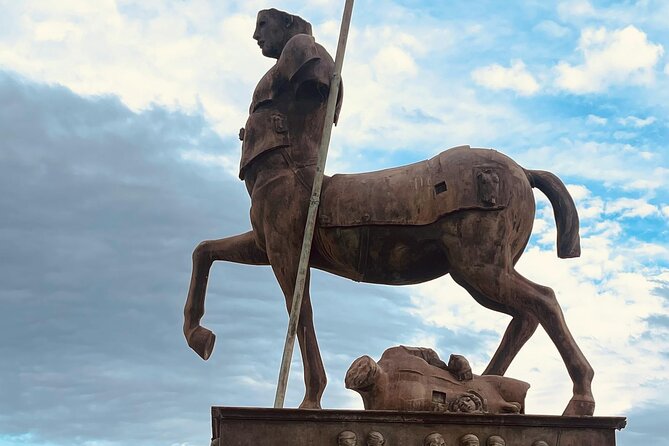
This is where the math usually lands in favor of the tour. You pay $78.31 per person, and key costs are already covered:
- Guided tour service in both Pompeii and Herculaneum
- Herculaneum entry tickets (and entry tickets referred to as Pompeii express)
- Transportation, including round-trip to/from Naples, round-trip to/from Sorrento, and a one-way transfer from Pompeii to Herculaneum
On top of that, the package includes train tickets to/from Rome to Naples plus transportation from Naples.
What’s not included is straightforward:
- Meals and drinks (only a lunch break is mentioned, at your own expense)
- Personal expenses
If you’re staying in Sorrento or Naples, the transportation inclusions can be a big deal. You’re also saving time on coordinating multiple tickets by yourself.
Group size, guide style, and the small comforts that matter
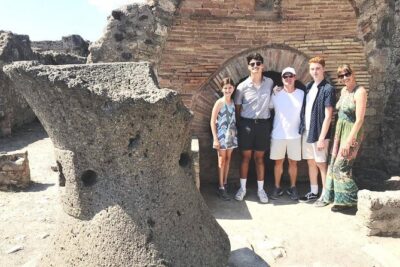
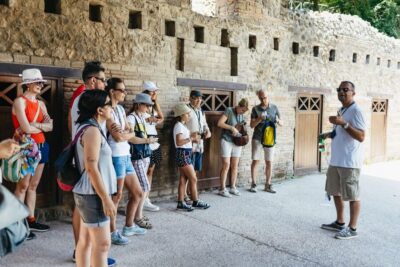
This tour runs with a minimum number of travelers, and it has a maximum of 21. That size tends to keep everyone together without turning into a long conga line of strangers.
The guides are repeatedly praised for being considerate and for making sure the group gets the most from both sites. You’ll also want to pay attention to whether your guide keeps the group moving at a pace that matches your questions. On tours like this, that’s often the difference between seeing buildings and understanding them.
If your day includes a guide like Vincenzo, Manuela, or Serena, you can reasonably expect a guided pace that tries to keep everyone oriented rather than leaving you behind.
Who this Pompeii and Herculaneum tour fits best
This is a strong fit if:
- You want a guided overview of both parks without planning every ticket and transfer.
- You like houses, theatres, baths, and streets—not just one kind of site.
- You’re okay with short stops in exchange for breadth across the day.
It might not be ideal if you:
- Want to spend long hours in a single house or want deep time in just Pompeii or just Herculaneum.
- Plan to rely on the tour alone for every photo and every label. You’ll likely want a follow-up visit or extra time on your own.
Should you book this Pompeii and Herculaneum tour?
Yes, book it if you want the most efficient way to experience two of the most important ruined cities on Earth in a single day, with tickets and guidance handled for you. The schedule is built for people who want clarity fast: Pompeii to learn the city, Herculaneum to see how preservation changes the mood.
Don’t book it if you know you’ll resent short stops. This is not a slow, choose-your-own adventure day. It’s a smart, structured tour that prioritizes highlights and interpretation over lingering.
FAQ
How long is the Pompeii and Herculaneum small-group tour?
It runs approximately 6 to 11 hours.
What is the price per person?
The price is $78.31 per person.
Is the tour guided?
Yes. You get guided tour service in both Pompeii and Herculaneum.
Are admission tickets included?
Yes. Admission tickets are included for Pompeii and Herculaneum, including Pompeii express entry tickets.
What languages is the tour offered in?
The tour is offered in English.
Does this tour include transportation?
Yes. It includes round-trip transportation to/from Naples and Sorrento, a one-way transfer from Pompeii to Herculaneum, and train tickets to/from Rome to Naples plus transportation from Naples.
Do meals cost extra?
Yes. Meals and drinks are not included.
How large is the group?
The tour has a maximum of 21 travelers.
Can children enter for free?
Yes. Children under 18 enter for free with a valid form of ID.
If you tell me where you’re staying (Naples, Sorrento, or elsewhere) and what you most want to photograph (theatres, baths, houses, street scenes), I can help you pick the best expectations for this exact route.
More Tour Reviews in Pompeii


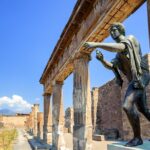

Herculaneum, a Few More Tours

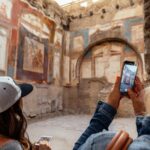
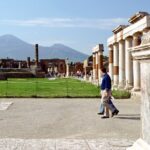
More Pompeii Tours to Compare
More Pompeii tours, freshly reviewed


Pompeii Tours, compared.
 ★ 4.8Pompeii: Entry Ticket and Guided Tour with an ArchaeologistFrom $3519,459 reviews
 ★ 4.1Pompeii: Entry Ticket with Audio GuideFrom $4013,491 reviews
 ★ 4.8Pompeii: Small Group Tour with an ArchaeologistFrom $4012,264 reviews
 ★ 4.3Pompeii Ruins & Mount Vesuvius Day TourFrom $12011,459 reviews
★ 5.0Pompeii Small Group Tour with an ArchaeologistFrom $356,593 reviews
★ 4.3Pompeii Ruins & Mount Vesuvius Day TourFrom $12011,459 reviews
★ 5.0Pompeii Small Group Tour with an ArchaeologistFrom $356,593 reviews
 ★ 4.5Skip-the-line Pompeii – Small Group TourFrom $544,401 reviews
 ★ 4.6Naples or Sorrento: Full-Day Pompeii and Mount Vesuvius TourFrom $1044,235 reviews
 ★ 3.9Pompeii: Skip-the-line Entry Ticket with Audio Guide & MapFrom $433,153 reviews
Browse the lists this tour appears in