
Review · POMPEII TOURS
Pompeii and Herculaneum Small Group Excursion from Naples
Two cities, one crater shadow—79 AD comes alive. This small-group day trip from Naples lets you walk Pompeii and Herculaneum with an archaeologist guide, plus built-in transport that keeps your head clear.
I love the archaeology-led pacing and the fact that the plan is set for you, not improvised on the fly.
I also like the round-trip pickup at Starhotels Terminus, right by Naples Central Station. It saves time and stress, especially when you’re trying to coordinate trains, taxis, and crowds on your own.
And yes, you’ll get that welcome kit and discount card at Maximall Pompeii during the day.
The only real catch: it’s a long, hot, lots-of-stairs kind of 8-hour outing. The stops move quickly, so if you want to linger in one room for an extra hour, you may feel a bit boxed in.
In This Review
- Key highlights at a glance
- Naples to Pompeii and Herculaneum: a tight schedule that actually works
- Getting started at Starhotels Terminus (near Naples Central Station)
- Pompeii through Porta Marina: how the guide sets the scene
- Pompeii highlights you’ll see fast: Chaste Lovers to Teatro Grande
- Insula dei Casti Amanti (Chaste Lovers frescoes)
- Granaries of the Forum
- Stabian Baths (Terme Stabiane)
- Via dell’Abbondanza (Abbondanza Street) walk
- Lupanar (brothel)
- Odeon (small theater) and Basilica
- House of the Faun and Teatro Grande
- Pompeii’s reality check
- Maximall Pompeii break: a practical pit stop with a discount card
- Herculaneum first impression: why it feels different
- Herculaneum houses and baths: the stops that shape the story
- Partem Domus lignea (House of the Wooden Partition)
- College of the Augustales
- House of Menander
- Central Thermae
- House of the Relief of Telephus
- Samnitic House and House of the Fine Courtyard
- House of the Grand Portal and House of the Skeleton
- House of the Black Salon of Nero and House of the Deer
- La Terrazza di M. Nonio Balbo (Terrace of Nonio Balbo)
- Price and value: why $140-ish can be a smart move here
- Practical tips to make the day feel easy, not exhausting
- Pack for heat and stone
- Wear shoes with real grip
- Use your breaks wisely
- Expect short windows, not long solo time
- Who should book this Pompeii and Herculaneum tour?
- Should you book this Pompeii and Herculaneum Small Group Excursion from Naples?
- FAQ
- Where do I meet the tour in Naples?
- How long is the excursion?
- Is the tour offered in English?
- What’s the group size limit?
- Are entrance tickets included for Pompeii and Herculaneum?
- How much time do we have at Herculaneum?
- Are meals included in the price?
- Is there a break for shopping or food near Pompeii?
- Are dogs allowed?
- What is the cancellation policy?
Key highlights at a glance
- Archaeologist guidance at both Pompeii and Herculaneum so you’re not just staring at walls
- Pompeii entry through Porta Marina, one of the city’s key gateways
- Herculaneum park time set at about 2 hours with multiple house-and-bath stops
- Maximall Pompeii break with a welcome kit and discount card for food and shopping
- Small group cap of 23, which helps you stay together and ask questions
Which Pompeii ticket and guide? Compare a few more.
- From Naples: Pompeii Ruins & Mount Vesuvius Day Tour★ 4.3 · 11,459 reviews
- From Naples: Skip-the-line Pompeii – Small Group Tour★ 4.5 · 4,401 reviews
- Naples or Sorrento: Full-Day Pompeii and Mount Vesuvius Tour★ 4.6 · 4,235 reviews
- Pompeii & Mt.Vesuvius Day Tour from Naples with Pizza Lunch★ 4.0 · 2,901 reviews
Naples to Pompeii and Herculaneum: a tight schedule that actually works
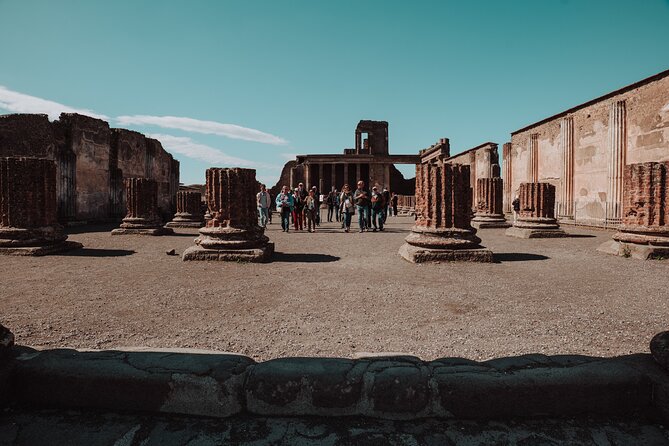
This is the kind of tour that’s designed for real days in real time. You start in central Naples, get driven out to the ruins, then spend the day with a licensed archaeologist explaining what you’re seeing in both Pompeii and Herculaneum. The value here is the combination: you’re not trying to stitch together transit and interpretation yourself.
Most of your time is spent on-site. There’s not much “waiting around.” That’s good—though it also means you should treat the day as a workout. Wear shoes that can handle uneven stone and short ramps. Bring water and plan for sun. When you’re walking Pompeii and Herculaneum back-to-back, you feel every kilometer.
Getting started at Starhotels Terminus (near Naples Central Station)
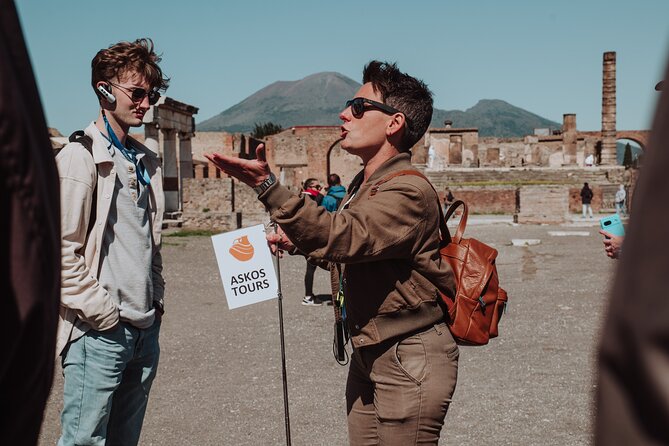
The meeting point is outside Starhotels Terminus in Piazza Giuseppe Garibaldi, just across from Naples Central Station. The driver meets you holding an ASKOS TOURS sign, so you’re not wandering the plaza looking for a tour bus that may or may not exist.
Why I like this setup: it’s simple and central. If you’re already using Naples Central as your base, you don’t have to add another transfer just to start the day. You’re also saved from the “call taxi, wait, argue about price” part of travel.
Also worth knowing: if you’re carrying suitcases, the tour suggests using a luggage deposit if possible. Not all minibuses have room for luggage compartments, and you don’t want to be the person stuck juggling bags while everyone else has their day.
Pompeii through Porta Marina: how the guide sets the scene
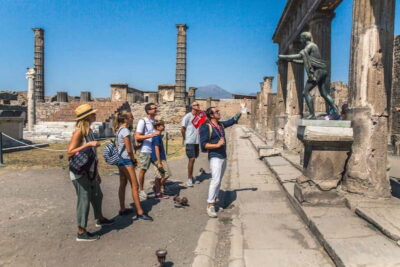
You enter Pompeii at Porta Marina, then your guided visit begins. This matters because Pompeii can feel like a pile of ruins until someone helps you understand the city’s logic: how it was laid out, how people moved through it, and what daily life looked like before the eruption of 79 AD.
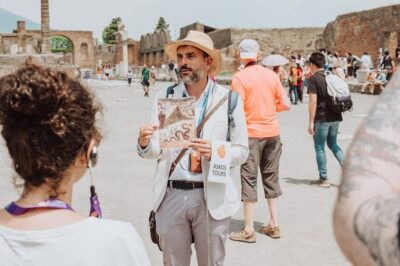
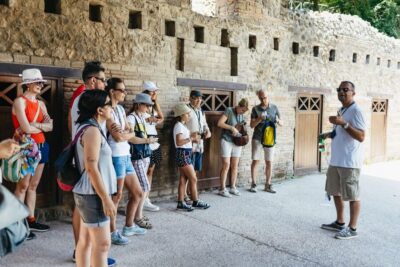
Here’s what you’ll get with an archaeologist guide: context tied to specific buildings. A good guide won’t just name places; they connect them to routines—markets, baths, street life, and the quiet rhythms of home. Many guides used on this experience are praised by name in the wild for bringing that context to life (names that show up include Raphael, Gennaro, Giovani, Bruno, Michael, Michele, Alfredo, and others).
One practical upside: the tour uses radio headsets systems when needed, so you can follow explanations even in busier areas or when voices carry oddly across stone streets. If you have hearing needs, it’s totally reasonable to ask for the headset when you meet your group.
Pompeii highlights you’ll see fast: Chaste Lovers to Teatro Grande
Pompeii is huge. Even with a guide, you don’t get “museum pace.” Instead, you get curated stops that hit major themes: living spaces, public buildings, entertainment, and the city’s social underside.
Here’s what your Pompeii route looks like, in plain terms:
Herculaneum keeps a few more tours worth your time

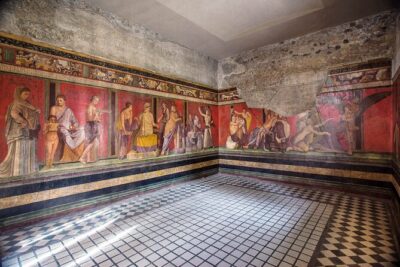
Insula dei Casti Amanti (Chaste Lovers frescoes)
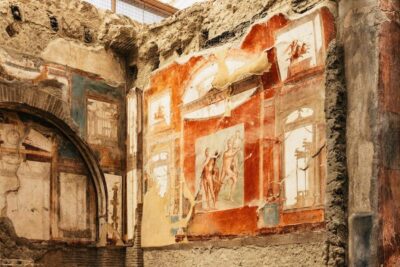
This is a quick stop but a memorable one. The famous frescoes show intimate moments of daily life, and the point isn’t shock value—it’s how art and decor reflected private behavior. You’ll get a clearer sense of why people in Pompeii decorated spaces like they did, not just what the artwork depicts.
Drawback: the stop is short, so if you’re the type who wants to study fresco details for 15 minutes, plan to take notes and move on.
Granaries of the Forum
You’ll see the structures tied to food storage and civic logistics. These places remind you Pompeii wasn’t only entertainment and houses—it was an economy that needed grain, supply chains, and stable routines.
Stabian Baths (Terme Stabiane)
Baths are where Roman city life becomes physical. Think social time plus hygiene, with architecture that tells you how people used space. In Pompeii, baths also hint at how routine could keep going—until it couldn’t.
Via dell’Abbondanza (Abbondanza Street) walk
This is one of those stretches that helps your brain build a map. A guided walk along the street gives you a feel for what it meant to move from one district to another and how shops and buildings shaped the experience of the street.
Lupanar (brothel)
A quick look, but it adds texture. It shows you that daily life included industries and services we’d rather not romanticize. Your guide should frame it in terms of how Romans organized social life—not just as a curiosity.
Odeon (small theater) and Basilica
These stops connect culture and governance. The Odeon points to performances and gatherings. The Basilica links to public life and administration. Together, they show how Pompeii functioned beyond the residential zones.
House of the Faun and Teatro Grande
You’ll also hit major landmarks: the House of the Faun and the Great Theatre. These are the “scale” moments. Pompeii can feel intimate one minute and monumental the next, and these stops help you understand that range.
Pompeii’s reality check
The route is efficient. That’s good for fitting both sites into one day. The downside is that Pompeii’s biggest treasure is time—and you don’t have infinite of it. The tour maximizes highlights, but it’s not built for deep solo wandering.
Maximall Pompeii break: a practical pit stop with a discount card
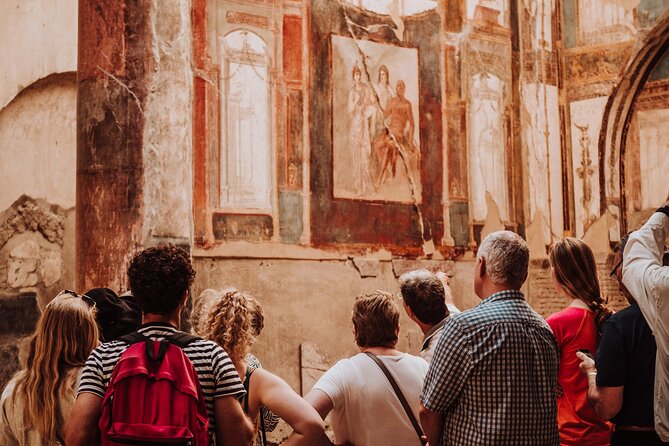
Between sites, you get a break at Maximall Pompeii. It’s the largest shopping center in Southern Italy, and it’s basically your logistical safety net.
You’ll have about 50 minutes here, and it’s more useful than it sounds. Reviews often praise this stop for giving people a chance to eat, cool down (many note the comfort of transport and indoor options), and recharge before the next ruins session. You also receive a branded welcome kit and a discount card that can be used for special deals in stores.
Important note: meals and drinks are not included in the tour price. This stop is where you handle your food plan.
If you’re hungry, don’t treat it like sightseeing time. Use it to refill water, grab something quick, and get back on track—Pompeii to Herculaneum is not the moment to wait for a perfect lunch.
Herculaneum first impression: why it feels different
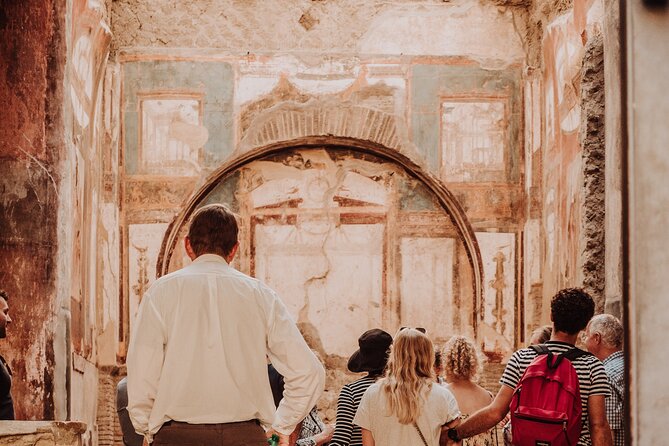
Herculaneum is where many people go, then instantly understand why it’s so famous. The tour gives you about 2 hours at the Archaeological Park of Herculaneum, and that time includes guided stops in multiple houses and major structures.
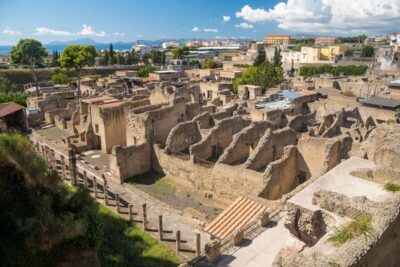
The main difference you’ll notice: the site feels more intact, and the preserved surfaces help you picture daily life more clearly than the more exposed sections of Pompeii. It’s also smaller, which means your guide can connect buildings to themes without the “run between sites” feeling that you sometimes get elsewhere.
Your archaeologist guide should help you compare what you saw in Pompeii with what Herculaneum preserved—especially around domestic interiors and street life.
Herculaneum houses and baths: the stops that shape the story
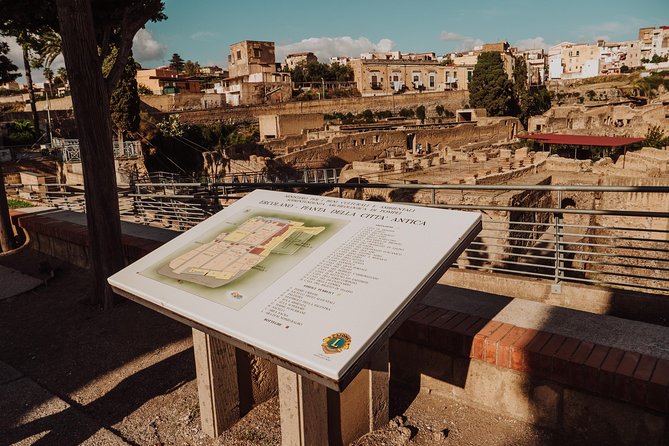
Within your Herculaneum park time, you’ll make a sequence of short but purposeful stops. They’re designed to give you a sense of how people lived, relaxed, and displayed status.
Here are the key places you’ll see:
Partem Domus lignea (House of the Wooden Partition)
A brief look at a house feature that helps you understand how interiors were laid out. It’s the kind of stop where the guide’s explanation matters as much as the structure itself.
College of the Augustales
This is a civic/religious stop that broadens your view beyond private life. It shows the social organization of the community and where communal identity played out.
House of Menander
Known for the decorative and artistic atmosphere of a domestic space. Even with a short stop, this is where you start to see Herculaneum as a place people lived, not just a set.
Central Thermae
The baths again—but in a different setting. You’ll connect how leisure and cleanliness worked, and how architecture supported daily routines.
House of the Relief of Telephus
A quick stop that links art to storytelling inside homes. It reinforces how myth and imagery were part of everyday decoration.
Samnitic House and House of the Fine Courtyard
These stops are about domestic layout and status signals—how courtyards and room arrangements acted like a social stage.
House of the Grand Portal and House of the Skeleton
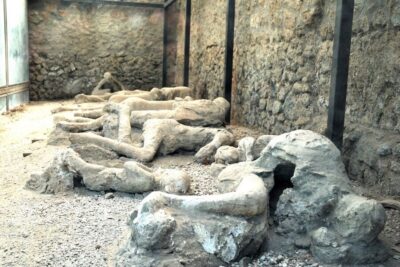
The grand portal shows how entrances communicate wealth. The skeleton house is a reminder of the disaster itself and the human reality behind the ruins.
House of the Black Salon of Nero and House of the Deer
The “Black Salon” stop is about dramatic interior design and color. The House of the Deer adds another layer of the artistic and decorative world inside a home.
La Terrazza di M. Nonio Balbo (Terrace of Nonio Balbo)
This terrace stop gives you a feeling for space and views within the park. It’s a good end-of-session moment: you get a breath, then look back at what you’ve just walked through.
After all the ruins, you return by minibus to Naples, ending back at Starhotels Terminus.
Price and value: why $140-ish can be a smart move here
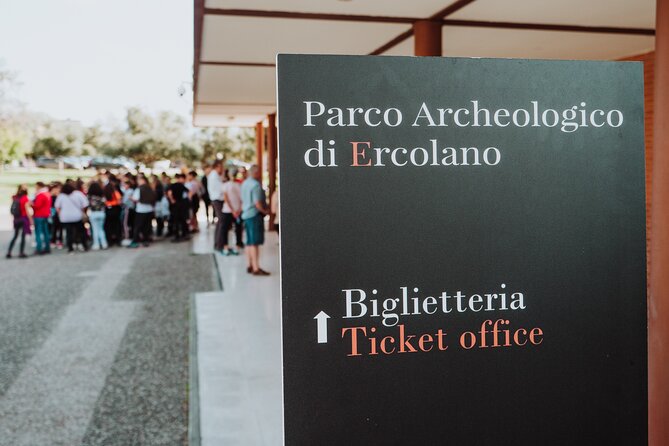
At $140.29 per person, the price might look steep until you compare what’s included. Ruins entry for Herculaneum is listed as 16 euros per adult, and Pompeii entry (Pompeii express) is listed as 20 euros per adult. Those ticket costs alone cover a meaningful chunk of the price.
Then you add:
- a licensed archaeologist guide for interpretation at both sites
- professional driver assistance and round-trip minibus transport
- a capped small-group setup (max 23 people)
- the Maximall welcome kit + discount card
If you try to DIY this, you can save money on the guide, but you’ll spend it in time and energy: getting to the sites, finding entrances, and trying to understand Pompeii and Herculaneum without a translator-friendly narrative. For many people, that trade is worth it—especially on a limited day.
Practical tips to make the day feel easy, not exhausting
This tour is doable for most people, but it is still a walking day. Here’s how I’d prep if you want a smooth experience:
Pack for heat and stone
Bring water. Bring sun protection. If you have one, a small umbrella or fan can help. Many people call out how hot it can get, and the ruins don’t care if you’re tired.
Wear shoes with real grip
Pompeii and Herculaneum involve uneven surfaces. You’ll be walking between short guided stops; your footing matters more than style.
Use your breaks wisely
Maximall Pompeii has a set time window. Use it for food and a quick reset, not for browsing the entire mall.
Expect short windows, not long solo time
The stop-by-stop structure is designed to cover big themes. If you’re the kind of person who loves to stand and stare at one mosaic until your brain melts, you may feel the pace. Still, you’ll leave with a much clearer storyline than most self-guided visits.
Who should book this Pompeii and Herculaneum tour?
Book it if you want:
- an organized single-day way to see both sites from Naples
- an archaeologist-led explanation that helps you understand what you’re looking at
- an efficient itinerary with a small group (max 23)
- transport handled for you, so you don’t lose the day to logistics
Skip it (or consider another option) if:
- you want long free time in Pompeii to wander alone
- you prefer a slower pace with fewer stops
- you hate the idea of a short break at a shopping center area (Maximall is part of the plan)
Should you book this Pompeii and Herculaneum Small Group Excursion from Naples?
Yes, I think you should book it—if you’re time-limited and want real interpretation. Pompeii alone is already a lot. Herculaneum alone is also a lot. This tour is built for people who want both, without turning the day into a transit puzzle.
If you go in expecting a guided highlights route (not a slow, freeform museum marathon), you’ll get a satisfying “two sides of the same tragedy” experience: Pompeii’s street-and-life feel, then Herculaneum’s more intact glimpses into how people actually lived.
FAQ
Where do I meet the tour in Naples?
You meet outside Starhotels Terminus at Piazza Giuseppe Garibaldi 91, near Naples Central Station. The driver will be holding an ASKOS TOURS sign.
How long is the excursion?
It runs about 8 hours (approx.).
Is the tour offered in English?
Yes, it’s offered in English.
What’s the group size limit?
The tour has a maximum of 23 travelers.
Are entrance tickets included for Pompeii and Herculaneum?
Yes. Entrance fees are included, including Herculaneum entry tickets and Pompeii express entry tickets.
How much time do we have at Herculaneum?
The Herculaneum Archaeological Park visit is listed at 2 hours.
Are meals included in the price?
No. Meals and drinks are not included.
Is there a break for shopping or food near Pompeii?
Yes. You’ll stop at Maximall Pompeii for about 50 minutes, and you’ll receive a welcome kit and discount card.
Are dogs allowed?
No dogs and animals are permitted in the vehicle for this tour option. Service animals are allowed.
What is the cancellation policy?
You can cancel for free up to 24 hours in advance for a full refund. If you cancel less than 24 hours before the experience starts, the amount paid isn’t refunded.
More Tour Reviews in Naples

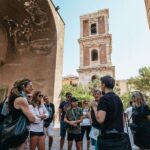

Herculaneum, a Few More Tours
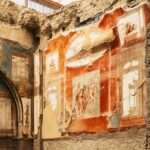
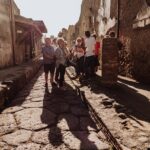
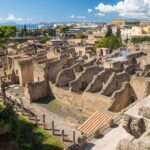

More Pompeii Tours to Compare

More Naples tours, freshly reviewed


Pompeii Tours, compared.
 ★ 4.8Pompeii: Entry Ticket and Guided Tour with an ArchaeologistFrom $3519,459 reviews
 ★ 4.1Pompeii: Entry Ticket with Audio GuideFrom $4013,491 reviews
 ★ 4.8Pompeii: Small Group Tour with an ArchaeologistFrom $4012,264 reviews
 ★ 4.3Pompeii Ruins & Mount Vesuvius Day TourFrom $12011,459 reviews
★ 5.0Pompeii Small Group Tour with an ArchaeologistFrom $356,593 reviews
★ 4.3Pompeii Ruins & Mount Vesuvius Day TourFrom $12011,459 reviews
★ 5.0Pompeii Small Group Tour with an ArchaeologistFrom $356,593 reviews
 ★ 4.5Skip-the-line Pompeii – Small Group TourFrom $544,401 reviews
 ★ 4.6Naples or Sorrento: Full-Day Pompeii and Mount Vesuvius TourFrom $1044,235 reviews
 ★ 3.9Pompeii: Skip-the-line Entry Ticket with Audio Guide & MapFrom $433,153 reviews
Browse the lists this tour appears in