
Review · POMPEII TOURS
Pompeii and Herculaneum led by an Archaeologist with private transport
Two Roman tragedies, one smooth day. This private tour strings together Herculaneum and Pompeii with an archaeologist guide and a comfortable, air-conditioned ride so you spend less time figuring things out and more time seeing how people really lived. I especially love the way the route is built to keep you moving through high-impact spots fast, and still stop often enough to catch the meaning behind the ruins.
My other big win is the guide level. Guides like Lucio, Alfredo, Daniela, and Ivan (and yes, their driver sidekicks too) show you the why behind details—like how each town was preserved differently after the eruption—and they’ll answer questions without rushing you.
The main drawback is simple: it’s a long day on your feet. Even with short stops and plenty of walking between areas, you’ll want solid shoes and a bit of stamina, especially in summer when you should skip flip-flops and keep water handy.
In This Review
- Key things you’ll notice on this one-day Pompeii + Herculaneum tour
- One day, two different ruins: how this tour actually feels
- Pickup across Naples and the Amalfi Coast: less stress before the first ruin
- Herculaneum first: why starting here changes what you notice
- House of the Deer and the art of daily status
- La Terrazza di M. Nonio Balbo and civic pride
- College of the Augustales: religion, empire, and power in one building
- Central Thermae: men and women, separate entrances
- More Herculaneum houses: luxury, access, and how rooms connect
- Lunch and the travel beat: keeping energy without losing the timeline
- Pompeii in the afternoon: main square, markets of life, and the theater stage
- Lupanar: the famous brothel stop
- Forum and central streets: the city’s meeting points
- Granaries of the Forum: food logistics and even casts
- Basilica: the covered work-and-business space
- Stabian Baths: old thermal complex, big-city leisure
- The big houses: Menander and Faun for luxury scale
- Theaters: where performance shaped public identity
- The value question: is $666.75 for this private day actually worth it?
- Who this tour is best for (and who should choose differently)
- Should you book this Pompeii and Herculaneum archaeologist tour?
- FAQ
- Is this tour private?
- How long is the tour?
- Where does pickup happen?
- What language is the tour in?
- Are admission tickets included?
- Are meals included?
- What should I wear or bring?
- How much walking is involved?
- Can I cancel and get a refund?
Key things you’ll notice on this one-day Pompeii + Herculaneum tour
- Private archaeologist guide pacing that keeps the story clear as you bounce between sites
- Air-conditioned Mercedes-style transport between Herculaneum and Pompeii
- Herculaneum homes and bath areas shown in a tight, high-value sequence
- Pompeii big-ticket stops like the Forum, baths, and major houses without you getting lost
- Pickup and drop-off across Campania (Naples, Salerno, Sorrento, Amalfi Coast)
Which Pompeii ticket and guide? Compare a few more.
- From Naples: Pompeii Ruins & Mount Vesuvius Day Tour★ 4.3 · 11,459 reviews
- From Naples: Skip-the-line Pompeii – Small Group Tour★ 4.5 · 4,401 reviews
- Naples or Sorrento: Full-Day Pompeii and Mount Vesuvius Tour★ 4.6 · 4,235 reviews
- Pompeii & Mt.Vesuvius Day Tour from Naples with Pizza Lunch★ 4.0 · 2,901 reviews
One day, two different ruins: how this tour actually feels
Pompeii and Herculaneum are often sold as two separate “must-dos.” This tour treats them like one connected lesson, and that matters because the cities didn’t get ruined the same way—or preserved the same way. In a single day, you see the contrast up close: Pompeii reads like a city frozen in place, while Herculaneum can feel more intimate because of how it’s been protected and compacted by what happened.
You also get a big practical advantage: private transport. You’re not waiting around for schedules or squeezing into a crowded bus. Instead, you ride in comfort between sites, then meet your guide on the ground and walk through the highlights in a controlled flow.
Time is the tradeoff. The tour runs about 7 hours, and you’re juggling two archaeological parks in one day, so you won’t linger at every corner like you would on a multi-day visit. Still, the stops are chosen for impact and clarity, so you get a lot for the effort.
Pickup across Naples and the Amalfi Coast: less stress before the first ruin
This works well even if your trip rhythm is complicated. The pickup covers a lot of the Campania region, including Naples, Salerno, Sorrento, and the Amalfi Coast, plus cruise port/train station/airport options. That means you’re less likely to lose half a day to logistics, especially on days when you’re already coordinating with hotel check-outs or ship schedules.
If you’re coming from a cruise, the timing flexibility is a real plus. One review described the team adjusting the schedule when a ship arrived later than most, and the driver was waiting. That kind of “we’ll meet you where you are” energy is exactly what you want here.
What to bring is pretty standard, but worth heeding:
- comfortable shoes (you’re walking on uneven ground)
- in summer, skip flip-flops
- sunglasses, sunscreen, and water
Herculaneum first: why starting here changes what you notice
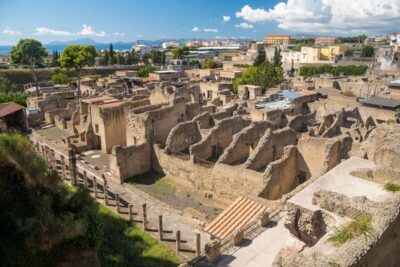
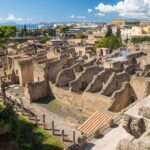
Most people think of Pompeii first. Starting in Herculaneum makes the story click faster. It’s smaller than Pompeii, so the park can feel more manageable, and the guided walk helps you spot details that would otherwise blur together.
You’ll begin at the Archaeological Park of Herculaneum, then your guide takes you through a set of stops that explain how the city was lived in—through villas, decorative elements, and practical spaces like baths. Entry is part of what you pay for in the tour package, so you don’t have to build a second plan around ticket timing.
House of the Deer and the art of daily status
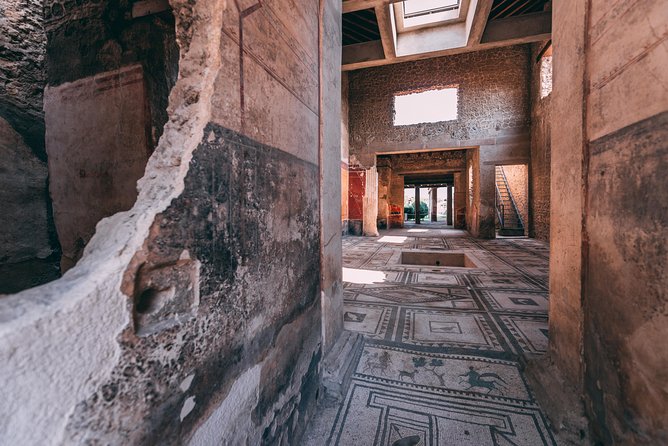
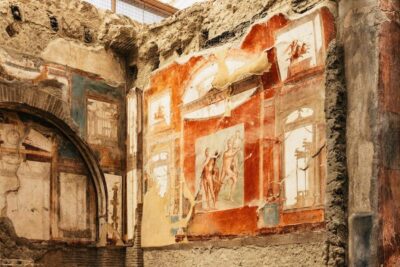
The House of the Deer is short, but it’s the kind of stop that teaches you how to “read” Herculaneum. The house gets its name from marble statues of stags/deer found in the peristyle area. Even if you don’t catch every tiny detail, your guide can point out what the art choices suggest about the homeowners’ wealth and taste.
After that, you’ll move through other quick-but-meaningful points where inscriptions, benefactors, and civic buildings show up as more than background. You’re not just seeing walls—you’re seeing people placing their identity in public life.
Herculaneum keeps a few more tours worth your time
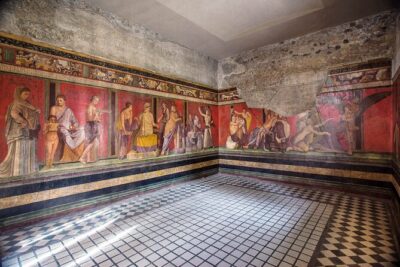
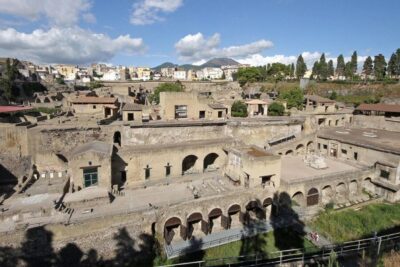
La Terrazza di M. Nonio Balbo and civic pride
Next is La Terrazza di M. Nonio Balbo, tied to Marcus Nonius Balbus, a major city benefactor. The big value of this stop is the inscription concept: it’s not random decoration; it’s how the city tells you who mattered and why. Your guide can help you translate the tone of public honors into something human.
It also gives you a bridge into the next stops, where Herculaneum isn’t only private houses. It’s public religious and political life, too.
College of the Augustales: religion, empire, and power in one building
At the College of the Augustales, you’ll learn about the possible cult connection to Emperor Augustus and the headquarters role for the Collegium Augustalium. Even with a brief stop, this is useful because it helps you understand that Roman identity wasn’t only personal. It was organized.
In practice, guides make this hit by explaining what the space likely did in daily civic rhythms—so the building feels functional instead of just impressive.
Central Thermae: men and women, separate entrances
The Central Thermae give you a direct window into how Romans scheduled leisure. Built around the early 1st century AD, these baths were divided by sex, with men’s and women’s areas accessed through separate entrances.
A quick note: baths can be confusing if you’re looking for one “cool feature” to photograph. With a guide, you’ll instead understand the flow—where people would have moved and how the architecture organized it.
More Herculaneum houses: luxury, access, and how rooms connect
Then comes the part many people love: the houses. Herculaneum’s private spaces can feel like a behind-the-scenes look at how wealth worked.
You’ll see stops such as:
- Casa del Rilievo di Telefo, which is linked to Marcus Nonius Balbus and has an unusual private access to the adjoining Suburban Thermae
- House of the Skeleton, named from human remains found in 1831 (this one often lands because it’s so eerie, but it also shows how archaeology keeps finding new information)
- House of the Black Salon, known for a luxurious feel and carbonized traces of wooden parts at the monumental entrance
- Casa del Tramezzo di Legno, featuring an important surviving wooden partition element
- Casa Sannitica, with a typical Samnite-style arrangement, an atrium-gallery with Ionic columns, and fresco decoration
- Casa del Bel Cortile, with a distinctive courtyard and stairway design
- House of the Grand Portal, in the central area, where you can see charred wooden remains mixed into the architecture
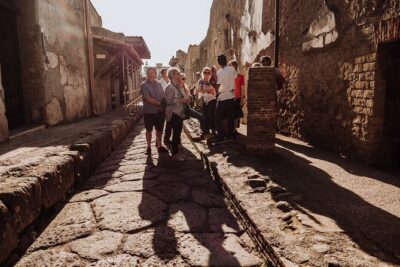
Even though each stop is timed, the guide’s job is to connect them. The houses aren’t random. They build a theme: wealth expressed through layout, art, and access.
The practical drawback of house-heavy touring
Because the stops are frequent and short, you may want a break. If you’re the type who enjoys long museum-style wandering, this can feel a bit “take it in, move on.” Still, in exchange, you get breadth and story clarity in one packed day.
Lunch and the travel beat: keeping energy without losing the timeline
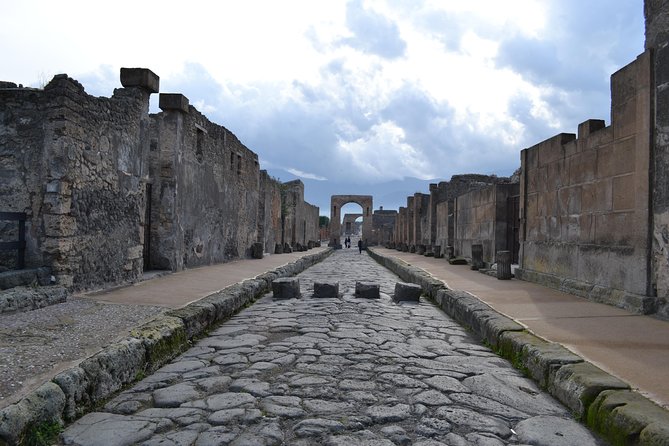
There’s a lunch window in between Herculaneum and Pompeii, but it’s not required. That flexibility is smart. If you’re the kind of traveler who wants a proper meal, you can do it. If you’re trying to beat crowds and keep the day efficient, you can skip it.
Either way, you’re riding to Pompeii with the tour vehicle, which helps you stay on pace. This matters because Pompeii is the bigger site, and timing is everything once you’re walking.
Pompeii in the afternoon: main square, markets of life, and the theater stage
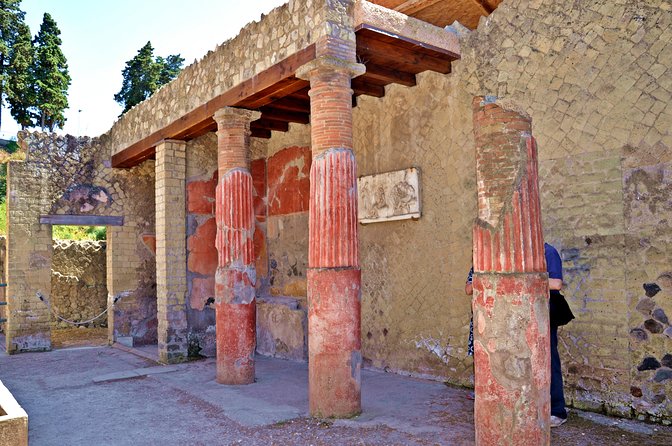
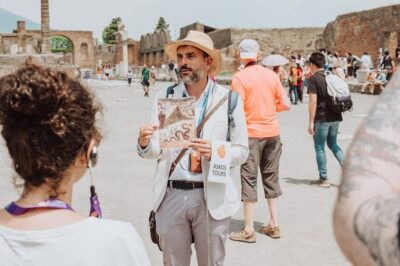
Once you arrive at the Pompeii Archaeological Park, you get a guided walk that focuses on high-readability areas: public spaces, major buildings, and standout private homes.
You’ll start with free time for lunch on your own (again, not forced), then continue into Pompeii with the guide.
Lupanar: the famous brothel stop
The Lupanar is likely the most talked-about Pompeii interior because of its reputation. This stop is brief, but it’s a strong way to ground the city in real human life—how commerce and adult entertainment existed alongside civic and religious structures.
Even if you prefer not to dwell on the subject matter, it’s still useful as a cultural data point. Your guide can frame it so it doesn’t feel like shock tourism.
Forum and central streets: the city’s meeting points
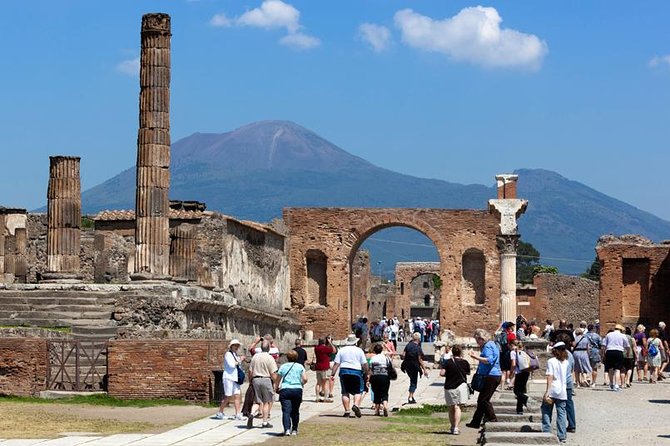
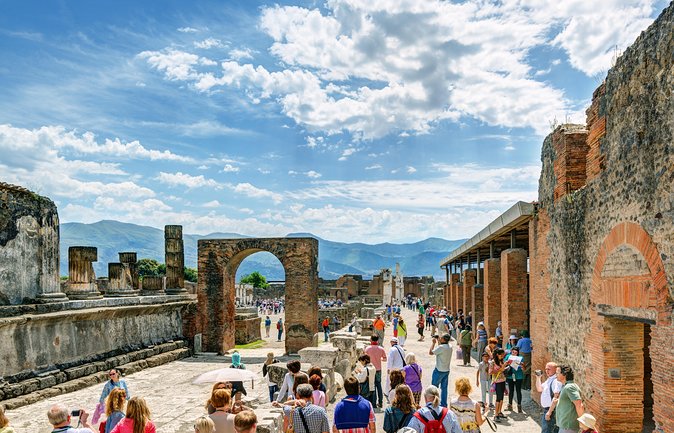
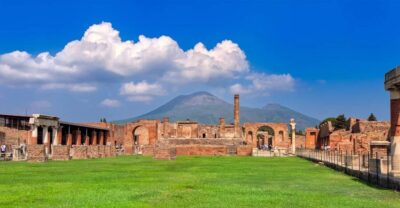
Then you hit Pompeii’s core: the main square (Foro de Pompeya) and the walk through the main street. These are the sorts of places where you start to understand Pompeii’s scale and urban logic: where people gathered, where trade ran, and how movement tied everything together.
For photo lovers, these are the areas where you’ll get the “yes, I’m here” shots. For history lovers, they’re where the city layout becomes obvious.
Granaries of the Forum: food logistics and even casts
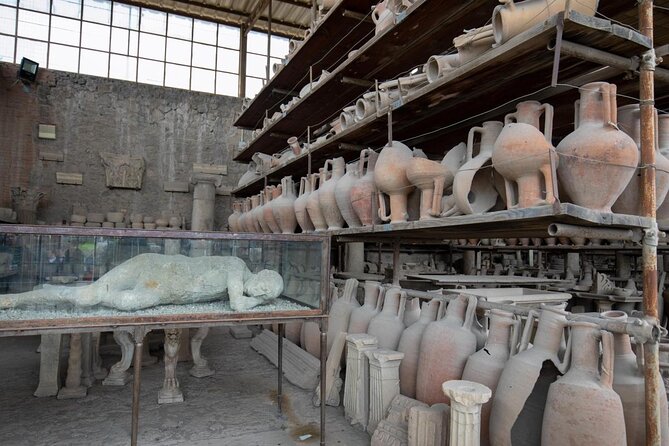
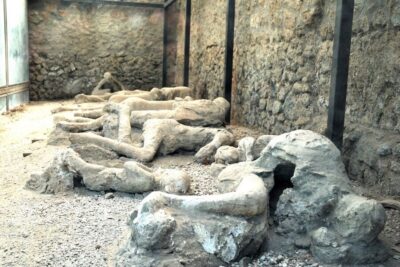
The Granaries of the Forum are an interesting contrast to the theater and houses. Here you’ll see marble tables and features connected to fountains at entrances, plus casts of victims. You might also encounter casts related to animals and other objects (like a dog and a tree) that help dramatize what the eruption changed in an instant.
This is one of those stops that can hit harder when you realize you’re looking at evidence of human moments, not just building remnants.
Basilica: the covered work-and-business space
The Basilica is an open portico that sheltered merchants and activity. The value is in the function. It’s where business and social life happened in weather, where people could transact while moving through the city’s rhythm.
It also helps you connect Pompeii’s architecture to daily behavior, not just to aesthetics.
Stabian Baths: old thermal complex, big-city leisure
The Stabian Baths (Terme Stabiane) cover a vast area and represent the oldest thermal complex in the city. Baths in Pompeii show you leisure as infrastructure. You’re seeing a system built to support routine social time.
This stop also gives you a mental rest from house interiors. Baths are big, airy spaces, and that can help if your legs feel heavy.
The big houses: Menander and Faun for luxury scale
Two of Pompeii’s star houses appear in the route:
- House of Menander, noted for rich architecture, decoration, and contents
- House of the Faun, one of the largest and most impressive private residences
These stops are shorter than what you’d do solo, but the benefit is that your guide helps you see patterns quickly—how decorations signal status, how room layout organizes visitors and private life, and why certain areas were built for show.
Theaters: where performance shaped public identity
You’ll also visit the Teatro Grande and get a look at the Teatro Piccolo. The theaters matter because they show Roman public culture as something built into the city’s structure. A theater isn’t just a building; it’s a place where citizens gathered and shared stories and entertainment.
The value question: is $666.75 for this private day actually worth it?
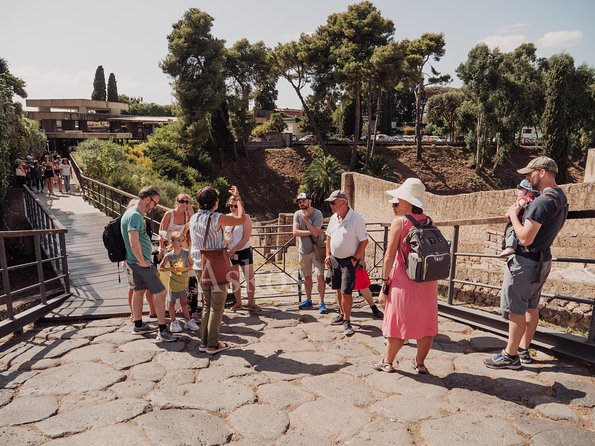
At $666.75 per person for about 7 hours, you’re not buying a budget outing. You’re buying reduced hassle, entry included, and a guide who can connect the dots across both sites.
Here’s what you’re likely getting for the money:
- Private transport (air-conditioned) between Herculaneum and Pompeii
- Pickup and drop-off across the Campania area
- A certified archaeologist guide doing the interpretation work that self-guided visiting can’t always deliver
- Pompeii Express and Herculaneum entry tickets included in the tour package
- A paced route with lots of stops that hit the main ideas without you building your own itinerary
If you’re traveling with limited time, or you’re the type who wants to understand what you’re seeing without spending weeks studying maps, the price can feel fair fast. If you’re on a strict budget and you already know you’ll enjoy slow wandering, then a self-guided or smaller-scope guide might cost less.
In other words: it’s premium pricing for a premium day, mostly because you’re paying for time saved and meaning added.
Who this tour is best for (and who should choose differently)
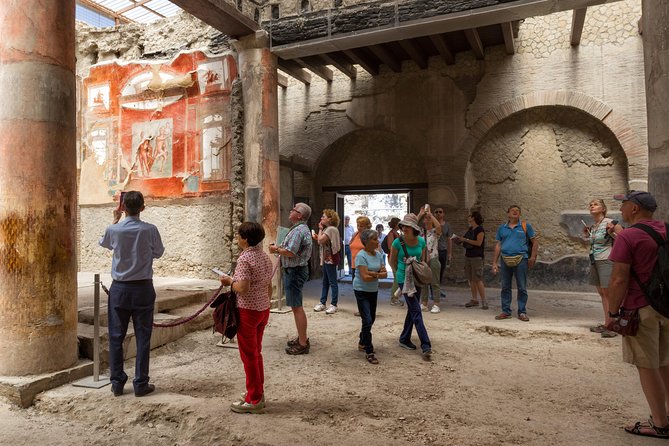
This tour fits best if you:
- want both Pompeii and Herculaneum in one day
- hate wasting time on logistics and prefer pickup + private transport
- like architecture and city life, and want someone to explain what you’re looking at
- appreciate a route that focuses on key stops rather than everything
It may not fit perfectly if you:
- want hours of free roaming at just one site
- get worn out by frequent movement and short stops
- plan to do it in high heat without much water planning
Should you book this Pompeii and Herculaneum archaeologist tour?
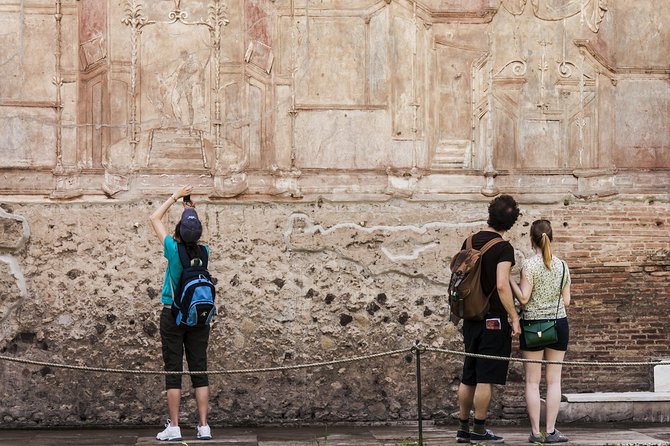
I’d book it if you’re trying to make the most of a short Naples-area stay. The biggest reason: you’re not just seeing ruins. You’re getting the “why” behind what survived, how people arranged their lives, and how Pompeii and Herculaneum differ after Vesuvius. With guides like Lucio, Alfredo, Daniela, and Ivan reported on earlier departures, the day has real momentum—and that matters when you have only one shot.
If you book, do two things before you go: wear comfortable shoes, and pack water plus sun protection. Then let the guide do the heavy lifting while you focus on what’s in front of you.
FAQ
Is this tour private?
Yes. It’s a private tour/activity, so only your group participates.
How long is the tour?
It runs for about 7 hours (approx.).
Where does pickup happen?
Pickup is offered from your accommodation in Naples, Salerno, Sorrento, or the Amalfi Coast, and also at the cruise port, train station, or airport.
What language is the tour in?
The tour is offered in English.
Are admission tickets included?
Yes. The tour includes the Pompeii Express admission ticket and the entrance fees for the Herculaneum ruins entry.
Are meals included?
Meals aren’t included. There is a lunch stop in between Herculaneum and Pompeii, but it’s not obligatory.
What should I wear or bring?
Bring comfortable shoes. In summer, avoid flip-flops. Also bring sunglasses, sunscreen, and water.
How much walking is involved?
It’s a walking-heavy day across both archaeological sites, with short visits at multiple stops—so plan for time on your feet.
Can I cancel and get a refund?
Yes. You can cancel for a full refund up to 24 hours in advance of the experience start time.
More Tour Reviews in Naples


Herculaneum, a Few More Tours

More Pompeii Tours to Compare

More Naples tours, freshly reviewed



Pompeii Tours, compared.
 ★ 4.8Pompeii: Entry Ticket and Guided Tour with an ArchaeologistFrom $3519,459 reviews
 ★ 4.1Pompeii: Entry Ticket with Audio GuideFrom $4013,491 reviews
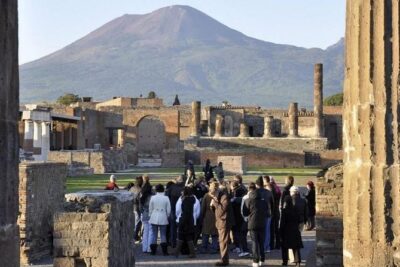 ★ 4.8Pompeii: Small Group Tour with an ArchaeologistFrom $4012,264 reviews
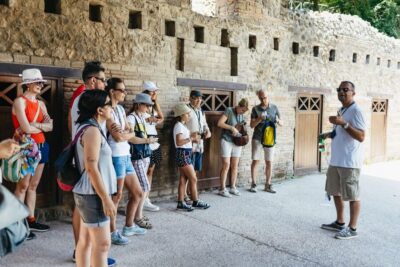 ★ 4.3Pompeii Ruins & Mount Vesuvius Day TourFrom $12011,459 reviews
★ 5.0Pompeii Small Group Tour with an ArchaeologistFrom $356,593 reviews
★ 4.3Pompeii Ruins & Mount Vesuvius Day TourFrom $12011,459 reviews
★ 5.0Pompeii Small Group Tour with an ArchaeologistFrom $356,593 reviews
 ★ 4.5Skip-the-line Pompeii – Small Group TourFrom $544,401 reviews
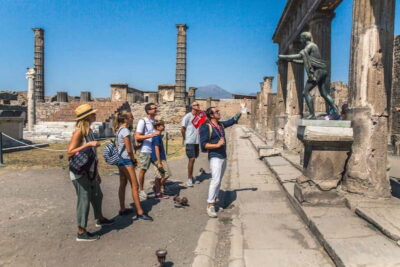 ★ 4.6Naples or Sorrento: Full-Day Pompeii and Mount Vesuvius TourFrom $1044,235 reviews
 ★ 3.9Pompeii: Skip-the-line Entry Ticket with Audio Guide & MapFrom $433,153 reviews
Browse the lists this tour appears in