
Review · POMPEII TOURS
Pompeii and Herculaneum day trip
Two volcano cities in one day is a miracle. This private Pompeii and Herculaneum day trip is a practical way to hit the big-ticket sights without worrying about trains, buses, or timing gaps. You’ll ride in comfort from Naples and spend most of the day walking ancient streets.
I especially like the private-driver freedom. You’re not stuck with a rigid bus route, and the schedule is organized enough that you can still see a lot, even if you move at a slower pace for photos. I also like the human touch in the ruins guidance: guides such as Antonino (often called Tony) are praised for answering questions and even adjusting the tour for sensory needs, while a Pompeii guide named Anna is noted for making the site click for people of all ages.
One consideration: the day is full, with many stops that are 5–20 minutes long, so it can feel like a quick tour of highlights. And you’ll want to budget for extra ticket costs on top of the tour price.
In This Review
- Key takeaways before you go
- Naples pickup and the rhythm of a private day
- Porta Marina and the first guided focus in Pompeii
- Pompeii highlights: forum life, a prosperous street, and the theatre district
- Pompeii’s museum stop: Antiquarium and the human scale of the finds
- Switching to Herculaneum: smaller site, better preservation
- Herculaneum streets and stops you can pair with your pace
- What’s included, what’s not, and how to budget realistically
- Timing, crowds, and getting the most out of short stops
- Guides, flexibility, and why the driver matters
- Who this Pompeii and Herculaneum trip is best for
- Should you book this private Pompeii and Herculaneum day trip?
- FAQ
- How long is the Pompeii and Herculaneum day trip?
- Where does pickup happen?
- Is the tour offered in English?
- Do I get a guide?
- Are admission tickets included?
- Is this a private tour?
- What if I need to cancel?
Key takeaways before you go
Private pickup and drop-off: From your Naples-area hotel, port, station, or airport, if streets allow.
Optional professional ruins guide: You can choose the option with licensed guidance, otherwise you explore more on your own.
Pompeii plus Herculaneum in one push: Short, well-chosen stops keep you moving and give you a strong overview fast.
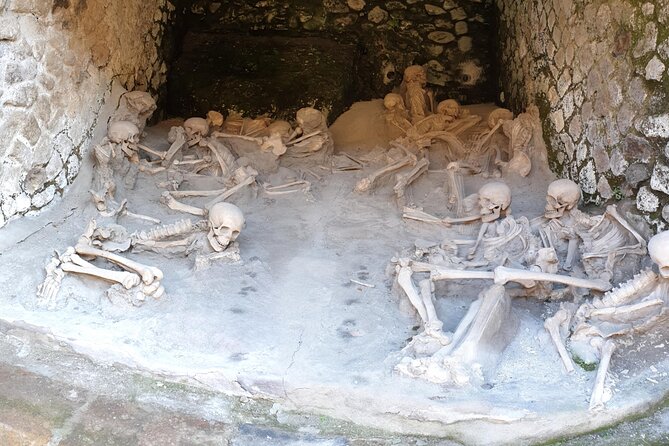
Herculaneum is easier on the senses: It’s smaller and generally better preserved, because lava and mud covered it differently than Pompeii.
Guides can work with your group: Antonino has been described as patient with kids and adaptable for visual/hearing needs.
Which Pompeii ticket and guide? Compare a few more.
- From Naples: Pompeii Ruins & Mount Vesuvius Day Tour★ 4.3 · 11,459 reviews
- From Naples: Skip-the-line Pompeii – Small Group Tour★ 4.5 · 4,401 reviews
- Naples or Sorrento: Full-Day Pompeii and Mount Vesuvius Tour★ 4.6 · 4,235 reviews
- Pompeii & Mt.Vesuvius Day Tour from Naples with Pizza Lunch★ 4.0 · 2,901 reviews
Naples pickup and the rhythm of a private day
This tour is built for comfort and control. You get an air-conditioned vehicle and a private setup, so you can start from where you’re staying instead of trekking to a central bus stop. If you’re arriving by cruise ship, pickup is arranged in the Naples area around the docking situation.
The “6 to 7 hours” timing matters because this is not a slow sightseeing cruise. You’ll be in motion most of the day, with frequent short stops at the most important areas of Pompeii and Herculaneum. The upside is that you avoid the most frustrating part of visiting these sites: getting to the right place at the right time and not losing hours to logistics.
Porta Marina and the first guided focus in Pompeii
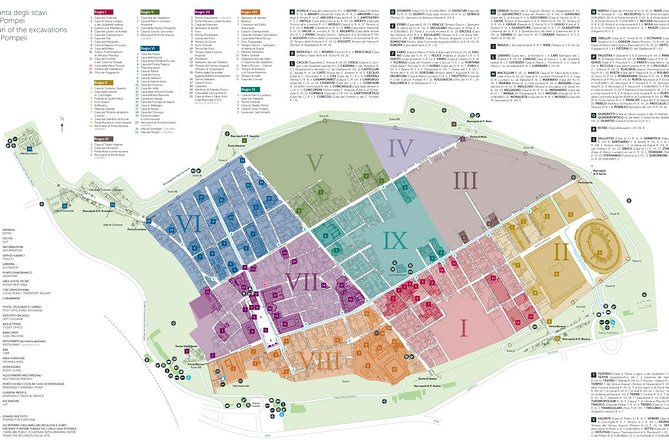
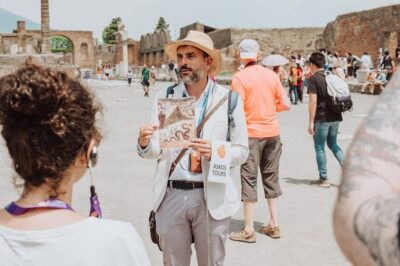
The day starts at Porta Marina, where you meet a licensed guide after handling tickets. This first block is your orientation. You’ll be led through the ruins as an ancient city layout rather than a random pile of stones, which makes the rest of Pompeii feel more readable.
A key detail: the guide is included only if you select the option with ruins guidance. If you didn’t choose a guided option, you still get the private-driver transportation and a structured walk-through, but you’ll miss some of the context a guide can add on the ground.
Two hours here is a good length. It’s enough time to get your bearings, learn what you’re looking at, and start recognizing areas like public spaces versus elite homes. If you have kids, this is also where you’ll usually start spotting small visual clues that make Pompeii feel real.
Pompeii highlights: forum life, a prosperous street, and the theatre district

Pompeii is huge, and the schedule reflects that reality. After your opening orientation, the itinerary leans into quick “hit points” that show how daily life worked.
At the Foro di Pompei (Civil Forum), you’ll be in the core civic area—places connected to justice, administration, business, and trade activity. It’s one of the spots that helps you understand Pompeii as a living city, not just a museum of temples.
Then you move along Via dell’Abbondanza, a street tied to prosperity. Even if you only get a short stop, the idea is to connect the forum’s civic heartbeat with the commercial street life that fed it.
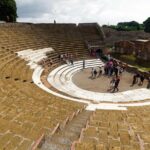
The Teatro Grande area brings you to the entertainment and meeting zone. Pompeii’s theatres also help you see how public space worked for gatherings, not just performances. In a place this big, these short stops act like signposts.
Casa del Menandro is one of the richer homes you’ll see briefly. It gives you a sense of what wealth looked like in architecture, decoration, and interior contents, even if you’re not spending hours inside the residence.
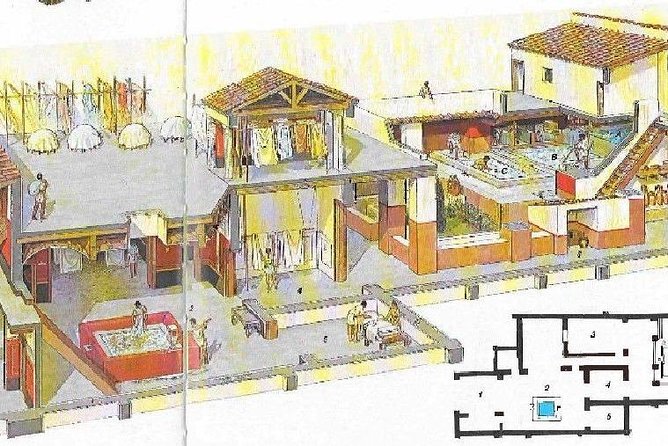
The Stabian Baths (Terme Stabiane) add another angle: leisure and routine. A Roman bath complex wasn’t just about cleanliness; it was a social center. If you want one Pompeii stop that shows how people spent time day to day, baths are a strong choice.
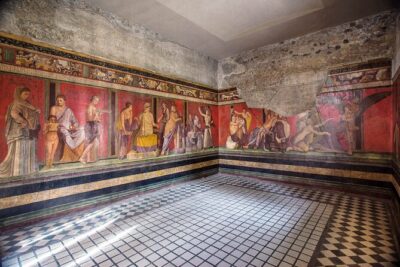
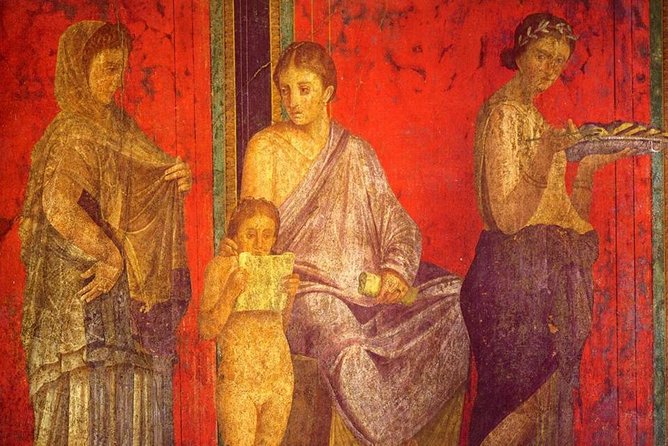
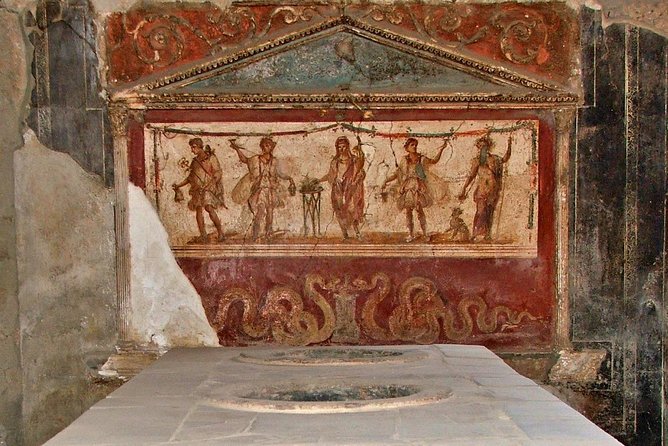
And yes, the itinerary includes the Lupanar, the purpose-built brothel. The reason this stop matters is that Pompeii preserves details that other sites don’t—especially the wall paintings that communicate how advertisements and messaging worked in everyday life. If that topic makes you uncomfortable, you can still decide how long you want to linger.
Pompeii’s museum stop: Antiquarium and the human scale of the finds
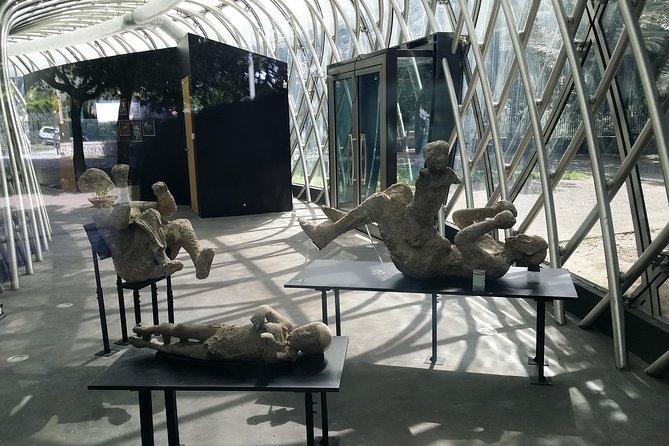
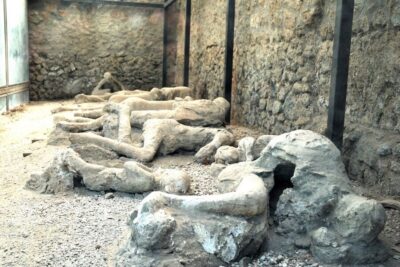
You also stop at the Antiquarium area in Pompeii, where you can see archaeological finds that relate to daily life and the eruption aftermath. One standout element mentioned in the tour description is the presence of casts of the victims of Mount Vesuvius’ eruption, plus materials showing Pompeii’s settlement before it became a thriving Roman city.
This is the stop that often changes how visitors feel about the ruins. Buildings and streets are striking, but museum context is what turns “wow” into understanding. The trade-off is time: you won’t have a full, slow museum day here, so keep this stop as your grounding moment rather than expecting a complete dig-site tour.
Herculaneum keeps a few more tours worth your time

Switching to Herculaneum: smaller site, better preservation
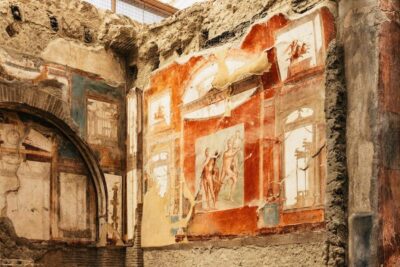
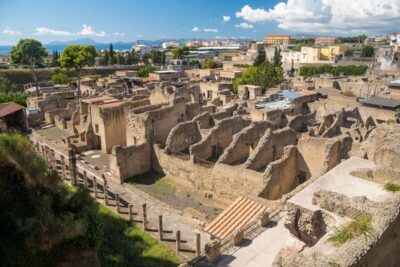
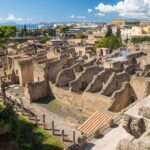
After Pompeii, you head to Parco Acheologico di Ercolano (Herculaneum). Here the tone changes. Herculaneum is smaller and less famous than Pompeii, but the preservation is generally stronger because the lava and mud covered the town in a different way.
That preservation angle is practical, not just academic. When surfaces and structures remain clearer, you can better picture entrances, street flow, and the way rooms lined up. In many visits, Herculaneum feels more intimate because you’re not fighting the sheer sprawl.
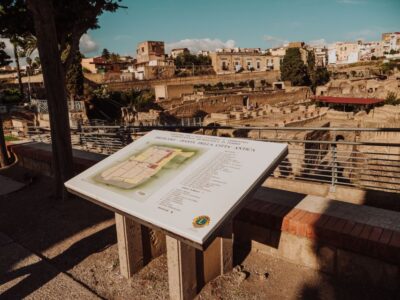
The tour schedule gives you a focused visit rather than a long exploration. If Pompeii felt like sprinting through big landmarks, Herculaneum often feels like slowing down slightly—even if you’re still on a tight timetable.
Herculaneum streets and stops you can pair with your pace
The itinerary continues with included site visits and smaller stops inside Herculaneum.
The House of the Hotel is described as the ruins of a large wealthy residence. You’ll get a quick look that helps you connect the town’s social differences to what you saw in Pompeii’s elite homes.
Next is the House of the Wooden Sacellum, which is especially interesting for the description of the wooden partition/door that was charred in the eruption. If you care about the small architectural details that survived, this is the kind of stop that rewards a close look.
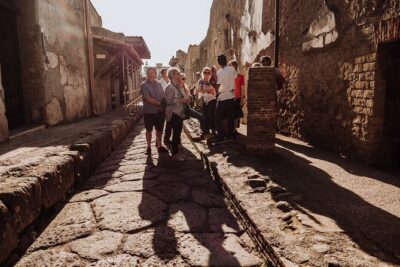
You also pass the Decumano Massimo, the main street. Even a short stop on a main axis helps you map the city layout in your head, which makes the walking feel more organized and less like wandering.
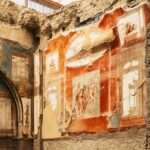
The College of the Augustales adds a political and community flavor. The building is tied to the Augustan period and connected to financing by brothers mentioned in an inscription context. For many visitors, this is where Herculaneum shifts from “ruins you see” to “society you can picture.”
Finally, there’s a Suburban Baths stop and an Antiquarium di Ercolano museum visit. The museum is noted for holding objects found next to skeletons—again, a reminder that this was a real place with people, not just a set for archaeology. If you’re sensitive to this theme, you’ll still likely learn a lot, but you may want to choose your time carefully inside the museum.
What’s included, what’s not, and how to budget realistically
This tour price is $429.69 per person, and it includes major logistics: private transportation, an air-conditioned vehicle, and bottled water. Pickup and drop-off are arranged from Naples-area hotels, ports, train station, and the airport (depending on vehicle access). You’ll also get a mobile ticket.
What’s not included can change the final cost, so it’s worth planning ahead:
- Lunch (not included)
- Access fees to ruins and monuments: €34 per booking (free for visitors younger than 18, as stated)
- Porta Marina entrance: €18 per person
- A professional ruins guide only if you choose the option that includes guidance (otherwise you’re more self-directed)
Here’s the value angle: you’re paying for the door-to-door convenience plus a structured route through two major sites in one day. If you try to DIY this with buses and trains, you’ll spend more time commuting and more energy solving small problems (which add up quickly in Pompeii and Herculaneum).
Timing, crowds, and getting the most out of short stops
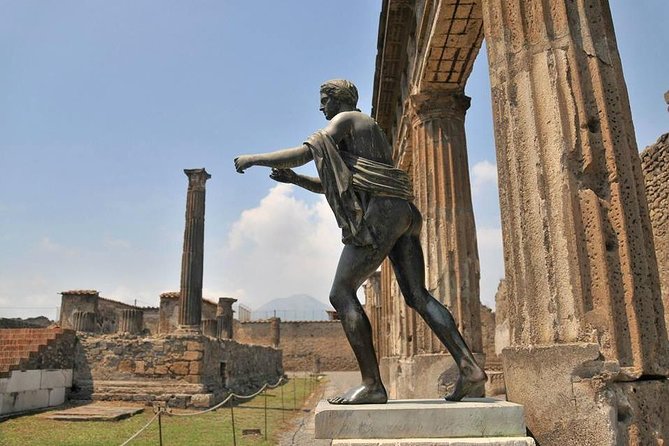
Pompeii can be crowded, and the itinerary is designed to keep you moving through key areas rather than waiting around. In the guidance style described in the praised experiences, the idea is to get you looking in the right direction quickly and to navigate around heavier foot traffic when possible.
If you can influence your day start time with your tour selection, I’d lean toward the earliest workable entry. Even if you don’t control the exact opening hour, arriving first helps you avoid the thickest crowd crush later.
The stops being short is both a strength and a limitation. You’ll likely see many of the headline areas, but you won’t get a slow, deep dive into any single room or fresco. My practical advice: decide in advance what you want most. If you love elite homes, prioritize the houses. If you want daily life, watch for the baths, theatres, and forum areas.
Guides, flexibility, and why the driver matters
The “private driver” part is more than comfort. It’s the difference between feeling like a visitor and feeling like you have a plan.
A DRIVE INTO THE BLUE is praised for pairing travelers with guides who explain what you’re seeing and adjust to the group. Names that come up include Antonino (often described as passionate and able to tailor the tour), Pepino as a driver praised for promptness and communication, and Anna as a Pompeii guide in one strongly positive account.
Also, because the tour is private (your group only), you’re not managing other people’s pace. That matters if you’re traveling with kids, older family members, or anyone who needs time to absorb what’s in front of them.
Who this Pompeii and Herculaneum trip is best for
I think this tour suits you best if you want:
- One day that covers both sites without turning your vacation into a logistics project
- A structured Pompeii route with guidance available at the start
- A more preserved-site contrast at Herculaneum
It may be less ideal if you want long museum-style wandering or if you’re hoping to spend half a day inside one major building. The format is “high-impact highlights,” not “slow archaeology marathon.”
If you’re traveling with children, the guide-focused setup is a plus. And if you have sensory needs in your group, the reported ability of Antonino to adjust how the tour is explained and organized is a meaningful detail to consider.
Should you book this private Pompeii and Herculaneum day trip?
Book it if you want maximum ancient-city value per hour and you’d rather pay for transport and structure than gamble with transit time. The private-door pickup, air-conditioned ride, and the Pompeii-and-Herculaneum pairing make it a strong Naples day plan.
Skip it (or consider a different format) if your ideal day is slow, quiet, and museum-deep. With many short stops, you’ll be better served by a tour that lets you linger longer in the places you love most.
FAQ
How long is the Pompeii and Herculaneum day trip?
The tour runs about 6 to 7 hours.
Where does pickup happen?
Pickup can be arranged from your Naples-area hotel, port, train station, or airport, depending on access by car. For some accommodations, the meeting spot will be the closest reachable spot.
Is the tour offered in English?
Yes, it’s offered in English.
Do I get a guide?
A professional guide at the ruins is included only if you select the option that includes the guide. Otherwise, you still follow the planned stops with transportation provided.
Are admission tickets included?
Not all entrances are included. You’ll pay access fees to ruins and monuments (listed as €34 per booking) plus the Porta Marina entrance (€18 per person). Some specific stops are listed as free or included, but overall admission costs still apply.
Is this a private tour?
Yes. It’s a private tour/activity, meaning only your group participates.
What if I need to cancel?
You can cancel for a full refund if you cancel at least 24 hours before the experience start time. If it’s canceled due to the minimum traveler requirement not being met, you’ll be offered a different date/experience or a full refund.
More Tour Reviews in Naples

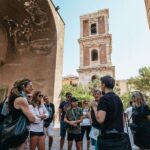

Herculaneum, a Few More Tours


More Pompeii Tours to Compare

More Naples tours, freshly reviewed




Pompeii Tours, compared.
 ★ 4.8Pompeii: Entry Ticket and Guided Tour with an ArchaeologistFrom $3519,459 reviews
 ★ 4.1Pompeii: Entry Ticket with Audio GuideFrom $4013,491 reviews
 ★ 4.8Pompeii: Small Group Tour with an ArchaeologistFrom $4012,264 reviews
 ★ 4.3Pompeii Ruins & Mount Vesuvius Day TourFrom $12011,459 reviews
★ 5.0Pompeii Small Group Tour with an ArchaeologistFrom $356,593 reviews
★ 4.3Pompeii Ruins & Mount Vesuvius Day TourFrom $12011,459 reviews
★ 5.0Pompeii Small Group Tour with an ArchaeologistFrom $356,593 reviews
 ★ 4.5Skip-the-line Pompeii – Small Group TourFrom $544,401 reviews
 ★ 4.6Naples or Sorrento: Full-Day Pompeii and Mount Vesuvius TourFrom $1044,235 reviews
 ★ 3.9Pompeii: Skip-the-line Entry Ticket with Audio Guide & MapFrom $433,153 reviews
Browse the lists this tour appears in