
Review · POMPEII TOURS
Pasta Cooking class in Pompeii
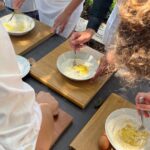
Dough and family secrets in a Pompeii kitchen. That’s the pull of this handmade pasta class with Sabrina at her home near Pompeii—small group, simple ingredients, and an “kitchen table” feel. You start outdoors in a small garden, then move inside as you learn the techniques behind fresh dough, rolling, and shaping like it’s been done for generations.
I particularly like the focus on hands-on learning—how to mix until it feels right, and how to roll it so it doesn’t fight you. I also like that the meal isn’t an afterthought: you eat what you make, with a starter of bruschetta using seasonal garden vegetables and a sweet dessert afterward. One consideration: it lasts about 3 hours, so wear comfortable clothes and expect to be standing and working with dough.
In This Review
- Key highlights to know before you go
- A 3-hour Pompeii pasta class set in a family kitchen
- Meeting at Via Messigno, 132 and what your time looks like
- The garden start: seeing ingredients before you touch dough
- Inside the kitchen with Sabrina: handmade pasta basics that actually make sense
- What you’ll make and eat: bruschetta, fresh pasta, and a sweet finish
- Wine, family atmosphere, and the little surprises
- Price and value: $94.68 for real food work, not a quick taste
- Mobile ticket and transfers: how to handle logistics smoothly
- Who this class is best for
- Should you book the Pompeii pasta cooking class?
- FAQ
- FAQ
- How long is the pasta cooking class?
- Where is the meeting point?
- How much does it cost?
- Is there a limit on group size?
- What’s included in the class meal?
- What are the transfer options?
- Do I get a ticket for this activity?
- Is the experience only for solo travelers?
- Are service animals allowed?
- Can I cancel for free?
Key highlights to know before you go
- Small group setting (max 10) keeps it personal and easier for kids or first-timers
- Garden-to-kitchen flow: you start outside with local produce before you cook
- Sabrina’s “feel the dough” instruction helps you understand the why, not just the steps
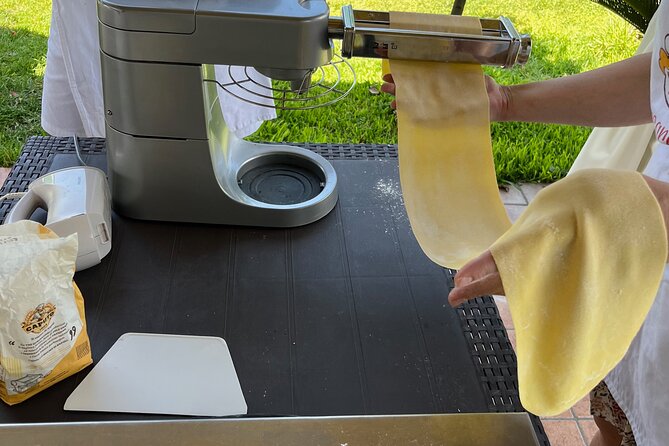
- Handmade pasta skills include learning with a pasta machine and making shapes like ravioli and fettuchini
- Family-table meal and possible wine make it feel like dinner, not a demo
Which Pompeii ticket and guide? Compare a few more.
- Pompeii Small Group Tour with an Archaeologist★ 5.0 · 6,593 reviews
- Discover the Ancient Ruins of Pompeii: Day Trip from Rome★ 3.5 · 2,247 reviews
- Pompeii and Herculaneum Small Group Tour with an Archaeologist★ 5.0 · 1,350 reviews
- Skip the Line Guided Tour of Pompeii led by an Archaeologist★ 5.0 · 703 reviews
A 3-hour Pompeii pasta class set in a family kitchen
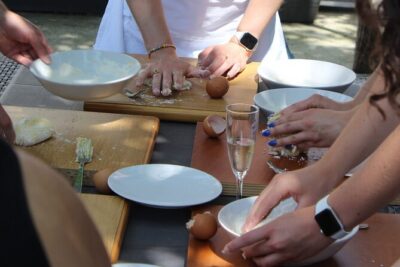
This is not a classroom. It’s a kitchen home experience run by Giardini Balestrieri, with Sabrina welcoming you into the space where she learned the recipes from her mother, and her mother from her grandmother. You’re in Pompeii, but the lesson doesn’t start with ancient ruins. It starts with food grown close by—first in the small garden, then in the house where you’ll make pasta from flour and eggs.
The format matters. With a maximum of 10 people, you’re not fighting for attention. You can ask questions while you’re mixing dough and rolling it out. That’s a big deal for a skill class, because pasta dough is one of those things where a small adjustment changes everything.
At around three hours, the pace is steady: you learn, you shape, you eat. If you like cooking experiences where you come away with practical skills (not just a couple of bites), this fits well.
Meeting at Via Messigno, 132 and what your time looks like
You meet at Via Messigno, 132, 80045 Pompei NA, Italy, and the activity ends back at the meeting point. That’s useful because it reduces the “where do we go next” stress—one less logistical puzzle in an already busy part of Italy.
Time-wise, expect a structured arc:
1) you begin outside with a look at the garden and ingredients
2) you move indoors for the pasta lesson
3) you sit down to eat what you prepared
Even if the day is packed with Pompeii ruins plans, a cooking class like this works because it gives you a different kind of memory. Ruins are visual and historical. Food is physical and repeatable—if you want, you can try again at home.
The garden start: seeing ingredients before you touch dough
One of the smartest parts of this experience is the garden first step. You’ll see products of the land before the lesson gets hands-on. That changes how you pay attention. Instead of treating the ingredients as generic “Italian cooking,” you start noticing what seasonal produce looks like and how it might end up in simple dishes.
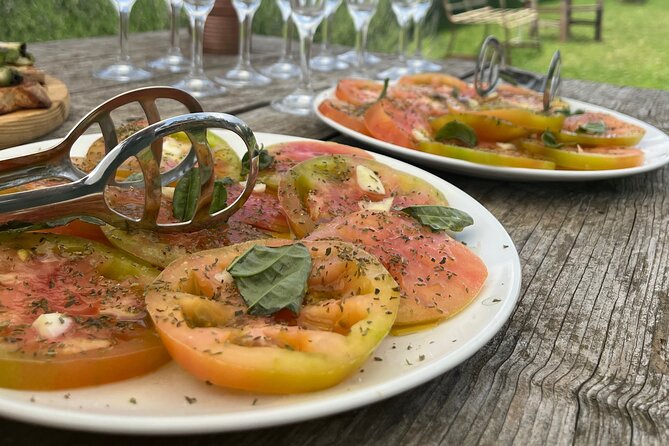
In the sample menu, your starter is bruschetta with seasonal vegetables, and the vegetables are described as coming from the garden. It’s a gentle way to connect the setting to the cooking. You’re not just eating; you’re learning how Italians often treat ingredients as the star—even when the steps are straightforward.
If you’re traveling with kids, the garden portion also helps. It gives them something to watch and point at before the flour flies.
Inside the kitchen with Sabrina: handmade pasta basics that actually make sense
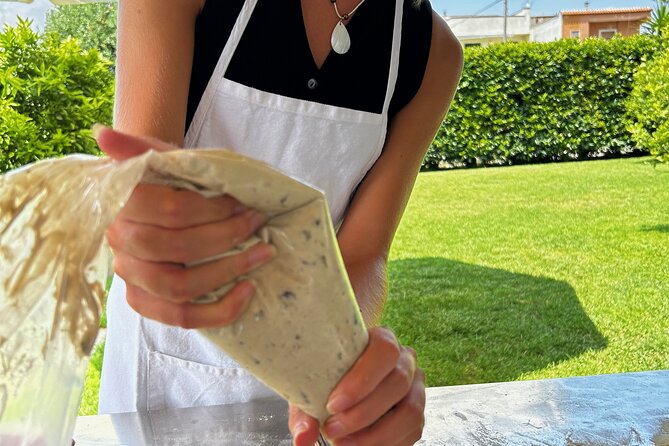
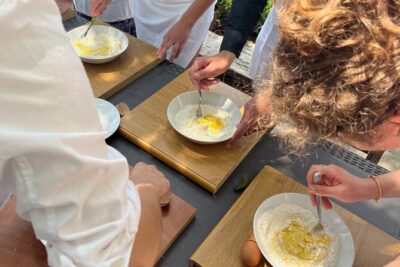
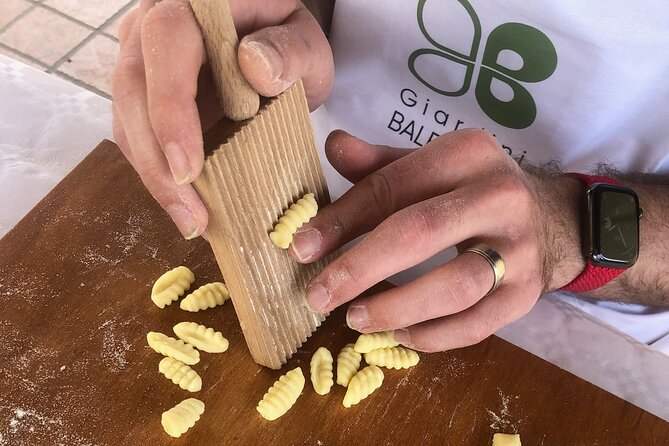
The core of the class is learning to make handmade pasta. The recipe style is described as only flour and eggs, plus the key ingredient that’s harder to write down: technique passed down through the family.
Sabrina teaches you how to feel when the dough is right—how it should look and how it should behave as you work it. That “feel” teaching is more valuable than a timed recipe. Dough depends on flour and humidity and how you handle it. If you can tell when it’s perfect, you’ll succeed even when your kitchen at home isn’t identical to hers.
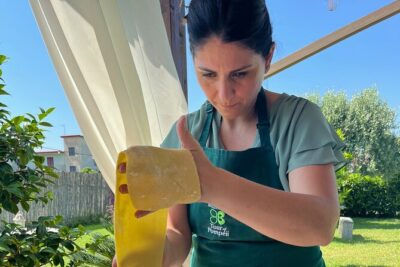
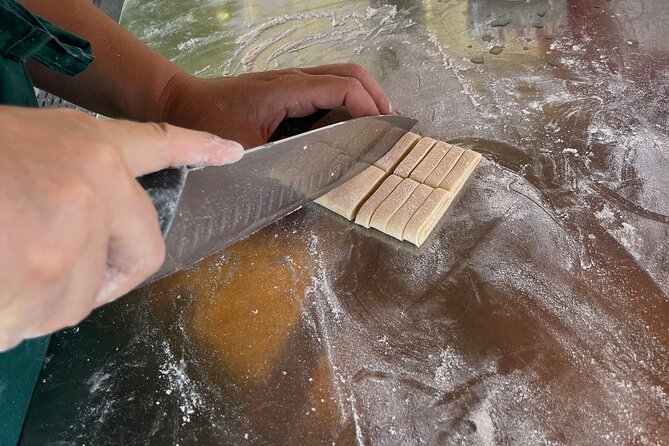
You also learn how to roll it out properly. In skill lessons, rolling is where most home attempts go sideways—too thick, too uneven, or tearing when you try to shape it. Getting this part explained helps your pasta taste better and also improves texture, not just appearance.
Small but important detail: there’s mention of learning flour types and using the pasta machine correctly. That’s useful if you want to recreate the process later without guessing.
Roll more pasta with a Neapolitan cook

What you’ll make and eat: bruschetta, fresh pasta, and a sweet finish
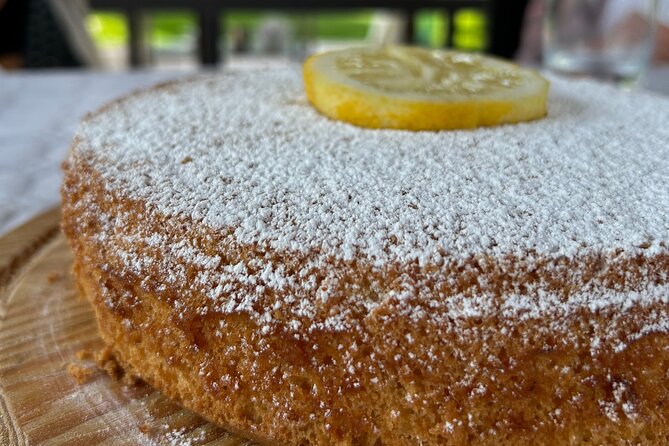
You’ll eat during the class, not after it. That’s part of the value. The sample menu lists:
- Starter: bruschetta with seasonal vegetables (from the garden)
- Main: fresh pasta
- Dessert: sweet of home
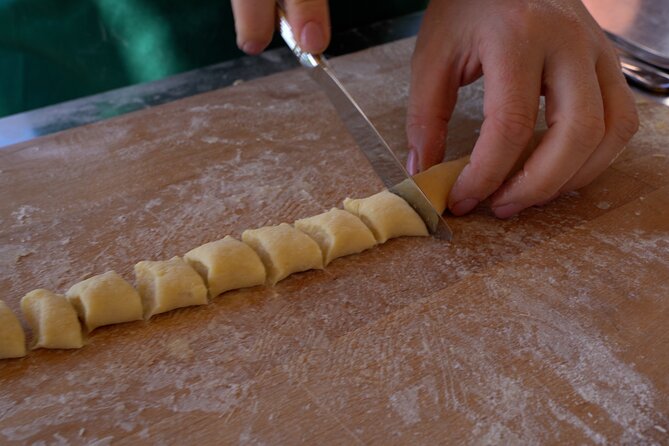
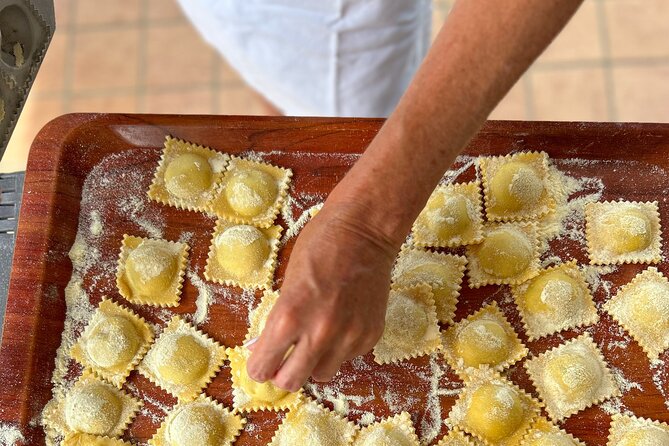
Some of the techniques you may practice go beyond the simplest dough: the experience includes making handmade shapes such as ravioli and also learning how to make fettuchini. You may also see a lemon sauce used with ravioli, depending on what’s being taught that day.
And yes—people describe the meal as the best part: you prepare it and then you sit down to enjoy what you made. That’s a key distinction from many cooking classes where you do prep but only taste a small portion. Here, the meal is part of the learning loop.
Wine, family atmosphere, and the little surprises
From the reviews provided with this listing, wine is part of the experience for some groups, including mentions of Gragnano wine that comes from Sabrina’s uncle’s vineyard. It’s not listed in the sample menu, so you should treat it as “often included” rather than guaranteed—but if wine is offered on your date, it fits the vibe: relaxed family dinner energy.
There’s also a charming detail in the way people describe meeting Sabrina’s family. You might meet her husband and kids, and one review even mentions a cat named Gary. That kind of household warmth is a real differentiator. You’re not just learning recipes; you’re seeing how the cooking connects to everyday life.
Price and value: $94.68 for real food work, not a quick taste
At $94.68 per person for about 3 hours (with a small group cap), this is not a budget activity. But it can still feel like good value because you’re doing the cooking yourself and then eating it. You’re getting:
- instruction that covers dough feel, rolling, and technique
- practical pasta-machine guidance
- a full meal that includes starter, fresh pasta, and dessert
If you compare this to “watch someone cook” tours, the cost starts making more sense. Skill classes cost more because they require time, ingredients, and small-group attention. And with a max of 10 travelers, you’re more likely to get hands-on time rather than standing back and hoping.
One more plus for planning: the pricing is per person, and the minimum for two people is stated. If you’re traveling as a couple, it’s straightforward to book.
Mobile ticket and transfers: how to handle logistics smoothly
This experience uses a mobile ticket, and it’s near public transportation. That’s helpful because Pompeii can be a traffic-and-parking puzzle.
Transfers are not included, but you can request a transfer by asking for information. If you’re staying far from the meeting point or you don’t want to deal with local timing, this is worth exploring early. When you contact the provider, ask what your options are and how close pickup is to where you’ll be standing when you’re ready.
Who this class is best for
This works especially well if you’re:
- cooking-curious and want to learn technique, not just taste food
- traveling with family members who enjoy hands-on activities
- a couple or small group that benefits from a max 10 format
- someone who wants an authentic-feeling experience without adding more museum time
It’s also a nice counterbalance to Pompeii sightseeing. After hours among stones and shadows, pasta dough gives you a change of pace that still feels connected to Italian life.
If you dislike getting flour on your hands, you might want to think twice. If you’re okay with a practical, slightly messy (and very fun) skill session, you’ll likely enjoy it.
Should you book the Pompeii pasta cooking class?
I’d book it if you want a memorable activity that produces something you can carry home—at least in your skills and confidence. The combination of a garden start, family-style instruction from Sabrina, and a sit-down meal you helped make is the kind of experience that doesn’t fade after the pictures stop.
Skip it if you’re looking for a quick, low-effort food stop, or if three hours of active cooking isn’t your thing.
FAQ
FAQ
How long is the pasta cooking class?
It’s about 3 hours.
Where is the meeting point?
You’ll meet at Via Messigno, 132, 80045 Pompei NA, Italy, and the activity ends back at the same meeting point.
How much does it cost?
The price is $94.68 per person.
Is there a limit on group size?
Yes. The experience has a maximum of 10 travelers.
What’s included in the class meal?
The sample menu includes bruschetta with seasonal vegetables, fresh pasta, and a sweet of home dessert.
What are the transfer options?
Transfers are not included, but you can request a transfer by asking for information.
Do I get a ticket for this activity?
Yes. It includes a mobile ticket.
Is the experience only for solo travelers?
There is a minimum experience for two people.
Are service animals allowed?
Yes. Service animals are allowed.
Can I cancel for free?
Yes. You can cancel for a full refund up to 24 hours in advance of the experience’s start time.
More Tour Reviews in Pompeii



More Cooking Tables in Pompeii
More Pompeii Tours to Compare
More Pompeii tours, freshly reviewed
Pompeii Tours, compared.
 ★ 4.8Pompeii: Entry Ticket and Guided Tour with an ArchaeologistFrom $3519,459 reviews
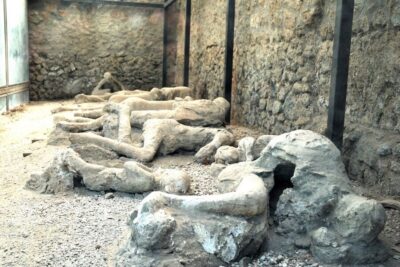 ★ 4.1Pompeii: Entry Ticket with Audio GuideFrom $4013,491 reviews
 ★ 4.8Pompeii: Small Group Tour with an ArchaeologistFrom $4012,264 reviews
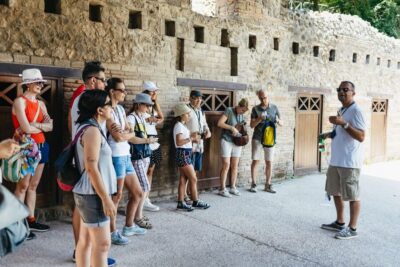 ★ 4.3Pompeii Ruins & Mount Vesuvius Day TourFrom $12011,459 reviews
★ 5.0Pompeii Small Group Tour with an ArchaeologistFrom $356,593 reviews
★ 4.3Pompeii Ruins & Mount Vesuvius Day TourFrom $12011,459 reviews
★ 5.0Pompeii Small Group Tour with an ArchaeologistFrom $356,593 reviews
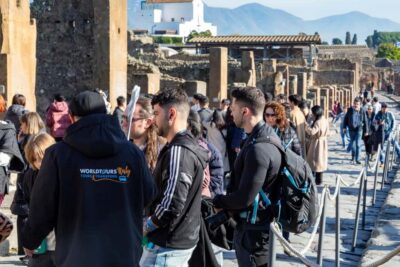 ★ 4.5Skip-the-line Pompeii – Small Group TourFrom $544,401 reviews
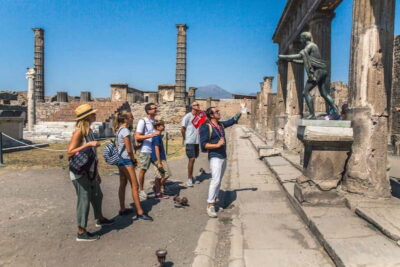 ★ 4.6Naples or Sorrento: Full-Day Pompeii and Mount Vesuvius TourFrom $1044,235 reviews
 ★ 3.9Pompeii: Skip-the-line Entry Ticket with Audio Guide & MapFrom $433,153 reviews
Browse the lists this tour appears in