
Review · POMPEII TOURS
Late Afternoon Best time to visit Pompei on a private tour
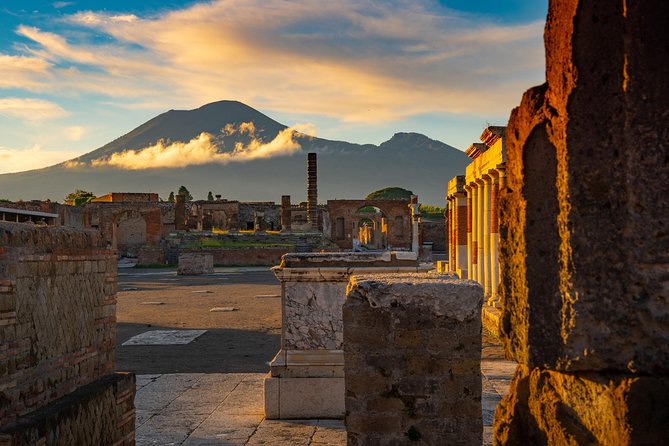
Sunset turns Pompeii from ruin to story. This private late-afternoon Pompeii tour uses a licensed guide, Alex, to help you read the site instead of just walking it. I like two things most: the pacing (fast enough to cover highlights, slow enough for real explanations) and the timing, which trades the hardest midday crowds and heat for softer light. The main drawback to consider is that Pompeii is still a lot of walking on uneven ground, and the 2-hour format can feel like a sprint if you want to linger everywhere.
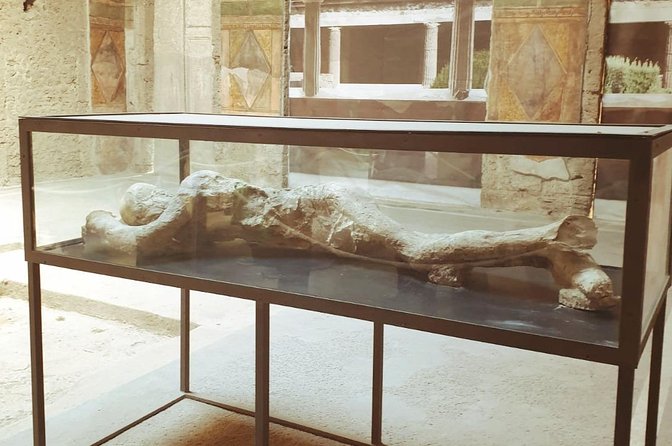
If you are traveling with teens, kids, or a mixed group, a private guide really matters. I also like that the route includes the human side of AD 79, including the plaster casts of victims—hard to forget once you see them in person.
In This Review
- Why this late-afternoon private Pompeii tour works
- Late afternoon vs. midday crush: what changes in your visit
- The value of a private guide (and why Alex’s style matters)
- Meeting point: where to start and how to plan your arrival
- The “need-to-know” about tickets and the mobile entry
- Stop-by-stop route: what you’ll see and why it matters
- Porta Marina to the main highlights: Forum, baths, water, and more
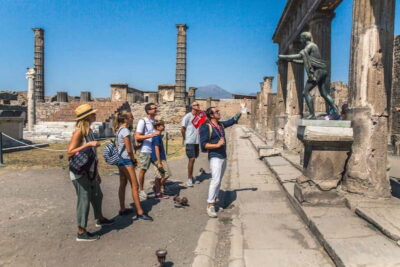
- The Forum (Foro de Pompeya): Pompeii’s daily power center
- Temple of Apollo: gods and mythology in stone
- Stabian Baths (Terme Stabiane): Roman leisure you can feel
- Teatro Grande: Greek theatre inside Roman life
- Casa del Menandro: wealth you can study
- Panificio di Popidio Prisco: a 2,000-year-old bakery
- Termopolio di Vetuzio Placido: ancient street food
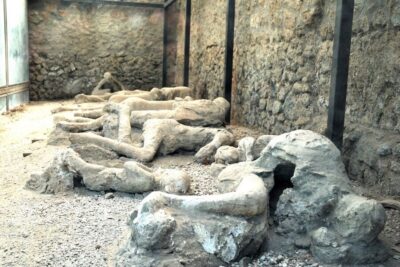
- Orto dei Fuggiaschi: plaster casts and the eruption’s human cost
- What to expect from the pacing in a 2-hour private tour
- Weather, light, and that late-day bonus
- Who this tour suits best (and who might want something else)
- Should you book this late-afternoon private Pompeii tour?
Why this late-afternoon private Pompeii tour works
Golden-hour lighting for big monuments: You get the site in warm late-day light, which makes details easier to spot and photos more flattering.
A guide who adjusts to your group: Alex keeps people engaged, answers questions, and can slow down for slower walkers.
Stop types that cover more than one Pompeii theme: politics and religion (Forum, Apollo), daily life (bakeries, street food), and the eruption’s aftermath (casts).
Clever use of quieter timing: going late helps you dodge some of the worst crowd pressure without needing an early-morning alarm.
Private pacing with a focused route: you do a lot in 2 hours, but you also get the chance to ask why things were built and how they worked.
Which Pompeii ticket and guide? Compare a few more.
- Pompeii Small Group Tour with an Archaeologist★ 5.0 · 6,593 reviews
- Discover the Ancient Ruins of Pompeii: Day Trip from Rome★ 3.5 · 2,247 reviews
- Pompeii and Herculaneum Small Group Tour with an Archaeologist★ 5.0 · 1,350 reviews
- Skip the Line Guided Tour of Pompeii led by an Archaeologist★ 5.0 · 703 reviews
Late afternoon vs. midday crush: what changes in your visit
Pompeii is famous for a reason, but it can also be exhausting. Late afternoon is a smart compromise: the temperature often eases, and you’re less likely to feel like you’re elbowing through the same photo spot for the hundredth time that day.
This tour is built around that idea. It’s timed so you can see key sights in golden light during sunset, and that light also helps you notice things you might miss in harsh noon sun. Even if the sky isn’t perfectly clear, the cooler conditions can make the whole experience feel more human.
One more practical point: Pompeii closes access at certain times, and the day’s light affects how long you’ll want to keep going. Doing a late-afternoon private tour means you can enjoy the site at a calmer rhythm without losing your whole day to logistics.
The value of a private guide (and why Alex’s style matters)
A private tour costs more than joining a group. With $249 for about 2 hours, it can still feel like a win if you care about context and you hate wasting time. Your guide is not just pointing—your guide is connecting the dots between buildings, daily routines, and the eruption of AD 79.
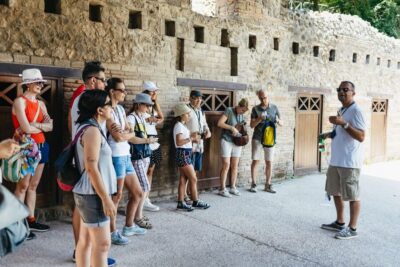
What really comes through with Alex is how he holds attention. I like guides who can explain with stories, not just facts, and Alex does that. In practice, that means you’ll move quickly through the site to cover major highlights, but stop when you need clarity—especially when questions pop up.
This is also a tour that works well for different ages. If you have teens who get bored easily, or a kid who needs a bit more animation, a private guide can adapt in a way a standard group tour often can’t.
Meeting point: where to start and how to plan your arrival
The tour starts at Via Villa dei Misteri, 2, 80045 Pompei NA, Italy and ends back at the meeting point. From there, you begin your on-site walk at Porta Marina, the sea gate.
That matters because Pompeii is not compact in the way people imagine. Even with a private route, you’ll still be crossing real distances on cobblestones and paths that aren’t meant for roller-skating. I’d plan to arrive a little early so you can find your guide without stress.
You’ll also want comfortable walking shoes. The itinerary is packed with stops, and the time you save by going private is mostly about not standing around waiting in lines or crowds.
The “need-to-know” about tickets and the mobile entry
The entrance ticket is not included. The price listed is €18 for adults, and entry is free under 18. Your tour uses a mobile ticket, which is convenient if you prefer to keep things digital.
If you want less friction at the gate, ask about skip-the-line tickets. The guide can buy them on request, which can help you protect your limited 2-hour window.
If you’re traveling with multiple people, I’d also do the math in advance. When entrance is separate, the total cost depends on who’s in your group. That said, paying for a private guide can still be good value because you’re paying for how you experience the site, not just access.
Rather go private? More options in Pompeii



Stop-by-stop route: what you’ll see and why it matters
This tour is designed as a focused walk through Pompeii’s biggest themes: civic life, Roman leisure, domestic wealth, and the eruption’s human cost. The specific order you experience may flex based on crowd levels and opening rotations for certain houses, but the spine of the visit stays the same.
Porta Marina to the main highlights: Forum, baths, water, and more
Your visit begins at Porta Marina, the sea gate. Expect an introduction that frames Pompeii and explains the eruption dynamics of AD 79. That context is crucial. Without it, the site can feel like random ruins; with it, you start seeing patterns.
From there, you’ll hit major areas like:
- the Forum, Pompeii’s main square and the center of political, economic, religious, and social life
- the body casts, preserved in their last moments
- an ancient public bath area
- a rich house selected based on crowds/opening rotation or your request
- shops and workshops, plus the water system
- and the theatre
The value here is variety. You’re not only looking at big monuments; you’re also seeing how people ate, worked, washed, and gathered.
One consideration: because you’re covering many zones, you may not get long sittings at every spot. If you want museum-style pacing, you’ll probably wish for more time. If you want understanding plus highlights, this route hits the sweet spot.
The Forum (Foro de Pompeya): Pompeii’s daily power center
The Forum gets about 10 minutes on the schedule. That’s enough time to learn what the space was for and why it mattered.
When you’re standing there, you’ll get a clearer picture of civic life: speeches, business, religious events, and the social rhythm of the city. It’s the kind of place where a guide makes the difference, because the ruins still feel readable—you just need the right keys.
Temple of Apollo: gods and mythology in stone
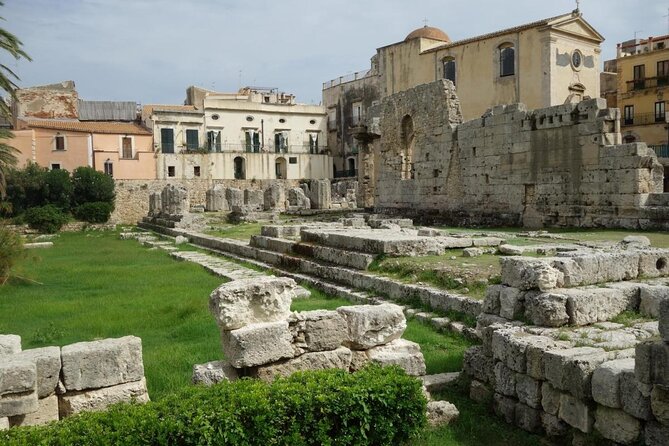
Next is the Temple of Apollo, roughly 5 minutes. This stop is short, but it helps you understand how religion and identity were built into city life.
When you’re traveling through Pompeii, it’s easy to focus only on “houses and streets.” A stop like Apollo reminds you the city was also organized around belief and ceremony.
Stabian Baths (Terme Stabiane): Roman leisure you can feel
At around 15 minutes, the Stabian Baths are a strong anchor. Even if you’re not a Roman-history buff, baths are a great window into daily routines. You’ll learn how bathing worked as a social and practical activity, not just hygiene.
It’s also one of those areas where you can picture the movement: people coming in, warming up, meeting, chatting. Pompeii stops being abstract when you imagine the flow of people in real spaces.
Teatro Grande: Greek theatre inside Roman life
The Greek theatre area is scheduled for about 15 minutes. That mix—Greek architecture ideas in a Roman city—shows how Pompeii was connected to wider Mediterranean culture.
A good guide will help you see why theatres mattered: they weren’t only entertainment. They also reinforced status and public life.
Casa del Menandro: wealth you can study
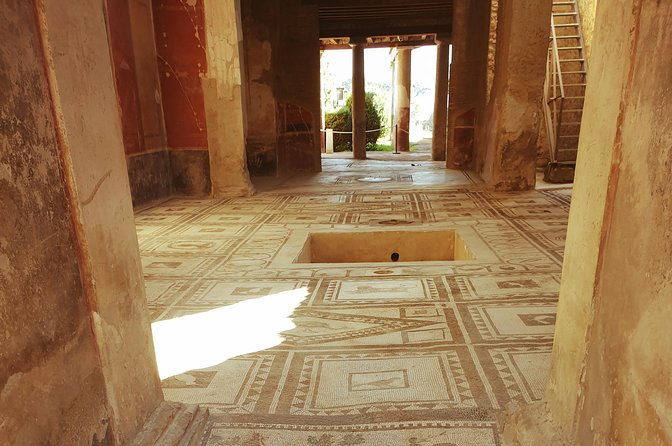
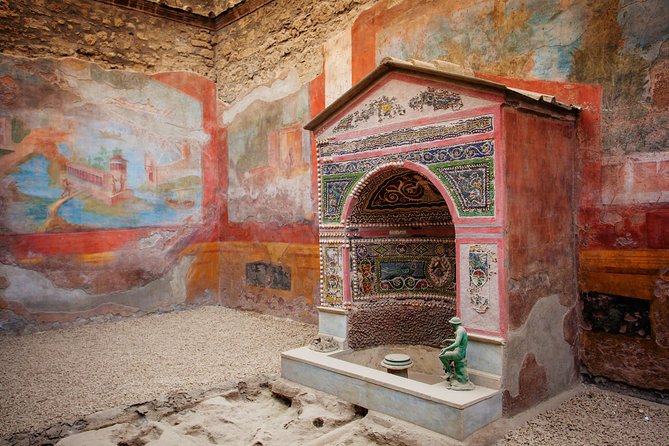
The House of Menander (Casa del Menandro) gets about 20 minutes. This is one of those stops where the guide’s storytelling helps you move beyond “wow, fancy house” and into “this house was designed for specific habits.”
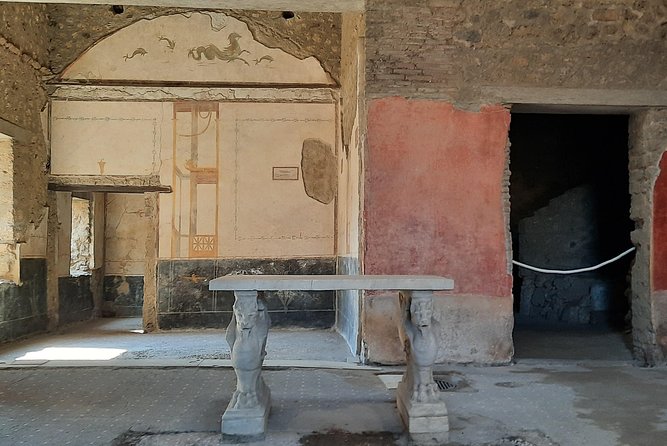
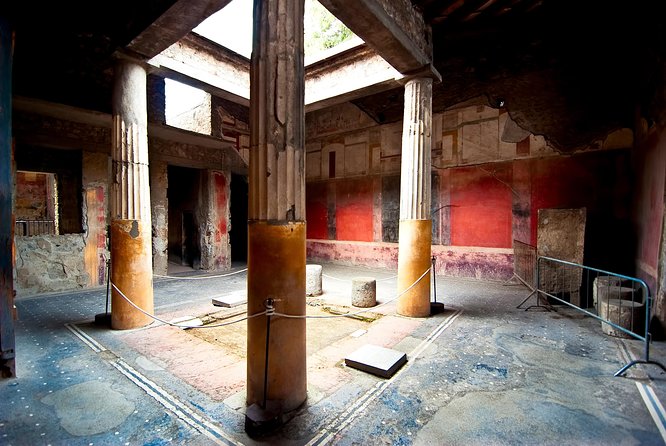
You’ll see features like fresco paintings and mosaics. Even a short visit can teach you how Roman households displayed taste, power, and personality—through art and layout.
Panificio di Popidio Prisco: a 2,000-year-old bakery
The itinerary includes the Panificio di Popidio Prisco, with about 10 minutes. This is one of the most fun stops because it’s about food production, not just monuments.
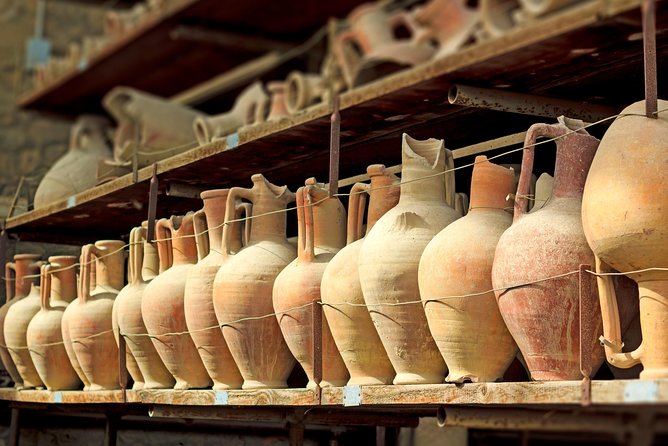
You’ll see the old baking equipment, including the oven and mills. It’s the kind of place where the “how” hits you fast. Suddenly you’re not just touring Pompeii—you’re understanding the mechanics of everyday life.
Termopolio di Vetuzio Placido: ancient street food
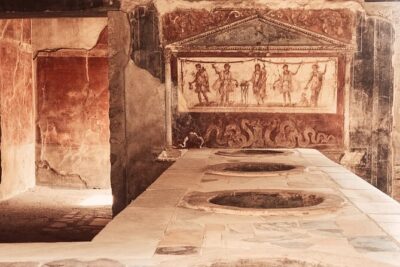
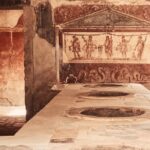
Next is the Termopolio di Vetuzio Placido, about 5 minutes. It’s a quick stop, but it’s memorable because it’s so relatable. Termopolia were essentially street-side spots for hot meals.
If you want a Pompeii highlight that feels modern in concept—order, eat, move on—this is it. Even without a full meal, you can mentally place yourself there.
Orto dei Fuggiaschi: plaster casts and the eruption’s human cost
The tour finishes with Orto dei Fuggiaschi, scheduled for about 15 minutes. This is where Pompeii becomes emotionally heavy. You’ll see the plaster casts of people affected by the eruption—preserved in the last seconds of life.
If you’ve never seen the casts before, treat this part of the visit carefully. Slow down. Ask questions. Let it land. It’s a sobering reminder that this wasn’t a distant tragedy; it happened to individuals with names, routines, and families.
What to expect from the pacing in a 2-hour private tour
Two hours at Pompeii is both perfect and imperfect. Perfect because you can get the essentials—Forum, Apollo, baths, theatre, house, food stops, and the casts—without exhausting yourself for a full day. Imperfect because Pompeii rewards lingering, and you can’t linger everywhere in 120 minutes.
The good news is that this tour is private, so the guide can adjust. Alex is described as patient and quick to stop and explain items when asked. If you have a group that moves slower, that flexibility can be a big deal.
If you’re a fast walker who loves snapping photos, you’ll still have time for key viewpoints and explanations. If you’re a slow, curious walker, your guide’s willingness to adjust can keep the experience satisfying rather than rushed.
Weather, light, and that late-day bonus
This is where the late-afternoon plan pays off. The tour requires good weather, so there’s a built-in factor: rain can change the experience. But when the weather cooperates, the light is part of the show.
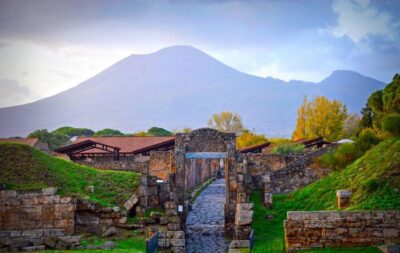
One of the best practical advantages is that you can get cooler conditions without sacrificing too much of your day. And if you happen to visit when skies are dramatic—like stormy, shifting clouds—you might find the site feels even more cinematic than usual.
Bring the usual basics: sun protection, water, and a light layer if evenings feel cool. Pompeii’s outdoor walking makes small weather changes feel bigger.
Who this tour suits best (and who might want something else)
This private tour is a great match if you:
- want a highlight-focused route in about 2 hours
- care about understanding what you’re seeing, not just walking past it
- hate crowds and prefer a calmer time of day
- are traveling with teens, families, or mixed-age groups that need pacing flexibility
You might consider a longer tour (or a more relaxed route) if you:
- want to spend extra time inside houses and side areas
- have mobility limits that make uneven cobblestones hard
- prefer spending half your visit at just one or two major locations
But for most people, this is a smart way to get real Pompeii value without living on your feet all day.
Should you book this late-afternoon private Pompeii tour?
Yes, if you want Pompeii with context, not just sightseeing. I like that this experience focuses on the big essentials—Forum, temples, baths, the theatre, domestic art, food, and the casts—while still respecting your time with a 2-hour private pace. Alex is the kind of guide who can answer questions and keep different ages engaged, and that turns Pompeii from a checklist into a story you actually remember.
Book it especially if you dislike early starts and want the site in softer light. Just plan for walking, budget for the separate €18 adult entrance ticket, and bring weather-ready comfort.
More Tours in Pompeii


More Tour Reviews in Pompeii

More Pompeii Tours to Compare
More Pompeii tours, freshly reviewed


Pompeii Tours, compared.
 ★ 4.8Pompeii: Entry Ticket and Guided Tour with an ArchaeologistFrom $3519,459 reviews
 ★ 4.1Pompeii: Entry Ticket with Audio GuideFrom $4013,491 reviews
 ★ 4.8Pompeii: Small Group Tour with an ArchaeologistFrom $4012,264 reviews
 ★ 4.3Pompeii Ruins & Mount Vesuvius Day TourFrom $12011,459 reviews
★ 5.0Pompeii Small Group Tour with an ArchaeologistFrom $356,593 reviews
★ 4.3Pompeii Ruins & Mount Vesuvius Day TourFrom $12011,459 reviews
★ 5.0Pompeii Small Group Tour with an ArchaeologistFrom $356,593 reviews
 ★ 4.5Skip-the-line Pompeii – Small Group TourFrom $544,401 reviews
 ★ 4.6Naples or Sorrento: Full-Day Pompeii and Mount Vesuvius TourFrom $1044,235 reviews
 ★ 3.9Pompeii: Skip-the-line Entry Ticket with Audio Guide & MapFrom $433,153 reviews