
Review · HERCULANEUM TOURS
Herculaneum: Tickets & Tour with a Local Archaeologist
Two thousand years later, the street still talks. With Skip-the-line entry and a licensed archaeologist guide, Herculaneum (Ercolano) turns ruins into a readable city, not just a photo stop. I especially like how guides such as Enrica use clear stories to connect the site to real people in 79 AD.
What I like most is the level of preservation you actually get to see up close—frescoes, mosaics, and the chilling reality of the House of Skeletons. One drawback: this tour is not suitable for wheelchair users, and electric wheelchairs aren’t allowed, so it’s best if you can manage the walking parts of an ancient site.
In This Review
- Key things to know before you go
- Herculaneum’s 79 AD time capsule: why it feels more human
- Starting at Biglietteria Ercolano: arrive early and get settled
- Casa dei Cervi (House of the Deer): mosaics and domestic life, up close
- Casa di Nettuno ed Anfitrite: myth, decoration, and meaning
- Sacellum of the Augustales: the shrine you don’t want to skip
- House of Skeletons: where history turns quiet and personal
- Casa dell’Albergo and the walkable rhythm of Roman streets
- Public baths, water systems, and the city’s daily pulse
- Price and value: what $58 buys you (and what it doesn’t)
- Who should book this tour, and who might want a different plan
- Should you book this Herculaneum archaeologist tour?
- FAQ
- How long is the Herculaneum tour?
- Where do I meet the guide?
- Is skip-the-line entry included?
- What’s included with the tour besides the tickets?
- What languages are offered?
- Are food and drinks included?
- Is this tour suitable for wheelchair users?
- What should I bring?
- Can I cancel for a full refund?
Key things to know before you go
- Skip-the-line tickets save you waiting at Biglietteria Ercolano.
- Licensed archaeologist guidance helps you read details most people miss.
- 2 hours is the sweet spot for the core route without feeling like a marathon.
- Preservation is the whole story: bright wall art, mosaics, and human remains where they were found.
- Headsets when needed so you can hear the guide if the group grows past 11 people.
- Somber moments are handled with care, including the skeleton area.
Herculaneum’s 79 AD time capsule: why it feels more human
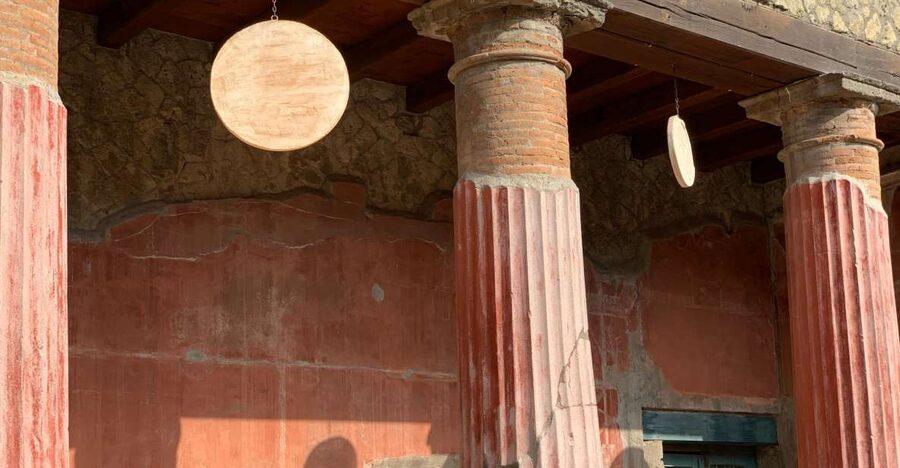
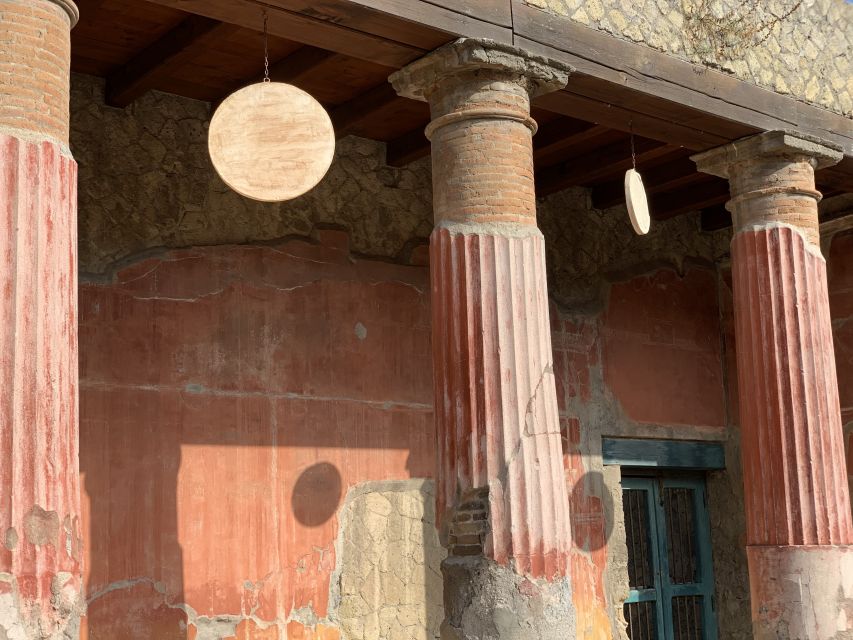
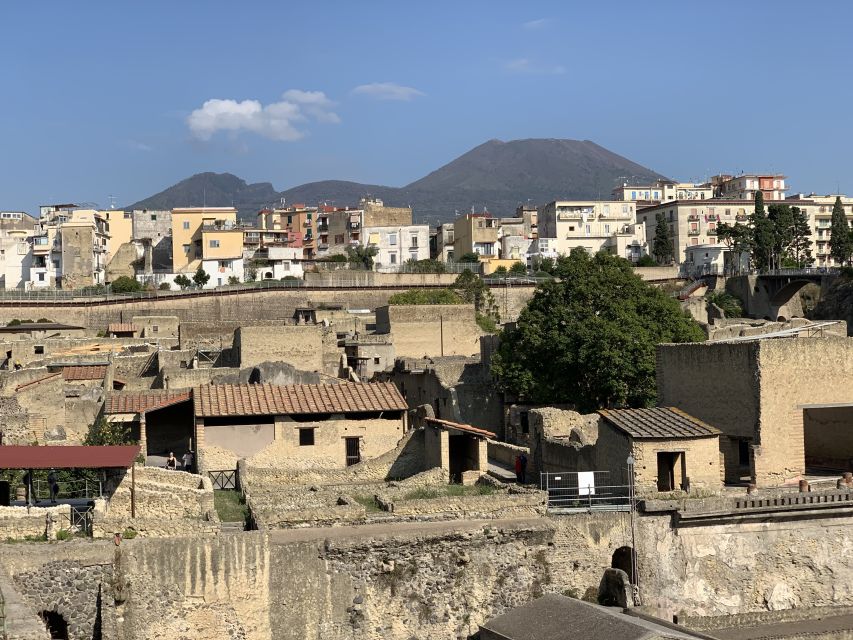
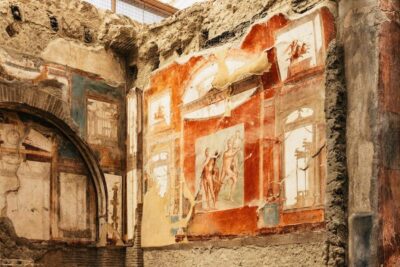
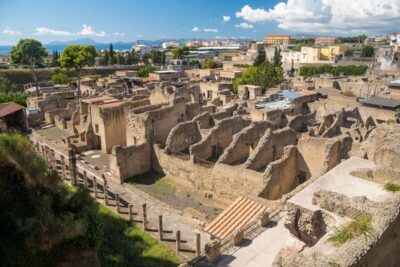
Herculaneum is the sister site to Pompeii, but it lands differently. When Mount Vesuvius erupted in 79 AD, this Roman seaside town was buried under volcanic material. The burial conditions helped preserve far more than stone alone—think wall paintings, mosaics, and even carbonized everyday objects.
That’s why a guided tour matters here. Without context, you see “old rooms.” With an archaeologist, you see how people lived, decorated, cooked, bathed, and worshipped—and what was left behind at the moment of catastrophe.
I also like the pacing of Herculaneum compared with Pompeii. It’s more intimate, so you can keep your brain engaged with each house and corner rather than bouncing between massive plazas.
Starting at Biglietteria Ercolano: arrive early and get settled
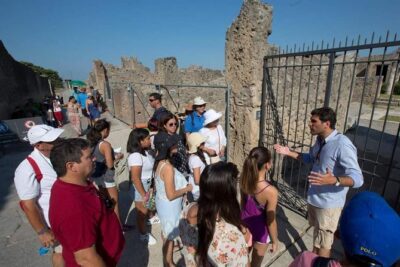
Your tour starts at the ticket office in Biglietteria Ercolano. Plan to show up about 10 minutes early so you can find your group, get any headset if it’s needed, and hear the intro before you begin walking.
This matters because the whole site experience depends on timing. The skip-the-line entry is there to get you in faster, but you still want to be ready to start promptly once you’re inside.
If you’re sensitive to sound, you’ll be glad the tour includes headsets when groups exceed 11 people. In louder moments, it helps you catch every key detail the guide points out.
Casa dei Cervi (House of the Deer): mosaics and domestic life, up close
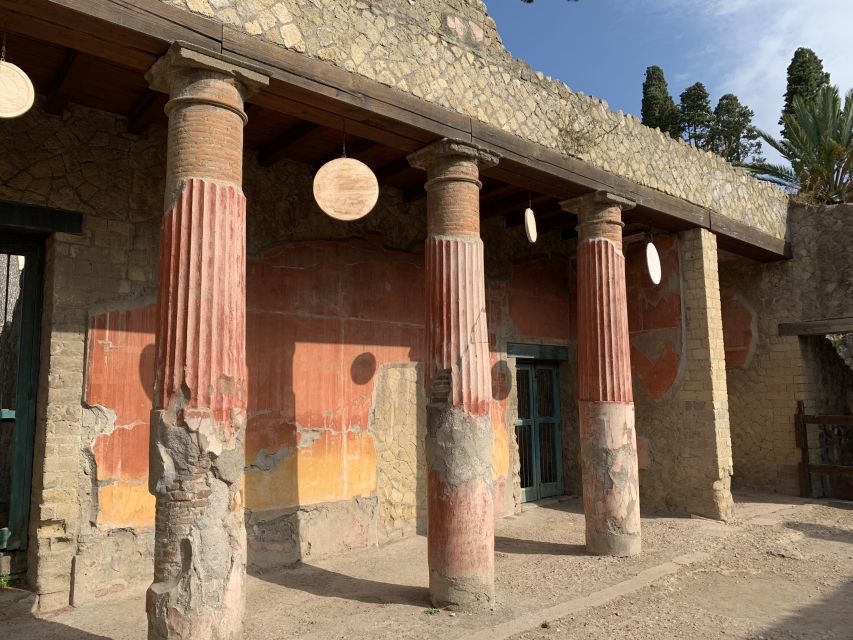
The tour route begins with Casa dei Cervi, commonly known as the House of the Deer. This is where you get your first real sense of how Herculaneum’s villas worked as living spaces—not just architectural shells.
Expect a guided look at the house’s preserved interior features, with attention to how the decoration and layout reflect status and daily routines. The guide’s job is to point out what’s meaningful: where you should look first, what the floor and walls are telling you, and why the preservation quality is so rare.
One practical note: this early stop sets the tone for the whole visit. If you’re tired, it’s still worth paying attention here, because later sections—especially the skeleton and refuge areas—hit harder when you’ve already learned how to “read” a Roman room.
Casa di Nettuno ed Anfitrite: myth, decoration, and meaning
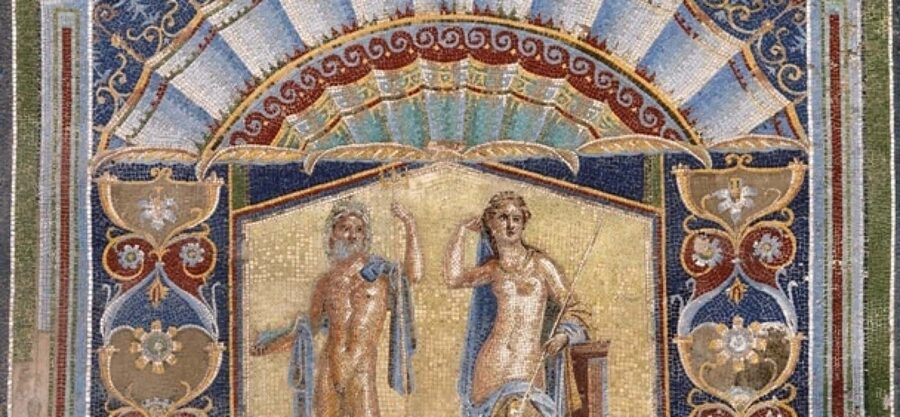
Next comes Casa di Nettuno ed Anfitrite. Even if you don’t know the myth references, the house’s theme helps you understand why Roman art wasn’t just decoration. It was identity. It was conversation. It was the homeowner showing taste, connections, and worldview.
Your archaeologist guide should be pointing out the visual language—what elements repeat, what survives best, and how the art fits the rooms’ functions. The difference between seeing “pretty pictures” and understanding “how the Romans wanted this space to feel” is the difference between a quick walk and a real experience.
If you’re coming straight from Pompeii, this stop can be a helpful reset. Herculaneum’s preservation makes wall and floor details easier to interpret on the spot.
Sacellum of the Augustales: the shrine you don’t want to skip
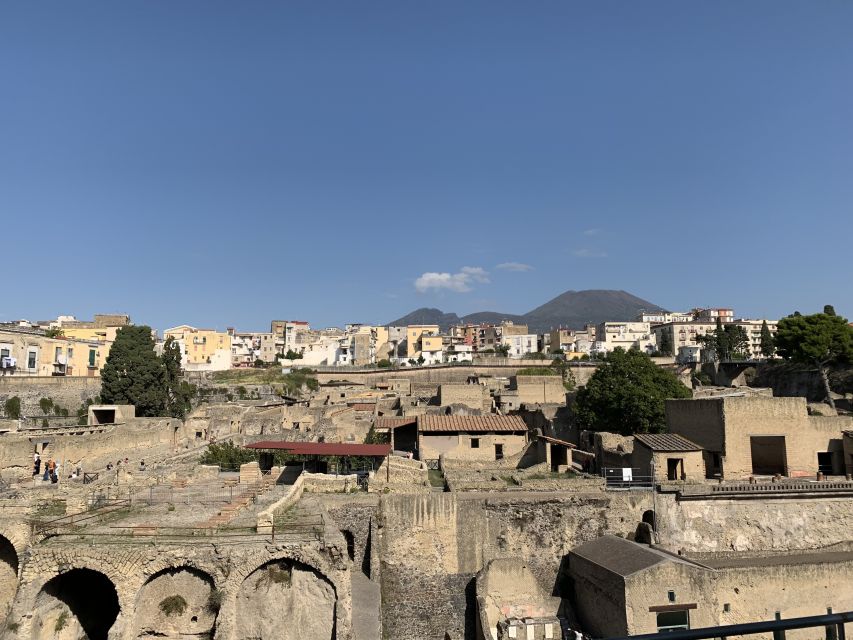
The Sacellum of the Augustales is a key stop because it shifts the story from homes to community. A sacellum is a small shrine, and this one connects to the Augustales—local figures tied to worship connected with the Roman imperial system.
A good guide will make this make sense. You’ll likely hear how roles and beliefs shaped social life, and why shrines like this were more than private corners. They reflect who mattered, what people practiced, and how public religion shaped daily routines.
This stop is also a mental gear-change. After rooms filled with domestic life, you get a place that reminds you Herculaneum had institutions and rituals. That balance is what makes the city feel complete.
House of Skeletons: where history turns quiet and personal
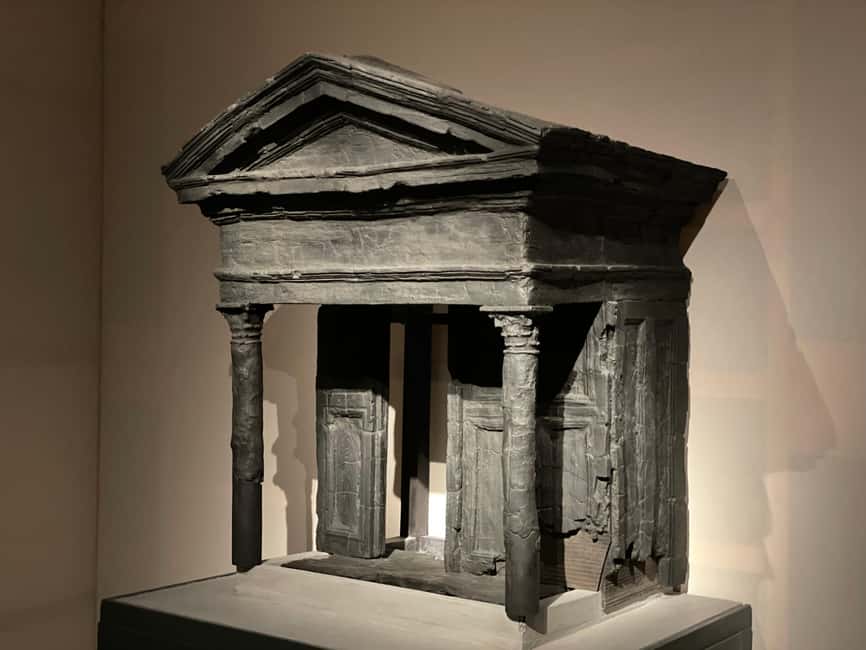
Then you reach the House of Skeletons, one of the most powerful areas in the whole site. This is where the catastrophe isn’t abstract. It’s human remains—people found where they fell.
You may feel the emotional shift fast. Several guides in this tour’s orbit are known for handling the moment with care and clear explanation, including the stark contrast between respectful silence and the selfie culture people can fall into at Pompeii’s more famous plaster casts.
What you should aim for: slow down here. Listen closely. Ask questions if your guide invites them. The value of the archaeologist isn’t only knowing the date—it’s helping you interpret what you’re seeing so the skeletons aren’t just a shock, but part of a story you can actually understand.
If you’re traveling with teens or older kids, this stop often becomes the one that makes the visit stick. It’s the first time many people really grasp that a city is made of individuals, not just ruins.
Casa dell’Albergo and the walkable rhythm of Roman streets
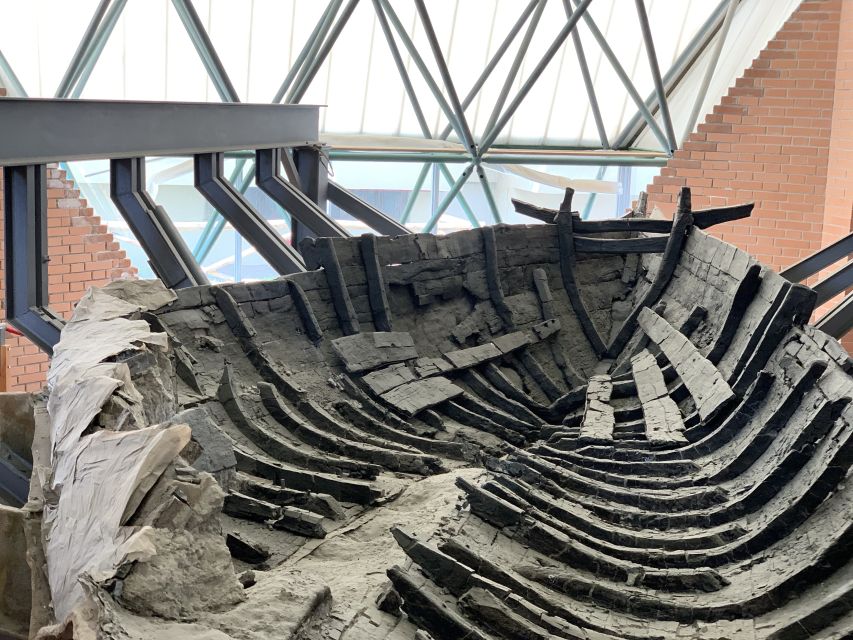
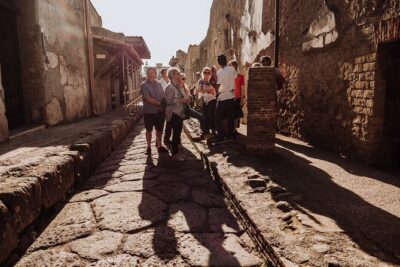
The tour continues to Casa dell’Albergo, followed by time in the broader archaeological area with guided tour and a photo stop. This is where you get the street-level sense of the city.
In the “big picture” moments, you’ll want to pay attention to how rooms connect to corridors and how the layout supports daily movement. Herculaneum works well for this kind of walking tour because it’s compact enough to keep context while you go.
Guides also tend to use this section to connect the domestic world with public life. You may hear about Roman water systems and the clever engineering that supported everyday needs, especially around public bathing areas.
Public baths, water systems, and the city’s daily pulse
Herculaneum includes public baths, and it’s a highlight for a reason. Baths were where people met, traded news, and treated their bodies like part of their social routine.
With a trained guide, the baths stop being just “ruins with steps.” You learn how water flow, design choices, and space usage shaped daily habits. That’s one of the strongest arguments for paying for a tour with a local archaeologist rather than trying to piece everything together alone.
Even in just two hours, this segment helps you imagine the sound of conversation and the movement of bodies through shared spaces. The effect is that Herculaneum feels less like a museum and more like a town that paused mid-day.
Price and value: what $58 buys you (and what it doesn’t)
At $58 per person for a 2-hour tour, you’re paying for two things beyond the site itself: skip-the-line access and a real guide who can interpret the details. You’re also getting headsets if the group is larger than 11 people, which is important for hearing explanations clearly.
What you’re not paying for is food and drinks, and there’s no hotel pickup or drop-off. So treat this as a focused on-site experience. If you’re hungry, plan to eat before or after you tour.
Is it worth it compared to going solo? For Herculaneum, I think it usually is—especially if you care about understanding frescoes and mosaics rather than just snapping them. Without context, it’s easy to overlook the “why” behind the preservation and the “what” behind the scenes.
Who should book this tour, and who might want a different plan
This tour is a great fit if you want:
- A human-centered visit to Herculaneum, not just architecture
- Clear explanations of preserved villas, frescoes, and mosaics
- Time-efficient access to the most meaningful parts of the site in 2 hours
- A guide who can switch between English, Spanish, Italian, or French depending on your group
It’s likely a weaker fit if you:
- Need wheelchair-friendly access. The tour is not suitable for wheelchair users, and electric wheelchairs aren’t allowed.
- Want a very fast “see everything” route. Two hours covers a lot, but you’re still meant to walk at a thoughtful pace with stops for guided interpretation.
It’s also a smart add-on if you’re already doing Pompeii. The contrast is part of the point: Pompeii often feels like a roar of ruins. Herculaneum is more intimate and more preserved, so your brain can stay inside the story.
Should you book this Herculaneum archaeologist tour?
I’d book it if you want the site to make sense as you walk. With skip-the-line entry, a licensed archaeologist guide, and a route that reaches the most emotionally and visually important buildings—especially Casa dei Cervi, Casa di Nettuno ed Anfitrite, the Sacellum of the Augustales, and the House of Skeletons—this tour gives you real value per hour.
Skip it only if mobility access is a problem for your group. Otherwise, plan to arrive early, bring water, and let the guide do what a guide does best: point your eyes, not just your feet, so Herculaneum becomes a city you can understand.
FAQ
How long is the Herculaneum tour?
The tour lasts about 2 hours.
Where do I meet the guide?
Meet at the ticket office at Biglietteria Ercolano. Arrive about 10 minutes before the tour starts.
Is skip-the-line entry included?
Yes. Skip-the-line entrance tickets are included.
What’s included with the tour besides the tickets?
You get a guided tour with a licensed guide. If the group exceeds 11 people, you also receive headsets.
What languages are offered?
The live guide is available in Spanish, English, Italian, and French.
Are food and drinks included?
No. Food and drinks are not included.
Is this tour suitable for wheelchair users?
No. It is not suitable for wheelchair users, and electric wheelchairs aren’t allowed.
What should I bring?
Bring a passport or ID card and water.
Can I cancel for a full refund?
Yes. You can cancel up to 24 hours in advance for a full refund.
Herculaneum Tours, compared.
 ★ 4.8Herculaneum: Skip-the-Line Guided Tour with ArchaeologistFrom $533,439 reviews
 ★ 5.0Pompeii and Herculaneum Small Group Tour with an ArchaeologistFrom $771,350 reviews
 ★ 5.0Herculaneum Small Group Tour and Ticket With an ArchaeologistFrom $53994 reviews
 ★ 4.3Herculaneum: Skip-the-Line Entry Ticket with Audio GuideFrom $15870 reviews
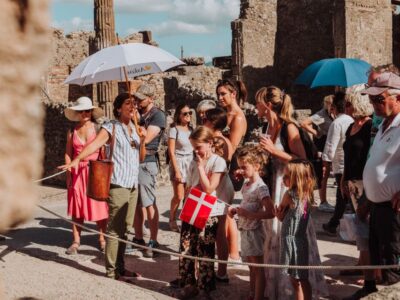 ★ 4.8Pompeii: Small-Group Tour of Pompeii and Herculaneum867 reviews
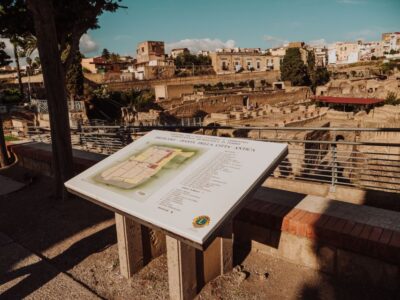 ★ 4.8Pompeii & Herculaneum with Archaeologist GuideFrom $168665 reviews
 ★ 3.9Pompeii, Herculaneum, & Vesuvius Full-Day TourFrom $152602 reviews
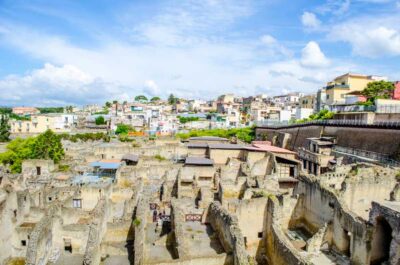 ★ 4.1Ercolano: Herculaneum Entry Ticket with Optional Audio GuideFrom $21581 reviews
Browse the lists this tour appears in