
Review · HERCULANEUM TOURS
Herculaneum: skip the line entry ticket (art) + audioguide & map
Roman streets still feel painfully real.
This Herculaneum visit is interesting because you get straight into the archaeological park with skip-the-line ticket access plus an audioguide and map, then explore at your own pace. It’s a smart way to see why this town still reads like a lived-in place after the Vesuvius eruption in 79 AD.
What I like most is how practical it feels once you’re inside: the included audioguide helps you make sense of what you’re looking at without needing to keep up with a group. I also like the value in the basic package—entrance ticket plus a map—because you can wander houses, villas, and mosaics and come away understanding daily Roman life.
One drawback to consider: since there isn’t a live tourist guide, you’ll rely on the audio. And a couple of people noted the audio setup can be a bit unclear at first, plus the narration can feel repetitive.
In This Review
- Key things to know before you go
- Entering Herculaneum fast and making it stress-free
- The audio guide and map: your best friend inside the park
- What 2–4 hours in Herculaneum actually feels like
- Wandering the Roman town: houses, villas, and mosaics
- Houses and villas: where the town becomes personal
- Mosaics: more than decoration
- Streets and daily life
- The one thing that can make or break your visit: compare it right
- Don’t miss the sea connection: the city wall moment
- Value check: what you’re paying for (and what you’re not)
- Small practical tips that will help you enjoy it more
- Who this tour suits best
- Should you book this Herculaneum audio ticket tour?
- FAQ
- How long is the Herculaneum visit?
- Is this tour offered in English?
- Does the ticket include skip-the-line entry?
- Is a live tourist guide included?
- What’s included with the ticket?
- Where do I meet for the tour?
- Where do you end?
- Is service animal access allowed?
- Is it easy to reach by public transportation?
- Can I cancel for a full refund?
Key things to know before you go
- Skip-the-line style entry helps you start exploring fast rather than waiting at the gates.
- Audio + map are included, so you can pace yourself through streets, houses, and standout mosaics.
- Herculaneum is often more satisfying before Pompeii, because it’s so well preserved.
- Expect narration you control; it can be easy to use, though some content repeats.
- You’ll want time for the town’s boundaries—a city wall view explains how the sea shaped daily life.
Herculaneum keeps a few more tours worth your time
- Herculaneum: Skip-the-Line Guided Tour with Archaeologist★ 4.8 · 3,439 reviews
- Herculaneum Small Group Tour and Ticket With an Archaeologist★ 5.0 · 994 reviews
- Herculaneum: Skip-the-Line Entry Ticket with Audio Guide★ 4.3 · 870 reviews
- From Naples: Pompeii & Herculaneum with Archaeologist Guide★ 4.8 · 665 reviews
Entering Herculaneum fast and making it stress-free
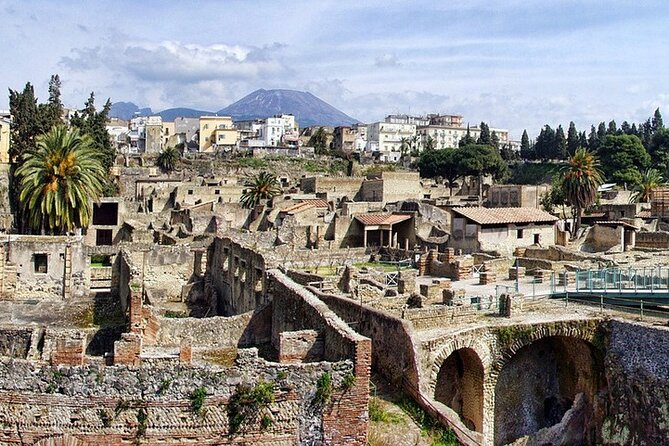
Herculaneum works best when you’re not trying to cram it in between other big sights. The whole point of this experience is getting you into the Archaeological Park of Herculaneum smoothly, with the entrance ticket and everything you need already built in. You start at the Herculaneum Ticket Office (80056 Ercolano), and the visit ends back at the same spot—no confusing back-and-forth.
The big practical win is the skip-the-line entry ticket. If you’ve ever stood in a long queue at a major site, you know that every minute you save changes how much you actually enjoy the visit. Here, you can head straight into the park and start orienting yourself, instead of spending the first hour just figuring out logistics.
This is also private, meaning it’s only your group. Even though you’re exploring at your own pace with an audioguide, that still helps you avoid that constant shuffle-and-wait rhythm you get in larger group tours.
The audio guide and map: your best friend inside the park
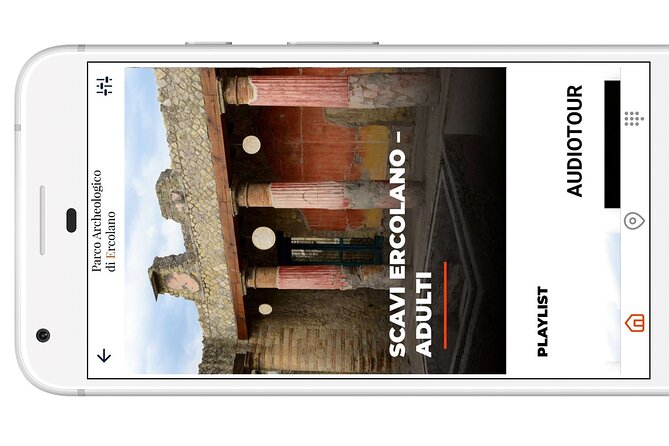
This experience is built around self-guided exploration. That means the real “guide” is the audioguide, supported by the map included with your ticket.
Here’s the good part: when the audio is working smoothly, it’s the kind of tool that lets you stop when something grabs your attention—like a room layout, a passageway, or decorative flooring—without worrying you’ll miss a scripted explanation. People also described the audioguide as easy to use and informative, which matters because Herculaneum can feel like a puzzle at first glance.
Two things to keep in mind:
- The narration can be a bit repetitive. That’s not unusual for audio systems at major ruins, but it’s good to know so you don’t expect a perfectly fresh fact every single minute.
- One real downside that shows up in feedback is that the audio setup and instructions may not feel clearly indicated at the start. Your move: at the ticket office, make sure you clearly understand where the audioguide and map are, how you turn the audio on, and what you need to do to start listening.
Also, this is offered in English, so you can relax into the experience instead of filtering information through translation apps.
What 2–4 hours in Herculaneum actually feels like
The visit is flexible—think roughly 2 to 4 hours—and the park time is often around 3 hours. In practice, that’s a sweet spot. It’s long enough to move through multiple areas and still pause. It’s short enough that you don’t burn out.
Herculaneum isn’t about sprinting from one headline to another. It’s about noticing the everyday details. If you give yourself time, you’ll see how the town’s spaces connect: doorways lead into rooms, rooms connect to courtyards, and the whole layout starts to read like a real neighborhood rather than a museum.
If you rush, you’ll miss what makes it special.
Wandering the Roman town: houses, villas, and mosaics
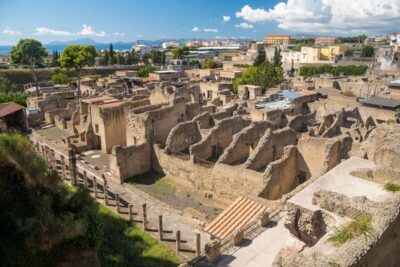
The core stop is the Archeological Park of Herculaneum, and the experience is structured for you to explore it at your own pace. The park’s greatest strength is preservation. A common theme in feedback is that Herculaneum is a marvel partly because it’s better preserved than Pompeii. The key reason people point to is that it was buried under marsh/mud rather than ash, which helped protect much of the town’s structure.
That matters because it changes what you feel when you walk through it. You aren’t just looking at ruins. You’re seeing buildings in a way that supports imagination—where people cooked, where they relaxed, how rooms were arranged, and how decoration reflected status and daily routines.
Other tickets and entries for Naples


Houses and villas: where the town becomes personal
In Herculaneum, the houses and villas aren’t just “things to look at.” They’re your map of Roman life. As you move through rooms and corridors, the included audio helps translate layout into meaning—like how space was organized for living, working, and gathering.
If you like architecture, this is where Herculaneum pays off. The scale is intimate. You can actually grasp how big decisions—like which areas were more public, or which spaces were set apart—played out on the ground.
Mosaics: more than decoration
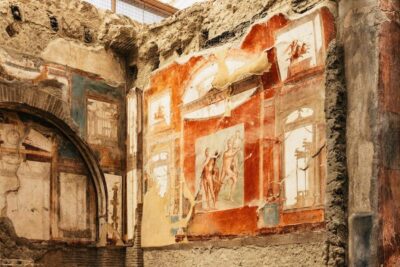
Mosaics are a major attraction here, and it’s worth slowing down for them. In a place like this, you can see why decorative floors weren’t just art. They were identity. They made spaces feel finished and intentional.
Using the audioguide, you’ll get context for what you’re seeing, which helps you avoid the common trap of standing in front of mosaics and thinking, cool, but what does it mean.
Streets and daily life
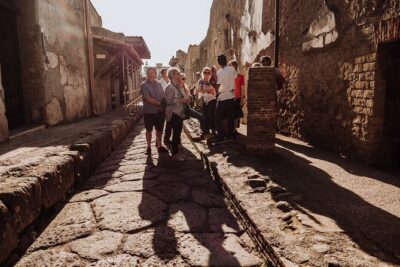
The eruption of Vesuvius froze the town in time. That’s the headline. The deeper value is how the park lets you understand the texture of daily life. A Roman town is made of many small systems: movement through streets, access to homes, and the way public and private spaces interact.
When you’re moving through the park independently, you can spend extra time where your brain is most curious—maybe on an entrance, a courtyard, or a section you keep coming back to.
The one thing that can make or break your visit: compare it right
A big tip from experience is simple: consider doing Herculaneum before Pompeii. The reasoning is practical. If you hit Pompeii first, the comparison can make Herculaneum feel underwhelming in the moment, even though Herculaneum is genuinely impressive.
Why? Because both sites get you into Roman life—but they do it differently. Herculaneum’s stronger preservation means you can understand the shape of a household and daily routines more clearly, especially when you’re seeing it for the first time.
So if Pompeii is on your plan, I’d treat Herculaneum as your early win. Let it set your expectations. Then Pompeii becomes the contrast, not the judgment.
Don’t miss the sea connection: the city wall moment
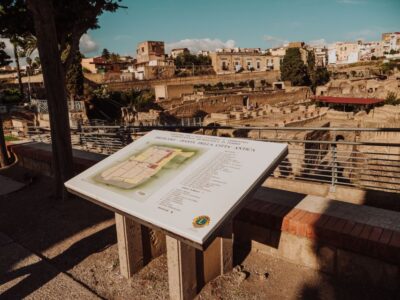
One standout detail mentioned is the view of the city wall, once bordered by the sea. That kind of viewpoint is more than scenic. It helps explain why a town developed the way it did—why certain edges mattered, how the waterfront shaped access and activity, and how the town connected to the wider world.
When you reach those boundary views, take a breath and actually look. Use the audioguide cues, but also let your eyes do the work: imagine the coastline, think about how people would move, trade, travel, and work in a place where the sea wasn’t far away.
It’s the kind of moment that makes you leave with a stronger mental picture, not just a list of sights.
Value check: what you’re paying for (and what you’re not)
Even without seeing a price tag here, you can still judge value based on what’s included. This experience gives you:
- Entrance ticket (artecard)
- Audioguide
- Map
- Skip-the-line entry style access
What it does not include is a live tourist guide. That changes the whole value equation. If you love listening to facts from a person, you might feel this is less interactive than you’d prefer. But if you like autonomy—stopping, backtracking, and spending extra time on mosaics or room layouts—this format can be excellent.
For many people, the sweet spot is exactly this: audioguide-driven learning with enough structure to understand what you see, but enough freedom to go at your own speed.
Small practical tips that will help you enjoy it more
A few simple habits make self-guided ruins feel better.
- Arrive with a little patience, not a sprint plan. You’re likely to get a smoother start if you’re not rushing at the ticket office.
- Use the audio like a tool, not a soundtrack. If something feels repetitive, pause it and just look. Then restart for the next segment.
- Give mosaics and doorways time. Spend extra seconds where you can connect the room to the bigger layout.
- Plan your day so you’re not exhausted. About 3 hours at a dense site can feel long if you’ve already done a lot that morning.
Who this tour suits best
This is a good fit if you want:
- Roman ruins with clear context but at your own pace
- A visit that doesn’t require tracking a human guide
- A structured way to understand Herculaneum through audio and map
- A day that’s flexible enough for lingering—especially if mosaics and household layouts are your thing
It may be less ideal if you specifically want a live expert explaining everything step-by-step, or if you strongly prefer a highly guided group experience.
Should you book this Herculaneum audio ticket tour?
I’d book this if you want a smooth, practical way in and you’re happy learning through an audioguide. Herculaneum rewards patience. With audio and a map included, you can make sense of what you’re seeing without turning the visit into a scramble.
I’d think twice if you know you hate audio guides, or if you want a human who can answer questions on the spot. Also consider that one issue that’s shown up in real feedback is that the audio guidance at the start can be unclear, so choose a time when you can slow down and get set up properly.
If you’re building a Vesuvius-area itinerary, do Herculaneum first. It’s the order that keeps the experience from feeling like a repeat.
FAQ
How long is the Herculaneum visit?
It runs about 2 to 4 hours, and the visit time in the park is often around 3 hours.
Is this tour offered in English?
Yes, it’s offered in English.
Does the ticket include skip-the-line entry?
Yes. You get an entrance ticket with skip-the-line entry style access.
Is a live tourist guide included?
No. The experience includes an audioguide and a map, not a live tourist guide.
What’s included with the ticket?
You get the Herculaneum entrance ticket (artecard), an audioguide, and a map.
Where do I meet for the tour?
Meet at the Herculaneum Ticket Office, 80056 Ercolano.
Where do you end?
The activity ends back at the same meeting point.
Is service animal access allowed?
Yes, service animals are allowed.
Is it easy to reach by public transportation?
Yes. The meeting point is noted as near public transportation.
Can I cancel for a full refund?
Yes. You can cancel for a full refund up to 24 hours before the experience’s start time.
More Tickets and Entries in Naples




More Tour Reviews in Naples




Herculaneum, a Few More Tours



More Naples tours, freshly reviewed





Herculaneum Tours, compared.
 ★ 4.8Herculaneum: Skip-the-Line Guided Tour with ArchaeologistFrom $533,439 reviews
 ★ 5.0Pompeii and Herculaneum Small Group Tour with an ArchaeologistFrom $771,350 reviews
 ★ 5.0Herculaneum Small Group Tour and Ticket With an ArchaeologistFrom $53994 reviews
 ★ 4.3Herculaneum: Skip-the-Line Entry Ticket with Audio GuideFrom $15870 reviews
 ★ 4.8Pompeii: Small-Group Tour of Pompeii and Herculaneum867 reviews
 ★ 4.8Pompeii & Herculaneum with Archaeologist GuideFrom $168665 reviews
 ★ 3.9Pompeii, Herculaneum, & Vesuvius Full-Day TourFrom $152602 reviews
 ★ 4.1Ercolano: Herculaneum Entry Ticket with Optional Audio GuideFrom $21581 reviews
Browse the lists this tour appears in