
Review · HERCULANEUM TOURS
Herculaneum Private Tour with an Archaeologist
Roman streets, frozen in time.
This private Herculaneum tour is interesting because you don’t just pass buildings—you learn what daily life looked like when the town was buried by Vesuvius. I like the one-on-one feel of having an archaeologist-style guide steer the pace, and I also love how the route hits a packed set of named highlights, from the College of the Augustales to the Central Thermae. One thing to consider: this is advertised as an archaeologist-led experience, but some people have reported getting a very strong historian/teacher instead—so if that credential matters to you, it’s worth checking who you’ll actually have.
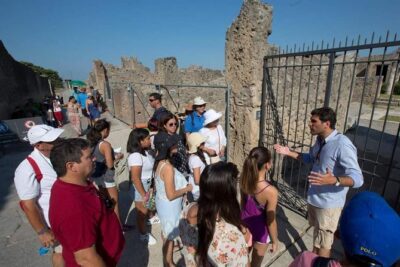
You meet your guide outside the archaeological site ticket office in the red building area, and the tour loops back to the same place after about 2 hours. It’s family friendly, run in English, and the timing works well if you’re trying to beat the crowds and the midday heat—especially in summer.
In This Review
- Key things that make this Herculaneum tour work
- The big idea: why Herculaneum feels different
- Meeting outside the red building and getting oriented fast
- Price and what you actually get for it
- Stop-by-stop: what you’ll see in about two hours
- College of the Augustales: power and practice in a religious setting
- House of the Skeleton: the shock value that teaches you to look closer
- Casa del Rilievo di Telefo: art inside an everyday domestic world
- Wooden Partition house: why small architectural details matter
- La Terrazza di M. Nonio Balbo: how elevation changed the whole vibe
- House of the Black Salon (Salon of Nero): mood, materials, and reputation
- Casa Sannitica: a name that hints at roots and change
- Central Thermae: baths that explain the city’s rhythm
- House of the Fine Courtyard: the small rules of home life
- House of the Grand Portal: first impressions and the social front
- House of the Deer: details you’ll actually remember later
- Who this tour suits best (and who might want to rethink it)
- Guide quality: how to make sure you get the right experience
- Quick practical checklist before you go
- Should you book Herculaneum Private Tour with an Archaeologist?
- FAQ
- How long is the Herculaneum private tour?
- Where do we meet the guide?
- Is the tour in English?
- Is the Herculaneum entrance ticket included in the price?
- What’s included in the tour price?
- Does the tour include transportation or food?
- What if I need to cancel?
Key things that make this Herculaneum tour work
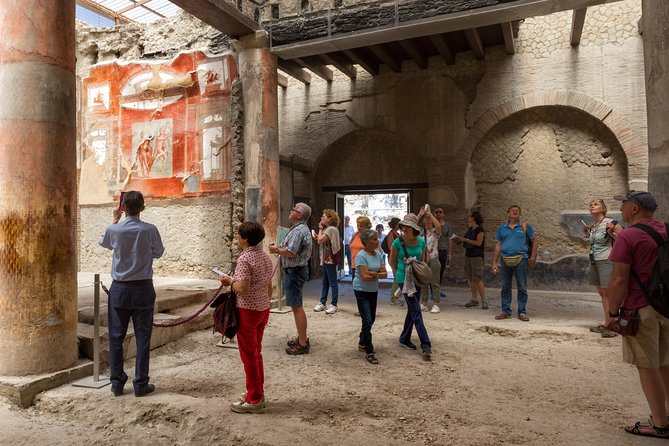
- Private, archaeologist-led style guidance that turns ruins into real routines (shops, baths, homes, and public spaces).
- A tight, 11-stop route with quick visits that keep you moving and you don’t feel stuck in one area.
- Family friendly pacing that’s easier than doing it on your own with kids in tow.
- Free luggage storage on-site at the meeting point, so you’re not lugging bags through the ruins.
- You visit “names you can remember” like the House of the Skeleton and the M. Nonio Balbo Terrace, not random walls.
- English tours throughout the day means you’re more likely to find a slot that fits your schedule.
Herculaneum keeps a few more tours worth your time
- Herculaneum: Skip-the-Line Guided Tour with Archaeologist★ 4.8 · 3,439 reviews
- Herculaneum Small Group Tour and Ticket With an Archaeologist★ 5.0 · 994 reviews
- Herculaneum: Skip-the-Line Entry Ticket with Audio Guide★ 4.3 · 870 reviews
- From Naples: Pompeii & Herculaneum with Archaeologist Guide★ 4.8 · 665 reviews
The big idea: why Herculaneum feels different
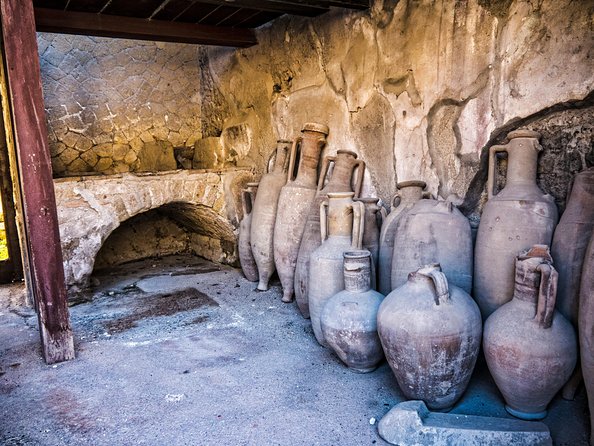
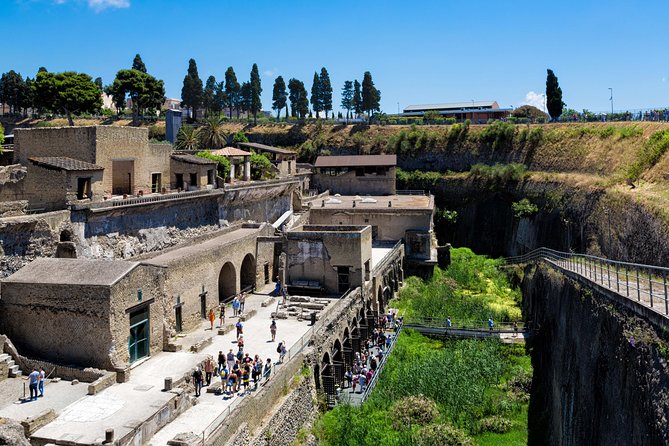
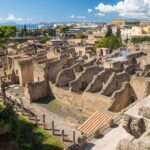
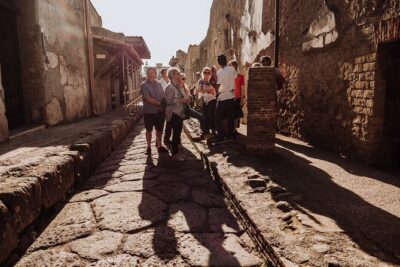
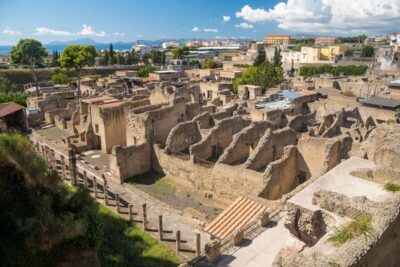
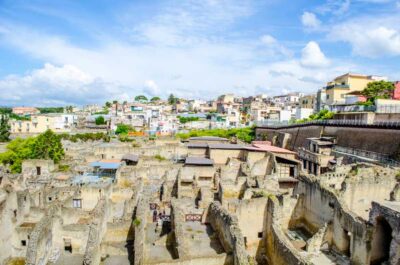
Herculaneum is smaller than Pompeii, but it has a major advantage: it’s famously well preserved. That matters because you can actually see details in the built spaces—the kind of things that help you understand how people cooked, cooled off, worked, entertained, and handled everyday issues like privacy and sound.
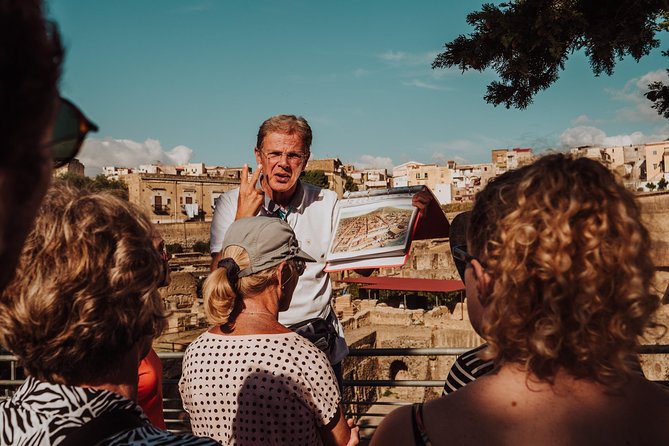
A private guide changes your experience fast. Without one, you’ll see walls, stairways, and room shapes. With a guide, you start connecting those shapes to human habits: where someone would gather, how a bath complex functions, what a “public religious vibe” likely meant, and why a courtyard layout mattered.
Meeting outside the red building and getting oriented fast
You start at Via dei Papiri Ercolanesi, 80056 Ercolano NA, at the meeting point outside the archaeological site ticket office (the red building). That’s practical: it’s easy to find, and you’re not hunting for a guide in the maze.
A small but useful bonus is that there’s free luggage storage at the meeting point. If you’re arriving from Naples by train or rolling in with a daypack, this keeps you from dragging bags across uneven paths. The tour is designed so you end back at the same meeting spot, which is nice if you’re juggling plans right after.
Price and what you actually get for it
The tour price is $178.38 per person, and it includes guidance and assistance by an archaeologist guide plus the fact that it’s a private tour. What’s not included is the Herculaneum entrance ticket and anything like transportation or food/drink.
For an adult, the entry ticket is 16 euros (and EU citizens aged 18–25 pay 2 euros). So the all-in cost for many people will be tour price plus that ticket.
Is it worth it? I think it is if you want more than looking. You’re paying for someone to help you read the site—especially at Herculaneum, where the value is in details. If you just want a scenic walk and don’t care about interpreting what you’re seeing, you may feel the price more strongly. But if you like structure—like arriving somewhere and having the “why” explained in plain language—this kind of private route usually earns its keep.
Stop-by-stop: what you’ll see in about two hours
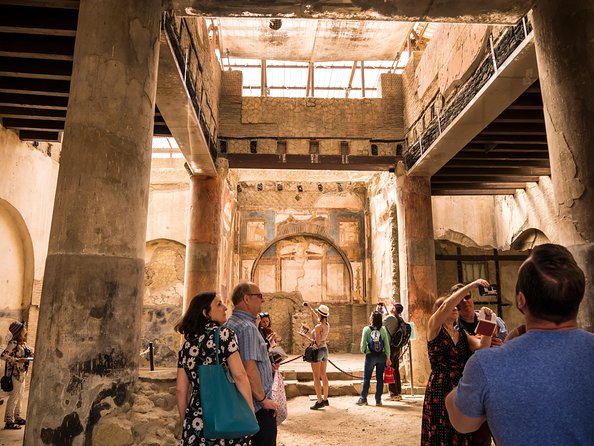
The route moves through a compact sequence of highlights. Each stop is brief (about 10 minutes), which sounds fast, but it’s a smart format for ruins: you get a story, you see the space, then you move on before fatigue sets in.
Rather go private? More options in Naples



College of the Augustales: power and practice in a religious setting
This first stop is the College of the Augustales. Even if you don’t know Roman titles, your guide can help you understand the role of this kind of organization in community life.
What I like about starting here is that it sets the “tone” of the city. You quickly grasp that Herculaneum wasn’t only homes and shops—it had institutions, roles, and rituals that shaped daily identity. The payoff is that later, when you’re in houses and baths, you start noticing civic signals and social priorities.
House of the Skeleton: the shock value that teaches you to look closer
The House of the Skeleton is the sort of name that grabs attention right away. Your guide will turn that title into context—what this space likely conveyed and what the remains or features were telling archaeologists and historians.
The drawback of places like this is that people can rush in thinking it’s only a “weird bones” stop. Don’t do that. Ask your guide what story the house layout supports and what everyday function you can still infer.
Casa del Rilievo di Telefo: art inside an everyday domestic world
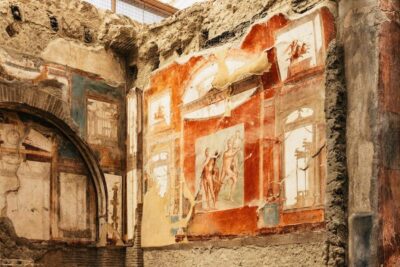
Next is Casa del Rilievo di Telefo, focused on a relief associated with Telephus. This is where the tour often shifts from “how life worked” to “how people expressed taste and meaning.”
A relief like this is useful because it shows how art lived inside private spaces. You’re not just seeing Roman myths from afar; you’re seeing how myth, identity, and status could travel into the house.
Wooden Partition house: why small architectural details matter
The Partem Domus lignea – Casa del Tramezzo di Legno stop is about a wooden partition concept (and how the Romans used space). Partitions sound trivial until you realize they shape privacy, airflow, workflow, and who can see what.
This is a strong example of why a guide helps. You might notice a room split, but you may not connect it to real human needs—like controlling movement, directing activity, or creating comfortable zones.
La Terrazza di M. Nonio Balbo: how elevation changed the whole vibe
At La Terrazza di M. Nonio Balbo, you get a shift in perspective. Terraces and elevated spaces change everything: light, views, and how people used the home as a social stage.
This stop can also be a morale booster. After several indoor or courtyard moments, you get a “breath” in the visual sense—an angle that makes the site feel like a town rather than a museum floor plan.
House of the Black Salon (Salon of Nero): mood, materials, and reputation
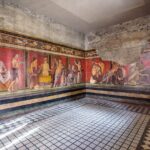
The House of the Black Salon (also linked to the Salon of Nero) is a dramatic-sounding highlight for a reason. Dark interior spaces can suggest intention: a mood, an audience, a statement.
Your guide’s job here is to help you connect the look of a room to its purpose. Was it for receiving people? Displaying status? Hosting? At Herculaneum, interpreting those choices is part of the value.
Casa Sannitica: a name that hints at roots and change
Then you reach Casa Sannitica. The label alone points to cultural layering. Your guide can help you understand how identities shifted and how homes could reflect that mix.
This stop is often a good moment to ask a question: what makes one house feel tied to a certain tradition versus another? It’s a small switch from “tour mode” to “conversation mode,” and your guide can keep it grounded.
Central Thermae: baths that explain the city’s rhythm
The Central Thermae is one of the most important segments because baths were social engines. They were also practical: hygiene, leisure, and meeting people.
In about 10 minutes, you won’t tour every corridor like a long museum visit, but you’ll get the big structure explained—how a bath complex works as a system rather than as separate random rooms. Once you understand the logic, you’ll start “reading” the site differently across the whole tour.
House of the Fine Courtyard: the small rules of home life
At Casa del Bel Cortile (the House of the Fine Courtyard), you’ll focus on outdoor-in-between space. Courtyards matter because they can control light, ventilation, and privacy, and they often act as the heart of a home’s daily movement.
This is a great stop for people who like architecture and function. A good guide will help you notice where people would gather versus where they’d keep things private or quieter.
House of the Grand Portal: first impressions and the social front
House of the Grand Portal is about thresholds and arrival. Portals and entries were how the city decided who mattered. Your guide can help you see how the exterior and entry experience tied into status.
Pay attention here to what you’d notice if you were visiting a house: where your eye goes first, how you’d move inside, and what that suggests about how hosts controlled the experience.
House of the Deer: details you’ll actually remember later
The tour ends with House of the Deer, another named space that’s built for spotting and interpretation. Your guide can point out how that house’s features connect to the kind of symbolism or decoration people used at home.
What makes this end stop helpful is emotional. By the time you reach it, you’ve been trained by the earlier stops to look for meaning in the built form. You’ll walk away with a couple of images that stick: the structure, the layout logic, and the “human purpose” behind it.
Who this tour suits best (and who might want to rethink it)
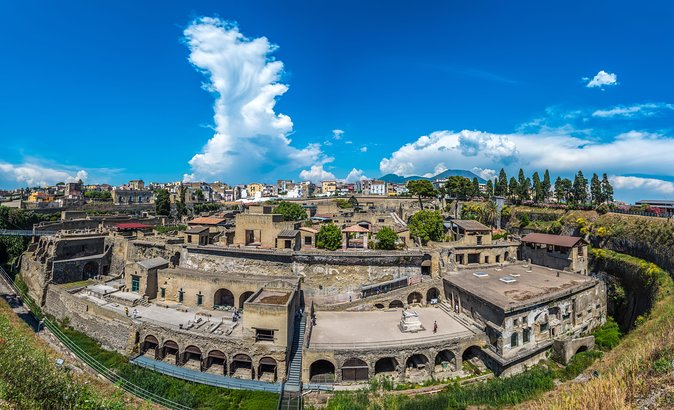
This tour is especially good for:
- Families who want a guided, not-too-long format for kids
- Anyone who plans to compare Herculaneum to Pompeii and wants a stronger sense of what’s different
- History lovers who prefer explanation over random wandering
- People who want to spend two hours efficiently and leave with a mental map
You might hesitate if:
- You’re strictly hunting for a specific archaeologist credential and you can’t confirm who you’ll have
- You prefer freedom over structure and would rather do the site at your own speed with a guidebook
A practical tip from real-world scheduling: if you’re visiting in summer, I’d pick an earlier time whenever you can. By late morning into midday, the heat can become a real factor outdoors.
Guide quality: how to make sure you get the right experience
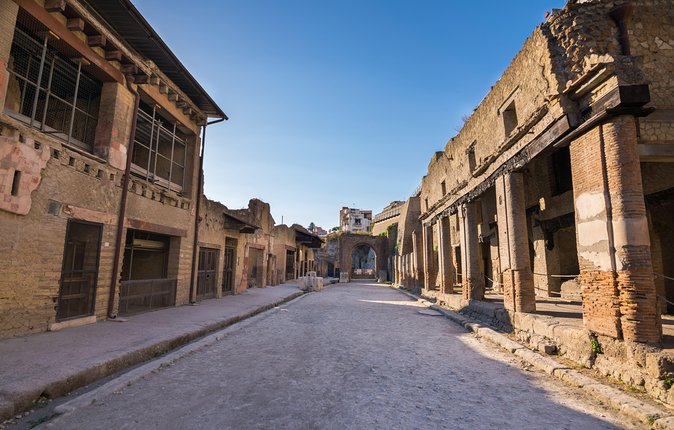
This is the part I’d treat as your biggest “value lever.” The overall concept works only if your guide can explain the spaces clearly. Some guides you may encounter include names like Michele Lamberti, Mena, Luciano Leone, Sara, Daniela, Giuseppe, and Antonella. The strongest tours tend to be the ones where the guide clearly connects architectural details to daily life, and keeps the stories understandable.
If you’re booking with the idea of an archaeologist specifically, send a quick message before you arrive (or ask at confirmation) about who will lead your slot and what their background is. It’s a simple step that can prevent disappointment.
Quick practical checklist before you go
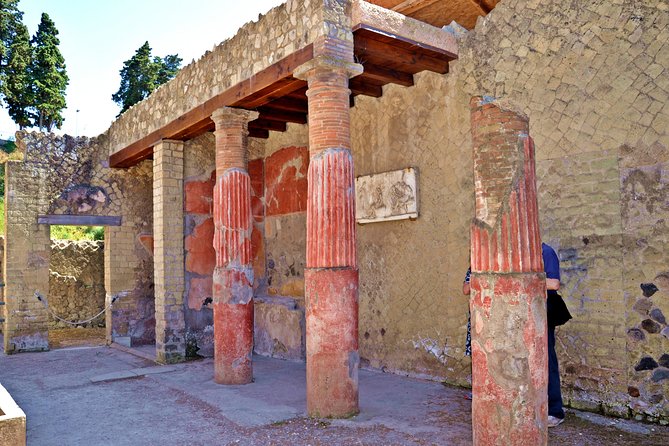
- Wear shoes you trust on uneven stone and outdoor paths
- If it’s warm, plan for the sun and hydration
- Bring a small bag or plan to store luggage at the meeting point
- Arrive ready to ask questions—your guide can steer you to the details that matter most
Should you book Herculaneum Private Tour with an Archaeologist?
If you want a short, high-impact visit where you understand what you’re looking at, I’d book it. The format is built for real interpretation: named stops, steady pacing, and a guide who can turn “walls and rooms” into everyday behavior—baths as social time, courtyards as home hubs, entry portals as status signals.
On the other hand, if you mainly want photos, or if archaeologist credentials are a dealbreaker for you, take two minutes to confirm who will actually lead your day. Do that, and you’ll get the best version of this experience: a walk through a preserved Roman town where the details finally make sense.
FAQ
How long is the Herculaneum private tour?
It runs about 2 hours (approximately).
Where do we meet the guide?
Meet outside the ticket office of the archaeological site (in the red building area).
Is the tour in English?
Yes, it’s offered in English.
Is the Herculaneum entrance ticket included in the price?
No. Herculaneum entry tickets are not included. The listed adult ticket price is 16 euros, and EU citizens age 18–25 pay 2 euros.
What’s included in the tour price?
The price includes guidance and assistance by an archaeologist guide and the private tour format.
Does the tour include transportation or food?
No. Transportation and food and drinks are not included.
What if I need to cancel?
You can cancel for a full refund if you cancel at least 24 hours before the experience’s start time.
More Tours in Naples



More Tour Reviews in Naples

Herculaneum, a Few More Tours

More Naples tours, freshly reviewed




Herculaneum Tours, compared.
 ★ 4.8Herculaneum: Skip-the-Line Guided Tour with ArchaeologistFrom $533,439 reviews
 ★ 5.0Pompeii and Herculaneum Small Group Tour with an ArchaeologistFrom $771,350 reviews
 ★ 5.0Herculaneum Small Group Tour and Ticket With an ArchaeologistFrom $53994 reviews
 ★ 4.3Herculaneum: Skip-the-Line Entry Ticket with Audio GuideFrom $15870 reviews
 ★ 4.8Pompeii: Small-Group Tour of Pompeii and Herculaneum867 reviews
 ★ 4.8Pompeii & Herculaneum with Archaeologist GuideFrom $168665 reviews
 ★ 3.9Pompeii, Herculaneum, & Vesuvius Full-Day TourFrom $152602 reviews
 ★ 4.1Ercolano: Herculaneum Entry Ticket with Optional Audio GuideFrom $21581 reviews
Browse the lists this tour appears in