
Review · HERCULANEUM TOURS
Herculaneum Private Guided Tour Led by a Local Top-rated Guide – All inclusive
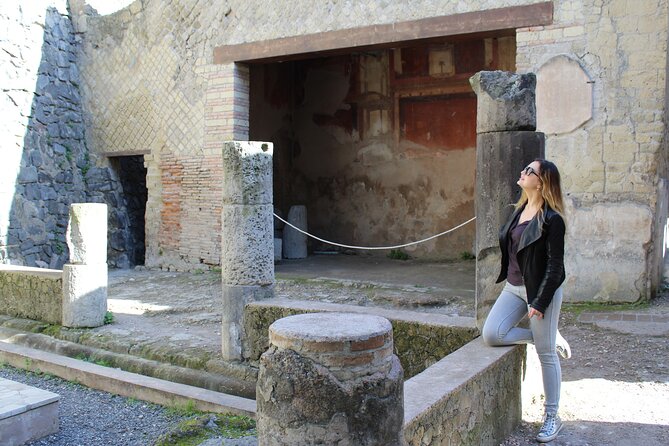
Herculaneum feels frozen in time. This private guided tour pairs skip-the-line entry with a local expert who helps you read the ruins—mosaics, baths, forums, villas—after they were buried by the AD79 eruption of Mt. Vesuvius. I like that you’re not just moving through ruins; you’re getting the little details that make Roman daily life click, and some guides (like Italo) even point out religious symbols such as angel motifs. One possible drawback: at $207.11 per person it’s a pricier choice than joining a shared group tour.
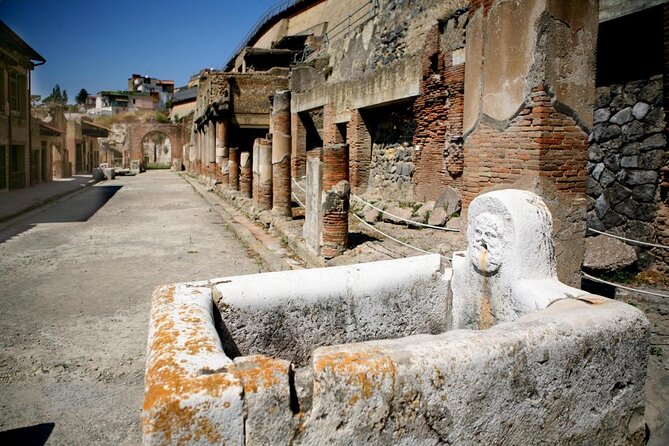
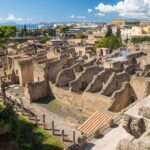
What makes it especially appealing is the site itself. Herculaneum is largely intact compared with other Roman ruins, so you can visualize rooms and streets without doing mental gymnastics. The walk is set up for a smooth visit—private attention plus an art-history angle—so it tends to work well for classics students and adults who want more than a quick photo stop.
In This Review
- Key things to know about this private Herculaneum tour
- Why Herculaneum is worth your Naples time
- Arriving at Ercolano Scavi: start fast, not stressed
- The guided route: streets, public buildings, and how Romans moved
- Amphitheater, Decumanus, and the city grid
- Forum and Basilica: where business met politics
- Palestra and the gymnasium feel
- Thermal Baths and Roman routines you can picture
- The mosaics and preserved interiors that steal the show
- House of the Mosaic Atrium
- House of Neptune and Amphitrite (seafront villa life)
- House of the Deer and House of the Mosaic Atrium follow-ups
- The kind of interpretation you get from your guide
- How long you’re out there, and what it feels like on the ground
- Price and value: does $207.11 per person make sense?
- Who this tour suits best (and who might prefer something else)
- Should you book the Herculaneum private guided tour?
- FAQ
- What time does the tour depart?
- Where do I meet the guide?
- How long is the tour?
- Is admission included?
- Is this tour private?
- Does it include skip-the-line tickets?
- What language is the tour offered in?
- Do I need hotel pickup?
- Can children join the tour?
Key things to know about this private Herculaneum tour
- Private, all-inclusive experience: guided tour plus your admission ticket included in the price
- Skip the long lines: you can go straight inside the archaeological area with the provided tickets
- Top-rated local guides: you may meet guides such as Italo, Anna, Lelo, Loretta, or Roberta
- About 2.5 hours on foot: a focused walking tour that ends back at the meeting point
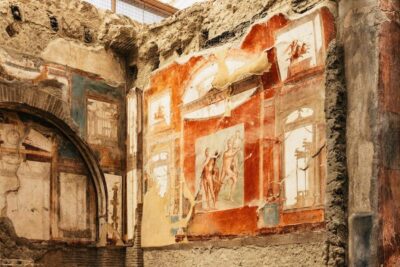
- Mosaics and preserved interiors: you’ll spend real time with standout floors and carbonized finds
Herculaneum keeps a few more tours worth your time
- Herculaneum: Skip-the-Line Guided Tour with Archaeologist★ 4.8 · 3,439 reviews
- Herculaneum Small Group Tour and Ticket With an Archaeologist★ 5.0 · 994 reviews
- Herculaneum: Skip-the-Line Entry Ticket with Audio Guide★ 4.3 · 870 reviews
- From Naples: Pompeii & Herculaneum with Archaeologist Guide★ 4.8 · 665 reviews
Why Herculaneum is worth your Naples time
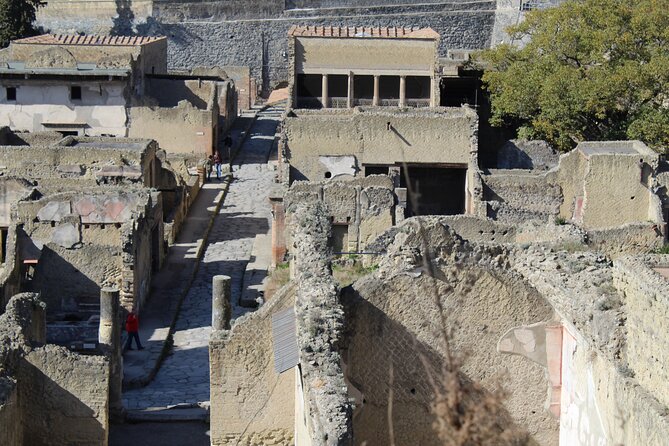
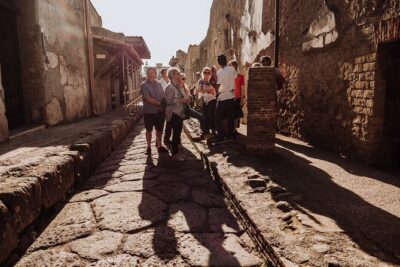
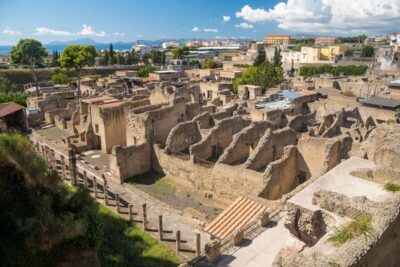
If you’re comparing ruins on the Amalfi Coast side of the map, Herculaneum has a different feel than Pompeii. The big reason is preservation. After Vesuvius covered the town in AD79, many structures stayed remarkably intact, which means you’re not only looking at walls—you’re seeing spaces that feel like rooms, courtyards, and street-level life.
This matters because Herculaneum is easy to visualize. The tour route is designed to help you make sense of what you’re seeing: major public areas (like the Forum and Basilica) sit alongside leisure and domestic zones (like the thermal baths and seafront villas). When you visit with a guide, those “lump of stone” moments turn into story-driven scenes: where people gathered, where they exercised, and how wealthy families organized daily living.
It also helps that the city timeline stretches early. You’ll hear the story of Herculaneum stretching back to as early as the 7th century BC, not just a one-day tragedy. That longer context makes AD79 feel even more powerful, because you understand what was lost.
Arriving at Ercolano Scavi: start fast, not stressed
This tour meets at Ercolano Scavi (80056 Ercolano, Metropolitan City of Naples). The departures are offered at 8:30am or 12:30pm, and you’ll meet your guide in time for that slot. From there, you’ll head straight into the archaeological area using skip-the-line tickets.
I like this setup for one simple reason: it respects your energy. Naples traffic and queues can be unpredictable. When you already have the right entry plan, the experience starts with momentum instead of waiting. It also keeps the tour focused. Since the visit is about two and a half hours, you don’t want that time eaten up at the entrance.
A few practical notes from the tour details:
- You’re walking through an outdoor archaeological site, so comfortable shoes matter.
- The tour calls for moderate physical fitness.
- It’s near public transportation, and there’s no hotel pickup or drop-off, so plan to get there yourself.
The guided route: streets, public buildings, and how Romans moved
The tour is a private walking route through the heart of the ancient city. As you follow your guide, you’ll see a range of spaces tied to different parts of Roman life—public, athletic, and domestic.
Here’s how that adds up as a visitor experience.
Amphitheater, Decumanus, and the city grid
Early on, you’ll encounter major features such as the amphitheater and key streets like Decumanus (a principal street). These aren’t just landmarks. With a guide, they become reference points. You start to understand how the city’s layout supported crowds, commerce, and movement.
Even if you’ve visited other Roman sites, Herculaneum can feel “closer” because so much is preserved enough to picture circulation through the town. That’s where private guiding pays off: you don’t need to guess what you’re looking at.
More guided runs around Naples


Forum and Basilica: where business met politics
Next comes the Forum and the Basilica. These are the social engines of the city. In simple terms, this is where the town’s public life happened—gatherings, decision-making, and the rhythm of daily civic activity.
With an art historian angle (included), you may also notice how decorations and spatial choices signaled status. That’s a big reason the tour feels more satisfying than a basic walkthrough: you get clues, not just facts.
Palestra and the gymnasium feel
You’ll also see the Palestra and get a look into what functions like a gymnasium. These are the kinds of structures that help you understand Roman culture beyond politics. People trained, socialized, and performed identity through fitness and public presence.
For a lot of visitors, this is where Herculaneum becomes vivid fast—because the layout makes sense once you’re shown what rooms and courtyards were for.
Thermal Baths and Roman routines you can picture
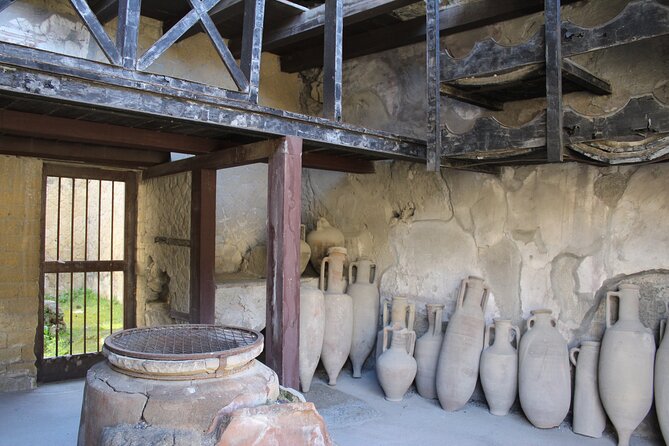
One of the most memorable parts is the Thermal Baths stop. Baths weren’t just “hygiene.” They were a routine, a meeting place, and part of how you belonged.
In Herculaneum, bath areas are easier to grasp because the structures are preserved enough that you can follow the flow of space. Your guide can point out how the rooms connect and why certain features mattered. That’s the difference between “seeing ruins” and understanding how a day might have worked.
This part of the tour tends to stand out because it connects physical space to human behavior. You’re standing in a setting built for movement from one room to another. When the guide explains what you’re looking at, you start mapping it in your head.
The mosaics and preserved interiors that steal the show
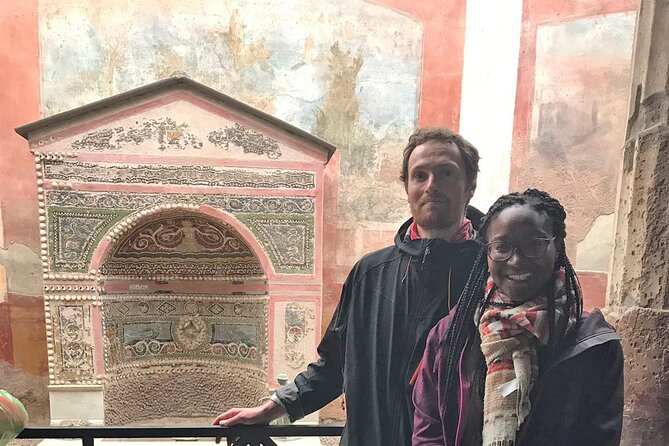
Let’s talk about the star attraction: the mosaics and preserved domestic spaces.
House of the Mosaic Atrium
In the House of the Mosaic Atrium, you’ll get a close look at a famous style of floor decoration and how homes were organized around key open areas. Atriums were the kind of space where family life happened and where decorative choices broadcast wealth and taste.
Even if mosaics are familiar to you from other sites, seeing them in Herculaneum has a different effect. They’re part of a larger intact setting rather than scattered fragments in a museum-like display.
House of Neptune and Amphitrite (seafront villa life)
You’ll also visit the House of Neptune and Amphitrite and other spaces in what the tour describes as a grand seafront villa complex. This is where Roman domestic luxury becomes easy to visualize: how a wealthy household might have enjoyed views, how rooms connect to daily life, and how decoration communicates identity.
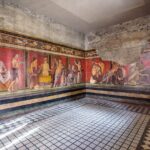
The tour highlights include very specific sensory details like colorful mosaics and the presence of carbonized furniture. That combination can be startling: you aren’t only looking at decoration; you’re seeing evidence of objects and interiors preserved by the conditions of AD79.
House of the Deer and House of the Mosaic Atrium follow-ups
Depending on how the route flows with your guide, you may also see the House of the Deer along with the larger mosaic-focused homes. The goal isn’t just to stack houses—it’s to show you patterns. Wealthy Herculaneum homes shared certain design ideas, but each residence had its own signature.
The kind of interpretation you get from your guide
This is also where the private format shines. Guides named in past visits—like Anna, Lelo, Loretta, and Roberta—are described as enthusiastic and able to answer questions with real focus. One highlight example: Italo has been noted for pointing out details that many people would miss, like angel symbols.
That’s what you should aim for. When you’re paying for a private guide, you want them to do more than read a plaque. You want interpretation that turns preserved art and architecture into a story you can actually picture.
How long you’re out there, and what it feels like on the ground
The tour is listed at around 2 hours (approx.), and the highlight description frames it as a 2.5-hour private walking tour. Either way, expect a short, tightly managed route rather than a half-day excavation marathon.
The experience ends back at the starting point, so you’re not left coordinating transport right after you’ve walked yourself through the emotional centerpiece of the visit.
For pacing, here’s what you can plan around:
- You’ll walk at a steady pace through multiple major stops.
- You’ll pause often enough for interpretation (that’s the point of having a private guide).
- It’s not described as a long, strenuous trek, but you should still be ready for uneven surfaces and standing in outdoor areas.
If you’re coming from central Naples, this is the kind of day plan that avoids turning into a grind. You’re there for a focused visit to one site.
Price and value: does $207.11 per person make sense?
At $207.11 per person, this is not a budget tour. The key question is what you’re buying.
You’re getting:
- A private tour (your group only)
- A professional guide and local guide
- A professional art historian guide
- Admission ticket included
- Guaranteed skip-the-line entry
- Group discounts mentioned for the booking context
So the value isn’t just the information. It’s the structure: guided time in a site that can be confusing without someone pointing out what matters. If you’re the type of traveler who wants Roman life explained—rather than just photographed—this is where private guiding starts to justify its cost.
Also, if you’re traveling as a family or small group, private guiding can stop feeling like a luxury and start feeling like the smartest way to keep everyone engaged. That’s especially true when you’re visiting a place where interpretation really improves the experience.
Who this tour suits best (and who might prefer something else)
This is a strong fit if:
- You want personal attention and room to ask questions.
- You care about art details in addition to architecture.
- You like Roman history but find it hard to connect “ruins” to daily life without help.
- You’re traveling with teenagers or students who respond well to clear explanations and period details.
It might be less ideal if:
- You’re primarily there for a quick overview and don’t mind self-guiding.
- Your budget is tight and you’re choosing between multiple activities.
- Your group is looking for long downtime breaks. This is a compact walking route.
Should you book the Herculaneum private guided tour?
I’d book it if you want the Herculaneum experience to feel clear and alive, not like a checklist. The tour’s biggest advantages are the skip-the-line entry and the chance to get interpretation tailored to what you’re standing in front of—especially for the mosaics, baths, and major public structures.
If price is your main concern, compare what you’d pay for admission plus what you’d spend managing lines on your own. For a site like Herculaneum, having someone guide the route and spotlight details you’d otherwise miss often makes the cost feel less painful.
FAQ
What time does the tour depart?
The tour offers departures at 8:30am or 12:30pm, depending on the option you choose.
Where do I meet the guide?
You meet at Ercolano Scavi, 80056 Ercolano, Metropolitan City of Naples, Italy.
How long is the tour?
The tour is listed at about 2 hours (approx.), and the experience description also frames it as a 2.5-hour private walking tour.
Is admission included?
Yes. The admission ticket for Parco Acheologico di Ercolano is included.
Is this tour private?
Yes. It’s a private tour/activity, and only your group participates.
Does it include skip-the-line tickets?
Yes. You’ll receive skip-the-line tickets so you can go straight inside the archaeological site.
What language is the tour offered in?
The tour is offered in English.
Do I need hotel pickup?
No. Hotel pickup and drop-off are not included, so you’ll make your own way to the meeting point.
Can children join the tour?
Children must be accompanied by an adult.
More Tours in Naples




More Tour Reviews in Naples

Herculaneum, a Few More Tours


More Naples tours, freshly reviewed



Herculaneum Tours, compared.
 ★ 4.8Herculaneum: Skip-the-Line Guided Tour with ArchaeologistFrom $533,439 reviews
 ★ 5.0Pompeii and Herculaneum Small Group Tour with an ArchaeologistFrom $771,350 reviews
 ★ 5.0Herculaneum Small Group Tour and Ticket With an ArchaeologistFrom $53994 reviews
 ★ 4.3Herculaneum: Skip-the-Line Entry Ticket with Audio GuideFrom $15870 reviews
 ★ 4.8Pompeii: Small-Group Tour of Pompeii and Herculaneum867 reviews
 ★ 4.8Pompeii & Herculaneum with Archaeologist GuideFrom $168665 reviews
 ★ 3.9Pompeii, Herculaneum, & Vesuvius Full-Day TourFrom $152602 reviews
 ★ 4.1Ercolano: Herculaneum Entry Ticket with Optional Audio GuideFrom $21581 reviews
Browse the lists this tour appears in