
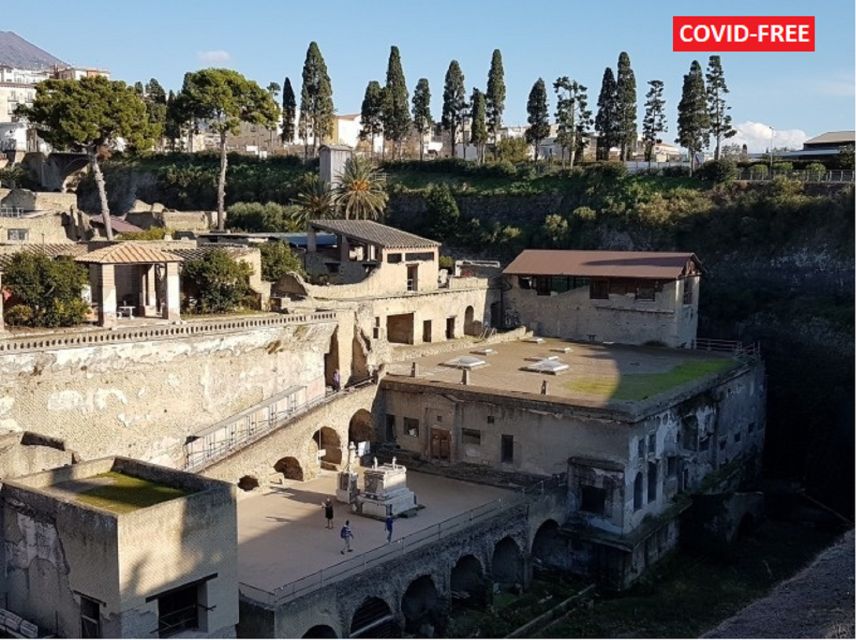
Review · HERCULANEUM TOURS
From Naples: Day Trip to Herculaneum with skip the line
Herculaneum is the disaster scene you can still walk through. This skip-the-line shuttle means you spend more time inside the ruins and less time stuck outside. I especially like how the site feels more intact than many other Roman ruin stops, and how you can choose your own pace. The main drawback: the biggest friction point is often the shuttle pickup/meeting details, where delays or unclear signage can eat into your calm.
From central Naples, you ride by shuttle bus and get a round-trip transfer, then enjoy free time on site. I also like that the preserved wooden structures and high-quality ruins let you picture everyday life—houses, expensive furnishings, and the shock of sudden eruption. One thing to plan for up front: this option doesn’t include a guide or guaranteed audio, so you’ll need your own context plan.
If you want a straightforward day—transport handled, entry fast, and time for wandering—this fits well. It’s best when you’re comfortable finding your way around independently and you’re okay with minimal narration while you explore.
In This Review
- Key things to know before you go
- Why Herculaneum’s mud-and-lava preservation feels different from Pompeii
- Getting from central Naples: the shuttle bus and meeting-point reality check
- Skip-the-line entry: how to start your walk smart
- What you’ll see in the first stretch: houses, wooden rooms, and the street grid
- Villas, public buildings, and the thermal baths you can linger over
- Self-guided pacing: what to do without a guide or included audio
- Price and value: is $71 worth it for this 4-hour format?
- Who should book this Naples to Herculaneum shuttle
- Should you book this tour or plan it independently?
- FAQ
- How long is the Naples to Herculaneum day trip?
- What’s included in the ticket price?
- Is there a guide or audio guide included?
- Where does pickup happen in Naples?
- Is there a skip-the-line entrance?
- Are there child discounts or age rules?
- What ID do children need to bring?
- Can I cancel for a full refund?
Key things to know before you go
- Skip-the-line entrance: You enter without delay, so your time goes to walking, not waiting.
- Self-guided ruins: No guided script means you can linger where you’re most curious.
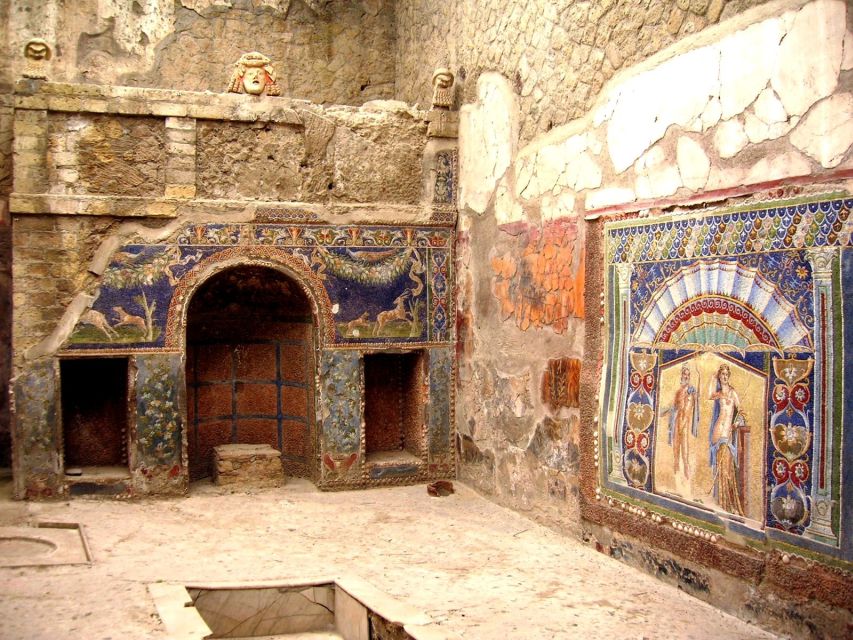
- Preservation you can feel: Intact wooden structures help you understand how homes worked.
- Shuttle pickup is the wild card: Build in a little extra buffer for meeting-point confusion.
- No guide or included audio: Have a phone plan, or be ready to purchase audio on site if you want it.
Herculaneum keeps a few more tours worth your time
- Herculaneum: Skip-the-Line Guided Tour with Archaeologist★ 4.8 · 3,439 reviews
- Herculaneum Small Group Tour and Ticket With an Archaeologist★ 5.0 · 994 reviews
- Herculaneum: Skip-the-Line Entry Ticket with Audio Guide★ 4.3 · 870 reviews
- From Naples: Pompeii & Herculaneum with Archaeologist Guide★ 4.8 · 665 reviews
Why Herculaneum’s mud-and-lava preservation feels different from Pompeii

Herculaneum was buried by mud and lava during Mount Vesuvius’s eruption in A.D. 79. That quick covering is why the site can feel unusually readable: you’re not just looking at stone outlines, you’re seeing enough detail to imagine rooms and daily routines.
I like the emotional pull here. Pompeii can feel like a grand outdoor museum; Herculaneum often feels closer to a real neighborhood that stopped mid-life. When you see those preserved wooden structures—some interpreted as dwellings with more costly, ornate interiors—it hits you that this wasn’t a ruin puzzle. It was a lived-in place.
If you’re the type who wants authenticity over comfort, you’ll appreciate the way the streets, buildings, and surviving materials help you build a mental map fast.
Getting from central Naples: the shuttle bus and meeting-point reality check
This is a shuttle-based day trip, so your first job is getting on the right bus at the right stop. The driver picks you up at a designated city bus stop, and the exact departure time is confirmed the day before by the local operator. In plain terms: screenshots and patience beat guesswork.
I’d treat the pickup like a timed transfer, not a casual meetup. Some service patterns can mean a late arrival, unclear announcements in English on the return trip, or a drop-off that’s close—but not directly at the entrance area. If you’re staying near the center, the shuttle approach is convenient; if you’re outside your home-base comfort zone, you’ll want extra margin.
Practical move: on the day, arrive a bit early and keep your booking details accessible offline. Also, be ready to walk a few blocks if the bus doesn’t stop exactly at the final corner you expected. Once you’re inside Herculaneum, the calm returns.
Skip-the-line entry: how to start your walk smart
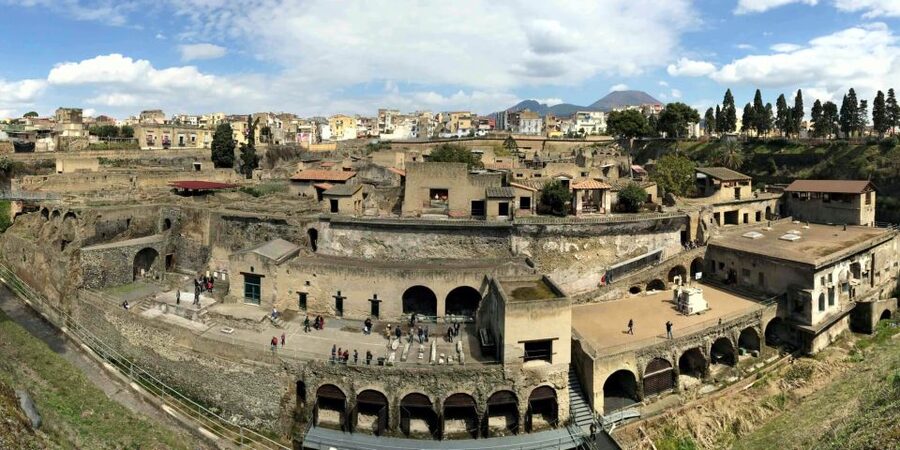
The whole point of the skip-the-line ticket is simple: you enter the archaeological site without delay. That matters, because Herculaneum rewards you for movement. The longer you wait at the entrance, the more your 4-hour window shrinks.
When you first step in, take 5 minutes to decide your priorities. Do you want to focus on private homes and villas first, or jump to public buildings and the baths? Since you’re exploring at your own pace, setting a personal order is how you avoid the classic “we wandered, then realized we missed the best parts” problem.
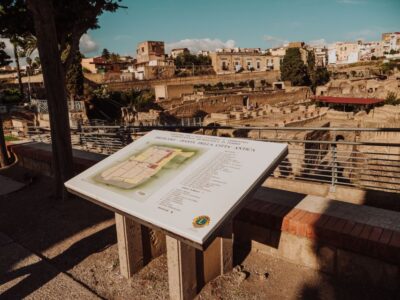
Also, keep an eye out for the way the site is laid out. You’ll be walking through the town that was destroyed by eruption, and it helps to notice the street pattern and building transitions as you go. That way, every next area feels connected, not random.
What you’ll see in the first stretch: houses, wooden rooms, and the street grid
Early on, the ruins make their case through the basics: buildings, streets, and the surprising survival of structure. You’ll walk past the ancient Roman town that was destroyed by the eruption, and the scale of everyday life starts to register quickly.
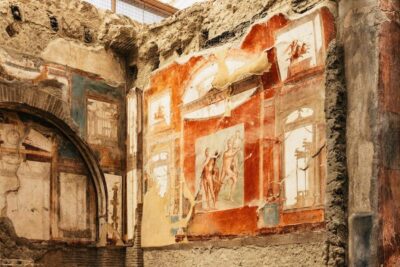
One of the most compelling parts is the intact wooden material. These aren’t just decorative fragments; they’re part of dwelling spaces, tied to the idea of homes with more expensive furnishings and ornamentation. Seeing wood in a volcanic burial context is one reason people find Herculaneum more evocative than many other archaeological sites.
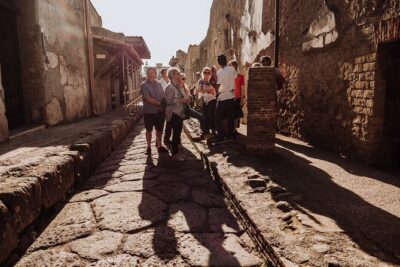
As you go, watch for how the buildings relate to the street. It sounds obvious, but noticing the street grid early helps you understand where you are in the town. It turns your stroll into a guided-by-your-own-eyes route, even without a live guide.
If you like to take photos, do it thoughtfully. Some areas can feel best when you pause and look first, because the preserved details are easier to notice when you slow down.
Other Naples outings worth a look before you book


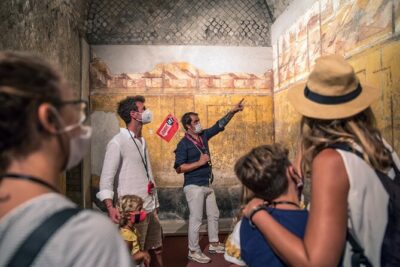


Villas, public buildings, and the thermal baths you can linger over
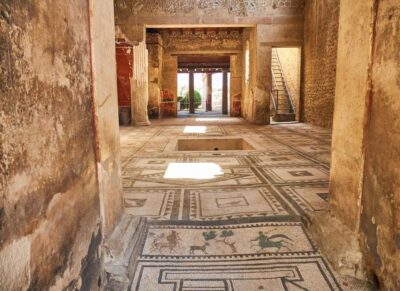
After you’ve oriented yourself, the site opens up into a mix of residential and civic spaces. Beyond the villas—where wealth and luxury are suggested by the preserved style and features—you’ll reach important public buildings and the thermal baths.
This is a big reason the self-guided format works so well. Thermal baths aren’t something you rush. You’ll likely want time to sit for a moment and really map what you’re seeing: the purpose of the space, the layout, and how baths fit into Roman social life.
For public buildings, your pacing choice matters even more. Without a guide, you might be tempted to speed through. Instead, I recommend picking one civic area to focus on and spending the extra minutes there. It’s the difference between “we saw ruins” and “we understood what we were seeing.”
And if you’re a Vesuvius nerd, this whole day becomes a lesson in abrupt history. You’re standing in a city frozen at a moment of catastrophe, where mud and lava acted like an emergency time capsule.
Self-guided pacing: what to do without a guide or included audio
This experience includes free time on site, but it does not include a guide or audio guide. That’s not a deal-breaker, but you should plan for it.
Here’s what I do in situations like this: I use my phone to set expectations before I enter. Even a basic map plus a few targeted topics—houses vs. baths, wooden structures vs. villas—keeps the ruins from feeling silent. If you prefer an audio experience, you might find yourself purchasing an audio option on site or using an app you bring with you. The key is being ready, so you’re not deciding in a line while your time ticks away.
The good part of self-guided is control. You don’t have to match your pace to a group’s photo speed. If you want 30 minutes on one area that clicks for you, you can.
The not-so-good part is that you’ll miss context unless you build it yourself. Plan for that, and the freedom becomes a feature instead of a gap.
Price and value: is $71 worth it for this 4-hour format?
At about $71 per person for roughly a 4-hour outing, you’re paying for three things: round-trip shuttle transport, the skip-the-line entry, and a structured way to reach Herculaneum without coordinating your own bus or train.
Is it worth it? It often is if you want convenience and faster entry. Skip-the-line is particularly valuable in archaeological sites because waiting can eat the best part of your day—walking when you have energy and light. In a short time window, every minute matters.
But the value depends on your comfort level with independent navigation and meeting points. If the pickup is confusing or delayed, you can end up spending energy you didn’t plan to spend. In that scenario, the “cheap” alternative—handling public transport yourself—can start to look competitive, especially since the site visit itself is easy to do at your own pace.
My rule of thumb: if you want a low-stress transfer and you’re okay staying flexible around exact departure times, this price tends to make sense. If you dislike logistics and hate being late, you may want a more guided or more explicitly meeting-point-friendly option.
Who should book this Naples to Herculaneum shuttle
This is a good fit for you if:
- you want self-guided time inside the ruins and dislike rigid schedules
- you’re comfortable reading the site with your own notes or phone help
- you prefer shuttle convenience from central Naples over plotting transport
It might not be ideal if:
- you’re traveling on a tight itinerary and can’t afford a pickup hiccup
- you strongly want a live guide or an included audio program (since neither is part of the package)
- you get flustered by meeting-point ambiguity and signage gaps
For couples, solo travelers, and families who can manage a quick independent visit, it can work well. For people who want expert narration every step, you’ll likely feel a little “on your own” once you cross the threshold.
Should you book this tour or plan it independently?
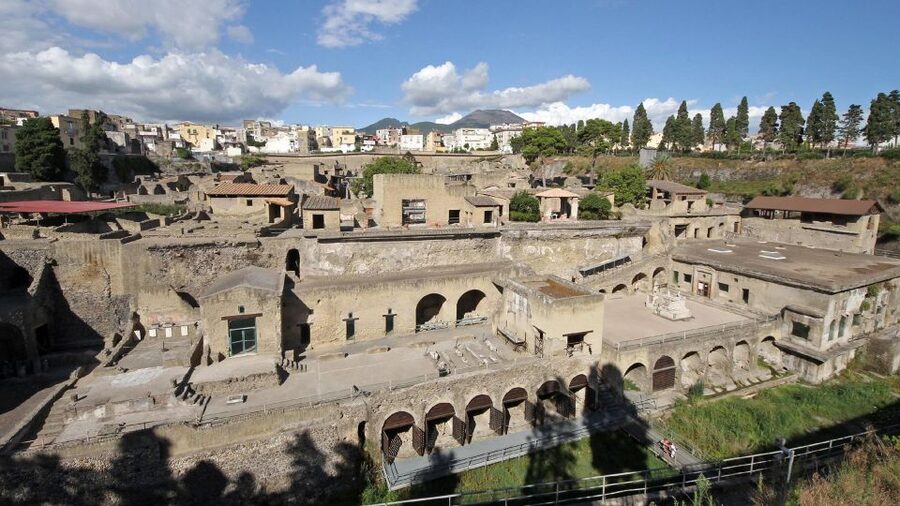
If you like the idea of arriving, entering quickly, and then wandering where your curiosity pulls you, I’d book it—especially for the skip-the-line advantage and the straightforward shuttle transfer. It’s the kind of plan that keeps your day simple: Naples to Herculaneum, time to explore, back to Naples.
If, however, your biggest stress is meeting points and you hate dealing with last-minute timing changes, take extra care. Consider arriving early to the pickup area and keeping your instructions ready on your phone. If you want the surest experience with the least “where is the bus?” risk, compare against options that include a clearly managed guide meeting inside Naples.
Bottom line: book it if you’re flexible and self-sufficient. Don’t book it if you need everything spelled out hour-by-hour with someone leading the way from start to finish.
FAQ
How long is the Naples to Herculaneum day trip?
The duration is 4 hours total.
What’s included in the ticket price?
You get round-trip transportation by shuttle bus, free time to visit the archaeological site, and skip-the-line entrance to the Herculaneum ruins.
Is there a guide or audio guide included?
No. A guide or audio guide is not included.
Where does pickup happen in Naples?
Pickup is included, and the driver will pick you up at the designated city bus stop.
Is there a skip-the-line entrance?
Yes. Your ticket lets you enter the Herculaneum ruins without delay.
Are there child discounts or age rules?
The tour is free for children up to 3 years old. There’s a reduced price for children between 4 and 17 years old.
What ID do children need to bring?
You should bring a passport or ID card for children.
Can I cancel for a full refund?
Yes. You can cancel up to 24 hours in advance for a full refund.
More 1-Day Tours in Naples





More Tour Reviews in Naples





Herculaneum, a Few More Tours





More Naples tours, freshly reviewed





Herculaneum Tours, compared.
 ★ 4.8Herculaneum: Skip-the-Line Guided Tour with ArchaeologistFrom $533,439 reviews
 ★ 5.0Pompeii and Herculaneum Small Group Tour with an ArchaeologistFrom $771,350 reviews
 ★ 5.0Herculaneum Small Group Tour and Ticket With an ArchaeologistFrom $53994 reviews
 ★ 4.3Herculaneum: Skip-the-Line Entry Ticket with Audio GuideFrom $15870 reviews
 ★ 4.8Pompeii: Small-Group Tour of Pompeii and Herculaneum867 reviews
 ★ 4.8Pompeii & Herculaneum with Archaeologist GuideFrom $168665 reviews
 ★ 3.9Pompeii, Herculaneum, & Vesuvius Full-Day TourFrom $152602 reviews
 ★ 4.1Ercolano: Herculaneum Entry Ticket with Optional Audio GuideFrom $21581 reviews
Browse the lists this tour appears in