

Review · POMPEII TOURS
From Naples: Archeological day to Pompeii and Herculaneum
Ash and silence still hang in these streets, and this Naples day trip connects Pompeii and Herculaneum with an easy coach ride. I like the stress-free transportation and the built-in skip-the-line access that helps you spend more time walking and less time waiting. One thing to consider: it’s an audio-led visit, so if you prefer a live guide, the storytelling won’t feel as guided.
What makes this day work well is the pacing: you get real time in each ancient city, plus an audio guide meant to help you make sense of the houses, temples, frescoes, and the preserved details buried by the 79 AD eruption. The Pompeii audio guide also uses an ID requirement, so plan to bring a valid document. And yes, Pompeii is big enough that you can get turned around if you don’t pay attention to the map and your route.
In This Review
- Key highlights you’ll feel from the first stop
- Getting to Pompeii and Herculaneum Without the Naples Headache
- Herculaneum: Why This City Feels More Intimate
- Pompeii’s 4 Hours: Big Site, Big Payoff
- A simple way to plan your Pompeii route
- Houses, frescoes, temples, and preserved food
- How the Mount Vesuvius Story Lands While You Walk
- Audio Guide Reality Check: Freedom vs. Control
- Price and Value: What $123.48 Buys You
- Practical Tips That Make the Day Easier
- Bring what you’ll actually use
- Use the map like a tool, not a decoration
- Manage audio guide tech friction
- Who This Tour Suits Best
- Should You Book This Naples-to-Pompeii-and-Herculaneum Day Trip?
- FAQ
- How long is the day trip?
- Where does the tour start in Naples?
- Which sites are included?
- How much time do you get at each site?
- Is transportation included?
- Are tickets included?
- Is food included?
- Do you get an audio guide?
- What languages are available for the audio guide?
- Do I need ID for the Pompeii audio guide?
- FAQ
- What is the cancellation policy?
- What languages does the driver speak?
- Is there free time for exploring?
- How do I get back to the meeting point?
Key highlights you’ll feel from the first stop
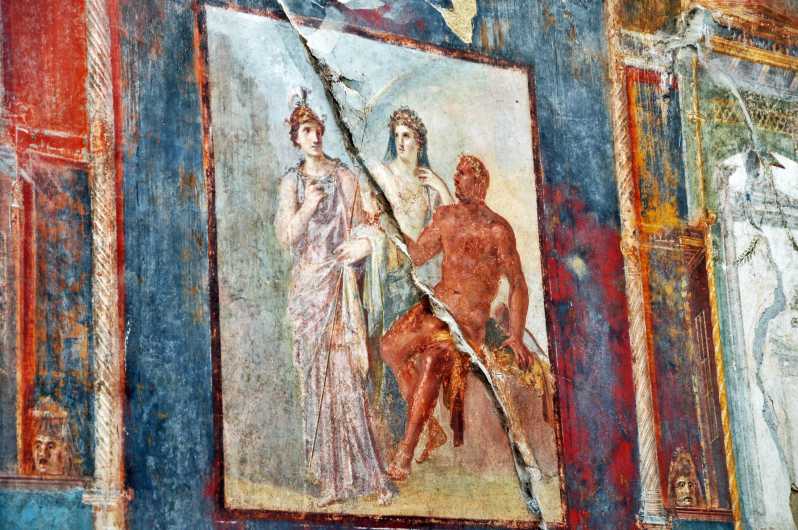
- Comfortable Naples-to-Vesuvius transfer: a straightforward roundtrip coach plan so you’re not piecing together trains or buses.
- Skip-the-line tickets at both sites: time saved where it matters, especially on busy days.
- Two very different “ash cities”: Herculaneum first, then Pompeii, with time to explore instead of rushing through.
- Audio guide learning (self-paced): designed to explain key finds while you walk the streets.
- Pompeii map included: helpful, but you still need a route plan to avoid getting lost.
Which Pompeii ticket and guide? Compare a few more.
- From Naples: Pompeii Ruins & Mount Vesuvius Day Tour★ 4.3 · 11,459 reviews
- From Naples: Skip-the-line Pompeii – Small Group Tour★ 4.5 · 4,401 reviews
- Naples or Sorrento: Full-Day Pompeii and Mount Vesuvius Tour★ 4.6 · 4,235 reviews
- Pompeii & Mt.Vesuvius Day Tour from Naples with Pizza Lunch★ 4.0 · 2,901 reviews
Getting to Pompeii and Herculaneum Without the Naples Headache
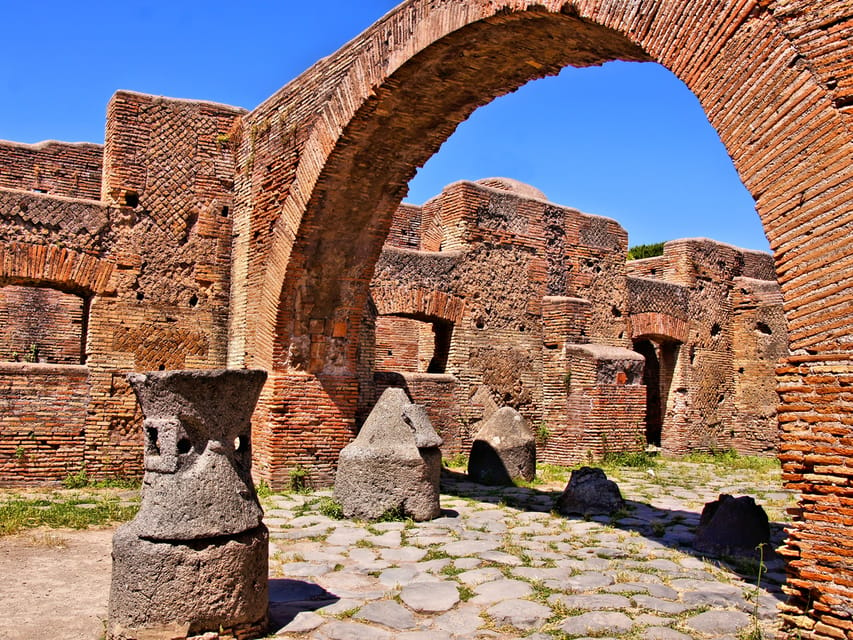
This is the kind of day trip that makes sense if you want the payoff without the logistics pain. You start and end back at Via Galileo Ferraris 40, with the bus logo “Around Vesuvio,” which makes it easier to confirm you’re at the right meeting spot. The total duration is about 8.5 hours, so it’s long enough to cover both sites but not so long that you feel wrecked by the end.
The coach transfer is part of the value. Instead of juggling local transport and figuring out the best way to move between two archaeological areas, you’re placed on a set schedule and transported comfortably. The driver speaks English and Italian, which matters if something goes off-script with timing or pickup details.
What I’d watch for: one review mentioned the neighborhood around the bus pickup felt a bit sketchy. That doesn’t mean the day is unsafe or chaotic, but it’s a good reminder to keep your head up, arrive a little early, and treat the meeting point like a quick “show up and go” moment rather than a place to linger.
Herculaneum: Why This City Feels More Intimate
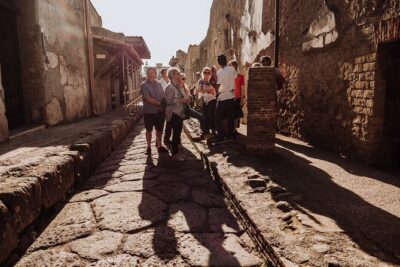
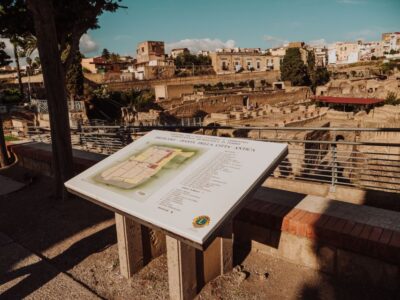
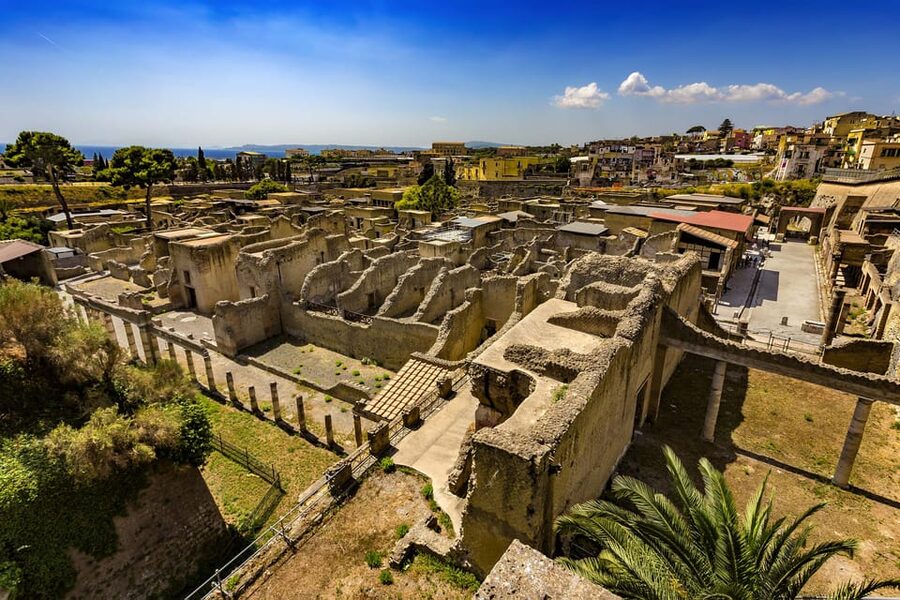
You start at Ercolano (Herculaneum) and you’ll have about 2.5 hours on site. This shorter time block is actually a plus: Herculaneum can feel more focused because the preserved structures and streets help you understand daily life in a way that’s quick to grasp once you’re walking.
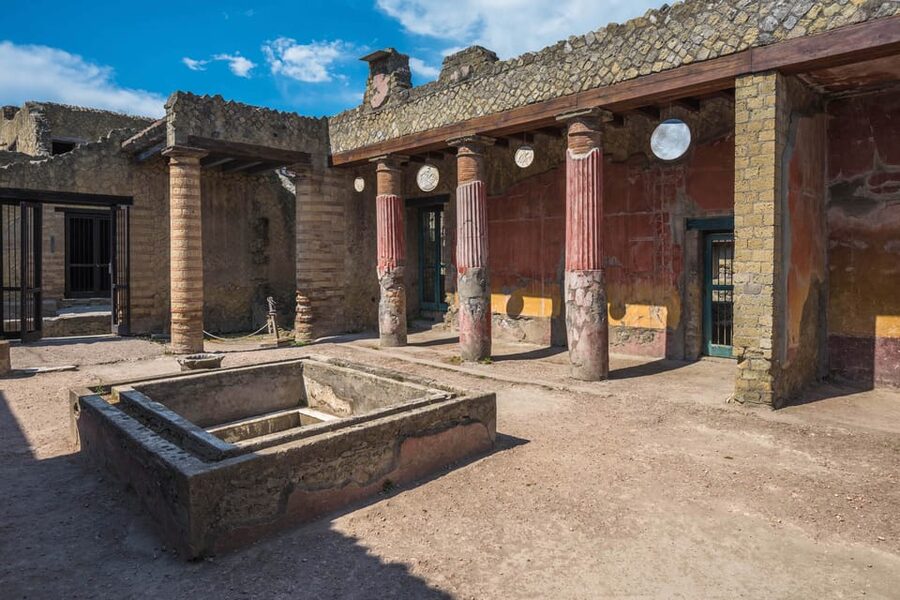
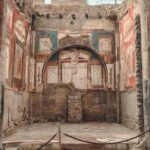
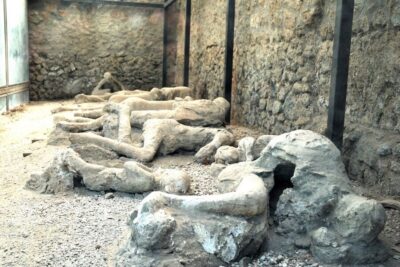
Herculaneum’s big selling point is what the eruption did to the place. The ash preserved homes and everyday objects—details that help you picture the city as it was, not just as ruins. As you move through the site, you’ll see fresco-like surfaces, building spaces, and the famous casts and remains connected to the victims of the eruption. You won’t be stuck with one single “must-see” spot. Instead, you’ll have time to wander through multiple streets and building areas at your own rhythm.
The tour includes skip-the-line access at Herculaneum, which is a practical win. When you’re dealing with a major archaeological site, even short delays add up fast, and a line can steal the best part of your day: the morning energy when you’re ready to soak it in.
Audio guide note: the Herculaneum portion uses a digital audio guide included in the price. Since it’s self-paced, you control how long you stay in front of a wall, a doorway, or a preserved fragment. That flexibility is great if you like slowing down for details, but if you’re the type who prefers someone to narrate in real time, audio can feel a bit disconnected.
Pompeii’s 4 Hours: Big Site, Big Payoff
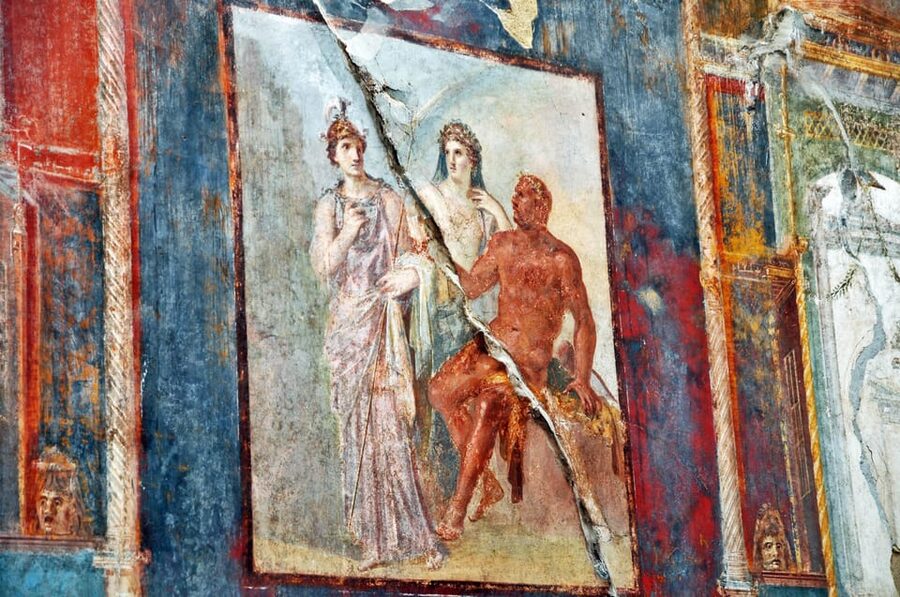
Then it’s on to Pompei for about 4 hours on site, which is enough time to see major highlights without turning the day into a sprint. Pompeii is famous for a reason, but the real value comes from the feeling you get walking between rooms, courtyards, and street corners that are preserved in a way that makes daily life visible.
You’ll spend your time in the archaeological areas with free time, and the tour supports that with an audio guide plus a detailed map of Pompeii. That combination matters, because Pompeii is the kind of place where it’s easy to lose your bearings. One review specifically noted that Pompeii has so much to see that you can easily get lost, and that the map could be easier because street signage can feel different from what you expect. So even with the included map, treat it as your navigation tool and not just a souvenir.
A simple way to plan your Pompeii route
Pompeii rewards a route. When you have 4 hours, you don’t want to drift randomly for that whole time. Here’s a practical approach you can use:
- Start by picking a “spine” route: one main street or one central cluster of sights.
- Use the audio guide to decide which side streets or house entrances are worth the extra stop.
- Check your position using the map a few times, not continuously.
If you follow that rhythm, you’ll spend more time actually connecting scenes to stories, instead of wandering until you’re frustrated.
Herculaneum keeps a few more tours worth your time


Houses, frescoes, temples, and preserved food
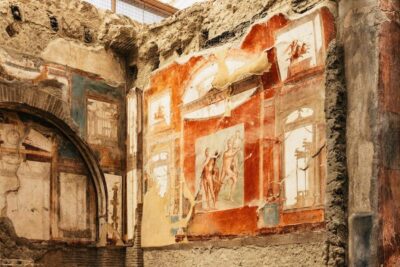
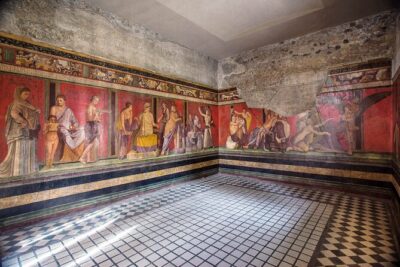
The audio guide is designed to help you understand what you’re seeing: frescoes and sculptures, entrances into houses and temples, and also the casts and skeletons connected to the eruption victims. The ash didn’t just bury buildings—it preserved décor and even food details. That’s the heart of why Pompeii and Herculaneum hit so hard: you’re not only looking at ruins, you’re looking at moments of ordinary life frozen in place.
How the Mount Vesuvius Story Lands While You Walk
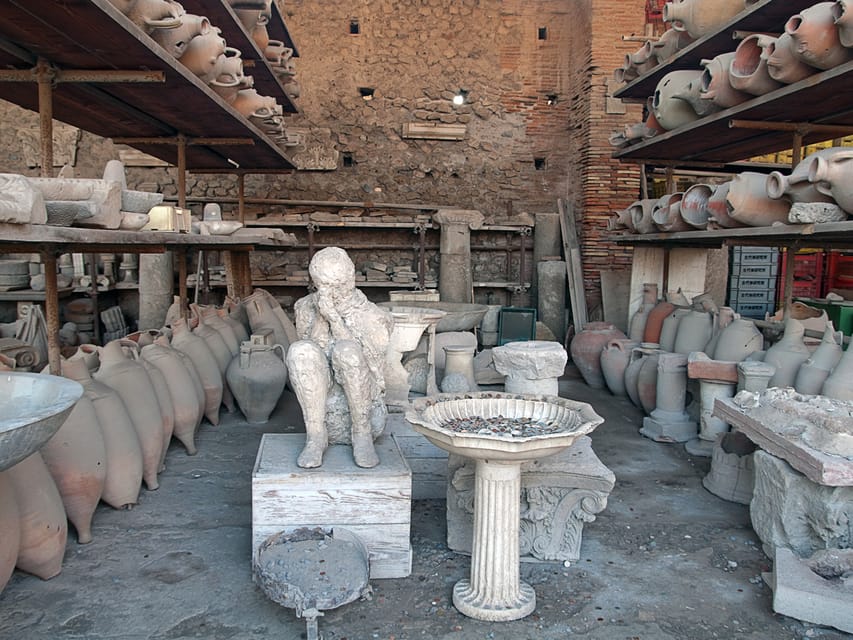
You don’t just visit two sites and move on. The day is structured to help you connect the human story to the place itself. You’ll learn about the eruption of Mount Vesuvius in 79 AD, and the explanation fits the pacing of the walks: you’ll be hearing context while you look at preserved environments, objects, and human remains.
This matters because Vesuvius can feel like a big famous volcano from a textbook—until you’re standing in the spaces where people lived. Once you see the architectural layout, the preserved décor, and the scale of burial, the history stops being abstract. You start noticing how the eruption changed the city instantly, and how the ash preserved what would normally decay or be looted over centuries.
If you care about understanding the “why” behind the site’s features, the audio approach can work well. You’re not trapped in a lecture—you can take the context and apply it directly to what you’re seeing in front of you.
Audio Guide Reality Check: Freedom vs. Control

I like that this trip gives you a self-guided audio format. You’re not stuck with a pace that’s set for the slowest group member. You can stop when you spot something visually interesting—a doorway, a mural fragment, a preserved floor pattern—and you can revisit the audio portion as needed.
That said, audio guides have two common friction points, and this tour has both in its reality:
- Pompeii is crowded with sights, so you need navigation discipline.
- The audio guide controls can take getting used to. One review flagged that it wasn’t always easy to understand which number to press to listen to explanations, and that some parts felt short.
Here’s the practical way to handle that:
- Before you get deep into Pompeii, spend a minute confirming your audio guide setup works smoothly.
- If the audio feels unclear, focus on the visual cues first and let the audio fill in afterward, rather than forcing the audio to lead every decision.
- Don’t rely on the guide alone for direction. Use the included map and check your location.
Also note the Pompeii audio guide has an ID requirement. The tour info says you must have a valid ID document to rent the Pompeii audio guide. Bring it with you and keep it handy at the start of the Pompeii portion.
Price and Value: What $123.48 Buys You

At $123.48 per person, this day trip sits in the mid-range for major-site tours. The value isn’t just that you’re visiting Pompeii and Herculaneum—it’s how the day is packaged to reduce wasted time and friction:
- Roundtrip transportation from Naples: you’re buying convenience and time-saving logistics.
- Skip-the-line tickets at both sites: that’s a direct time and stress reduction.
- Audio guide support: including Pompeii’s map and the Herculaneum digital guide.
Is it the cheapest way to see both places independently? Probably not. But you’re paying for a full day plan where you don’t have to coordinate transit schedules and ticket logistics yourself. For most people, that tradeoff is worth it—especially if you’re on a short Naples visit and can’t afford “oops, we misread the bus times” problems.
One more value angle: you get different time allotments—2.5 hours in Herculaneum and 4 hours in Pompeii. That split feels intentional because Pompeii is larger and more sprawling, while Herculaneum benefits from focused walking without turning the day into a sprint.
Practical Tips That Make the Day Easier

A day like this can go smoothly if you plan for comfort and navigation.
Bring what you’ll actually use
- Comfortable walking shoes (Pompeii especially is extensive).
- Water and snacks. Food and drinks aren’t included, so plan to buy or bring your own.
- Your valid ID document for the Pompeii audio guide.
Use the map like a tool, not a decoration
Pompeii is the one place where you’ll benefit most from a simple strategy: stop, orient, then move. If the map feels more confusing than expected (street signs can differ), don’t panic. Take a photo of your start location and then check orientation again after a major stop.
Manage audio guide tech friction
If you rely on the audio guide heavily, be ready for minor control quirks. Before entering the densest parts of Pompeii, confirm the device is responding and the audio selection method makes sense to you.
Who This Tour Suits Best
This is a strong fit if you:
- Want a proper day trip from Naples that covers both major ash-buried cities.
- Prefer self-paced exploring with audio explanations rather than constant live narration.
- Like archaeology that connects architecture, art, and human stories in one walk.
It’s less ideal if you:
- Want a lot of back-and-forth Q&A or a live guide style where explanations expand on the spot.
- Get easily frustrated by audio controls and navigation challenges without a person directing you.
That said, even with audio, the included time in each site lets you decide how much you want to focus on specific areas rather than being herded through.
Should You Book This Naples-to-Pompeii-and-Herculaneum Day Trip?
If you want the practical best of both worlds—Naples convenience plus serious time in Pompeii and Herculaneum—this is an easy yes. The skip-the-line access and roundtrip coach transfer do real work for your day. The audio guide format is also a fair match for archaeology, as long as you’re comfortable being self-directed.
I’d consider skipping or switching to a live-guided alternative only if you strongly prefer a person talking through every stop, or if you know you’ll dislike any tech-based audio controls. Otherwise, this is a solid way to understand what the eruption changed, and to walk through two cities shaped forever by ash.
FAQ
How long is the day trip?
It lasts about 8.5 hours.
Where does the tour start in Naples?
The meeting point is Via Galileo Ferraris 40. Coordinates provided are 40.8505189, 14.2747942.
Which sites are included?
You’ll visit Herculaneum (Ercolano) and Pompeii.
How much time do you get at each site?
You get about 2.5 hours at Herculaneum and about 4 hours at Pompeii.
Is transportation included?
Yes. The tour includes roundtrip transportation from Naples by bus/coach.
Are tickets included?
Yes. Skip-the-line tickets are included for both Herculaneum and Pompeii.
Is food included?
No. Food and drinks aren’t included.
Do you get an audio guide?
Yes. A digital audio guide is included for Herculaneum, and an audio guide plus a detailed map of Pompeii are included.
What languages are available for the audio guide?
The audio guide is listed as available in Chinese, English, French, German, Hebrew, Italian, Portuguese, Russian, and Spanish.
Do I need ID for the Pompeii audio guide?
Yes. You must have a valid ID document to rent the Pompeii audio guide.
FAQ
What is the cancellation policy?
You can cancel up to 24 hours in advance for a full refund.
What languages does the driver speak?
The driver speaks English and Italian.
Is there free time for exploring?
Yes, you’ll have free time at both Herculaneum and Pompeii during the visit.
How do I get back to the meeting point?
The tour ends back at the original Naples meeting point, Via Galileo Ferraris 40.
More Tour Reviews in Naples






Herculaneum, a Few More Tours





More Pompeii Tours to Compare




More Naples tours, freshly reviewed




Pompeii Tours, compared.
 ★ 4.8Pompeii: Entry Ticket and Guided Tour with an ArchaeologistFrom $3519,459 reviews
 ★ 4.1Pompeii: Entry Ticket with Audio GuideFrom $4013,491 reviews
 ★ 4.8Pompeii: Small Group Tour with an ArchaeologistFrom $4012,264 reviews
 ★ 4.3Pompeii Ruins & Mount Vesuvius Day TourFrom $12011,459 reviews
★ 5.0Pompeii Small Group Tour with an ArchaeologistFrom $356,593 reviews
★ 4.3Pompeii Ruins & Mount Vesuvius Day TourFrom $12011,459 reviews
★ 5.0Pompeii Small Group Tour with an ArchaeologistFrom $356,593 reviews
 ★ 4.5Skip-the-line Pompeii – Small Group TourFrom $544,401 reviews
 ★ 4.6Naples or Sorrento: Full-Day Pompeii and Mount Vesuvius TourFrom $1044,235 reviews
 ★ 3.9Pompeii: Skip-the-line Entry Ticket with Audio Guide & MapFrom $433,153 reviews
Browse the lists this tour appears in