
Review · POMPEII TOURS
Ancient Pompeii Private Tour: Skip the Line & Kid-Friendly Option
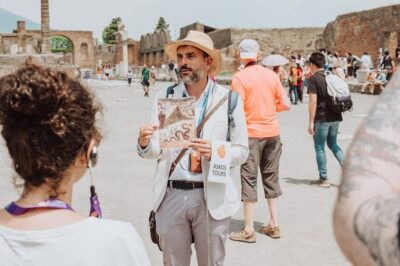
Pompeii hits different with a real plan. You get skip-the-line entry built in, plus the family option adds kid-friendly games and a special map so the day doesn’t turn into a hot, exhausted blur. The trade-off is simple: it’s still a lot of walking on uneven ancient stone, so you’ll want decent shoes and a steady pace.
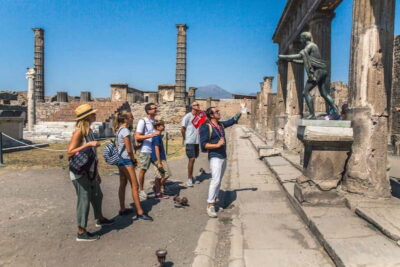
I like how the tour is set up around your time. It’s a private walking tour (your group only), with a guide who can adjust the route if you care more about mosaics, public buildings, or the story of the eruption.
In This Review
- Key highlights worth your attention
- Skip-the-line Pompeii in 2 hours: what you gain
- Meeting at Via Villa dei Misteri: set yourself up for an easier day
- The AD 79 story your guide uses to connect everything
- The Forum and Via dell’Abbondanza: Pompeii’s main stage
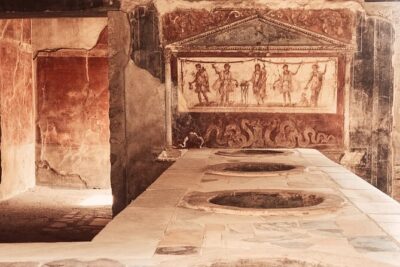
- Forum Baths and the Temple of Apollo: Roman routine made visible
- Casa dei Vettii and Teatro Grande: social status and architecture
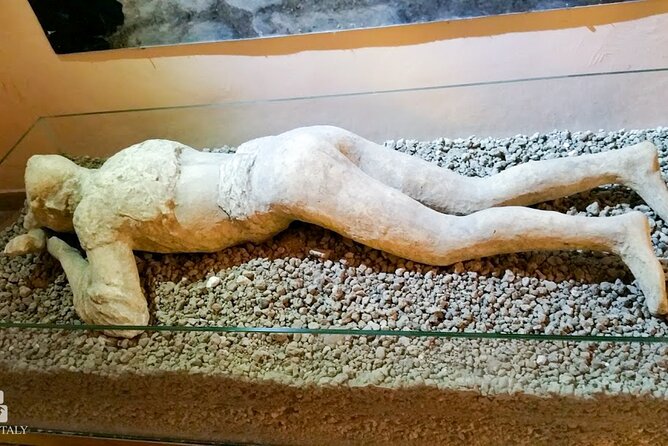
- Antiquarium di Pompei: the casts that make the eruption personal
- The family tour kit: turning ruins into a game
- Price and value: why $165.05 makes sense for the right day
- Who should book this Pompeii private tour?
- Should you book this Pompeii private tour?
- FAQ
- FAQ
- How long is the Pompeii private tour?
- Is this tour private?
- What language is the guide?
- Where do we meet, and where does the tour end?
- Are entrance tickets included?
- What’s included for the family option?
- What ages is the family tour designed for?
- Do we need to arrange pickup or drop-off?
- What if my child is under 18?
- Can I cancel and get a refund?
Key highlights worth your attention
- Skip-the-line timing so you spend less time waiting and more time seeing
- Family tour kit with a kid map, stickers, games, and clues
- Forum, baths, and temples that explain how Romans lived, worked, and prayed
- Casa dei Vettii with its famously restored, eye-popping wall art
- Antiquarium plaster casts that show the human cost of AD 79
Which Pompeii ticket and guide? Compare a few more.
- Pompeii Small Group Tour with an Archaeologist★ 5.0 · 6,593 reviews
- Discover the Ancient Ruins of Pompeii: Day Trip from Rome★ 3.5 · 2,247 reviews
- Pompeii and Herculaneum Small Group Tour with an Archaeologist★ 5.0 · 1,350 reviews
- Skip the Line Guided Tour of Pompeii led by an Archaeologist★ 5.0 · 703 reviews
Skip-the-line Pompeii in 2 hours: what you gain
Pompeii is huge, and the ruins feel like they’re spread out to punish indecision. A private guide fixes that. In about two hours, you can hit the big, memorable anchors—Forum area buildings, major streets, a standout house, theaters, and the museum casts—without wasting your day in lines or trying to decode site signage while your feet complain.
The “skip-the-line” element matters because Pompeii’s entrance process can be slow on busy days. Even with timed tickets, you can lose momentum waiting. Here, the guide’s access and the included tickets help you get moving quickly. If you’re visiting in peak season or you hate standing around, that time-saving is the main reason this style of tour is worth it.
You also get something that’s hard to buy on your own: a guided explanation that connects the places. The guide frames the city through the eruption story of August 24, AD 79—when Mt. Vesuvius buried Pompeii under ash and molten material. That perspective turns a pile of stones into a place where you can picture neighbors going to baths, merchants trading goods, and citizens gathering in public spaces.
Meeting at Via Villa dei Misteri: set yourself up for an easier day
Your meeting point is Via Villa dei Misteri, 2, 80045 Pompei (Pompeii). The end is back at the same spot. That matters because it keeps your day simple: you’re not fighting transfers, then guessing where you’ll be dropped afterward.
Two practical notes. First, this is near public transportation, so you can arrive without a private driver if you plan well. Second, the tour asks for moderate physical fitness. Pompeii is outdoors, often hot, and the surfaces can be rough. Pack smart: good walking shoes and a light, breathable layer are not optional.
If you’re traveling with kids, I’d treat footwear as the “make or break” item. One wrong shoe and the day becomes a daily negotiation instead of a museum adventure.
The AD 79 story your guide uses to connect everything
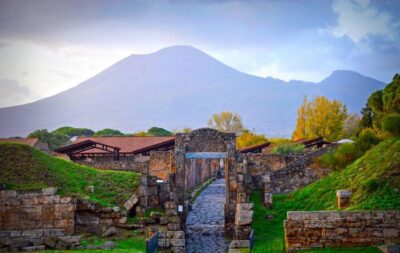
One of the most helpful things a Pompeii guide can do is set the timeline in your head before you start wandering. Here, the guide starts with the eruption story—Mt. Vesuvius begins erupting, ash blankets Pompeii, and the city is preserved. That explanation gives you a mental “why” for what you’re seeing.
From there, the tour doesn’t just point at buildings. It walks you through how Pompeii functioned: city walls and gates, public meeting spaces, religious sites, markets, and everyday routines. When you understand that the Forum area was the center for political, religious, and commercial life, it’s easier to read the rest of the ruins.
You also get a flexible element: if something pulls your attention—mosaics, baths, the theater, or the casts—tell your guide. The route can be tailored so you spend time where your curiosity actually is, not where the guidebook says you must stand.
The Forum and Via dell’Abbondanza: Pompeii’s main stage
Most Pompeii “first-timer” moments happen around the city’s core. This tour hits that core in a logical sequence, so your photos don’t feel random.
Stop 2: Forum of Pompeii
The Forum is your anchor. It’s described as the political, religious, and commercial heart of the city—a rectangular pedestrian plaza (about 157 by 38 meters). You also learn something specific that helps you visualize daily life: the space was off-limits to chariot traffic. That one detail makes the Forum feel like a human meeting place, not just an architectural artifact.
Stop 3: Via dell’Abbondanza
Then you shift to the city’s longest and most important street, the Decumanus Inferior. Via dell’Abbondanza runs from the Forum toward the Sarno Gate. This is where you get a vivid look at commercial and social life—basically, where people walked, shopped, and did business.
Two practical benefits for you here. One: you’re moving from public power (Forum) to everyday street life (Via dell’Abbondanza), so the tour doesn’t feel like endless temples. Two: your guide can point out how the city’s layout shaped movement. Pompeii is a puzzle, and streets are the fastest way to solve it.
Rather go private? More options in Pompeii



Forum Baths and the Temple of Apollo: Roman routine made visible
This is the part I love because it shifts you from politics and commerce into daily body-and-soul stuff—how people spent time, cleaned up, and worshipped.
Stop 4: Terme del Foro (Forum Baths)
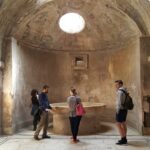
These public baths are remarkably well preserved and, importantly, they were among the only baths still operating at the time of the eruption in AD 79. You can walk through the bath sequence: Apodyterium (changing room), Frigidarium (cold), Tepidarium (warm), and Calidarium (hot).
I also like that the guide explains what you’re looking at in the rooms—barrel-vaulted ceilings, stucco reliefs, and telamones (terracotta figures). Those details help you understand why baths weren’t just about hygiene. They were a social routine—part relaxation, part conversation, part community.
Stop 5: Temple of Apollo
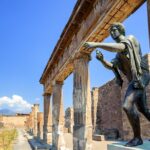
Next is the Temple of Apollo, one of the oldest and most important religious sites in Pompeii, tied to origins dating back to the 6th century BC. It’s a central landmark, located in the Forum area. You learn it mixes Greek and Italic design, sits on an elevated podium, and originally had an imposing set of stairs and a portico lined with 48 columns.
Also, you’ll hear about Apollo and Diana: bronze replicas are shown there, while the originals are preserved at the National Archaeological Museum in Naples. That “where did the original go?” detail is useful, because otherwise you might wonder what’s real on-site versus replicated.
Casa dei Vettii and Teatro Grande: social status and architecture
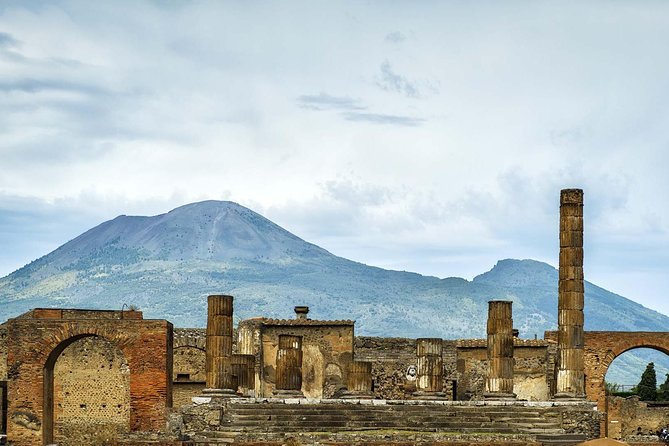
If you want one “wow” block of the day, this is it. Pompeii homes and theaters show Roman taste in a way that feels surprisingly modern—status display on one hand, design and crowd experience on the other.
Stop 7: Casa dei Vettii
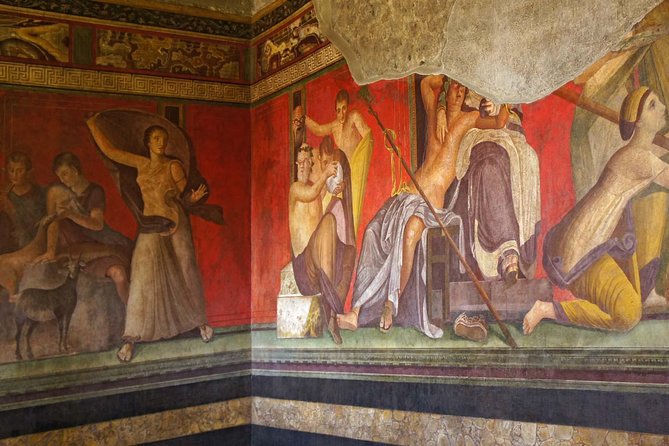
This house is often called the Sistine Chapel of Pompeii, and it earned that nickname honestly. It reopened in 2023 after a meticulous 20-year restoration, and it’s described as one of the most opulent and perfectly preserved residences.
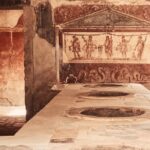
You learn who lived here: two freedmen-turned-wealthy wine merchants, Aulus Vettius Conviva and Aulus Vettius Restitutus. The point your guide makes is clear—you can read their social leap in the luxury of the home. Wall paintings and floor mosaics become less like decoration and more like a statement: we made it.
Stop 8: Teatro Grande
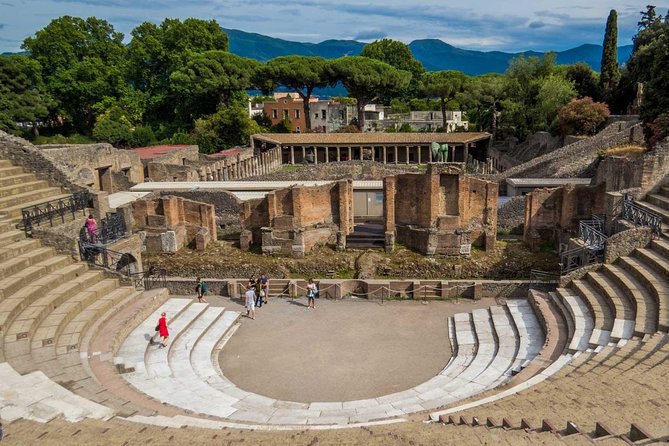
Then comes the Teatro Grande, one of the world’s oldest surviving masonry theaters. It was built in the 2nd century BC and carved into a lava hillside. It also shows a transition between Greek and Roman styles—something you may not catch on your own without the guide’s pointing.
If you’re traveling with kids, these two stops can be a turning point. A house like Casa dei Vettii is full of visible “look at this!” moments. A theater is built for human attention, so it naturally grabs kids who are otherwise antsy in ruins.
Antiquarium di Pompei: the casts that make the eruption personal
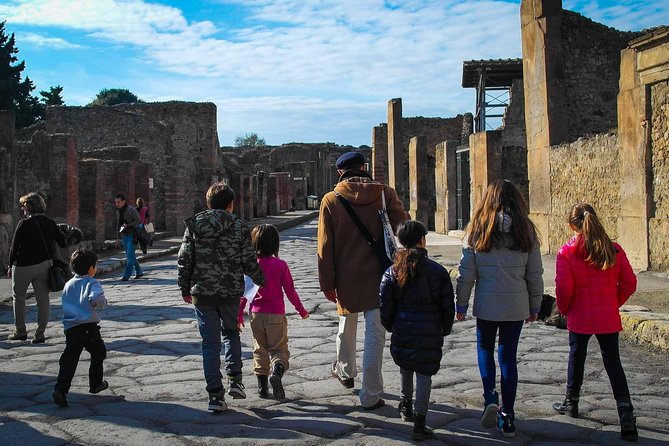
This stop changes the tone of the day in the best way—because it adds human weight to the story.
Stop 9: Antiquarium di Pompei
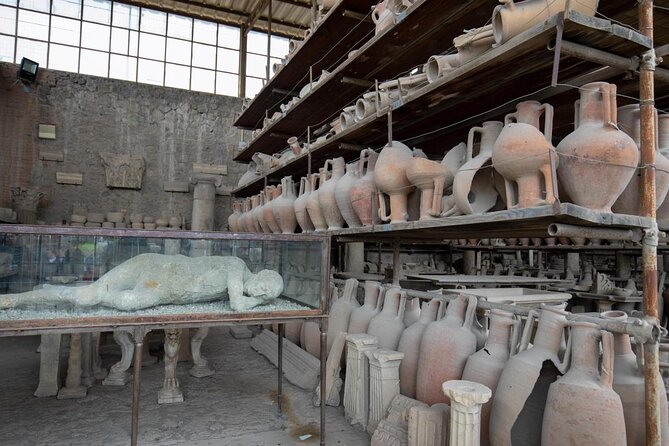
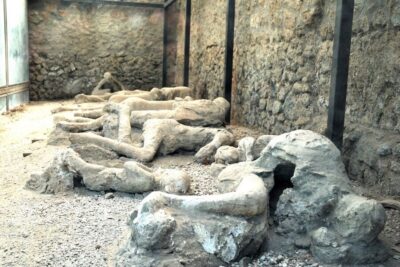
The Antiquarium is Pompeii’s main site museum, in a climate-controlled space, and it holds some of the most fragile artifacts discovered across the ruins. It’s also where you see plaster casts of victims frozen in the eruption.
It’s not just history class. It’s the emotional reality of what AD 79 meant for real families. Your guide keeps it grounded, and the museum setting lets you slow down from the hot walking outside.
If you’re sensitive to this kind of display, know that the casts are the point. You don’t have to stare, but it’s worth stepping in for a moment to connect the eruption story to the people who lived through it.
The family tour kit: turning ruins into a game
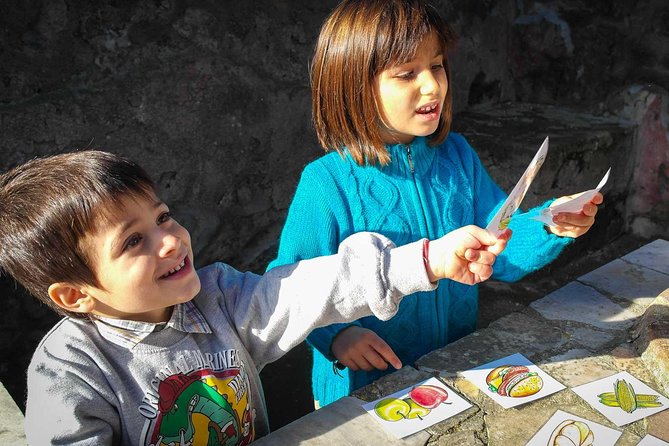
This is where the tour earns its extra value for families.
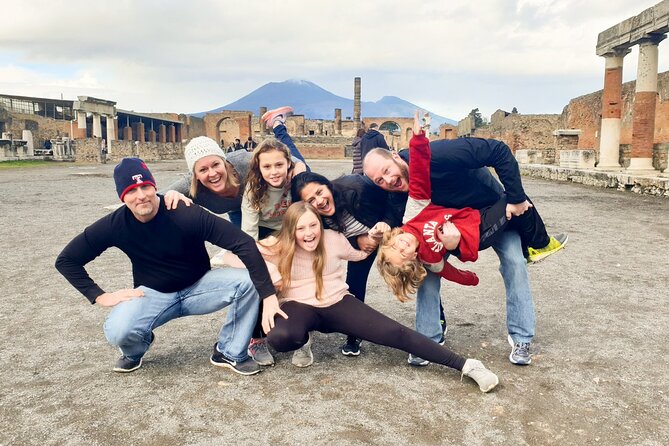
The family option is designed for kids (recommended for ages 6 to 11) and includes a Pompeii4kids kit: a map with stickers, activities, and an activity book. The guide also tailors the route to keep younger minds engaged with games, puzzles, and clues.
What that looks like in practice is simple and effective: kids aren’t just watching adults read signs. They have tasks. They get to play along as you move between major points—placing stickers, answering question prompts, and learning which character or role might have fit into a building they’re standing in.
Guides on this route have a reputation for handling the real-world mess of family travel—hot kids, restless attention spans, and the constant asking of why. That kind of patience matters. A Pompeii day is short, but kid energy doesn’t come in “museum hours.” A family tour built for that reality is much easier than trying to DIY it with a standard audio app.
One extra “value” detail: a good guide will often pace the route so kids can enjoy the breeze down the main walkways and avoid wasting energy circling back.
Price and value: why $165.05 makes sense for the right day
$165.05 per person is not cheap, so you should be clear on what you’re buying.
Here’s what you’re paying for:
- A private guide with Blue Badge credentials
- Admission/tickets included for the site stops (and fast-track access)
- A structured highlight route so you don’t need to spend your limited time figuring out what to see first
- The family kit if you select the family option
The real value is time and explanation. Pompeii is one of those places where your experience changes fast depending on whether you have a guide who can translate what you’re seeing. Without that, it’s easy to miss why the baths mattered, what the Forum represented, or why the house paintings are so powerful.
Also, private tours tend to work better when you have specific needs: kids, limited vacation time, or a desire for a calmer pace. If your goal is the biggest sights in a short visit, this price tag starts to look more like a “buy back your afternoon” deal.
Who should book this Pompeii private tour?
This tour fits best if:
- You want the big Pompeii highlights in about two hours instead of a full-day wander
- You value a guide’s storytelling that connects streets, buildings, and the AD 79 eruption
- You’re traveling with kids and want them engaged with a kid-focused map and games
- You like a flexible route where you can ask for more detail at stops that catch your interest
You might want a different style of tour if:
- Your group has strong mobility constraints, because this is still a walking circuit across uneven ancient surfaces
- Your family needs a lot of breaks far from crowds, since the tour is built around seeing key areas efficiently
As for timing, I’d pick an earlier slot if you can. One family shared that a late morning left them overheating, while an earlier plan would have made the day easier. Pompeii heat is real, and your comfort affects everything from photos to patience.
Should you book this Pompeii private tour?
Yes, if you want Pompeii to feel understandable, not overwhelming. This is the kind of tour that turns scattered ruins into a clear story—Forum to street life, baths to temples, standout houses to the theater, then the museum casts that land the eruption’s meaning.
Book it especially if you’re bringing kids. The family kit and clue-style approach can keep younger visitors focused while adults still get real substance, not just a kid script.
If you hate walking or you want a do-what-you-feel-only day, then a private highlight tour may feel too structured. But if you want maximum meaning per hour, this one makes a strong case.
FAQ
FAQ
How long is the Pompeii private tour?
It runs for about 2 hours (approx.).
Is this tour private?
Yes. It’s a private tour, and only your group participates.
What language is the guide?
The tour is offered in English.
Where do we meet, and where does the tour end?
You meet at Via Villa dei Misteri, 2, 80045 Pompei NA, Italy. The tour ends back at the same meeting point.
Are entrance tickets included?
The tour details indicate admission tickets are included for the stops.
What’s included for the family option?
The family option includes the Pompeii4kids kit with a kid map, stickers, activities, and an activity book.
What ages is the family tour designed for?
The family option is recommended for children ages 6 to 11.
Do we need to arrange pickup or drop-off?
Pick up and drop off are not included.
What if my child is under 18?
A current valid passport is required on the day of travel for children under 18.
Can I cancel and get a refund?
Yes, you can cancel for a full refund up to 24 hours in advance.
More Tours in Pompeii



More Tour Reviews in Pompeii

More Pompeii Tours to Compare
More Pompeii tours, freshly reviewed



Pompeii Tours, compared.
 ★ 4.8Pompeii: Entry Ticket and Guided Tour with an ArchaeologistFrom $3519,459 reviews
 ★ 4.1Pompeii: Entry Ticket with Audio GuideFrom $4013,491 reviews
 ★ 4.8Pompeii: Small Group Tour with an ArchaeologistFrom $4012,264 reviews
 ★ 4.3Pompeii Ruins & Mount Vesuvius Day TourFrom $12011,459 reviews
★ 5.0Pompeii Small Group Tour with an ArchaeologistFrom $356,593 reviews
★ 4.3Pompeii Ruins & Mount Vesuvius Day TourFrom $12011,459 reviews
★ 5.0Pompeii Small Group Tour with an ArchaeologistFrom $356,593 reviews
 ★ 4.5Skip-the-line Pompeii – Small Group TourFrom $544,401 reviews
 ★ 4.6Naples or Sorrento: Full-Day Pompeii and Mount Vesuvius TourFrom $1044,235 reviews
 ★ 3.9Pompeii: Skip-the-line Entry Ticket with Audio Guide & MapFrom $433,153 reviews