
Review · POMPEII TOURS
3-Days Audio Guide for Pompeii, Herculaneum, Vesuvius and Naples
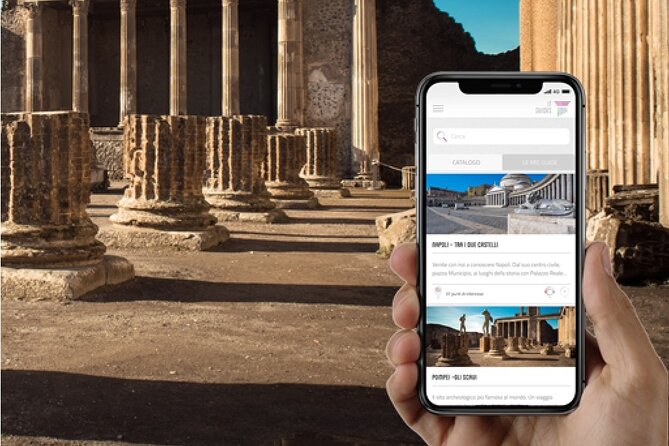
Naples and the ruins can feel like too much at once. This 3-day audio guide turns it into a clear, step-by-step route, and you can keep control of your pace. I like the offline-friendly setup on your smartphone, and I especially love that Naples includes a big focus on the Sansevero Chapel and the Veiled Christ.
The main trade-off is simple: admission tickets for most stops are not included, so you’ll still need to plan your entries for Pompeii, Ercolano, Vesuvius, and several Naples sites. Also, at archaeological spots the phone GPS can be off, so you’ll want to rely on the maps you get at the ticket office when you’re navigating.
In This Review
- Key highlights worth planning around
- Why a 3-day audio plan makes Naples and the ruins easier
- Meeting point and how the mobile ticket works in real life
- Day 1 Naples: from Gesù Nuovo to the Sansevero Chapel
- Stop 1: Chiesa del Gesù Nuovo (about 15 minutes, admission included)
- Stop 2: Complesso Monumentale Sant’ Anna Dei Lombardi (about 20 minutes)
- Stop 3: Museo Cappella Sansevero (about 20 minutes)
- Stop 4: Complesso Monumentale di Santa Chiara (about 1 hour)
- Day 2 Pompeii: using audio to navigate the biggest name in ruins
- Day 3 Ercolano and Vesuvius: a 2-hour Roman city then a volcano viewpoint
- Stop 1: Parco Acheologico di Ercolano (about 2 hours, admission not included)
- Stop 2: Vesuvius National Park (about 1 hour 30 minutes, admission not included)
- Audio quality, offline access, and why the voice matters
- Price and value: why it can beat buying audio on-site
- Practical tips to make the audio guide work for you
- Who should book this audio guide (and who might not love it)
- Should you book this 3-day audio guide?
- FAQ
- What is included in the 3-day Pompeii, Herculaneum, Vesuvius, and Naples audio guide?
- How long does the experience take?
- Where does the tour start and end?
- Can I use the audio guide offline?
- Is the audio guide delivered on my phone?
- Are admissions included for Pompeii and Herculaneum?
- Are admissions included for Naples churches and monuments?
- Does the itinerary include Vesuvius?
- What are the opening hours?
- Is cancellation possible, and what are the rules?
Key highlights worth planning around

- Mobile ticket and self-guided timing: you move at your pace across three days instead of matching a group schedule
- Sansevero Chapel coverage: a large section devoted to the Veiled Christ helps you actually understand what you’re seeing
- Pompeii and Ercolano focus: each archaeological park gets a dedicated window (about 2 hours) so you don’t skim
- Vesuvius + Gulf views: the volcano day includes time for the national park and those famous top views
- Offline audio option: download the content ahead of time so weak reception doesn’t ruin your day
- Curated commentary: the contents are produced and supervised by Rosella Gallo, professor of Art History in Rome
Which Pompeii ticket and guide? Compare a few more.
- From Naples: Pompeii Ruins & Mount Vesuvius Day Tour★ 4.3 · 11,459 reviews
- From Naples: Skip-the-line Pompeii – Small Group Tour★ 4.5 · 4,401 reviews
- Naples or Sorrento: Full-Day Pompeii and Mount Vesuvius Tour★ 4.6 · 4,235 reviews
- Pompeii & Mt.Vesuvius Day Tour from Naples with Pizza Lunch★ 4.0 · 2,901 reviews
Why a 3-day audio plan makes Naples and the ruins easier
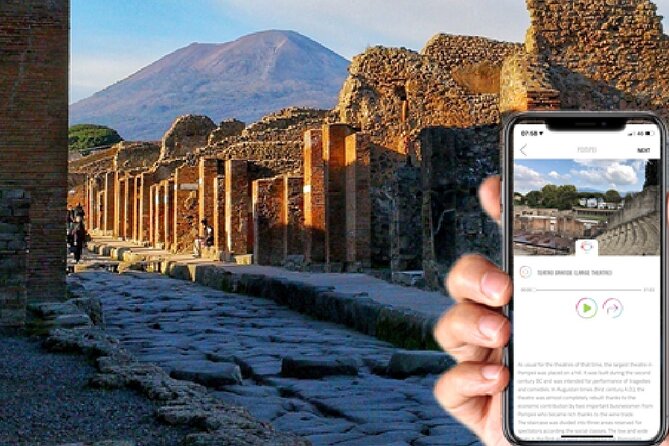
Naples is noisy, fast, and full of art that can be hard to sort out on the fly. Add Pompeii, Herculaneum, and Vesuvius, and your brain can start to feel like it’s buffering. This format helps because it keeps you moving from stop to stop with timed listening, so you’re not just walking with random facts floating in and out.
You’ll also get a practical kind of guidance: not a lecture, more like a companion that explains what you’re looking at and why it matters. That is especially helpful when you’re at sites where details are everywhere but time is limited.
And because it’s an audio guide on your phone, you can slow down for the moments you care about. Want to linger at one chapel panel or one Roman street view? You can.
Meeting point and how the mobile ticket works in real life
You start at Piazza Monteoliveto, 1, 80134 Napoli. The tour ends back at that same meeting point. This matters because it anchors your days in the city, so you’re not scrambling to figure out where the route begins.
It’s described as a private activity, meaning it’s just your group involved, not a mixed crowd herded together. In practice, that’s a benefit if you prefer calm planning. The core of the experience is still self-guided audio, but having a defined start point reduces stress.
One practical tip: treat your phone like your guidebook and your ticket manager. Bring headphones, keep your battery charged, and download the audio content for offline use before your first day if you can. When you’re in busy tourist zones or in the gaps between sites, you’ll be glad you did.
Day 1 Naples: from Gesù Nuovo to the Sansevero Chapel
Day 1 is all about Naples proper, and it’s a smart mix: Baroque church first, then a quick jump through Renaissance and major 18th-century sculpture, then a long stop for a monastery cloister.
Stop 1: Chiesa del Gesù Nuovo (about 15 minutes, admission included)
This is the place to start if you want your Naples trip to have an immediate wow factor. Gesù Nuovo is described as the most famous Baroque church in Naples, and the short time slot is perfect for first impressions. You’re not stuck for hours on Day 1, but you are given enough structure to notice the big visual beats without getting lost.
More ways up the crater, side by side


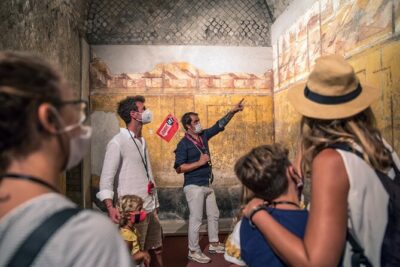

Stop 2: Complesso Monumentale Sant’ Anna Dei Lombardi (about 20 minutes)
This Renaissance jewel sits in the heart of Naples. The best way to use a stop like this is to go in thinking of it as a visual walkthrough: façade details, architectural transitions, and how the space feels as you move through. Since admission isn’t included here, check entry requirements in advance so you don’t waste listening time standing around waiting.
Stop 3: Museo Cappella Sansevero (about 20 minutes)
This is the anchor point for the whole Naples section. The guide includes a large dedicated chunk for the Sansevero Chapel and the Veiled Christ. That’s huge, because sculpture like this can be impressive and confusing at the same time. Good audio helps you slow down just enough to understand what you’re seeing and why it’s famous.
Even if you only do the allotted time, you’ll come out with a stronger sense of how the chapel fits into Naples’ 18th-century artistic world. And since your audio plan is designed around it, you’re not relying on quick signage alone.
Stop 4: Complesso Monumentale di Santa Chiara (about 1 hour)
This is where Day 1 gives you breathing room. Santa Chiara’s cloister is described as the most beautiful cloister in the world. That’s a bold claim, but it points to the right expectation: you’re going to spend time watching light, looking at arches, and noticing how the space frames you as you walk.
This stop being longer is also practical. Day 1 includes indoor and semi-indoor experiences, then a classic long visual pause. If you plan your day right, you can end with calm instead of exhaustion.
Day 2 Pompeii: using audio to navigate the biggest name in ruins
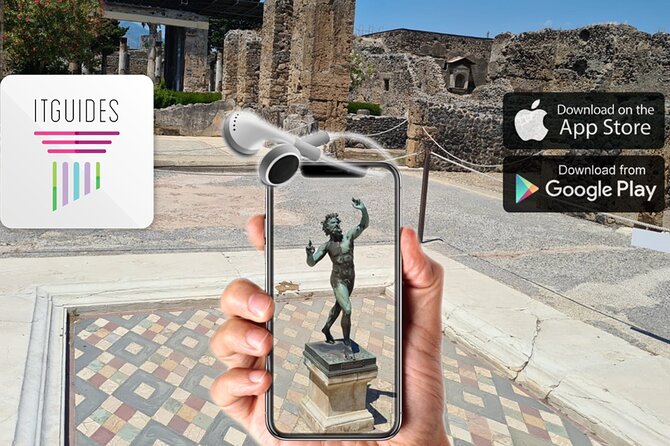
Pompeii Archaeological Park gets about 2 hours on this plan. For many people, that’s the real question: can audio make 2 hours feel like more? In my view, yes, because the guide format turns Pompeii from a mass of stones into a route with meaning.
Pompeii is famous, but fame can trick you. You might look at a doorway and assume it’s just a doorway. With timed audio, you get prompts that help you interpret the space as part of a larger Roman street pattern and daily life.
Admission isn’t included here, so you’ll want to confirm entry timing and ticket rules before you arrive. Since you’re listening while walking, it’s also helpful to have your audio downloaded so you’re not stuck restarting content mid-way.
One more practical thing: archaeological GPS can be off. The guide notes this directly and suggests using the maps you receive at the ticket office. I like this approach because it stops you from chasing a dot on your screen. Use your phone as a guide, not as a GPS dictator.
Day 3 Ercolano and Vesuvius: a 2-hour Roman city then a volcano viewpoint
Day 3 is built around two different moods: first, the Roman city of Ercolano; then, the dramatic landscape of Vesuvius National Park.
Stop 1: Parco Acheologico di Ercolano (about 2 hours, admission not included)
Ercolano is set up to give you a complete view of life in a 2000-year-old Roman city. That wording matters because it suggests you’re meant to understand the city as a functioning place, not just a collection of ruins.
Audio is perfect here because it can explain how spaces relate to daily life. Instead of walking through details without context, you get a guided sense of how people moved and used rooms and streets.
And again: admission is not included. Plan your entry so you can start listening right away and keep your rhythm.
Stop 2: Vesuvius National Park (about 1 hour 30 minutes, admission not included)
Vesuvius National Park gives you the payoff view over the Gulf of Naples. The time slot is about 1 hour 30 minutes, which is enough for the experience without turning it into a full-day hike commitment.
This is also a great pairing with Ercolano. After you’ve seen Roman life in Ercolano, the volcano stops being just a headline and becomes a physical force that shaped everything. You’ll likely find your understanding clicking into place as you move from streets and buildings to open views.
If the weather isn’t perfect, don’t panic. Even when visibility is limited, the viewpoint experience is about being there with the landscape and understanding the setting.
Audio quality, offline access, and why the voice matters
A lot of audio guides sound the same: fast, vague, and hard to follow. This one is positioned as a balanced mix of historical information and curiosity, aiming to keep you engaged without turning the experience into homework.
What stands out from the positive feedback is that the app is described as practical and easy to use inside Pompeii, with explanations that are simple and clear. People also point to a pleasant voice and straightforward listening while walking. That’s important: when you’re in ruins, you don’t want audio that requires constant concentration.
You also get the offline option. The content can be downloaded to your smartphone, which is exactly what you want in a region where signal can vary between urban streets and outdoor sites.
Finally, there’s a credibility detail you can take seriously: the content is produced and supervised by Rosella Gallo, professor of Art History at the Academy of Fine Arts in Rome. I don’t think you need a degree in art history to enjoy it, but that kind of oversight usually shows up in the way details are explained.
Price and value: why it can beat buying audio on-site
At $11.45 per person, this guide competes in a market where audio at ticket booths can cost considerably more. The offer explicitly claims you save 50% compared to audio available at the ticket office.
Even better: you’re not only covering Pompeii and one small stop in Naples. You’re getting audio for Pompeii, Ercolano, Vesuvius, and multiple key Naples sights across three days. That makes the per-day value feel more real than a single-day add-on.
One more value factor: you’re using your phone. That means you’re not carrying a separate device, and you can focus on the experience instead of logistics. If you’re the type who likes to move at your own pace, that alone can make the package feel like money well spent.
Practical tips to make the audio guide work for you
If you want this plan to feel effortless, do these three things:
- Download offline audio before you’re out and about, so you don’t lose your place.
- Use headphones and keep volume moderate but clear. Ruins and viewpoints can be loud or windy.
- Trust the maps rather than obsessing over GPS in Pompeii and Ercolano. The guide itself warns that GPS accuracy may be off.
Also, think about pacing. Day 1 includes several Naples stops, including one longer cloister visit. If you try to cram extra stops on top, you’ll end up rushing the very places the audio is timed for.
Who should book this audio guide (and who might not love it)
This is a good match if you want control. If you like planning your own route, pausing for photos, and listening only when you’re ready, you’ll probably enjoy this setup.
It’s also a strong choice if you’re doing multiple sites in a tight time window. Pompeii plus Vesuvius can feel overwhelming. The audio format gives your brain handles to grab onto.
It may not be ideal if you expect the price to cover admissions. The plan clearly marks admission as included only for Chiesa del Gesù Nuovo. For many other stops, you’ll need to buy entry separately.
Should you book this 3-day audio guide?
I’d book it if you want a low-stress way to cover Naples, Pompeii, Ercolano, and Vesuvius without locking yourself into a fixed group rhythm. The Sansevero Chapel focus is a standout, and the format is built for walking and understanding as you go.
I’d think twice if you strongly prefer a guide in person or if you haven’t yet figured out admission planning for Pompeii, Ercolano, and Vesuvius. Since most entries aren’t included, you’ll need to do that extra step yourself.
If you’re comfortable buying site tickets on your own and you’re happy using your phone as your guide, this is a smart-value way to get real explanations on the move.
FAQ
What is included in the 3-day Pompeii, Herculaneum, Vesuvius, and Naples audio guide?
The experience is an audio guide for your smartphone (a mobile ticket). Admission is included only for Chiesa del Gesù Nuovo. Admission for the other stops is not included.
How long does the experience take?
It’s scheduled for 3 days, with an approximate total duration across the listed stops.
Where does the tour start and end?
It starts at Piazza Monteoliveto, 1, 80134 Napoli NA, Italy, and it ends back at the same meeting point.
Can I use the audio guide offline?
Yes. The audio content can be used offline by downloading it on your smartphone.
Is the audio guide delivered on my phone?
Yes. It’s provided through the ITGUIDES app for smartphone, and the ticket is a mobile ticket.
Are admissions included for Pompeii and Herculaneum?
No. Pompeii Archaeological Park and Parco Acheologico di Ercolano are listed with admission not included.
Are admissions included for Naples churches and monuments?
Only Chiesa del Gesù Nuovo includes admission. Complesso Monumentale Sant’ Anna Dei Lombardi, Museo Cappella Sansevero, and Complesso Monumentale di Santa Chiara list admission as not included.
Does the itinerary include Vesuvius?
Yes. Vesuvius National Park is included with an allotted time of about 1 hour 30 minutes.
What are the opening hours?
Opening hours are listed as Monday–Sunday from 10:00 AM to 5:00 PM, with the range shown from 06/16/2022 to 06/17/2026.
Is cancellation possible, and what are the rules?
Free cancellation is available. You must cancel at least 24 hours before the experience’s start time for a full refund.
Herculaneum, a Few More Tours


Up Vesuvius, More Ways to Climb



More Pompeii Tours to Compare


More Naples tours, freshly reviewed




Pompeii Tours, compared.
 ★ 4.8Pompeii: Entry Ticket and Guided Tour with an ArchaeologistFrom $3519,459 reviews
 ★ 4.1Pompeii: Entry Ticket with Audio GuideFrom $4013,491 reviews
 ★ 4.8Pompeii: Small Group Tour with an ArchaeologistFrom $4012,264 reviews
 ★ 4.3Pompeii Ruins & Mount Vesuvius Day TourFrom $12011,459 reviews
★ 5.0Pompeii Small Group Tour with an ArchaeologistFrom $356,593 reviews
★ 4.3Pompeii Ruins & Mount Vesuvius Day TourFrom $12011,459 reviews
★ 5.0Pompeii Small Group Tour with an ArchaeologistFrom $356,593 reviews
 ★ 4.5Skip-the-line Pompeii – Small Group TourFrom $544,401 reviews
 ★ 4.6Naples or Sorrento: Full-Day Pompeii and Mount Vesuvius TourFrom $1044,235 reviews
 ★ 3.9Pompeii: Skip-the-line Entry Ticket with Audio Guide & MapFrom $433,153 reviews
Browse the lists this tour appears in