
Review · POMPEII TOURS
Private Pompeii & Ravello Day Trip via Amalfi Coast (Tickets)
One-day plans can change your whole trip. This private route strings together Pompeii and Ravello with a hotel pickup setup and a full-day driver, so you spend less time figuring things out. You’ll get live commentary in transit, plus a pacing that can match how you like to travel.
I especially like the flexibility around Pompeii—go at your own pace or upgrade to include a licensed guide approach, plus skip-the-line help with the Pompeii Express option. You also get a real focus on interpretation once you’re in the ruins, not just a drop-off and a shrug.
The trade-off is simple: it’s an 8 to 9 hour day, with real walking at Pompeii and lots of winding roads on the coast, so hot weather and comfort matter. If you hate steps or crowds, you’ll want to plan your pacing carefully.
In This Review
- Key Things to Know Before You Go
- Hotel Pickup and a Full-Day Driver for Easy Coast Time
- Pompeii at Your Own Pace, Starting at Porta Marina
- The Pompeii Stops That Make Daily Life Feel Real
- Houses, Mosaics, and the Theatre Where People Gathered
- Ravello’s Duomo, Villa Rufolo Views, and the Terrace of Infinity
- Quick Amalfi Coast Town Breaks: Minori, Maiori, Cetara, and Vietri
- Price and Value: When Private Is Worth the Cost
- My Booking Recommendation: Who Should Choose This Tour
- FAQ
- How long is the Pompeii & Ravello day trip?
- What’s included in the tour price?
- Are Pompeii admission tickets included?
- Are the Ravello villa and garden entrances included?
- Do I get time to explore Ravello on my own?
- Where do you pick up from?
- What’s the cancellation window?
- Should I book this tour?
Key Things to Know Before You Go
- Hotel pickup and a dedicated English-speaking driver mean less logistics stress and more time watching the views
- Pompeii options let you keep it self-guided or add a licensed guide + Pompeii Express skip-the-line tickets
- Smart pacing across major Pompeii highlights covers gates, forums, markets, baths, big houses, and the theatre
- Ravello time is built in (about an hour) so you’re not rushed through the town
- Villa Rufolo and Villa Cimbrone are quick stops with views that make the drive feel worth it
- Short Amalfi Coast town breaks keep the day moving without turning it into nonstop car time
Which Pompeii ticket and guide? Compare a few more.
- Pompeii Small Group Tour with an Archaeologist★ 5.0 · 6,593 reviews
- Discover the Ancient Ruins of Pompeii: Day Trip from Rome★ 3.5 · 2,247 reviews
- Pompeii and Herculaneum Small Group Tour with an Archaeologist★ 5.0 · 1,350 reviews
- Skip the Line Guided Tour of Pompeii led by an Archaeologist★ 5.0 · 703 reviews
Hotel Pickup and a Full-Day Driver for Easy Coast Time

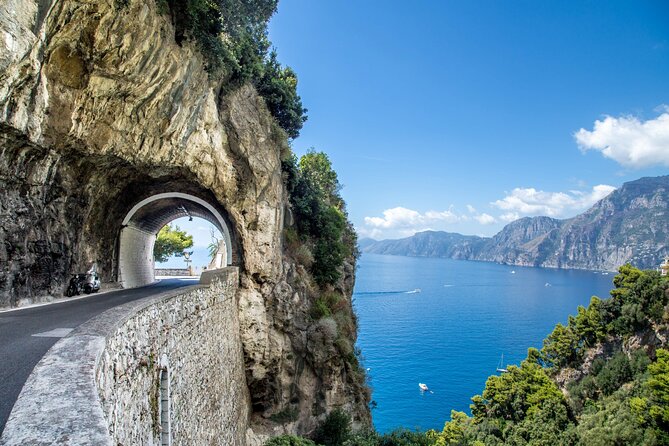
This day trip works because it treats driving time as part of the experience, not just a necessary evil. You get private transportation with an English-speaking driver and live commentary while you’re on the Amalfi Coast route, and you’re picked up from places like Naples, Sorrento, Pompeii, or even cruise terminals and ports.
You’ll also feel the value if you’re traveling with family or a small group. Everyone stays together, stops happen when you want them, and there’s no “everyone back on the bus” drama every ten minutes. One of the best bits from real-world guides on this route is how they help you plan the order of stops so Pompeii and the coast don’t fight for your attention.
One more practical detail: the tour uses mobile tickets, which saves time when you arrive. And since this is private, your group is the only group that matters for the day’s timing.
Pompeii at Your Own Pace, Starting at Porta Marina
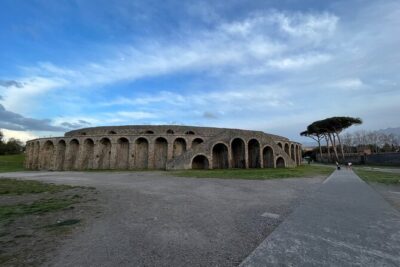
Pompeii hits hardest when you arrive feeling like you walked in through the same doorway a Roman visitor would recognize. Your visit begins at Porta Marina, one of the city’s ancient gates, with defensive walls and a real sense of arrival. It’s an excellent starting point because it gives you context before you plunge into houses and plazas.
From there, you can move in your own rhythm, especially if you choose the option without a private guide inside Pompeii. You’ll still see major stops close together, but you can pause for photos, slow down around frescoed spaces, or regroup when your feet start bargaining for better job conditions.
The site is vast, and that’s the part that surprises most first-timers. Even with a planned route, you’ll feel how Pompeii is more than a checklist. You’re walking through neighborhoods where shops, taverns, bath areas, and civic spaces all connect—so it feels like a real city, not a museum spread out in fields.
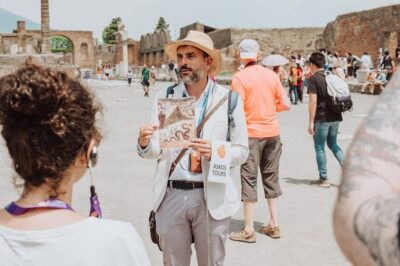
If you want the highest payoff from your time, consider the Pompeii guide upgrade. The included Blue Badge guide option (when selected) adds interpretation, and it also includes Pompeii Express skip-the-line tickets. That matters because Pompeii time can evaporate if you’re stuck in entry lines.
The Pompeii Stops That Make Daily Life Feel Real
In Pompeii, the “wow” comes from small, specific details—things that tell you how people ate, prayed, argued, bathed, and shopped. The route here is built around that kind of everyday Roman texture.
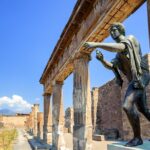
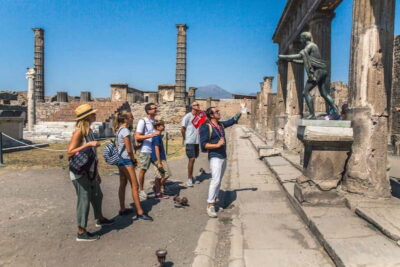
A standout is the Temple of Apollo, one of the city’s older religious buildings, with early roots going back before Roman rule. Standing near the forum area, you can still picture the layout: portico, altar, and elevated podium that signal importance. From that zone you often get sightlines toward Mount Vesuvius, which helps you understand how the volcano shaped the city’s mindset long before it reshaped the city’s fate.
Then comes the civic center: the Forum. Even with everything roofless and weathered, the forum’s scale helps you imagine politics, religion, markets, and public life happening in one central space. The views framed around it also give you an easy mental map—Pompeii isn’t flat, and you’ll feel that as you walk from plaza to plaza.
From civic life to daily food reality, you’ll spend time at the Macellum, Pompeii’s main food market. This is where the ruins show their practical side: counters, storage spaces, basins, and commercial organization. It’s one of those places where you can almost smell the bread and fish in your imagination.
Next, don’t skip the Forum Baths area. The sequence of changing rooms and warm/hot spaces is still readable, and the engineering details help you understand Roman bathing as both hygiene and social life. If you like figuring out how places worked—heat systems, circulation, ventilation—this stop pays off quickly.
For civic architecture and public business, you’ll also see major public building space described for law-court and civic activity. It’s a good reminder that the Romans ran their city through public spaces, not just through private wealth.
Houses, Mosaics, and the Theatre Where People Gathered
Pompeii’s residential highlights are where your imagination starts doing heavy lifting—because the houses are huge, refined, and surprisingly varied. A key highlight on this route is the House of the Faun, covering an entire block and showing Pompeii’s elite lifestyle. The scale alone is a shock, and the mosaics (including the famous Alexander Mosaic) make the artistic ambitions of wealthy owners feel tangible.
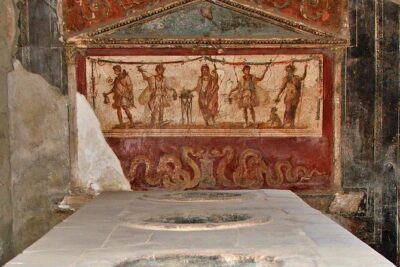
Right near it in the experience is the House of the Vettii, often praised for its fresco decoration across rooms and the overall lived-in elegance of the space. If you like seeing mythological and everyday scenes layered together, this house is a strong choice.
You’ll also pass through a mixed-use insula area—residential plus small commercial spaces—where excavation details and even renovation evidence reveal the city’s constant motion right before AD 79. One of the reasons this stop works is the elevated walkways and ramps that let you view without flattening the site. You get perspective without stepping on fragile layers.
Then there’s the Teatro Grande. The open-air theatre carved into the hillside is one of Pompeii’s best “how did this sound” reminders. When you stand in the theatre’s seating area, it’s easier to imagine crowds gathering for drama and music and how theatre shaped public culture. Panoramic access from walkways also helps you see how the city’s major areas relate to each other.
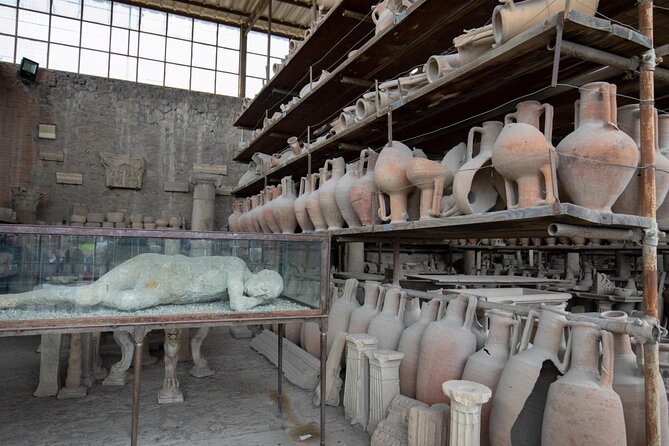
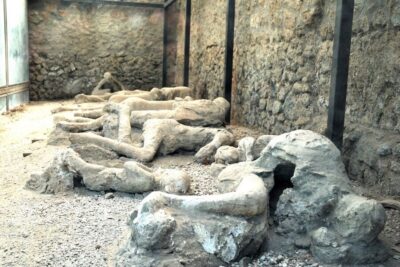
Finally, the Antiquarium is worth your time. It’s where objects and context stitch the ruins together—everyday items, fresco fragments, and plaster casts that capture the eruption’s dramatic final moments. If you want your Pompeii visit to feel more coherent, this is where you get the storyline back.
Positano to Ravello: more coast-road days out




Ravello’s Duomo, Villa Rufolo Views, and the Terrace of Infinity

After Pompeii, you head to the upper Amalfi Coast, where the vibe changes from Roman ruins to clifftop calm. Ravello sits high above the shoreline, quieter than the seaside towns below, and it’s known for views that feel almost staged.
You’ll get about an hour of free time in Ravello, which is just enough to wander without turning it into a sprint. Make time for Piazza Duomo and the 11th-century cathedral, with its bronze doors and bright interior. Even if you don’t go deep into museums, the town’s architecture and sea views do most of the work.
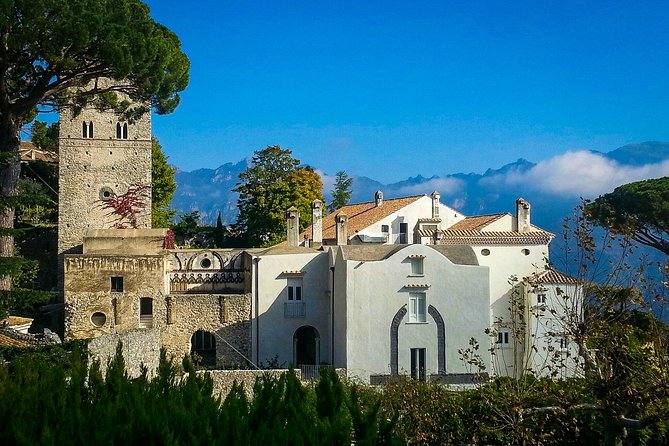
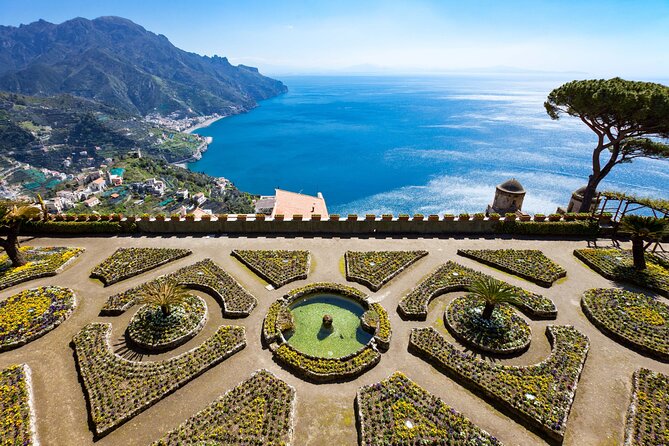
For gardens and layered history, your stops include Villa Rufolo, just off the main square. You’ll have a short visit there, but the cloistered courtyards, Neo-Moorish arches, and tiered gardens are the kind of mix that works in a limited timeframe. There’s also a fun art connection here: the gardens inspired Richard Wagner, who found scenes for Parsifal in this kind of setting.
The most iconic view time comes at Villa Cimbrone Gardens. The highlight is the Terrace of Infinity, where the balustrade lined with marble busts gives that edge-of-the-world effect. If you can only do one garden moment on the Amalfi side, this is the one that tends to stick in your memory.
Note: entry to these villa/garden stops isn’t included, so budget for that if you plan to go inside.
Quick Amalfi Coast Town Breaks: Minori, Maiori, Cetara, and Vietri
This private day doesn’t try to force you into one long sightseeing crawl. Instead, it uses short, meaningful pauses where the coast feels more lived-in.
In Minori, you’ll get about 30 minutes—enough time to breathe, snack, and look at the small beach area. It’s known as the City of Taste, and it’s loved for handmade pastas and lemon specialties, which makes even a quick break feel flavorful. If you want a break from the big-name coastal crush, Minori does the job.
Maiori is similar in concept but with a different feel. It has one of the longer beaches on the coast and a breezier, more open promenade. You can take a slow walk, find a café, and enjoy the sea without feeling like you’re standing in someone else’s photo background.
Along the drive, you’ll also catch views of Cetara, a fishing village known for its anchovy tradition and a working harbor look. Even if you don’t get long here, it’s a good mental reset: this coastline isn’t only about hotels and viewpoints—it’s also about daily catch and small boats.
As you near Salerno, Vietri sul Mare gives you a color hit. The town’s ceramics and bright tilework, plus the domed church above the rooftops, make it feel like the artistic gateway to the Amalfi Coast. Even from the road, it’s visually distinct, and it’s easy to see why ceramic traditions are still obvious in shop signs and façades.
Price and Value: When Private Is Worth the Cost

At $508.61 per person, you’re paying for more than “a driver who gets you there.” You’re paying for private transportation, English live commentary, and the flexibility to tailor your day. In practice, that can be a great value if you’re the kind of traveler who hates wasting time—waiting, re-routing, or losing precious hours in queues.
Where the pricing gets interesting is the Pompeii option. Admission fees at Pompeii are not included unless you select the Pompeii guide option. When you do select it, you get the Pompeii Express skip-the-line tickets and a private Blue Badge guide for Pompeii. That can be worth it if you want help interpreting what you’re seeing and if you’d rather trade money for time and clarity.
If you’re traveling at a slower pace and you’re comfortable reading the site with audio or signage, you might do fine without the Pompeii guide upgrade. But if you love stories—how religion mixed with politics, how markets worked, why specific buildings were designed the way they were—then the guide option is the lever that turns Pompeii from impressive to unforgettable.
One more value tip: this tour is often booked well ahead (about 93 days on average). If your travel dates are set, don’t wait until the last minute.
My Booking Recommendation: Who Should Choose This Tour
Book this private day trip if you want a smooth, guided-on-the-right-things experience without the stress of planning. It’s ideal for couples, families, and small groups who prefer one dedicated driver and want Pompeii interpretation handled in the way that fits them—self-paced or guided.
If you’re the type who enjoys scenic stops but also wants Pompeii to feel structured, this is a strong match. Guides on this route are often praised for managing timing and pacing so you don’t feel trapped in the biggest crowds, and named guides like Fabrizio, plus Pompeii guides such as Viviana and Umberto, come up in feedback for their storytelling and attention.
Skip it (or at least rethink Pompeii timing) if you hate long days. Between Pompeii walking and the heat, you’ll want comfortable shoes and a strategy for breaks. And if you’re traveling during peak traffic periods, expect that winding roads on the Amalfi side can steal time from your stops—starting early helps.
FAQ
How long is the Pompeii & Ravello day trip?
It runs about 8 to 9 hours.
What’s included in the tour price?
Private transportation with an English-speaking driver, live commentary on board, and a Pompeii Blue Badge guide plus Pompeii Express skip-the-line tickets only if you select the Pompeii guide option.
Are Pompeii admission tickets included?
Admission fees at Pompeii are not included unless you select the Pompeii guide option.
Are the Ravello villa and garden entrances included?
No. Admission tickets for Villa Rufolo and Villa Cimbrone Gardens are not included.
Do I get time to explore Ravello on my own?
Yes. You have about 1 hour of free time in Ravello.
Where do you pick up from?
Pickup is available from Naples, Sorrento, Pompeii, hotels, vacation rentals, train stations, airports, and cruise terminals/ports. You choose your pickup place when booking.
What’s the cancellation window?
You can cancel for a full refund if you cancel up to 24 hours in advance of the experience start time.
Should I book this tour?
If you want Pompeii plus the Amalfi Coast in one day without juggling maps and transfers, this is a smart, high-value setup. Choose the Pompeii guide option if you want stronger interpretation and skip-the-line help; keep it self-guided if you’d rather spend your time moving at your own pace.
More Tour Reviews in Pompeii





More Amalfi Coast Days Out




More Pompeii Tours to Compare
More Pompeii tours, freshly reviewed



Pompeii Tours, compared.
 ★ 4.8Pompeii: Entry Ticket and Guided Tour with an ArchaeologistFrom $3519,459 reviews
 ★ 4.1Pompeii: Entry Ticket with Audio GuideFrom $4013,491 reviews
 ★ 4.8Pompeii: Small Group Tour with an ArchaeologistFrom $4012,264 reviews
 ★ 4.3Pompeii Ruins & Mount Vesuvius Day TourFrom $12011,459 reviews
★ 5.0Pompeii Small Group Tour with an ArchaeologistFrom $356,593 reviews
★ 4.3Pompeii Ruins & Mount Vesuvius Day TourFrom $12011,459 reviews
★ 5.0Pompeii Small Group Tour with an ArchaeologistFrom $356,593 reviews
 ★ 4.5Skip-the-line Pompeii – Small Group TourFrom $544,401 reviews
 ★ 4.6Naples or Sorrento: Full-Day Pompeii and Mount Vesuvius TourFrom $1044,235 reviews
 ★ 3.9Pompeii: Skip-the-line Entry Ticket with Audio Guide & MapFrom $433,153 reviews
Browse the lists this tour appears in