
Review · POMPEII TOURS
Private Pompeii and Vesuvius with Wine Tasting and Full Tickets
Pompeii plus Vesuvius feels like time travel. This private day blends a guided walk through Pompeii with a real-time volcanic experience, then tops it off with a vineyard lunch and wine tasting at Cantina del Vesuvio. I like that you get a private guide and can move at your pace, instead of being swept along with a crowd.
The main thing to plan for is the physical side of Vesuvius. The climb is on a gravel-and-ash trail in sun and wind, so if anyone in your group has limits, use the café near the parking lot option and keep the day enjoyable. A Vesuvius climb also means good shoes and sun gear are not optional.
In This Review
- Quick highlights
- Private transport and full tickets: why this day runs smoothly
- Pompeii orientation: walking in the footsteps of everyday Roman life
- Stop 1: Archaeological Park of Pompeii (2 hours)
- Stop 2: Porta Marina and the city walls (5 minutes)
- Stop 3: Temple of Apollo (5 minutes)
- Stop 4: Pompeii’s Forum (10 minutes)
- Stop 5: Macellum (5 minutes)
- Stop 6: Terme del Foro (10 minutes)
- Stop 7: Casa dei Vettii (10 minutes)
- Stop 8: Insula dei Casti Amanti (10 minutes)
- Stop 9: Teatro Grande (5 minutes)
- Stop 10: Antiquarium di Pompei (10 minutes)
- Cantina del Vesuvio: the wine tasting and lunch break you’ll remember
- Vesuvius National Park: crater views, a volcanologist talk, and a real descent
- Logistics that matter: timing, flexibility, and who the guides really fit
- Price and value: is $701.99 per person worth it?
- Who should book this private Pompeii and Vesuvius day?
- Should you book this private Pompeii and Vesuvius wine tour?
- FAQ
- How long is the Pompeii and Vesuvius private tour?
- Is pickup included?
- What language is the tour in?
- Are admission tickets included?
- Does the day include wine tasting and lunch?
- Is there a kids option for Pompeii?
- How hard is the Vesuvius part?
- Is it possible to avoid walking to the top of Vesuvius?
- Are mobile tickets provided?
- What is the cancellation policy?
Quick highlights
- Private Pompeii guide with flexible pacing and stop choices based on your group
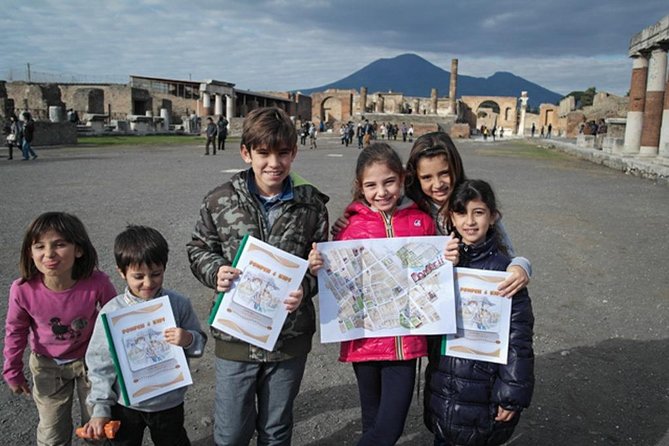
- Pompeii for kids option (best for ages 6 to 11) with activities and an interactive guide book
- Full-ticket approach with admission included at key ruins and museum stops
- Vineyard lunch and wine tasting in the Vesuvius National Park area at Cantina del Vesuvio
- Half-crater walk at Vesuvius plus an English introduction from a volcanologist
- Pickup available from Naples, Sorrento, Pompeii, stations, and cruise ports
Which Pompeii ticket and guide? Compare a few more.
- Pompeii Small Group Tour with an Archaeologist★ 5.0 · 6,593 reviews
- Discover the Ancient Ruins of Pompeii: Day Trip from Rome★ 3.5 · 2,247 reviews
- Pompeii and Herculaneum Small Group Tour with an Archaeologist★ 5.0 · 1,350 reviews
- Skip the Line Guided Tour of Pompeii led by an Archaeologist★ 5.0 · 703 reviews
Private transport and full tickets: why this day runs smoothly
You’re paying for fewer hassles. This is a private format, meaning it’s only your group, and you get pickup from places like Naples, Sorrento, Pompeii, train stations, airports, and cruise terminals/ports. For a site cluster like Pompeii plus Vesuvius, that matters because timing is everything.
Another value point: tickets are included for Pompeii’s main stops, the Antiquarium (the museum gateway), the winery visit, and the Vesuvius National Park experience. You also get mobile tickets, which helps if you’re trying to keep your phone organized and avoid ticket desk lines.
One more practical detail: the day runs about 8 to 9 hours, and the operator flags moderate walking fitness as the expectation. That’s fair. Pompeii is mostly walking, and Vesuvius adds a stair-step effect from the uneven trail.
Pompeii orientation: walking in the footsteps of everyday Roman life
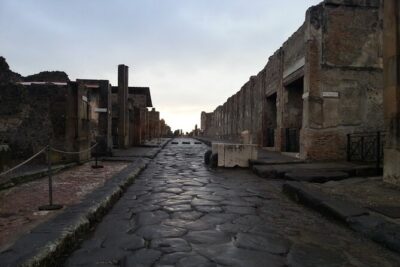
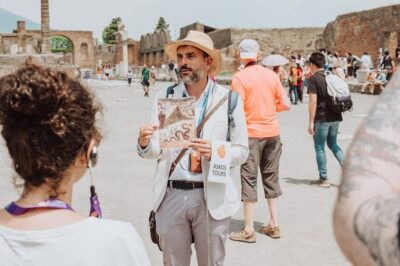
Your Pompeii start is built around “get your bearings fast” pacing, not just checking off monuments. The guide chooses highlights across the Archaeological Park, and you’ll see the city as a place people lived in, shopped in, bathed in, and prayed in—not just as a dramatic ruins photo set.
If you’re traveling with kids, this tour includes a Pompeii for Kids style visit. It’s especially recommended for kids 6 to 11, and it uses activities and games plus an interactive tour book approach. Even if your kids are older, it can still help you move through Pompeii without turning it into a long adult lecture.
Stop 1: Archaeological Park of Pompeii (2 hours)
This is the big opening act, with your private guide steering you through the most meaningful areas of the park. The time matters here: two hours gives you space to understand what you’re looking at before you start moving faster between specific sights.
A common mistake at Pompeii is trying to “see everything.” This tour’s structure helps you do the opposite: see the right things and understand why they mattered.
Stop 2: Porta Marina and the city walls (5 minutes)
Porta Marina is one of the main gates and a direct clue to how Pompeii handled arrivals. You can connect it to the port area and the defensive walls—basically, you’re seeing how the city controlled access for merchants, sailors, and visitors.
It’s a short stop, but that’s the point. You’re building a mental map: gate, entry route, and the idea of controlled flow into the city.
More ways up the crater, side by side




Stop 3: Temple of Apollo (5 minutes)
The Temple of Apollo sits near major civic spaces and connects religion with daily public space. You’ll learn how offerings and prophecy tied people’s hopes to a god linked with the sun, music, and prophecy.
What I like here is the scale and setting: it gives you a sense of how major sacred spaces were placed near the center of life.
Stop 4: Pompeii’s Forum (10 minutes)
The Forum is Pompeii’s civic center, where you can see temples, administrative buildings, and market structures all arranged in one major space. The view from the elevated modern walkways helps a lot. From that perspective, you start to understand how politics, religion, and trade shared the same square.
This is a great “pause” stop. Even if the ruins don’t look like much at first glance, the guide helps you read them like a layout.
Stop 5: Macellum (5 minutes)
The Macellum was the main food market, a covered hub for fish, meat, fruit, and imported goods. It’s one of the most relatable parts of Pompeii because it’s about meals, supplies, and commerce—Roman daily life in concrete form.
Look for how the stalls and counters suggest a working rhythm. It’s not just pretty stone; it’s a system.
Stop 6: Terme del Foro (10 minutes)
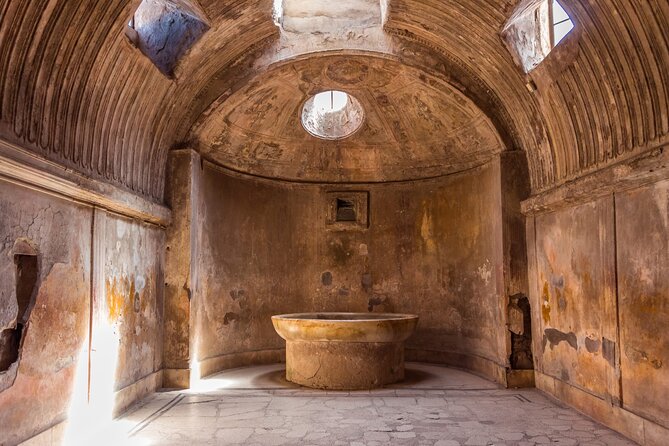
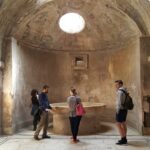
The Forum Baths were a social center, not just a place to wash. You’ll see men’s and women’s areas, warm and hot bathing spaces, and even a cold plunge—heated with an advanced system (the hypocaust concept).
If you’re only used to modern gyms, this bath complex explains a lot about Roman priorities: hygiene, leisure, and conversation all in one daily stop.
Stop 7: Casa dei Vettii (10 minutes)
This is one of Pompeii’s standout elite residences, known for frescoes and an elegant layout around atria and peristyle gardens. It’s a strong contrast to the markets and baths, and it makes the city feel more three-dimensional.
The fresco focus helps you understand taste and status in the ancient world, and it’s often easier to connect with than purely technical architectural notes.
Stop 8: Insula dei Casti Amanti (10 minutes)
This block is named after a lovers’ fresco, and it’s a powerful look at daily life in a mixed residential and commercial neighborhood. You view it from elevated ramps designed to protect the fragile surfaces below, which means you get a clear look without destroying what’s there.
I like this stop because it shows Pompeii in motion. You’re imagining craftsmen, shop work, and homes sharing the same street world.
Stop 9: Teatro Grande (5 minutes)
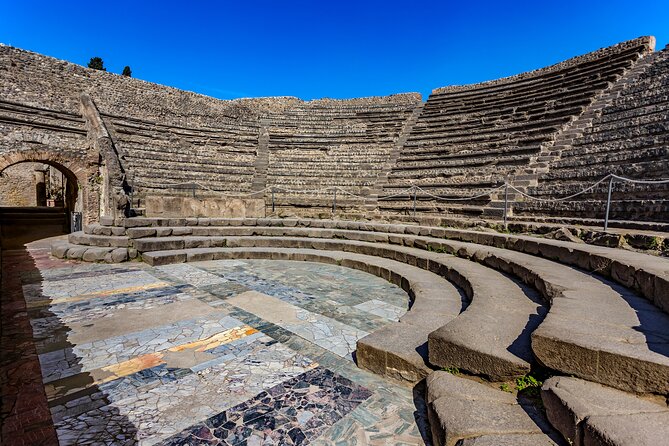
The Teatro Grande is where you understand how entertainment functioned as public culture. From the terraces, you can see the seating tiers, stage building, and performance area, and you can grasp why crowds mattered.
It’s brief, but it gives you a key human ingredient: Pompeians weren’t only religious or working. They also watched, performed, and gathered.
Stop 10: Antiquarium di Pompei (10 minutes)
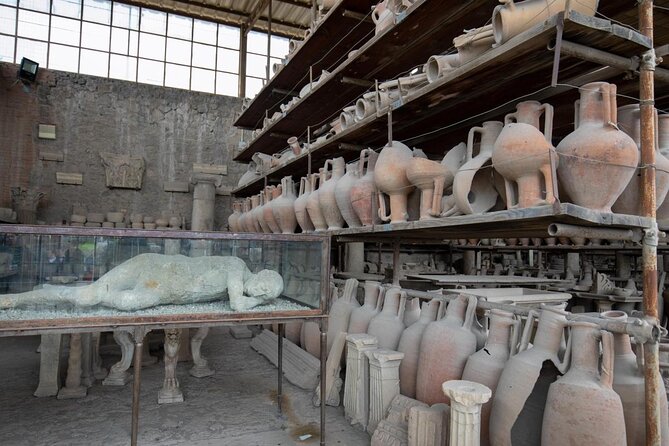
This museum is the best kind of “warm-up.” It organizes artifacts and objects recovered during excavations so you can connect what you see outdoors with what survived inside protected displays.
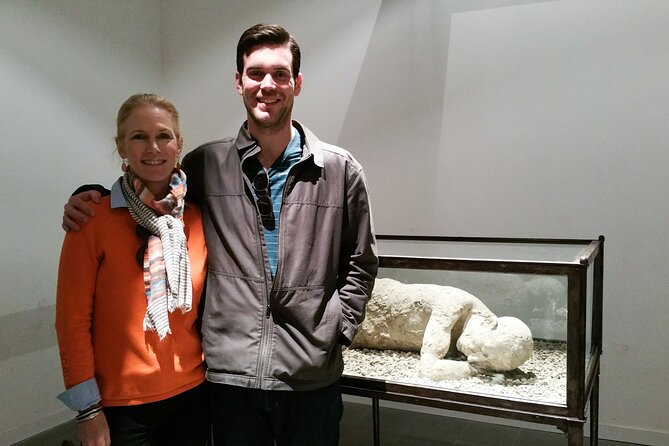
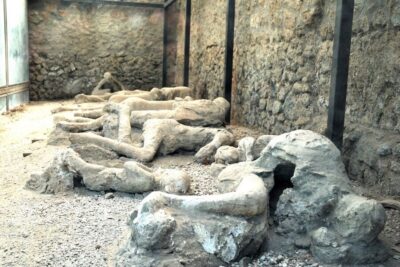
The emotional punch is the plaster casts of victims and eruption material shown at the end. If you’re sensitive, just know this part can hit harder than the ruins alone.
Cantina del Vesuvio: the wine tasting and lunch break you’ll remember
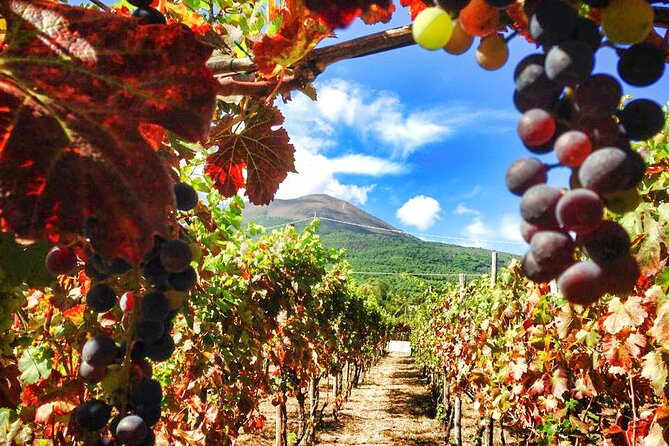
After Pompeii’s walking and focus, the vineyard stop feels like a reset. Cantina del Vesuvio (Famiglia Russo, since 1930) is set on the Vesuvius slopes, and the idea is simple: taste wine tied to volcanic terroir, eat a local meal, then enjoy a slower pace.
The lunch is a set menu with local ingredients. You’ll start with bruschetta plus provolone cheese, salame, and capocollo cured pork. For the main course, you get spaghetti with the cherry tomatoes del Piennolo from Mount Vesuvius. Dessert is pastiera, the wheat-and-ricotta Neapolitan cake.
Then comes the wine tasting. You’ll taste through multiple pours, including Rosè Sparkling, White, Rosé, Red, Red Reserva, and a sweet dessert wine. If you like pairing food with place, this is one of the best parts of the whole day because you’re drinking and eating where the landscape influences the result.
Vesuvius National Park: crater views, a volcanologist talk, and a real descent
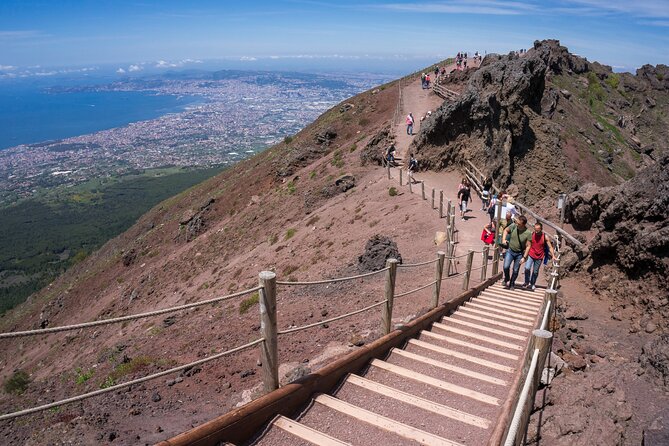
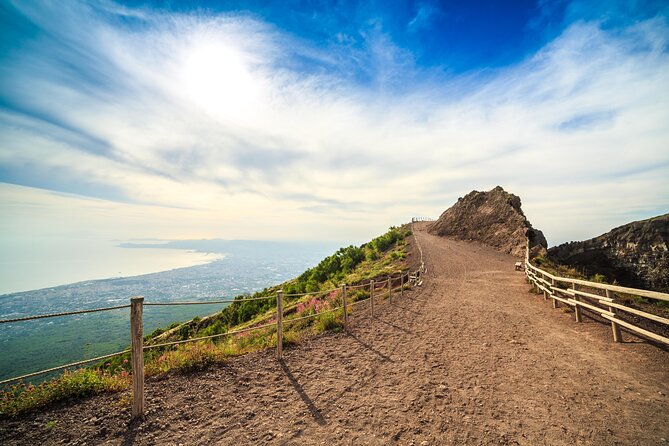
This is the part that turns the day from historical to immediate. Your driver handles tickets and brings you to the trail beginning, then it’s about a 30-minute walk up on gravel and ash. It’s exposed—sun and wind can be the deciding factors for comfort.
At the top, there’s a live introduction from a volcanologist in English, running about 10 minutes and starting every few minutes. Then you can walk halfway around the crater on your own for about 30 minutes. On a clear day, that crater-ring perspective is the kind of photo you can’t fake later.
The descent is the same way you came up, so plan your energy and keep an eye on footing. If someone doesn’t want to climb, there’s a café near the parking lot, so you’re not forced into a “either all in or nothing” situation.
Logistics that matter: timing, flexibility, and who the guides really fit
This is a private day, so your guide’s personality and timing make a big difference. In past experiences tied to this tour style, guides have included people named Fabio and Danilo, and drivers have included Vincenzo and Pasquale. You might not get the exact same names on your date, but the pattern is clear: you’ll want a guide who can explain while also staying efficient.
That’s where this format wins over big-group tours. You can slow down where your curiosity is strongest and move on quickly when you’ve got the idea.
A quick word on winter or odd weather: the day can still work, but expect the Vesuvius trail conditions to change. The best move is to show up geared for the worst case—good shoes and layers.
Price and value: is $701.99 per person worth it?
This isn’t a budget add-on. At $701.99 per person, you’re paying for a tight bundle: private transport, a private Pompeii guide experience, full admissions, the Vesuvius National Park entry and crater walk time, plus the winery lunch and wine tasting.
If you split costs into parts, the value starts to make more sense. Pompeii alone can become a ticket-and-guide expense if you’re serious about seeing the right stops. Add Vesuvius entry plus the crater experience, and the price jumps again. Then tack on an included vineyard meal with multiple pours, and you’ve built a day that’s harder to recreate cheaply on your own without losing time.
The real value is also less obvious: fewer transfer problems, fewer waiting lines, and a schedule that supports actual understanding. Pompeii is hard to do well if you’re piecing it together in bits.
That said, it’s only “worth it” if you’ll use the structure. If you just want to rush ruins for quick photos and you don’t care about guides or meals, you can likely spend less elsewhere.
Who should book this private Pompeii and Vesuvius day?
This tour is a great fit if:
- You want Pompeii explained instead of just walked through
- You like having a planned route that still feels personal
- You’re traveling as a couple, family, or small group and want pickup to reduce stress
- You’re interested in a vineyard lunch tied to the Vesuvius area
- You have kids (especially ages 6 to 11) and want the Pompeii for Kids format
It might not be the best match if:
- Your group has very limited mobility. There’s a moderate fitness expectation, and Vesuvius involves a climb on uneven trail
- You hate guided time. This day is guide-led by design
Should you book this private Pompeii and Vesuvius wine tour?
Yes—if you want a day that feels organized without feeling rigid. The combination of Pompeii with a private guide, the practical “see it, then understand it” flow, and the vineyard lunch with wine tasting is a strong pairing. Then the volcanologist talk and crater walk give you a satisfying ending that connects the legend to the real mountain.
If you’re worried about the Vesuvius walk, take the café option for anyone who needs it and keep the rest of the group moving at a comfortable pace. With good shoes and sun gear, this day has a lot going for it—and it’s the kind of itinerary that stays memorable long after the photos fade.
FAQ
How long is the Pompeii and Vesuvius private tour?
It runs about 8 to 9 hours.
Is pickup included?
Pickup is offered. You can request pickup from Naples, Sorrento, Pompeii, train stations, airports, and cruise terminals/ports.
What language is the tour in?
The tour is offered in English.
Are admission tickets included?
Admission tickets are included for the Pompeii sites listed, the Antiquarium, the winery experience, and the Vesuvius National Park portion.
Does the day include wine tasting and lunch?
Yes. At Cantina del Vesuvio, you get a set menu lunch and a wine tasting with multiple wines.
Is there a kids option for Pompeii?
Yes. There’s an option for a kid-friendly Pompeii visit with activities and an interactive tour book, recommended for ages 6 to 11.
How hard is the Vesuvius part?
It involves a climb on a gravel-and-ash trail in sun and wind. The tour is listed for travelers with moderate physical fitness.
Is it possible to avoid walking to the top of Vesuvius?
Yes. There is a café near the parking lot for someone who does not feel like climbing.
Are mobile tickets provided?
Yes, mobile tickets are included.
What is the cancellation policy?
You can cancel for a full refund up to 24 hours before the experience’s start time. Free cancellation is available based on the local time cut-off.
More Wine on the Slopes





Up Vesuvius, More Ways to Climb




More Pompeii Tours to Compare


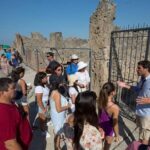
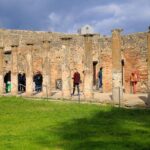
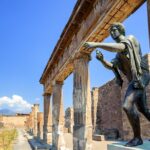

More Pompeii tours, freshly reviewed


Pompeii Tours, compared.
 ★ 4.8Pompeii: Entry Ticket and Guided Tour with an ArchaeologistFrom $3519,459 reviews
 ★ 4.1Pompeii: Entry Ticket with Audio GuideFrom $4013,491 reviews
 ★ 4.8Pompeii: Small Group Tour with an ArchaeologistFrom $4012,264 reviews
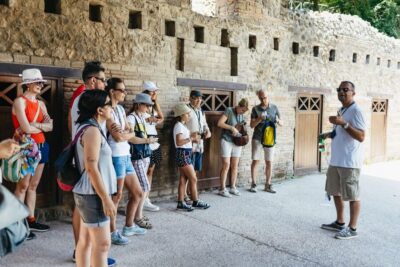 ★ 4.3Pompeii Ruins & Mount Vesuvius Day TourFrom $12011,459 reviews
★ 5.0Pompeii Small Group Tour with an ArchaeologistFrom $356,593 reviews
★ 4.3Pompeii Ruins & Mount Vesuvius Day TourFrom $12011,459 reviews
★ 5.0Pompeii Small Group Tour with an ArchaeologistFrom $356,593 reviews
 ★ 4.5Skip-the-line Pompeii – Small Group TourFrom $544,401 reviews
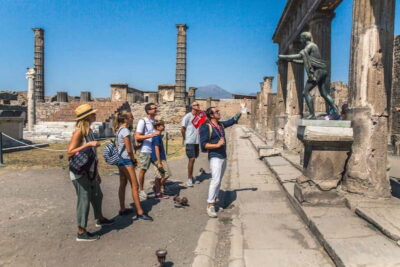 ★ 4.6Naples or Sorrento: Full-Day Pompeii and Mount Vesuvius TourFrom $1044,235 reviews
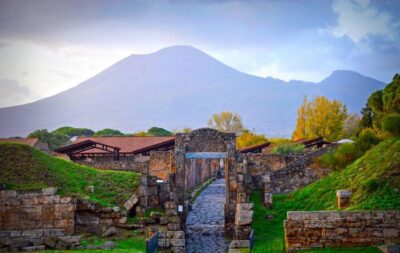 ★ 3.9Pompeii: Skip-the-line Entry Ticket with Audio Guide & MapFrom $433,153 reviews
Browse the lists this tour appears in