
Review · POMPEII TOURS
Pompeii and Mount Vesuvius Small Group Tour
Two ancient worlds in one long day. This small-group tour strings together Pompeii and Mount Vesuvius with smart pacing, guided interpretation, and minivan transfers so you spend less time figuring things out and more time seeing.
I like the format most: you get a real archaeologist for Pompeii, not just a quick facts pass. When my group had guides like Raffaela in Pompeii and Mario on Vesuvius, the ruins felt like they belonged to people, not textbooks. I also like that you’re not hiking blind on Vesuvius; you follow a licensed hiking guide along the crater trail for those edge-of-the-volcano views.
One consideration: Vesuvius is physical. Expect steps early on the hike and a very steep uphill stretch near the end, and weather can limit visibility at the top. If you’re sensitive to heights, wind, or uneven footing, read the wear-and-pace section before you book.
In This Review
- Key things you’ll notice on this Pompeii and Vesuvius tour
- Pompeii and Vesuvius in one day: why this combo works
- Start at Porta Marina Superiore: getting into Pompeii fast
- Pompeii with an archaeologist: the best way to make the stones human
- Foro to granaries to Menander: key public spaces and what they reveal
- Baths, a brothel, and big houses: the Pompeii stops people remember
- Teatro Piccolo and Teatro Grande: why the theaters matter here
- The shift to Vesuvius: minibus transfer and the crater-trail reality
- What you actually learn on the crater rim
- Weather changes and Herculaneum as the backup plan
- Timing, comfort, and what to wear so you enjoy the climb
- Price and value: is $119.77 worth it?
- Who should book this Pompeii and Mount Vesuvius small group tour
- Should you book it?
- FAQ
- How long is the Pompeii and Mount Vesuvius small group tour?
- What’s included in the price?
- Do I need to buy Mount Vesuvius tickets separately?
- How hard is the hike on Mount Vesuvius?
- Is food provided during the tour?
- What happens if Vesuvius is closed due to weather?
- What should I wear or bring?
- Are kids allowed?
- Can I cancel and get a refund?
Key things you’ll notice on this Pompeii and Vesuvius tour
- Archaeologist-led Pompeii storytelling that turns street names and buildings into daily life
- Two-guides setup: one expert for Pompeii, and a licensed hiking guide for the volcano
- Short, targeted Pompeii stops that hit big-ticket sites without wandering
- A guided crater trail with a first segment of steps and a steep final climb
- Weather-plan switch to Herculaneum if Vesuvius can’t be accessed
- Small-group logistics with a minibus transfer designed to save time
Which Pompeii ticket and guide? Compare a few more.
- Pompeii Small Group Tour with an Archaeologist★ 5.0 · 6,593 reviews
- Discover the Ancient Ruins of Pompeii: Day Trip from Rome★ 3.5 · 2,247 reviews
- Pompeii and Herculaneum Small Group Tour with an Archaeologist★ 5.0 · 1,350 reviews
- Skip the Line Guided Tour of Pompeii led by an Archaeologist★ 5.0 · 703 reviews
Pompeii and Vesuvius in one day: why this combo works
Pompeii is huge in your mind and messy in real life. Without a guide, you can end up “seeing ruins” but missing why any of it matters—how the city was laid out, what specific buildings were for, and how the eruption reshaped everything. This tour tackles that head-on by giving you a structured walk through the most meaningful areas rather than a random circuit.
Then comes the other half of the story: the volcano itself. Mount Vesuvius is the reason Pompeii exists in its current form, and the crater rim changes the whole perspective. You’re not only standing near historic sites; you’re also looking at the volcanic setting that created the catastrophe. Add in the minibus transfer from Pompeii and the fact that Vesuvius climbing is guided, and the day feels more like a plan than a series of logistics problems.
The pace is also built for real travelers. You get around Pompeii with short stops that let you keep moving, then you switch to the crater trail. It’s not a slow, sit-down day. It’s a “get oriented fast, then go deeper where it counts” kind of day.
Start at Porta Marina Superiore: getting into Pompeii fast
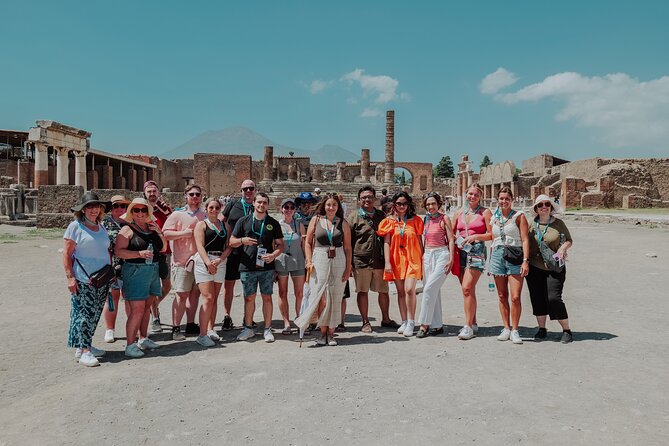
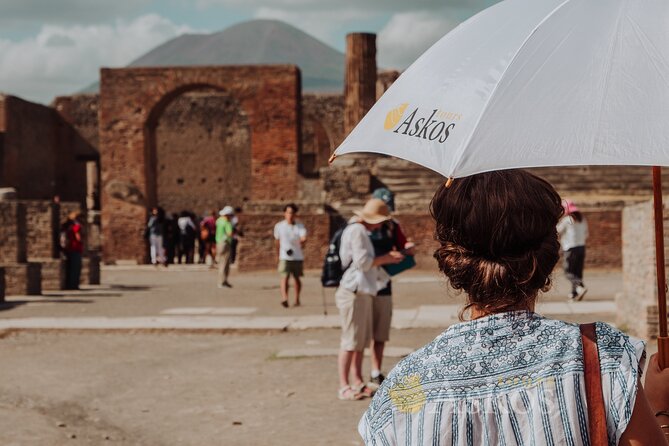
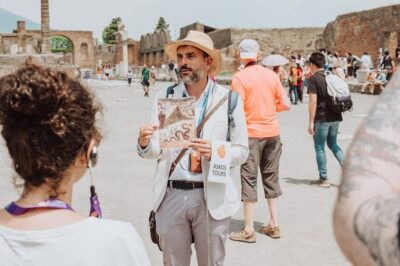
Your day begins at the Pompeii main entrance called Porta Marina Superiore. The guide meets you there holding a sign that shows Askos Tours, so you’re not wandering around guessing who’s in charge. That matters because Pompeii is busy, and the best tours reduce confusion early.
From the start, you’re set up for a guided experience. The Pompei ruins portion includes a 2-hour archaeologist guide (for groups up to 20), and that’s the backbone of the day. This isn’t just someone pointing at walls. The point is interpretation: where you are in the city, what you’re looking at, and how the spaces connected to everyday life.
You’ll also move through areas where key features are close together—so you spend your time reading the ruins instead of crossing empty gaps. Even the “free time” elements on the route still have structure because you’re walking as part of the tour path.
Pompeii with an archaeologist: the best way to make the stones human
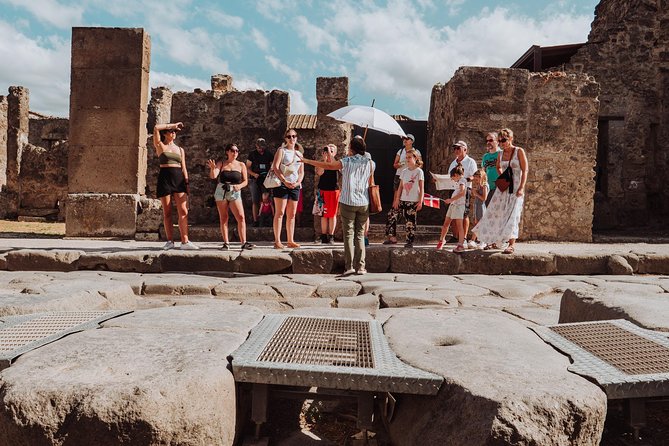
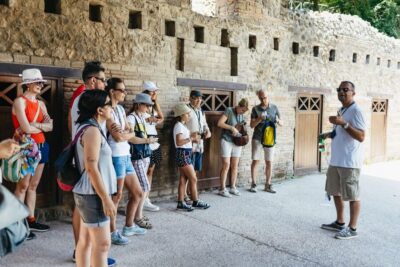
The Pompeii portion is built around a guided flow that hits the city’s layout and its most talked-about interiors. With an archaeologist guide—people like Anna, Teresa, Nicoletta, and Raffaela are examples you might encounter—the ruins tend to feel sharper. You’re not just seeing architecture; you’re learning what those rooms and streets were used for.
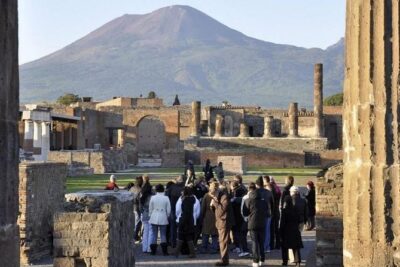
The first big stop after entering is the ancient main square area (Foro de Pompeya). It’s a short visit, but it works because the square is the “hub” idea for Pompeii. You get a sense of the civic heartbeat—where people gathered, not just where they lived.
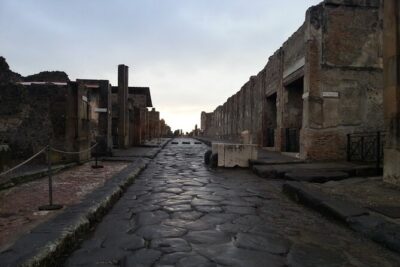
From there, you’ll walk through the main street while the guide points out meaningful contrasts: public vs. private, ritual vs. daily chores, and how Pompeii’s urban planning shaped movement. If you’ve ever felt Pompeii is overwhelming, this guided orientation is the antidote. It gives you a mental map you can keep using long after the day ends.
Foro to granaries to Menander: key public spaces and what they reveal
This is where the tour starts teaching you how to read Pompeii.
- Foro de Pompeya (main square): Even though the stop is brief, it grounds you. Squares in Roman cities weren’t just open space—they were a social engine.
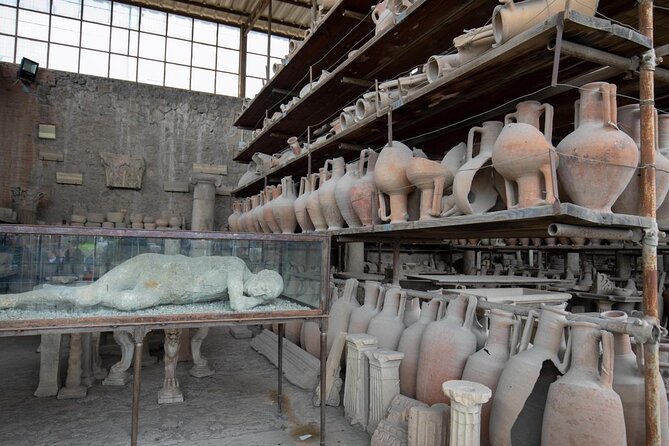
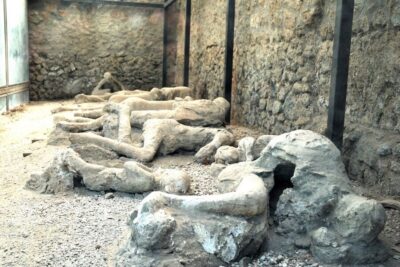
- Granaries of the Forum: This part is particularly memorable because it doesn’t stay abstract. You can see marble tables and features tied to fountains at entrances, plus casts connected to the eruption, including a dog and even a tree. These details aren’t there to shock you; they help you understand how the eruption froze moments rather than just destroying buildings.
- House of Menander: You’ll take a look at one of the city’s richer residences. The focus here is architecture and decoration—how wealth showed up in domestic spaces, not just temples and monuments.
What I like about these stops is how they layer. You begin with a public hub, then move into a more functional building near the hub, and then shift back into elite domestic life. That keeps the story from turning into a checklist of famous ruins.
A drawback of a fast schedule is that you can’t linger the way you would on a self-guided day. If you’re the type who loves reading every inscription or returning to your favorite doorway for photos, you’ll have to be okay with a guided “hit-and-clarify” style.
More ways up the crater, side by side


Baths, a brothel, and big houses: the Pompeii stops people remember
Pompeii’s power is partly that it was ordinary life—so the tour wisely includes places that feel surprisingly specific.
You’ll see:
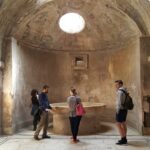
- Stabian Baths (Terme Stabiane): These occupy a vast area and represent the oldest thermal complex in the city. Baths in Roman culture were social spaces, not just “places to get clean,” and you’ll feel that when you picture the flows of people through the rooms.
- Lupanar (the famous brothel): It’s the best-known red-light district site in Pompeii. The tour keeps it factual and interpretive, and the short visit is enough to give context without turning it into a spectacle.
- House of the Faun: One of Pompeii’s largest and most impressive private residences. This stop helps you grasp the scale of wealthy living spaces compared with everyday streets.
I also appreciate how the tour balances “big ticket” sites with variety. You’re not trapped only in temples and theaters. Pompeii’s story includes bathing culture, commerce, status, and entertainment.
Teatro Piccolo and Teatro Grande: why the theaters matter here
Theaters can be easy to under-appreciate when you’re just walking past. This tour fixes that by including both Teatro Piccolo (a quick look) and then Teatro Grande, the main theater.
You’ll spend about 10 minutes on Teatro Grande, which sounds short—until you remember what a theater represents. These were the places where mass gatherings and performances shaped community life. In a city that’s so visually preserved, it’s the theaters that help you picture voices filling open space rather than silence over stone.
If you’re into performance, storytelling, or Roman civic culture, this is one of those “quick stop, big meaning” moments. And because you’re doing it under guide direction, you’re not guessing what you’re looking at.
The shift to Vesuvius: minibus transfer and the crater-trail reality
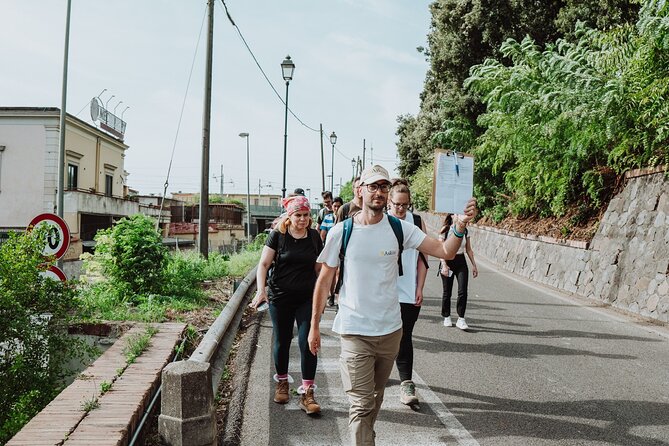
After Pompeii, you transfer toward Mount Vesuvius by modern minibus. Transportation is part of the value here. You’re not hiring separate rides or trying to stitch together public transport that might not match the timing of a guided schedule.
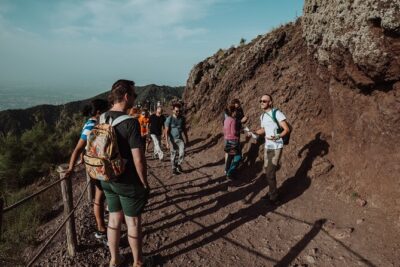
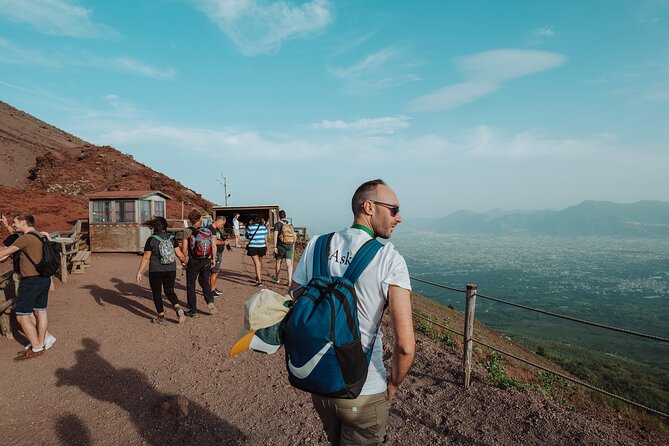
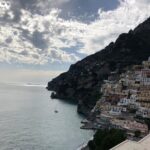
Once at the volcano, you’ll join a hiking licensed guide for the crater area. The plan is to reach the top, see the crater (there may be slight smoking depending on conditions), and take in the wide panorama. On a clear day, you’re looking toward the Bay of Naples, Capri and Ischia, the Sorrento coast, and more.
But you need to treat this like a hike, not a casual stroll:
- The first 30 minutes involves steps walking to reach the crater area.
- The last 500 meters includes a very steep uphill section.
- Closed-in shoes are essential.
If you’ve got knee issues or you hate slippery surfaces, this is where the tour’s “moderate physical fitness” note turns into real-world importance. Loose sand and steep grades can make the climb harder than you expect—especially in heat.
What you actually learn on the crater rim
The top isn’t just a view stop. It’s where the day clicks.
Your volcano guide (people like Mario are commonly leading this part) typically explains the eruption mechanisms, how the eruption impacted Pompeii and Herculaneum, and what Vesuvius looks like now. That matters because the crater rim is the closest you’ll get to understanding the event’s scale from the outside.
Even if visibility is limited, the guide can still orient you—what to look for, where the risk sits, and how the volcano behaves. One day can be dramatic fog; another can be sharp and clear. Either way, you leave with better mental geography of the region.
Also, plan for wind. On calmer days you might feel fine, but when it’s breezy at the top, having a light layer helps.
Weather changes and Herculaneum as the backup plan
This is a volcano. That means weather can change quickly, and the tour has an explicit contingency: if Vesuvius is not accessible due to force majeure, the day includes a visit to Herculaneum instead of Vesuvius.
That’s not a consolation prize. Herculaneum is smaller and often feels more intimate, with preserved details that complement what you saw in Pompeii. If a fog bank rolls in or paths are closed, the switch keeps you from wasting the afternoon.
In practice, I’d plan for the possibility that you might not get perfect crater visibility. If you’re booking for a single, specific photo moment, you might be disappointed. If you’re booking for a guided understanding of the eruption story, the backup plan keeps the learning going.
Timing, comfort, and what to wear so you enjoy the climb
This tour is about 8 hours total. It’s long enough that comfort and pacing matter, especially with a crater hike included.
Here’s how I’d prepare based on the tour’s guidance and the typical realities of the hike:
- Wear closed-in, grippy shoes. If you’re tempted by sandals, don’t. Loose sand and steep sections can turn a pleasant walk into a careful scramble.
- Bring sunglasses and sunscreen for summer.
- Expect wind up top and consider a light jacket or layer.
- Keep in mind that some people find the climb tougher than they expected, even if they consider themselves fit. The steep last stretch is the part that tends to test everyone.
If you’re traveling with kids, note that children under 6 aren’t allowed. For older kids, the tour can work well if they’re okay with a hike and you bring realistic expectations about pacing and short stops.
Price and value: is $119.77 worth it?
At $119.77 per person, this tour competes with other day trips by offering a structure you usually pay extra for: expert guidance plus transfers plus volcano hiking support.
What’s included helps the value case:
- A 2-hour archaeologist guide in Pompeii.
- Tickets/fees for Pompeii Express and Mount Vesuvius (Mount Vesuvius entry is listed as 11 euros).
- Minibus transportation from Pompeii and back.
- A hiking licensed guide for the Vesuvius portion.
What’s not included is equally important: food and drinks aren’t part of the price. So budget time and money for a quick lunch. There are cafes down the hill where you can grab a sandwich and beverage, which makes planning easier.
The long day also affects value. You’re paying for time saved and meaning added. If you were to do Pompeii and Vesuvius on your own, you’d likely spend more time managing schedules, finding the right meeting points, and figuring out which ruins deserve attention first. This tour removes that friction.
Who should book this Pompeii and Mount Vesuvius small group tour
This tour is a strong match for you if:
- You want Pompeii with interpretation, not just roaming.
- You like geology and history tied to real places.
- You’re okay with a long day and a steep final climb segment on Vesuvius.
- You prefer smaller groups (max 14 on the minibus, and up to 20 for the archaeologist portion).
It may be a rough match if:
- You have mobility limitations or you can’t handle uneven ground and steps.
- You’re expecting an easy, flat walk at the top.
- You’re booking during a season or weather window where fog and rain are common and you’ll be frustrated by visibility changes.
Should you book it?
Yes—if you’re the kind of person who wants the Pompeii story explained and the Vesuvius story connected to the places you see. The combination of archaeologist-led Pompeii and guided crater-trail hiking is exactly what turns a bucket-list stop into real understanding.
Book it especially if you like having a plan. The route is structured, the guides you might get (Raffaela, Teresa, Nicoletta, Anna for Pompeii; Mario for Vesuvius) bring a lot of clarity, and the weather contingency keeps the day meaningful even when the volcano won’t cooperate.
If you’re unsure about your hiking comfort, think hard about the steep uphill last 500 meters and the step-heavy first 30 minutes. Wear the right shoes, bring a light layer, and treat the climb as part of the experience—not an afterthought.
FAQ
How long is the Pompeii and Mount Vesuvius small group tour?
It runs about 8 hours (approx.).
What’s included in the price?
The tour includes a 2-hour archaeologist guide at Pompeii, admission fees for Pompei Express and Mount Vesuvius, and transportation by modern minibus, plus a hiking licensed guide for Vesuvius.
Do I need to buy Mount Vesuvius tickets separately?
No. Mount Vesuvius admission is included in the tour details, and the entry ticket amount is listed as 11 euros.
How hard is the hike on Mount Vesuvius?
It’s not recommended for people with walking or mobility issues. There are steps in the first 30 minutes to reach the crater area, and the last 500 meters include a very steep uphill walk.
Is food provided during the tour?
No. Food and drinks are not included.
What happens if Vesuvius is closed due to weather?
If Vesuvius is not accessible due to force majeure, the tour includes a visit to Herculaneum instead.
What should I wear or bring?
Wear comfortable, closed-in shoes with good traction. In summer, also bring sunglasses and sunscreen.
Are kids allowed?
Children under 6 are not allowed.
Can I cancel and get a refund?
Yes. Free cancellation is available up to 24 hours in advance for a full refund.
More Tour Reviews in Pompeii


Up Vesuvius, More Ways to Climb




More Pompeii Tours to Compare
More Pompeii tours, freshly reviewed

Pompeii Tours, compared.
 ★ 4.8Pompeii: Entry Ticket and Guided Tour with an ArchaeologistFrom $3519,459 reviews
 ★ 4.1Pompeii: Entry Ticket with Audio GuideFrom $4013,491 reviews
 ★ 4.8Pompeii: Small Group Tour with an ArchaeologistFrom $4012,264 reviews
 ★ 4.3Pompeii Ruins & Mount Vesuvius Day TourFrom $12011,459 reviews
★ 5.0Pompeii Small Group Tour with an ArchaeologistFrom $356,593 reviews
★ 4.3Pompeii Ruins & Mount Vesuvius Day TourFrom $12011,459 reviews
★ 5.0Pompeii Small Group Tour with an ArchaeologistFrom $356,593 reviews
 ★ 4.5Skip-the-line Pompeii – Small Group TourFrom $544,401 reviews
 ★ 4.6Naples or Sorrento: Full-Day Pompeii and Mount Vesuvius TourFrom $1044,235 reviews
 ★ 3.9Pompeii: Skip-the-line Entry Ticket with Audio Guide & MapFrom $433,153 reviews
Browse the lists this tour appears in