
Review · POMPEII TOURS
Pompeii & Herculaneum Family Adventure | Guide+Transport+Tickets
A day that feels like time travel, with kids included. This private family adventure pairs Herculaneum’s rare preservation with Pompeii’s biggest civic stops, all with a Blue Badge guide and skip-the-line tickets so you spend less time in lines and more time looking. I love the way the tour turns ruins into real places to imagine daily life, and I also like the structured kid activities that keep everyone moving without feeling like a school trip. One thing to plan for: it’s lots of walking over uneven ancient stone, so you’ll want comfortable shoes and a moderate fitness level.
Herculaneum leads the emotional part of the day. Pompeii then widens the scale, with forums, temples, theaters, baths, and homes that help you see how a Roman city worked in practice. If you’re traveling with a group that needs a smoother visit than a DIY day, this is built to do that.
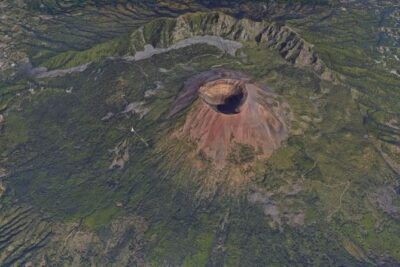
And if you’re hungry for big views, you’ll get them the easy way. The route includes seeing Mt. Vesuvius from the bottom for photos, without driving to the top, which keeps the schedule focused on archaeology.
In This Review
- Key highlights worth planning around
- Why Herculaneum leads the day (and not just because it’s smaller)
- The Boat Pavilion and Antiquarium: port life in plain human terms
- Walking the ancient shoreline (and handling the human story well)
- The House of the Deer and the town’s leisure culture
- Exercise courtyards, public baths, and homes across levels
- Pompeii’s civic heart: Porta Marina to Basilica to Forum
- Market, baths, and everyday streets that feel like errands
- The theater and the Antiquarium: seeing public life and then the artifacts
- Vesuvius pictures without the summit drive
- Price and what you’re really paying for at $738.31 per person
- Logistics, pace, and what to bring for a smooth family day
- Should you book this Pompeii & Herculaneum family adventure?
- FAQ
- How long is the Pompeii & Herculaneum family tour?
- Are tickets included?
- Is pickup available?
- Do you get to see Mt. Vesuvius?
- Is lunch included?
- Is the tour only for my group?
- What language is the tour offered in?
- Is bottled water included?
- What is the cancellation policy for a full refund?
Key highlights worth planning around
- Herculaneum’s preservation you can actually feel: carbonized wood, painted walls, mosaics, and everyday objects that survive in stunning detail
- A hands-on port story at the Boat Pavilion, where you see a Roman vessel and maritime gear tied to trade by sea
- Human-scale history at the ancient shoreline, including a guided approach to the boathouse-area evidence of people who tried to escape
- Pompeii’s civic route: Basilica, Forum, Temple of Apollo, baths, theater, plus market stops that make the city feel functional
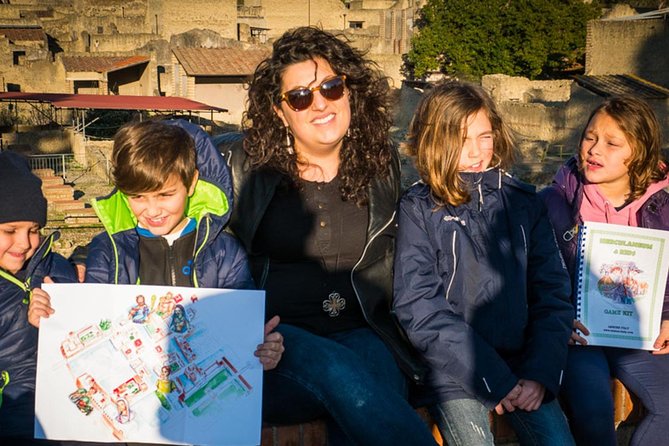
- Kid-friendly pacing with family materials and on-the-ground games that turn navigation into activity
- No Vesuvius summit drive, just great picture angles from ground level and a clear sense of where the eruption hit
Which Pompeii ticket and guide? Compare a few more.
- Pompeii Small Group Tour with an Archaeologist★ 5.0 · 6,593 reviews
- Discover the Ancient Ruins of Pompeii: Day Trip from Rome★ 3.5 · 2,247 reviews
- Pompeii and Herculaneum Small Group Tour with an Archaeologist★ 5.0 · 1,350 reviews
- Skip the Line Guided Tour of Pompeii led by an Archaeologist★ 5.0 · 703 reviews
Why Herculaneum leads the day (and not just because it’s smaller)
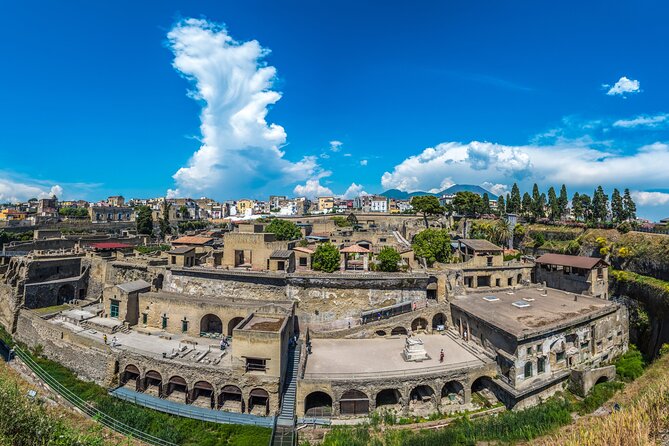
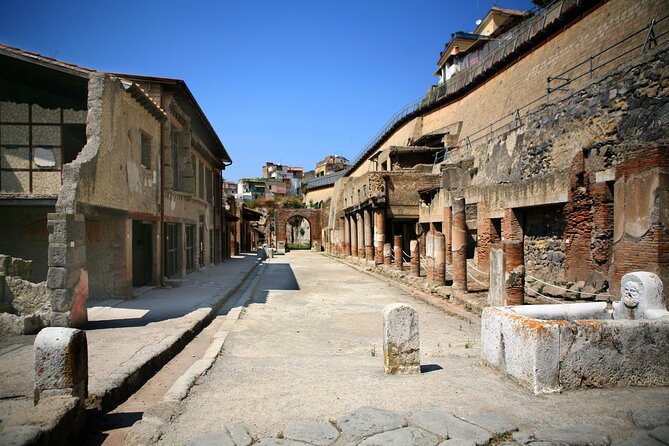
If you’ve ever visited Pompeii and felt overwhelmed, Herculaneum is the fix. It’s the smaller sister city, and the difference shows fast. In Herculaneum, many spaces stay readable at human scale: arcades, townhouses, and even shoreline areas that help you picture where people lived, worked, shopped, and relaxed.
The standout here is the type of preservation. Pompeii was buried under ash and pumice. Herculaneum was hit by a superheated volcanic surge that carbonized wood and sealed upper floors, leaving whole streets and structures with an eerie level of intactness. You can see details that usually disappear in archaeology, like wooden beams and doors, painted wall surfaces, furniture parts, and everyday items. It makes the city feel less like a museum and more like a place that was frozen mid-day.
With a private guide, you also avoid the common problem of walking through quietly stunned ruins for two hours and not knowing what you’re seeing. Here, the guide helps you connect objects to real routines—dining patterns, storage, trade, and leisure—so the visuals land emotionally and not just intellectually.
The Boat Pavilion and Antiquarium: port life in plain human terms
One of my favorite segments in this itinerary is the pair of stops that explain Herculaneum as a working seaside town.
At the Boat Pavilion, you’ll go inside an area tied to the discovery of a Roman vessel and maritime equipment. It’s a strong transition for families because kids naturally think in terms of boats, departures, fishing trips, and arrivals. Adults get the bigger picture too: Herculaneum wasn’t just a dramatic backdrop. It was connected to trade and travel by sea, and the port shaped daily life.
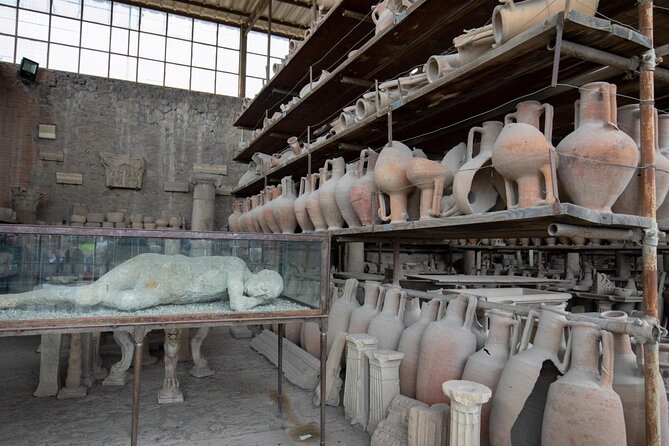
Then the Antiquarium gives you the archaeology “why.” Your guide highlights artifacts that survived the eruption in extraordinary condition, including pieces of carbonized wood from furniture, doors, beams, and even shelving. That detail matters because wood usually doesn’t last. Here, you can understand how the sealing conditions helped preserve materials that rarely survive. It’s one of those rare moments when the science behind the site becomes simple enough to carry with you through the rest of the day.
If your family tends to lose energy when the focus turns too technical, this part is your buffer. It explains the eruption and preservation without turning into a lecture.
Walking the ancient shoreline (and handling the human story well)
The tour then brings you down to the ancient shoreline. This is where you’ll get help picturing the town as it was when it still sat at sea level—boats being pulled ashore, goods arriving, and people moving with familiar routines.
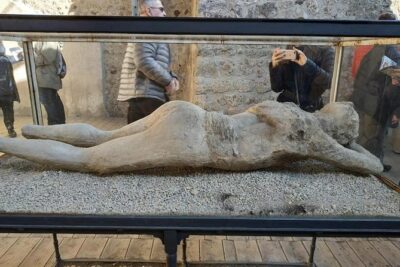
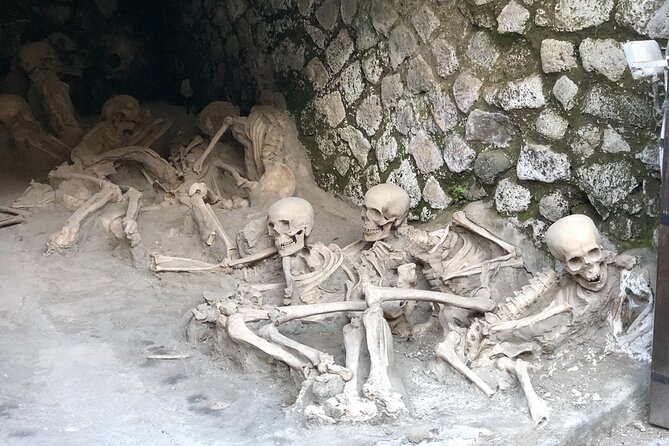
A particularly important detail here is the discovery at the boathouses area: archaeologists found over 300 skeletons inside boathouses, including men, women, and children, connected to attempts to escape by sea during the eruption. The way this segment is guided matters. Your guide leads it sensitively so families can absorb the human story at the pace that fits your group. It avoids the “speed-run” problem some tours create, where you’re forced to process heavy material quickly between other stops.
For kids, geography becomes the lesson: where the sea was, what “escape” would have meant, and why the shoreline mattered. For adults, it’s a reminder that archaeology is not abstract. It’s about people making choices in final minutes—choices shaped by what they thought the safest route was.
The House of the Deer and the town’s leisure culture
After the shoreline, the itinerary shifts to comfort and luxury, and that contrast is useful. You get to see what wealthy residents wanted their days to look like.
At the elegant House of the Deer, the highlight is famous marble sculpture work featuring deer attacked by dogs. The setting also includes terraces with views over the ancient coastline. Kids tend to latch onto the drama of the sculpture scene, while adults can connect the dots to Roman luxury: art placed to impress visitors, leisure spaces built around scenery, and the way wealth showed up in everyday life, not just in big monuments.
This stop is more than decoration. It helps you understand the social landscape of Herculaneum—how people wanted to live, host, and display status even in a city that would later become a time capsule.
Herculaneum keeps a few more tours worth your time
Exercise courtyards, public baths, and homes across levels
Roman life included public-facing routines, and Herculaneum preserves evidence of that in a way that feels direct.
You’ll see a large exercise courtyard that once served for athletic training and social life. It wasn’t only about physical practice. It connected to education too—porticoes, classrooms, and the idea that young citizens were trained in discipline and rhetoric alongside fitness. Walking across the open space, it’s easier to imagine boys running drills and teachers watching from the shade, plus the sense of civic pride behind investing in youth.
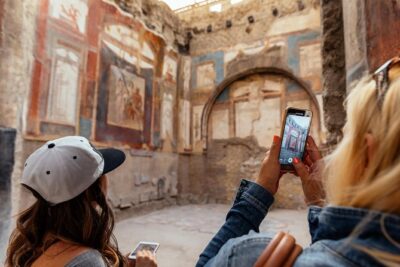
Next comes a family-friendly highlight: you’ll visit a celebrated residence reopened after restoration. This is one of the best stops for understanding how Roman domestic life worked across levels. Look for preserved wall paintings, wooden shutters, and upper-floor structures—details that help the house feel lived-in rather than staged. It’s a rare chance to experience an ancient home layout with enough structure to picture daily movement through rooms.
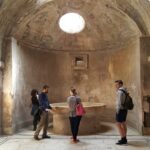
Then there’s the women’s section of the public baths, which are remarkably preserved. You’ll see benches and painted walls, plus wooden shelving that survived. The guide explains how baths worked as hygiene and social time—changing rooms, warm and hot areas, and steam that would have filled the spaces. For many families, it’s the first time the word bath starts sounding like a social calendar item instead of a modern gym.
A particularly atmospheric add-on is the hall dedicated to the cult of the Emperor, with frescoes and an explanation of the Augustales, a prestigious local group of freedmen tied to civic and religious life. It ties politics and faith together in a way that helps you stop thinking of religion as separate from daily routines.
Pompeii’s civic heart: Porta Marina to Basilica to Forum
After Herculaneum, Pompeii is a bigger stage. The key is that the itinerary doesn’t wander randomly. It builds meaning step-by-step.
The day in Pompeii often starts with Porta Marina, one of the main gateways where merchants and sailors entered. This matters because it gives you an arrival point. You can picture streets that started where goods came in, and that makes the city’s scale feel less random.
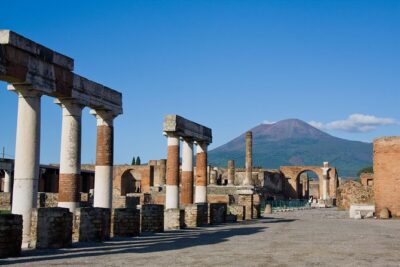
From there you’ll move into the Basilica, Pompeii’s most important civic building. It’s where legal disputes were heard and business deals happened. Walking among the surviving columns helps you understand how architecture conveyed authority even without a roof. It’s a civic machine, and your guide helps connect it to contracts and disputes that happened long before paper signatures.
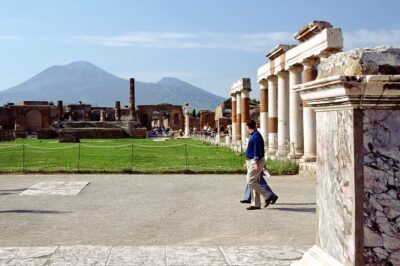
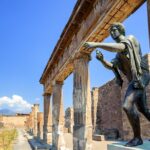
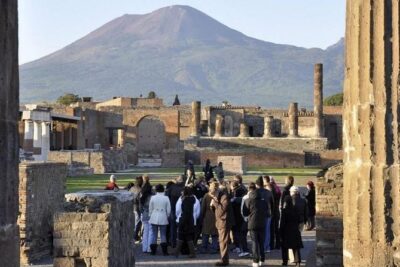
Then comes the Temple of Apollo. Kids usually enjoy the dramatic statues and the sense of ceremonies happening in a real setting. Adults get the political angle too: how religion shaped identity and power. There’s also a clear view toward Mt. Vesuvius from the temple terrace—useful for families because it creates a visual anchor for everything that comes next.
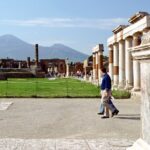
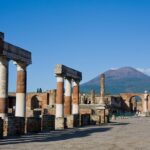
Next is the Forum, which functions as the beating heart of Pompeii—where religious events, speeches, business, and politics met in one public space. Your guide helps you picture vendor noise, citizens moving between temples and markets, and the daily rhythm of civic life.
Market, baths, and everyday streets that feel like errands
To keep Pompeii from becoming just a list of monuments, the itinerary brings you into the places where ordinary routines happened.
The Macellum is the marketplace, with stalls tied to meat, fish, fruit, and imported delicacies. It’s one of the best ways to see Pompeii as a living trading town. Your guide points out marble counters and storage vessels so you can imagine what people actually bought and how sellers organized their space.
Then you’ll hit the Forum Baths. Here the tour becomes playful without getting shallow. You’ll walk through changing rooms and heated bathing areas and notice mosaics and stucco details that survived the eruption. Kids tend to like comparing it to modern spas or sports clubs, and adults can appreciate that bathing mixed hygiene with social time.
The tour also includes a grand aristocratic house famous for gardens and mosaics, plus a notable detail like the small bronze statue of the dancing faun and a mosaic floor featuring Alexander the Great. After Herculaneum’s homes, this gives you a comparative lens: you can see how wealth expressed itself through art and household design.
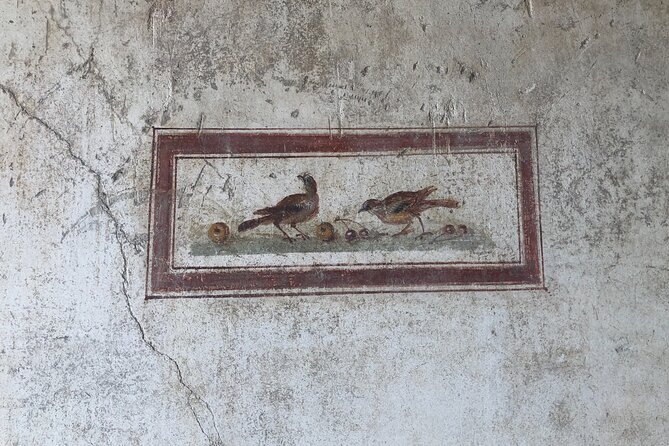
You’ll also visit the restored House of the Vettii, with vivid frescoes and a garden courtyard. Mythological scenes painted like story panels help kids make sense of Roman art as entertainment and status display, not just decoration.
Finally, you’ll walk along Pompeii’s liveliest street lined with bakeries, bars, and storefronts. There are stepping stones for foot traffic, so kids often treat it like a mini challenge while adults notice the fountains, shop counters, and signage-like elements that make Pompeii feel familiar in function.
The theater and the Antiquarium: seeing public life and then the artifacts
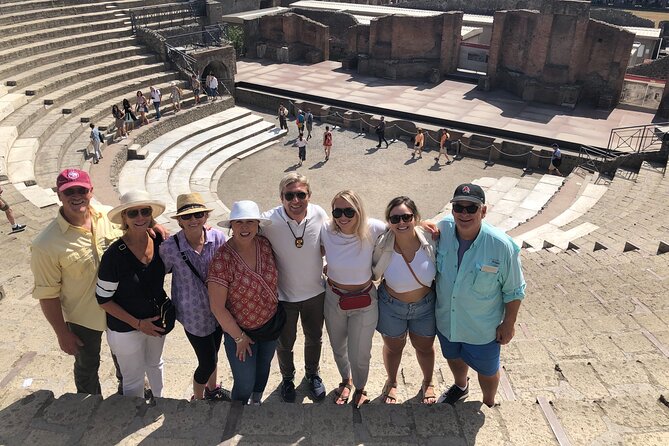
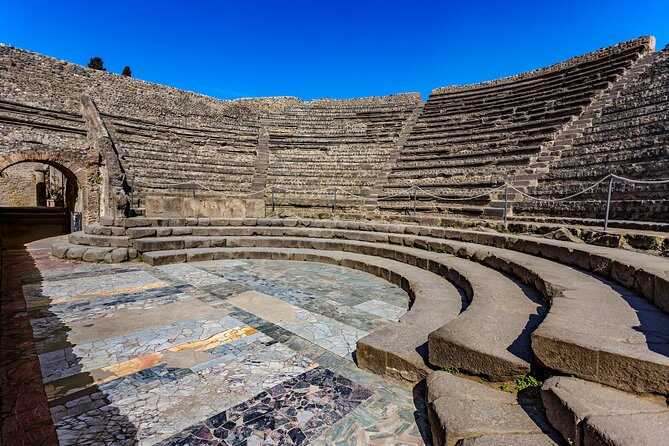
Pompeii gives you public culture, and the theater is the cleanest way to do it. It’s built into the hillside to amplify sound, so your guide explains how performances would have filled the space. Kids can test ancient acoustics from the stage area—standing in the right spot makes it feel like the past still has a voice.
After the big civic and entertainment stops, the Antiquarium connects ruins to actual objects recovered during excavation. You’ll see jewelry, coins, tools, and household items that show how people worked, worshiped, decorated homes, and expressed themselves. It also helps families place “everyday” details into context, especially if you’ve already seen bakeries, baths, and markets during the day.
This sequencing is smart. It moves from large spaces (Forum, theater) back to smaller things you can hold in your mind. The result is a fuller picture, even if your family only remembers a handful of moments.
Vesuvius pictures without the summit drive
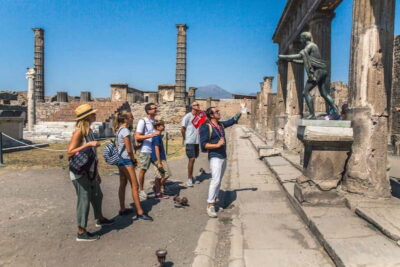
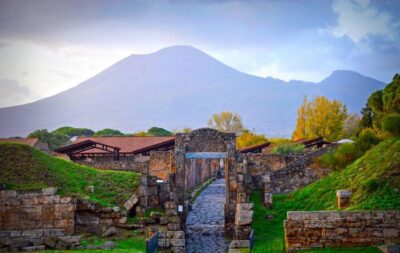
One practical detail that matters: the tour includes seeing Vesuvius from the bottom, with great photo opportunities from both Pompeii and Herculaneum. You’re not driving to the top of the volcano, so you avoid the detour that can steal time from the sites themselves.
If you want views and history without adding physical strain, this approach fits. It’s also better for families since the day already involves steady walking through archaeological grounds.
Price and what you’re really paying for at $738.31 per person
At $738.31 per person, this isn’t a budget day trip. You’re paying for a full package that reduces stress: private transport, a Blue Badge guide in both towns, and skip-the-line tickets for both Herculaneum and Pompeii.
Here’s how I’d think about the value. The biggest “cost you avoid” on a DIY visit is wasted time—ticket lines, figuring out where to start, and trying to learn the right context while your kids bounce off ruins. The guide structure is doing the heavy lifting: explaining why the spaces matter, pacing the day so it doesn’t turn into a rushed sprint, and using family-friendly booklets and activities to keep kids engaged.
Meals aren’t automatically included unless the Pizza Lunch Option is selected, and bottled water isn’t included. So budget for drinks and plan your snack strategy. But the tour’s inclusions do cover the essentials: transport, guided access to the sites, and ticket entry.
A practical note: the listing indicates average booking about 142 days in advance. Demand can be real for Pompeii and Herculaneum, especially for family-friendly private guiding, so booking ahead is a smart move.
Logistics, pace, and what to bring for a smooth family day
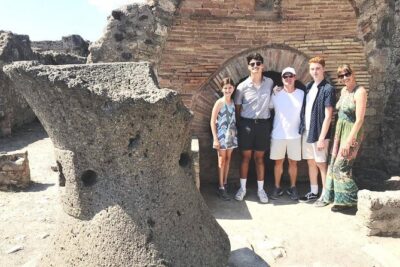
This is a private tour, with only your group participating. That’s a big deal with kids: you’re not negotiating your pace around other families trying to keep up with a schedule. Your guide can adjust timing based on the day and your group needs, including the suggestion that visiting Pompeii in the afternoon may be less crowded (season-dependent).
Still, be honest with your expectations. This is about walking a lot across uneven surfaces. The tour also recommends moderate physical fitness, comfortable walking shoes, and sunscreen. If you’re traveling with strollers, you’ll want to think carefully, but the data only says moderate fitness overall, so plan for ground-level travel.
Bring:
- Comfortable walking shoes with good grip
- Sunscreen, plus a hat if you use one
- A plan for water and small snacks since bottled water isn’t included
And if you get a guide like Giuseppe D’Angelo, that’s a strong indicator for quality. One review praised him as kind, thoughtful, and very good at making the experience work smoothly for a family. You can’t count on the exact same guide every time, but it signals the standard you should expect from the team.
Should you book this Pompeii & Herculaneum family adventure?
Book it if you want an archaeology day that feels human, not just instructional. The combination of Herculaneum’s preserved details with Pompeii’s civic landmarks is a great match for families: kids get story-driven visuals and simple games, while adults get enough context to understand what they’re seeing without needing a PhD.
You should reconsider if your group has very limited walking ability or if you’re trying to keep costs extremely low. At this price, you’re paying for private guiding and transport, not for a low-cost group shuttle.
My rule of thumb: if your family wants the best odds of a meaningful day with less stress, and you’re okay paying for that convenience, this is a strong choice.
FAQ
How long is the Pompeii & Herculaneum family tour?
It runs about 8 hours total, including time at both archaeological sites.
Are tickets included?
Yes. The tour includes Herculaneum and Pompeii Express skip-the-line tickets, and admission tickets are included for both major site visits.
Is pickup available?
Yes. Pickup is flexible and may be offered from Naples, Sorrento, Pompeii, hotels, vacation rentals, train stations, airports, and cruise terminal/port areas. You specify your pickup place when booking.
Do you get to see Mt. Vesuvius?
You will see the volcano from the bottom for photos. The tour notes that it does not drive to the top.
Is lunch included?
Meals are only included if you select the Pizza Lunch Option.
Is the tour only for my group?
Yes. It is listed as a private tour/activity, so only your group participates.
What language is the tour offered in?
The tour is offered in English.
Is bottled water included?
No. Bottled water is not included.
What is the cancellation policy for a full refund?
You can cancel up to 24 hours in advance for a full refund. If you cancel less than 24 hours before the start time, the amount paid is not refunded.
More Tour Reviews in Pompeii


Herculaneum, a Few More Tours

More Pompeii Tours to Compare
More Pompeii tours, freshly reviewed

Pompeii Tours, compared.
 ★ 4.8Pompeii: Entry Ticket and Guided Tour with an ArchaeologistFrom $3519,459 reviews
 ★ 4.1Pompeii: Entry Ticket with Audio GuideFrom $4013,491 reviews
 ★ 4.8Pompeii: Small Group Tour with an ArchaeologistFrom $4012,264 reviews
 ★ 4.3Pompeii Ruins & Mount Vesuvius Day TourFrom $12011,459 reviews
★ 5.0Pompeii Small Group Tour with an ArchaeologistFrom $356,593 reviews
★ 4.3Pompeii Ruins & Mount Vesuvius Day TourFrom $12011,459 reviews
★ 5.0Pompeii Small Group Tour with an ArchaeologistFrom $356,593 reviews
 ★ 4.5Skip-the-line Pompeii – Small Group TourFrom $544,401 reviews
 ★ 4.6Naples or Sorrento: Full-Day Pompeii and Mount Vesuvius TourFrom $1044,235 reviews
 ★ 3.9Pompeii: Skip-the-line Entry Ticket with Audio Guide & MapFrom $433,153 reviews
Browse the lists this tour appears in