
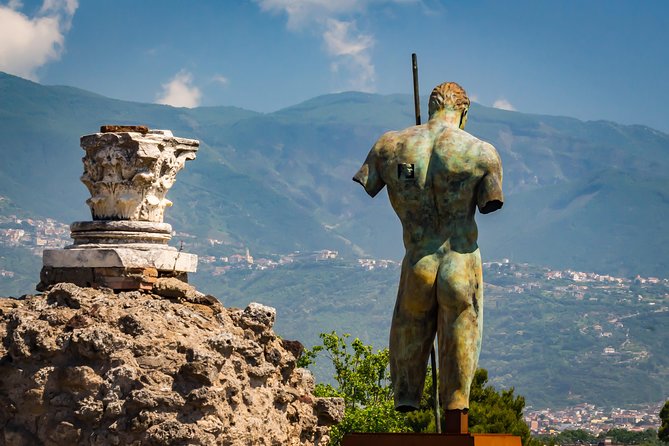
Review · POMPEII TOURS
Pompeii and Herculaneum small group tour – skip the line
Two UNESCO sites, one efficient day. This small-group Pompeii and Herculaneum tour is built to save you time, starting with skip-the-line entry in Pompeii so you can get learning fast instead of waiting outside.
I love how the guide storytelling turns ruins into daily life. Hearing an expert like Sergio explain what people actually did in Pompeii made the streets feel less like a museum stop and more like a real place.
One thing to plan for: it’s a lot of walking on uneven ground. Even reviews flagged it as not stroller-friendly, and the Herculaneum train station walk is uphill (and was under renovation in Sept 2025), so wear good shoes and keep your expectations realistic.
In This Review
- Key highlights in quick bites
- Why this Pompeii + Herculaneum combo makes sense in 5.5 hours
- Meeting at Piazza Esedra and getting into Pompeii fast
- Pompeii’s first stops: portico shelter, the forum, and the main street feel
- Casa del Menandro and the “how did they live?” stops
- The most famous brothel stop and Casa del Fauno
- Teatro Piccolo to Teatro Grande: Pompeii’s performance spaces
- The train transfer: the part of the day you should plan for
- Herculaneum house tour: rooms with charred wood and startling details
- Skeleton House to Central Thermae: the city’s darker lessons and daily routines
- Casa Sannitica, Bel Cortile, and the Grand Portal: how design changes the vibe
- Walking reality: uneven ruins, water breaks, and stroller limits
- Price and value: what you’re really paying for
- Who this tour fits best (and who should skip it)
- Should you book this Pompeii and Herculaneum skip-the-line tour?
- FAQ
- What is the approximate duration of the tour?
- Where do I meet the guide for the Pompeii start?
- What language is the tour offered in?
- Is there skip-the-line entry?
- How do you get from Pompeii to Herculaneum?
- Are meals included?
Key highlights in quick bites
- Skip-the-line entry in Pompeii so you start seeing the city right away
- Max 20 people, meaning better pacing and room for questions
- Two UNESCO sites with a guided walkthrough of both cities
- Roman “house museum” stops focused on daily life, art, and architecture
- Train transfer included one-way from Pompeii to Herculaneum
Which Pompeii ticket and guide? Compare a few more.
- Pompeii Small Group Tour with an Archaeologist★ 5.0 · 6,593 reviews
- Discover the Ancient Ruins of Pompeii: Day Trip from Rome★ 3.5 · 2,247 reviews
- Pompeii and Herculaneum Small Group Tour with an Archaeologist★ 5.0 · 1,350 reviews
- Skip the Line Guided Tour of Pompeii led by an Archaeologist★ 5.0 · 703 reviews
Why this Pompeii + Herculaneum combo makes sense in 5.5 hours
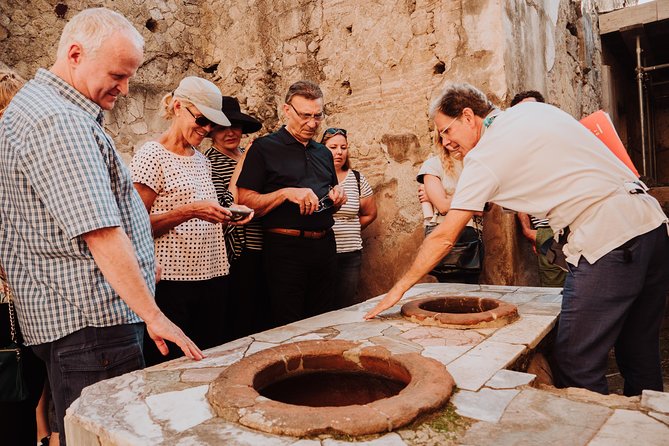
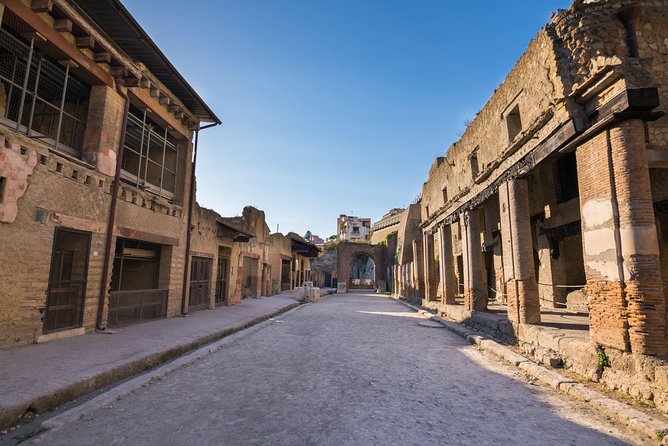
If you only have one day near Naples/Sorrento, this is the practical choice: you hit both UNESCO sites without having to coordinate separate guides, ticket queues, and transport. Pompeii gives you the big-city street grid and monumental public spaces. Herculaneum feels tighter and more intimate, with some structures preserving things Pompeii doesn’t always show as clearly.
This tour also leans into what makes these cities special: the feel of everyday Roman life. You’re not just looking at big monuments. You’re moving through homes, bath areas, and public gathering points, with explanations that connect the dots—how people shopped, ate, socialized, bathed, and lived in rooms decorated with frescoes and mosaics.
The pacing is packed, but that’s the point. At the end of the day, you’ll be tired. You’ll also understand why the eruption changed everything so completely.
Meeting at Piazza Esedra and getting into Pompeii fast
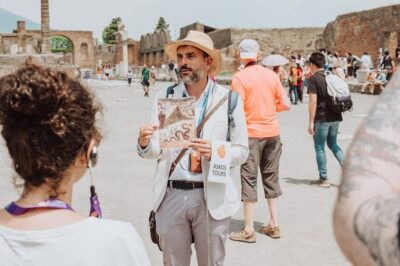
You start in Pompeii at Piazza Esedra, 4. From there, your guide meets you and leads you to the Pompeii entrance area known as Porta Marina Superiore. Your guide holds a sign with Askos Tours on it, so you can spot them quickly.
The biggest time-saver is the skip-the-line arrangement in Pompeii. That matters here because Pompeii can bottleneck at entrances. When you start moving sooner, you get more quality time inside the ruins—especially when your day includes another full archaeological park afterward.
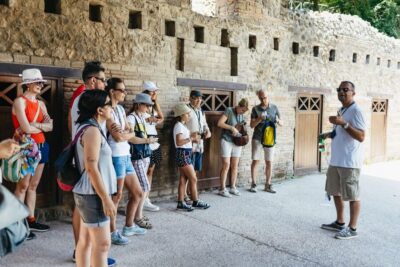
The tour is offered in English, and the group size caps at 20 travelers. That limit shows up in how the guide manages stop-and-go moments and answers questions without turning your day into a one-way march.
Pompeii’s first stops: portico shelter, the forum, and the main street feel
Once you’re in, the early stops help you understand the city layout instead of hopping house to house with no context.
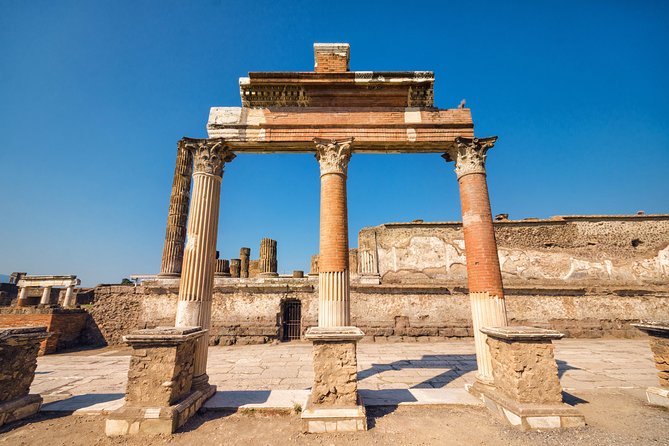
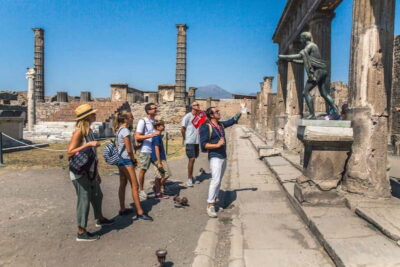
First up is a stop at the Basilica, described as an open portico used by merchants and for everyday activities. Even in ruins, you can sense why a covered, open public space mattered: it’s where commerce and meetings could happen without everyone standing in the sun all day.
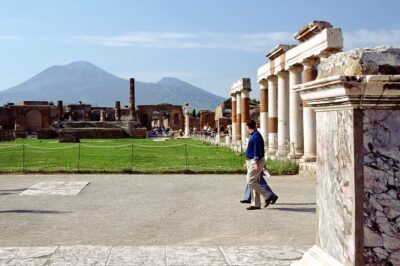
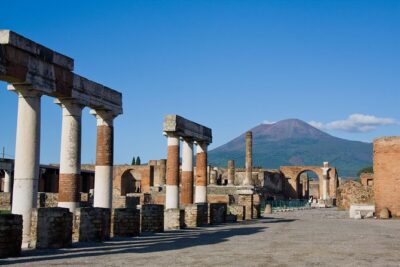
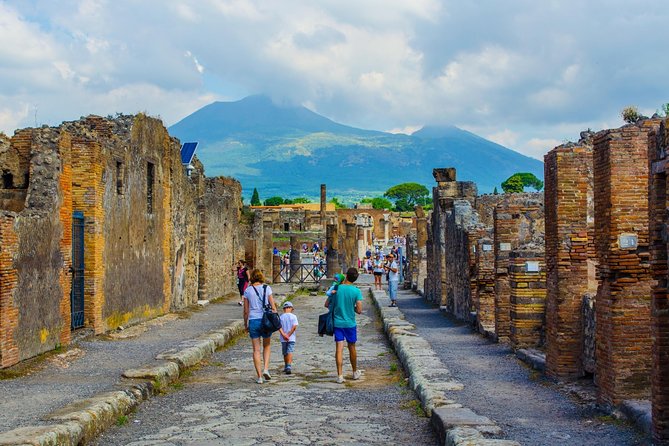
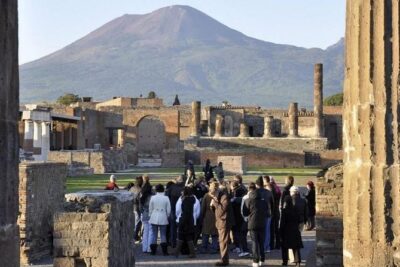
Then you move to the Foro de Pompeya, the ancient main square. This is where Pompeii stops being a set of buildings and starts feeling like a functioning town center. From there, you also get a chance to walk through Pompeii’s main street, which is useful because street orientation helps later when you’re trying to remember where everything sits.
A small timing note: several stops are tight (around 10 minutes each). That’s not enough time to wander independently for long, but it is enough to see key details and understand what you’re looking at—especially with guide-led explanations.
Casa del Menandro and the “how did they live?” stops
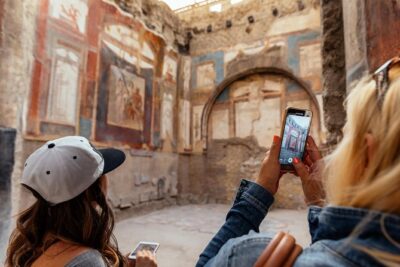
Pompeii’s power is its houses, and this tour doesn’t treat them like quick photo ops. One highlight is Casa del Menandro, one of Pompeii’s richer homes, known for architecture, decoration, and contents. The tour focus here is the human side—how status and taste showed up on the walls and in how spaces were arranged.
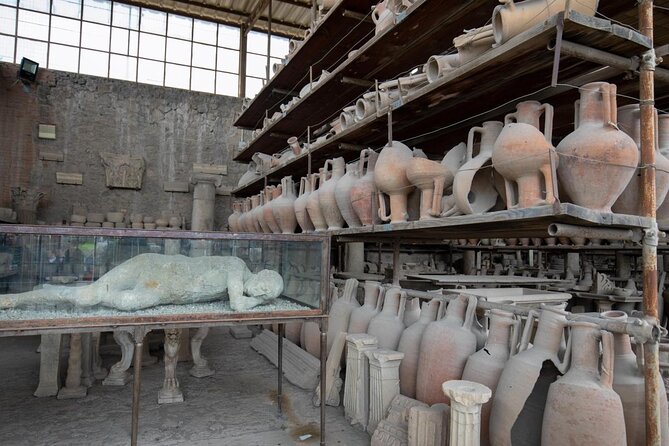
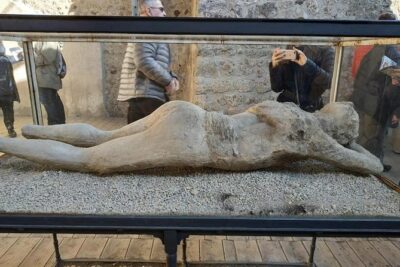
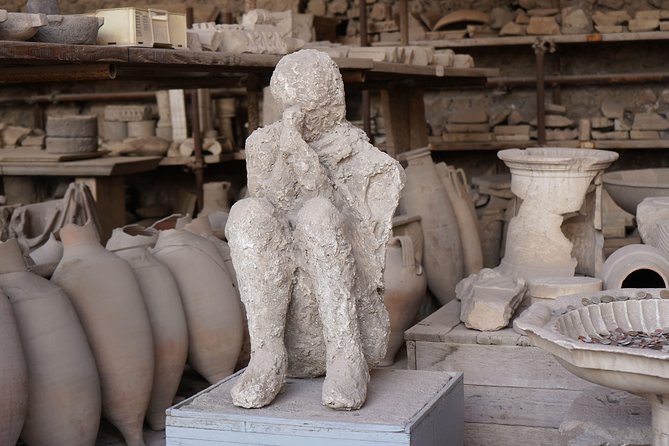
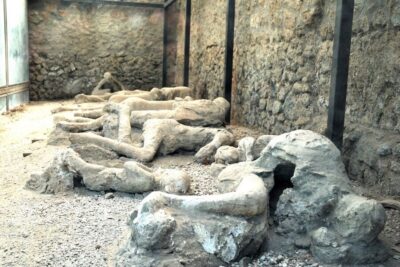
Next you’ll reach the Granai del Foro (granaries). This stop is visually interesting because it includes marble tables and fountain-adjacent basins near entrances, plus the casts of eruption victims—and even a dog and a tree. It’s a heavy topic, but it’s also one of the clearest examples of why Pompeii matters. You can’t separate the art from the tragedy; the city tells both stories.
Then come the Terme del Foro, a broad bath area and described as the oldest thermal complex in the city. Baths in Roman culture weren’t just about hygiene. They were social hubs, so seeing this zone helps you understand why public leisure was so integrated into daily routine.
Herculaneum keeps a few more tours worth your time

The most famous brothel stop and Casa del Fauno
This day includes the most famous brothel in Pompeii. The tone here varies depending on the guide’s approach, but the practical value is this: you get a fuller picture of what “public life” looked like in a Roman city, including the parts modern visitors might feel awkward about.
After that, you’ll visit Casa del Fauno, one of the larger and more impressive private residences in Pompeii. This is a strong contrast point after the public-focused areas. Houses like this show wealth through layout and scale, while smaller details remind you the Romans weren’t living in blank stone boxes—they were decorating, organizing, and using their spaces.
Teatro Piccolo to Teatro Grande: Pompeii’s performance spaces
Pompeii isn’t only markets and homes. It also has real entertainment infrastructure, and this tour makes sure you see it.
You’ll stop at the Teatro Piccolo and then move to Teatro Grande, the most important theater in Pompeii. The Teatro Grande stop is longer (about 15 minutes), which helps because theaters are easier to appreciate when you understand how the space functions—where people gathered, how sightlines work, and why performance mattered.
Even if you’re not a theatre person, this is one of the best “big picture” moments of the day. It ties back to the forum and main street: a city needs places where people gather for civic life and for entertainment.
The train transfer: the part of the day you should plan for
After Pompeii, you transfer to Herculaneum (Ercolano) by train. The trip is listed as about 30 minutes, plus roughly 10 minutes of walking.
Your meeting point in Herculaneum is the Ticket Office of the Herculaneum ruins. You can reach it either by car (parking is mentioned as close to the meeting area) or via the local train station Corso Resina 1, which is about 10 minutes walk away.
Here’s the practical caution I’d give you: the station walk can be uphill. One review also noted the station was under renovation in Sept 2025, so it can be a bit confusing if signage is limited. Bring your patience, follow posted signs, and give yourself a small buffer mindset.
The tour includes a quick lunch break if required, but no meals are included—so plan to grab something simple on your own if you need it. In a packed day, small breaks matter more than big sit-down meals.
Herculaneum house tour: rooms with charred wood and startling details
Herculaneum is where the tour shifts from Pompeii’s open street energy to a more preserved, room-by-room feeling. Many stops are houses, but each one spotlights a different kind of Roman design choice.
You start with Casa dei Cervi, named for marble statues of stags in the peristyle area. Then you’ll see La Terrazza di M. Nonio Balbo, another named house with marble stags/deer mentioned in the stop description.
The College of the Augustales comes next. This is a different kind of site than a private home, and it’s a useful reminder that not all “structures with art” were meant for one family’s living space.
Then you’ll go to Casa del Rilievo di Telefo, described as unusual because it has private access to the adjoining Suburban Thermae to the south. That’s a great example of how class and convenience shaped daily movement.
One stop that makes Herculaneum feel unique is Partem Domus lignea – Casa del Tramezzo di Legno, tied to an important wooden partition that remained. Pompeii has plenty of art and architecture, but Herculaneum’s story is also about preserved materials—especially wood and carbonized elements.
Skeleton House to Central Thermae: the city’s darker lessons and daily routines
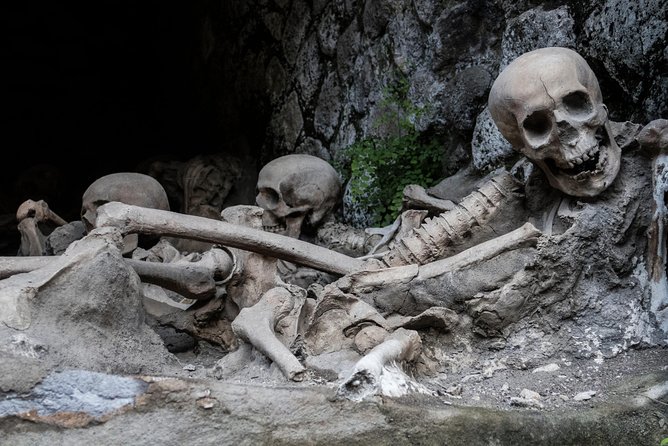
You’ll visit the House of the Skeleton, named after human remains found in a second-floor room back in 1831. This is one of those stops where you’re likely to slow down. The facts are clinical, but the emotional impact is real, and the guide helps keep it grounded.
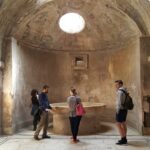
After that, you’ll head to Central Thermae, built around the beginning of the 1st century AD. The tour highlights that it was divided into men’s and women’s baths with separate entrances. That detail is a quick way to understand how Roman public life could be both communal and segregated at the same time.
Then comes Casa del Salone Nero (Black Hall)—a luxury mansion with a monumental entrance that still retains carbonised remains of doorposts and lintel. Seeing charred structural elements makes the eruption feel immediate. It’s not just “something happened.” It’s evidence of an instant, frozen in time.
Casa Sannitica, Bel Cortile, and the Grand Portal: how design changes the vibe
The remaining house stops are a series of design variations, and that’s where Herculaneum really rewards careful attention.
Casa Sannitica is described as having arrangements typical of the Samnites, with a splendid atrium, a gallery with Ionic columns, and frescoed rooms. Casa del Bel Cortile is especially distinctive: instead of an atrium, it has a courtyard with a stairway and a stone balcony. Even without going into architectural theory, you can feel how different those spaces are for daily movement.
Finally, you’ll visit the House of the Grand Portal, with charred remains of wooden parts, plus frescoes and colonnati. It’s a strong closing stop because it pulls the theme together: Herculaneum’s art and architecture matter, but the preserved “stuff” is what makes it unforgettable.
Walking reality: uneven ruins, water breaks, and stroller limits
This is not a sit-and-watch tour. Expect lots of moving through ruins, uneven ground, and frequent step-ups and step-downs.
One review pointed out that it’s not stroller friendly—and you may end up carrying a baby anyway. If you’re traveling with a stroller, plan to leave it behind and use a carrier, or at least expect delays and extra strain.
Also: bring water. Another review strongly suggested using the toilet before the tour. That’s practical advice because you’ll be walking between stops and won’t have easy restroom access on every segment.
If you like small comforts, you’ll also be glad you wore shoes with grip. Pompeii and Herculaneum are famous for ruins, not for smooth walkways.
Price and value: what you’re really paying for
At $119.85 per person, this tour is priced like a “guided day with logistics handled” package. The value is mostly in three things:
- Skip-the-line tickets in Pompeii, which saves you queue time
- Guidance in both sites, for the full duration (not just a short introduction)
- One-way Circumvesuviana train tickets from Pompeii to Herculaneum
Admission ticket details are listed per stop, and one part of the Herculaneum section specifically notes admission ticket not included, while the overall inclusions say skip-the-line tickets in Herculaneum. Since that’s a conflict in the provided info, I’d do one simple thing: confirm at booking what entrance costs are covered for Herculaneum. It’s a quick check that can prevent confusion later.
Even with that caveat, the structure makes sense for most first-timers. If you were to buy skip-line tickets and then arrange a guide and train timing on your own, costs often add up fast—especially when you want both UNESCO sites in the same day.
Who this tour fits best (and who should skip it)
This tour fits you if you:
- Want Pompeii and Herculaneum in one guided day
- Like houses, mosaics/frescoes, and the “how people lived” angle
- Prefer a small group where you can ask questions
- Are comfortable walking and managing uneven terrain
You might want a different plan if you:
- Have major mobility limitations (lots of walking and steps are part of the deal)
- Need a stroller-friendly itinerary (it’s not set up for that)
- Want a slow, relaxed pace with lots of free time
If your goal is a single, well-guided overview that still includes major details, this one is a strong match.
Should you book this Pompeii and Herculaneum skip-the-line tour?
My take: book it if you want a smart use of time and you’re okay with an active day. The best payoff is the combination of skip-the-line access, small-group guidance, and a route that actually shows the two cities as living places—not just piles of stone.
Just go in with two expectations: you’ll walk, and the day depends on smooth movement between sites (including the station area in Herculaneum). Bring water, wear solid shoes, and treat it like an archaeology field day with a very good guide.
FAQ
What is the approximate duration of the tour?
It runs about 5 hours 30 minutes approximately.
Where do I meet the guide for the Pompeii start?
The start is at Piazza Esedra, 4, 80045 Pompei NA, Italy.
What language is the tour offered in?
The tour is offered in English.
Is there skip-the-line entry?
Yes, the tour includes skip-the-line tickets in Pompeii and skip-the-line tickets in Herculaneum.
How do you get from Pompeii to Herculaneum?
You transfer by train (Circumvesuviana) with one-way train tickets included, then walk about 10 minutes to the Herculaneum meeting point.
Are meals included?
No. Meals and personal expenses are not included.
More Tour Reviews in Pompeii



Herculaneum, a Few More Tours

More Pompeii Tours to Compare
More Pompeii tours, freshly reviewed

Pompeii Tours, compared.
 ★ 4.8Pompeii: Entry Ticket and Guided Tour with an ArchaeologistFrom $3519,459 reviews
 ★ 4.1Pompeii: Entry Ticket with Audio GuideFrom $4013,491 reviews
 ★ 4.8Pompeii: Small Group Tour with an ArchaeologistFrom $4012,264 reviews
 ★ 4.3Pompeii Ruins & Mount Vesuvius Day TourFrom $12011,459 reviews
★ 5.0Pompeii Small Group Tour with an ArchaeologistFrom $356,593 reviews
★ 4.3Pompeii Ruins & Mount Vesuvius Day TourFrom $12011,459 reviews
★ 5.0Pompeii Small Group Tour with an ArchaeologistFrom $356,593 reviews
 ★ 4.5Skip-the-line Pompeii – Small Group TourFrom $544,401 reviews
 ★ 4.6Naples or Sorrento: Full-Day Pompeii and Mount Vesuvius TourFrom $1044,235 reviews
 ★ 3.9Pompeii: Skip-the-line Entry Ticket with Audio Guide & MapFrom $433,153 reviews
Browse the lists this tour appears in