
Review · NAPLES PASTA & COOKING CLASSES
Naples: Hands-On Pasta Class Making Gnocchi & Tagliatelle
Two hours. Two pastas. Big Naples energy. In the historical center at Naplesbay Cooking Lab, you roll up your sleeves to learn soft potato gnocchi and fresh tagliatelle from a local chef, and you’ll even pick up techniques that chefs like Daniele and Alex use to keep things moving (and funny). I also love the payoff: you eat what you made, paired with homemade tomato sauce and a included drink. One thing to consider: this is not a quiet, seated demo—active cooking in a real kitchen means it’s not wheelchair accessible.
Before you start shaping dough, you get a small appetizer and a drink so you’re not starving while the table turns into a pasta workstation. The class also provides the gear—apron and kitchen tools plus a chef hat—so you can focus on learning instead of hunting for supplies. Your chef may teach in Italian, Spanish, French, or English, depending on the instructor that day.
At the end, you sit down for lunch or dinner with your pasta, and you leave with a chef diploma souvenir (plus a free luggage deposit so you can travel light). If your goal is hands-on food learning with real Neapolitan flavors—Campania potatoes, San Marzano tomatoes, olive oil, and basil—this is a strong use of time in Naples.
In This Review
- Key things you’ll notice right away
- Naplesbay Cooking Lab: getting started near the Duomo
- Soft potato gnocchi: the texture lesson that changes everything
- Tagliatelle and fettuccine-style ribbons: rolling, cutting, and getting hands-on
- San Marzano tomato sauce: the part that makes it taste like Naples
- The chef experience: humor, movement, and practical tricks
- What’s included (and why it’s good value at $41)
- Who should book this Naples gnocchi and tagliatelle class
- Tips so you leave with both pasta and confidence
- Should you book the Naples gnocchi and tagliatelle class?
- FAQ
- Where is the meeting point?
- How long is the pasta class?
- What does it cost?
- What pasta will I learn to make?
- Is food included, or is it just a demonstration?
- Do I get a drink?
- What ingredients are used for the tomato sauce?
- What languages do the instructors speak?
- Does the class provide any tools or gear?
- Is there a luggage deposit?
- Is the activity wheelchair accessible, and what are the age rules?
- Is there a cancellation deadline?
Key things you’ll notice right away
- Hands-on pacing: you work constantly, not just watch while others cook
- Soft potato gnocchi technique: aiming for light, tender dumplings that hold sauce
- Fresh pasta ribbons: mixing, kneading, rolling, and cutting tagliatelle-style pasta
- San Marzano tomato sauce: a simple recipe where ingredient quality matters
- Meal included: you eat your gnocchi and tagliatelle with a drink, not just a snack
Roll more pasta with a Neapolitan cook
- Naples: Pasta Making Class with Starter and Drink★ 4.9 · 1,060 reviews
- Naples Pasta Class: Fettuccine & Ravioli with Grandma’s Recipe★ 5.0 · 506 reviews
- Naples: Pasta Cooking Class with Tiramisù and a Drink★ 4.6 · 415 reviews
- Naples: Neapolitan Pizza and Tiramisu Cooking Class★ 4.9 · 258 reviews
Naplesbay Cooking Lab: getting started near the Duomo
You’ll meet at Naplesbay Cooking Lab, right in the heart of Naples’ historical center, a short walk from Duomo Cathedral. The location matters. You can arrive, drop bags, and jump straight into cooking without a long commute—nice when you’ve already walked through streets that don’t reward extra detours.
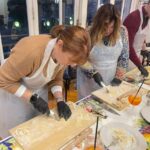
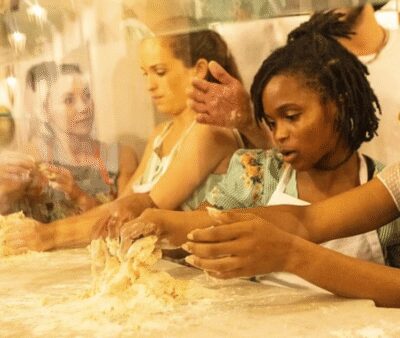
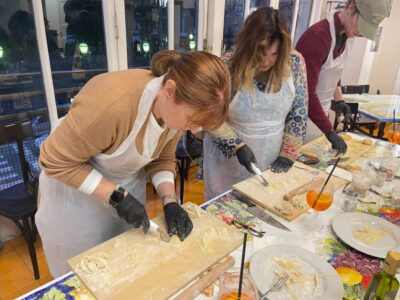
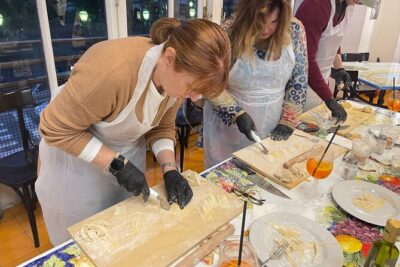
When you get inside, the class setup is practical. You’ll get an apron, kitchen tools, and a chef hat. That’s not just cute. It signals something important about how this class runs: you’re supposed to make pasta, not take notes from the sidelines. Even the best tourist food lesson gets boring if you do zero work. Here, you’ll be doing.
You’ll also get a free luggage deposit. Naples is famous for great walking routes, but carrying bags while you cook is a pain. This small inclusion makes the whole experience feel easier from the start.
Soft potato gnocchi: the texture lesson that changes everything
The gnocchi part is the star. The class is built around making soft potato gnocchi from scratch with a chef guiding you through the steps that affect texture. Gnocchi can be heavy, gluey, or crumbly when the method is off. In this class, the focus is on what makes gnocchi taste right and feel right: light, tender dumplings that cling to sauce instead of sinking into it.
You start with potatoes, then you move through the dough stage in a way that’s meant to be approachable. What I like about this style of instruction is that you’re not just following commands—you’re learning why each step matters. The chef will show you how to aim for a consistency that’s elastic enough to shape, but not dense.
A key point for your expectations: gnocchi is delicate work. You’ll likely feel the dough change as you handle it. That’s normal. When it’s right, you’ll notice a smoother feel and easier shaping. When it’s not, the dough can fight back. Your best “classroom tip” here is to trust the chef’s cue when they guide you on texture. With gnocchi, guessing costs you time and results.
Also, you’re not doing gnocchi as a side dish. It’s framed as a highlight, so you’re spending real attention on getting it right, not just making a quick shape for pictures.
Tagliatelle and fettuccine-style ribbons: rolling, cutting, and getting hands-on
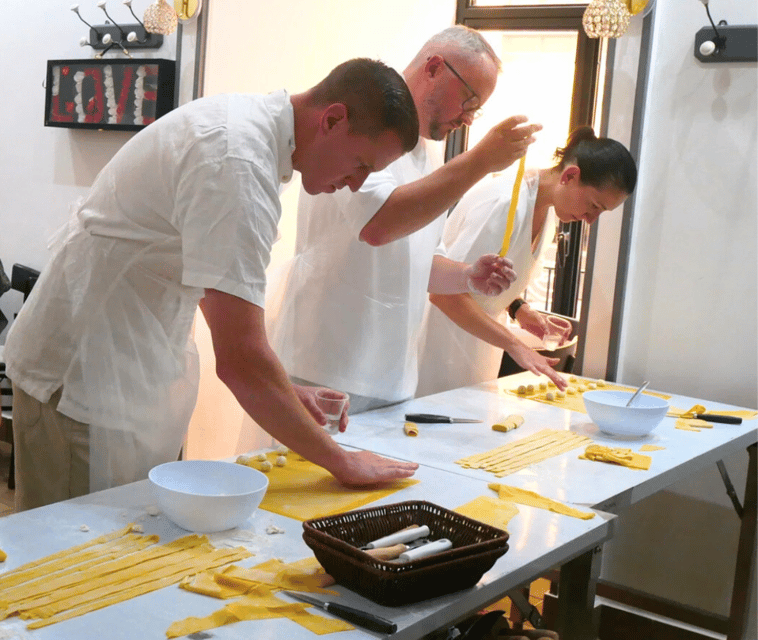
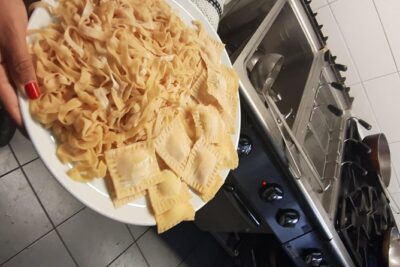
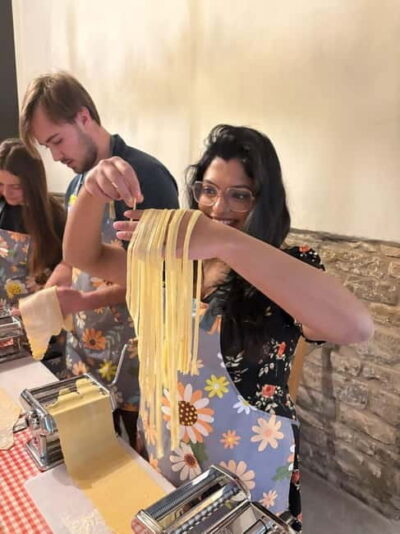
After the gnocchi, you shift to fresh pasta ribbons—tagliatelle-style (often described as fettuccine). This is where the class becomes very satisfying: you mix and knead dough, then you roll and cut long, silky strips using traditional tools and professional techniques.
If you’ve ever tried to roll pasta at home, you know the dough can be stubborn. It wants to shrink, tear, or end up uneven. Here, the chef’s role is to keep you from fighting the process for two hours. With step-by-step guidance, you learn how to portion, flatten, roll, and cut so the strips end up even enough to cook beautifully.
The cutting stage is especially fun. Long ribbons are more visually “Italian” than most pasta shapes, and they’re also more forgiving than filled pasta in the sense that you don’t have to perfect sealing. You’ll see how the thickness changes the bite. Too thick and it feels chewy. Too thin and it can turn delicate in the pan.
One more note: the class description also mentions preparation of ravioli alongside tagliatelle in the included details. Since the core highlights focus on gnocchi and tagliatelle, I’d treat ravioli as an additional pasta step that may appear depending on the class flow. If you have strong preferences, it’s worth checking at booking which pastas your specific session will cover.
San Marzano tomato sauce: the part that makes it taste like Naples
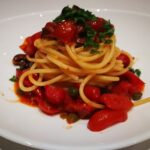
Once your pasta is shaped, you make the sauce. This is not a jar situation. You’ll prepare a homemade tomato sauce using high-quality ingredients: San Marzano DOP tomatoes, extra virgin olive oil, basil, and a touch of sea salt.
This sauce is a great example of Italian cooking logic: flavor doesn’t always come from complexity. It comes from good ingredients and controlled heat. As it gently cooks, you’ll notice the kitchen smell shift into that unmistakable tomato + basil aroma.
Here’s how I’d use this lesson at home: don’t rush the sauce. You don’t need it to be dramatic or thick like a meat sauce. You need it to taste balanced and fresh, with olive oil and basil doing their job. The chef’s method is aimed at that sweet spot—enough cooking to round out the tomatoes, not enough to flatten them.
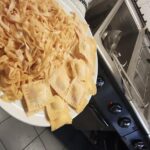
And then comes the best part: you eat. Your gnocchi and tagliatelle are served with the warm tomato sauce, and you get a glass of wine with your meal (or a non-alcoholic drink, depending on your choice).
Other Naples outings worth a look before you book

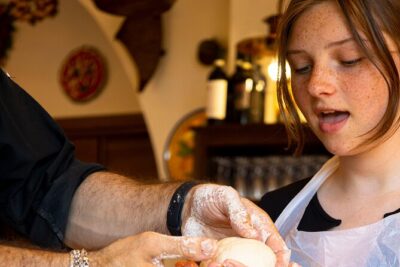
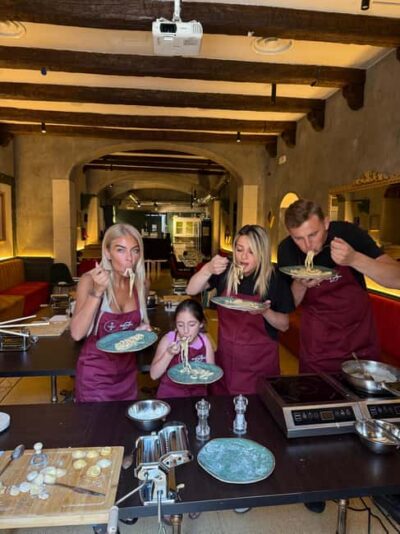
The chef experience: humor, movement, and practical tricks
A cooking class is only as good as the teacher’s style. The best classes keep energy up and make you feel capable even when your dough looks like it’s doing its own thing.
In this Naples class, you’ll likely work with instructors who are fluent in Italian, Spanish, French, or English. That matters if your Italian is limited. You can follow steps without stopping every five minutes to decode words.
From the chef personalities tied to recent sessions, two names show up repeatedly: Chef Daniele and Chef Alex. One session notes Daniele keeping things lively with humor and making the process feel easy, never boring or overly technical. Another highlights Alex as attentive and available for questions. That combination—clarity plus room for questions—is what turns a pasta class from a chore into a memory.
There’s also a practical confidence boost here. You’ll leave not just knowing what to do, but feeling like you could do it again. That’s the difference between watching cooking videos and learning actual technique in a working kitchen.
What’s included (and why it’s good value at $41)
The price is $41 per person for a 2-hour class. That’s one of the reasons this works well for many visitors: you’re paying for instruction, ingredients, tools, and a real meal.
What you get for that money includes:
- Kitchen tools and an apron (plus a chef hat)
- Hands-on pasta-making with the chef
- A kitchen break with a local appetizer and one included drink
- A meal (lunch or dinner) with the pasta you prepared
- A chef diploma souvenir
- Free luggage deposit
When you compare that to the cost of eating in Naples plus buying ingredients if you try this later, the value gets clearer. You’re not just paying for entertainment. You’re paying for a structured skill session with food at the end. The included appetizer and drink also help the timing—so you’re not stuck waiting hungry while you learn.
Is $41 cheap? In a lot of cities, you might find cheaper classes. But in Naples, where eating well is part of the daily rhythm, this price can feel like a fair deal because the meal isn’t optional. You’re also getting personalized guidance in a short time block, which is hard to replicate on your own.
Who should book this Naples gnocchi and tagliatelle class
This class is a good fit if you:
- Want hands-on cooking instead of a sit-and-watch tour
- Care about learning technique (especially gnocchi texture)
- Like eating what you make, right after you finish it
- Prefer a short, focused experience instead of a half-day detour
It may not be your best choice if:
- You hate active cooking tasks or messy hands (this is a working kitchen)
- Mobility is limited, since it’s not wheelchair accessible
- You need a totally quiet experience—this kind of kitchen learning has chatter and movement
It also works well for families with older kids, since the only age rule listed is that anyone under 18 must be accompanied by a parent or legal guardian.
Tips so you leave with both pasta and confidence
You’ll get the most from the class if you treat it like a skill lesson, not just a meal. A few practical moves:
- Wear comfortable clothes you don’t mind getting flour on. Pasta work can be messy.
- Pay attention to the chef’s texture cues. Gnocchi is texture math in disguise.
- When you finish one step, ask one question right then instead of waiting. Timing matters.
- Plan to use the chef diploma as your reminder to try again later. If you enjoyed it, you’ll probably want to replicate it at home.
Also, because the class runs in languages including Italian, Spanish, French, and English, don’t assume the entire group will share one language. If you’re comfortable, introduce yourself and use the chef’s instructions as your anchor.
Should you book the Naples gnocchi and tagliatelle class?
I think you should book it if you want an authentic Naples food experience that’s active, structured, and ends with an actual meal—right in the center near Duomo. The biggest reason to choose this class is the balance: you learn soft potato gnocchi and fresh ribbon pasta technique, you make San Marzano tomato sauce, and you eat what you produce with a drink included.
Skip it if you want a purely observational experience or you need full wheelchair access. And if you’re specifically chasing one pasta type (only gnocchi, only tagliatelle, only ravioli), check the exact session format when you book—because the class description and included details mention both tagliatelle and ravioli.
If you’re reading this in planning mode, here’s my simple rule: if making pasta sounds fun even if it’s a little chaotic, this 2-hour Naples kitchen experience is worth your time and your money.
FAQ
Where is the meeting point?
You’ll meet at Naplesbay Cooking Lab, located in the heart of Naples’ historical center, just a short walk from Duomo Cathedral.
How long is the pasta class?
The class lasts 2 hours.
What does it cost?
The price is $41 per person.
What pasta will I learn to make?
The experience focuses on making soft potato gnocchi and fresh tagliatelle. The included details also mention tagliatelle and ravioli, so your session may include ravioli depending on the class flow.
Is food included, or is it just a demonstration?
Food is included. You’ll have an appetizer during the experience and then a lunch or dinner with the pasta you prepared.
Do I get a drink?
Yes. One alcoholic or non-alcoholic drink is included.
What ingredients are used for the tomato sauce?
The homemade tomato sauce is made with San Marzano DOP tomatoes, extra virgin olive oil, basil, and a touch of sea salt.
What languages do the instructors speak?
The instructor language options listed are Italian, Spanish, French, and English.
Does the class provide any tools or gear?
Yes. You receive kitchen tools and an apron, and you also get a chef’s hat.
Is there a luggage deposit?
Yes. There is a free luggage deposit.
Is the activity wheelchair accessible, and what are the age rules?
It is not wheelchair accessible. Participants under 18 must be accompanied by a parent or legal guardian.
Is there a cancellation deadline?
Cancellation is free up to 24 hours in advance for a full refund.
More Workshops in Naples


More Tour Reviews in Naples

More Cooking Tables in Naples
More Naples tours, freshly reviewed



Naples Pasta & Cooking Classes, compared.
 ★ 4.9Pasta Making Class with Starter and DrinkFrom $391,060 reviews
 ★ 5.0Naples Pasta Class: Fettuccine & Ravioli with Grandma’s RecipeFrom $54506 reviews
 ★ 4.6Pasta Cooking Class with Tiramisù and a DrinkFrom $71415 reviews
 ★ 4.9Neapolitan Pizza and Tiramisu Cooking ClassFrom $24258 reviews
 ★ 4.8Traditional Italian Food Cooking Class at RestaurantFrom $57106 reviews
 ★ 5.0Amazing Pizza and Pasta Class at Savio’s kitchen cooking schoolFrom $173104 reviews
 ★ 4.5Hands-On Pasta Making and Traditional Tiramisu WorkshopFrom $7271 reviews
Browse the lists this tour appears in