
Pizza dough meets tiramisù craft in Naples. This 3-hour class at Naplesbay Cooking Lab is hands-on from the first knead to the wood-fired bake, with English guidance that can include Chef Alex, known for patient, funny teaching. You’ll also cook and eat both dishes on-site, so it feels like real participation, not just watching.
What I like most is the focus on original Neapolitan method and getting technique right, not vague instructions. You learn to make margherita-style pizza from scratch and build tiramisù with mascarpone cream, coffee-soaked biscuits, and cocoa. The small group setup (up to 15) also helps the chef keep an eye on everyone’s dough, pacing, and portions.
One thing to plan for: there’s no pickup, so you’ll need to get yourself to the Naplesbay Cooking Lab address at the start time.
In This Review
- Key highlights you should care about
- Naplesbay Cooking Lab: a small-group food class built for real technique
- Where you meet (and why no pickup matters)
- Snack + starter before you bake: getting your appetite and your bearings
- Pizza margherita the Neapolitan way: dough, shaping, and wood-fired baking
- Tiramisu layering: the coffee-biscuit-mascarpone rhythm
- Eating together: drinks and the value of cooking your own meal
- The chefs: English-friendly, patient, and funny when it counts
- Who should book this Naples pizza and tiramisù class?
- Practical tips so your class goes smoothly
- Should you book? My decision guide
- FAQ
- How long is the Naples pizza and tiramisù cooking class?
- What will I cook during the class?
- Is pickup and drop-off included?
- Where is the meeting point?
- What’s included in the price?
- How big is the group?
Key highlights you should care about
- Wood-fired oven baking for that classic Neapolitan-style finish
- Pizza dough from scratch, not shortcuts or pre-made bases
- Tiramisu layering practice using mascarpone, coffee-soaked biscuits, and cocoa
- Small group size (max 15) so you can actually ask questions
- Starter, drinks, and a limoncello pairing included with your meal
Roll more pasta with a Neapolitan cook
- Naples: Pasta Making Class with Starter and Drink★ 4.9 · 1,060 reviews
- Naples Pasta Class: Fettuccine & Ravioli with Grandma’s Recipe★ 5.0 · 506 reviews
- Naples: Pasta Cooking Class with Tiramisù and a Drink★ 4.6 · 415 reviews
- Naples: Neapolitan Pizza and Tiramisu Cooking Class★ 4.9 · 258 reviews
Naplesbay Cooking Lab: a small-group food class built for real technique
This is a straightforward, 3-hour Naples cooking class centered on two icons: Neapolitan pizza and tiramisù. You’ll be in a proper teaching kitchen setting at Naplesbay Cooking Lab, which matters because you get time to practice the steps, not just get a seat near the action.
The group is capped at 15 people, which is a big deal when you’re dealing with dough and timing. In a larger room, you’d get one glance at your shaping technique and then wait your turn. Here, you’re more likely to get direct coaching while you’re working.
You also get an English-speaking format. That helps a lot with cooking classes, since small details are often language-dependent: how to judge texture, how to portion toppings, and how to pace your dessert layers. If you’re traveling with anyone who doesn’t speak Italian, this setup is a practical win.
Finally, the class is labeled suitable for everyone. If you’re traveling as a family, that also helps your planning, but keep in mind: participants under 18 must be accompanied by a parent or legal guardian.
Where you meet (and why no pickup matters)
You’ll start and end right at the same place: Naplesbay Cooking Lab, Via delle Zite, 30, 80139 Napoli NA, Italy. The activity runs from the meeting point and finishes back there, so you don’t have to worry about a strange drop-off location.
The logistics are simple, but there’s one clear consideration: no pickup & drop-off is included. If you’re arriving in Naples by train or ferry, you’ll want to map out how you’ll reach Via delle Zite before you book your day. You’ll also be glad it’s near public transportation, since that reduces the stress of being late.
You’ll use a mobile ticket, and you’ll receive confirmation at booking time. There’s also a free luggage deposit, which is useful if you’re in Naples for multiple stops and don’t want to haul bags around while you cook.
Snack + starter before you bake: getting your appetite and your bearings
The class includes a local starter, listed as a typical Neapolitan appetizer in the bruscetta style. You’ll see cherry tomatoes, mozzarella, homemade bread, and extra virgin olive oil in the lineup. This isn’t just filler. It sets the flavor baseline for the meal you’re about to build: simple ingredients treated with care.
I like this approach because it gives you a short, comfortable on-ramp. You settle in, you get a taste of local ingredients up front, and then you shift into kitchen mode with everyone ready to cook.
You’ll also notice the class keeps you moving. In many cooking tours, you spend a lot of time waiting. Here, the structure is designed so you cook and then eat what you made, which keeps the energy up for the full 3 hours.
Pizza margherita the Neapolitan way: dough, shaping, and wood-fired baking
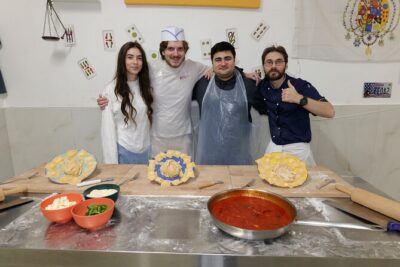
Neapolitan pizza is a specific craft, and this class is built around the basics done properly. You’ll work from the start: make the dough and learn how to mix and knead it, then shape it for baking. That’s valuable because most visitors only ever see the finished pie. In this class, you’ll touch the process.
Next comes topping the pizza. The class focuses on margherita-style pizza, so you’re not chasing a complicated ingredient list. The point is to learn technique: how the dough behaves, how toppings distribute, and how to keep things balanced so the bake matches what you expect.
Then you bake in a traditional wood-fired oven. Wood-fired baking changes the whole outcome. Heat behaves differently than in a standard oven, and the class is set up so you can experience that difference directly. If you care about flavor and texture, this is where you get the payoff.
In the class atmosphere, the chef’s teaching style plays a huge role. Recent sessions have featured chefs like Antonio and Amos, praised for being patient and hands-on. That matters if you’re a true beginner. When your first dough attempt isn’t perfect, you want an instructor who can keep things calm and still technical.
Tip for getting the most out of the pizza part: watch closely during the first demonstration, then ask one specific question before your hands get messy. Texture and timing are the two areas where it’s easiest to go wrong, so catching early helps.
More aprons on in Naples
Tiramisu layering: the coffee-biscuit-mascarpone rhythm
After pizza, you switch to dessert: tiramisù. This isn’t a quick assembly. You’ll learn the process in a way that makes the final slice make sense.
The class specifically covers making tiramisù through its core components:
- mascarpone cream
- coffee-soaked biscuits
- cocoa
Layering is the real craft here. Too much coffee can make biscuits collapse. Too little can leave it dry. The class structure is designed to walk you through the rhythm so the dessert sets with the right feel.
Chefs who lead this class have been credited for sharing family-style technique, including Chef Lucas being highlighted for teaching his grandmother’s recipe approach. Even if every chef’s method has personal touches, the consistent elements are the same: cream balance, biscuit soaking, and cocoa finishing.
When you’re learning tiramisù, I think it helps to focus on consistency over perfection. Your goal is a dessert that layers well, tastes balanced, and looks like tiramisù should look. If you’re taking the skill home, you want a repeatable method, not a one-off miracle bake.
Eating together: drinks and the value of cooking your own meal
After you finish cooking, you sit down to enjoy what you made: pizza and tiramisù. That matters because many classes stop at cooking and give you a token sample. Here, the meal is part of the experience.
Included with the food, you’ll get alcoholic beverages with the pizza and limoncello with tiramisù. If you’re traveling for a fun evening meal, this pairing boosts the “why this class” value quickly. It turns cooking into a full dining moment, not just a class you attend and then leave hungry.
The price is $71.38 per person for about 3 hours. On paper, that’s not “cheap,” but the value story is strong:
- you’re cooking two full dishes
- the class includes a starter
- you get drinks with the meal
- you receive instruction plus practical know-how to recreate it later
- you get apron and chef hats, which sounds silly until you’re actually in the kitchen and it makes the whole thing feel official
I also like that you take home recipes and skills. Cooking classes that only teach “how it tastes” are less useful. If you’re serious about making pizza or tiramisù again at home, recipe access turns this into a skill investment.
The chefs: English-friendly, patient, and funny when it counts
A cooking class lives or dies by the instructor. In this Naplesbay format, chefs are described as both knowledgeable and practical, with a style that keeps people relaxed while they learn.
Chef Alex is specifically praised for being super informative and funny, with English described as very good. Chef Antonio also gets credit for being hands-on and humorous, plus for making the class paced in a beginner-friendly way.
Chef Luca and Chef Lucas show up in descriptions for engaging teaching and technique-focused instruction, with one note highlighting tiramisù technique as a standout. Chef Amos is praised for patience and entertainment, especially with kids.
If you’re the type who learns better when you’re laughing and asking questions, this format is a good match. If you prefer a silent, formal workshop, you might still appreciate the clarity, but you may want to mentally switch expectations from classroom to kitchen.
Who should book this Naples pizza and tiramisù class?
This is a great fit for:
- Couples looking for a fun shared activity in Naples beyond sightseeing
- Families who want an experience that keeps kids involved, especially since the class is suitable for everyone and has a small group size
- Food lovers who want technique, not just taste
- Beginner cooks who need structure and step-by-step guidance
It may be less ideal if:
- You want an all-day plan with lots of wandering and stops around Naples
- You’re hoping for pickup convenience since there’s no transportation included
- You have a tight schedule that makes a 3-hour block hard to protect
That said, because you end where you start, you can plan dinner nearby without the usual scramble.
Practical tips so your class goes smoothly
Here’s how I’d set yourself up for an easy experience based on how these kitchen classes work.
- Arrive a few minutes early. You want time to settle in, find the lab, and start without rushing.
- Come hungry. You’ll cook and eat pizza and tiramisù, plus a starter and drinks are part of the package.
- Watch the first instructions closely. The dough and layering steps are where technique shows up fastest.
- Ask one question while you’re in the step, not after everyone moves on. With a group of up to 15, timing still matters.
- Take the recipe notes seriously. If your goal is making these at home, pay attention to what the chef emphasizes most.
And if you’re traveling with luggage, the free luggage deposit is there to help you travel lighter until class time.
Should you book? My decision guide
Book it if you want an experience that gives you both:
- real hands-on cooking practice
- a sit-down meal that actually includes what you made
At $71.38, you’re paying for instruction, ingredients, oven time, and the fact that the meal isn’t an afterthought. In Naples, that’s a fair value if you’d otherwise spend money on a restaurant meal and still wish you understood how to make the dishes.
Also, the class tends to be booked about 51 days in advance on average, which is a useful hint. If your dates are firm, don’t wait until the last minute.
Skip or rethink if your priority is sightseeing-heavy Naples neighborhoods or you can’t easily make it to Via delle Zite without pickup. The class is strong, but it asks you to handle your own arrival.
If you want a fun, technique-focused evening (or afternoon) with Neapolitan pizza dough and tiramisù building skills you can repeat later, this is the kind of tour that delivers on the promise.
FAQ
How long is the Naples pizza and tiramisù cooking class?
It runs for about 3 hours.
What will I cook during the class?
You’ll make Neapolitan pizza (margherita-style) and tiramisù, plus you’ll learn the steps for both from preparation to baking.
Is pickup and drop-off included?
No. You’ll need to get to the meeting point on your own.
Where is the meeting point?
The class starts at Naplesbay Cooking Lab, Via delle Zite, 30, 80139 Napoli NA, Italy, and it ends back at the same meeting point.
What’s included in the price?
You get an apron and chef hats, a local starter snack, limoncello with tiramisù, an alcoholic drink with pizza, and the instruction and experience of making and eating pizza and tiramisù, plus a free luggage deposit.
How big is the group?
The class has a maximum of 15 travelers, and it’s suitable for everyone. Participants under 18 must be accompanied by a parent or legal guardian.
More Cooking Classes in Naples


More Tour Reviews in Naples




More Cooking Tables in Naples
More Naples tours, freshly reviewed



Naples Pasta & Cooking Classes, compared.
 ★ 4.9Pasta Making Class with Starter and DrinkFrom $391,060 reviews
 ★ 5.0Naples Pasta Class: Fettuccine & Ravioli with Grandma’s RecipeFrom $54506 reviews
 ★ 4.6Pasta Cooking Class with Tiramisù and a DrinkFrom $71415 reviews
 ★ 4.9Neapolitan Pizza and Tiramisu Cooking ClassFrom $24258 reviews
 ★ 4.8Traditional Italian Food Cooking Class at RestaurantFrom $57106 reviews
 ★ 5.0Amazing Pizza and Pasta Class at Savio’s kitchen cooking schoolFrom $173104 reviews
 ★ 4.5Hands-On Pasta Making and Traditional Tiramisu WorkshopFrom $7271 reviews
 ★ 4.9Fresh Pasta Cooking Class and Dinner with a LocalFrom $6169 reviews
Browse the lists this tour appears in