
Review · NAPLES PIZZA-MAKING CLASSES
Naples: Neapolitan Pizza and Tiramisu Cooking Class
One bite, and Naples makes sense. This Neapolitan pizza and tiramisù cooking class is hands-on, fun, and very practical, with a small group feel. I love that you start from scratch, especially the pizza dough—not just topping a premade base. I also like that you finish by eating what you make with a drink, plus a limoncello taste with your tiramisù. The main catch to consider is that it is not suitable for wheelchair users, so plan accordingly if mobility is an issue.
You’ll spend about 3 hours in a Naples setting designed for cooking: apron, chef hat, ingredients, equipment, and clear instruction in Italian, English, Spanish, or French. You’ll leave with a personalized certificate, photos, and take-home recipes, so it’s not just a one-off meal you forget the next day.
In This Review
- Quick highlights you’ll actually use later
- Why Neapolitan pizza and tiramisù belong together in Naples
- Meeting at NaplesBay and what the setup gets right
- Bruschetta with San Marzano tomatoes and Fior di Latte
- Pizza dough from scratch: the part you’ll remember
- Baking in a traditional oven: learn the rhythm
- Tiramù steps: creamy texture, not guesswork
- Eating together: the best part is you get to enjoy it
- Take-home recipes and a certificate that makes it real
- Price check: what $24 per person buys you (and what it doesn’t)
- Who should book this class in Naples
- A couple of considerations before you go
- FAQ
- Is prior cooking experience required?
- How long is the Naples pizza and tiramisù cooking class?
- What food and drinks are included?
- Do they offer vegetarian options?
- What languages do the instructors speak?
- What should I bring, and what’s not allowed?
- Should you book this Naples pizza and tiramisù class?
Quick highlights you’ll actually use later
- Pizza dough from scratch: you learn what to aim for, not just what to do.
- Tiramisù step-by-step: the creamy texture comes from technique, not shortcuts.
- Bruschetta appetizer included: San Marzano tomatoes and Fior di Latte set the stage.
- Small group up to 10: the pace stays friendly and you get help while you work.
- Eat in the class: your pizza and tiramisù aren’t just “practice,” they’re dinner.
Fancy another turn at the pizza peel?
- Naples: Pizza-Making Workshop with Drink and Appetizer★ 4.9 · 5,411 reviews
- Authentic Pizza Making Class in Naples with Appetizers and Drink★ 5.0 · 3,178 reviews
- Naples: Neapolitan Pizza and Tiramisù Making Class★ 4.8 · 839 reviews
- Naples: Premium Pizza Class From Dough to Dessert & Wine★ 4.9 · 346 reviews
Why Neapolitan pizza and tiramisù belong together in Naples
In Naples, pizza is not just food. It’s a skill people take seriously, and you can feel that when you’re making dough with guidance. Pair that with tiramisù, Italy’s most famous coffee-cocoa dessert, and you get two very different techniques in one session: yeasted dough plus a no-bake dessert that depends on careful assembly.
This class makes the pairing easy because the flow is built around learning. You’re not jumping between random tasks; you do the pizza first, then switch gears to dessert. That rhythm helps your brain and your hands. After a few steps, you stop thinking like a tourist and start thinking like someone who could actually cook at home.
Meeting at NaplesBay and what the setup gets right
The class meets at the entrance, where your host is waiting with a NaplesBay apron or sign. That sounds simple, but it matters in Naples, where walking by a door and guessing which business is yours is a common travel annoyance.
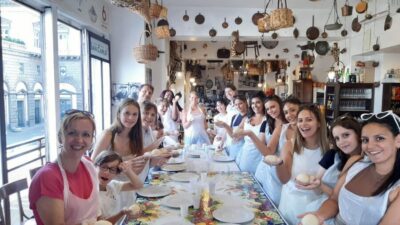
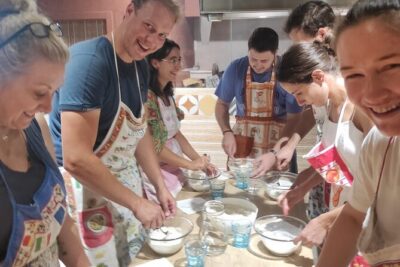
Once you’re inside, you get the practical things that make cooking classes work: an apron and chef hat, plus everything you need for your station. Since the group is limited to 10 participants, the teaching stays personal. You also get a free luggage deposit, which is a quiet win if you’re sightseeing all day and don’t want to carry a bag around.
From what I’ve seen in how this type of class runs, the big advantage of a small group is control. You can ask questions in the moment—while dough is still workable and while your tiramisù components are still within timing. If you tend to learn best when you can correct things right away, this setup fits.
Bruschetta with San Marzano tomatoes and Fior di Latte
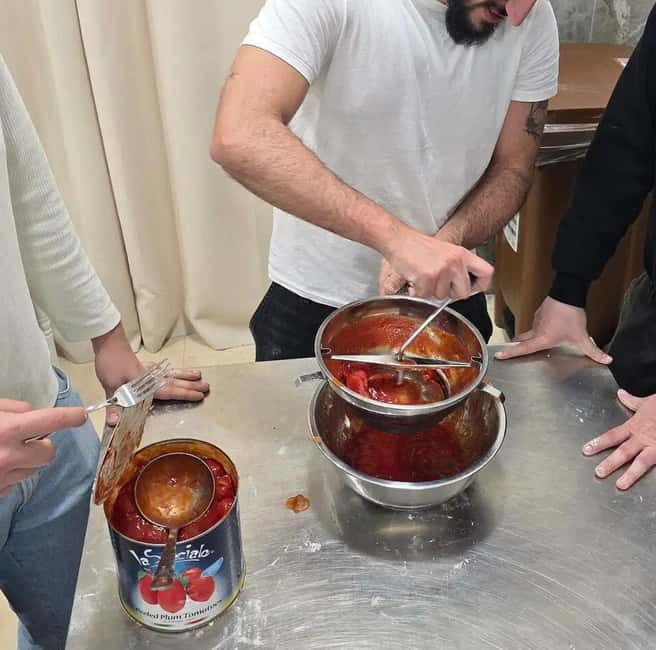
Before you touch pizza, you start with appetizers: bruschetta with San Marzano tomatoes and a slice of Fior di Latte cheese. This is a smart start for two reasons.
First, it gets you thinking about the flavors you’ll be building on—tomato freshness, dairy softness, and how simple ingredients can taste powerful when they’re right. Second, it takes the edge off. You’re not arriving hungry and tense, waiting for the first instruction.
It’s also a real Naples touch: San Marzano tomatoes are strongly associated with Campania, and Fior di Latte is the kind of cheese people talk about when they care about texture. You’ll eat it during the early part of the session, which helps you settle in before the more hands-on steps.
Pizza dough from scratch: the part you’ll remember
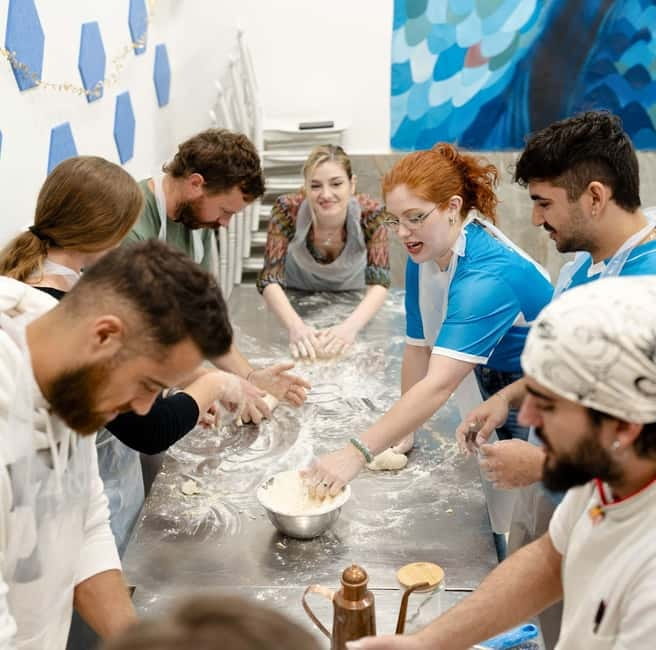
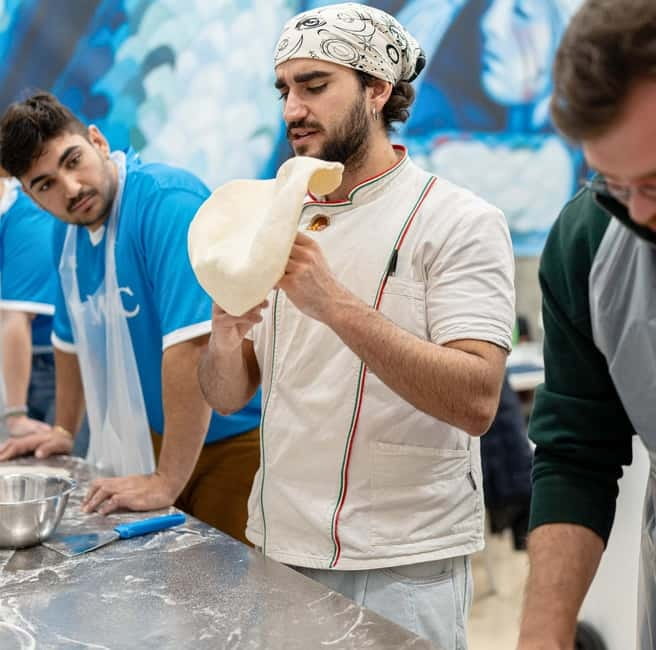
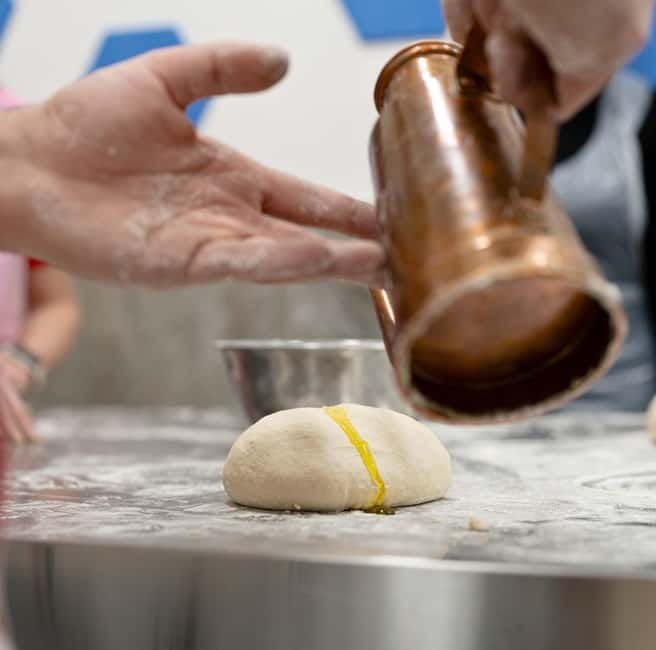
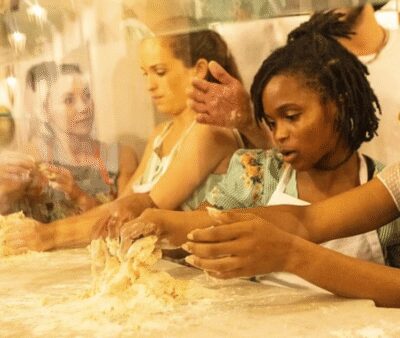
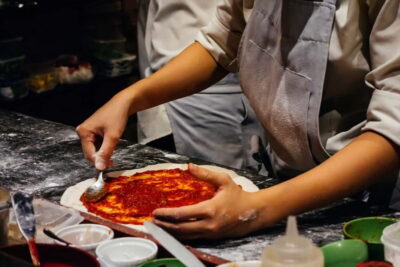
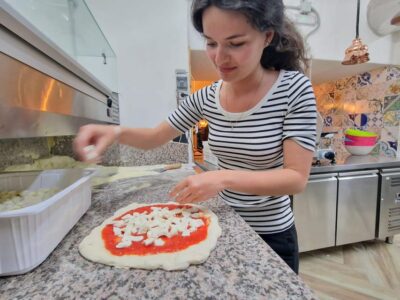
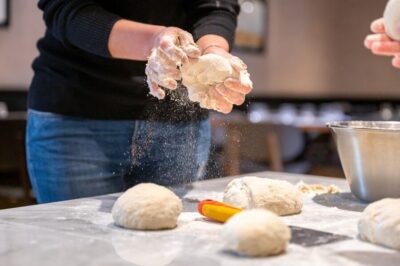
This is where the class earns its reputation. You prepare the dough from scratch, and then you top it with fresh local ingredients and bake it in a traditional oven. Even if you’ve made pizza at home before, the difference is usually technique: dough handling, shaping, and what to look for while it’s working.
Here’s what I’d focus on while you cook:
- Dough feel over timing anxiety. Don’t panic if your dough looks different from your neighbor’s. Your teacher should guide you toward the right texture, and that’s what matters.
- Less is often more when you build your topping. Neapolitan pizza is meant to be balanced and ingredient-forward.
- Watch the oven moment. Baking is fast. You’ll feel it when your pizza is ready, and that visual cue becomes useful for your next attempt at home.
The chef side of this matters too. Instructors such as Asim, Alex, Maurizio, Vitali/Vitale, and Luca/Lucas have been specifically praised for explaining in a relaxed way and keeping everyone involved. That’s not just “nice teaching.” In a dough class, it’s what prevents mistakes from turning into stress.
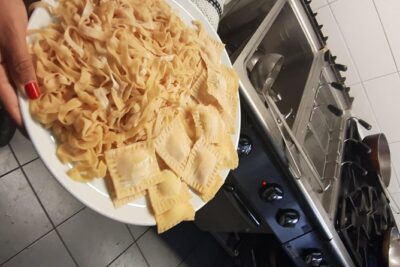
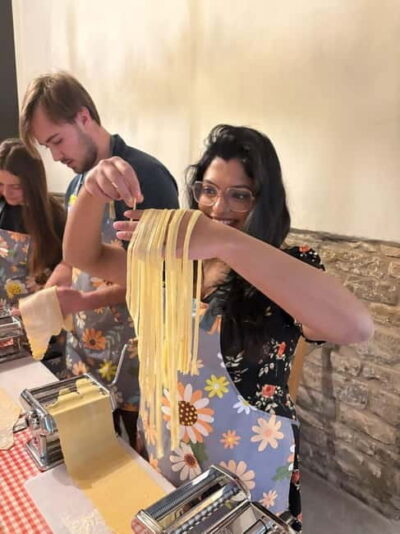
Roll more pasta with a Neapolitan cook

Baking in a traditional oven: learn the rhythm
Neapolitan pizza is tied to heat and timing. A traditional oven changes everything compared with a home kitchen. You’ll likely spend part of the class watching the process and learning how to gauge the bake, not by guessing, but by following the chef’s instructions.
When the oven takes over, you still have a job. You can help with final touches, listen for cues, and observe what happens to the crust. That’s the moment you realize why real Neapolitan pizza tastes the way it does: the outer crust forms quickly, the inside stays tender, and the toppings don’t sit there drying out.
Also, because the class is small, you get chances to work rather than standing in the back waiting your turn. One of the best “value” parts of this activity is that it doesn’t feel like you’re just paying to watch someone else cook.
Tiramù steps: creamy texture, not guesswork
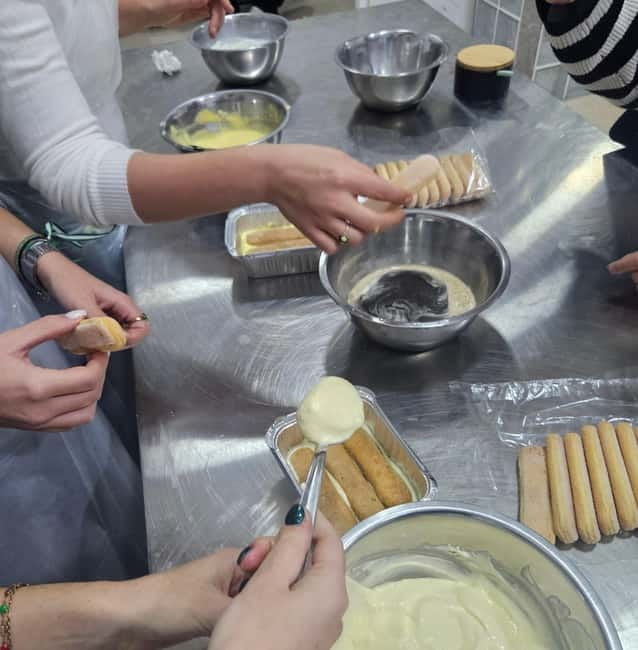
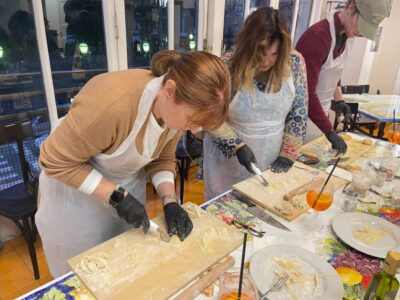
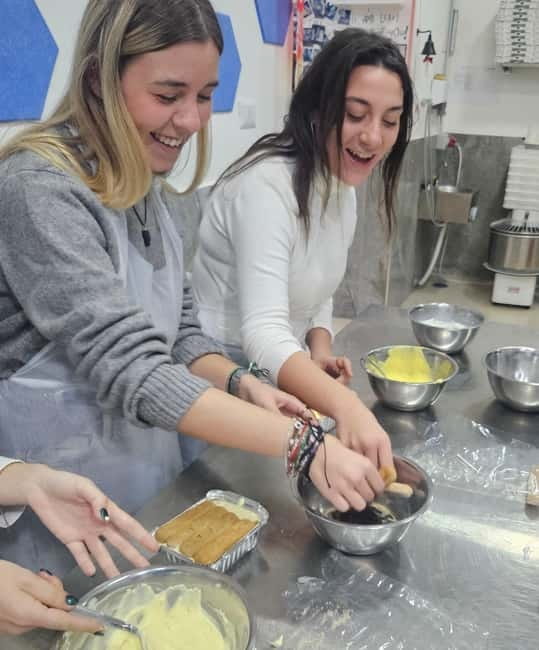
After pizza, you shift to Italy’s most famous dessert. You craft a rich, velvety tiramisù step by step. This part is great if you want a dessert that looks impressive but doesn’t require advanced baking skills.
As you build your tiramisù, pay attention to the details your chef points out, because that’s where the difference lives:
- Mixing and assembly are the real skills. If you rush, texture suffers.
- Layering matters. Your end result should look tidy when sliced and should hold structure.
A fun extra is the limoncello taste served with your tiramisù. Limoncello doesn’t cover up the dessert; it acts like a bright finish. The pairing helps explain why Naples often serves lemon-forward flavors alongside heavier comfort food.
Eating together: the best part is you get to enjoy it
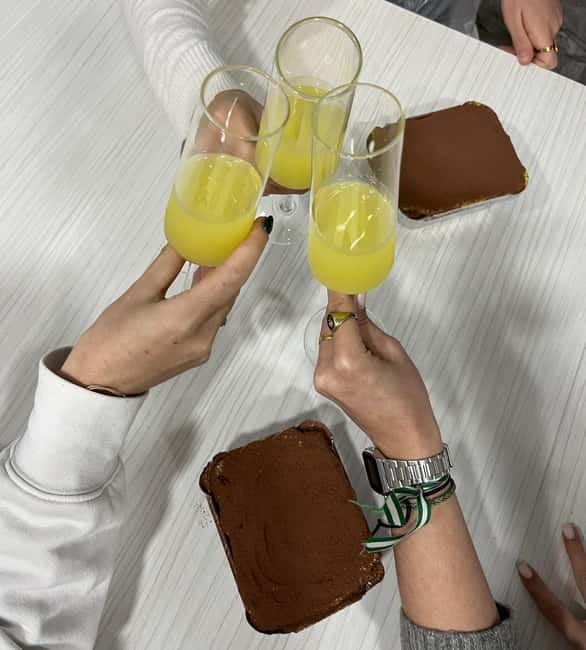
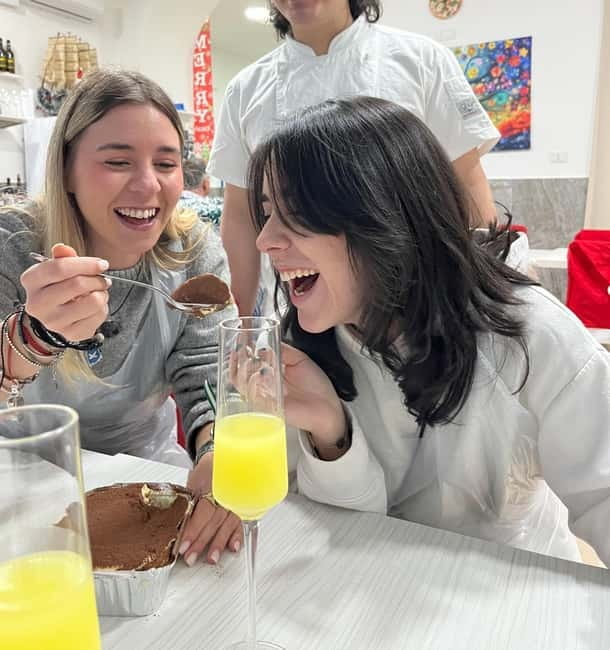
Once the cooking is done, you sit down and enjoy your pizza and dessert paired with a refreshing drink. The included beverage can be water, a glass of red/white wine, beer, or soft drinks. That’s a practical benefit: you’re not done when you wipe your hands clean. You get to eat while it’s still real food, still fresh from the oven.
This meal break also changes the vibe. Cooking classes can feel like homework. Here, it feels more like a shared evening where the food is the reward for your effort.
Take-home recipes and a certificate that makes it real
At the end, you get a personalized certificate plus the recipes so you can recreate the dishes at home. You also take home photos, which matters if you’re cooking as a couple or with friends and want something more than just a memory.
For me, recipes are the key part. Lots of classes teach by showing you what to do, but you still leave with questions like How long did we mix? What texture did we aim for? Having written recipes makes it easier to repeat the result instead of guessing your way back to success.
Price check: what $24 per person buys you (and what it doesn’t)
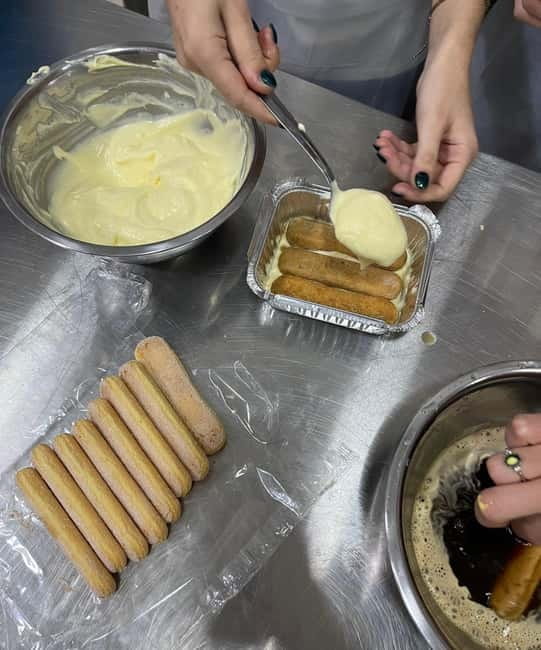
At about $24 per person for a 3-hour experience that includes ingredients, equipment, a chef, bruschetta appetizer, pizza and tiramisù you make, a drink, and a limoncello taste, the value is mostly in the “hands-on” part.
You’re paying for:
- A real teaching setup (not a casual meet-and-greet)
- Guidance while you work the dough and assemble the dessert
- The ingredients and baking environment
- Eating the results, not just watching or sampling
What it doesn’t include is transportation or a full city tour. This is a cooking-focused block of time. If you’re expecting a sweeping Naples highlights itinerary, you’ll be disappointed. If you want a very hands-on food lesson that produces dinner and gives you recipes, this price can feel like a bargain.
Who should book this class in Naples
You’ll probably love it if:
- You want a beginner-friendly cooking experience and don’t need prior skills
- You’re traveling as a couple, family, or group and want an activity that creates memories
- You like learning by doing, with a chef guiding you step-by-step
- You want two classic Naples foods handled in one session
Family note: the class has worked well for kids in real-world scenarios, partly because the group stays small and the chefs keep things moving. If you’re bringing someone under 18, they must be accompanied by a parent or legal guardian.
Language note: the instruction can be in Italian, English, Spanish, or French, which is a real comfort if your Italian is still in progress.
Vegetarian note: vegetarian options are available if you notify in advance. Also, one participant shared that the chef prepared a gluten-free version for pizza. Since that isn’t stated as a standard policy in the basic info, I’d treat it as “ask ahead,” not as a guarantee.
A couple of considerations before you go
The class is generally a smooth experience, but there are a few practical things to think about.
- Mobility: it’s not suitable for wheelchair users.
- Comfort: wear comfortable shoes and clothes you don’t mind getting a little dough dust on.
- Timing attention: baking and assembling move quickly, so if you get distracted easily, make sure you’re present when the chef gives cues.
- Group size: it’s capped at 10, which usually keeps it manageable, but if you prefer maximum personal space, you may want to ask about the exact number when you book.
FAQ
Is prior cooking experience required?
No. The class is designed for people with no prior cooking experience.
How long is the Naples pizza and tiramisù cooking class?
It runs for about 3 hours.
What food and drinks are included?
You’ll get bruschetta with San Marzano tomatoes and a slice of Fior di Latte cheese, plus one beverage (water, wine, beer, or soft drinks). You’ll also eat the pizza and tiramisù you make, and there is a limoncello taste with your tiramisù.
Do they offer vegetarian options?
Yes. Vegetarian options are available if you notify in advance.
What languages do the instructors speak?
The chef/instructor can teach in Italian, English, Spanish, and French.
What should I bring, and what’s not allowed?
Bring comfortable shoes and a camera. Pets aren’t allowed, and smoking indoors isn’t allowed.
Should you book this Naples pizza and tiramisù class?
If your goal is a hands-on food experience in Naples that ends with a real meal, I’d book it. The big wins are dough-from-scratch learning, a structured tiramù build, and the fact that you eat what you make with included drinks. At the same time, skip it if wheelchair access is required or if you’re looking for more of a sightseeing tour than a cooking session.
If you can spare 3 hours, go. This is the kind of activity that turns Naples from a place you walk through into a place you can actually recreate at home.
More Tour Reviews in Naples





More Cooking Tables in Naples

More Pizza to Make by Hand

More Naples tours, freshly reviewed




Naples Pizza-Making Classes, compared.
 ★ 4.9Pizza-Making Workshop with Drink and AppetizerFrom $395,411 reviews
 ★ 5.0Authentic Pizza Making Class in Naples with Appetizers and DrinkFrom $593,178 reviews
 ★ 4.8Neapolitan Pizza and Tiramisù Making ClassFrom $71839 reviews
 ★ 4.9Premium Pizza Class From Dough to Dessert & WineFrom $70346 reviews
 ★ 5.0Semi-Private Pizza Making Experience in Naples with DrinkFrom $56324 reviews
 ★ 4.8Pizza Making Class with Local PizzaioloFrom $58124 reviews
 ★ 5.0Naples Pizza Class: Learn, Bake & Eat the Authentic Pizza TasteFrom $65103 reviews
 ★ 4.7Authentic Neapolitan Pizza Making ClassFrom $7797 reviews
Browse the lists this tour appears in