
Review · NAPLES PASTA & COOKING CLASSES
Hands-On Pasta Making and Traditional Tiramisu Workshop
A flour-dusted afternoon in Naples. This hands-on workshop pairs tiramisu prep with rolling and shaping fresh egg pasta, and it ends with you eating what you made. I love the clear step-by-step coaching (including tips on dough and a good cooking point), and I love that you sit down for a full tasting of each dish. The one thing to consider is that, in some groups, the pasta you shape may be cooked and served together, so you might not get the exact pieces you personally made.
The setting helps too: it runs inside a working trattoria in the San Carlo 17 area, and many people mention an upstairs classroom with a view and a lively restaurant around you. It’s also built for an English-speaking group, and the class is long enough (about 2.5 hours) to feel like you actually learned something, not just watched.
One more practical note: this is max 30 people, so it can feel social and noisy. If you’re sensitive to sound or you want lots of personal attention at every step, pick your spot early and plan to ask questions.
In This Review
- Key things that make this class worth your time
- San Carlo 17: where the class happens and what the room feels like
- The class timeline: tiramisu sets first, then pasta takes over
- Rolling egg pasta by hand: what you learn (and why it’s easier than it looks)
- The pasta lineup: ravioli, maltagliati, and Nerano tagliatelle
- Ravioli with fresh ricotta (Sorrentina style)
- Maltagliati with potatoes and provola
- Tagliatelle for Nerano pasta
- One key consideration about the pasta you eat
- Tiramisu technique: eggs, cream, coffee-dipped biscuits, and cocoa
- Lunch at the end: what you eat, what’s included, and why it feels like a real meal
- Price and value at $72.41: what you’re really paying for
- Who should book: beginners, families, and groups that like hands-on work
- When to think twice: hearing, seating, pacing, and meal expectations
- Tips to get better results on the day
- Should you book this Naples pasta and tiramisu workshop?
- FAQ
- How long is the Naples pasta and tiramisu workshop?
- What does the class cost?
- What will I make during the workshop?
- Is the class taught in English?
- Is food included or do I just watch and then leave?
- Where does the workshop start?
- Can I cancel for a full refund?
Key things that make this class worth your time
- Tiramisu first, then pasta dough so the dessert can chill while you work
- Hands-on rolling, cutting, and filling using simple tools and your own hands
- You eat multiple dishes at the end (water plus one drink included)
- English-speaking instruction with examples of different pasta shapes and serving styles
- Restaurant-energy setting (sometimes loud), so seating can affect how well you can hear
- Recipes to take home mentioned by many people, so your work doesn’t stop when you leave
Roll more pasta with a Neapolitan cook
- Naples: Pasta Making Class with Starter and Drink★ 4.9 · 1,060 reviews
- Naples Pasta Class: Fettuccine & Ravioli with Grandma’s Recipe★ 5.0 · 506 reviews
- Naples: Pasta Cooking Class with Tiramisù and a Drink★ 4.6 · 415 reviews
- Naples: Neapolitan Pizza and Tiramisu Cooking Class★ 4.9 · 258 reviews
San Carlo 17: where the class happens and what the room feels like
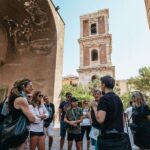
The meeting point is San Carlo 17, at the trattoria and pizzeria on Via San Carlo, in central Naples (80133). The class takes place inside a restaurant setting, and from the way people describe it, you’ll likely be in an upstairs room while diners and staff are active downstairs.
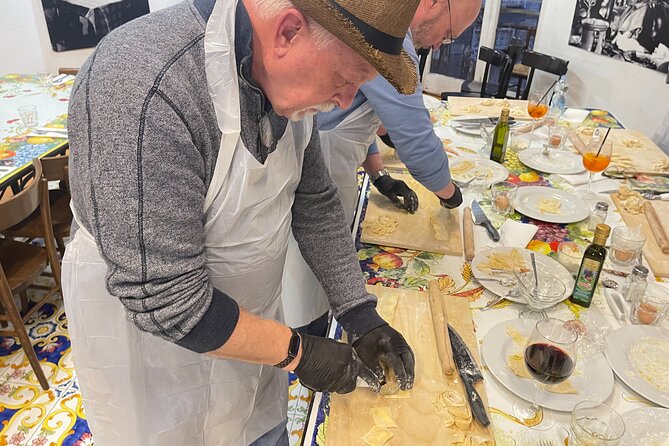
That matters more than you might think. A cooking class needs good sightlines. Several people found it easier when the instructor was closer and more centered, while others mentioned it could be hard to hear across a long table—especially with normal restaurant noise. If you want to follow every step cleanly, aim for the seat where you can see hands and rolling technique, not just the person talking.
The good news: the venue is described as clean, professional, and very “Italian restaurant” in feel. People also note bright decor, and in at least one case, a window view that made lunch feel like a treat rather than a rushed food stop.
The class timeline: tiramisu sets first, then pasta takes over
The workshop flows in a smart order: you start with the tiramisu so it can rest in the fridge while your hands get busy with dough.
First, you’ll prepare the tiramisu mixture. The core steps you’re taught include whipping eggs and building a rich cream. Then you assemble the dessert: coffee-dipped biscuits layered with cocoa. Once it’s finished, it goes into the fridge right away, which is exactly what you want if you want that classic set and sliceable texture later.
After that dessert downtime begins, the program switches gears to pasta dough. You’ll make traditional Italian egg pasta dough, then form it into sheets and shapes using hands and simple rolling pins. In other words, your time is balanced: you’re not stuck waiting for one long simmer. You’re actively working while the tiramisu chills.
Most people leave feeling they did a full “Naples meal cycle”—dessert prep up front, then pasta production, then the payoff lunch.
Rolling egg pasta by hand: what you learn (and why it’s easier than it looks)
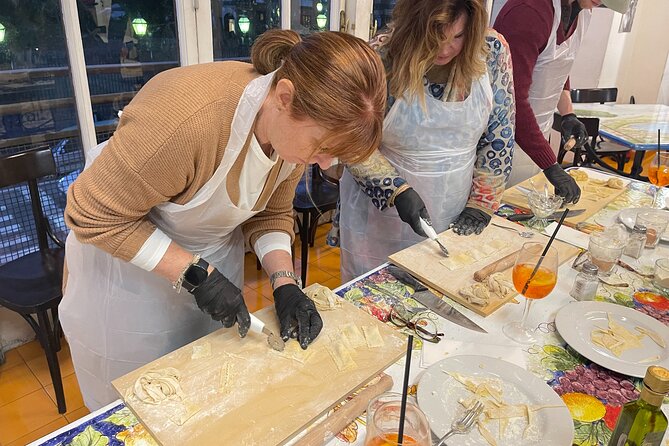
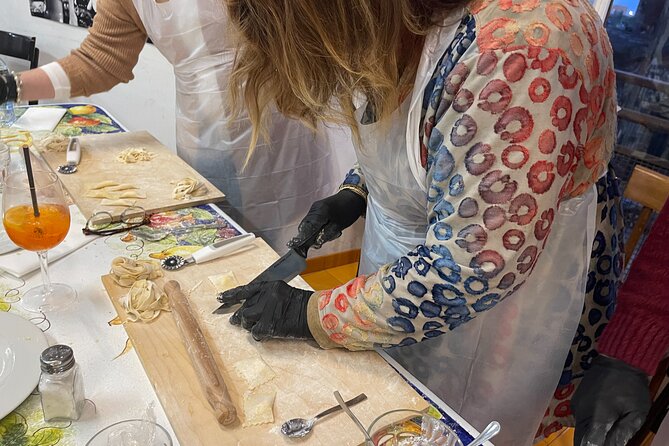
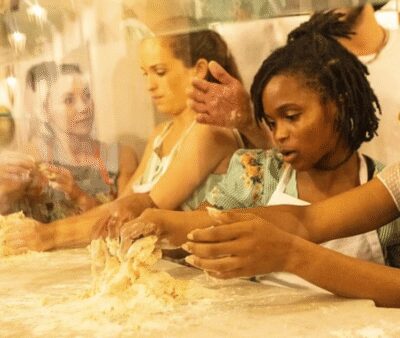
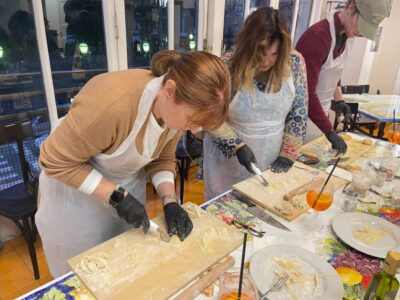
The pasta part is where this workshop earns its keep. You don’t just get a demonstration; you make the dough, roll it, cut it, and shape it.
You’ll start with egg pasta dough, then roll it out into a workable sheet. People repeatedly point out that using only hands and a rolling pin is simpler than they expected. That’s not just about comfort—it’s also about learning the feel of dough. When you handle it yourself, you understand how different dough consistency looks and feels before it becomes pasta shapes.
Then comes shaping. The workshop includes multiple pasta forms, which helps you learn more than one “style logic.” Ravioli is about filling and sealing. Maltagliati is about cutting irregular pieces (and using what you make). Tagliatelle is about keeping the sheet level and portioning into ribbons.
You also get instruction on tools and ingredients—flour, eggs, and other basics—and the chef or instructor shares what they call secrets to getting a good cooking point. That cooking point detail is useful because it’s the difference between tender and gummy, or flavorful and bland.
The pasta lineup: ravioli, maltagliati, and Nerano tagliatelle
This is not one-pasta-only. The class builds a handmade menu where each type has a role on your plate.
More aprons on in Naples
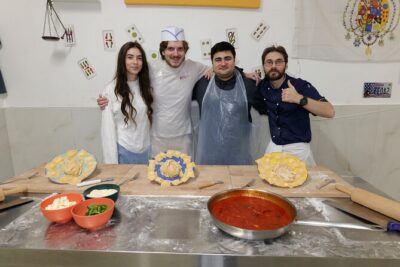
Ravioli with fresh ricotta (Sorrentina style)
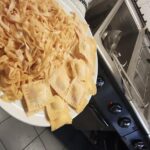
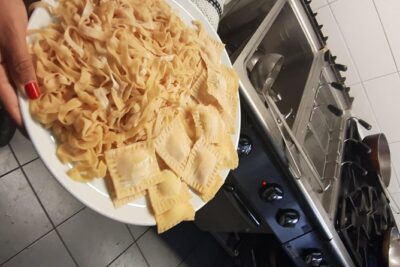
You’ll cut and fill ravioli with fresh ricotta, then prepare it to be served in a traditional Sorrentina-style presentation. Ravioli is a hands-on test: you learn how to portion filling, manage dough, and create sealed edges that hold up when cooked.
Maltagliati with potatoes and provola
Next is maltagliati, cooked with potatoes and provola cheese. Maltagliati is often misunderstood because it looks rustic. But that’s the point: it’s about making irregular pieces from dough and letting the sauce grip them.
This is also a nice break from “perfect shapes.” If you’re worried about making something too uniform, maltagliati teaches you that pasta can be beautiful without being identical.
Tagliatelle for Nerano pasta
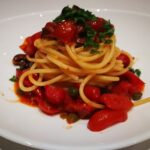
You’ll also make tagliatelle for Nerano pasta. Tagliatelle is classic and familiar, and shaping it teaches portion control—how wide you roll, how you cut, and how to keep ribbons from sticking together.
One key consideration about the pasta you eat
Here’s the part that matters for picky pasta lovers: some people say the chef cooks everyone’s pasta together and serves it in a way that may be randomly distributed. That can mean you may not get exactly the pasta you personally shaped, even though you made the dough and portions in class.
The overall experience still tends to be positive because you get a tasting of the dishes and the food is described as delicious. But if you’re hoping for strict one-person, one-batch pride, this is something to keep in mind before you book.
Tiramisu technique: eggs, cream, coffee-dipped biscuits, and cocoa
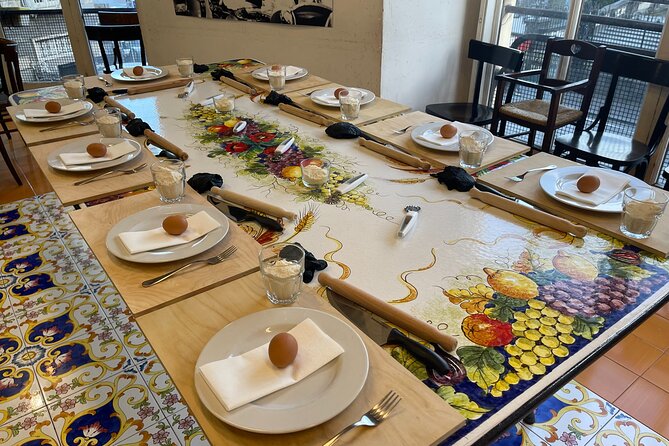
The tiramisu steps are taught clearly, and the sequence is the secret. You whip eggs and prepare the cream, then layer coffee-dipped biscuits. Cocoa goes in at the end for that unmistakable finish.
This is also where a class helps more than a recipe. Coffee-dipping is quick and forgiving until you overdo it. Too much liquid and biscuits turn soggy; too little and the flavor doesn’t spread. By assembling it with hands-on guidance, you learn what “right” looks like in real time.
And because you chill the tiramisu right away, you get the best chance at that classic set. Even people who are not dessert people often leave saying the tiramisu was the best part, sometimes the best they’ve tasted.
Lunch at the end: what you eat, what’s included, and why it feels like a real meal
After you prepare everything, the chef cooks the pasta you made. Then you sit down and eat plates that include each prepared dish. You also get water and one drink included with the meal, and the experience ends with coffee.
A few details people highlighted:
- There’s plenty of food, and it’s smart to arrive hungry.
- One drink is included, and some people chose Aperol Spritz and loved it.
- Coffee closes the meal, which feels very Naples and very old-school.
In practical terms, this means the class isn’t just a workshop snack. You’re paying for a full production day: make pasta and dessert, then eat the results like a proper lunch.
Price and value at $72.41: what you’re really paying for
$72.41 can sound like a splurge—until you look at what’s included.
You’re paying for:
- about 2 hours 30 minutes of guided, hands-on cooking
- making egg pasta dough and shaping multiple varieties
- assembling a traditional tiramisu and chilling it
- chef cooking and serving you a tasting of the dishes
- water and one drink, plus coffee
You’re also getting recipe take-home materials mentioned by many people. That’s not guaranteed in the listing data alone, but it shows up repeatedly in the experience feedback, and it’s exactly what makes the value last beyond the day.
So the value isn’t just the meal. It’s the coaching plus the chance to learn techniques you can reuse at home: rolling dough, cutting shapes, filling ravioli, and building a layered tiramisu.
Who should book: beginners, families, and groups that like hands-on work
This workshop fits a wide range of skill levels. People describe it as friendly for old and young, and also fun for families with teens.
If you’re a beginner, you’ll like the structure. You start with tiramisu steps that are easy to follow and then move into pasta with clear guidance and instructor help at the table.
If you’re traveling as a group, this is social in a good way. You’ll likely meet other people in your class size cap (max 30), and the workflow makes it feel communal—mixing, rolling, shaping, and then sitting together to eat.
When to think twice: hearing, seating, pacing, and meal expectations
This is the balanced part.
Some people said it felt rushed, depending on how quickly the group moved. Others felt the instructor was great, helpful, and patient. With cooking, pacing can vary by group size and skill level, so your best bet is to show up ready to focus and don’t expect perfect time for slow perfection.
Noise and sightlines can also be an issue. If your table is long, it can be harder to hear directions clearly. One practical move: choose a seat where you can see hands and rolling technique, and don’t be shy about asking for a repeat if you missed a step.
Finally, remember the earlier point: even if you shape pasta yourself, cooking and serving may be done together. That can disappoint people who want total “mine, exactly mine” control. If that’s you, still consider booking—just adjust expectations to a tasting experience rather than strict individual plates.
Tips to get better results on the day
You’ll have the best time if you treat this like a real cooking session, not just a sightseeing detour.
- Arrive hungry. There’s enough food to justify it, and people who came hungry seemed happiest.
- Wear comfortable clothes that can handle a little flour dust.
- If you can, sit where you can see the instructor most clearly. Hearing can be tricky in an active restaurant.
- Pay attention to the “cooking point” guidance. That’s the part that tends to make the difference once the chef cooks your pasta.
- Expect to work with your hands. Rolling and shaping can be easier than you think, but it helps to keep a steady pace.
If you’re picky about sweetness or coffee strength in tiramisu, you can also use the tips you’re given to adjust at home later. The best classes give you technique, not just a finished dessert.
Should you book this Naples pasta and tiramisu workshop?
Book it if you want an English-guided, hands-on cooking class that includes both traditional tiramisu and multiple pasta varieties, then turns into a real lunch with water, one drink, and coffee. This is especially worth it if you enjoy practical learning: rolling dough, cutting shapes, filling ravioli, and watching how texture changes when you get cooking point right.
Skip or choose carefully if you’re sensitive to noise and hard-to-hear instruction, or if you need the exact pasta you made to be the exact pasta you eat. Some groups are faster, and some serving is done together.
If you’re flexible, this workshop is one of the best ways to bring Naples home with you—through technique, not just photos.
FAQ
How long is the Naples pasta and tiramisu workshop?
It lasts about 2 hours 30 minutes.
What does the class cost?
The price is $72.41 per person.
What will I make during the workshop?
You’ll prepare a traditional tiramisu, make egg pasta dough, and create multiple pasta dishes, including ravioli with fresh ricotta, maltagliati with potatoes and provola, and tagliatelle for Nerano pasta.
Is the class taught in English?
Yes, the workshop is offered in English.
Is food included or do I just watch and then leave?
Food is included. After preparation, the chef cooks what you made and you eat a plate of each prepared dish, plus water and one drink. The experience closes with coffee.
Where does the workshop start?
The meeting point is San Carlo 17 (Trattoria e Pizzeria), Via San Carlo, 17, 80133 Napoli NA, Italy.
Can I cancel for a full refund?
Yes. You can cancel up to 24 hours in advance for a full refund. If you cancel less than 24 hours before the start time, the amount paid isn’t refunded.
More Cooking Classes in Naples

More Tour Reviews in Naples



More Cooking Tables in Naples
More Naples tours, freshly reviewed




Naples Pasta & Cooking Classes, compared.
 ★ 4.9Pasta Making Class with Starter and DrinkFrom $391,060 reviews
 ★ 5.0Naples Pasta Class: Fettuccine & Ravioli with Grandma’s RecipeFrom $54506 reviews
 ★ 4.6Pasta Cooking Class with Tiramisù and a DrinkFrom $71415 reviews
 ★ 4.9Neapolitan Pizza and Tiramisu Cooking ClassFrom $24258 reviews
 ★ 4.8Traditional Italian Food Cooking Class at RestaurantFrom $57106 reviews
 ★ 5.0Amazing Pizza and Pasta Class at Savio’s kitchen cooking schoolFrom $173104 reviews
 ★ 4.9Fresh Pasta Cooking Class and Dinner with a LocalFrom $6169 reviews
Browse the lists this tour appears in